In the high-stakes world of pharmaceutical development, a
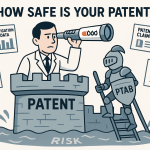
A patent is more than just a legal document; it’s the bedrock of a multi-billion dollar investment. It represents years of research, countless clinical trials, and the promise of market exclusivity that allows a company to recoup its costs and fund future innovation. But what if that bedrock wasn’t as solid as you thought? What if there was a mechanism—a powerful, fast-moving tribunal—that could challenge and even invalidate that patent long after it was granted?
Welcome to the world of the Patent Trial and Appeal Board (PTAB). For many in the pharmaceutical industry, the PTAB is a source of immense anxiety. Created by the Leahy-Smith America Invents Act (AIA) in 2012, its proceedings, particularly Inter Partes Review (IPR) and Post-Grant Review (PGR), have fundamentally altered the landscape of patent litigation. These quasi-judicial reviews offer a cheaper, faster alternative to district court litigation for challenging a patent’s validity.
The impact has been profound. While designed to combat low-quality patents held by “patent trolls,” the PTAB has become a primary battleground for brand-name and generic drug manufacturers. Understanding the intricate timelines—the “challenge windows”—for initiating these reviews isn’t just a matter of legal compliance; it’s a core component of both offensive and defensive strategy that can determine market entry, protect blockbuster revenue streams, and shape the competitive dynamics of the entire industry. This guide will walk you through the critical deadlines, strategic considerations, and the complex interplay between PTAB proceedings and traditional Hatch-Waxman litigation.
The America Invents Act (AIA): A New Battlefield for Pharma
Before the AIA, challenging a patent was typically a costly and protracted affair confined to federal district courts. The process could take years and millions of dollars in legal fees, creating a significant barrier to entry for companies wanting to question the validity of a competitor’s patent.
The AIA changed everything. It introduced new administrative trial proceedings to be held before the PTAB, a panel of specialized administrative patent judges at the U.S. Patent and Trademark Office (USPTO). The goal was to create a more efficient and expert forum for resolving patent validity disputes. The two most significant proceedings for the pharmaceutical industry are Post-Grant Review (PGR) and Inter Partes Review (IPR).
These proceedings are not just another legal hurdle; they represent a paradigm shift. They are faster, the judges are technically savvy, and the standard of proof for invalidating a patent claim is lower (“preponderance of the evidence”) than in district court (“clear and convincing evidence”). This combination has made the PTAB an incredibly powerful tool for challengers.
In its first decade, the PTAB instituted trial on over 10,000 of the nearly 20,000 patents challenged via IPR and PGR petitions. Of the patents that reached a final written decision, a staggering 84% had at least one challenged claim found unpatentable [1].
This statistic underscores why understanding the PTAB is not optional. For a brand-name company, a successful PTAB challenge can erase market exclusivity overnight. For a generic or biosimilar manufacturer, it can clear the path to market years ahead of schedule. But this powerful weapon can only be wielded within specific, unforgiving time windows. Miss the window, and the opportunity is lost forever.
The Two Main Arenas: A Deep Dive into PGR and IPR
While often discussed together, PGR and IPR are distinct proceedings with different rules, grounds for challenge, and, most importantly, different timing requirements. Think of them as two different weapons in an arsenal, each designed for a specific phase of a patent’s life.
Post-Grant Review (PGR): The Early, Broad-Spectrum Attack
PGR is the broader of the two challenge mechanisms. It allows a petitioner to challenge a patent on nearly any ground of invalidity available under U.S. patent law.
What are the Grounds for a PGR Challenge?
A PGR petition can be filed on the basis that one or more claims are unpatentable under any ground related to 35 U.S.C. § 101 (patentable subject matter), § 102 (novelty), § 103 (obviousness), or § 112 (written description, enablement, and definiteness) [2].
This wide scope is its greatest strength. It allows challengers to attack a patent on grounds that are not available in an IPR, such as lack of written description or enablement—arguments that are often particularly potent against complex pharmaceutical and biotech patents. For example, a challenger could argue that the patent fails to adequately describe how to make and use the claimed drug formulation, a common vulnerability.
The Critical 9-Month Window: When the PGR Clock Starts
The power of PGR comes with a major limitation: it must be filed within nine months of the patent’s grant date or the date of issuance of a reissue patent [3].
This nine-month window is absolute and unforgiving. The clock starts ticking the moment the patent is officially granted by the USPTO. This makes PGR an “early strike” option. It’s designed for challengers who are closely monitoring newly issued patents in their technology space and are prepared to act quickly.
For a pharmaceutical company, this means that the moment a competitor’s key patent on a new drug or formulation is granted, a nine-month countdown begins. During this period, the patent is at its most vulnerable to the broadest possible administrative attack. After those nine months pass, the opportunity to file a PGR is gone forever.
Inter Partes Review (IPR): The Later-Stage, Sharpshooter Approach
If PGR is a broadsword, IPR is a rapier. It’s a more focused tool available later in a patent’s life, but with a narrower set of arguments.
What are the Grounds for an IPR Challenge?
An IPR challenge is significantly more limited than a PGR. It can only be based on grounds of invalidity under 35 U.S.C. § 102 (novelty) or § 103 (obviousness), and only on the basis of patents or printed publications [4].
This means you cannot use an IPR to challenge a patent for lack of enablement, insufficient written description, or on subject matter eligibility grounds. The challenge must be based on prior art that was either patented or published. For example, a generic company might file an IPR arguing that a brand’s patent on a specific crystalline form of a drug is obvious in light of a combination of two previously published scientific articles.
The IPR Clock: Two Triggers You Can’t Ignore
The timing for filing an IPR is more complex than for a PGR. There are two primary triggers:
The Post-PGR Window: A petitioner can file an IPR petition starting after the nine-month PGR window has closed [5]. This makes IPR the default challenge mechanism for any patent that is more than nine months old.
The Hatch-Waxman Litigation Bar: This is the most critical and complex timing rule for the pharmaceutical industry. If the petitioner (or a real party in interest) is sued for infringement of the patent, they are barred from filing an IPR petition more than one year after the date on which they were served with the infringement complaint [6].
This one-year bar, codified in 35 U.S.C. § 315(b), is the linchpin of PTAB strategy in pharma. It creates a direct and high-stakes link between traditional district court litigation and PTAB proceedings.
The Hatch-Waxman Intersection: Where Timelines Collide
The Drug Price Competition and Patent Term Restoration Act of 1984, commonly known as the Hatch-Waxman Act, created the modern framework for generic drug approval. Its core is the Abbreviated New Drug Application (ANDA) process. A key part of this process is the “Paragraph IV certification.”
The Paragraph IV Certification: Firing the Starting Gun
When a generic company files an ANDA, it must certify against the brand-name company’s patents listed in the FDA’s “Orange Book.” A Paragraph IV certification is a declaration by the generic company that it believes the brand’s listed patent is invalid, unenforceable, or will not be infringed by the generic product [7].
Sending a notice of this Paragraph IV certification to the patent holder is considered an act of “artificial infringement.” This allows the brand-name company to sue the generic filer for patent infringement immediately, even though the generic product isn’t on the market yet. If the brand company files suit within 45 days of receiving the notice, it triggers an automatic 30-month stay of the generic’s FDA approval, giving the parties time to litigate the patent(s).
The 35 U.S.C. § 315(b) Time Bar: The One-Year Countdown
This is where the clocks converge. The moment the brand-name company serves its complaint for patent infringement on the generic filer, the one-year IPR clock starts ticking.
Example Scenario:
January 1, 2025: Generic Corp files an ANDA with a Paragraph IV certification for BrandPharma’s blockbuster drug, Exclusivor®.
January 15, 2025: Generic Corp sends its Paragraph IV notice letter to BrandPharma.
March 1, 2025: BrandPharma sues Generic Corp for patent infringement and officially serves the complaint.
THE IPR CLOCK STARTS: Generic Corp now has until March 1, 2026, to file an IPR petition against BrandPharma’s patent.
If Generic Corp fails to file its IPR by that date, it loses the right to challenge the patent at the PTAB. It must then rely solely on the district court litigation, where the odds are generally more favorable to the patent holder.
Strategic Dismissals and Resetting the Clock
This one-year bar has led to complex legal maneuvering. What if the brand-name company dismisses its lawsuit? Does that reset the clock? The courts have generally held that a voluntary dismissal without prejudice (meaning the case can be re-filed) does not reset the § 315(b) clock. However, a dismissal with prejudice (a final resolution that prevents re-filing) may terminate the bar, but this is a rare and strategically complex move [8].
This creates a “use it or lose it” scenario for generic challengers. They must decide early in the litigation process whether to pursue a parallel track at the PTAB.
Strategic Implications for Stakeholders
Understanding these windows isn’t just an academic exercise. It dictates billion-dollar corporate strategies.
For Brand-Name Pharma (The Patent Holder): Building a Fortress
For innovator companies, the goal is to survive these challenge windows and protect exclusivity.
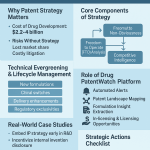
Proactive Patent Prosecution: Strategy begins long before a challenge is filed. When prosecuting patents, innovators must anticipate future PTAB challenges. This means building a portfolio with a mix of claim types and submitting extensive evidence of non-obviousness to the patent office. The goal is to create a “thicket” of strong, well-supported patents that are difficult to attack. As patent attorney Gene Quinn, founder of IPWatchdog, advises, “The time to start thinking about surviving a PTAB challenge is the day you start writing your patent application” [9].
Monitoring the PGR Window: For the first nine months of a key patent’s life, it is exceptionally vulnerable. Brand companies must be on high alert for PGR petitions.
Strategic Litigation: When filing a Hatch-Waxman suit, the brand company knows it is starting the one-year IPR clock for the defendant. This can be used strategically. Some brands may even sue on a narrower set of patents initially to control which clocks they start and when.
For Generics and Biosimilars (The Challenger): Choosing the Right Weapon at the Right Time
For challengers, the PTAB offers a powerful pathway to market, but it requires careful timing and resource allocation.
The Dual-Track Dilemma: The most common strategy for an ANDA filer is to pursue a “dual-track” approach: fighting the patent(s) in district court while simultaneously challenging them at the PTAB via IPR. This is expensive and complex but can be highly effective. A win at the PTAB can effectively end the district court case.
Leveraging Patent Intelligence: Success hinges on identifying the best patents to challenge and the strongest prior art. This is where patent intelligence platforms become invaluable. Services like DrugPatentWatch provide comprehensive data on pharmaceutical patents, their expiration dates, litigation history, and Orange Book listings. A challenger can use this intelligence to analyze a brand’s entire patent estate, identify the weakest links, and gather the prior art needed for a successful IPR petition—all before the one-year clock runs out. By knowing which patents are most critical to a drug’s exclusivity, a generic company can focus its resources on challenging the patents that matter most.
Timing is Everything: A challenger must meticulously track the date of service for every infringement complaint. Missing the one-year IPR deadline is a catastrophic, unforced error. The decision to file an IPR must be made in concert with the district court strategy, as the outcomes of each proceeding can influence the other.
The Finish Line: Understanding Estoppel
Winning or losing a PTAB challenge has significant consequences that extend beyond the patent in question. This is due to a legal concept called estoppel.
If a challenger files a PGR or IPR and receives a Final Written Decision from the PTAB, they are “estopped”—or legally barred—from later asserting in a district court case that the patent is invalid on any ground that they raised or reasonably could have raised during the PTAB proceeding [10].
This is the trade-off. In exchange for a faster, cheaper shot at invalidating a patent, the challenger gives up the right to make those same arguments later. It forces challengers to put their best case forward at the PTAB. If they hold back an argument, they lose the right to use it. This makes the initial petition a critical, all-in moment.
Key Takeaways
The PTAB is a Game-Changer: The PTAB’s administrative trials (PGR and IPR) have created a faster, lower-cost, and often more successful way to challenge pharmaceutical patents compared to district court litigation.
PGR is an Early, Broad Attack: A Post-Grant Review (PGR) offers the widest range of invalidity arguments but must be filed within a strict 9-month window after a patent is granted.
IPR is a Later, Focused Attack: An Inter Partes Review (IPR) uses a narrower set of prior art-based arguments and can be filed after the 9-month PGR window closes.
The One-Year IPR Bar is Crucial: For pharmaceutical companies involved in Hatch-Waxman litigation, the most important deadline is the one-year anniversary of being served with a patent infringement complaint. An IPR petition must be filed before this date.
Strategy is Paramount: For brand-name companies, success lies in building PTAB-resistant patent portfolios. For generic/biosimilar challengers, it involves using patent intelligence tools like DrugPatentWatch to identify targets and filing timely, well-researched petitions as part of a dual-track litigation strategy.
Estoppel Raises the Stakes: Losing a PTAB challenge prevents the challenger from raising the same invalidity arguments again in court, making the initial petition a critical, high-stakes event.
Frequently Asked Questions (FAQ)
1. Can a brand-name pharma company use the PTAB to challenge a competitor’s patent?
Absolutely. While much of the focus is on the generic vs. brand dynamic, brand-name companies can and do use IPR and PGR against each other. If a competitor secures a patent on a new delivery mechanism or a competing compound in the same therapeutic class, a company can use the PTAB to try and clear the competitive landscape, provided they are not themselves infringing and have not been sued (which would start the one-year clock).
2. What happens if a patent is reissued? Does that reset the PTAB challenge windows?
Yes, it can. The issuance of a reissue patent re-starts the nine-month clock for filing a PGR against any new or amended claims in the reissued patent [3]. This can be a strategic move by a patent owner to fix vulnerabilities, but it also opens a new window of attack for challengers on the modified claims. It does not, however, re-open the PGR window for claims that were not changed from the original patent.
3. If a company is sued for infringement by a parent company, does the one-year IPR clock start for a lawsuit filed by its subsidiary on the same patent?
This touches on the “real party in interest” (RPI) and privity rules, which are extremely complex. Generally, the courts and the PTAB look at who is ultimately controlling and funding the litigation. If two separate entities (e.g., a generic manufacturer and its distribution partner) are sued separately, the one-year clock runs independently for each from their respective dates of service. However, if the entities are considered to be in “privity,” a suit against one could start the clock for the other. This is a highly fact-specific determination that requires careful legal analysis.
4. Can a company file an IPR against a patent before it gets sued to preemptively “clear the way”?
Yes. This is a common strategy. A company planning to launch a product can proactively file an IPR against a competitor’s patent that it fears might be asserted against it. This allows the company to choose the timing and forum for the first fight. However, this is a risky move. It guarantees a costly legal battle that might not have otherwise occurred, and if the IPR fails, the challenger is estopped from raising those arguments later if they are eventually sued.
5. How does the Biosimilar Price Competition and Innovation Act (BPCIA) “patent dance” interact with PTAB timelines?
The BPCIA framework for biosimilars is analogous to Hatch-Waxman for generics and has its own complex process of patent disclosure and litigation, often called the “patent dance.” Similar to Hatch-Waxman, once a biosimilar applicant is sued for patent infringement by the reference product sponsor, the one-year clock for filing an IPR (§ 315(b)) begins to run [11]. The strategic considerations are very similar: biosimilar applicants must decide whether and when to launch a parallel PTAB attack after being sued.