Introduction: Beyond Replication – The High-Stakes Gauntlet of the Modern Generics Market
For decades, the generic drug industry has been the unsung hero of global healthcare. It operates on a simple, powerful premise: once the patent on an innovative drug expires, functionally identical, lower-cost versions can be brought to market, dramatically increasing patient access and driving monumental savings for healthcare systems. The numbers are staggering. In the United States alone, generics account for an estimated 91% of all prescriptions filled, generating over $2.44 trillion in savings over the past decade . This is the backbone of affordable medicine, a critical component of public health.
But behind this story of immense societal value lies a far more complex and brutal reality for the companies competing in this arena. The very forces that make generics a public good—intense competition, relentless price pressure, and stringent quality standards—are the same forces that have transformed the industry into a high-stakes gauntlet . The old notion of generic development as a simple, low-risk process of “reverse-engineering” and replication is dangerously outdated. Today’s landscape is a formidable maze of interconnected challenges that have exponentially increased the cost, risk, and complexity of bringing a product to market .
From navigating a labyrinth of global regulations and litigating multi-million-dollar patent challenges to surviving a post-launch price crush that can erode margins by over 90%, success in the modern generics market demands a new level of strategic sophistication . It requires more than just manufacturing prowess; it demands expertise in intellectual property law, advanced formulation science, global regulatory affairs, and resilient supply chain management.
This is where the Contract Research Organization (CRO) enters the narrative, not as a peripheral service provider, but as an indispensable strategic co-pilot. The CRO industry, once a collection of utility players performing routine tasks, has evolved into a sophisticated, multi-billion-dollar ecosystem of specialized expertise . The global CRO services market is projected to surge from an estimated $82.0 billion in 2024 to nearly $130 billion by 2029, a testament to its increasingly central role in drug development . As pharmaceutical companies of all sizes shift toward more agile, asset-light operating models, it’s estimated that roughly 60% of all clinical development budgets now flow to these external partners .
For generic drug developers, this evolution is not just a trend; it’s a lifeline. In an environment where speed-to-market is paramount and the margin for error is razor-thin, CROs provide the critical capabilities, scalable resources, and specialized knowledge that many generic companies cannot afford to build or maintain in-house. They are the navigators of the regulatory maze, the scientists cracking the formulation code, and the operational engines driving the clinical studies that are the gateway to market approval.
This report will deconstruct the modern generic drug development lifecycle, exposing the critical hurdles at each stage. More importantly, it will provide a strategic playbook for how to leverage the deep and diverse capabilities of CROs to overcome these challenges. We will explore the full spectrum of CRO services, dissect the cost-benefit analysis of outsourcing, and examine the best practices for forging successful, long-term partnerships. This is not just a story about outsourcing; it’s a story about a fundamental shift in how the generic drug industry must operate to survive and thrive. It’s about turning patent data into competitive advantage, scientific challenges into market opportunities, and tactical vendor relationships into powerful strategic alliances. Welcome to the new playbook for generic drug development.
Deconstructing the Generic Lifecycle: A Minefield of Scientific, Legal, and Commercial Hurdles
To truly appreciate the strategic necessity of partnering with a CRO, we must first dissect the modern generic drug development lifecycle. It is a journey fraught with peril, where a single misstep in any domain—be it legal, scientific, or regulatory—can lead to costly delays, outright rejection, and the complete collapse of a product’s business case. The path from identifying a target molecule to launching a successful product is not a straight line but a series of interconnected gauntlets, each demanding a unique and highly specialized skill set.
The First Hurdle: Patent Intelligence and Strategic Portfolio Selection
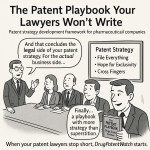
Long before a single beaker is touched in the lab, the battle for generic market share is won or lost in the dense, complex world of intellectual property (IP). The most critical upstream activity for any generic company is not science, but strategy—specifically, the meticulous analysis of the patent landscape to identify commercially viable opportunities. This process is the foundation upon which the entire development program is built.
The Hatch-Waxman Act: The Legal Battlefield
The modern U.S. generic industry was born from the Drug Price Competition and Patent Term Restoration Act of 1984, commonly known as the Hatch-Waxman Act. This landmark legislation created the Abbreviated New Drug Application (ANDA) pathway, allowing generic manufacturers to gain approval without conducting their own costly and duplicative clinical trials for safety and efficacy . Instead, they need only prove their product is bioequivalent to the innovator’s drug.
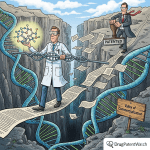
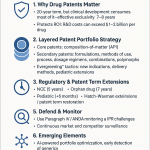
However, the Act’s true genius lies in how it balances this streamlined pathway with incentives for innovation. It established a formal, high-stakes legal framework for challenging brand-name drug patents before they expire. At the heart of this framework is the Paragraph IV (P-IV) certification. When filing an ANDA, a generic company must certify the status of every patent listed for the brand-name drug in the FDA’s “Orange Book.” A P-IV certification is a bold declaration: it asserts that the brand’s patent is invalid, unenforceable, or will not be infringed by the proposed generic product.
This filing is legally defined as an “artificial act of infringement,” a move designed to invite a lawsuit from the patent holder. If the brand company sues within 45 days, it triggers an automatic 30-month stay on the FDA’s ability to grant final approval to the generic . This stay gives the brand a period of protected market exclusivity to litigate the patent dispute. For the generic company, this means the legal clock starts ticking long before the regulatory clock, and the entire development timeline must be planned around this potential 30-month delay.
The Ultimate Prize: 180-Day Exclusivity
So why would a generic company intentionally invite a multi-million-dollar lawsuit? The answer lies in the Hatch-Waxman Act’s most powerful incentive: 180-day marketing exclusivity. The first generic applicant to submit a “substantially complete” ANDA with a P-IV certification is rewarded with a six-month period of market exclusivity upon approval. During this time, the FDA cannot approve any other generic versions of the same drug.
This creates a temporary, highly lucrative duopoly between the brand-name drug and the first generic entrant. The first generic can capture significant market share while still pricing at a relatively modest discount to the brand. After the 180 days expire, the floodgates open, multiple competitors enter, and prices plummet dramatically . This first-mover advantage is so profound that it has created a “race to the courthouse,” where the entire R&D process is often reverse-engineered from a legal and competitive intelligence starting point. The goal is to be the first to file a valid ANDA, which means the legal and regulatory strategy must be locked in before the most expensive scientific work, like bioequivalence studies, even begins.
The Economics of Litigation as a Strategic Investment
It is a common misconception to view patent litigation as merely a defensive cost. For sophisticated generic players, it is a calculated, offensive strategic investment. A typical P-IV litigation can take two to three years to resolve and cost anywhere from $5 million to $10 million in legal fees, with blockbuster drugs commanding even higher sums. The risks are substantial; a loss can bar market entry until the patent’s natural expiration.
However, the potential rewards are astronomical. The 180-day exclusivity period for a successful blockbuster drug can generate hundreds of millions of dollars in revenue, providing a massive return on the legal investment. While the overall “success rate” for generic challengers is high—around 76% when accounting for settlements and dropped cases—the win rate at trial is closer to a coin flip at 48%. This high-stakes calculus underscores why deep patent intelligence is not just a support function but the very core of a generic company’s business strategy.
The Indispensable Role of Competitive Intelligence Platforms
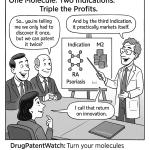
Navigating this complex IP landscape is impossible without sophisticated tools. Brand-name companies often create “patent thickets”—dense webs of overlapping patents covering not just the active molecule but also its formulation, manufacturing process, and methods of use—to deter and delay generic competition . A generic company must meticulously analyze this entire portfolio to identify a viable path to market.
This is where competitive intelligence platforms like DrugPatentWatch become indispensable. These services provide comprehensive, real-time databases of drug patents, regulatory exclusivities, and detailed litigation information . They allow strategists to:
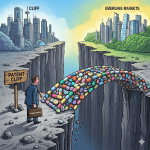
Identify Opportunities: Systematically track patent expiration dates and identify drugs approaching the “patent cliff” .
Analyze the Landscape: Deconstruct patent thickets to assess the strength and validity of a brand’s IP portfolio.
Track Competitors: Monitor which other generic companies are filing P-IV challenges, helping to predict the competitive intensity for a given product .
Inform Litigation Strategy: Analyze the litigation history of specific patents and patent holders to assess the likelihood of a lawsuit and the potential for a successful challenge .
In essence, platforms like DrugPatentWatch provide the foundational data that allows a generic company to transform the patent gauntlet from a purely legal obstacle into a strategic roadmap for identifying and capturing high-value market opportunities.
The Scientific Gateway: Mastering Formulation and Bioequivalence (BE)
Once a target molecule has been selected based on a thorough IP analysis, the challenge shifts from the courtroom to the laboratory. The core scientific task in generic development is to create a product that is therapeutically equivalent to the innovator’s Reference Listed Drug (RLD) without access to the innovator’s proprietary formula or manufacturing processes. This is a far more complex endeavor than simple replication and is centered on two immense challenges: reverse-engineering the formulation and proving its bioequivalence.
The Formulation Enigma: Reverse-Engineering Performance
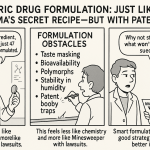
The goal of a generic formulation is not just to contain the same Active Pharmaceutical Ingredient (API), but to deliver it to the body in the exact same way as the RLD. This means the generic product must have the same rate and extent of absorption, a property known as bioequivalence . To achieve this, formulators must solve what is often called the “formulation enigma.” They must deduce the critical characteristics of the brand-name product and replicate its performance using different inactive ingredients (excipients) and potentially different manufacturing processes.
Several key scientific hurdles must be overcome:
API Stability: The API must remain stable throughout the product’s shelf life. Formulators must understand and control for potential degradation pathways like hydrolysis or oxidation, which can be influenced by excipients and environmental conditions.
Excipient Compatibility: While excipients like binders, fillers, and coatings are “inactive,” they can have a profound impact on how a drug is released and absorbed. A generic company often cannot use the exact same excipients as the brand, requiring exhaustive compatibility studies to ensure their chosen ingredients do not negatively interact with the API or alter its performance.
Polymorphism: Many APIs can exist in multiple crystalline forms, or polymorphs, each with different properties like solubility and stability. The generic developer must ensure their API has the correct polymorphic form to match the RLD’s performance.
A misstep in any of these areas can lead to a product that fails its bioequivalence study, forcing a costly and time-consuming return to the formulation bench.
The Bioequivalence Minefield: The Gateway to Approval
Demonstrating bioequivalence is the scientific cornerstone of the ANDA approval process . For most oral drugs, this is done through a pharmacokinetic (PK) study in a small group of healthy volunteers. In these studies, subjects are given both the generic product and the RLD, and blood samples are taken over time to measure the concentration of the drug in their plasma .
The statistical analysis is rigorous. Regulators like the FDA require that the 90% confidence interval for the geometric mean ratio of the generic to the brand product for key PK parameters—namely Cmax (the maximum concentration, a measure of absorption rate) and AUC (the area under the concentration-time curve, a measure of absorption extent)—must fall entirely within the narrow range of 80.00% to 125.00%.
While this sounds straightforward, BE studies are a major source of cost, risk, and delay.
High Cost: A standard BE study can be expensive and time-consuming.
High Variability: For “highly variable drugs,” the natural variation in how individuals absorb the drug can make it difficult to meet the statistical criteria without enrolling a very large number of subjects, driving up costs significantly.
Clinical Endpoint Studies: For locally acting drugs where blood levels do not reflect the drug’s action (e.g., topical creams, inhaled asthma medications), the FDA may require a full-blown clinical endpoint bioequivalence study. This is essentially a comparative efficacy trial that can cost anywhere from $2 million to $6 million and take years to complete, a barrier so high that it deters many companies from even attempting to develop such products.
The Strategic Pivot to Complex Generics
The intense price competition in the market for simple oral solid generics has driven a strategic pivot across the industry toward complex generics. These are products with features that make them harder to develop, such as:
Complex Active Ingredients: Peptides, polymeric compounds, or complex mixtures.
Complex Formulations: Liposomes, emulsions, or long-acting injectables.
Complex Routes of Delivery: Topical, inhaled, or ophthalmic products.
Complex Drug-Device Combinations: Auto-injectors or metered-dose inhalers.
The higher scientific and manufacturing barriers to entry for complex generics mean fewer competitors and, consequently, slower price erosion and more sustainable profit margins. However, this strategic shift comes at a cost. Proving bioequivalence for a transdermal patch or an inhaled corticosteroid requires a far more sophisticated scientific and regulatory approach than for a simple tablet. This pivot has fundamentally altered the capability profile required for a generic company to succeed, making them increasingly reliant on the deep, specialized expertise housed within niche CROs that specialize in areas like complex formulation, bioanalysis, and drug-device testing . The move toward complexity is a direct response to market pressures, and it has made strategic outsourcing not just an option for efficiency, but a necessity for capability.
The Regulatory Labyrinth: Navigating Global FDA and EMA Gauntlets
After conquering the scientific challenges of formulation and bioequivalence, the generic developer must enter the regulatory labyrinth. In the past, regulatory affairs might have been seen as a downstream, box-checking exercise. Today, it has transformed into a dynamic, high-stakes risk management function that can dictate a product’s commercial viability from the earliest stages of portfolio selection . For companies with global ambitions, this means simultaneously navigating the distinct and often divergent requirements of the world’s major regulatory bodies, primarily the U.S. Food and Drug Administration (FDA) and the European Medicines Agency (EMA).
Divergent Pathways, Duplicated Effort
While the FDA and EMA share the same fundamental goal—ensuring the safety and efficacy of medicines—their pathways, data requirements, and timelines for generic approval can differ significantly .
The U.S. FDA: The approval process is the Abbreviated New Drug Application (ANDA) pathway, established by the Hatch-Waxman Act. The entire process is built on demonstrating bioequivalence to a single, specific Reference Listed Drug (RLD) identified in the FDA’s Orange Book .
The European Medicines Agency (EMA): The process involves a Marketing Authorisation Application (MAA), which can be filed through a centralized procedure (for EU-wide approval) or decentralized/mutual-recognition procedures involving individual member states.
These procedural differences manifest in critical scientific requirements. The agencies may have different standards for bioequivalence studies, particularly concerning fasting versus fed states, the statistical analysis of highly variable drugs, and the criteria for granting “biowaivers” (which allow in vitro data to substitute for in vivo studies) . Perhaps the most significant operational hurdle is the requirement that BE studies must use a reference product sourced from the local market. This single rule often forces companies to conduct expensive and time-consuming duplicate clinical BE studies—one using a U.S.-sourced RLD for the FDA and another using an EU-sourced reference product for the EMA.
This is not a minor inconvenience; a multi-year delay in a major market can completely upend a product’s business case. It means duplicated effort, staggered launches, and the inability to leverage a single global development program efficiently . This lack of global harmonization forces companies into a difficult choice: either incur the high cost of running parallel development programs or accept a staggered launch strategy that sacrifices the critical first-mover advantage in some of the world’s largest markets.
The GDUFA Effect: A Double-Edged Sword of Speed and Cost
In the United States, the regulatory cost landscape was reshaped in 2012 by the Generic Drug User Fee Amendments (GDUFA). The goal of GDUFA was to provide the FDA with the resources needed to clear a massive backlog of generic applications and provide the industry with more predictable review timelines . It achieved this by authorizing the FDA to collect user fees from generic manufacturers.
While GDUFA has largely succeeded in improving review efficiency and predictability, it has introduced substantial, non-refundable, upfront costs. For Fiscal Year 2025, these fees include an ANDA filing fee of $321,920, an annual program fee for large companies of $1,891,664, and various facility fees. These six- and seven-figure fees have transformed the financial calculus of generic development. They act as a significant barrier to entry, particularly for smaller companies or those targeting niche products. Companies must now be highly selective in their portfolio choices, prioritizing products with a high probability of success and a market size sufficient to justify the massive upfront regulatory investment .
The Nitrosamine Crisis: A Case Study in Dynamic Risk
The dynamic and unpredictable nature of regulatory risk was starkly illustrated by the nitrosamine impurity crisis, which began in 2018. The discovery of N-nitrosodimethylamine (NDMA), a probable human carcinogen, in certain widely used blood pressure medications led to global recalls and a massive industry-wide re-evaluation of manufacturing processes.
The root cause was traced to specific chemical reactions that could occur during the synthesis of the API, often under conditions that were previously considered acceptable. In response, regulatory bodies like the FDA issued stringent new guidance requiring all manufacturers to conduct comprehensive risk assessments of their processes, perform highly sensitive confirmatory testing if a risk is identified, and implement changes to mitigate the formation of these impurities . This crisis added significant, often unbudgeted, costs for advanced analytical testing, process re-validation, and potential reformulation across entire product portfolios. For some older products, the cost and complexity of mitigation were so high that companies simply discontinued them, contributing to drug shortages .
This episode serves as a powerful reminder that regulatory compliance is not a static target. Standards evolve, new risks emerge, and the industry must be prepared to adapt rapidly. This is where the expertise of a CRO becomes invaluable. CROs that specialize in regulatory affairs provide essential services, including developing global regulatory strategies, preparing and compiling the complex eCTD dossiers for submission, and managing all communications with the agencies. Their teams of experts stay abreast of evolving guidance documents and can help a generic sponsor anticipate and navigate emerging challenges like the nitrosamine crisis, turning a potential compliance disaster into a manageable risk.
The Market Shock: Surviving Price Erosion and Supply Chain Fragility
Securing regulatory approval is a monumental achievement, but it is not the end of the journey. For a generic drug, it is merely the entry ticket to a marketplace characterized by brutal price competition and an increasingly fragile global supply chain. The post-launch phase is where the economic realities of the generic business model come into sharp focus, and where many promising products fail to achieve commercial viability.
The Economics of Erosion: A Race to the Bottom
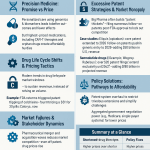
The entry of generic competition triggers a predictable and severe decline in price. The pattern is well-established :
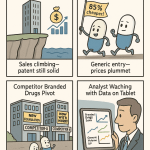
First Generic Entry: A single generic competitor typically slashes the price by 30% to 39% compared to the brand.
Increased Competition: With just two or three competitors in the market, the price plummets further, falling by 50% to 70%.
Market Saturation: Once six or more competitors enter, the market becomes fully commoditized, and prices can collapse by 85% to 95% from the original brand price.
This rapid price erosion means the window for achieving significant profitability is often very short, lasting only until the second or third competitor arrives. This dynamic places an immense premium on being one of the first to market, reinforcing the importance of speed and efficiency throughout the entire development and regulatory process.
The Power of Consolidated Buyers
The downward pressure on prices is amplified by the immense negotiating power of consolidated buyers. In the U.S. market, a small number of entities control a vast portion of generic drug purchases. These include:
Group Purchasing Organizations (GPOs): Entities that aggregate the purchasing volume of thousands of hospitals and healthcare systems to negotiate discounts from manufacturers.
Pharmacy Benefit Managers (PBMs): Companies that manage prescription drug benefits on behalf of health insurers, employers, and Medicare Part D plans. They control the formularies that determine which drugs are covered and at what co-pay level.
These massive purchasing blocs have extraordinary leverage to demand steep discounts and play manufacturers against each other. In many mature, multi-source generic markets, manufacturers effectively become price-takers, forced to accept razor-thin margins simply to gain access to the market controlled by these powerful intermediaries.
From Price Crush to Drug Shortage: A Systemic Failure
The combination of fierce competition and powerful buyers creates a relentless “race to the bottom” on price. While this delivers short-term savings, it has a pernicious long-term consequence: it undermines the economic foundation required for a stable and reliable supply of essential medicines. When the price of a generic drug falls below the cost of production and compliance, manufacturers have a simple business decision to make: they exit the market.
An estimated 3,000 generic drug products have been withdrawn over the past decade due to unprofitability. This market consolidation is the primary driver of the chronic drug shortages that now plague the healthcare system. The number of ongoing drug shortages in the U.S. reached a decade-high of 301 per quarter in 2023, with manufacturing or quality problems cited as the cause in over 60% of cases. These shortages are not mere inconveniences; they lead to delayed treatments, medication errors as staff work with unfamiliar alternatives, and in some documented cases, increased patient mortality .
This creates a public health paradox: the system’s relentless pursuit of the lowest possible price directly contributes to a fragile supply chain that results in shortages, ultimately harming patients and increasing overall costs for hospitals, which must dedicate enormous resources to managing the crisis and often pay exorbitant prices on a “grey market” for scarce drugs .
The Fragile Global Supply Chain
The economic pressures have also driven the geographic consolidation of manufacturing. The vast majority of APIs and finished generic drugs for the U.S. market are produced overseas, primarily in India and China. This creates a precarious, domino-like dependency. India, the largest supplier of finished generic drugs to the U.S., sources 70-80% of its own APIs from China. China, in turn, dominates the upstream production of the key starting materials needed to make those APIs.
This geopolitical concentration of the supply chain creates significant vulnerabilities. A trade war, a natural disaster, a pandemic, or a political decision in one country can have immediate and severe repercussions for the drug supply thousands of miles away. The 2023 nationwide shortage of the critical chemotherapy drug cisplatin, for example, was triggered by the shutdown of a single manufacturing plant in India that supplied 50% of the U.S. market. This fragility is a direct consequence of an economic model that has prioritized the lowest cost above all other considerations, including supply chain resilience.
The CRO as a Strategic Co-Pilot: From Tactical Vendor to Indispensable Partner
Faced with this daunting array of scientific, legal, regulatory, and commercial challenges, generic pharmaceutical companies can no longer afford to go it alone. The traditional model of maintaining large, fixed-cost, in-house R&D infrastructure is becoming increasingly untenable in a world of volatile pipelines and razor-thin margins. This is why outsourcing has evolved from a tactical, cost-saving measure for non-essential tasks into an indispensable strategic imperative .
Contract Research Organizations have risen to meet this demand, evolving from simple service providers into sophisticated partners capable of managing nearly every aspect of the development lifecycle . For a generic company, a CRO is more than just an extra pair of hands; it is a source of specialized expertise, a flexible extension of its R&D capacity, and a critical enabler of speed and efficiency. By strategically partnering with the right CROs, generic firms can build a more agile, cost-effective, and resilient operating model, allowing them to navigate the gauntlet and compete more effectively.
The Core Arsenal: A Deep Dive into CRO Services for Generic Development
Modern CROs offer a vast and comprehensive portfolio of services that span the entire drug development value chain, from early-stage research to post-market surveillance . For generic developers, these services can be mapped directly to the specific challenges of the lifecycle, providing targeted solutions at every critical juncture.
Preclinical, Formulation, and Bioanalytical Services
At the very beginning of the scientific journey, CROs provide the foundational laboratory services necessary to develop a viable product and prepare for pivotal BE studies.
Formulation Development: Specialized CROs can take on the complex task of reverse-engineering the RLD and developing a stable, bioequivalent generic formulation. They bring deep expertise in excipient science, polymorphism, and advanced drug delivery systems, which is particularly critical for complex generics .
Drug Metabolism and Pharmacokinetics (DMPK): These studies, often outsourced to CROs like Alliance Pharma, are essential for understanding how a drug is absorbed, distributed, metabolized, and excreted by the body. This data is foundational for designing effective BE studies .
Bioanalytical Services: This is a core competency of many CROs. They develop and validate the highly sensitive analytical methods required to measure drug concentrations in biological samples (like blood plasma) from BE studies. The accuracy and reliability of this data are paramount for regulatory approval .
Clinical Trial Management for Bioequivalence Studies
The execution of bioequivalence studies is one of the most commonly outsourced functions in generic development. Full-service CROs can manage every aspect of these crucial trials .
Protocol Design and Regulatory Strategy: Experienced CROs help design scientifically sound BE study protocols that meet the specific requirements of the FDA, EMA, and other global regulators .
Site Selection and Management: CROs identify, qualify, and manage the clinical research sites (often specialized Phase 1 units) where the BE studies are conducted .
Patient Recruitment: A key bottleneck in any clinical trial is enrolling subjects. CROs have extensive databases of healthy volunteers and specialized patient populations, and they employ sophisticated recruitment strategies to ensure trials enroll on time .
Clinical Monitoring: Clinical Research Associates (CRAs) from the CRO regularly visit the trial sites to ensure the study is being conducted according to the protocol, Good Clinical Practice (GCP) guidelines are being followed, and the data being collected is accurate and complete .
Data Management and Biostatistics: CROs provide end-to-end data services. This includes building the electronic databases for data capture (eCRFs), cleaning and validating the data, and performing the complex statistical analyses required to determine if bioequivalence has been met .
Regulatory Affairs and Strategic Consulting
Navigating the global regulatory labyrinth is a core service offering for many CROs. Their regulatory affairs teams act as expert guides, helping sponsors avoid common pitfalls and streamline the path to approval.
Dossier Preparation and Submission: CROs have dedicated teams of medical writers and regulatory specialists who compile the vast amounts of data required for an ANDA or MAA submission into the standardized eCTD format .
Agency Communications: The CRO can act as the formal point of contact with regulatory agencies, managing all queries, responding to information requests, and preparing for agency meetings .
CMC Strategic Consulting: Many CROs offer specialized consulting on Chemistry, Manufacturing, and Controls (CMC). They provide expert guidance on formulation, stability testing, and manufacturing process validation to ensure the quality section of the regulatory dossier is robust and compliant with FDA standards .
Complex Generic Pathways: For more complex products, CROs like Accelsiors provide specialized expertise in navigating alternative regulatory pathways, such as the 505(b)(2) “hybrid” application in the U.S., which can offer its own period of market exclusivity.
The table below provides a clear map of how these core CRO services directly address the primary challenges faced during the generic drug development lifecycle.
Generic Lifecycle Challenge
Description
Core CRO Solution(s)
Patent & Portfolio Analysis
Identifying viable generic opportunities by navigating complex patent landscapes and litigation risks.
Regulatory Strategy Consulting, Market Access & HEOR, Competitive Intelligence Support
Formulation & Bioequivalence
Reverse-engineering the brand product and scientifically proving therapeutic equivalence.
Formulation Development, DMPK & Bioanalytical Services, Full-Service BE Study Management, Biostatistics
Global Regulatory Submission
Navigating divergent FDA and EMA requirements to achieve timely global approvals.
Global Regulatory Affairs, Medical Writing & eCTD Publishing, Agency Liaison Services
Manufacturing & CMC
Ensuring a robust, consistent, and compliant manufacturing process and quality control system.
Overcoming barriers to market entry and preparing for a successful commercial launch.
Market Access Consulting, Health Economics & Outcomes Research (HEOR), Launch Strategy Support
This comprehensive, end-to-end support system allows a generic sponsor to effectively “rent” a complete R&D and regulatory infrastructure, tapping into world-class capabilities on a flexible, project-by-project basis.
The Business Case for Outsourcing: A Strategic Cost-Benefit Analysis
The decision to outsource is no longer driven by a simple desire to cut costs on peripheral tasks. It has become a fundamental strategic choice that directly impacts a company’s capital efficiency, its speed-to-market, its access to innovation, and its ability to manage risk . For generic drug developers, building a robust business case for outsourcing requires looking beyond the line-item costs and evaluating the profound strategic benefits.
Cost and Capital Efficiency: From Fixed to Variable
The most immediate and compelling argument for outsourcing is financial. Building and maintaining the internal infrastructure required for drug development—such as laboratories certified for Good Laboratory Practices (GLP), manufacturing plants compliant with Current Good Manufacturing Practices (cGMP), and clinical operations teams—represents a monumental fixed cost . These are expenses that a company incurs regardless of whether its pipeline is full or empty.
Outsourcing masterfully converts these high fixed overheads into more manageable, predictable variable costs that are directly tied to project deliverables . A generic company pays a CRO for a specific scope of work, such as a BE study. When the study is complete, the cost ends. This model offers several powerful financial advantages:
Capital Preservation: It allows companies, particularly smaller or virtual firms, to avoid massive upfront capital outlays on facilities and equipment, preserving precious cash for core activities like IP litigation and portfolio expansion .
Reduced Operational Costs: In most cases, it is simply cheaper to outsource R&D activities to specialized CROs—who benefit from economies of scale and optimized processes—than it is to create and maintain the equivalent capabilities in-house .
Financial Risk Mitigation for BE Studies: This is a particularly critical point in generic development. BE studies are inherently risky; a formulation that appears promising on the bench can unexpectedly fail in human trials. If a company operates its own in-house clinical unit, a failed study means the project is terminated, but the substantial fixed costs of the facility and its staff remain, becoming a significant financial drain. By outsourcing the study to a CRO, the financial loss is capped at the cost of that specific project. This makes the crucial “fail-fast” approach—quickly identifying and terminating unpromising candidates—financially viable, allowing resources to be reallocated to more promising projects .
Speed and Time-to-Market: The Ultimate Competitive Weapon
In the generic drug industry, timing is everything. The first company to launch after patent expiry captures the lion’s share of the market and revenue before the inevitable price crash. Every day of delay is a day of lost opportunity. Outsourcing is a powerful tool for accelerating development timelines.
Ready-to-Deploy Resources: CROs provide immediate access to fully-equipped facilities and trained, experienced teams. This allows a project to start almost immediately, eliminating the months or even years it would take to build the same capacity internally .
Operational Excellence: Leading CROs have spent decades honing their processes for maximum efficiency. One case study showed that by partnering with a CRO to streamline resourcing, a firm was able to reduce its “time-to-offer” for new projects from over 50 days to just 36 .
Accelerated Patient Recruitment: Patient recruitment is historically one of the biggest bottlenecks in clinical research . CROs leverage vast patient databases, established site networks, and sophisticated digital recruitment strategies to enroll trials faster, shaving critical time off the clinical phase .
Studies suggest that strategic partnerships between drug developers and CROs can reduce the time it takes to get a drug to market by as much as 30% . In the generics world, a 30% reduction in development time can be the difference between a blockbuster launch and a non-viable, “me-too” product.
Access to World-Class Expertise and Technology
No single company, regardless of its size, can be a world leader in every scientific discipline and technology relevant to drug development. The outsourcing ecosystem represents a vast, global reservoir of specialized knowledge and cutting-edge technology that is available on demand .
Niche Scientific Expertise: A generic company pivoting to complex generics may lack deep in-house experience in, for example, inhalation product testing or transdermal drug delivery. A specialized CRO can provide this expertise instantly, allowing the sponsor to leverage decades of accumulated knowledge without having to build it from scratch .
Advanced Technology: CROs continuously invest in state-of-the-art analytical equipment, laboratory automation, and eClinical software platforms that may be prohibitively expensive for a single generic company to purchase and maintain . Partnering with a CRO provides access to these tools, enhancing the quality and efficiency of the development program.
Scalability, Flexibility, and Risk Management
The generic drug pipeline is inherently unpredictable. A promising P-IV challenge might lead to a settlement, requiring a rapid scale-up of development activities. Conversely, a failed BE study might lead to a project’s termination. Outsourcing provides the critical agility to scale operations up or down in response to these changing demands . This flexibility allows a company to adapt its resources to match the precise needs of its portfolio without being locked into the fixed capacity of its own infrastructure.
Finally, while outsourcing introduces new vendor management risks, it also helps mitigate execution risk. Experienced CROs have managed hundreds of similar projects. They have encountered and solved the common problems, developed robust quality systems, and established best practices to prevent pitfalls . While the sponsor always retains ultimate regulatory accountability for the program, partnering with a high-quality CRO allows them to share the immense burden of operational execution risk .
Forging the Alliance: Structuring and Managing the Partnership for Success
Recognizing the strategic value of CROs is only the first step. The ultimate success of an outsourced program hinges on the quality of the partnership itself. The relationship between a sponsor and a CRO has evolved far beyond a simple transactional exchange of services for payment. The most successful collaborations are true strategic alliances, built on a foundation of mutual trust, transparent communication, and a deeply shared vision for the project’s success . Structuring and managing this alliance requires a deliberate and sophisticated approach.
A Spectrum of Partnership Models
There is no one-size-fits-all model for a sponsor-CRO partnership. The optimal structure depends on the sponsor’s size, internal capabilities, and the specific needs of the project. The models exist on a spectrum from purely transactional to deeply relational and integrated .
Transactional Models (Basic/Approved Provider): This is a fee-for-service model best suited for discrete, commoditized tasks where the scope is well-defined and unlikely to change (e.g., routine analytical testing). The relationship is tactical, and suppliers can often be switched with little impact .
Relational Models (Preferred Provider): This model moves beyond simple transactions. The sponsor designates a CRO as a “preferred” partner for a certain type of work, fostering a longer-term relationship. While still largely fee-for-service, this model allows the CRO to gain a deeper understanding of the sponsor’s needs and processes, leading to greater efficiency over time .
Full-Service Outsourcing (FSO): In this model, the sponsor outsources all or most of the activities for an entire program (e.g., a complete ANDA development program) to a single, large CRO. The CRO acts as the operational arm of the sponsor, managing everything from formulation to regulatory submission. This is the lifeline for many virtual and small biotech/generic companies that lack internal infrastructure .
Functional Service Provider (FSP): Here, the sponsor outsources a specific function (e.g., clinical monitoring, data management, biostatistics) across multiple projects to a CRO, while retaining overall project management in-house. This model allows a sponsor to plug specific capability gaps and is often used by larger companies with robust internal teams .
Blended/Hybrid Models: Increasingly, sponsors and CROs are adopting flexible, hybrid models that combine elements of FSO and FSP. A company might use an FSO model for its oncology portfolio but an FSP model for its biostatistics needs across all therapeutic areas. These tailored models require a high degree of partnership and cultural alignment to succeed .
The choice of model is a critical strategic decision. It requires a clear-eyed assessment of a company’s own internal strengths and weaknesses. A virtual generic company with no clinical operations team would be best served by an FSO model, effectively renting an entire development department. In contrast, a large generic firm with a strong project management office but lacking specialized bioanalytical capacity might strategically choose an FSP model for just that function.
The Cornerstones of a Successful Alliance
Regardless of the model chosen, decades of experience have shown that successful sponsor-CRO partnerships are built on a set of core principles that go beyond the technical scope of work.
Transparent Communication and Aligned Expectations: This is, by far, the most critical success factor. “Misaligned expectations” is the most common reason for a partnership to turn sour . From the very beginning, both parties must engage in open and honest communication about timelines, deliverables, roles, responsibilities, and processes. As Jim Kremidas, executive director of the Association for MultiSite Research Corporations, notes, the old model of a sponsor developing a protocol and “throwing it over the fence” to the CRO is a recipe for failure. Effective collaboration requires continuous engagement from the design phase through execution .
Mutual Trust and a Shared Vision: The relationship must evolve from a master-vendor dynamic to a collaboration between peers. This requires building trust over time through consistent performance and open dialogue . The CRO should be treated as a true extension of the sponsor’s team, with both parties sharing a commitment to the ultimate success of the program .
Robust Governance and Clear Roles: A successful alliance is not left to chance; it is managed through a clear governance structure. This is typically codified in a Master Service Agreement (MSA), an overarching legal document that establishes the obligations, communication pathways, and performance metrics for the relationship . A well-defined project plan that outlines exactly who is responsible for each task is crucial for preventing confusion, duplication of effort, and gaps in execution .
Leveraging the CRO’s Broader Expertise: A common mistake sponsors make is to view their CRO partner through the narrow lens of a single project. As Judith Ng-Cashin, MD, Chief Medical Officer at Novotech, points out, a sponsor might run one Phase III trial in a specific indication every few years, while their CRO partner might be running three such trials concurrently. Sponsors should actively leverage this broader experience to gain insights into how regulators are reacting to new trial designs and data, turning the CRO into a valuable source of real-time regulatory intelligence .
Ultimately, the success of a generic launch is becoming increasingly dependent on the quality of the sponsor-CRO alliance. Companies must invest as much in building the partnership—through communication, governance, and trust—as they do in the science itself.
Case Studies in Collaboration: Learning from the Leaders
To move from theory to practice, it is invaluable to examine how leading generic pharmaceutical companies have successfully leveraged partnerships with CROs and Contract Development and Manufacturing Organizations (CDMOs) to overcome significant challenges and bring complex products to market. These real-world examples deconstruct the mechanics of successful collaboration and provide transferable lessons for any company looking to optimize its outsourcing strategy. The following case studies illustrate the two primary strategic drivers for outsourcing in the modern generic landscape: capability acquisition for tackling scientifically complex products, and economic model innovation for solving systemic market failures.
Case Study 1: The Complex Inhalable – Viatris and Kindeva’s Launch of Breyna™ (Generic Symbicort®)
This case study is a masterclass in how a strategic partnership can enable a generic company to break into a high-barrier, technically demanding product category.
The Challenge: Conquering the Drug-Device Combination
AstraZeneca’s Symbicort® is a blockbuster treatment for asthma and COPD, delivered via a complex metered-dose inhaler. Developing a generic version is not simply a matter of replicating the drug molecules; it requires creating a drug-device combination product that delivers the exact same dose with the same particle size distribution and spray pattern as the brand . This presents immense technical challenges in formulation, device engineering, and the clinical studies required to prove bioequivalence for an inhaled product. These high barriers to entry meant that for years, Symbicort® faced no generic competition.
The Partnership: Marrying Scale with Specialization
Viatris, one of the world’s largest generic and specialty pharmaceutical companies, recognized the significant commercial opportunity but needed a partner with deep, specialized expertise in inhalation drug delivery. They found that partner in Kindeva Drug Delivery, a leading CDMO that was spun out of 3M and has a long history of innovation in respiratory products .
This collaboration was a strategic marriage of complementary strengths:
Viatris’s Role: As the sponsor, Viatris brought its global scale, extensive regulatory experience, and commercial infrastructure to the table. They managed the overall program strategy, led the ANDA submission to the FDA, and were responsible for the commercial launch and marketing of the product, named Breyna™ . Viatris President Rajiv Malik framed the success as proof of the company’s “well-established development expertise and proven ability to move up the value chain with more complex products” .
Kindeva’s Role: As the specialist CDMO/CRO, Kindeva provided the critical technical capabilities that Viatris lacked in-house. Their team was responsible for the technical formulation of the product, the management of the complex clinical program required for an inhaled drug, and providing key support for the regulatory submission. Kindeva’s CEO, Aaron Mann, highlighted that the milestone reflected their “sustained commitment to inhalation and complex drug delivery”.
The Outcome: A First-to-Market Triumph
In March 2022, Viatris announced that it had received FDA approval for Breyna™, the first-ever generic version of Symbicort® . This landmark approval was a direct result of the successful collaboration. Viatris was able to leverage Kindeva’s specialized capabilities to overcome the formidable technical hurdles, while Kindeva benefited from Viatris’s regulatory and commercial power to bring the product through to approval and launch.
The Key Lesson: This case study perfectly illustrates the principle of capability acquisition. As generic companies pivot from simple oral solids to more complex products, they will inevitably encounter areas where they lack the necessary in-house scientific or technical expertise. Rather than spending years and hundreds of millions of dollars trying to build these capabilities from scratch, the more effective strategy is to partner with a specialized CRO or CDMO that is already a world leader in that specific niche. This allows the generic sponsor to remain agile, access best-in-class technology, and focus on its own core competencies of regulatory strategy and commercialization.
Case Study 2: Combating Shortages – Sandoz and Civica Rx’s Supply Chain Partnership
This case study demonstrates how innovative partnership models can be used to address systemic failures in the generic market, such as chronic drug shortages.
The Challenge: The Unsustainable Economics of Essential Medicines
As discussed previously, the U.S. healthcare system is plagued by chronic shortages of essential generic medicines, particularly sterile injectables used in hospitals. These shortages are not typically caused by a lack of manufacturing know-how, but by a market failure. Relentless price pressure from buyers makes it unprofitable for manufacturers to continue producing many of these low-margin drugs, leading them to exit the market and creating a fragile supply chain with too few suppliers.
The Partnership: Innovating the Business Model
This challenge required a solution that went beyond a traditional CRO/sponsor relationship. It required a new economic model. The partnership between Sandoz, a global leader in generic pharmaceuticals, and Civica Rx, a non-profit organization founded by a group of U.S. health systems, provided just that .
Civica Rx was created to solve the drug shortage problem from the demand side. Representing over 50 health systems and 1,200 hospitals, it aggregates the purchasing volume of its members and uses that leverage to create a more stable and predictable market for manufacturers.
The collaboration was structured as a long-term, five-year agreement with a novel approach:
Sandoz’s Role: As the manufacturer, Sandoz committed to supplying six critical injectable generic medicines widely used in hospitals, including antibiotics, blood pressure regulators, and other essential drugs .
Civica Rx’s Role: As the buyer, Civica provided Sandoz with pre-committed orders and long-term volume guarantees. This was the game-changing element. As Carol Lynch, then-President of Sandoz Inc., stated, “With collaborations like Civica, where Sandoz has long-term contracts with pre-committed orders, it can better predict supply requirements for those medicines in order to sustainably deliver them” .
The Outcome: Stabilizing a Fragile Supply Chain
The Sandoz-Civica partnership creates a win-win-win scenario.
For Sandoz: The predictable demand and guaranteed volumes make it economically viable to continue manufacturing these essential, low-margin medicines.
For Civica’s Hospitals: They gain a reliable and stable supply of critical drugs, allowing them to avoid the clinical and financial chaos caused by shortages.
For Patients: They are assured access to the life-saving treatments they need.
The Key Lesson: This case study highlights the power of economic model innovation. It shows that the concept of “partnership” can extend beyond the R&D process to address fundamental commercial and supply chain challenges. For generic companies struggling with the profitability of mature products, seeking out innovative collaborations with large provider networks, non-profits, or even government entities can create the economic stability needed to keep essential medicines on the market. It demonstrates that sometimes the most valuable partner is not one that helps you develop a drug, but one that helps you create a sustainable market for it.
The Horizon: Future-Proofing Your Generic Strategy with Next-Generation CROs
The generic drug development landscape is not static. It is being reshaped by powerful technological forces and evolving strategic priorities. The CROs that will be the most valuable partners in the coming decade are those that are not just keeping pace with these changes, but are actively driving them. For generic companies, future-proofing their strategy means understanding these trends and deliberately seeking out next-generation CROs that have embraced the digital revolution and are pioneering the factory of the future.
The Digital Revolution: AI, Decentralization, and the Data-Driven CRO
For decades, pharmaceutical R&D has been a largely analog process, reliant on manual data collection, paper-based records, and siloed information systems. This is changing at a breathtaking pace. The convergence of artificial intelligence (AI), cloud computing, and digital health technologies is ushering in a new era of data-driven drug development. CROs are at the forefront of this transformation, evolving from service providers into sophisticated technology and data analytics platforms.
Artificial Intelligence: From Hype to Hard ROI
Artificial intelligence is no longer a futuristic buzzword; it is a practical tool that is already delivering a tangible return on investment in generic drug development. AI’s ability to analyze vast, complex datasets and identify patterns that are invisible to human analysts is a game-changer, particularly in the critical upstream phase of portfolio selection and business development .
AI-Powered Molecule Scouting: AI platforms can scan billions of data points from patent databases, clinical trial registries, sales data, and scientific literature to automatically identify and rank high-potential generic opportunities post-loss-of-exclusivity (LOE).
Predictive Market Analytics: Instead of relying on static spreadsheets and gut-feel, companies can now use machine learning models to forecast market size and, crucially, predict the rate of post-LOE price erosion with far greater accuracy. These models are trained on historical data from thousands of past generic launches and can account for dozens of variables, such as the number of competitors, the therapeutic area, and market regulations .
Formulation and Trial Optimization: AI is also being used to accelerate the scientific process. Generative AI can help optimize formulation design by simulating how different excipients will behave, and it can help design more efficient BE trials by, for example, creating “synthetic” control arms from real-world data, potentially reducing the number of subjects required .
This shift toward AI-driven decision-making will inevitably create a new competitive divide in the generic industry. Companies that embrace these technologies—either by building their own capabilities or, more likely, by partnering with tech-forward CROs that offer these services—will be able to make faster, smarter, and more profitable portfolio decisions. They will identify the best opportunities first and build more accurate business cases, leaving competitors who are still relying on traditional methods to fight over the less attractive, lower-margin assets.
Decentralized Clinical Trials (DCTs): Bringing the Trial to the Patient
The COVID-19 pandemic acted as a massive catalyst for the adoption of Decentralized Clinical Trial (DCT) methodologies . DCTs leverage digital health technologies—such as telemedicine, wearable sensors, and electronic patient-reported outcomes (ePRO)—to conduct some or all trial activities in a patient’s home, rather than requiring them to travel to a central trial site.
For generic drug development, DCTs offer the potential to make BE studies more efficient, faster, and more patient-centric. For example, a hybrid DCT model could reduce the number of required site visits, making it easier to recruit and retain volunteers, which can be a significant bottleneck . CROs are rapidly building out their capabilities in this area, acquiring technology platforms and developing the operational expertise needed to manage the logistics of remote data collection and monitoring . As these models mature, they could significantly reduce the cost and timeline of the pivotal BE studies that are the gateway to generic approval.
The CROs of the future are becoming “ecosystem integrators,” bringing together data providers, technology partners, and site networks to offer more complete, end-to-end services . For generic sponsors, partnering with these digitally-enabled CROs is the key to harnessing the power of these transformative technologies.
The Factory of the Future: Continuous Manufacturing and Digital Twins
Just as the R&D process is being digitized, the world of pharmaceutical manufacturing is on the cusp of its own revolution. Advanced Manufacturing Technologies (AMTs) promise to make the production of medicines cheaper, faster, and of higher quality. For the generic industry, which is perpetually squeezed by cost pressures, these technologies offer a potential path toward a more sustainable future.
Continuous Manufacturing: The “Investment Trap”
For decades, drugs have been made using batch manufacturing—a multi-step, start-and-stop process with long hold times and extensive testing between each stage. Continuous Manufacturing (CM) represents a paradigm shift. In a CM process, raw materials are fed continuously into an integrated production line, and the finished product emerges at the other end in a non-stop flow .
The FDA has been a vocal champion of CM, highlighting its potential to improve product quality, increase manufacturing flexibility, and help prevent drug shortages . The benefits are clear: CM lines have a smaller footprint, lower operational costs, and allow for real-time quality monitoring, which can dramatically reduce the risk of batch failures.
Despite this promise, adoption of CM in the generic industry has been notoriously slow . The reason is a classic “investment trap.” The upfront capital investment required to build a CM facility is substantial. For generic companies operating on razor-thin margins and needing the flexibility to produce a large portfolio of different products, the return on that investment is uncertain compared to using existing, fully-depreciated batch manufacturing assets.
Digital Twins and the Rise of the Smart CDMO
This is where specialized CDMOs, often integrated with or acting as CROs, are stepping in to de-risk the transition. These forward-thinking partners are making the capital investments in AMTs and offering them as a service to generic companies . This allows sponsors to access the benefits of CM without the prohibitive upfront cost.
Furthermore, these “smart factories” are being designed around another powerful Industry 4.0 concept: the digital twin. A digital twin is a virtual, dynamic, real-time computer model of a physical manufacturing process . Data from sensors on the physical production line is fed continuously to the virtual model, which uses it to simulate the process with incredible fidelity. This technology has profound implications :
Process Optimization: Engineers can test and optimize process parameters in the virtual world without wasting expensive materials or risking a real production run.
Accelerated Scale-Up: The digital twin can be used to simulate how the process will behave at a larger commercial scale, dramatically accelerating the tech transfer and scale-up process.
Enhanced Quality Control: The model can predict potential deviations from quality standards before they occur, allowing for proactive intervention.
The combination of CM and digital twins has the potential to break the self-destructive feedback loop of price erosion and supply chain fragility that currently plagues the generic industry. By dramatically lowering the cost of goods sold (COGS) and improving quality assurance, these technologies could make it profitable to produce even low-margin generics. This could not only stabilize the supply of existing medicines but could also make the “onshoring” or “re-shoring” of essential medicine manufacturing economically viable once again, directly addressing the root cause of drug shortages. For generic companies, the path to the factory of the future will almost certainly be paved by partnerships with the specialized CDMOs who are building it.
Conclusion: The Symbiotic Future of Generics and CROs
The journey through the modern generic drug development lifecycle reveals a landscape of profound complexity and relentless pressure. The simple narrative of copying a blockbuster drug has been replaced by a far more challenging reality—a strategic gauntlet where victory is determined by a company’s mastery of patent law, its depth in complex science, its agility in navigating global regulations, and its resilience in the face of brutal market economics. In this demanding environment, the principle of “going it alone” is no longer a viable strategy; it is a blueprint for failure.
The rise of the Contract Research Organization from a tactical vendor to a strategic partner is the defining operational shift of this new era. The relationship between the generic pharmaceutical industry and the CRO industry has become deeply symbiotic. Generic companies, driven by the need for cost efficiency and speed, provide the demand that fuels the CRO market’s robust growth. In turn, CROs provide the essential capabilities—the specialized expertise, the scalable infrastructure, and the advanced technologies—that allow generic companies to compete and win.
This report has illuminated the critical junctures where this partnership creates transformative value. It begins with the intellectual property battle, where CROs and intelligence platforms like DrugPatentWatch provide the data and strategic insight to turn the patent cliff into a market opportunity. It continues in the laboratory, where specialized CROs provide the formulation and bioanalytical horsepower needed to conquer the scientific challenges of bioequivalence, especially for the complex generics that represent the industry’s future. It extends to the global regulatory arena, where the deep experience of CRO regulatory affairs teams can shave years off a global launch timeline.
Perhaps most importantly, the CRO partnership model offers a more agile and resilient financial structure. By converting the high fixed costs of R&D infrastructure into more manageable variable costs, outsourcing allows generic companies to better withstand market volatility, manage the financial risks of development, and pursue a “fail-fast” approach that conserves capital for the most promising assets.
Looking to the horizon, this symbiotic relationship is only set to deepen. The next wave of competition will be fought on the frontiers of data and technology. CROs are evolving into technology-enabled platforms, harnessing the power of artificial intelligence to drive smarter portfolio decisions and deploying decentralized trial models to make clinical research more efficient. They are building the advanced manufacturing facilities of the future, de-risking the adoption of game-changing technologies like continuous manufacturing for their generic partners.
The new playbook for success in generic drug development is clear. It is a playbook written on the principles of strategic collaboration. The winners of the next decade will not necessarily be the companies with the biggest factories, but those who can build the smartest partnerships. They will be the ones who recognize that in a world of ever-increasing complexity, the ability to effectively leverage a global network of specialized expertise is the ultimate competitive advantage. The future of affordable medicine depends on the strength of this alliance.
Key Takeaways
From Cost-Center to Profit-Driver: Strategic outsourcing is no longer simply about saving money on non-core tasks; it is a primary driver of value. It accelerates revenue by speeding time-to-market and mitigates the immense financial risks inherent in drug development.
Intelligence is the New Scale: In the modern generics market, success is determined less by manufacturing scale and more by the scale and sophistication of your competitive and patent intelligence. Mastering the IP landscape to identify the right opportunities is the most critical first step.
Embrace Complexity, Outsource Expertise: The market for simple oral solid generics is increasingly commoditized. The future of profitable growth lies in complex generics and biosimilars. Entering these high-barrier markets requires deep, specialized scientific expertise that is most efficiently accessed through partnerships with niche CROs.
The Partnership is the Product: The ultimate success of a generic launch is now intrinsically linked to the quality of the sponsor-CRO alliance. Companies must invest as much in building the partnership—through transparent communication, robust governance, and mutual trust—as they do in the science.
Future-Proof with Technology: The next competitive frontier will be defined by the adoption of digital and advanced manufacturing technologies. The generic companies that will lead the market are those that partner with forward-thinking CROs and CDMOs who are at the forefront of the AI, decentralization, and continuous manufacturing revolutions.
Frequently Asked Questions (FAQ)
1. Our company has a strong in-house R&D team. At what point does it still make strategic sense to outsource a project to a CRO instead of keeping it internal?
This is a critical strategic question that hinges on a clear-eyed assessment of capability, capacity, and risk. Even with a strong internal team, outsourcing makes sense under several conditions. First, consider specialized capability gaps. If you are developing a complex generic, such as an inhaled product or a long-acting injectable, you may lack the niche expertise and specialized equipment that a dedicated CRO has spent decades perfecting . Outsourcing in this case is about acquiring best-in-class expertise, not just extra hands. Second, evaluate capacity constraints. If your internal teams are at full capacity with high-priority projects, outsourcing a lower-priority or standard BE study can be a smart way to keep the pipeline moving without diverting core resources . Third, and most importantly, use outsourcing as a financial risk management tool. A pivotal BE study has a non-trivial risk of failure. By outsourcing it, you cap your financial exposure to the cost of the contract, avoiding the much larger financial drain of an idle in-house clinical unit if the project is terminated .
2. With the rise of complex generics and biosimilars, how should we adjust our CRO selection criteria to ensure they have the right scientific, not just operational, expertise?
The selection criteria must evolve significantly. For simple generics, the focus was often on operational efficiency, cost, and speed. For complex generics and biosimilars, you are hiring a scientific brain trust, not just an operational engine. Your due diligence should be much deeper. First, scrutinize their specific therapeutic and technical track record. Ask for case studies and regulatory submission successes in the exact product class you are targeting. Second, evaluate the depth of their scientific leadership. You should be interviewing their key scientists and medical officers, not just their business development team, to gauge their strategic input and problem-solving capabilities . Third, assess their technological infrastructure. Do they have the state-of-the-art bioanalytical equipment, advanced drug delivery testing rigs, and sophisticated data modeling software required for your product? . Finally, look for integrated services. A CRO that can seamlessly integrate formulation development, advanced bioanalysis, clinical operations, and regulatory strategy for complex products under one roof can provide immense value and reduce coordination friction .
3. We are concerned about IP security when working with CROs, especially those with operations in multiple countries. What are the best practices for structuring contracts to protect our intellectual property?
IP security is a paramount concern, and it must be addressed contractually and operationally. The foundation is a robust Master Service Agreement (MSA) and project-specific work orders that contain explicit and stringent confidentiality and IP clauses . Key contractual provisions should include: clear definitions of what constitutes confidential information; an unambiguous statement that all IP generated from the project (e.g., new formulation insights, analytical methods) belongs solely to the sponsor; and strict limitations on the CRO’s use of the information and any subsequent publication rights. Operationally, conduct thorough due diligence on the CRO’s data security systems, including their protocols for data access, encryption, and employee training. For highly sensitive projects, consider a “clean room” approach where a dedicated CRO team is firewalled from the rest of their organization. Finally, a strong, trust-based relationship is your best defense; partner with reputable, well-established CROs with a long track record of working with major pharmaceutical companies and protecting their clients’ IP .
4. How can we effectively measure the ROI of a CRO partnership beyond simple cost savings, incorporating factors like speed-to-market and risk reduction?
Measuring the true ROI requires a more sophisticated financial model than a simple cost comparison. You need to quantify the value of speed and the cost of risk. For speed-to-market, model the revenue impact of launching your generic product one, three, or six months earlier. Given the rapid price erosion in the generic market, the revenue captured in those early months before multiple competitors enter can be substantial and often dwarfs the direct cost of the CRO services . This “first-mover revenue” should be a key part of your ROI calculation. For risk reduction, you can quantify the value in two ways. First, calculate the “cost of failure” for an in-house project (including the carrying cost of idle staff and facilities) versus the capped cost of a failed outsourced project. The difference represents the value of the financial risk transferred to the CRO. Second, assign a probability of success to the project with and without the CRO’s specialized expertise; the incremental increase in the probability of success, multiplied by the project’s expected net present value (eNPV), represents the value of the scientific risk mitigation provided by the partner.
5. Many CROs are now offering AI-powered analytics. How can we differentiate between genuine, value-adding technology and marketing hype when evaluating these new services?
This is a crucial question in the current environment. To cut through the hype, focus on tangible outputs and underlying methodologies. First, ask for a live demonstration with your own data or a relevant case study. Don’t settle for a canned sales presentation. Ask them to run a sample analysis on a molecule you are considering to see the depth and actionability of their insights . Second, dig into their data sources and methodology. What specific datasets are their AI models trained on (e.g., global sales data, patent litigation records, clinical trial outcomes)? How do they validate their predictive models? A reputable provider will be transparent about their data and methods. Third, evaluate the integration and usability. Is the AI platform a standalone tool, or is it integrated into the CRO’s broader workflow? The real value comes when AI insights directly inform clinical trial design or regulatory strategy. Finally, speak to reference clients who have used these specific AI services. Ask them for concrete examples of how the platform led to a better portfolio decision, a more efficient trial, or a more accurate forecast. Genuine value is demonstrated by real-world results, not just sophisticated-sounding algorithms.
References
DrugPatentWatch. (2025, July 28). Top 10 Challenges in Generic Drug Development. DrugPatentWatch Blog.
GSC Biological and Pharmaceutical Sciences. (2025). Formulation challenges in generic drug development: a comprehensive review of stability and bioequivalence studies.
DrugPatentWatch. (n.d.). Compliance Challenges in Generic Drug Development: Lessons Learned. DrugPatentWatch Blog.
U.S. Food and Drug Administration. (n.d.). The Generic Drug Approval Process. CDER Conversations.
Sofpromed. (n.d.). What is a CRO (Clinical Research Organization)?.
Umbrex. (n.d.). How the Contract Research Organizations (CROs) Industry Works.
National Center for Biotechnology Information. (2018). The role of contract research organizations in the chain of translational medicine.
PitchBook. (n.d.). DrugPatentWatch Company Profile.
U.S. Food and Drug Administration. (n.d.). Generic Drugs: Questions & Answers.
GeneOnline. (n.d.). Technology’s Growing Role in Generic Drug Development: DrugPatentWatch Reports Potential Rise in Approvals.
Bioaccess. (n.d.). Navigating the ANDA and FDA Approval Processes.
U.S. Food and Drug Administration. (n.d.). What Is the Approval Process for Generic Drugs?.
Wikipedia. (n.d.). Abbreviated New Drug Application.
DrugPatentWatch. (2025, August 1). Obtaining Generic Drug Approval in the United States. DrugPatentWatch Blog.
European Medicines Agency. (n.d.). Generic and hybrid applications.
FiercePharma. (n.d.). White House threatens to deploy ‘every tool in our arsenal’ if drugmakers don’t adopt ‘most-favored’ pricing.
U.S. Food and Drug Administration. (2021, September 21). Utilizing Generic Drug Awareness to Improve Patient Outcomes with Dr. Sarah Ibrahim [Video]. YouTube.
Leadingpharm. (n.d.). News.
Grand View Research. (n.d.). U.S. Small Molecule Drug Discovery Outsourcing Market Report.
DrugPatentWatch. (2025, July 30). When Should You Outsource Drug Development?. DrugPatentWatch Blog.
National Center for Biotechnology Information. (2022). Drug development process and COVID-19 pandemic: Flourishing era of outsourcing.
ASPE. (n.d.). Examination of Clinical Trial Costs and Barriers for Drug Development.
ASPE. (n.d.). Cost of Generic Drugs.
MRCT Center. (2022). Drug development process and COVID-19 pandemic: Flourishing era of outsourcing.
Umbrex. (n.d.). How the Contract Research Organizations (CROs) Industry Works.
Journal of Applied Bioanalysis. (n.d.). How CROs can gain a competitive advantage in the bioanalysis market.
DrugPatentWatch. (2024, August 21). The Role of CROs in Generic Drug Development. DrugPatentWatch Blog.
Pharmaceutical Technology. (n.d.). Outsourcing Reformulation and Lifecycle Management: The Expanding Role of CROs.
TNF Pharma. (2021, October 14). Advantages of Working with a CRO.
ICON plc. (2024, October 21). The benefits of going big: Why small biotechs need large CRO partners.
SGS. (n.d.). The guide to a successful CRO partnership.
Vested. (n.d.). Unpacking CRO Outsourcing.
SGS. (2022, August 30). The Guide to a Successful CRO Partnership.
Outsourced Pharma. (n.d.). CRO, CMO, and CDMO Partnerships: A Guide for Pharma and Biotech Companies.
ASPE. (n.d.). Cost of Generic Drugs.
Contract Pharma. (2023, September 29). Modern Partnerships with CROs.
Applied Clinical Trials. (2025, June 10). Redefining Collaboration in Clinical Trials.
Applied Clinical Trials. (2025, June 25). How CRO Partnerships Are Evolving to Meet Changing Industry Demands.
Persei vivarium. (n.d.). Interview with Enrique Conde, CEO of the CRO Effice Research.
Precision for Medicine. (n.d.). CROs in Clinical Trials: Keys to Successful Sponsor-CRO Partnerships.
PPD. (n.d.). The Growing Role of Contract Research Organizations in Clinical Trials.
Linical. (n.d.). CRO Case Studies.
Medable. (2025, June 24). Case Study: Accelerating CRO study deployment at scale.
NIH SEED Office. (n.d.). Drug Regulatory Case Study ChroKi Biosciences.
U.S. Food and Drug Administration. (n.d.). Utilizing Generic Drug Awareness to Improve Patient Outcomes with Dr. Sarah Ibrahim.
National Center for Biotechnology Information. (2022). Drug development process and COVID-19 pandemic: Flourishing era of outsourcing.
Patheon. (2024, October 21). Accelerating Drug Development with Strategic CDMO and CRO Partnerships.
FiercePharma. (2025, July 30). Teva execs shrug off pharmaceutical tariff threat as turnaround strategy rolls forward.
Teva Pharmaceuticals. (n.d.). R&D Sourcing Manager – TAPI Job Details.
FiercePharma. (n.d.). Teva’s CEO shares ‘Pivot to Growth’ progress.
DrugPatentWatch. (2025, July 28). Top 10 Challenges in Generic Drug Development.
GSC Biological and Pharmaceutical Sciences. (2025, May 29). Formulation challenges in generic drug development: a comprehensive review of stability and bioequivalence studies.
Sofpromed. (2024, December 14). What is a CRO (Clinical Research Organization)?.
Umbrex. (n.d.). How the Contract Research Organizations (CROs) Industry Works.