Introduction: The Allure of the Biotech Lottery: Beyond the Hype
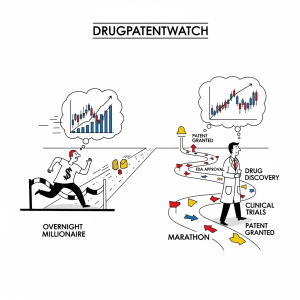
Scan the financial headlines on any given day, and you’re bound to see it: a small biotech company’s stock erupting, doubling or even tripling in value seemingly overnight. The catalyst? A positive announcement from the U.S. Food and Drug Administration (FDA). Stories of companies like Moderna, which rocketed from a ~$5 billion valuation to over $180 billion in under three years, or Axsome Therapeutics, which saw its shares leap from $2 to $108 in a single year, fuel a powerful and seductive narrative.1 This is the biotech lottery—a high-stakes game where a single regulatory decision can seemingly mint fortunes, turning early investors into overnight millionaires.
But is that the whole story? As a strategic advisor who has spent over a decade and a half navigating the treacherous currents between the laboratory, the patent office, and Wall Street, I can tell you that this narrative, while alluring, is a dangerous oversimplification. The reality is that the journey of a new drug is not a sprint to a single event but a grueling, decade-plus marathon. It’s a path littered with the ghosts of failed compounds, costing billions of dollars and consuming entire careers.3 For every celebrated success, there are thousands of failures that never make the news. The FDA’s approval is not the finish line; it is merely the firing of the starting pistol for an even more complex and uncertain race: commercialization.
This report is designed for you—the savvy professional in the pharmaceutical and biotech ecosystem. Whether you’re in intellectual property, R&D, business development, or the investment community, you know that hype is cheap and data is king. You’re skeptical of simplistic stories and demand a nuanced understanding of the forces that truly drive value. Together, we will deconstruct the “drug patent approval effect.” We will move beyond the headlines to dissect the entire value-creation chain, from the initial spark of discovery through the crucible of clinical trials, the labyrinth of patent law, and the brutal realities of the commercial marketplace.
Our core thesis is this: sustainable, long-term value in the biopharmaceutical industry is not the product of a single regulatory event. It is the hard-won result of a confluence of factors: groundbreaking science, a meticulously constructed intellectual property fortress, flawless commercial execution, and a deep understanding of the market’s complex psychology. The overnight millionaire is a myth. The enduring success stories are built on a decade of strategy, resilience, and foresight. Let’s pull back the curtain and examine the machinery that drives these momentous events.
The Gauntlet: A Decade-Long Journey from Lab Bench to Market
Before a single dollar of revenue is generated, before a stock ticker ever reacts to an FDA announcement, a potential new medicine must survive a perilous journey that can take 12 to 15 years and consume, on average, over $2 billion in capital.3 This is the drug development gauntlet, a process of systematic de-risking and staggering attrition. Understanding the milestones and pitfalls of this journey is fundamental to understanding how and when value is truly created—and destroyed.
From Discovery to IND: The Valley of Death
Every new drug begins as an idea, a hypothesis that modulating a specific biological target—a protein, a gene, a pathway—could result in a therapeutic benefit for a given disease.5 This initial “discovery” phase is a monumental undertaking of basic research, often originating in academic labs before being pursued by industry.5 Researchers may screen thousands, sometimes tens of thousands, of chemical or biological compounds to find a few “hits” that show promising activity against the target.9
These hits are then refined into “lead compounds” and subjected to a battery of preclinical research. This is where the molecule is tested in vitro (in test tubes and cell cultures) and in vivo (in animal models) to answer fundamental questions.4 How is the drug absorbed, distributed, metabolized, and excreted (ADME)? What is its mechanism of action? And most critically, is it safe? These studies are designed to identify potential toxicity before the compound is ever administered to a human.3
The attrition rate at this stage is breathtaking. For every 10,000 compounds evaluated in the discovery phase, only an estimated 10 to 20 will even advance into the development pipeline. Of those, only about half will make it through preclinical trials.9 This period is often called the “Valley of Death” for a reason. It’s a chasm where promising science often perishes due to a lack of funding, unforeseen toxicity, or fundamental flaws in the initial hypothesis.
If a compound successfully navigates this valley and the sponsor company believes it has a reasonably safe and promising candidate, they compile all the preclinical data, manufacturing information, and a detailed plan for human testing into a single, comprehensive package: the Investigational New Drug (IND) application. Submitting the IND to the FDA is the first major regulatory hurdle. It’s the official request to transition from testing in animals to testing in people.9 If the FDA does not object within 30 days, the company can initiate its first clinical trial.9
The Clinical Trial Crucible: Where Value is Forged and Destroyed
Entering the clinical phase is a momentous step. It’s where a potential drug’s true value begins to be tested and defined in the eyes of regulators, clinicians, and, of course, investors. The clinical research process is rigidly structured into three sequential phases, each with a distinct purpose, escalating cost, and a high probability of failure. Each phase serves as a critical inflection point, a binary event that can either propel a company’s valuation to new heights or send it crashing into oblivion.
Phase I: The Safety Hurdle
The primary objective of a Phase I trial is simple and stark: is the drug safe for humans? These studies typically involve a small number of participants, usually 20 to 100 healthy volunteers, or in some cases, patients with the target disease if the drug has a significant side effect profile (e.g., in oncology).12 Over several months, researchers administer escalating single doses of the drug to determine its safety, tolerability, pharmacokinetic profile, and the most frequent side effects.6
From an investment perspective, a successful Phase I trial is a necessary but insufficient milestone. It confirms that the drug isn’t overtly toxic at the proposed doses, which is a crucial first step. However, it provides little to no information about efficacy—whether the drug actually works. While a Phase I failure can be damaging, a success rarely triggers a massive stock surge. It’s a box that must be checked to proceed. The good news is that this is the phase with the highest success rate; approximately 70% of drugs that enter Phase I will move on to Phase II.12
Phase II: The Efficacy Signal
Phase II is where the rubber truly meets the road. This is the first time the drug is tested in a larger group of patients who actually have the disease or condition it’s intended to treat, typically numbering from a few hundred participants.3 Conducted over a period of several months to two years, Phase II trials are designed to provide the first real evidence of clinical efficacy, or “proof-of-concept”.12 Does the drug have a therapeutic effect? Researchers also continue to gather safety data and work to determine the optimal dosage range for larger-scale testing.
For investors, positive Phase II results are often the most significant early-stage catalyst. A strong efficacy signal can send a company’s stock soaring because it dramatically de-risks the asset. It’s the first tangible evidence that the years of preclinical work and the underlying scientific hypothesis might translate into a viable commercial product. Conversely, a Phase II failure is a major blow. It suggests the drug simply doesn’t work, and the high hopes built on preclinical data were unfounded. The odds are long; only about 33% of drugs successfully navigate Phase II and advance to the next stage.12
Phase III: The Pivotal Showdown
If a drug shows promise in Phase II, it enters the final, most rigorous, and by far the most expensive stage of pre-market testing: the Phase III trial. These are large-scale, often global, “pivotal” studies involving anywhere from 300 to 3,000 or more participants.12 Lasting from one to four years, these trials are designed to definitively demonstrate a drug’s safety and effectiveness in its intended patient population, often comparing it against a placebo or the current standard of care.12
The data generated in Phase III trials forms the bedrock of the New Drug Application submitted to the FDA. Because these studies are larger and longer, they are more likely to detect less common or long-term side effects.12 A successful Phase III trial is the single most powerful pre-approval catalyst for a company’s stock. It is the final validation of the drug’s clinical utility and signals a high probability of forthcoming FDA approval.
A Phase III failure, however, is catastrophic. It represents the loss of a massive, irretrievable investment of time and money—often hundreds of millions of dollars. For a small, single-asset biotech company, a late-stage failure can be an extinction-level event, wiping out the vast majority of its market capitalization in a single trading session.17 The stakes are immense, and success is far from guaranteed. Historical data shows that only about 25-30% of drugs that enter this final phase will ultimately proceed to an FDA submission.12
The Asymmetry of News: Why Bad News Hits Harder
In the high-stakes world of clinical trials, not all news is created equal in the eyes of the market. A fascinating and critically important phenomenon is the consistent asymmetry in how investors react to positive versus negative outcomes. Put simply, bad news hits much, much harder.
Academic and industry studies have repeatedly quantified this effect. One analysis found that while a positive Phase III trial result produced an average stock price increase of 11%, a negative result triggered an average drop of 22%—a twofold greater impact.19 Another study looking at the final regulatory decision found that an FDA approval generated a modest positive abnormal return of 1.56% in the days surrounding the announcement, whereas a rejection led to a devastating -21.03% loss.20 This pattern holds across all phases of development; the value destruction from failure consistently outweighs the value creation from success by a significant margin.19
This isn’t just a statistical curiosity; it’s a fundamental market dynamic rooted in a combination of investor psychology and valuation principles. The market tends to price in a certain degree of optimism for a promising drug as it advances through the pipeline. Investors build risk-adjusted models, and with each successful phase, the probability of success increases, lifting the valuation. Success, therefore, is often a confirmation of an already building expectation. Failure, on the other hand, is a shock. It forces a sudden and brutal re-evaluation, where the probability of success for that asset drops to zero, and all the previously modeled future revenue evaporates in an instant. This dynamic is consistent with the principles of behavioral economics, specifically Prospect Theory, which posits that individuals feel the pain of a loss more acutely than the pleasure of an equivalent gain.19
This market reality has profound strategic implications that shape the very structure of the biopharmaceutical industry. For a small biotech with its fortunes pinned on a single lead asset, this asymmetric risk profile makes a Phase III trial an all-or-nothing bet with a negatively skewed payoff.17 A win is great, but a loss is an existential threat. This creates a powerful incentive for these smaller companies to de-risk their position by seeking a partner or an outright acquisition by a larger pharmaceutical company
before that final, binary roll of the dice. For large pharma, this dynamic makes a diversified pipeline not just a strategic advantage but a necessity. Companies like Johnson & Johnson or AbbVie can absorb the inevitable failure of one late-stage asset because they have dozens of other revenue-generating products and pipeline candidates.21 This reality transforms M&A and pipeline surveillance from an opportunistic activity into a core, continuous business function essential for survival and growth.
The FDA’s Gatekeepers: Understanding the Approval Catalyst
After a decade or more of painstaking research and development, and having successfully navigated the clinical trial gauntlet, a drug sponsor is finally ready to seek permission to market their new product. This involves submitting a massive, comprehensive application to the FDA, which then acts as the final gatekeeper between the company and the patients it hopes to treat. While the market may have already formed strong opinions based on the clinical data, the FDA’s official decision remains the ultimate catalyst.
The Application: A Multi-Faceted Narrative
The formal request to market a new drug comes in the form of a New Drug Application (NDA) for small-molecule drugs or a Biologics License Application (BLA) for biologics like vaccines and antibodies.4 An NDA is far more than a simple data submission; it is a meticulously crafted narrative that tells the complete story of the drug.23 Its purpose is to present a compelling and comprehensive argument that the drug is safe and effective for its intended use in the studied population.
The application itself is a monumental document, often running to hundreds of thousands of pages. It must include everything the company knows about the drug, from the earliest laboratory data to the results of the pivotal Phase III trials.23 Key components include:
Preclinical Data: All animal pharmacology and toxicology data that established the drug’s initial safety profile.9
Clinical Data: Detailed reports, data, and statistical analyses from all human studies (Phases I, II, and III), demonstrating both safety and efficacy.23
Manufacturing Information: A thorough description of the drug’s composition, the manufacturing process, and the quality control measures in place to ensure consistency and purity.9
Proposed Labeling: The draft of the package insert that will accompany the drug, outlining its approved uses, dosage, administration, side effects, and any warnings or contraindications.9
Patent Information: The sponsor must submit information on any patents that claim the drug or a method of using the drug, which the FDA then publishes in its “Orange Book”.9 This is a critical step for establishing the drug’s period of market exclusivity.
Once submitted, the FDA has 60 days to decide whether the application is complete enough to be accepted for review. If it is, the clock starts on a formal review period.14
Navigating the Review Process: Pathways to Market
The standard review timeline for an NDA is ten months from the date of filing. However, recognizing the urgent need for certain new therapies, the FDA has established several expedited programs designed to speed promising drugs to patients.23 For investors, these designations are not just procedural; they are powerful signals from the agency about a drug’s potential importance.
Fast Track: This designation is for drugs that treat a serious condition and fill an unmet medical need. It allows for more frequent communication with the FDA and eligibility for a “rolling review,” where the company can submit sections of its NDA as they are completed rather than all at once.6
Breakthrough Therapy: This is a more intensive designation for drugs that treat a serious condition where preliminary clinical evidence indicates the drug may demonstrate substantial improvement over available therapy. It includes all the features of Fast Track, plus intensive FDA guidance on an efficient drug development program.26
Accelerated Approval: This pathway allows for earlier approval of drugs that treat serious conditions and fill an unmet medical need based on a “surrogate endpoint”—a marker thought to predict clinical benefit but that is not itself a measure of clinical benefit (e.g., tumor shrinkage rather than survival).6 The company must then conduct post-marketing trials to confirm the drug’s clinical benefit.
Priority Review: This designation is given to drugs that, if approved, would offer significant improvements in the safety or effectiveness of the treatment, diagnosis, or prevention of serious conditions. A Priority Review designation shortens the FDA’s review goal from ten months to just six.23
During the review period, a multidisciplinary team at the FDA—including physicians, statisticians, chemists, pharmacologists, and other scientists—scrutinizes every aspect of the application.4 The agency also conducts inspections of the manufacturing facilities to ensure they comply with Good Manufacturing Practices (GMP).14
The Moment of Truth: Approval vs. Complete Response Letter (CRL)
At the end of the review period comes the binary outcome that the company and its investors have awaited for years. The FDA will either issue an approval letter, allowing the drug to be marketed, or a Complete Response Letter (CRL).
An approval is, of course, the desired outcome. However, the quality of the approval is critically important. The final, negotiated drug label determines the commercial potential. A broad label, covering a wide patient population with minimal restrictions, can unlock a massive market. A narrow label, perhaps restricted to a sub-population of patients or saddled with a “black box warning” (the FDA’s most serious safety alert), can severely disappoint investors and limit a drug’s sales potential, even if it is technically “approved.”
A Complete Response Letter (CRL) is the modern equivalent of a rejection. It outlines the specific deficiencies in the application and explains why the agency cannot approve it in its current form.14 A CRL is a major setback. It can mean the FDA requires additional data, new clinical trials, or has concerns about manufacturing. This injects a huge amount of uncertainty and delay into the process. The path forward is often unclear, and the additional time and capital required to address the FDA’s concerns can be substantial. For a small company with limited cash reserves, a CRL can be a devastating, and sometimes fatal, blow, causing its stock to plummet as investors recalibrate their expectations.20
The Economic Moat: Why Patents and Exclusivity are the Real Prize
While FDA approval is the scientific and regulatory validation of a new drug, it is not, by itself, what creates a blockbuster product. The true economic engine of the pharmaceutical industry—the force that justifies the immense risk and investment of drug development—is market exclusivity. This is the legally protected period of monopoly granted to an innovator, and it is built upon a complex interplay of patent law and regulatory frameworks. Understanding this “economic moat” is essential to grasping the long-term value of a newly approved drug.
The 20-Year Myth vs. The 12-Year Reality
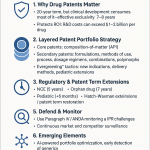
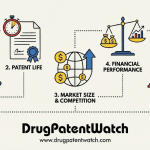
One of the most pervasive and misleading concepts in pharmaceuticals is the notion of a “20-year patent.” While it is true that a U.S. utility patent has a standard term of 20 years from its filing date, this number is profoundly deceptive in the context of drug development.28
The critical distinction is that the patent clock starts ticking the moment the application is filed.29 This typically happens very early in the development process, often during the discovery or preclinical phase, to secure protection for the novel molecule as soon as possible. However, as we’ve seen, the drug will then spend the next 10 to 15 years navigating the arduous path of clinical trials and FDA review.13 By the time the drug is finally approved and can be sold to patients, a huge portion of its 20-year patent term has already evaporated.
The result is that the effective patent life—the actual period a drug is on the market with patent protection and without generic competition—is significantly shorter. On average, a new drug enjoys only about 7 to 12 years of market exclusivity before its core patent expires.28 This compressed timeframe is the single most important economic reality in the pharmaceutical industry. It forces companies to charge high prices upon launch to recoup their multi-billion dollar R&D investment in a narrow window of opportunity. It also drives the relentless pursuit of strategies to extend this period of exclusivity for as long as legally possible.
The Hatch-Waxman Act: A Grand Bargain
The modern landscape of pharmaceutical patents and generic competition in the United States was fundamentally shaped by a landmark piece of legislation: the Drug Price Competition and Patent Term Restoration Act of 1984, better known as the Hatch-Waxman Act.32 This act created a grand bargain, a delicate balance between incentivizing innovation for brand-name drug companies and facilitating the market entry of lower-cost generic drugs.
For innovators, the Act provided a crucial concession: Patent Term Extension (PTE). This provision allows a company to apply to have a portion of the patent term that was lost during the lengthy FDA review process restored.29 The calculation is complex, but it can add up to five years back to a patent’s life, though the total effective patent term cannot exceed 14 years from the drug’s approval date.29 This helps to partially compensate for the regulatory delays unique to the pharmaceutical industry.
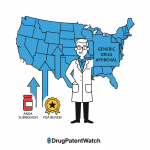
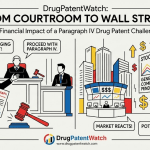
For the generic industry, Hatch-Waxman created the Abbreviated New Drug Application (ANDA) pathway.32 This allows generic manufacturers to get their products approved without having to repeat the costly and time-consuming clinical trials conducted by the innovator. Instead, they only need to prove that their product is bioequivalent to the brand-name drug.34 The Act also created a powerful incentive for generics to challenge weak patents: the first generic company to file an ANDA with a “Paragraph IV certification” (challenging the validity of the innovator’s patent) is rewarded with a 180-day period of generic exclusivity.25
In addition to patent-based protections, the FDA also grants several types of regulatory exclusivity, which are distinct from patents and can run concurrently. These provide a fixed period of market protection regardless of the patent status 34:
New Chemical Entity (NCE) Exclusivity: 5 years of protection for a drug containing an active ingredient never before approved by the FDA.25
Orphan Drug Exclusivity (ODE): 7 years of protection for drugs developed to treat rare diseases (affecting fewer than 200,000 people in the U.S.).25
New Clinical Investigation Exclusivity: 3 years of protection for new indications or other significant changes to a previously approved drug.25
Pediatric Exclusivity: An additional 6 months of exclusivity added to existing patents and exclusivities as an incentive to study a drug in children.25
Building a Fortress: The Art of the Patent Thicket
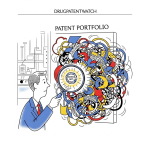
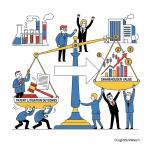
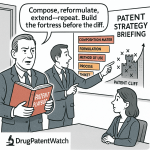
Securing the initial “composition of matter” patent on a new molecule is just the first step in building a durable economic moat. Sophisticated pharmaceutical companies do not rely on a single patent. Instead, they engage in a strategy known as “evergreening” or building a “patent thicket”.30 This involves filing dozens, or even hundreds, of secondary patents that cover every conceivable aspect of the drug beyond the core molecule itself.34
This multi-layered web of protection is designed to create a formidable fortress around the blockbuster drug, making it incredibly difficult for generic competitors to enter the market even after the primary patent expires.36 A generic company might successfully challenge the main patent, only to find themselves blocked by a dozen others. The quintessential example is AbbVie’s Humira, which is protected by a thicket of more than 130 patents, covering not just the molecule but its manufacturing processes, formulations, and methods of use.37
These secondary patents can include:
Formulation Patents: Protecting specific delivery mechanisms, such as an extended-release version that allows for once-daily dosing, a new injectable form, or a specific combination of inactive ingredients.30
Method-of-Use Patents: Covering the use of the drug to treat a new disease or patient population. A drug initially approved for arthritis might later be found effective for psoriasis, and this new use can be patented, extending the franchise’s life.36
Process Patents: Protecting a novel and more efficient method of manufacturing the drug.31
Polymorph Patents: Covering specific crystalline structures of the active pharmaceutical ingredient, which can affect its stability and bioavailability.36
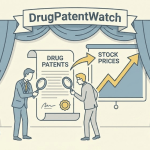
The strategic value of a patent thicket lies in its cumulative deterrent effect. It raises the cost and uncertainty for any potential challenger, forcing them to navigate a legal minefield. For investors and competitors, understanding the depth and strength of a company’s patent thicket is paramount. This is where specialized business intelligence platforms like DrugPatentWatch become indispensable. These tools allow analysts to meticulously map out a drug’s entire patent estate, track litigation, identify the expiration dates of key patents, and spot potential vulnerabilities in a competitor’s IP fortress, turning raw patent data into actionable competitive intelligence.40
The Market’s Crystal Ball: Is the News Already “Priced In?”
One of the most perplexing phenomena for investors new to the biotech sector is the “sell on the news” event: a company announces a long-awaited FDA approval, and its stock price, after a brief pop, proceeds to drift downward. Didn’t the company just achieve its ultimate goal? To understand this seemingly paradoxical behavior, we must delve into the principles of market efficiency and the psychology of investor expectations. The key concept is that in an information-driven market, the future is often bought and sold long before it arrives.
The Efficient Market Hypothesis in Biotech
The Efficient Market Hypothesis (EMH), a cornerstone of modern financial theory, posits that at any given time, a security’s price “fully reflects” all available information.20 In its “semi-strong” form, this means that all publicly available information—including press releases, clinical trial data, and scientific publications—is already incorporated into the stock’s current price.
In the context of biotech, this theory has profound implications. The journey of a drug through clinical trials is a series of public data releases. The results of Phase I, Phase II, and especially the pivotal Phase III trials are typically announced months or even years before the final FDA decision.43 Each positive data release serves to de-risk the asset, and rational investors adjust their valuation models accordingly. By the time the company formally submits its NDA, the market has already analyzed the pivotal trial data and has likely formed a strong consensus on the probability of approval.
Therefore, the final FDA decision is often not “new” news in the truest sense. More often than not, it is simply the confirmation of an outcome that was already widely anticipated and, consequently, already “priced into” the stock.43 The dramatic stock price appreciation didn’t happen on approval day; it happened incrementally over the preceding years as each successful clinical milestone was achieved.
“Buy the Rumor, Sell the News”: Decoding Post-Approval Dips
This brings us to the classic Wall Street adage: “Buy the rumor, sell the news.” This perfectly describes the dynamic often seen with FDA approvals. Investors who “bought the rumor” were those who invested earlier in the development cycle, taking on higher risk in anticipation of positive clinical data and eventual approval. The “news”—the final FDA approval—becomes a logical exit point for these early investors to realize their profits. This wave of selling can easily overwhelm the initial burst of buying from less informed investors reacting to the headline, leading to a net decline in the stock price in the days and weeks following the announcement.
Furthermore, the moment of approval marks a fundamental shift in the investment narrative. The primary risk factor transitions from a scientific and regulatory one (Will the drug work? Will it be approved?) to a commercial one (Can the company effectively manufacture, market, and sell the drug? Will payers reimburse for it?).45 This introduces a whole new set of uncertainties. How strong is the sales team? How crowded is the market? What will the final price be, and will insurers cover it? The market’s focus pivots immediately from the certainty of approval to the uncertainty of the launch, and this new risk profile can temper enthusiasm and put a ceiling on the stock price.
“A study in the Journal of Finance and Accountancy has shown a direct link between FDA approvals and healthcare company stock prices, specifically in large-cap pharmaceuticals. However, it is somewhat rare for a single approval to send a stock price skyrocketing. That is largely because many investors will price in the approval of a key drug or technology throughout the approval process as approval becomes more likely, as stages of the approval process progress over time.” 43
The Role of Information Leakage and Analyst Expectations
While the EMH provides a powerful framework, the real world is often messier. Several academic studies have uncovered intriguing patterns that suggest the market may be even more prescient than the theory would suggest. By analyzing stock price movements in the months leading up to a major announcement, researchers have found that the stock prices of companies destined for positive news tend to drift upward, while those headed for negative news often drift downward, well before any official public disclosure.46
One study of oncology drugs found that in the 120 trading days before a Phase III trial announcement, the mean stock price for companies that would go on to report positive trials increased by 13.7%, while it decreased by 0.7% for those that would report negative trials.46 This divergence suggests that information about the trial’s outcome may be seeping into the market through various channels. While this could involve illegal insider trading, it’s more often the result of sophisticated “channel checks” by institutional investors, who glean insights from conversations with clinical trial investigators, key opinion leaders, and other industry experts.50
Financial analysts also play a crucial role in shaping market expectations. Their revenue forecasts and sales projections for a new drug establish the “bar” that the company’s launch performance will be measured against.51 A drug that generates $500 million in its first year may sound like a success, but if analyst consensus was for $1 billion, the launch will be deemed a failure and the stock will suffer. Therefore, the market’s reaction is not just about the approval itself, but about how the perceived commercial potential stacks up against these pre-established expectations.
Case Studies in Value Creation: From Breakthrough to Blockbuster
Theory and statistics provide a framework, but the true dynamics of the drug approval effect are best understood through real-world examples. By examining the trajectories of companies that have successfully navigated the gauntlet, we can see how different strategies—from dominating a niche to launching a revolutionary cure—translate into shareholder value. These case studies reveal that while the approval event is a pivotal moment, it is the long-term strategic context that dictates the ultimate outcome.
Vertex Pharmaceuticals: The Power of Dominating a Niche
The story of Vertex Pharmaceuticals and cystic fibrosis (CF) is a masterclass in how a focused, science-driven strategy can transform a company and create immense, sustained shareholder value.52 This was not a story of a single lucky approval but of a systematic, decade-long campaign to conquer a disease.
Cystic fibrosis is a rare genetic disease caused by mutations in the CFTR gene, leading to the production of a dysfunctional protein.53 Vertex’s strategy was not to treat the symptoms, but to develop drugs—known as CFTR modulators—that correct the function of the faulty protein itself.
Their journey began with the approval of Kalydeco (ivacaftor) in 2012. Kalydeco was a breakthrough, but it was only effective for a tiny subset of CF patients with a specific mutation. While a significant scientific achievement, its market was limited. The stock reacted positively, but it was just the first step.
Vertex then methodically built upon this success. They developed and launched:
Orkambi (lumacaftor/ivacaftor) in 2015, a combination therapy that expanded treatment to patients with the most common CF mutation, F508del.
Symdeko (tezacaftor/ivacaftor) in 2018, another combination with an improved safety profile.
Trikafta (elexacaftor/tezacaftor/ivacaftor) in 2019. This triple-combination therapy was the true game-changer. It was effective for approximately 90% of all CF patients, dramatically expanding the addressable market and transforming the standard of care.52
Analyzing Vertex’s stock performance over this period reveals a story of compounding value.55 There were certainly spikes around key approvals, but the overarching trend was a sustained, multi-year climb as the market recognized the power of their strategy. They weren’t just launching products; they were building an impenetrable fortress around a disease. Each new drug was not a competitor to the last but an expansion of the franchise, pulling more and more of the patient population under their therapeutic umbrella. This created a near-monopoly in a high-value market, turning Vertex into a biotech giant and rewarding long-term investors who understood the strategic vision beyond any single approval date.
Gilead Sciences & Sovaldi: Curing a Disease, Igniting a Firestorm
If Vertex represents the methodical construction of a franchise, Gilead’s launch of Sovaldi (sofosbuvir) for Hepatitis C (HCV) is the archetypal example of an explosive, market-redefining blockbuster that changed the industry forever.
Gilead did not discover Sovaldi. They acquired it by purchasing the smaller biotech Pharmasset for a staggering $11.2 billion in 2011—a move many analysts at the time considered wildly overpriced.57 What Gilead saw was the potential for a true cure. Previous HCV treatments were long, arduous regimens involving interferon injections with debilitating side effects and cure rates of less than 50%. Sovaldi promised a simple, all-oral, 12-week course of treatment with a cure rate exceeding 90%.58
When the FDA approved Sovaldi in late 2013, the launch was nothing short of historic. It became the most successful drug launch of all time, generating an unprecedented $12.4 billion in sales in its first full year on the market, 2014.57 Gilead’s stock price soared, rewarding the company’s bold acquisition and validating its vision.60
However, the Sovaldi story has a second, more complex chapter. Gilead launched the drug with a wholesale price of $84,000 for a 12-week course, or $1,000 per pill.58 This price tag ignited a political and public firestorm. Payers, politicians, and patient advocates were outraged, arguing the price was unsustainable and would put a cure out of reach for many.57 While Gilead argued the price was justified by the drug’s value—curing a patient for $84,000 was cheaper than the long-term costs of managing chronic liver disease, including transplants—the controversy fundamentally changed the national conversation around drug pricing.59
The Sovaldi case demonstrates the peak of the drug approval effect—a revolutionary product that created billions in shareholder value. But it also serves as a cautionary tale. The immense success and the pricing strategy it enabled brought a level of scrutiny to the industry that persists to this day, leading to increased pressure from payers and policymakers and making the post-approval landscape far more challenging for all subsequent innovators.
Eli Lilly & The GLP-1 Revolution: A New Class of Mega-Blockbuster
A more recent case study illustrates how an entire new class of drugs can redefine a company’s trajectory and create a new multi-hundred-billion-dollar market. Eli Lilly’s development and launch of its GLP-1 receptor agonists, Mounjaro (for type 2 diabetes) and Zepbound (for obesity), has been one of the most significant value-creation events in recent pharmaceutical history.
These drugs, which work by mimicking gut hormones to control blood sugar and suppress appetite, have demonstrated unprecedented levels of efficacy for both diabetes management and weight loss. The launch of Mounjaro and its subsequent approval as Zepbound for obesity have been wildly successful, with sales soaring and demand consistently outstripping supply.21
This success has had a dramatic effect on Eli Lilly’s valuation. The company’s stock has surged, making it the largest healthcare company in the world by market capitalization, surpassing long-time stalwarts like Johnson & Johnson.21 The Lilly case highlights several key aspects of the modern blockbuster:
The Power of Label Expansion: The ability to take a drug approved for one indication (diabetes) and get it approved for another, even larger one (obesity) is a massive value driver.
Intense Competition: Lilly is not alone. Its success is mirrored by that of Novo Nordisk, with its competing GLP-1 drugs Ozempic and Wegovy. The post-approval environment is a head-to-head battle for market share between two pharma giants, with billions of dollars at stake.22
Manufacturing as a Bottleneck: The overwhelming demand for these drugs has shown that post-approval success is not just about marketing; it’s about the ability to manufacture and supply a global market at an enormous scale. Production constraints have been a major limiting factor for both companies.63
The GLP-1 story shows that even in the modern era of intense pricing pressure, a truly innovative drug class that addresses a massive unmet need can still generate astronomical returns and fundamentally reshape a company’s future.
After the Bell Rings: The Post-Approval Marathon
The moment the FDA gives its blessing is a cause for celebration, but for the teams on the ground, it’s when the real work begins. The focus instantly shifts from the controlled, predictable world of clinical trials to the chaotic, unpredictable realities of the global marketplace. A drug’s long-term stock performance is ultimately determined not by the approval itself, but by how successfully the company navigates the treacherous post-approval marathon, from securing market access to defending its franchise against a ticking clock.
The Commercialization Gauntlet: From Approval to Access
Getting a drug approved is a scientific achievement; getting it to patients is a commercial one. This process is fraught with challenges that are often underestimated by investors focused solely on the regulatory milestone.
First is manufacturing and supply chain management. A company must be able to scale up production from the relatively small batches needed for clinical trials to the massive quantities required for a global launch, all while maintaining strict quality standards. Any hiccup in this process can lead to shortages, delaying patient access and ceding ground to competitors.64
Second, and arguably most critical, is market access and reimbursement. In today’s healthcare environment, FDA approval does not guarantee that patients will get the drug. The company must convince a complex web of payers—private insurance companies, government programs like Medicare and Medicaid, and national health systems abroad—that the drug is not only effective but also cost-effective.66 This involves intense negotiations and the submission of extensive health economic data. A successful launch hinges on securing a favorable position on payer formularies. A great drug with poor insurance coverage will be a commercial failure.
Finally, the company must execute a flawless launch strategy. Research shows that a drug’s sales trajectory in the first six months after launch is highly predictive of its ultimate success.67 This requires a deeply integrated, cross-functional effort involving marketing, sales, medical affairs, and patient support services, all aligned around a clear value proposition for patients and physicians.51
The Specter of the Patent Cliff: When the Moat Dries Up
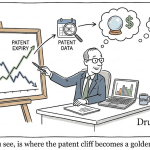
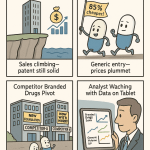
Every blockbuster drug’s life is governed by a ticking clock: the expiration of its key patents. The “patent cliff” is the term used to describe the sudden and catastrophic decline in revenue—often 80-90% within the first year—that occurs when a drug loses its market exclusivity and faces a flood of low-cost generic or biosimilar competition.70
The history of the pharmaceutical industry is littered with examples of this phenomenon. Pfizer’s cholesterol drug Lipitor, once the best-selling drug in the world with annual sales exceeding $13 billion, saw its revenue plummet after its patent expired in 2011.59 This is not a surprise event; it is a predictable and inevitable part of the pharmaceutical lifecycle.
The key insight for investors is that the market is relentlessly forward-looking. A company’s stock price doesn’t wait until the day the patent expires to react. The market begins to “price in” the future loss of revenue as much as 12 to 24 months before the loss of exclusivity (LOE) occurs.72 A company with a major blockbuster nearing its patent cliff, and without a promising pipeline of new drugs to replace that revenue, will almost certainly see its stock underperform, regardless of its current strong earnings.
This reality forces pharmaceutical companies into a perpetual cycle of innovation and acquisition. They must constantly reinvest their profits into R&D to discover the next generation of blockbuster drugs. When their internal pipeline is insufficient, they turn to M&A, acquiring smaller biotech companies with promising assets to fill the impending revenue gap created by the patent cliff.72
Macro-Forces at Play: Interest Rates and Policy Headwinds
A company’s stock performance is not determined in a vacuum. It is subject to powerful macroeconomic and political forces that can create significant tailwinds or headwinds for the entire sector.
Interest rates have a disproportionately large impact on the valuation of biotech companies, particularly those in the early, pre-revenue stages.73 The valuation of these companies is based almost entirely on the discounted cash flow (DCF) of their future, potential products. Because these cash flows are many years away, their present value is highly sensitive to the discount rate used in the calculation. The risk-free interest rate is a key component of this discount rate. When interest rates are high, the discount rate rises, and the present value of those distant future earnings plummets, crushing valuations.75 This makes it harder for companies to raise capital, stifling investment and M&A activity. Conversely, when interest rates fall, discount rates decrease, the present value of future earnings increases, and capital flows back into the sector, often igniting a bull market.73
Healthcare policy represents another major source of uncertainty. Government actions can fundamentally alter the industry’s business model. In the United States, the Inflation Reduction Act (IRA) of 2022 is a prime example. For the first time, the law grants Medicare the authority to directly negotiate the prices of certain high-cost drugs, effectively imposing price controls.78 While intended to lower costs for patients and the government, this policy creates significant long-term uncertainty for pharmaceutical companies’ revenue models. The prospect of lower future profits could, in turn, reduce the incentive to invest in the risky, long-term R&D needed to develop the next generation of breakthrough therapies.80 Navigating these shifting political and economic landscapes is a critical challenge for every company in the sector.
The Strategist’s Toolkit: Turning Patent Data into Competitive Advantage
In the hyper-competitive biopharmaceutical arena, waiting for a competitor to announce their Phase III results or FDA submission is waiting too long. The most successful companies don’t just react to public news; they proactively map the competitive landscape years in advance. Their most powerful tool for doing this is patent intelligence—the strategic analysis of patent filings to gain a deep, predictive understanding of a rival’s R&D pipeline, technological capabilities, and market ambitions.
The Foundation: What is Patent Intelligence?
At its core, patent intelligence is the transformation of raw patent data into actionable business strategy.82 A patent is a legal document that grants an inventor exclusive rights, but it comes with a critical trade-off: in exchange for this temporary monopoly, the inventor must publicly disclose their invention in extensive detail.39 This disclosure requirement turns the global patent system into an unparalleled repository of competitive intelligence.
By analyzing a competitor’s patent filings, a company can uncover:
The specific diseases they are targeting.
The biological mechanisms of action they are pursuing.
The novel chemical structures or biologic platforms they are developing.
The markets they consider most valuable (based on where they file for protection).
Understanding the different types of patents is crucial for extracting strategic meaning 36:
Composition of Matter Patents: These are the crown jewels, covering the novel molecule itself. They provide the strongest and broadest protection and are a key indicator of a competitor’s commitment to a new drug candidate.39
Method-of-Use Patents: These cover the use of a compound for a specific therapeutic purpose. A strong portfolio of these patents can protect a drug in multiple indications, expanding its market potential.36
Formulation Patents: These protect the specific way a drug is delivered (e.g., extended-release tablet, transdermal patch). They are a key component of “evergreening” strategies to extend a product’s lifecycle.39
Strategic Applications: From R&D to M&A
Armed with this understanding, a strategic intelligence team can leverage patent data across the entire organization to drive competitive advantage.
Monitor Competitor R&D Pipelines: Patent filings often precede clinical trial disclosures or scientific publications by a year or more.39 By systematically tracking a competitor’s patent activity, a company can see what new targets and technologies are emerging from their labs long before they become public knowledge. This provides an invaluable early warning system, allowing the company to anticipate future competitive threats and adjust its own R&D priorities accordingly.85
Identify “White Space” Opportunities: In a crowded therapeutic area, patent landscape analysis can reveal which biological pathways are saturated with competitors and, more importantly, which ones are relatively open.39 This “white space” analysis can guide a company’s own research toward less competitive, higher-potential areas, increasing the probability of developing a truly differentiated product.
Mitigate Infringement Risk: Before investing hundreds of millions of dollars into a new clinical program, a company must ensure it has “freedom to operate” (FTO). A thorough analysis of the existing patent landscape can identify potential blocking patents held by competitors, allowing the company to either design around them, challenge their validity, or seek a license, thereby avoiding costly litigation down the road.83
Conduct Due Diligence for M&A and Licensing: When considering an acquisition or in-licensing deal, the target’s intellectual property portfolio is one of its most valuable assets. Patent intelligence is critical for assessing the strength, breadth, and defensibility of the target’s patents. A deep dive can reveal potential weaknesses in their IP that could undermine the deal’s value, or confirm that their patent fortress is as strong as advertised, justifying a premium valuation.39
Leveraging Platforms like DrugPatentWatch for Actionable Insights
The sheer volume and complexity of global patent data can be overwhelming. Manually tracking and analyzing the patent filings of dozens of competitors across multiple jurisdictions is a herculean task. This is where professional-grade patent intelligence platforms become essential.
Services like DrugPatentWatch are designed specifically for the biopharmaceutical industry, providing a centralized, curated, and user-friendly interface to this critical data.40 Instead of sifting through raw data from disparate patent office websites, analysts can use such a platform to:
Track Key Expiration Dates: Quickly identify when blockbuster drugs are set to lose exclusivity, providing a clear timeline for generic or biosimilar entry opportunities.89
Monitor Litigation: Stay informed on patent challenges (like Paragraph IV filings) and other litigation that could lead to an earlier-than-expected loss of exclusivity for a competitor’s product.42
Analyze Global Patent Portfolios: Understand a competitor’s international strategy by seeing where they have filed for patent protection, revealing their priority markets.40
Identify Generic and API Suppliers: For companies in the generic space, these platforms can help identify potential partners and suppliers for drugs coming off patent.89
By integrating data from the FDA, patent offices, and other global regulatory bodies, and presenting it in an accessible format with features like email alerts and custom dashboards, platforms like DrugPatentWatch empower strategic intelligence teams to move from theory to practice.40 They provide the tools needed to continuously monitor the competitive environment, identify threats and opportunities early, and ultimately, make more informed, data-driven decisions that maximize return on investment.
Conclusion
The narrative of the “overnight millionaire” in the biopharmaceutical industry, born from a single, triumphant FDA approval, is a compelling but ultimately misleading fiction. As we have dissected, the stock market’s reaction to a drug approval is not an isolated event but the culmination of a decade-long saga of immense scientific risk, staggering financial investment, and intricate strategic maneuvering. True, sustainable value is not created in a day but is forged over years in the crucible of clinical trials and protected by a fortress of intellectual property.
The journey from a laboratory hypothesis to a marketed medicine is a process of extreme attrition, where failure is the norm and success is the rare exception. The market, in its semi-efficient wisdom, understands this. It does not wait for the final regulatory seal of approval to render its verdict. Instead, it continuously recalibrates a company’s valuation at each critical inflection point—the first signal of human efficacy in Phase II, the definitive validation in Phase III, and the often-underestimated challenges of commercial launch. The approval itself is frequently the confirmation of an expectation long since priced into the stock, a moment where the market’s focus pivots from regulatory hope to the cold, hard realities of commercial execution.
For the strategist, the investor, and the industry leader, the key is to look beyond the headline event. The critical questions are not just “Will it be approved?” but “How strong is the patent moat?” “How crowded is the market?” “Can the company execute the launch?” and “What is in the pipeline to replace this revenue when the patent cliff inevitably arrives?”
Understanding these deeper dynamics is what separates speculation from strategic investment. It requires a multi-disciplinary perspective that appreciates the science, the law, and the finance that underpin this unique industry. By leveraging sophisticated tools like patent intelligence to anticipate competitive moves and by recognizing that bad news carries more weight than good, savvy players can navigate the inherent volatility of the sector. The ultimate prize is not a one-day stock pop, but the creation of a durable franchise that can transform patient lives and deliver enduring value to shareholders for years to come. The marathon, not the sprint, is the race that matters.
Key Takeaways
Approval is a Milestone, Not the Finish Line: The stock market’s reaction to an FDA approval is the culmination of a 10-15 year, multi-billion dollar development process. The final decision is often “priced in” based on previously released clinical trial data.
Asymmetric Risk Governs the Market: Negative news (e.g., a clinical trial failure) has a disproportionately larger negative impact on a stock’s price than positive news has a positive impact. This dynamic is a primary driver of M&A and portfolio strategy in the industry.
Effective Patent Life is the Key Metric: The 20-year patent term is misleading. The actual period of market exclusivity for a new drug is typically only 7-12 years due to the long development timeline. This compressed window dictates pricing and commercial strategy.
The Patent Thicket is the Real Defense: Companies rely on a dense web of secondary patents (formulation, method-of-use, etc.) to extend market exclusivity long after the primary patent on a molecule expires. Analyzing this “patent thicket” is crucial for competitive assessment.
Post-Approval Execution Determines Long-Term Value: After FDA approval, a company faces the “commercialization gauntlet” of manufacturing scale-up, market access negotiations with payers, and flawless launch execution. Failure in these areas can cripple a scientifically successful drug.
The Market is Forward-Looking: Investors anticipate future events. A stock will often begin to underperform 12-24 months before a major patent cliff, as the market prices in the expected revenue loss.
Patent Intelligence is a Strategic Weapon: Systematically analyzing competitor patent filings provides an early warning system for new R&D directions and potential market threats, offering a significant competitive advantage. Platforms like DrugPatentWatch are essential tools for this analysis.
Macro-Forces Matter: Broader economic factors, especially interest rates, have a profound impact on biotech valuations. High rates increase the cost of capital and depress valuations, while falling rates can ignite sector-wide rallies.
Frequently Asked Questions (FAQ)
1. Why is a “Breakthrough Therapy” designation a more powerful stock catalyst than a “Fast Track” designation?
While both are expedited pathways, a Breakthrough Therapy designation is a much stronger signal from the FDA and therefore a more potent stock catalyst. Fast Track is granted based on a drug’s potential to address an unmet need in a serious condition. In contrast, Breakthrough designation requires preliminary clinical evidence indicating the drug may offer a substantial improvement over existing therapies. This means the FDA has seen early human data that it finds exceptionally promising. It signals not just potential, but demonstrated superiority, which significantly de-risks the asset in the eyes of investors and implies a higher probability of both clinical and commercial success.
2. For a large pharma company, how can one differentiate between a patent cliff that is a major threat versus one that is a manageable headwind?
The key differentiators are pipeline maturity and revenue concentration. A patent cliff becomes a major threat when the expiring drug constitutes a very high percentage of the company’s total revenue (e.g., over 25-30%) AND the company’s late-stage (Phase III or recently approved) pipeline lacks assets with the potential to generate comparable revenue. Conversely, it is a manageable headwind if the company is well-diversified, the expiring drug is a smaller piece of the overall revenue pie, and they have several promising Phase III or newly launched drugs ready to offset the loss. You should analyze the company’s pipeline for “next-generation” blockbusters and review their recent M&A activity, which often signals how management is preparing to fill the impending revenue gap.
3. What is the first thing to look for in a competitor’s patent filing to gauge their strategic intent?
Beyond the obvious (the drug and disease), the two most revealing elements are the priority date and the geographic scope of the filing. The priority date establishes the invention’s timeline and can be cross-referenced with clinical trial databases to see how far along the R&D process is. The geographic scope—the list of countries where they are seeking protection—is a direct proxy for their commercial strategy. A filing in the U.S., Europe, and Japan signals a plan for a major global launch. A more limited filing might suggest a niche market strategy or a partnership model for other regions. This tells you not just what they are doing, but where and how big they plan to be.
4. If a drug gets approved but has a “black box warning,” how does that typically impact its long-term stock performance versus its initial launch?
A black box warning, the FDA’s most stringent safety alert, acts as a significant commercial drag and can severely impact long-term stock performance. Initially, the stock might still see a positive reaction simply because an approval is better than a rejection. However, the market will quickly pivot to the commercial implications. The warning can limit the eligible patient population, make physicians hesitant to prescribe the drug except as a last resort, and lead to unfavorable reimbursement terms from payers. This often results in a launch that dramatically underperforms initial, pre-warning sales forecasts. The stock will likely underperform its peers over the long term unless the company can generate new data to have the warning removed or prove its value in a specific, well-defined patient niche.
5. How do rising interest rates affect a preclinical biotech company differently than a profitable, commercial-stage one?
Rising interest rates harm both, but they are an existential threat to preclinical biotechs while being more of a valuation headwind for profitable ones. A preclinical company has no revenue and relies entirely on external capital (venture funding, IPOs) to survive. Its valuation is a long-dated bet on future success. High interest rates increase the “discount rate” applied to those distant future cash flows, crushing its present valuation and making it much harder and more expensive to raise the cash it needs to fund its research. A profitable, commercial-stage company has existing cash flows. While rising rates will still lower its DCF valuation and make debt more expensive, it can fund its own R&D and operations. Therefore, high rates can trigger a “flight to quality” within the sector, where investors sell speculative preclinical names and move into established, profitable companies.
Find Your Next Blockbuster – Biotech & Pharmaceutical patents, sales, drug prices, litigation – DrugPatentWatch, accessed August 19, 2025, https://www.drugpatentwatch.com/about.php
The Impact of Medical and Health Fiscal Expenditures on Pharmaceutical Industry Stock Index in China – MDPI, accessed August 19, 2025, https://www.mdpi.com/1660-4601/19/18/11730