In the high-stakes world of pharmaceutical development, a patent is more than just a legal document; it’s the lifeblood of innovation. It represents the culmination of billions of dollars in research, years of clinical trials, and the promise of market exclusivity that makes such staggering investments viable. But what happens after the celebrations of a patent grant die down? The harsh reality is that a patent is not a “set it and forget it” asset. It requires ongoing investment to be kept alive, a series of payments known as maintenance fees or annuities.
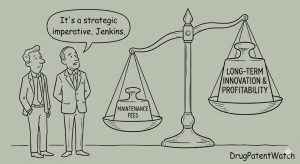
For the uninitiated, these fees can seem like a mere administrative nuisance, a recurring line item in a sprawling IP budget. But for savvy pharmaceutical and biotech professionals, law firms, and investors, they represent something far more profound: a critical strategic lever. The decision of which patents to maintain and which to let lapse can define a company’s competitive posture, shape its R&D pipeline, and ultimately dictate its long-term profitability. This isn’t just about paying bills; it’s about making calculated decisions that can unlock immense value or, if mismanaged, lead to catastrophic losses.
How do you transform this recurring cost into a source of competitive advantage? It starts by understanding that every maintenance fee payment is a reaffirmation of a patent’s value. It’s a conscious choice to continue protecting an asset. In an industry where the “patent cliff” is a constant and terrifying reality, the strategic management of these fees is not just good housekeeping—it’s an essential discipline for survival and growth.
The Unseen Costs: What Are Drug Patent Maintenance Fees?
At its core, a patent maintenance fee is a renewal fee paid to a national patent office to keep a granted patent in force. Think of it as a property tax for your intellectual property. The government grants you a temporary monopoly, and in return, you must periodically pay to maintain that right. If you stop paying, the patent lapses, and the invention falls into the public domain, free for anyone to use.
Defining Annuities and Maintenance Fees: More Than Just a Renewal
While the terms are often used interchangeably, “maintenance fees” is the preferred term in the United States, while “annuities” or “renewal fees” are more common in Europe and other parts of the world. The core concept is identical: a periodic payment to maintain a patent’s validity.
However, the philosophy behind these payments goes deeper than a simple fee-for-service. They serve a dual purpose that is critical to the health of the entire innovation ecosystem.
The Rationale Behind the Fees: Keeping the Patent System Viable
Why do patent offices charge these fees? The reasons are both pragmatic and philosophical, designed to balance the interests of the inventor with the broader public good.
Funding Patent Offices
The most straightforward reason is operational funding. Patent offices like the United States Patent and Trademark Office (USPTO) and the European Patent Office (EPO) are massive, complex organizations. They employ thousands of highly skilled examiners who review complex technical documents. The fees they collect—from filing, examination, and maintenance—fund these operations, ensuring the patent system can function efficiently.
Culling the Patent Thicket
A more strategic purpose is to prevent the accumulation of “patent thickets”—dense webs of overlapping intellectual property rights that can stifle innovation. By forcing patent holders to periodically re-evaluate the commercial and strategic worth of their assets, maintenance fees encourage the abandonment of patents that are no longer valuable. This clears the way for other innovators, ensuring that the public domain is enriched with inventions that their original owners no longer see fit to protect. It’s a market-driven mechanism to ensure only the most valuable and relevant patents remain in force.
<blockquote>1
“Between 2023 and 2028 alone, an estimated $356 billion in worldwide branded sales are at risk from patent expiration. Within the first year of generic entry, it’s not uncommon for a flagship drug to lose 80-90% of its mark2et share…”
<cite>— DrugPatentWatch, “Transforming Expired and Abandoned Patents into a Strategic Pharma Asset”</cite>
</blockquote>
This statistic underscores the immense financial stakes tied to a patent’s lifecycle. The decision to pay a maintenance fee is, in essence, a decision to keep a multi-billion dollar asset on the books and shield it from generic competition.
Navigating the Global Payment Maze: USPTO vs. EPO and Beyond
One of the greatest challenges in managing a global pharmaceutical patent portfolio is the lack of harmonization in maintenance fee schedules. The “when” and “how much” vary dramatically by jurisdiction, requiring meticulous tracking and a deep understanding of local regulations.
The USPTO’s Staggered Approach: The 3.5, 7.5, and 11.5-Year Hurdles
The United States employs a unique, staggered schedule for its maintenance fees. Instead of annual payments, they are due at three specific intervals after a patent is granted:
3.5 years
7.5 years
11.5 years
Payments can be made within a six-month window leading up to these deadlines. The fees escalate significantly at each stage, reflecting the assumption that a patent’s value should have become more apparent over time. This system forces patent holders to make critical “keep or drop” decisions at key moments in a drug’s lifecycle, often coinciding with preclinical or early clinical development milestones.
The European Patent Office (EPO): An Annual Commitment
In stark contrast, the EPO system requires annual renewal fees starting from the third year after the filing date of the application, even before the patent is granted. Once the European patent is granted and validated in individual member states, separate annual renewal fees must be paid directly to each national patent office.
This creates a far more complex and costly administrative burden for companies with broad European protection. The annual nature of the payment, however, also provides a more frequent opportunity to prune the portfolio and shed assets that are no longer aligned with corporate strategy.
Key Differences in Other Major Jurisdictions
Other major pharmaceutical markets like Japan and China also have their own distinct annuity systems, typically involving annual payments with escalating fees. Managing a global portfolio means juggling dozens of different deadlines, currencies, and fee structures, a task that is virtually impossible without specialized software and services.
The High Stakes of Non-Payment: When a Patent Lifeline Snaps
What happens if you miss a payment? The consequences can range from a minor financial headache to a full-blown corporate catastrophe.
The Immediate Consequence: Lapse and Loss of Exclusivity
If a maintenance fee is not paid by the final deadline (including any grace period), the patent immediately expires. The protection it afforded evaporates, and the invention enters the public domain. For a pharmaceutical company, this could mean that a competitor is suddenly free to manufacture a generic version of a blockbuster drug, wiping out billions in revenue overnight.
The Path to Revival: Petitions, Surcharges, and Unintentional Delay
All is not necessarily lost if a deadline is missed. Most patent offices, including the USPTO, provide a mechanism for reviving an expired patent. However, the process is neither guaranteed nor simple.
To revive a patent at the USPTO, the patent holder must file a petition and pay the missed fee, a surcharge, and a petition fee. Crucially, they must also provide a statement that the delay in payment was unintentional. The longer the delay, the greater the scrutiny the patent office may apply to this claim. A lack of funds is generally not considered a valid reason for unintentional delay.
While revival is possible, it’s a risky and expensive fallback. The period during which the patent was lapsed can create “intervening rights,” potentially allowing a competitor who began using the invention during that time to continue their activities. The best strategy is always to avoid the lapse in the first place.
From Cost Center to Strategic Asset: Managing Your Patent Portfolio
For far too many companies, the IP department is viewed as a cost center, and maintenance fees are just one more expense to be minimized. This is a profound strategic error. A well-managed patent portfolio is a powerful offensive and defensive weapon, and the management of annuities is central to wielding it effectively.
The Art of the Pruning Decision: Which Patents to Keep, Which to Let Go?
The most critical aspect of maintenance fee management is the strategic decision to abandon a patent. This process, often called patent pruning, is analogous to a gardener trimming away dead or unproductive branches to allow the healthy parts of the plant to flourish.
So, how do you decide which patents to prune? It requires a multi-faceted analysis that goes far beyond a single data point.
Aligning with Commercial Strategy and R&D Pipelines
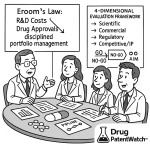
The first and most important question is: Does this patent protect a current or future revenue stream? Patents covering your flagship products are a clear “keep.” But what about patents for drugs in early-stage development? Or for a technology platform that is no longer central to your R&D focus? The IP strategy must be inextricably linked to the broader corporate and R&D strategy. Regular, structured reviews involving legal, R&D, and business development teams are essential to ensure this alignment.
Using Data to Drive Decisions
The decision to prune shouldn’t be based on gut feeling. It should be data-driven. Key questions to ask include:
Strength of the Patent: How broad and enforceable are the claims? Is it susceptible to challenge?
Competitive Landscape: Are competitors actively working in this space? Does this patent block them effectively?
Market Potential: What is the projected market size for the product this patent protects?
Geographic Value: Is it worth maintaining protection in smaller markets where the commercial return may not justify the cost?
“Every patent in a portfolio should be fighting for its life,” notes one industry IP counsel. “If it can’t justify its own maintenance costs with a clear strategic or commercial value proposition, it’s a candidate for pruning.”
Budgeting and Forecasting: Taming the Annuity Beast
For a company with thousands of patents across dozens of jurisdictions, maintenance fees represent a significant and complex financial obligation. Accurately forecasting these costs is critical for effective financial planning. This requires sophisticated tools that can account for:
Varying fee schedules across all jurisdictions.
Fluctuations in currency exchange rates.
Potential changes in patent office fee structures.
By accurately forecasting these expenses, companies can avoid budget surprises and make more informed decisions about resource allocation.
The Strategic Role of Maintenance Fees in the Pharma Lifecycle
The timing of maintenance fee payments and the data surrounding them provide a wealth of competitive intelligence for those who know how to look.
Impact on Generic and Biosimilar Entry
The date a patent lapses due to non-payment is just as important as its final statutory expiration date. For generic and biosimilar manufacturers, monitoring the maintenance status of a target drug’s patents is a fundamental part of their business intelligence. A brand-name company’s decision to let a secondary patent lapse can signal a strategic shift or a lack of confidence, potentially opening the door for an earlier-than-expected generic launch.
Leveraging Patent Expiry Data for Competitive Intelligence
Conversely, brand-name companies can use this data to their advantage. By analyzing the patent maintenance patterns of competitors, you can gain insights into their strategic priorities.
Are they heavily maintaining patents around a specific biological target? This could indicate a major R&D focus.
Did they abandon a series of patents related to a particular drug delivery technology? This might signal a pivot in their development strategy.
This level of analysis requires access to comprehensive, real-time data on patent status, a service that is the cornerstone of specialized platforms.
The Digital Transformation of Patent Management
Manually tracking thousands of patent maintenance deadlines across the globe using spreadsheets is a recipe for disaster. The complexity of the task demands specialized digital solutions that can automate, analyze, and provide strategic insights.
The Power of Specialized Platforms: A Nod to DrugPatentWatch
This is where platforms like DrugPatentWatch become indispensable. They move beyond simple deadline reminders and provide a rich, integrated database that transforms patent data into actionable business intelligence. Such platforms allow IP, R&D, and business development teams to:
Monitor the complete patent landscape for a specific drug, including all related patents and their maintenance status.
Anticipate patent expiry dates, whether statutory or due to non-payment, to forecast generic entry.
Analyze competitors’ patent strategies by observing which patents they choose to maintain or abandon.
Identify licensing or acquisition opportunities by finding valuable but non-core assets that other companies might be willing to divest.
By integrating patent data with regulatory information, clinical trial data, and other sources, these platforms provide a holistic view that empowers strategic decision-making, turning the administrative burden of maintenance fees into a source of powerful competitive intelligence.
Conclusion: Beyond the Payment—Annuities as a Strategic Lever
Drug patent maintenance fees are far more than a recurring administrative cost. They are a series of strategic decision points that, when managed effectively, can protect revenue, inform R&D investment, and provide a clear window into the competitive landscape.
For the modern pharmaceutical company, treating patent portfolio management as a dynamic, strategic function is no longer optional. The companies that thrive will be those that master the art of the prune, that leverage data to inform their decisions, and that view every maintenance fee payment not as an expense, but as a deliberate investment in their future. In the relentless race for innovation and market leadership, mastering the intricacies of patent maintenance is a critical, and often underestimated, key to success.
Key Takeaways
More Than a Fee: Patent maintenance fees (or annuities) are strategic tools for managing the value and lifespan of your intellectual property, not just administrative costs.
Use It or Lose It: The system is designed to encourage the abandonment of non-valuable patents, enriching the public domain and preventing “patent thickets.” Failing to pay results in the loss of patent rights.
Global Complexity is the Norm: Fee schedules, timing, and rules vary significantly between jurisdictions like the USPTO (staggered payments) and the EPO (annual payments), requiring meticulous global tracking.
Pruning is Strategic: Actively deciding which patents to abandon (“prune”) based on commercial, R&D, and competitive alignment is crucial for optimizing your portfolio and reducing costs.
Data is Your Advantage: Monitoring the maintenance status of competitor patents provides powerful intelligence on their strategic priorities. Platforms like DrugPatentWatch are essential for turning this data into actionable insights.
Frequently Asked Questions (FAQ)
1. What is the most common strategic mistake companies make with maintenance fees?
The most common mistake is treating it as a purely administrative or legal function divorced from business strategy. When the business development and R&D teams aren’t involved in the “keep or drop” decision, companies risk abandoning patents that could have future strategic value or, conversely, wasting millions maintaining assets that no longer align with the company’s direction.
2. How early should a company start planning for a maintenance fee decision?
Planning should begin at least 12-18 months before the payment window opens. This allows ample time for a thorough evaluation, cross-departmental discussions, and data gathering. For a major patent protecting a blockbuster drug, the strategic conversation around its lifecycle should be ongoing from the moment it’s granted.
3. Can letting a patent lapse ever be an offensive strategy?
Yes, though it’s a nuanced tactic. A company might strategically abandon a patent on an older technology to encourage the market to move towards its newer, more robustly-patented platform. It can also be a form of “deceptive signaling,” though this is risky. A more common offensive use is to analyze a competitor’s abandoned patents to identify technology that can be freely adopted to improve your own processes or products.
4. What is the role of “intervening rights” and why are they a concern?
Intervening rights can be granted to a party that starts using an invention after a patent has lapsed for non-payment but before it is successfully revived. If the patent owner manages to reinstate the patent, the intervening party may still be allowed to continue their activities. This creates significant legal uncertainty and is a major reason why allowing a valuable patent to lapse, even with the possibility of revival, is incredibly risky.
5. How can a small biotech with a limited budget manage its maintenance fees effectively?
For a small biotech, every dollar counts. The key is rigorous prioritization. They must be ruthless in aligning their patent spend with their core value proposition and investor milestones. This means focusing protection on their lead candidates in key markets (US, EU, Japan) and being willing to abandon patents for earlier-stage or less promising research. Using a specialized, cost-effective patent management service is also crucial to avoid missing critical deadlines without having to hire a large internal team.