In the fiercely competitive pharmaceutical landscape, innovation is the lifeblood, and the journey from scientific discovery to a marketable drug demands colossal investments in time and capital. Within this high-stakes environment, intellectual property (IP) is not merely a legal formality; it stands as the very foundation upon which a company’s competitive advantage is built and sustained. A meticulously managed drug patent portfolio functions as an unassailable fortress, safeguarding groundbreaking innovations, securing vital market exclusivity, and ultimately, dictating an organization’s long-term viability and profitability.
1. The Unassailable Fortress: Why Drug Patent Portfolio Management is Your Ultimate Competitive Edge
The strategic management of a drug patent portfolio is a sophisticated discipline that extends far beyond the mere compilation of legal documents. It represents a dynamic, exhaustive approach to evaluating, maintaining, and strategically leveraging intellectual property to align seamlessly with a company’s overarching business strategy . This integrated perspective is crucial for coordinating product development with robust IP protection, ensuring a unified understanding of how the portfolio interacts with the market. Failure to adopt such a holistic view risks overlooking critical connections that could either protect or, conversely, undermine valuable innovations .
1.1. Beyond the Paper: Defining Strategic Patent Portfolio Management
True patent portfolio management transcends the simplistic act of maintaining an inventory of patents. It embodies an exhaustive, proactive methodology designed to evaluate, maintain, and strategically leverage intellectual property in a manner that directly supports and enhances a company’s IP-aligned business strategy . This comprehensive approach mandates a cohesive coordination between product development initiatives and IP protection strategies, ensuring that every innovation is adequately shielded and positioned for market success .
This definition underscores a fundamental shift from a reactive, administrative function to a proactive, strategic imperative. When a company views its patents merely as legal documents to be filed and forgotten, it misses the profound opportunity to integrate IP considerations into its core business decisions. Such a passive stance can lead to misallocated resources, significant protection gaps for key innovations, or a failure to fully capitalize on market opportunities. The strategic value of a patent portfolio is directly proportional to its active alignment with dynamic business objectives, necessitating continuous assessment and adaptation to shifting market conditions. This means that a static patent list, rather than being an asset, can quickly become a liability in a rapidly evolving industry.
The effective execution of portfolio management involves a continuous feedback loop, rather than a singular, discrete event. The process encompasses several interconnected elements that work in concert to synchronize a company’s product development with its IP protection strategy . Consequently, as research and development (R&D) pipelines evolve, market conditions fluctuate, or overarching business goals shift—perhaps towards new market entry or a greater focus on licensing—the patent strategy must dynamically adapt. This ongoing cadence ensures the portfolio remains a relevant and valuable competitive asset, constantly optimized to support the company’s growth and ongoing viability .
1.2. The Economic Imperative: Recouping Billions in R&D Investment
The pharmaceutical industry is characterized by an unparalleled commitment to research and development, a process that is notoriously expensive and time-consuming. Bringing a new drug to market often spans over a decade and demands investments that can run into billions of dollars . Patents serve as the primary economic engine, granting a period of market exclusivity—typically 20 years from the filing date—during which the innovator can recoup these substantial investments . Without this critical exclusivity, generic manufacturers could swiftly enter the market, drastically undercutting prices and eroding the innovator’s market share, thereby rendering the colossal R&D expenditures economically unviable .
Consider the sheer scale of investment:
Global biotech R&D spending reached approximately $250 billion in 2023 .
The United States stands as the dominant force in biotech R&D, contributing around 45% of global expenditures .
Pharmaceutical giants, often referred to as “Big Pharma,” contribute nearly 60% of total biotech R&D investments .
Leading companies like Roche, Johnson & Johnson, and Pfizer exemplify this commitment, with Roche spending over $14 billion on R&D in 2023, Johnson & Johnson allocating $13.8 billion, and Pfizer investing approximately $12 billion in the same year .
The average R&D cost per new drug has been estimated to range from less than $1 billion to more than $2 billion .
Adding to the financial risk, only about 12% of drugs entering clinical trials ultimately receive approval from the FDA .
These staggering figures are not mere statistics; they represent the immense financial risk and long-term commitment pharmaceutical companies undertake. Patents are not a luxury or an optional add-on; they are the fundamental incentive mechanism that underpins the entire economic model of drug development. Without the promise of market exclusivity, the capital required for such high-risk, long-term endeavors would simply not be deployed, effectively stifling innovation and the development of new life-saving treatments. This highlights the foundational role of patents in sustaining the pharmaceutical ecosystem and ensuring a continuous pipeline of new medicines.
However, this economic imperative also creates a fundamental tension between incentivizing innovation and ensuring drug affordability. While patents are undeniably vital for recouping R&D costs and stimulating groundbreaking research, this exclusivity inherently leads to high drug prices during the patent-protected period . This inherent tension is a constant source of public and policy debate. The industry’s reliance on extended exclusivity to justify its investments is often cited as a root cause of high prescription drug prices, which in turn leads to legislative scrutiny and public backlash against practices perceived as “gaming the system,” such such as the creation of “patent thickets” . Therefore, effective patent management isn’t solely about maximizing profit, but also about navigating this complex ethical and political tightrope, balancing commercial objectives with broader societal expectations for accessible healthcare.
1.3. Securing Market Dominance: The Competitive Moat
Patents are indispensable for establishing and maintaining a formidable competitive position in the market. They serve as a powerful legal barrier, preventing rivals from developing and marketing similar products and thereby allowing the patent holder to dominate the market for the duration of the patent term . This competitive edge translates directly into significant market share and substantial revenue, securing a unique, patented product’s position in the marketplace .
As Dr. Jane Smith, a patent attorney specializing in pharmaceuticals, aptly describes, “A well-constructed patent portfolio is like a chess game. Each patent is a piece on the board, strategically placed to defend your product and block competitors’ moves” . This vivid analogy underscores that competitive advantage is not merely about possessing patents, but about how they are strategically deployed. It is insufficient to simply protect one’s own invention; a truly strategic approach mandates anticipating and blocking competitor moves, which necessitates continuous monitoring of competitor patent filings and market activities . This strategic foresight leads to the concept of “patent layering” or “patent thickets”—the deliberate construction of multiple, overlapping layers of protection around a single drug to create a formidable barrier to entry for potential rivals .
However, the effectiveness of this “competitive moat” is increasingly challenged by external pressures and evolving market dynamics. The rise of biosimilars and generics, coupled with growing public and political scrutiny over drug prices, means that this market dominance is under constant attack . This reality implies that a robust patent strategy must now incorporate not only strong legal defensibility but also proactive public relations, diligent stakeholder engagement, and comprehensive preparedness for complex litigation. The “moat” must be continuously reinforced and adapted to withstand an ever-broadening array of challenges, ensuring sustained market leadership in a dynamic environment.
1.4. Attracting Capital and Forging Partnerships
A strong patent portfolio serves as a powerful magnet for investors, signaling that a company’s innovations are adequately protected and that there exists a clear pathway to market exclusivity and profitability . Patents provide this crucial assurance, making the company a significantly more attractive investment opportunity . Furthermore, patents can serve as tangible collateral in financing arrangements, offering a concrete asset against which companies can borrow . For startups and smaller pharmaceutical firms, building a robust patent portfolio early in their development is particularly crucial for attracting venture capital and other forms of investment, demonstrating a clear strategy for intellectual property protection .
Beyond direct investment, patents are instrumental in facilitating strategic partnerships and licensing agreements. They provide a clear framework for delineating contributions and rights, which is essential for successful collaborations . Such arrangements enable revenue generation from intellectual property assets and facilitate broader market reach by leveraging the resources and expertise of partners .
In an industry characterized by immense R&D costs, lengthy development timelines, and high failure rates—with only about 12% of drugs entering clinical trials ultimately receiving approval —patents provide a crucial layer of certainty and predictability. They demonstrate a company’s ability to protect its future revenue streams and market position, thereby making it a more attractive and less risky proposition for capital injection or collaborative ventures. This aspect is especially vital for early-stage biotechs that rely heavily on external funding to advance their pipelines through costly and uncertain development phases.
The strategic value of patents in partnerships extends beyond mere protection to active value creation and market expansion. Licensing patents, for instance, can “generate significant revenue streams by broadening product reach and leveraging licensees’ resources” . This approach is not solely about preventing others from copying; it is about actively generating income from IP assets that might not be fully exploited internally due to resource constraints or a specific market focus. It transforms patents from a potential cost center (associated with maintenance fees and legal costs) into a profit center, particularly for non-core assets or for market entry into regions where direct operations are not feasible. This highlights a sophisticated approach to IP monetization, where the portfolio becomes a dynamic source of value.
1.5. The Pharmaceutical Patent Landscape: A Strategic Overview
Crafting an effective patent strategy necessitates a profound understanding of the various types of patents available and how they integrate with the protracted drug development lifecycle. This section provides a foundational overview of the patent “arsenal” at a pharmaceutical company’s disposal.
1.5.1. Understanding the Arsenal: Types of Drug Patents
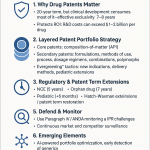
A singular patent is rarely sufficient to provide comprehensive protection for a drug . Pharmaceutical companies, therefore, employ a multi-layered patent strategy, meticulously securing protection for various aspects of a drug to create a robust “web of protection” . This layered approach aims to establish multiple, formidable barriers to entry for competitors.
Key types of patents commonly utilized in the pharmaceutical industry include:
Composition of Matter Patents: These are foundational patents covering the active pharmaceutical ingredient (API) itself. They are generally regarded as the strongest and broadest in scope, forming the core of a drug’s intellectual property protection .
Method of Use Patents: These patents protect novel uses or indications for an existing drug. For example, a known compound initially approved for one condition might later be patented for its efficacy in treating a different disease. These patents are increasingly important in lifecycle management, with 41% of patents filed after initial FDA approval being for method-of-use claims, underscoring their strategic value in extending market exclusivity .
Formulation Patents: These patents cover specific preparations or delivery methods of a drug. Examples include extended-release versions, new dosage forms (e.g., transitioning from an oral tablet to a topical patch), or improvements in taste or ease of administration designed to enhance patient compliance . For a new formulation to be patentable, it must demonstrate novelty and an inventive step, typically by providing a technical effect or a significant advantage over existing formulations .
Process Patents: These patents protect the specific processes used to manufacture the drug, encompassing chemical or biological pathways, precise reaction conditions (such as temperature, pH, or pressure), and the equipment employed .
Polymorphs, Salts, Metabolites, and Device Claims: Beyond these primary categories, other related chemical forms (e.g., crystalline forms, salts, or active metabolites of a drug) or administration devices (e.g., specialized inhalers or injectors) can also be patented, adding further intricate layers of protection around the core drug .
The strategic deployment of these diverse patent types allows for a sophisticated “layering” approach, which collectively creates a formidable barrier against competitors. By combining these different patent types, companies can construct a comprehensive “patent thicket” around a single drug. This strategy is not limited to protecting the core compound itself, but extends to its various applications, manufacturing methods, and delivery mechanisms. This multi-faceted protection significantly increases the difficulty and cost for generic manufacturers to “design around” the original patent and enter the market, thereby extending the effective period of market exclusivity .
However, the strategic use of these patent types, particularly those filed post-FDA approval, is a source of considerable contention and increasing regulatory scrutiny. Data indicates that “72% of patents for top drugs are filed post-FDA approval” , and these “late-filed patents correlate with 22% longer exclusivity periods” . While this practice is often framed as legitimate lifecycle management (frequently termed “evergreening” ), critics argue that it can be used to “game the U.S. patent system and block competition” without introducing significant therapeutic innovation. This highlights the ethical and regulatory tightrope companies must navigate, as such practices can invite legislative proposals, like the “Affordable Prescriptions for Patients Act,” specifically aimed at curbing perceived abuses and promoting earlier generic entry .
1.5.2. Navigating the Drug Development Lifecycle with Patents
Patent strategy is not a static blueprint; it is a dynamic, evolving plan that must adapt throughout the lengthy and complex drug development process, from the earliest stages of discovery to post-market launch and beyond . The integration of patent considerations at each phase is crucial for maximizing protection and commercial value.
The key stages of the drug development lifecycle and their associated patent considerations include:
Discovery and Initial Patent Filing: This nascent stage is where the fundamental innovation occurs. Early filing, often initiated with provisional patent applications, is paramount to establish an early priority date for the invention . The focus during this phase typically revolves around composition of matter patents and initial method of use claims, securing the core chemical entity.
Preclinical and Clinical Development (Phases 1, 2, 3): As a drug progresses through rigorous preclinical testing and human clinical trials, a wealth of new data emerges. This ongoing research often uncovers additional patent opportunities, such as specific formulations, new therapeutic indications, refined manufacturing processes, or optimized dosage regimens . During these phases, continuation and divisional applications are strategically leveraged to capture these evolving discoveries and expand the scope of protection around the initial invention .
Regulatory Approval (Registration): This critical phase marks the culmination of years of R&D. It is also the point where patent term adjustments (PTA) and patent term extensions (PTE) become highly relevant, designed to compensate for the significant time lost during the regulatory review process . Additionally, data exclusivity, a separate form of market protection granted by regulatory bodies, comes into play, providing additional periods of market protection independent of patent terms .
Launch/Post-Registration (Market Exclusivity Period): Once a drug is approved and launched, the strategic focus shifts to defending existing patents against challenges, exploring proactive lifecycle extension strategies (e.g., developing new formulations, combination therapies, or new indications—a practice often referred to as “evergreening”) , and continuously monitoring the market for potential infringement .
Patent Expiration and Generic Competition: This final stage, often termed the “patent cliff,” requires meticulous planning. Strategies include considering authorized generic launches, differentiating the brand based on quality and long-term safety data, and leveraging established brand loyalty through targeted marketing campaigns .
The lengthy development timeline—often 12-13 years from initial patent filing to regulatory approval —significantly shortens the effective market exclusivity period. While patents nominally grant 20 years of protection from their filing date, the reality of drug development means that companies often enjoy only 7-8 years of effective market exclusivity after a drug’s launch, or sometimes closer to 7-10 years on average . This “lost time dilemma” underscores precisely why patent term extensions (PTEs) and supplementary protection certificates (SPCs) are not just beneficial, but vital mechanisms. They are necessary to make the massive R&D investment economically viable and to incentivize continued innovation.
The interplay between patent strategy and regulatory processes is inherently complex and can often become contentious. FDA regulations, for instance, do not merely prolong development timelines; they can also influence the scope of a patent and lead to additional costs and delays as companies modify their filings to align with compliance requirements . Furthermore, FDA approval does not automatically guarantee market exclusivity, as competitors retain the right to challenge patents, creating a high-stakes environment for innovation . This intricate dynamic means that patent teams must work in lockstep with regulatory affairs departments to optimize filings and anticipate challenges, effectively transforming regulatory hurdles into strategic opportunities for extended market protection.
2. Building Your Patent Empire: Strategic Foundations
A robust drug patent portfolio is never built by chance; it is the deliberate outcome of meticulous planning, keen foresight, and expert execution. This section delves into the foundational best practices for identifying, claiming, and securing innovations, thereby laying the groundwork for a defensible and valuable patent empire.
2.1. Identifying Core Innovations and Patentable Subject Matter
The initial and arguably most critical step in constructing a strong patent portfolio involves the precise identification and prioritization of novel drug compounds, unique formulations, and proprietary methods of synthesis or delivery that are central to the business strategy . This process extends beyond mere scientific discovery; it requires a strategic mapping of patents against existing product lines and emerging market opportunities to ensure the portfolio remains relevant and valuable as the business evolves .
Key considerations in this identification process include:
Strategic Alignment: Patents should actively and directly support the company’s overarching goals, whether those involve launching new products, entering new markets, or developing sophisticated licensing strategies . This ensures that every patent contributes meaningfully to the business’s competitive posture.
Prioritization of Value: Inventions must be rigorously ranked using a codified rubric based on their strategic importance, potential return on investment (ROI), and alignment with long-term corporate objectives . This disciplined evaluation helps in the optimal allocation of finite resources, focusing efforts where they will yield the greatest impact .
Comprehensive Patentability Assessment: A crucial prerequisite is a thorough evaluation of an invention’s novelty, non-obviousness, and utility. This is achieved through comprehensive prior art searches, which involve scouring existing patents, scientific literature, and public disclosures . Engaging experienced patent attorneys is indispensable at this stage to interpret search results accurately and advise on strategies to overcome potential obstacles, thereby ensuring the strength and defensibility of subsequent patent applications .
The identification process is not purely scientific; it is fundamentally a strategic business decision. Prioritizing inventions based on “strategic importance, potential return on investment, and alignment with long-term goals” dictates that not every scientifically novel discovery warrants the significant investment required for patent protection. Resources—financial, human, and time—are finite. A strategically managed portfolio focuses on assets that maximize commercial value and competitive advantage, ensuring that R&D efforts are not just innovative but also commercially viable. This necessitates close, continuous collaboration between R&D, business development, and legal teams, fostering a shared understanding of market needs and IP opportunities.
Furthermore, the concept of “white space” identification is becoming increasingly crucial for proactive innovation and sustained market leadership. Patent landscape analysis is a powerful tool that helps to “discover white space for innovation” . White spaces are essentially areas within a technological domain where there is minimal or no existing patenting activity, suggesting untapped potential for novel research and breakthroughs . Identifying these gaps allows companies to strategically direct their R&D efforts towards truly patentable areas , fostering “first-to-market” opportunities and thereby creating less direct competition . This proactive approach transforms patent analysis from a purely defensive measure into an offensive innovation driver, enabling companies to carve out new market segments and secure future revenue streams.
2.2. The Art of the Claim: Strategic Drafting for Maximum Protection
The claims within a patent application are arguably its most critical component, as they precisely define the legal boundaries of the protection granted . Crafting clear, comprehensive, and strategically worded claims is an intricate art form, demanding exceptional precision to ensure both enforceability and broad coverage while meticulously avoiding known prior art . The quality of these claims directly impacts the scope and defensibility of the entire patent.
Key strategies in the art of claim drafting include:
Balancing Breadth and Specificity: Claims must be broad enough to prevent easy workarounds or “design-arounds” by competitors, yet specific enough to withstand rigorous scrutiny from patent examiners and potential challengers in litigation . This delicate balance is paramount to securing meaningful protection.
Anticipating Future Advancements: Forward-thinking claim drafting involves anticipating future advancements, variations, and potential applications of the invention. This foresight ensures long-term relevance and effectively blocks competitors from exploiting unforeseen uses or modifications of the drug .
Utilizing a Variety of Claim Types: To create a comprehensive “web of protection,” it is advisable to include a diverse array of claim types. This might encompass compound claims (for the active ingredient), method of treatment claims (for specific therapeutic uses), formulation claims (for drug preparations), and dosage regimen claims (for administration protocols) .
Detailed Description and Meticulous Documentation: The claims must be fully supported by a detailed written description of the invention. Meticulous documentation of every experimental step, reaction conditions, equipment used, and empirical data is crucial. This comprehensive record validates the advantages of the process or product and provides essential evidence during prosecution and potential enforcement .
Including Supporting Visuals: Diagrams, flowcharts, and schematics can significantly enhance the clarity of the patent application. These visuals depict process steps, equipment setups, and even molecular or chemical changes, making it easier for patent examiners—and later, judges or competitors—to understand the invention at a glance, thereby reinforcing the written descriptions and strengthening the overall application .
The quality of the patent application directly correlates with its defensibility and ultimate commercial value. As one expert notes, “the quality of your patent often depends on the quality of your application” . A poorly drafted patent, even for a groundbreaking invention, is a weak asset that can be easily challenged or circumvented. This underscores that investing in experienced patent attorneys and maintaining meticulous internal documentation is not merely an overhead cost, but a critical investment in protecting future revenue streams and market position. Precision in language is paramount, as ambiguity can lead to invalidation or a severely limited scope of protection in litigation.
Strategic claim drafting also serves as a proactive defense against future litigation. By anticipating potential advancements and variations of the core invention, and by drafting claims that are both broad and precise, companies are essentially pre-empting potential “design-arounds” by generic competitors . This proactive approach significantly reduces the likelihood and potential cost of future patent litigation, as the scope of protection is clearly defined and robust from the outset, making infringement more difficult and challenges less likely to succeed.
2.3. Leveraging Provisional and Continuation Applications
In the pharmaceutical industry, characterized by lengthy and iterative development cycles, strategic filing mechanisms such as provisional and continuation applications are crucial tools for establishing early priority dates and adapting patent protection as research evolves .
Provisional Patents:
Purpose: Provisional patent applications are filed early in the discovery process to establish an initial priority date for an invention. They offer a crucial balance between the speed required to secure an early filing date and the flexibility needed to refine the invention .
Benefit: This mechanism grants companies a full year to refine their invention, gather additional supporting data, and conduct further experiments before committing to the more rigorous and costly requirements of a full non-provisional application . This provides critical “breathing room” for ongoing research and development, which is particularly valuable given the protracted timelines of pharmaceutical R&D . It allows innovators to secure an early stake in a rapidly moving field without incurring immediate full costs.
Continuation and Divisional Applications:
Purpose: Continuation applications allow an applicant to pursue additional claims based on the original patent application’s disclosure, provided the parent application is still pending . Divisional applications, on the other hand, are used when a patent office determines that an application contains more than one distinct invention, requiring them to be separated into individual filings .
Benefit: These tools are particularly effective in the pharmaceutical industry, where new uses, improved formulations, or novel manufacturing processes may be discovered after the initial patent filing, often emerging during later stages of clinical trials . By keeping a continuation application pending, a company maintains the ability to pursue new claims as research progresses, thereby potentially extending the effective protection period and strengthening the overall portfolio against generic challengers .
These filing strategies are essential for navigating the inherent uncertainty and iterative nature of drug R&D. Drug discovery and development are rarely linear processes; new data constantly emerges, novel uses for compounds are identified, and formulations are continuously optimized. Provisional and continuation applications provide the necessary flexibility to secure early protection while simultaneously allowing for continued innovation and refinement without the risk of losing priority. This dynamic approach is a direct response to the “messy” reality of scientific discovery and its commercialization.
However, the strategic use of continuation applications can also contribute to the formation of “patent thickets,” a practice that has come under increasing scrutiny. While legitimate for capturing and protecting new discoveries and adaptations, the continuous filing of numerous continuation applications can lead to the creation of extensive, overlapping patent portfolios . This highlights the fine line between robust protection and potentially anti-competitive practices. Companies must be acutely aware of the evolving legal and public perception of these strategies, as they can invite legal challenges and legislative intervention aimed at facilitating earlier generic entry and increasing drug affordability.
2.4. The Global Chessboard: International Patent Strategy
Given the inherently global nature of the pharmaceutical market, protecting innovations in key markets worldwide is paramount for maximizing commercial success . This necessitates a nuanced and sophisticated understanding of diverse national patent laws, regulatory frameworks, and market dynamics across different jurisdictions. A “one-size-fits-all” approach to global IP strategy is simply insufficient.
Key considerations for developing a robust international patent strategy include:
Prioritization of Regions: Decisions regarding where to file internationally should be meticulously based on a comprehensive assessment of market potential, the specific regulatory environments, and the presence and strategies of competitors in each region . This ensures resources are allocated to markets that offer the highest strategic value.
Leveraging the Patent Cooperation Treaty (PCT): The PCT streamlines the complex process of seeking patent protection in multiple countries by providing a unified international filing procedure. This allows applicants to file a single “international” patent application, which then serves as a basis for seeking protection in numerous PCT member states, delaying national phase entry costs and providing more time for strategic decisions .
Engaging Local Expertise: Working closely with local patent attorneys in each target jurisdiction is crucial. These professionals possess an invaluable understanding of specific compliance requirements, local legal nuances, and cultural considerations that can significantly impact the success of a patent application or enforcement action .
Utilizing Global Databases: Leveraging comprehensive global patent databases and understanding international classification systems is critical for conducting thorough prior art searches and informing strategic market entry decisions. These resources provide a panoramic view of the global IP landscape, identifying potential conflicts and opportunities .
Global patent strategy is not a uniform application of rules but a nuanced “chessboard” where variations in national patent laws, regulatory exclusivities, and even political landscapes significantly impact market entry and profitability . For instance, China’s pharmaceutical patent term compensation system has a unique requirement: to qualify for the maximum 5-year extension, the drug must be first approved in China . This specific condition can profoundly influence global submission strategies, potentially incentivizing companies to prioritize China for initial regulatory approval, even if it is not their largest market, due to the specific IP incentives offered . This complex interplay between IP law, regulatory pathways, and market dynamics necessitates highly localized and adaptive strategies, where the timing and sequence of filings across different jurisdictions become critical strategic decisions.
These discrepancies in global IP frameworks create both opportunities and challenges for market access and affordability. The “fundamental tradeoff between affordability… and rate of entry into a national market” means that countries with weaker patent protection or stronger price regulation may experience slower drug launches or even no entry for certain innovative drugs. This highlights the ongoing global policy debate surrounding intellectual property and access to medicines, particularly in low- and middle-income countries . Companies must therefore balance the imperative of maximizing global protection with potential reputational harm or ethical considerations related to equitable access, especially in regions with pressing public health needs.
2.4.1. Must-Have Table: Comparison of Patent Term Extensions and Data Exclusivity Across Key Jurisdictions (US, EU, Japan, China)
Understanding the mechanisms for extending market exclusivity beyond the standard patent term is paramount for business professionals engaged in global pharmaceutical strategy. The following table provides a clear, side-by-side comparison of Patent Term Extensions (PTEs) and Supplementary Protection Certificates (SPCs) across key global jurisdictions, highlighting the nuances that can significantly impact a drug’s commercial lifespan.
Feature
United States (US)
European Union (EU)
Japan
China
Legislation/Mechanism
Hatch-Waxman Act (PTE)
Supplementary Protection Certificates (SPCs)
Patent Law (PTE)
Patent Law (Patent Term Compensation)
Purpose
Compensate for regulatory review delays
Compensate for regulatory review delays
Compensate for regulatory review delays
Compensate for regulatory review delays
Maximum Extension
Up to 5 years
Up to 5 years
Up to 5 years (average ~2 years)
Up to 5 years
Total Exclusivity Cap (Post-Approval)
Total patent term (incl. extension) cannot exceed 14 years from FDA approval
Total market exclusivity (patent + SPC) generally aims for 15 years from first marketing authorization
Not explicitly capped at 14/15 years, but duration is limited by regulatory delay
Effective patent term after market approval capped at 14 years
Pediatric Extension
Additional 6 months (Pediatric Exclusivity)
Additional 6 months for medicinal products for children (Paediatric Investigation Plan – PIP)
Not specified in snippets
Not specified in snippets
Key Conditions/Requirements
Unexpired patent; single extension; product’s use subject to FDA approval
Unexpired patent; first marketing authorization in EU; product protected by basic patent
Unexpired patent; regulatory approval granted
Requires drug to be first approved in China for maximum benefit; unexpired patent
Average Extension Granted
Approximately 2.5 years
Around 3 years
Around 2 years
Few examples; recent 5-year grant for Telitacicept
This consolidated view is critical for strategic decision-making in global market entry, licensing negotiations, and resource allocation. It allows companies to quickly grasp the varying incentives and requirements across major markets, informing where and when to pursue extended protection for their products.
3. Dynamic Management: Optimizing Your Portfolio for Sustained Value
A patent portfolio is not a static collection of historical documents; it is a living, evolving asset that demands continuous nurturing, strategic optimization, and proactive adaptation. This section delves into the best practices for actively managing your portfolio, ensuring it remains dynamically aligned with evolving business objectives and market realities, and leveraging the power of data for superior competitive intelligence.
3.1. Continuous Monitoring and Strategic Audits
Effective patent portfolio management necessitates an ongoing process of rigorous review and strategic adaptation to ensure patents remain aligned with the overarching business strategy . This involves systematic tracking of patent status, critical deadlines, and conducting periodic audits to meticulously assess the relevance and value of each asset within the portfolio .
Key practices for continuous monitoring and strategic audits include:
Prioritizing High-Value Assets: Patents must be continuously prioritized based on their strategic value to the company. This means focusing efforts and resources where they will yield the greatest impact, particularly on patents that provide explicit coverage for current products, those under development, or those central to future strategic initiatives . This ensures that the most critical innovations receive optimal protection and maintenance.
Pruning Non-Essential Patents: Regular and systematic portfolio audits are essential for identifying patents that no longer serve the business’s needs, have become obsolete, or are simply too costly to maintain relative to their diminishing value. Identifying and divesting redundant or low-value patents allows companies to free up valuable resources—both financial and human—that can be reallocated towards more promising assets or new R&D endeavors . This transforms patent maintenance from a passive obligation into an active financial optimization strategy.
Integrating Patent Strategy with Business Goals: The patent portfolio should not operate in isolation; it must actively support and advance the company’s broader goals. This includes aligning patenting efforts with new product launches, market entry initiatives, or specific strategies for licensing and monetization . Achieving this requires robust, cross-functional collaboration, fostering a shared understanding and responsibility between R&D, legal, marketing, and business development teams .
Diligent Monitoring of Maintenance Fees and Deadlines: Implementing a robust system for tracking maintenance fees, annuities, and other critical deadlines is paramount to prevent costly oversights that could lead to the unintended expiration of valuable patents . This seemingly administrative task is, in fact, a vital component of value preservation, ensuring that the company’s most important assets remain in force.
Proactive portfolio management is fundamentally a cost-saving and value-maximizing exercise. As one expert suggests, “If a patent has outlived its use to you, perhaps the associated fees and legal costs are no longer worthwhile to you” . This highlights that maintenance fees are ongoing costs that can accumulate significantly across a large portfolio. By regularly auditing and strategically pruning non-essential patents, companies can substantially reduce these recurring expenses, reallocate resources to more promising innovations, and ensure their portfolio remains lean, impactful, and aligned with current strategic priorities. This transforms patent maintenance from a passive obligation into an active financial optimization strategy.
Furthermore, portfolio optimization is driven by a continuous feedback loop informed by market intelligence. “Continuous market monitoring helps identify the opportunities and risks for your specific portfolio” . This implies that critical portfolio decisions—what to keep, what to prune, where to invest next—are not made in a vacuum. They are informed by a constant influx of competitive analysis, insights into emerging technologies, and an understanding of shifts in market conditions . This dynamic interplay ensures the patent portfolio remains a strategic asset that actively contributes to competitive advantage, rather than merely a historical archive of past innovations.
3.2. The Power of Data: Competitive Intelligence and Patent Analytics
In today’s hyper-competitive pharmaceutical landscape, leveraging patent data for sophisticated competitive intelligence is no longer an option; it is a strategic imperative. This involves meticulously analyzing existing patents, pending applications, and competitor filings to determine the scope of protection, identify potential infringement risks, and decipher competitor strategies .
Key practices for harnessing the power of data include:
Comprehensive Patent Landscape Analysis: Conducting thorough patent landscape analyses is crucial for identifying potential infringement risks, discovering “white space” for future innovation, understanding the strategic moves of competitors, and guiding internal R&D efforts towards patentable and commercially viable areas . This provides a panoramic view of the technological and competitive terrain.
Continuous Monitoring of Competitor Activities: Beyond periodic landscape analyses, actively monitoring competitors’ patent filings, R&D pipelines, and market activities is essential to anticipate market shifts and identify potential threats or opportunities early . This vigilance allows for timely adjustments to one’s own patent strategy.
Leveraging Advanced Data Analytics: Utilizing specialized patent analytics tools is fundamental for revealing emerging trends, identifying competitive activity, and pinpointing coverage gaps within the market. These tools enable data-driven decisions regarding patent prosecution, licensing, and enforcement . Analyzing citation data, for instance, can provide valuable insights into a patent’s impact on subsequent innovations, guiding decisions on enforcement, licensing, or further development .
Employing Predictive Analytics: Advanced predictive analytics can be employed to anticipate broader market shifts, identify nascent opportunities, and proactively prepare for potential challenges before they fully materialize . This foresight allows for more agile and responsive strategic planning.
Patent data, often perceived as dry legal documentation, is in fact a rich, often underutilized source of profound business intelligence. The analysis of patent specifications has been shown to improve sales forecasts by 32% compared to brand-based predictions . Machine learning models analyzing 432 drugs found that patent language patterns correlated with eventual sales volumes (R²=0.67) . This moves beyond simply knowing what patents exist to understanding why they exist, who is filing them, and what their future intentions might be. It’s about extracting strategic foresight from seemingly arcane legal documents, transforming raw data into actionable intelligence that can shape R&D pipelines, competitive positioning, and market entry strategies.
The integration of Artificial Intelligence (AI) and machine learning is revolutionizing patent analytics, providing unprecedented depth and speed of analysis. AI-powered patent analytics can “identify emerging trends,” “predict potential infringement risks,” and “suggest new areas for innovation” . Tools like XtalPi’s PatSight, for example, automate the extraction of crucial data such as compound structures, potency, and ADMET from patents, saving significant time and reducing manual errors . This means that the speed and accuracy of competitive intelligence are dramatically increasing, compelling companies to adopt these advanced technologies to maintain a competitive edge. It is no longer solely about human analysis; it is about augmented intelligence, where human expertise is amplified by sophisticated computational capabilities.
3.2.1. Leveraging Tools like DrugPatentWatch for Actionable Insights
Specialized platforms like DrugPatentWatch are indispensable for pharmaceutical companies seeking to transform complex patent data into actionable competitive advantage. These platforms serve as comprehensive biopharmaceutical business intelligence hubs, providing accurate, timely, and actionable intelligence to facilitate better decision-making .
DrugPatentWatch offers a suite of powerful functionalities:
Comprehensive Data Access: It provides deep knowledge on pharmaceutical drugs, encompassing patents, suppliers, generics, and formulations . The platform features a fully integrated database of drug patents and other critical information, allowing for freeform searching and dynamic browsing of data pertaining to pharmaceuticals and patents, both in the US and internationally .
Competitive Intelligence: The platform includes extensive data on litigation, tentative approvals, patent expirations, clinical trials, Paragraph IV challenges, and top patent holders . This information is invaluable for branded pharmaceutical global business intelligence and forecasting, enabling companies to assess the past successes of patent challengers and elucidate the research paths of competitors .
Market Entry Opportunities: For generic and specialty pharmaceutical companies, DrugPatentWatch aids in identifying market entry opportunities and informing portfolio management decisions . It enables users to predict branded drug patent expiration, identify generic suppliers, and prevent overstock of branded drugs for buyers, wholesalers, and distributors .
Advanced Search Capabilities: Users can perform detailed searches by pharmacology, drug patent expiration (by year or patent number), application name, trade name, country (for international patents), biologics license application, and product ingredient .
Alerts and Forecasting: The platform allows users to manage email alerts and provides data export capabilities . It also supports biopharmaceutical forecasting, helping users discover future therapeutic indications for drugs, identify first-time generic entrants, and anticipate future formulary budget requirements .
Platforms such as DrugPatentWatch democratize access to complex patent data, making sophisticated analysis accessible to a wider range of business professionals across an organization. Historically, patent analysis was a highly specialized, manual, and time-consuming task, often confined to legal departments. Tools like DrugPatentWatch, with their integrated databases and user-friendly interfaces, significantly reduce the barrier to entry for strategic patent intelligence . This means that R&D teams, business development professionals, and even marketing strategists can directly access and utilize patent insights, fostering a more IP-aware and data-driven culture across the organization.
The utility of such platforms extends far beyond merely defensive measures; they are powerful tools for proactive market shaping. By facilitating the identification of “generic market entry opportunities” and enabling the “anticipat[ion of] future formulary budget requirements” , DrugPatentWatch empowers both branded and generic companies to plan their market strategies years in advance. For branded companies, this means preparing for the impending “patent cliff” with robust lifecycle management strategies. For generic manufacturers, it means identifying lucrative entry points and optimizing their launch timings. This shifts the focus from passively reacting to patent events to actively shaping future market dynamics and competitive landscapes.
3.2.2. Must-Have Table: Key Features of Leading Patent Analytics Platforms
Selecting the right patent analytics platform is a critical strategic decision for pharmaceutical companies aiming to transform patent data into competitive advantage. The following table provides a comparative overview of key features offered by leading platforms, aiding business professionals in evaluating tools that best suit their specific needs for enhanced patent intelligence.
Platform Name
Primary Focus/Strength
Key Functionalities
Target User/Industry
Unique Selling Proposition
DrugPatentWatch
Global Biopharmaceutical Business Intelligence
Drug patents, suppliers, generics, formulations, litigation, patent expirations, clinical trials, Paragraph IV challenges, email alerts, data export, market entry opportunities, forecasting
Branded Pharma, Generics, API Manufacturers, Wholesalers, Healthcare Payers
Fully integrated database of drug patents & critical info; focus on market entry & forecasting for pharma; cited by major publications
Corporate IP Teams (all sizes), Law Firms, Academia & Government, Life Sciences & Healthcare
Unifies IP management with integrated data & tools; predictive AI for cost forecasting; tailored solutions for corporate & law firm needs
Questel (e.g., Equinox, Orbit Intelligence)
Smart IP Management Software & Services
IP docketing & portfolio management, automated renewals, KPI dashboards, invention-to-filing solution, patent search (Orbit Intelligence, BioSequence, Chemistry), AI-drafting, claim mapping, international filing support
Corporate IP Teams (all sizes), Law Firms (small to enterprise), R&D, Business Development
Intuitive IP docketing with leading law engine; comprehensive patent search & analytics; AI-powered drafting & prosecution copilots; end-to-end IP lifecycle management
IPD Analytics
Drug Life-Cycle Insights & Competitive Landscape Analysis
Combines uncommon expertise (e.g., former Federal Circuit Clerks, PhD Scientists) with proprietary data; focuses on quantifying competitive shifts
XtalPi PatSight
AI-Powered Pharmaceutical Patent Data Mining
Accurate chemical recognition, automated identification of structure/names/activity, multilingual patent support (Eng, Chi, Jap), time/resource saving (1 hr/patent), data management & SAR analysis, big data extraction, IP landscape analysis
Small Molecule Drug Discovery Researchers, R&D Teams
Automates extraction of crucial chemical/bioactivity data from patents using advanced optical AI; streamlines SAR analysis; provides editable data formats
This comparative table is invaluable for business professionals evaluating technology solutions to enhance their patent intelligence capabilities. It allows for a clear, concise understanding of the unique strengths and core functionalities of each leading platform. Such a tool assists in making informed investment decisions in these critical technologies, ensuring that the chosen solution aligns perfectly with the company’s specific strategic goals, whether that is optimizing R&D, forecasting market shifts, or strengthening litigation preparedness. It addresses the implicit need for practical, implementable solutions to execute the discussed best practices in patent portfolio management.
4. Defending Your Innovation: Enforcement and Risk Mitigation
Even the most meticulously crafted patent portfolio is only as strong as its ability to withstand challenges and deter infringement. In the pharmaceutical sector, where the stakes are extraordinarily high, proactive defense and a robust strategy for navigating litigation are not merely advisable; they are absolutely critical. This section addresses the essential practices for proactively defending intellectual property and effectively managing the complex landscape of patent litigation.
4.1. Proactive Defense Measures: Building a Robust Shield
Preventing infringement and preparing for potential challenges long before they materialize is a cornerstone of effective patent portfolio management. Implementing proactive measures constructs a formidable shield around a company’s innovations, minimizing vulnerabilities and deterring potential infringers .
Key practices for building this robust shield include:
Regular Patent Portfolio Reviews: Continuously assessing the strength, validity, and defensibility of existing patents is paramount . These periodic reviews help identify any weaknesses that could be exploited by challengers and ensure that the portfolio remains aligned with current legal standards and market realities.
Vigilant Monitoring of Competitor Activities: Beyond broad landscape analysis, actively watching for specific market moves and patent filings by potential infringers is essential . This includes tracking new product launches, clinical trial data, and regulatory submissions that might signal an intent to enter a protected market.
Maintaining Detailed Lab Notebooks and Comprehensive Documentation: Meticulous and contemporaneous records of the entire invention process—from initial conception to experimental results and data analysis—are invaluable. These detailed lab notebooks and supporting documentation provide undeniable evidence to strengthen a patent’s defensibility against challenges to its novelty, non-obviousness, or inventorship . This human element of diligent record-keeping remains critical even in an age of advanced analytics, as it provides the foundational, verifiable proof needed in legal disputes.
Implementing Strong Trade Secret Protections: Patents are not the only form of IP protection. Complementing patents with robust trade secret strategies is crucial for safeguarding unpatentable information or undisclosed proprietary data, such as specific manufacturing processes, purification methods, or preclinical data . This dual approach creates a more comprehensive defense.
Conducting Freedom-to-Operate (FTO) Analysis: Performing thorough FTO analyses early in the drug development pipeline is a strategic imperative. This involves scrutinizing the existing patent landscape to identify any third-party patents that could potentially be infringed by a company’s product or process. Identifying these risks early allows the company to “design around” existing patents, acquire necessary licenses, or adjust their development path, thereby avoiding costly and time-consuming litigation later in the product lifecycle .
Proactive measures significantly reduce both the likelihood and the cost of future litigation. By identifying potential infringement risks early through diligent FTO analysis , companies can strategically adjust their R&D or product development to avoid infringing existing patents, saving immense legal fees and potential damages. Similarly, robust documentation and regular portfolio reviews strengthen the validity of a patent, making it a less attractive target for competitors seeking to invalidate it. This strategic shift from reactive damage control to preventive strategy not only saves significant legal costs but also minimizes market disruption and preserves market exclusivity.
The “human element” of meticulous record-keeping remains critical even in an age of advanced analytics. While AI tools are powerful for analyzing vast datasets and identifying patterns, the foundational data often originates from human-generated records like lab notebooks and experimental reports . These detailed, timestamped records provide the undeniable evidence needed to prove inventorship, establish priority dates, and demonstrate the non-obviousness of an invention in a court of law. This highlights that technology augments, but does not replace, the fundamental discipline of rigorous scientific and legal documentation.
4.2. Navigating Patent Litigation and Challenges
Despite the most diligent proactive measures, patent disputes are an inherent and often unavoidable risk in the high-value pharmaceutical industry. This is particularly true given the aggressive strategies employed by generic manufacturers seeking to bring lower-cost alternatives to market . Companies must therefore be prepared for rigorous challenges and possess clear, well-defined strategies for both enforcement and defense .
The Hatch-Waxman Act (US): This landmark legislation provides a specific framework for the approval of generic drugs and outlines specialized procedures for patent litigation. A common scenario involves “Paragraph IV challenges,” where generic companies assert that the brand-name drug’s patents are either invalid or will not be infringed by their proposed generic product .
The Biologics Price Competition and Innovation Act (BPCIA) (US): Analogous to the Hatch-Waxman Act but tailored for biosimilars, the BPCIA outlines complex procedures for patent litigation, often referred to as the “patent dance,” which involves a structured exchange of information and legal challenges between the originator and biosimilar applicant .
Strategies for effectively responding to infringement and invalidity claims include:
Issuing Cease and Desist Letters: Often the initial step, these letters formally notify an alleged infringer of the patent holder’s rights and demand cessation of infringing activities .
Negotiation and Licensing Agreements: Litigation can be costly and protracted. Strategic negotiation and the establishment of licensing agreements can serve as a viable alternative, allowing for settlements that may include royalty payments or agreed-upon market entry dates for the generic/biosimilar product .
Filing Lawsuits for Infringement: When negotiations fail or infringement is clear and substantial, pursuing legal action through the courts is necessary to protect market exclusivity and seek damages .
Inter Partes Review (IPR) Proceedings: These are post-grant challenge mechanisms conducted at the United States Patent and Trademark Office (USPTO), allowing third parties to challenge the validity of an issued patent based on prior art .
Robust Preparation for Defense: Defending a pharmaceutical patent demands exceptionally robust preparation, as the stakes are extraordinarily high—a single unfavorable decision could result in the loss of market exclusivity and billions in revenue . This includes maintaining thorough documentation of the invention process and having a deep understanding of the patent’s prosecution history .
Strategic Claim Amendments: During patent prosecution or re-examination proceedings, claims can be strategically amended to address examiner objections or to strengthen their defensibility against potential challenges, all while striving to maintain broad protection for the core invention .
Utilizing Interviews and Hearings: Direct engagement with patent examiners through interviews or hearings can provide valuable opportunities to clarify misunderstandings, present arguments in person, and negotiate claim amendments directly, often leading to more favorable outcomes .
Litigation, while a significant cost, is also a strategic tool to extend market exclusivity. Companies like AbbVie have famously leveraged “extensive patent protection to extend its market exclusivity on Humira by 7 years, while extracting settlements and royalty payments before biosimilars entered the U.S. in 2023” . This demonstrates that legal battles, even those culminating in settlements rather than full trials, can effectively delay generic entry and secure substantial revenue, transforming what might seem like a defensive cost into an active extension of market life.
The rise of “patent thickets” and “product hopping” highlights an ongoing tension between legitimate IP protection and alleged anti-competitive behavior, which has increasingly drawn legislative attention. “Branded drug companies… routinely amass dozens, often hundreds, of patents on a single drug to create overlapping layers of patent protection” . While companies assert that this practice legitimately protects new and useful inventions as intended by the patent system, critics view it as “gaming the U.S. patent system” to block competition and maintain high drug prices. This has led to legislative proposals such as the “Affordable Prescriptions for Patients Act,” aimed at cracking down on these practices . This means that pharmaceutical companies must not only prepare for aggressive litigation but also for increasing regulatory scrutiny and public pressure regarding their patent enforcement strategies, navigating a complex legal and ethical landscape.
5. Maximizing Returns: Monetization and Lifecycle Extension Strategies
The true value of a drug patent portfolio extends far beyond mere defensive protection; it lies in its inherent capacity to generate diverse revenue streams and sustain market presence long after initial regulatory approval. This section explores proactive strategies for monetizing intellectual property and ethically extending the commercial life of pharmaceutical products, transforming IP from a cost center into a profit driver.
5.1. Strategic Licensing and Collaborative Ventures
Patents are not just legal shields; they are valuable assets that can generate significant revenue streams beyond direct product sales through carefully structured licensing agreements and strategic collaborative partnerships .
Key practices for strategic monetization include:
Identifying Licensing Opportunities: Ongoing, systematic patent assessments are crucial for identifying potential licensing opportunities with third parties. This is particularly relevant for patents that may be valuable to other companies but perhaps non-core to the patent holder’s immediate business focus . Such opportunities can transform dormant IP into active revenue generators.
Structuring Robust Licensing Agreements: When a licensing opportunity is identified, the terms of the agreement must be meticulously structured to maximize long-term value. This includes defining clear royalty rates, milestone payments tied to development or sales achievements, and exclusivity clauses that balance revenue generation with market control .
Fostering Collaborative Ventures: Partnering with other pharmaceutical firms, academic research institutions, or specialized technology companies provides access to complementary resources, expertise, and technologies that might not be available internally . Joint development partnerships can create synergistic opportunities for co-developing new products, leveraging complementary technologies, or exploring new indications for existing drugs .
Ensuring Clear IP Agreements in Collaborations: In any collaborative venture, establishing clear and comprehensive agreements on intellectual property rights from the outset is paramount. This includes defining ownership, usage rights, and revenue sharing for any jointly developed IP, ensuring mutual benefit and preventing future disputes that could undermine the partnership and portfolio enrichment .
Licensing transforms patents from a purely defensive cost center into an active revenue generator. Instead of simply protecting a product for internal sales, licensing allows a company to “build revenue through various channels” from its IP assets. This is particularly valuable for technologies or uses that a company might not have the resources or strategic intent to pursue internally, or for expanding into new geographical markets without the need for direct operational investment. It represents a sophisticated approach to extracting maximum value from every piece of the patent portfolio, even those not directly tied to a flagship product.
Furthermore, global variations in patent law and market access can significantly enhance leverage in licensing negotiations. The “proven implementation of the patent compensation system in countries like China, Japan, the EU, and the U.S. enhances leverage in global licensing negotiations and joint development contracts” . The ability to offer extended exclusivity in key markets through mechanisms like Patent Term Extensions (PTEs) or Supplementary Protection Certificates (SPCs) makes a patent portfolio considerably more attractive to potential licensees. This extended exclusivity adds certainty to revenue projections for the licensee, thereby increasing the strategic asset value of the patent and providing significant influence in royalty negotiations.
With the relentless pressure of patent expiration—a phenomenon often termed the “patent cliff”—pharmaceutical companies must employ creative and ethical strategies to extend the commercial life of their patents and maintain market exclusivity . This proactive approach is broadly referred to as “lifecycle management” and is crucial for sustaining revenue streams and funding future innovation.
Common techniques for extending market exclusivity, often termed “evergreening,” include:
New Formulations or Delivery Methods: This involves developing improved ways a drug is prepared or administered. Examples include creating extended-release versions, developing new dosage forms (e.g., transitioning from an oral tablet to a topical solution), or enhancing taste or ease of administration to improve patient compliance . For a new formulation to be patentable, it must demonstrate genuine novelty and an inventive step, typically by providing a technical effect or a distinct advantage over existing formulations .
New Indications or Uses: Companies can explore and patent new therapeutic uses for an existing drug. This might involve reviewing existing clinical data for potential off-label uses, or conducting new clinical trials for promising, previously unaddressed indications . This expands the patient population and market for the existing compound.
Combination Drugs: Creating new, patentable products by combining an existing drug with other complementary medications can open up new therapeutic avenues and extend the effective patent life of the original compound .
Metabolite Patents: Patenting active metabolites of a drug can provide an additional layer of protection, particularly if the metabolite offers distinct therapeutic advantages or a different pharmacokinetic profile .
Beyond these product-based strategies, formal mechanisms exist to compensate for regulatory delays:
Patent Term Extensions (PTEs) and Supplementary Protection Certificates (SPCs): These legal instruments are specifically designed to compensate patent holders for the time lost during the lengthy regulatory approval process, effectively extending the patent’s life beyond its standard 20-year term .
In the United States, PTEs under the Hatch-Waxman Act can add up to five years to a patent’s term, with the total patent term (including the extension) capped at 14 years from FDA approval . Approximately 40% of all US PTE requests are for pharmaceutical patents, underscoring their importance to the industry .
In the European Union, Supplementary Protection Certificates (SPCs) also allow for extensions of up to five years, with the total market exclusivity (patent plus SPC) generally aiming for 15 years from the first marketing authorization .
Japan and China have implemented similar patent term compensation systems, with China recently granting a groundbreaking full five-year extension for a drug, setting a significant precedent .
The practice of “evergreening” is a dual-edged sword, offering legitimate avenues for lifecycle management but also facing criticism for potentially anti-competitive motives. While techniques like developing new formulations or discovering new indications can genuinely improve patient outcomes, enhance safety, or extend the therapeutic utility of a drug, they are also criticized as “product hopping” or contributing to “patent thickets” when primarily used to “unduly extend the period of exclusivity” . The pharmaceutical industry maintains that these practices legitimately protect new inventions and incentivize ongoing R&D; however, critics argue they primarily serve to keep drug prices high without significant benefits for consumers or genuine innovation . This highlights the ongoing ethical debate and the imperative for companies to ensure their evergreening strategies are genuinely innovative, therapeutically meaningful, and legally defensible to avoid regulatory backlash and reputational damage.
The “lost time” dilemma, caused by the lengthy regulatory review process, makes PTEs and SPCs not just a bonus, but a critical economic necessity for pharmaceutical R&D. With an average effective market exclusivity of only 7-10 years post-launch , the nominal 20-year patent term is significantly eroded by the time consumed in R&D and regulatory approval. PTEs and SPCs are specifically designed to “address this economic disincentive by providing additional exclusivity, thereby maintaining the attractiveness of pharmaceutical R&D and ensuring a continuous pipeline of new medicines” . This means these extensions are fundamental to the economic viability of new drug development, rather than merely a legal loophole. They are essential for ensuring that the massive, high-risk investments in drug discovery can yield a sufficient return to justify future innovation.
5.3. Preparing for the Patent Cliff: Post-Exclusivity Planning
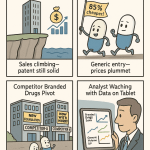
The “patent cliff,” a period where multiple blockbuster drugs lose patent protection within a short timeframe, can lead to steep and rapid revenue declines for innovator companies . Proactive and comprehensive planning is therefore essential to mitigate this significant impact and ensure sustained profitability and market presence.
Key strategies for preparing for and navigating the patent cliff include:
Developing Next-Generation Products: A core strategy involves investing heavily in R&D to develop improved versions, follow-on innovations, or entirely new therapeutic entities that can replace the revenue generated by expiring patents . This ensures a continuous pipeline of innovative products.
Exploring New Applications and Markets: Companies should actively identify new indications, patient populations, or geographical markets for the drug that may not have been fully exploited during the period of primary exclusivity . This can breathe new life into an aging asset.
Considering Authorized Generic Strategies: Launching an “authorized generic” version of the branded drug can be a strategic move. This allows the innovator company to maintain some market share and revenue post-expiry by competing directly with independent generic entrants, often leveraging existing manufacturing and distribution channels .
Differentiating the Brand: Even as generic competition emerges, the original brand can retain value. Strategies include emphasizing long-term safety data, real-world effectiveness, and cost-effectiveness compared to newer or generic alternatives . This reinforces the brand’s unique value proposition.
Leveraging Brand Loyalty and Reputation Management: Targeted marketing campaigns, ongoing medical education (CME) for healthcare providers, and proactive reputation management (e.g., monitoring online reviews, sharing positive patient stories) can help retain patient and prescriber loyalty even after generic entry .
Strategically Staggering Expiration Dates: A well-managed patent portfolio aims to stagger patent expiration dates across different products. This prevents multiple blockbuster drugs from losing exclusivity simultaneously, thereby smoothing out revenue fluctuations and avoiding a sudden, severe “cliff” effect .
The patent cliff is not an unforeseen disaster; it is a predictable event that can be anticipated years in advance using tools like DrugPatentWatch to track patent expirations . This foresight allows for strategic R&D investment, pipeline diversification, and meticulous market preparation, transforming a potential crisis into a managed transition. The long-term effect of patent expiration is indeed significant, with a “74% revenue decline by Year 3 post-generic entry” , underscoring the urgency and necessity of these proactive plans.
However, despite significant initial price drops, total revenue for a drug can sometimes increase post-patent expiry due to a substantial increase in sales volume. While patent expiration typically leads to an immediate and sharp price decline (e.g., 38-48% for physician-administered drugs) , analysis from the NBER indicates that volume increases (e.g., 157% for physician-administered drugs) can sometimes lead to a net revenue increase (e.g., +57%) . This counterintuitive finding suggests that post-expiry strategy should also consider market expansion through increased affordability and broader access, rather than solely focusing on brand defense. It highlights a complex market dynamic where increased patient access, driven by lower prices, can sometimes offset the initial price erosion, offering a different pathway to sustained commercial success.
6. The Evolving Horizon: Future Trends and Challenges in Pharma IP
The pharmaceutical intellectual property landscape is in a state of continuous flux, profoundly influenced by rapid technological advancements, evolving regulatory frameworks, and increasing societal demands for affordable healthcare. This final section explores the emerging trends and formidable challenges that will undoubtedly shape drug patent portfolio management in the years to come.
6.1. The Impact of Biosimilars and Generics
The advent of biosimilars has fundamentally revolutionized the pharmaceutical industry, introducing more affordable alternatives to expensive biologic drugs and, in turn, leading to a surge in complex patent litigation . Similarly, generic drugs continue to exert significant pricing pressure on small molecule drugs, reshaping market dynamics.
Key impacts of biosimilars and generics include:
Increased Litigation Complexity: As more biosimilars gain approval, patent litigation is expected to intensify . Biosimilar manufacturers often initiate patent litigation only after submitting their Biologic License Application (BLA) to the FDA, which itself occurs after extensive and costly clinical trials . This legal sequencing can effectively delay market entry for biosimilars, even if the underlying patents are weak.
Analytical and Clinical Challenges: Biologic products are inherently complex molecules, making it challenging to develop analytical methods that can accurately compare a biosimilar to its reference product, and to demonstrate clinical equivalence. These complexities often become central to patent litigation disputes .
Strategic Focus on Secondary Patents: As primary, composition-of-matter patents for biologics expire, biosimilar firms strategically target “secondary patents”—such as those covering methods of use, methods of manufacture, or specific formulations. These secondary patents are generally considered weaker than primary patents and are invalidated at a higher rate, but they can still delay market entry significantly .
Significant Healthcare Savings: Despite litigation delays, biosimilars hold immense potential for creating substantial savings within healthcare systems. Estimates suggest that the introduction of biosimilars could save the US healthcare system up to $54 billion over the next 10 years, and $14.4 billion over 5 years .
Intensified Pricing Pressure: The introduction of biosimilars and generics inevitably leads to increased pricing pressure, often forcing originator companies to reduce their prices to remain competitive and retain market share .
Incentive for Innovation: Paradoxically, the threat of biosimilar and generic competition incentivizes originator companies to continuously innovate and develop new and improved products, driving the next wave of therapeutic breakthroughs .
The Biologics Price Competition and Innovation Act (BPCIA) framework, while designed to create a pathway for biosimilar approval, inadvertently creates a unique litigation dynamic that can delay market access. Biosimilar manufacturers are often compelled to initiate patent litigation after completing extensive and costly clinical trials and submitting their BLA . This “delayed entry persists” because biosimilar firms face significant risks, including injunctions or substantial monetary damages, if they launch “at risk” without first achieving patent clearance. This legal sequencing means that even weak secondary patents, which are often invalidated at a higher rate than primary patents , can effectively block market entry for years, highlighting a systemic issue in balancing innovation protection with the imperative of public access to more affordable medicines.
This challenge posed by biosimilars is forcing a profound re-evaluation of traditional patent strategy, shifting the focus from pure exclusivity to a more dynamic and multi-faceted competitive response. The economic impact of biosimilars, characterized by significant price drops and potential revenue decline for originators , means that companies can no longer solely rely on building impenetrable patent thickets. Instead, they must develop multi-pronged strategies that encompass not only robust patent defense but also strong brand differentiation, proactive generation of real-world evidence to support value propositions, and potentially even the launch of authorized biosimilars to manage market transition. This signifies a strategic pivot from a singular “monopoly mindset” to a more nuanced “competitive market share” mindset, even during periods of patent protection.
6.2. Artificial Intelligence in Drug Discovery and Patent Strategy
The rapid advancements in Artificial Intelligence (AI) and advanced data analytics are fundamentally transforming the landscape of drug discovery and development. AI is accelerating target screening, significantly reducing development time and attrition rates, and enabling the realization of personalized medicine . This profound technological shift presents both unprecedented opportunities and complex new intellectual property challenges.
Key impacts of AI on drug discovery and patent strategy include:
Accelerated Discovery and Development: AI algorithms can fast-track the identification of novel drug targets, optimize compound design, and predict molecular properties, thereby reducing overall drug and vaccine discovery costs and attrition rates .
Advancing Personalized Medicine: AI improves the precision of treatment plans, enhances the accuracy of patient outcome predictions, and enables the identification of individuals at higher risk of specific diseases, significantly expanding the digital health market .
Increased IP Protection for AI Innovations: Innovators in AI are increasingly seeking robust IP protection for their algorithms, datasets, and AI-driven processes, recognizing their translational capacity and significant commercial interests within a competitive landscape .
Revolutionizing Patent Analytics: AI-powered tools are transforming competitive intelligence. They can rapidly identify emerging technological trends, predict potential infringement risks by analyzing vast patent databases, and even suggest entirely new areas for innovation or “white space” opportunities .
Streamlining Patent Drafting: AI is beginning to assist in the patent drafting process itself. AI tools can generate initial patent drafts, check for consistency and completeness across complex applications, and suggest optimal claim language based on historical patent data, thereby freeing up experienced patent attorneys to focus on higher-level strategic considerations and complex legal issues .
However, the question of inventorship for AI-driven discoveries poses a significant and unresolved legal challenge to traditional patent law. If AI is deemed to have “discovered” a drug, “the state of law has not yet been established to address whether the pharmaceutical company will enjoy a similar exclusivity” . This is a fundamental challenge to the concept of human inventorship, which has historically underpinned patent systems worldwide. If AI is perceived to have replaced human ingenuity beyond a certain “undefined threshold,” the traditional basis for granting IP rights may be threatened . This legal uncertainty creates considerable risk for pharmaceutical companies heavily investing in AI for their R&D pipelines, as the very ownership and enforceability of patents derived from such processes remain ambiguous.
The pervasive integration of AI necessitates a comprehensive re-evaluation of internal IP processes and potentially the development of entirely new licensing models with AI technology providers. Companies need to closely monitor “new court or legislative outcomes” that could affect their considerations when integrating AI tools into their discovery pipelines . This implies the urgent need for robust internal policies governing AI use in R&D, clear and foresightful agreements in M&A diligence involving AI startups, and sophisticated licensing deals with AI companies that provide their tools or platforms . The traditional IP management framework might prove insufficient to address these novel complexities, requiring legal teams to proactively engage with these evolving technological and legal frontiers to ensure continued protection and commercial viability.
6.3. Balancing Innovation, Access, and Public Health
The pharmaceutical industry operates at a critical nexus, constantly navigating the inherent tension between incentivizing groundbreaking innovation through strong intellectual property protection and ensuring affordable access to life-saving medicines, particularly in low- and middle-income countries . This delicate balance is a persistent global challenge.
Key challenges in this critical balance include:
High Drug Prices: While IP rights are justified as necessary to encourage innovation and recoup massive R&D costs, they are frequently criticized for contributing to exceptionally high prescription drug prices, particularly in markets like the United States .
Access in Low- and Middle-Income Countries (LMICs): Securing access to essential medicines remains a formidable challenge for LMICs. This is exacerbated by strong IP protection that can limit generic competition, coupled with a perceived lack of R&D focus on diseases prevalent in neglected populations .
Allegations of “Patent Abuse”: Practices such as “evergreening” (filing new patents on minor features as earlier patents expire), “product hopping” (shifting the market to a new, similar product with later-expiring patents), and the creation of “patent thickets” (numerous, overlapping patents) are alleged to unduly extend market exclusivity and block competition . Critics argue these practices primarily serve to maintain high prices without significant benefits for consumers or genuine innovation .
Limited Global Diffusion: Patented pharmaceuticals often diffuse slowly across international borders. Studies indicate that nearly 40% of new drugs become commercially available in 10 or fewer countries, with significant disparities in access between high-income and low-income nations .
In response to these challenges, various policy discussions and initiatives are emerging:
TRIPS Agreement and its Aftermath: The 1994 TRIPS Agreement required poorer countries to provide “longer and stronger” patent protection for pharmaceuticals. However, subsequent discussions have increasingly focused on the negative impact of higher prices and the need for flexibilities within the IP system to protect public health .
Exploring Alternative Innovation Incentives: Strategies beyond traditional IP monopolies are being actively explored, such as patent pools (e.g., Medicines Patent Pool), prize funds, and “delinkage models” where R&D costs are separated from product prices (e.g., for antibiotics, where new drugs need to be used sparingly to avoid resistance, making aggressive marketing counterproductive) .
WHO Pandemic Agreement: Recent global health crises, particularly the COVID-19 pandemic, have highlighted critical gaps in access to medicines and the need for technology transfer. The proposed WHO Pandemic Agreement seeks firmer commitments to sharing technologies and know-how for pandemic-related products, aiming to expand local production capabilities .
The global IP system faces increasing pressure to evolve beyond a pure “monopoly-for-innovation” model to more effectively address public health crises and global inequities. The ongoing “struggle for access to ARVs continues” , and the COVID-19 pandemic starkly illuminated the “know-how gap” in local production capabilities . This suggests that the traditional IP framework, while effective for incentivizing R&D, is increasingly perceived as insufficient or even detrimental in the face of widespread public health emergencies. The growing push for alternative incentive models and mechanisms for technology transfer indicates a fundamental re-thinking of how innovation can be fostered while simultaneously ensuring equitable and timely access to essential medicines for all.
Consequently, pharmaceutical companies must proactively engage in this critical ethical debate and demonstrably embrace social responsibility to maintain their reputation and avoid potentially punitive regulations. Companies “must face the daily challenge of creating value through the exploitation of IP rights, but avoiding considerable reputational harm” . A “too strict an interpretation of IP rights” can lead to severe public backlash and erode trust. This means that patent portfolio management is no longer solely a legal and business function; it is a critical component of corporate social responsibility and reputation management. Companies that actively collaborate with national governments, transnational organizations (like the WHO), and non-governmental organizations (such as the Bill and Melinda Gates Foundation) to find ways to ensure access in less developed countries are better positioned to navigate this complex ethical minefield and secure their long-term social license to operate .
Key Takeaways
The strategic management of a drug patent portfolio is a multifaceted, dynamic discipline essential for competitive advantage and sustained success in the pharmaceutical industry. For business professionals, transforming patent data into actionable intelligence is no longer optional but a strategic imperative.
Strategic Alignment is Non-Negotiable: Patent portfolio management must be deeply integrated with overarching business goals, R&D pipelines, and market strategies. It is a continuous, iterative process that moves far beyond mere legal compliance, ensuring every patent contributes to commercial objectives.
Layered Protection is Your Shield: Employing a diverse array of patent types—composition of matter, method of use, formulation, process, and more—in conjunction with strategic filing timelines (provisional, continuation applications) is crucial. This multi-layered “fortress” creates robust barriers to entry and extends market exclusivity.
Data is Gold: Embrace Analytics: Leverage advanced patent analytics platforms like DrugPatentWatch to gain superior competitive intelligence, identify lucrative “white spaces” for innovation, anticipate market shifts, and make data-driven decisions that optimize R&D and market strategies.
Proactive Defense is Paramount: Implement rigorous internal documentation protocols, conduct regular portfolio audits, and vigilantly monitor competitor activities. These proactive measures strengthen your patents against challenges, reduce the likelihood and cost of litigation, and preserve market exclusivity.
Lifecycle Management Extends Value: Strategically employ ethical “evergreening” techniques, such as developing new formulations, discovering new indications, or creating combination therapies. Simultaneously, diligently utilize Patent Term Extensions (PTEs) or Supplementary Protection Certificates (SPCs) to compensate for regulatory delays and ethically maximize the commercial lifespan of your products.
Global Nuance is Key: Develop a tailored international patent strategy that accounts for the diverse legal frameworks, varying regulatory exclusivities, and unique market dynamics across major global jurisdictions. Understanding these differences can unlock significant opportunities for extended protection and market entry.
Embrace the Future, Navigate the Challenges: The IP landscape is continuously evolving. Adapt to the profound impacts of biosimilars and Artificial Intelligence on litigation, inventorship, and market dynamics. Critically, engage proactively in the ongoing ethical debate to balance innovation incentives with societal demands for equitable access and affordability, safeguarding both profitability and reputation.
Frequently Asked Questions (FAQ)
How does effective drug patent portfolio management directly impact a pharmaceutical company’s valuation and attractiveness to investors?
A robust drug patent portfolio directly enhances a pharmaceutical company’s valuation and attractiveness to investors by signaling protected innovation and a clear pathway to market exclusivity. This assurance translates into predictable future revenue streams, which significantly de-risks the investment, making the company a more appealing prospect for venture capitalists, institutional investors, and potential partners. Furthermore, patents can serve as tangible collateral for financing arrangements, providing a concrete asset that strengthens a company’s financial flexibility and borrowing capacity.
What is the primary difference between a “patent thicket” and a legitimate “layered patent strategy,” and why is this distinction important?
A “layered patent strategy” involves securing multiple, distinct patents (e.g., composition of matter, method of use, formulation, process) around a single drug to provide comprehensive and legitimate protection for different inventive aspects of the innovation. This approach builds a robust defense against various forms of infringement. In contrast, a “patent thicket,” while often employing similar layering techniques, is typically characterized by an excessive number of overlapping patents, particularly those filed late in a drug’s lifecycle with minor or incremental innovations. The primary intent of a patent thicket is often to deter generic competition and extend market exclusivity beyond the original patent’s intended term, rather than to protect genuinely new inventions. This distinction is crucial because legitimate layering protects genuine innovation and is a recognized best practice, whereas patent thickets face increasing regulatory scrutiny, legislative challenges, and public criticism for potentially anti-competitive practices that can contribute to high drug prices and delayed access to affordable medicines.
How can pharmaceutical companies best prepare for the “patent cliff” to mitigate significant revenue loss?
Preparing for the “patent cliff” requires a multi-faceted, proactive approach that extends years before patent expiration. Companies should strategically invest in R&D to develop next-generation products, improved versions, or follow-on innovations that can replace the revenue from expiring patents. Strategic lifecycle management is key, involving the development of new formulations (e.g., extended-release), discovering new indications, or creating novel combination therapies. Additionally, companies can consider launching “authorized generics” to retain some market share, differentiate their brand based on long-term safety data and real-world effectiveness, and leverage existing brand loyalty through targeted marketing. Strategically staggering patent expiration dates across the entire portfolio also helps to avoid a sudden, severe revenue decline from multiple blockbusters losing exclusivity simultaneously.
What role does Artificial Intelligence (AI) play in modern drug patent portfolio management, and what are its limitations or challenges?
Artificial Intelligence is rapidly transforming drug patent portfolio management by significantly enhancing competitive intelligence, accelerating the identification of innovation “white spaces,” and streamlining aspects of patent drafting. AI-powered tools can analyze vast patent databases to identify emerging technological trends, predict potential infringement risks, and even suggest new areas for R&D. They can automate the extraction of crucial scientific data from patents, saving considerable time. However, significant limitations and challenges exist, particularly concerning the legal concept of inventorship. If AI is perceived to have independently “discovered” a drug or significantly replaced human ingenuity in the creative process, the traditional framework for patent rights may be threatened, leading to legal uncertainty regarding patent ownership and enforceability. Ethical considerations related to data privacy, algorithmic bias, and the broader societal impact of AI-driven monopolies also present ongoing challenges.
Beyond legal protection, how can patent data be leveraged for broader business intelligence and strategic decision-making in the pharmaceutical industry?
Beyond its core function of legal protection, patent data offers an invaluable source of business intelligence for strategic decision-making in the pharmaceutical industry. By analyzing competitor patent filings, companies can gain critical insights into their rivals’ R&D pipelines, strategic priorities, and potential future market moves. Patent landscape analyses help identify “white spaces”—areas of unmet medical need or limited patent activity—which represent lucrative opportunities for new innovation and market entry. By tracking patent families, claims, and litigation outcomes, companies can forecast market entry opportunities for generics and biosimilars, anticipate market shifts, and inform crucial decisions regarding R&D investment, potential mergers and acquisitions, and global market access strategies. Platforms like DrugPatentWatch are instrumental in transforming this raw, complex data into actionable intelligence that drives competitive advantage across the entire business lifecycle.
CBO. (n.d.). Spending on Pharmaceutical Research and Development and the Introduction of New Drugs. Retrieved from https://www.cbo.gov/publication/57126