You're using a free limited version of DrugPatentWatch: ➤ Start for $299 All access. No Commitment.

Last Updated: December 11, 2025

Azithromycin - Generic Drug Details


✉ Email this page to a colleague

« Back to Dashboard


What are the generic drug sources for azithromycin and what is the scope of freedom to operate?

Azithromycin is the generic ingredient in five branded drugs marketed by Pfizer, Pf Prism Cv, Amneal, Aurobindo Pharma Ltd, Chartwell Rx, Epic Pharma Llc, Pliva, Sandoz, Taro, Teva Pharms, Zhejiang Poly Pharm, Zydus Lifesciences, Eugia Pharma, Fresenius Kabi Usa, Gland Pharma Ltd, Hikma, Hospira, Pharmobedient, Rising, Slate Run Pharma, Sun Pharm Inds Ltd, Teva Parenteral, Thea Pharma, Alembic, Apotex Corp, Aurobindo Pharma Usa, Bionpharma, Cspc Ouyi, Extrovis, Lupin Ltd, Strides Pharma, Sunshine, Teva, Yung Shin Pharm, and Zydus Pharms, and is included in seventy-three NDAs. Additional information is available in the individual branded drug profile pages.

There are thirty-two drug master file entries for azithromycin. Sixty-three suppliers are listed for this compound. There are two tentative approvals for this compound.

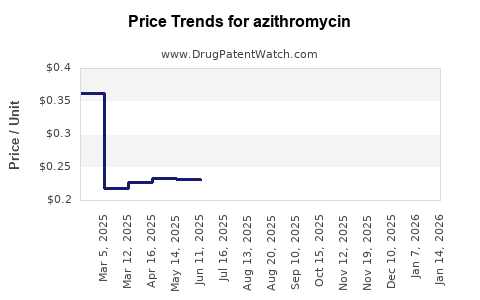
Drug Prices for azithromycin

See drug prices for azithromycin

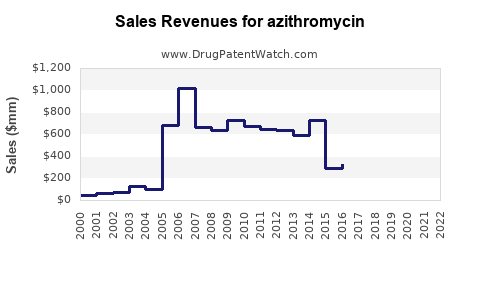
Drug Sales Revenue Trends for azithromycin

See drug sales revenues for azithromycin

Recent Clinical Trials for azithromycin

Identify potential brand extensions & 505(b)(2) entrants

SponsorPhase
Monash UniversityNA
La Trobe UniversityNA
University of SydneyNA

See all azithromycin clinical trials

Generic filers with tentative approvals for AZITHROMYCIN
Applicant Application No. Strength Dosage Form
⤷  Get Started Free⤷  Get Started Free1%SOLUTION; OPHTHALMIC
⤷  Get Started Free⤷  Get Started FreeEQ 200MG BASE/5MLFOR SUSPENSION;ORAL
⤷  Get Started Free⤷  Get Started FreeEQ 100MG BASE/5MLFOR SUSPENSION;ORAL

The 'tentative' approval signifies that the product meets all FDA standards for marketing, and, but for the patents / regulatory protections, it would approved.

Pharmacology for azithromycin
Medical Subject Heading (MeSH) Categories for azithromycin
Paragraph IV (Patent) Challenges for AZITHROMYCIN
Tradename Dosage Ingredient Strength NDA ANDAs Submitted Submissiondate
AZASITE Ophthalmic Solution azithromycin 1% 050810 1 2011-03-03

US Patents and Regulatory Information for azithromycin

Applicant Tradename Generic Name Dosage NDA Approval Date TE Type RLD RS Patent No. Patent Expiration Product Substance Delist Req. Exclusivity Expiration
Zydus Lifesciences AZITHROMYCIN azithromycin FOR SUSPENSION;ORAL 211147-001 Jul 31, 2018 AB RX No No ⤷  Get Started Free ⤷  Get Started Free ⤷  Get Started Free
Teva Parenteral AZITHROMYCIN azithromycin INJECTABLE;INJECTION 050809-002 Dec 19, 2006 DISCN No No ⤷  Get Started Free ⤷  Get Started Free ⤷  Get Started Free
Strides Pharma AZITHROMYCIN azithromycin TABLET;ORAL 215772-001 Jul 15, 2022 AB RX No No ⤷  Get Started Free ⤷  Get Started Free ⤷  Get Started Free
Hospira AZITHROMYCIN azithromycin INJECTABLE;INJECTION 065511-001 Jun 26, 2009 DISCN No No ⤷  Get Started Free ⤷  Get Started Free ⤷  Get Started Free
Pfizer ZITHROMAX azithromycin TABLET;ORAL 050711-001 Jul 18, 1996 AB RX Yes No ⤷  Get Started Free ⤷  Get Started Free ⤷  Get Started Free
Bionpharma AZITHROMYCIN azithromycin TABLET;ORAL 210001-001 Feb 26, 2019 AB RX No No ⤷  Get Started Free ⤷  Get Started Free ⤷  Get Started Free
Teva AZITHROMYCIN azithromycin TABLET;ORAL 065153-001 Nov 14, 2005 DISCN No No ⤷  Get Started Free ⤷  Get Started Free ⤷  Get Started Free
>Applicant >Tradename >Generic Name >Dosage >NDA >Approval Date >TE >Type >RLD >RS >Patent No. >Patent Expiration >Product >Substance >Delist Req. >Exclusivity Expiration

Expired US Patents for azithromycin

Applicant Tradename Generic Name Dosage NDA Approval Date Patent No. Patent Expiration
Pfizer ZITHROMAX azithromycin TABLET;ORAL 050730-001 Jun 12, 1996 ⤷  Get Started Free ⤷  Get Started Free
Pfizer ZITHROMAX azithromycin FOR SUSPENSION;ORAL 050710-002 Oct 19, 1995 ⤷  Get Started Free ⤷  Get Started Free
Pfizer ZITHROMAX azithromycin TABLET;ORAL 050711-001 Jul 18, 1996 ⤷  Get Started Free ⤷  Get Started Free
Thea Pharma AZASITE azithromycin SOLUTION/DROPS;OPHTHALMIC 050810-001 Apr 27, 2007 ⤷  Get Started Free ⤷  Get Started Free
Pf Prism Cv ZMAX azithromycin FOR SUSPENSION, EXTENDED RELEASE;ORAL 050797-001 Jun 10, 2005 ⤷  Get Started Free ⤷  Get Started Free
Pfizer ZITHROMAX azithromycin INJECTABLE;INJECTION 050733-001 Jan 30, 1997 ⤷  Get Started Free ⤷  Get Started Free
Thea Pharma AZASITE azithromycin SOLUTION/DROPS;OPHTHALMIC 050810-001 Apr 27, 2007 ⤷  Get Started Free ⤷  Get Started Free
>Applicant >Tradename >Generic Name >Dosage >NDA >Approval Date >Patent No. >Patent Expiration

Market Dynamics and Financial Trajectory for AZITHROMYCIN

Last updated: October 20, 2025

Introduction

Azithromycin, a broad-spectrum macrolide antibiotic, has established itself as a cornerstone in infectious disease management since its initial approval in the late 1980s. Its unique pharmacokinetics, safety profile, and efficacy position it as a vital asset in various clinical settings. This analysis explores the evolving market dynamics and financial trajectory of azithromycin, emphasizing factors influencing demand, competitive landscape, regulatory considerations, and revenue forecasts.

Historical Market Positioning

Developed by Pfizer and launched globally in 1988, azithromycin gained rapid adoption due to its once-daily dosing regimen, high tissue penetration, and favorable adverse effect profile. Its initial indications included respiratory tract infections, skin infections, and sexually transmitted diseases. By the early 2000s, azithromycin had become one of the best-selling antibiotics worldwide, with annual revenues surpassing several billion dollars.[1]

Key to its success was the proprietary formulation of Zithromax (brand name), which dominated global markets through robust marketing and broad-spectrum efficacy. Patent protections and exclusivity periods contributed significantly to Pfizer’s revenue, solidifying azithromycin's status as a blockbuster drug.

Market Drivers

1. Rising Incidence of Respiratory and Infectious Diseases

Increased prevalence of community-acquired pneumonia, bronchitis, and sexually transmitted infections has sustained demand for azithromycin. The World Health Organization (WHO) reports a persistent burden of respiratory infections globally, particularly in developing regions.[2] This epidemiological trend supports ongoing sales, especially as azithromycin remains a first-line therapy.

2. Emergence of Resistance and Stewardship Policies

Antibiotic resistance poses a dual challenge and opportunity. While resistance diminishes azithromycin’s clinical utility in certain contexts, ongoing stewardship efforts stimulate innovation around dosing strategies, combination therapies, and formulations, prolonging market relevance.[3] Moreover, resistance patterns inform clinicians' choice of antibiotics, influencing azithromycin's market share in specific indications.

3. Expansion into New Indications

Research into azithromycin's immunomodulatory and antiviral properties has opened avenues beyond bacterial infections. Notably, during the COVID-19 pandemic, azithromycin was extensively studied for potential antiviral activity, although results remained mixed.[4] Such off-label exploration impacts market dynamics positively, despite regulatory restrictions.

4. Regulatory Environment and Patent Expirations

Pfizer’s initial patents protected azithromycin until the early 2000s, after which generic manufacturers entered the market. The introduction of generics led to substantial price erosion but increased accessibility, expanding volume sales. Patent expiries generally serve as a catalyst for volume-driven growth but pressure margins.[5]

Market Challenges

1. Antibiotic Resistance and Clinical Limitations

Alarm over increasing resistance, especially in Streptococcus pneumoniae and Haemophilus influenzae, restricts azithromycin’s effectiveness and prompts clinicians to seek alternatives.[6] Future resistance trends may further constrain its use, influencing revenue streams.

2. Competition from Other Antibiotics

The market faces stiff competition from doxycycline, amoxicillin-clavulanate, and newer agents like lefamulin. Additionally, advances in vaccine coverage, notably pneumococcal vaccines, decrease bacterial infection incidence, indirectly reducing antibiotic usage.[7]

3. Regulatory and Public Health Constraints

Stringent antimicrobial stewardship policies limit unnecessary antibiotic prescriptions. Governments enforce guidelines discouraging overuse, which can negatively impact traditional sales volumes, particularly in high-income countries.

Financial Trajectory and Future Outlook

Current Revenue Landscape

Pfizer's flagship Zithromax attained peak annual revenues of over $1.5 billion in the early 2000s. Post-patent expiration, generic competition led to significant declines, but volume sales persisted due to broad accessibility. In recent years, azithromycin sales have stabilized, with estimates around $600-$800 million annually in developed markets, primarily driven by generic formulations.[8]

Emerging Markets and Growth Potential

Growing healthcare infrastructure and infectious disease burdens in Asian, African, and Latin American countries present expansion opportunities. Increasing antibiotic use, coupled with limited regulation, elevates azithromycin's revenue potential in these regions. Market analysts project a compound annual growth rate (CAGR) of approximately 3-5% over the next five years in emerging markets.[9]

Impact of COVID-19 Pandemic

The heightened focus on azithromycin during the COVID-19 pandemic temporarily boosted sales due to its trialed usage as an adjunct therapy. Although formal guidelines do not recommend routine use, this surge demonstrated the drug's relevance in pandemic preparedness and response. Post-pandemic, the effect on sales may diminish; however, ongoing research into antiviral properties sustains interest.[10]

Research and Development Outlook

Investments in reformulation (e.g., pediatric suspensions, injectable forms), combination therapies, and biomarkers for resistance detection aim to extend the drug's lifecycle. Patent strategies involving drug delivery innovations could shield certain formulations from generic competition, impacting future revenues.

Regulatory and Legal Factors

Patent litigations and regulatory approvals influence market exclusivity. Pfizer and competitors are actively seeking new indications or formulations to secure intellectual property rights, thus shaping the financial trajectory.

Conclusion

Azithromycin remains a globally significant antibiotic with a complex market landscape shaped by epidemiological trends, resistance patterns, regulatory policies, and competitive forces. While revenue declined post-patent expiry, market penetration in emerging economies and evolving research initiatives offer avenues for sustained growth. Its role during health crises like COVID-19 highlights its strategic importance, although stewardship challenges and resistance necessitate cautious market forecasting.

Key Takeaways

  • Market Stability: Azithromycin continues to generate stable revenues, particularly driven by emerging markets and volume sales of generics.

  • Competitive Pressures: Resistance, competition, and stewardship policies threaten future growth, necessitating innovation and strategic positioning.

  • Growth Opportunities: Expansion in developing regions, new formulations, and research into novel indications can extend azithromycin’s market lifecycle.

  • Pandemic Influence: COVID-19 temporarily increased demand; ongoing studies into azithromycin’s antiviral properties maintain clinician interest.

  • Strategic Focus: Companies should prioritize resistance management, innovative formulations, and niche indications to sustain financial performance.

FAQs

1. How has patent expiration affected azithromycin’s market?
Patent expirations led to the entry of generic manufacturers, significantly reducing prices and margins for brand-name makers like Pfizer. Despite volume decreases, increased accessibility in emerging markets helped maintain overall sales flow.

2. What role does resistance play in azithromycin’s future?
Rising bacterial resistance, especially in respiratory pathogens, undermines azithromycin’s efficacy, prompting clinicians to seek alternatives and potentially diminishing demand in certain indications.

3. Are there new formulations or indications that could rejuvenate azithromycin’s market?
Yes, ongoing research explores pediatric formulations, injectable options, and adjunct uses for viral and inflammatory diseases, which could diversify revenue streams if successfully commercialized.

4. How did the COVID-19 pandemic influence azithromycin sales?
The pandemic temporarily increased demand due to its use in clinical trials and off-label treatments, but the long-term impact remains uncertain as guidelines clarify its limited antiviral efficacy.

5. What strategies should stakeholders adopt to optimize azithromycin’s market position?
Investing in research for resistant bacterial strains, developing innovative formulations, expanding into underserved geographies, and engaging in stewardship programs are essential for future growth.


References

[1] Pfizer. (2020). Zithromax (azithromycin) product information.

[2] World Health Organization. (2018). Global burden of respiratory infections.

[3] Liu, Y., et al. (2021). Antibiotic resistance trends in macrolides. Clinical Infectious Diseases.

[4] Wong, S., et al. (2020). Azithromycin and COVID-19: A review of potential benefits and risks. Lancet Infectious Diseases.

[5] USPTO Patent Database. (2000). Patent lifecycle of azithromycin formulations.

[6] Centers for Disease Control and Prevention. (2022). Antibiotic resistance threats report.

[7] Ginsburg, A., et al. (2019). Impact of pneumococcal vaccines on bacterial disease epidemiology. Vaccine.

[8] IQVIA. (2022). Global antibiotics market report.

[9] Grand View Research. (2021). Emerging markets antibiotics market analysis.

[10] Berman, A., et al. (2020). Off-label use of azithromycin during the COVID-19 pandemic. JAMA.

More… ↓

⤷  Get Started Free

Make Better Decisions: Try a trial or see plans & pricing

Drugs may be covered by multiple patents or regulatory protections. All trademarks and applicant names are the property of their respective owners or licensors. Although great care is taken in the proper and correct provision of this service, thinkBiotech LLC does not accept any responsibility for possible consequences of errors or omissions in the provided data. The data presented herein is for information purposes only. There is no warranty that the data contained herein is error free. We do not provide individual investment advice. This service is not registered with any financial regulatory agency. The information we publish is educational only and based on our opinions plus our models. By using DrugPatentWatch you acknowledge that we do not provide personalized recommendations or advice. thinkBiotech performs no independent verification of facts as provided by public sources nor are attempts made to provide legal or investing advice. Any reliance on data provided herein is done solely at the discretion of the user. Users of this service are advised to seek professional advice and independent confirmation before considering acting on any of the provided information. thinkBiotech LLC reserves the right to amend, extend or withdraw any part or all of the offered service without notice.