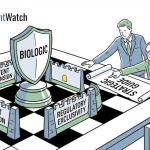
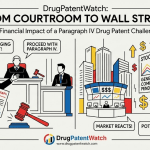
The U.S. pharmaceutical patent system is not a passive legal framework. It is an engineered adversarial machine, purpose-built to pit the commercial interests of generic manufacturers against the market exclusivity of brand-name innovators, with the expectation that the resulting conflict will ultimately serve the public. That machine’s operating system is the Drug Price Competition and Patent Term Restoration Act of 1984, the Hatch-Waxman Act, and its primary output is the Paragraph IV (PIV) challenge, a legal construct that transforms a generic drug application into a declaration of war.
This pillar page is a reference for pharmaceutical IP teams, portfolio managers, R&D leads, and institutional investors who need more than a survey of the law. It covers the full lifecycle of a patent dispute: the regulatory architecture that creates it, the litigation strategies on both sides, the IP valuation dynamics of the assets at stake, the antitrust framework governing settlements, and the parallel but distinct biosimilar battleground under the BPCIA. Each section carries a ‘Key Takeaways’ block, and sections with direct revenue and portfolio implications include an ‘Investment Strategy’ note.
I. The Hatch-Waxman Act: Engineering the Patent Battlefield
The Pre-1984 Landscape: A Market Without Competition
Before the Hatch-Waxman Act, the path to market for a generic drug was prohibitively expensive. Any company seeking FDA approval for a generic version of an approved drug had to submit a full New Drug Application (NDA) and conduct its own independent clinical trials to demonstrate safety and efficacy, even though the original drug had already cleared that bar. This requirement effectively extended the brand-name drug’s commercial monopoly indefinitely beyond its patent expiration, since the cost and time required to generate duplicate clinical data deterred generic entry.
The 1962 Kefauver-Harris Drug Amendments compounded this by requiring proof of efficacy through ‘substantial evidence’ from adequate and well-controlled studies, a standard that tripled the cost and duration of drug development. By 1984, generics accounted for just 19% of U.S. prescriptions dispensed, and fewer than 35% of top-selling drugs with expired patents faced any generic competition at all. Innovator companies collected monopoly rents well past the date their core patents should have expired.
The ‘Grand Bargain’: Structural Design of Adversarial Coexistence
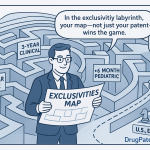
Senator Orrin Hatch and Representative Henry Waxman designed the 1984 Act as an explicit trade. Innovator companies received Patent Term Extension (PTE), allowing them to restore a portion of patent life consumed during FDA regulatory review, plus new forms of FDA-administered market exclusivity that operate independently of patent status. A New Chemical Entity (NCE) qualifies for five years of data exclusivity; new clinical study data supporting a new indication, dosage form, or route of administration earns three years. These exclusivities block FDA approval of competing generic applications, full stop, regardless of patent status.
Generic manufacturers received the Abbreviated New Drug Application (ANDA), which allows approval by demonstrating bioequivalence to the Reference Listed Drug (RLD) rather than repeating full clinical trials. A generic applicant must show that its product delivers the same amount of active ingredient into systemic circulation at the same rate, within accepted statistical bounds, as the brand. The Act also codified a ‘safe harbor’ under 35 U.S.C. Section 271(e)(1), exempting generic companies from patent infringement liability for activities reasonably related to preparing and submitting an ANDA, including manufacturing clinical trial batches and running bioequivalence studies.
The critical design feature is not the streamlined pathway itself but the patent certification mechanism layered on top of it. Generic manufacturers are not simply granted access to the ANDA pathway and told to wait. They are given a financial incentive to actively attack the patents protecting brand-name drugs.
The Orange Book: A Ministerial Record with Strategic Consequences
The FDA publishes ‘Approved Drug Products with Therapeutic Equivalence Evaluations,’ universally called the Orange Book. NDA holders must list patents they believe cover their approved drug, including patents on the drug substance (active ingredient), drug product (formulation), and methods of use. After initial approval, new patents must be submitted for listing within 30 days of issuance. The FDA’s role in this process is purely ministerial; it lists what it receives without assessing patent validity, claim scope, or whether the patent actually covers the approved drug product.
This ministerial function has profound strategic consequences. An innovator can list patents of dubious relevance to the approved product, and those patents become the legal targets for every subsequent PIV certification. A generic filer must address each listed patent individually, either arguing invalidity, non-infringement, or agreeing to delay market entry until expiration. The broader the patent listing, the more litigation the innovator can trigger, and the more 30-month automatic stays it can collect.
The FDA began scrutinizing Orange Book listings more aggressively following the Federal Circuit’s 2025 decision in Teva Pharmaceuticals v. Amneal Pharmaceuticals, which held that patents for drug delivery devices can be listed in the Orange Book only if those patents also claim the drug’s active ingredient. Device-only patents that survived Orange Book challenges for years are now vulnerable to delisting petitions, which would strip innovators of the ability to trigger automatic 30-month stays using those patents.
Key Takeaways: Hatch-Waxman Architecture
The Hatch-Waxman Act deliberately created an adversarial system where generic manufacturers have a financial stake in challenging patent validity. The Orange Book is a strategically critical document, not a neutral registry. The FDA’s 2025 delisting scrutiny, driven by Teva v. Amneal, is materially reducing the defensive value of device-related Orange Book listings. Regulatory exclusivity and patent protection are legally distinct; the expiration of one does not extinguish the other.
Investment Strategy Note
Investors modelling a brand-name drug’s effective exclusivity period should distinguish between patent-based protection and regulatory exclusivity. An NCE’s five-year data exclusivity blocks ANDA filing entirely, not just FDA approval, and runs from approval date. Stacking a five-year NCE exclusivity against a 20-year patent term from filing typically produces effective market exclusivity of roughly 11 to 13 years, but this varies materially based on how early patents were filed relative to FDA approval. Products with thin patent portfolios but intact NCE exclusivity are miscategorized as ‘patent cliff’ risks in the near term.
II. Paragraph IV Certification: The Mechanics of a Legal Ambush
The Four Certifications and the Strategic Choice Among Them
Every ANDA filed with the FDA must address all patents listed in the Orange Book for the corresponding RLD. For each patent, the ANDA applicant must submit one of four statutory certifications:
A Paragraph I certification states that no patent information for the RLD has been submitted to the FDA. A Paragraph II certification states that the listed patent has already expired. A Paragraph III certification identifies the patent’s expiration date and commits the applicant to seek final approval no earlier than that date. None of these three certifications triggers litigation; they are non-adversarial acknowledgments of existing rights.
A Paragraph IV certification states that, in the applicant’s opinion and knowledge, the listed patent is invalid, unenforceable, or will not be infringed by the proposed generic product. Filing this certification is a statutory act of patent infringement under 35 U.S.C. Section 271(e)(2). The legal fiction is complete and intentional: the generic has not yet manufactured or sold a competing product, but the law treats the filing itself as infringement, granting the patent holder immediate standing to sue in federal district court.
A fifth option, the Section viii carve-out or ‘skinny label,’ allows a generic applicant to seek approval for non-patented indications only when the RLD has method-of-use patents covering specific therapeutic uses. The applicant omits the patented indications from its proposed label. This avoids the PIV certification for that method-of-use patent but exposes the generic to induced infringement claims if prescribers use the drug off-label for the carved-out indication.
The PIV Notice Letter: Legally Non-Binding but Litigation-Defining
After the FDA sends an acknowledgment letter confirming that an ANDA is substantially complete, the applicant has 20 days to serve formal notice of the PIV certification on both the NDA holder and the patent owner. The notice letter must include a ‘detailed statement of the factual and legal basis’ for the invalidity or non-infringement position. If the letter asserts non-infringement, it must include an Offer of Confidential Access (OCA), giving the brand company access to the confidential portions of the ANDA, specifically the formulation details, manufacturing process, and bioequivalence data needed to evaluate the infringement claim.
The notice letter positions taken are not binding in litigation; a generic company can and does alter its invalidity and non-infringement theories as discovery proceeds. But the letter is the opening brief in the adversarial relationship, and courts scrutinize it when assessing good faith and fee-shifting under 35 U.S.C. Section 285. A notice letter built on thin prior art or non-infringement arguments that do not survive even basic claim construction analysis can expose the generic to sanctions.
The 45-Day Window and the Automatic 30-Month Stay
The 45-day window from the patent owner’s receipt of the PIV notice letter is the most consequential deadline in Hatch-Waxman litigation. If the patent owner files a timely infringement suit within this window, FDA approval of the ANDA is automatically stayed for 30 months from the date the patent owner received the notice letter, or until a district court judgment of non-infringement or invalidity, whichever comes first. No bond is required. The stay is automatic on proper filing.
The strategic implication is that a brand-name company does not need to believe it will win litigation to extract value from filing suit. Filing within 45 days of every PIV notice letter, on every listed patent, even patents of marginal strength, guarantees 30 months of continued market exclusivity. For a drug generating $1 billion annually in U.S. net revenue, a 30-month stay is worth approximately $2.5 billion in protected revenue at current pricing, before accounting for typical generic price erosion of 80% to 95% post-entry. The lawsuit’s expected litigation outcome is almost secondary to the value of the delay.
Courts have limited the brand’s ability to use weak or improperly listed patents to trigger stays. Amendments to the Hatch-Waxman Act through the Medicare Modernization Act of 2003 (MMA) capped at two the number of 30-month stays available per drug product by limiting each NDA holder to one automatic stay per ANDA. But the core dynamic remains: the threat of an automatic stay incentivizes filing suit on every PIV, regardless of the underlying patent’s strength.
First-Filer Exclusivity: The 180-Day Prize
The statute grants the first ANDA applicant to file a substantially complete ANDA containing a PIV certification against a listed patent a 180-day period of marketing exclusivity. During this period, FDA cannot grant final approval to any subsequent ANDA for the same drug product. The first-filer effectively operates as the only generic competitor in the market, creating a temporary duopoly with the brand.
In a duopoly, the first-filer generic does not need to compete on price against other generics. Typical pricing in the first 180 days runs at 15% to 25% below the brand’s list price, compared to the 80% to 95% discount that emerges when six or more generic competitors enter simultaneously. On a drug with $1 billion in annual U.S. sales, the first-filer exclusivity period can generate $150 million to $250 million in generic revenue for a six-month window. That figure, discounted for litigation risk and development costs, is the prize that drives PIV challenges.
Multiple applicants can qualify as co-first-filers if they submit their ANDAs on the same day. In this case, all co-first-filers share the 180-day exclusivity and must negotiate among themselves or through FDA procedural mechanisms when one forfeits or triggers the exclusivity period.
Forfeiture provisions in the MMA created additional complexity. A first-filer forfeits 180-day exclusivity if it fails to market the drug within a specified period, if it enters a settlement agreement that constitutes a forfeiture event, or if a court ruling of invalidity or non-infringement becomes final. These forfeiture provisions were designed to prevent first-filers from ‘parking’ their exclusivity, collecting settlement payments from the brand, and keeping later filers out of the market indefinitely.
Key Takeaways: Paragraph IV Mechanics
The PIV certification is a statutory act of infringement, not merely a legal notice. The 30-month automatic stay has more commercial value to the brand than its legal purpose suggests. First-filer 180-day exclusivity is the primary economic incentive for PIV challenges, and its value varies dramatically with the brand drug’s revenue base. Skinny-label carve-outs create ongoing induced infringement risk that courts are still actively adjudicating.
Investment Strategy Note
For generic company investors, pipeline analysis should quantify the expected value of 180-day exclusivity on each PIV target separately from base ANDA revenue. A company with three PIV certifications filed against drugs generating $2 billion, $500 million, and $150 million in annual U.S. revenue, respectively, has asymmetric risk-reward across those three assets. The $2 billion challenge drives the investment thesis; the other two are secondary. Forfeiture risk, particularly from premature settlement, is systematically underpriced in street models.
III. The Generic Challenger’s Litigation Playbook
Invalidity: Attacking the Patent at Its Foundation
A PIV challenge typically combines invalidity arguments with non-infringement arguments in the alternative, since winning on either theory produces the same outcome: generic entry. Invalidity arguments target the patent’s right to exist at all.
Anticipation under 35 U.S.C. Section 102 requires the challenger to find a single piece of prior art, published before the patent’s priority date, that discloses every element of the claimed invention. In pharmaceutical patents, the most productive prior art sources are prior patents on related compounds, scientific publications disclosing the molecule’s synthesis or pharmacological activity, conference presentations, and regulatory filings in foreign jurisdictions. The evidentiary burden in district court is ‘clear and convincing evidence,’ a high threshold that makes pure anticipation arguments successful mainly when the examiner missed obvious prior art during prosecution.
Obviousness under 35 U.S.C. Section 103 is the dominant invalidity theory in pharmaceutical patent litigation. The standard asks whether the claimed invention would have been obvious to a person of ordinary skill in the relevant art at the time of the invention. In drug patent cases, ‘ordinary skill’ typically means a medicinal chemist or formulator with a doctoral degree and several years of relevant industry experience. Courts assess obviousness through the four-factor Graham v. John Deere framework: the scope and content of the prior art, the differences between the prior art and the claims at issue, the level of ordinary skill in the art, and secondary considerations such as commercial success, long-felt need, and failure of others.
Secondary patents, covering formulations, salts, polymorphs, dosage forms, and delivery devices, are more vulnerable to obviousness attacks than primary compound patents. A polymorph patent claiming a specific crystalline form of an approved drug is defensible only if the specification demonstrates unexpected properties for that form, such as superior stability or bioavailability relative to other known forms. Without such evidence, courts routinely find that selecting among known crystalline forms of a known active ingredient is obvious.
AbbVie’s adalimumab (Humira) patent estate illustrates the strategy and its limits. AbbVie built a portfolio exceeding 130 patents on adalimumab, the large majority filed after the drug’s 2002 FDA approval. Biosimilar challengers, including Amgen, Samsung Bioepis, and Pfizer, attacked this portfolio on multiple fronts. By 2023, biosimilar adalimumab products from Amgen (Amjevita), Sandoz (Hyrimoz), and several others had entered the U.S. market, though the patent thicket delayed entry for years after European biosimilar competition began. AbbVie’s royalty-bearing license agreements with biosimilar developers, agreed before trial, reflect what the company calculated it would cost to settle rather than litigate every claim in that portfolio.
Non-Infringement: Designing Around the Claims
A non-infringement defense accepts the patent’s validity but argues that the proposed generic product falls outside the patent’s claims. Claim scope is determined by claim construction, the process by which a court interprets the meaning and breadth of each claim term using the patent’s intrinsic evidence (the specification, prosecution history, and other claims) and, when necessary, extrinsic evidence such as expert testimony and technical dictionaries.
Design-around strategies in small-molecule formulation patents typically involve substituting alternative excipients not covered by the brand’s claims, altering particle size distributions, changing the manufacturing process to avoid process patent claims, or modifying the drug’s release profile in ways that remain outside the claimed range. For example, if a brand holds patents on a specific polymer matrix for controlled drug release, a generic may design around those patents using a different polymer system that achieves a similar pharmacokinetic profile but does not use the claimed matrix components.
Method-of-use patent non-infringement is more complicated. The generic manufacturer does not directly treat patients; the infringing use is performed by physicians or patients. Brand-name companies must prove ‘induced infringement’ under 35 U.S.C. Section 271(b), which requires showing both that direct infringement occurs and that the generic manufacturer specifically intended to encourage it. Specific intent is typically inferred from the proposed label. If the label instructs prescribers to use the drug for the patented indication, courts find induced infringement even without direct evidence of intent. This is why the skinny-label carve-out exists: by omitting the patented indication from the label, the generic can argue its product is not labeled for the infringing use, breaking the intent inference.
The Federal Circuit addressed induced infringement from skinny labels in GlaxoSmithKline LLC v. Teva Pharmaceuticals USA (Fed. Cir. 2021), finding that Teva’s generic carvedilol label induced infringement of GSK’s method-of-use patent covering carvedilol for treating congestive heart failure, even after Teva had carved out that indication, because the label retained language about treating mild-to-severe heart failure that the court read as encouraging the patented use. That decision created substantial uncertainty around the carve-out strategy and prompted renewed attention to label language precision.
Inter Partes Review: The PTAB as a Parallel Front
The America Invents Act of 2011 created Inter Partes Review (IPR) proceedings before the Patent Trial and Appeal Board (PTAB), allowing any party to challenge an issued patent’s validity based on prior art (anticipation and obviousness) in an administrative proceeding. IPR is faster than district court litigation, with a statutory 12-month deadline from institution to final written decision, and cheaper, with typical costs of $500,000 to $2 million compared to district court litigation that can run $10 million to $30 million per case.
The standard of proof in IPR is ‘preponderance of the evidence,’ materially lower than district court’s ‘clear and convincing’ standard. The PTAB has historically maintained institution rates of 60% to 70% on petitions filed and has invalidated a majority of challenged claims in instituted proceedings. Pharmaceutical patent holders challenged through IPR have won a smaller proportion of their claims than patent holders in other technology sectors, partly because drug formulation patents often rely on secondary considerations (commercial success, long-felt need) that carry less weight in PTAB proceedings relative to district court.
The most aggressive generic firms use coordinated IPR-district court strategies. Filing an IPR petition concurrent with a PIV challenge creates parallel tracks: the PTAB may institute review and issue a final decision within 18 months, potentially invalidating patent claims before the district court reaches trial. A favorable PTAB ruling generates an IPR estoppel against the petitioner in district court (blocking re-litigation of grounds raised in the IPR), but it also provides invalidity findings that, though not binding on the district court, carry persuasive weight with juries and judges.
Mylan Pharmaceuticals has used coordinated IPR strategies extensively. Its challenges to Celgene’s pomalidomide (Pomalyst) patents combined district court PIV litigation with PTAB petitions, applying simultaneous pressure that contributed to accelerated settlement discussions. Celgene’s core compound patent on pomalidomide expired in 2019, but Mylan’s challenges targeted secondary formulation and method-of-use patents covering dosing regimens for multiple myeloma.
The Economics of Patent Challenge Deserts
PIV challenges are rational economic decisions. A generic company invests $3 million to $10 million in an ANDA, plus litigation costs of $10 million to $30 million per patent challenged, against an expected value derived from the brand drug’s revenue base and the probability of winning. This means the PIV challenge model concentrates attention on blockbuster drugs with U.S. annual revenues exceeding $500 million and neglects drugs with smaller markets even if those drugs’ patents are weak or facially invalid.
Drugs treating smaller patient populations, rare diseases, or conditions with limited commercial scale are systematically under-challenged. Patients who use these drugs pay brand-name prices indefinitely, not because the underlying patents are strong but because the financial incentive to challenge them is insufficient. This structural gap is a known failure mode of the Hatch-Waxman system that the incentive structure cannot self-correct.
Key Takeaways: The Generic Litigation Playbook
Obviousness under Section 103 is the most frequently successful invalidity theory for pharmaceutical secondary patents. Non-infringement carve-outs on skinny labels carry ongoing litigation risk, as GSK v. Teva demonstrated. IPR proceedings at the PTAB offer a faster, cheaper, and lower-evidentiary-burden route to patent invalidation than district court, particularly for formulation patents that rely heavily on secondary considerations. The PIV system creates systematic under-challenging of drugs with small market sizes.
Investment Strategy Note
A generic pipeline with PIV challenges pending against drugs with U.S. revenues below $200 million should be discounted sharply. The cost-to-benefit ratio on these challenges is poor. Conversely, a challenge against a drug with $2 billion or more in U.S. revenue, where the generic is sole first-filer, represents a significant free option even at a 30% litigation win probability, given the potential for a value-positive settlement with a date-certain entry license.
IV. The Innovator’s Defense: Patent Thickets, Product Hopping, and Authorized Generics
Building Patent Thickets: IP Valuation as a Defensive Weapon
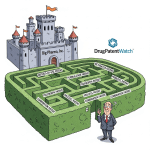
A patent thicket is a dense, overlapping portfolio of patents covering a single drug product from multiple angles, designed to raise the cost, complexity, and litigation risk of any generic challenge. The strategy is well-documented and widely practiced. Brand-name companies file secondary patents on formulations, crystalline polymorphs, salts, metabolites, dosage forms, manufacturing processes, drug-device combinations, and methods of administration, often years after the drug’s initial FDA approval and in some cases after the core compound patent has already expired.
AbbVie’s Humira patent estate is the most extensively studied example. At its peak, Humira had over 130 U.S. patents, the large majority filed after the drug’s 2002 approval. The drug’s compound patent, covering adalimumab itself, expired in 2016, but secondary patents on the formulation, the citrate-free formulation, the syringe device, and dosing methods for specific indications extended the effective exclusivity wall until the first U.S. biosimilar entry in January 2023. The royalty-bearing licenses AbbVie negotiated with biosimilar developers between 2019 and 2022 reflected the cost of clearing this thicket without going to trial on every patent. AbbVie reported approximately $5.7 billion in Humira U.S. net revenues in Q1 2023, the last quarter before meaningful biosimilar competition, illustrating the commercial stakes the thicket protected.
Bristol-Myers Squibb’s apixaban (Eliquis) portfolio presents another instructive case. BMS and Pfizer hold core compound patents expiring around 2026 and a dense secondary portfolio covering specific dosing regimens and patient populations. Generic challengers including Sigmapharm, Micro Labs, and several others filed PIV certifications beginning around 2019. BMS and Pfizer filed timely suits, triggering automatic 30-month stays. The parties litigated the dosing-regimen method-of-use patents extensively, with Eliquis’s combined U.S. net revenues exceeding $5 billion annually making each additional month of exclusivity commercially material at scale.
Johnson & Johnson’s ibrutinib (Imbruvica) patent estate, held through a collaboration with AbbVie’s Pharmacyclics unit, covered the BTK inhibitor across compound patents, formulation patents, and over 100 method-of-use patents covering specific lymphoma, leukemia, and CLL indications and dosing sequences. The compound patent expires in the mid-2030s, but the method-of-use patents create an additional layer of litigation complexity for any generic or biosimilar challenger.
The IP valuation framework for these patent estates treats each patent as a discrete time-limited revenue asset with associated litigation risk. A formulation patent with three years of remaining term on a drug generating $3 billion annually is worth approximately $9 billion in protected revenue before discount, less the probability-weighted cost of losing a PIV challenge. Portfolio managers in M&A contexts assign net present value to each patent in a thicket using a probability-of-success overlay drawn from prior art searches, claim construction risk assessments, and litigation outcome databases.
Product Hopping: Evergreening Through Formulation Shifts
Product hopping is the strategy of reformulating a drug as its primary patents approach expiration, driving prescriptions toward the new formulation before the original product faces generic competition. Because an ANDA must be filed against a specific RLD, and because pharmacists can substitute only products rated therapeutically equivalent to the dispensed prescription’s RLD, shifting the market to a new formulation effectively resets the reference product against which a generic must be measured.
Abbott Laboratories’ conversion of clarithromycin from immediate-release to extended-release (Biaxin XL) and its withdrawal of the immediate-release product from the market is a textbook case. Once the immediate-release product was withdrawn, pharmacists could no longer automatically substitute generic clarithromycin for prescriptions written for Biaxin, since the generic was rated equivalent only to the withdrawn immediate-release form, not to the new extended-release RLD.
Warner Chilcott executed a similar strategy with its multiple sclerosis drug Doryx (doxycycline hyclate), making successive tablet reformulations at different strengths and delaying each generic entrant by resetting the reference drug. Courts have found product hopping to violate antitrust law in some cases. In New York v. Actavis PLC (2d Cir. 2015), the Second Circuit affirmed an injunction blocking Warner Chilcott’s product hop on Namenda (memantine) from immediate-release to extended-release, finding that the hard switch combined with withdrawal of the original product constituted anticompetitive exclusionary conduct. The key distinction courts draw is between a soft switch, where the brand retains the original product in the market alongside the new formulation, allowing automatic generic substitution to function, and a hard switch, where the original product is withdrawn, preventing substitution. Hard switches draw scrutiny; soft switches generally do not.
Citizen Petitions as a Delay Mechanism
Brand-name companies regularly file citizen petitions with the FDA raising purported safety, quality, or labeling concerns about pending ANDA or 505(b)(2) applications. The FDA must respond to citizen petitions before approving the challenged application, creating a delay that can run from several months to over a year.
Data compiled by the FDA and academic researchers indicates that citizen petitions filed shortly before FDA approval of a generic are overwhelmingly denied, often within the same week as generic approval, suggesting the petitions’ primary purpose is delay rather than genuine safety concern. FDA review times for petitions filed within six months of a generic’s expected approval run 20 to 40 months on average for petitions that are ultimately denied, though the agency has accelerated its response time following congressional and FTC pressure.
The FDA Reauthorization Act of 2017 gave the FDA explicit authority to deny citizen petitions that it determines were submitted with the primary purpose of delaying generic drug approval. However, the evidentiary standard for such a determination is high, and petitions with even plausible clinical or scientific arguments regularly survive this threshold review.
Authorized Generics: Weaponizing the 180-Day Exclusivity Window
A brand-name company can market its own generic version of a drug, either directly or through a license to a generic subsidiary or third-party distributor, without filing a separate ANDA. This authorized generic (AG) is not subject to the same ANDA requirements and can launch during a first-filer’s 180-day exclusivity period, since the 180-day exclusivity blocks FDA approval of subsequent ANDAs but does not prohibit the brand from marketing its own AG.
Launching an AG during the first-filer’s exclusivity converts the temporary duopoly into a three-party market, immediately cutting the first-filer’s revenue by roughly 40% to 50% compared to a true exclusivity period. The FTC has documented that first-filer exclusivity revenues are 52% lower when an AG is present versus absent. The threat of an AG launch is therefore a potent negotiating tool in settlement discussions: a brand company can offer to forgo its AG launch (a ‘no-AG commitment’) as a material concession in exchange for a later generic entry date.
The ‘no-AG commitment’ is now a central element of the FTC’s post-Actavis settlement analysis. The FTC treats a no-AG commitment as a form of reverse payment, since it transfers value from the brand to the generic by preserving the profitability of the first-filer’s exclusivity period. The agency quantifies the value of a no-AG commitment by estimating the revenue difference between a duopoly exclusivity and a monopoly exclusivity, which typically runs into the tens of millions of dollars.
Key Takeaways: Innovator Defense
Patent thickets built on secondary patents are defensible only if the underlying patents survive obviousness challenges. Product hopping’s legal status depends on whether the brand withdraws the original product from the market. Citizen petitions are a legitimate regulatory tool that courts and regulators increasingly scrutinize for delay intent. Authorized generics neutralize first-filer exclusivity value and are a primary bargaining chip in settlement negotiations.
Investment Strategy Note
When analyzing a brand-name drug’s revenue durability, model the AG launch scenario as the base case, not a downside scenario. If the brand company has a history of AG use (e.g., AstraZeneca, Pfizer, Merck), first-filer exclusivity value for any challenge against their portfolio should be discounted by 40% to 50% absent explicit no-AG language in a settlement agreement. For acquisition targets, assess whether the target’s citizen petition filings are supported by substantive clinical data or are temporally correlated with imminent generic approvals.
V. Pay-for-Delay, FTC v. Actavis, and the Post-Settlement Landscape
The Economics of Reverse Payment Settlements
Patent litigation is uncertain, expensive, and binary: each side risks everything at trial. The expected value calculation for both parties drives toward settlement. A brand-name company facing a $2 billion annual revenue drug and a generic challenger with a 50% probability of winning litigation has a clear economic basis for settlement: paying the generic to accept a delayed entry date preserves expected revenues far in excess of any plausible settlement payment.
In a reverse payment (pay-for-delay) settlement, the brand pays the generic, the exact opposite of the typical litigation settlement structure. The payment compensates the generic for dropping its challenge and agreeing not to enter the market until a specified future date, which may be years before the patent’s natural expiration. The generic receives certainty of eventual entry plus an immediate payment. The brand receives certainty of continued exclusivity without litigation risk. Patients pay brand-name prices for the additional period.
The FTC estimated in 2012 that pay-for-delay agreements cost U.S. consumers $3.5 billion annually in foregone generic competition. That estimate has been revised upward in subsequent analysis as the frequency and complexity of these agreements grew.
FTC v. Actavis (2013): The Supreme Court Ends Immunity
Before 2013, courts were split on whether reverse payment settlements in the patent context were immune from antitrust scrutiny. Brand-name companies argued that any settlement that kept the generic off the market until a date within the patent’s term was presumptively lawful, since the patent itself conveyed the right to exclude throughout its term. The Eleventh Circuit had agreed, while other circuits were more skeptical.
In FTC v. Actavis (2013), the Supreme Court rejected the ‘scope of the patent’ test. The Court held that reverse payment settlements are subject to antitrust scrutiny under the ‘rule of reason,’ and that a large and unjustified payment from a patent holder to a patent challenger is strong evidence of an anticompetitive agreement. The Court’s reasoning was probabilistic: the size of the payment signals the brand’s assessment of the risk that the patent would be invalidated. A brand willing to pay $200 million to avoid litigation is effectively disclosing that it believes its patent has a significant probability of failing, and buying certainty at the consumer’s expense.
Actavis did not hold that reverse payments are per se illegal. It held that their legality depends on a fact-specific rule-of-reason analysis that considers whether the payment is justified by litigation cost savings and whether the generic’s agreed entry date creates anticompetitive harm. But the decision broke the immunity that had allowed explicit cash payments to flow freely from brand to generic.
The specific case involved Solvay Pharmaceuticals and Actavis (then Watson Pharmaceuticals) over AndroGel (testosterone gel). Solvay had paid Watson and other generics approximately $30 million annually in exchange for delayed market entry. After Actavis, explicit large cash payments of this type largely disappeared from settlement structures, replaced by more complex arrangements.
Post-Actavis Settlement Structures: The FTC’s Forensic Analysis
The MMA of 2003 requires pharmaceutical companies to file their patent settlement agreements with the FTC and DOJ within ten days of execution. This filing requirement gives the FTC a comprehensive view of settlement patterns. Its annual reports, covering fiscal years through 2021, document the shift away from explicit cash payments toward more opaque forms of value transfer that the agency categorizes as ‘possible compensation.’
The FTC currently identifies four principal categories of non-cash compensation in pharmaceutical patent settlements: quantity restrictions, no-AG commitments, declining royalty structures, and side business deals.
Quantity restrictions cap the volume of generic drug the settling generic company can sell for a specified period. The FTC treats these as functionally equivalent to market allocation schemes, since restricting supply while the generic is nominally in the market allows the brand and generic to share monopoly profits without an explicit cash payment. A quantity-restricted generic that can sell only 20% of market demand while the brand continues to supply the remaining 80% is not providing meaningful competition.
No-AG commitments, as discussed above, preserve the first-filer’s exclusivity value by guaranteeing the brand will not launch a competing authorized generic. The FTC consistently flags these as presumptive reverse payments requiring scrutiny.
Declining royalty structures and side deals covering unrelated products are harder to quantify but can transfer substantial value. A brand company that agrees to sell active pharmaceutical ingredient to the settling generic at below-market rates, or grants favorable licensing terms on an unrelated product, is providing compensation that does not appear in the face of the settlement agreement.
FTC data from FY 2018 to 2021 shows that settlements with no compensation at all, meaning the generic receives only an agreed entry date and attorneys’ fees, represent roughly 60% to 70% of all filed settlements in recent years. Settlements with ‘possible compensation’ in the forms described above represent 8% to 15% annually. The FTC’s active enforcement and the credible threat of antitrust litigation appear to have constrained, though not eliminated, the most egregious forms of value transfer.
Key Takeaways: Settlement Economics and Antitrust
FTC v. Actavis (2013) eliminated antitrust immunity for reverse payment settlements and requires rule-of-reason analysis based on payment size and competitive harm. Explicit cash payments have largely been replaced by no-AG commitments, quantity restrictions, and side deals that the FTC analyzes as ‘possible compensation.’ The MMA filing requirement gives the FTC comprehensive visibility into settlement structures. No-AG commitments are the most commercially significant and consistently scrutinized form of non-cash value transfer.
Investment Strategy Note
For institutional investors holding brand-name pharma, settlements with approaching-expiration PIV challengers should be evaluated for their no-AG provisions. A settlement that grants a first-filer an early entry date but commits the brand to no AG launch signals that the brand assessed its litigation position as weak; otherwise it would launch an AG rather than concede the exclusivity value. For generic company investors, settlements with no-AG provisions represent upside to base case exclusivity valuations. Quantity restrictions in settlements are a red flag: they suggest the brand retained partial price control and the generic’s revenue contribution to pipeline value should be discounted.
VI. Biosimilar Patent Disputes: The BPCIA’s Distinct Architecture
Why Biologics Required a Separate Legal Framework
Small-molecule drugs are defined chemical entities with structures that can be precisely characterized and replicated. A generic atorvastatin is chemically identical to Lipitor because both are synthesized to the same molecular structure. Bioequivalence, the pharmacokinetic equivalence standard used to approve generic ANDAs, is a valid proxy for therapeutic equivalence in this context.
Biologics are categorically different. Adalimumab (Humira), bevacizumab (Avastin), trastuzumab (Herceptin), and similar large-molecule drugs are proteins, typically antibodies or fusion proteins, produced in living cell lines through recombinant DNA technology. Their three-dimensional structures, including post-translational modifications like glycosylation patterns, are determined not just by the DNA sequence but by the specific cell line, fermentation conditions, purification process, and formulation used. No two manufacturers can produce an identical biologic. A follow-on product can only be ‘highly similar’ to the reference product, with no clinically meaningful differences in safety, purity, and potency. These products are biosimilars, not bioequivalent generics.
The biological complexity of these products means that demonstrating biosimilarity requires a far more extensive data package than a small-molecule bioequivalence study. A typical biosimilar development program includes structural and functional characterization studies (comparing the biosimilar’s physicochemical properties to the reference), animal toxicology studies, one or more clinical pharmacology studies (usually pharmacokinetic and pharmacodynamic comparison), and often at least one clinical efficacy and safety study, though the FDA has moved toward accepting totality-of-evidence approaches that can reduce the number of clinical trials required.
The BPCIA’s Structural Choices and Their Commercial Consequences
The Biologics Price Competition and Innovation Act, passed in 2010 as part of the Affordable Care Act and codified at 42 U.S.C. Section 262, created the abbreviated BLA (aBLA) pathway for biosimilars. Its structural choices reflect congressional judgments about the appropriate balance between innovation incentives and access for large-molecule drugs.
The BPCIA grants reference biologic sponsors 12 years of data exclusivity from the date of first licensure, compared to five years for NCE small molecules under Hatch-Waxman. No aBLA can be approved until four years after licensure, and the FDA cannot approve a biosimilar until 12 years after the reference product’s licensure. This 12-year period is substantially more protective than Hatch-Waxman’s framework, reflecting the higher development costs and greater scientific novelty of biologic products.
The BPCIA’s most distinctive structural choice is the absence of an automatic stay. A reference biologic sponsor that sues a biosimilar applicant does not receive an automatic 30-month stay of FDA approval. This single difference materially changes the litigation economics: the brand cannot use the lawsuit itself as a delay mechanism separate from the litigation’s outcome. A brand that files suit against a biosimilar applicant must actually litigate on the merits, or negotiate, without the comfort of 30 months of protected revenue as the default.
The BPCIA also created a separate, higher-standard exclusivity category: interchangeability. An ‘interchangeable’ biosimilar is one that the FDA has determined can be expected to produce the same clinical result as the reference product in any given patient, and that switching between the reference and the biosimilar does not produce greater safety or efficacy risk than continuing on the reference alone. An interchangeable biosimilar can be substituted by a pharmacist without physician intervention, just as a generic small-molecule drug can be substituted. The first product designated interchangeable for a given reference biologic receives one year of interchangeability exclusivity. The practical significance of interchangeable designation depends heavily on state pharmacy substitution laws.
The ‘Patent Dance’: An Optional Choreography
The BPCIA established a multi-step process for identifying and litigating patents between the biosimilar applicant and the reference product sponsor, colloquially called the ‘patent dance.’ After the FDA accepts a biosimilar aBLA for review, the applicant provides the sponsor with a copy of the application and manufacturing information. The sponsor then identifies patents it believes could be infringed by the biosimilar’s manufacture, use, or sale. The applicant responds with its invalidity and non-infringement contentions. The parties negotiate to identify which patents will be subject to immediate litigation.
The patent dance is technically optional. The Supreme Court held in Sandoz Inc. v. Amgen Inc. (2017) that a biosimilar applicant’s failure to provide its application to the reference sponsor did not prevent the sponsor from suing immediately, but also that the sponsor’s sole remedy for non-disclosure was the specified remedies within the BPCIA, not an injunction. This ruling clarified that biosimilar applicants can choose to forego the dance, accepting different litigation timing consequences.
When biosimilar applicants skip the dance, they forgo the staged disclosure process that clarifies which patents will be litigated immediately versus held in reserve. Instead, the sponsor retains the right to sue on all listed patents after biosimilar approval. The strategic calculus depends on whether the applicant prefers early resolution of patent disputes or prefers to limit the scope of pre-approval litigation and accept the risk of a larger patent dispute post-approval.
Major BPCIA Litigation: The Front Lines
AbbVie’s adalimumab patent litigation represents the largest biosimilar dispute in U.S. history by total commercial stakes. AbbVie’s Humira generated over $20 billion in global annual revenue at peak, with U.S. revenue of approximately $14 billion. Seven biosimilar developers, including Amgen (Amjevita), Samsung Bioepis (Hadlima), Sandoz (Hyrimoz), Coherus (Yusimry), Pfizer (Abrilada), Organon (Hadlima licensed from Samsung), and others negotiated royalty-bearing licenses with AbbVie rather than litigate the full patent portfolio. AbbVie’s license structure set a royalty rate of roughly 5% that steps down over time, generating material ongoing revenue even after biosimilar entry.
Regeneron’s aflibercept (Eylea) biosimilar disputes are among the most actively litigated current cases. Eylea treats wet AMD and diabetic macular edema. The original Eylea formulation (2 mg) has faced biosimilar challengers including Mylan (Biocon partner), Samsung Bioepis, and Coherus. Regeneron holds patents on the aflibercept molecule, the formulation, and the dosing regimen. Regeneron launched Eylea HD (8 mg, higher-concentration formulation) in 2023 as a product extension with its own separate patent portfolio, a structure that biosimilar developers characterized as a product hop designed to shift market share before biosimilar entry on the original formulation.
Amgen’s denosumab (Prolia, Xgeva) and Regeneron’s dupilumab (Dupixent) are the next major biosimilar battlegrounds, with aBLAs pending or expected. Dupixent’s U.S. net revenues exceeded $7 billion in 2023, making it a high-priority biosimilar target with correspondingly large patent portfolios to navigate.
Key Takeaways: BPCIA and Biosimilar Patent Disputes
The BPCIA’s 12-year data exclusivity and absence of automatic stays create materially different competitive dynamics than Hatch-Waxman. The patent dance is optional but carries litigation timing consequences for applicants who skip it. Interchangeable biosimilar designation matters most in states with broad automatic substitution laws. Manufacturing process patents are central to biologic IP disputes in ways that have no analog in small-molecule Hatch-Waxman litigation.
Investment Strategy Note
Biosimilar pipeline valuation requires a detailed reference product patent expiration model, not just a 12-year data exclusivity countdown. For reference product sponsors, the absence of an automatic stay makes post-approval biosimilar patent injunctions critical: sponsors cannot rely on litigation delay as a revenue protection tool and must either litigate aggressively to obtain preliminary injunctions or negotiate licenses before approval. For biosimilar developers, BPCIA litigation costs are higher per product than Hatch-Waxman PIV litigation because of the manufacturing process patent complexity, and investors should model litigation cost assumptions accordingly.
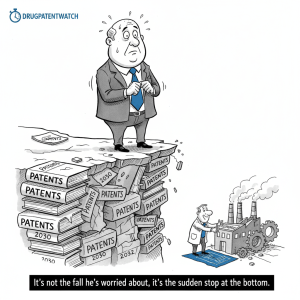
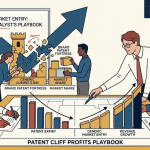
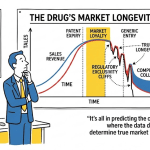
VII. The Patent Cliff: Revenue Erosion Economics and Market Entry Dynamics
Quantifying Post-Generic Price Collapse
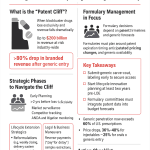
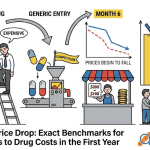
Generic entry triggers rapid price erosion that follows a consistent empirical pattern. Studies from the FDA, IQVIA, and academic researchers tracking drug prices after patent expiration show that the first generic entrant typically prices at 20% to 39% below the brand’s pre-entry price, capturing market share while maintaining a price premium over subsequent entrants. A second generic entrant drives average market prices to roughly 50% below the original brand price. Four competitors drive prices to approximately 20% of the original brand price. Six or more competitors drive prices below 10% of the original brand price, approaching marginal cost of production.
The transition from brand monopoly to multi-generic competition rarely occurs instantaneously. The first 180-day exclusivity period is a price plateau before the steeper descent. Once exclusivity expires and multiple generic manufacturers enter, the commodity economics of generic manufacturing take over quickly. This pattern is consistent across therapeutic areas, dosage forms, and market sizes, though drugs with complex manufacturing requirements or supply chain constraints may see slower price erosion simply due to the smaller number of qualified manufacturers.
Annual savings from generic and biosimilar competition exceeded $400 billion in the most recent reporting years, with Medicare Part D saving over $130 billion in a single year. The ’90/13 disparity,’ where generics account for 90% of prescriptions but 13% to 18% of prescription spending, reflects the concentration of costs in the on-patent brand-name segment. This disparity is the clearest argument that drug pricing pressure should target the patent-protected segment, not the generic market where competition has already produced deep discounts.
The Innovation Tension: Does Generic Competition Deter R&D?
The relationship between generic competition and pharmaceutical R&D investment is contested in the academic literature, though the empirical evidence does not cleanly support the claim that generic competition has reduced total innovative output. The U.S. pharmaceutical industry’s R&D expenditure has grown consistently over the past three decades, even as generic penetration has reached 90% of prescriptions. The more defensible claim is narrower: aggressive generic competition in specific therapeutic areas may reduce the incentive for incremental innovation within those areas, since a second-generation drug entering a market where the first-generation product faces generic competition has a shorter window of commercial advantage.
The Hatch-Waxman system’s design relies on the ‘patent cliff’ as a forcing function: innovators must continuously develop new patentable drugs to replace revenue lost to generic erosion. A company that collects monopoly rents and invests them back into genuine discovery is behaving exactly as the system intends. A company that invests those rents in evergreening secondary patents and product hops is gaming the system, preserving revenue without producing innovation. The former behavior is what the Hatch-Waxman ‘grand bargain’ assumed; the latter is what patent thicket enforcement actions and proposed legislation are designed to prevent.
Access, Pricing, and the Human Cost of Exclusivity Delays
Extended pharmaceutical exclusivity has direct human consequences. The launch of sofosbuvir (Sovaldi) in 2013 at a list price of $84,000 for a 12-week course generated enormous public and political attention. Gilead Sciences held patents covering sofosbuvir until well into the 2030s and faced no ANDA competition under Hatch-Waxman (as a small molecule) for years. Generic manufacturing costs for a sofosbuvir regimen were estimated by researchers at the Medicines Patent Pool at approximately $68 to $136. The gap between cost of goods and market price reflected the commercial return on Gilead’s clinical development investment, but also priced the drug out of reach for a large majority of the 170 million people globally with hepatitis C.
The Medicines Patent Pool negotiated voluntary licenses from Gilead allowing generic production of sofosbuvir-based regimens for distribution in 101 lower-income countries. In markets without those licenses, patients in middle-income countries continued to pay near-U.S. prices. This pricing structure is a direct output of the patent system: the same exclusivity framework that funds new drug development also creates conditions under which potentially curative treatments reach only a fraction of their eligible patient population.
VIII. Legislative Reform: The Regulatory Landscape in Motion
Current and Proposed Legislation
The patent thicket and product hopping strategies that have become standard practice in large pharma have attracted sustained congressional attention. Several legislative proposals are in active consideration or have passed one chamber.
The Stop STALLING Act targets citizen petitions by imposing substantial penalties, including disgorgement of profits during the delay period, when the FDA determines that a petition was filed primarily to delay generic approval. The bill passed the House Energy and Commerce Committee and has bipartisan support, though final passage remains uncertain.
The Affordable Prescriptions for Patients Act (APPA) would authorize the FTC to use the courts to challenge anticompetitive product hops under Section 5 of the FTC Act without having to prove consumer harm under standard antitrust analysis. The bill’s standard for an illegal product hop is whether the brand’s conduct was designed to prevent automatic generic substitution without adequate clinical justification. This is a lower threshold than traditional antitrust analysis but has faced industry opposition arguing it would chill genuine product innovation.
Proposed Orange Book reform legislation would grant the FDA authority to review patents for their substantive eligibility for Orange Book listing, moving the FDA from its current ministerial role to an active gatekeeper function. This would allow the FDA to reject listing of patents that do not clearly cover the approved drug product, reducing the number of Orange Book patents that can trigger automatic 30-month stays.
The Biosimilar Red Tape Elimination Act would modify the BPCIA’s patent dance to clarify certain procedural requirements and timelines, addressing ambiguities that have generated unnecessary litigation. Separately, proposals to reduce biologic data exclusivity from 12 years to 7 years have been debated in the context of the Inflation Reduction Act and subsequent drug pricing legislation, though no such reduction has been enacted.
FTC Enforcement Activity
The FTC’s pharmaceutical enforcement activity has expanded significantly since Actavis. The agency has challenged pay-for-delay settlements, filed amicus briefs in BPCIA litigation, petitioned the FDA to reconsider citizen petition responses it viewed as improperly delayed, and pushed for Orange Book delisting of device patents following Teva v. Amneal.
The FTC’s ongoing investigation into branded pharmaceutical companies’ patent listing practices is particularly consequential. The agency has issued Civil Investigative Demands to multiple large-cap pharma companies seeking documentation on their Orange Book listing decision processes, focusing on whether listings were made in good faith or as a strategic delay mechanism.
Key Takeaways: Legislative and Regulatory Trends
Orange Book reform, Stop STALLING Act provisions, and FTC enforcement are all moving in the same direction: reducing innovators’ ability to use procedural mechanisms to delay generic entry without genuine IP justification. Biosimilar data exclusivity reduction proposals have not become law but remain live legislative risk for reference product sponsors. The FTC’s post-Actavis enforcement posture is more aggressive than at any prior point.
Investment Strategy Note
For brand-name pharmaceutical companies with patent thicket strategies and histories of citizen petition filings, regulatory risk is underpriced in sell-side models. The expected value reduction from Stop STALLING Act enactment or Orange Book reform should be built into terminal-value assumptions for drugs with 2028 to 2033 expiration dates. For generic companies, the same regulatory reform trajectory represents upside: faster Orange Book delisting and reduced citizen petition delays accelerate the timeline from ANDA filing to final approval.
IX. Strategic Recommendations for IP Teams, Portfolio Managers, and R&D Leads
For Generic Manufacturers: Target Selection and Portfolio Management
PIV challenge target selection should be a quantitative, portfolio-level exercise rather than an asset-by-asset decision. The inputs are the brand drug’s current U.S. net revenue, the number of Orange Book patents and their expiration dates, the technical feasibility of designing around formulation patents, the number of co-pending ANDA filers (which determines whether first-filer exclusivity is shared), and an honest probability-of-success assessment on the primary invalidity theories.
The most commercially attractive targets combine high U.S. revenue with patent portfolios dominated by secondary patents showing obvious design-around paths or weak prior art positions. Primary compound patents in the final two to five years of their term are less attractive to challenge, since the litigation cost may exceed the present value of a one-to-three year acceleration of generic entry.
IPR petitions should be evaluated as a complement to, not a substitute for, district court PIV litigation on high-value targets. A coordinated IPR filing within six months of the PIV certification, targeting the patent’s strongest obviousness vulnerabilities, exerts simultaneous PTAB and district court pressure that can accelerate settlement discussions and produce a more favorable entry date than either track alone.
For biosimilar development programs, manufacturing process design should be integrated with IP clearance from the earliest stages. A biosimilar manufacturer that unknowingly replicates a patented manufacturing process cannot easily design around the patent after the program is substantially complete.
For Brand-Name Manufacturers: Proactive Lifecycle Planning
Patent portfolio construction should begin at the time of compound selection, not at the time of FDA approval. Secondary patents are more defensible when they are filed against a backdrop of demonstrated unexpected properties, such as superior bioavailability, reduced side-effect profiles, or manufacturing advantages documented in the specification.
Method-of-use patent strategy should be matched to clinical development plans. Filing method-of-use patents on indications not supported by robust clinical data creates vulnerability: if the patent’s specification does not demonstrate the claimed therapeutic benefit, an obviousness or lack-of-enablement attack becomes straightforward.
Product hop planning should be designed as a ‘soft switch,’ retaining the original product in the market alongside the new formulation to avoid antitrust exposure under New York v. Actavis. The clinical justification for the new formulation should be documented early in development and be ready to defend in both regulatory submissions and potential antitrust proceedings.
For Institutional Investors: Modeling Patent Cliff Risk
Patent cliff analysis requires more precision than ‘patent expires in X year.’ The relevant inputs are the composition-of-matter patent expiration, the formulation and method-of-use patent expirations by claim category, the regulatory exclusivity expiration, the number of ANDA filers and their litigation status, the brand’s historical AG launch behavior, and the settlement landscape for any pending PIV challenges.
Effective market exclusivity for a drug with a compound patent expiring in 2026, formulation patents expiring in 2028, and method-of-use patents expiring in 2030 is not 2030. It is the date at which generic competition is likely to commence based on the litigation and settlement trajectory of the pending PIV challenges, weighted by probability. A drug with six pending PIV challenges, where three challengers have already received favorable PTAB institution decisions, is more likely to face generic entry near the compound patent expiration than near the formulation patent expiration.
Biosimilar timelines require separate modeling. The 12-year data exclusivity creates a hard floor, but patent disputes, manufacturing scale-up challenges, and FDA approval timelines for interchangeability designations can extend effective exclusivity by two to five years beyond the data exclusivity endpoint.
X. Reference: Comparative Framework Summary
The following framework summarizes the primary structural differences between Hatch-Waxman (small-molecule drugs) and the BPCIA (biologics), followed by the landmark case law that defines the current litigation environment.
Hatch-Waxman vs. BPCIA: Core Structural Comparison
Under Hatch-Waxman, ANDA filers demonstrate bioequivalence to the RLD; under the BPCIA, aBLA filers demonstrate biosimilarity through a totality-of-evidence package that includes structural characterization, pharmacokinetic studies, and often clinical safety and efficacy data. Orange Book patent listings are publicly accessible under Hatch-Waxman; the BPCIA uses a private patent dance with no equivalent public registry. The automatic 30-month stay is available only under Hatch-Waxman; the BPCIA has no such mechanism. Innovator data exclusivity runs five years (NCE) under Hatch-Waxman and 12 years under the BPCIA. First-mover follow-on exclusivity is 180 days for the first Paragraph IV ANDA filer under Hatch-Waxman and one year for the first interchangeable biosimilar under the BPCIA. The small-molecule/large-molecule distinction governs which framework applies; drug-device combinations and complex biologics may fall under modified Hatch-Waxman provisions or the BPCIA depending on their regulatory classification.
Key Case Law: The Decisions That Set the Rules
FTC v. Actavis, Inc. (2013) held that reverse payment settlements are subject to antitrust rule-of-reason analysis, and a large, unjustified payment from brand to generic is evidence of anticompetitive harm. This case converted explicit cash pay-for-delay agreements from a standard settlement tool into an antitrust liability, driving the evolution toward no-AG commitments and quantity restrictions as substitute value transfer mechanisms.
Microsoft Corp. v. i4i Ltd. Partnership (2011) confirmed that issued patents carry a presumption of validity and that challengers must prove invalidity by clear and convincing evidence, the highest civil standard of proof. This ruling directly burdens generic challengers and makes district court invalidity a more difficult standard than PTAB’s preponderance standard.
Sandoz Inc. v. Amgen Inc. (2017) held that the BPCIA’s patent dance is optional and that a biosimilar applicant’s failure to provide its application to the reference sponsor triggers only the statutory remedies within the BPCIA, not an injunction or automatic stay. This clarified the optionality of the dance and the limits of what reference sponsors can obtain when a biosimilar applicant declines to participate.
GlaxoSmithKline LLC v. Teva Pharmaceuticals USA (Fed. Cir. 2021) found induced infringement from Teva’s generic carvedilol label, even after a skinny-label carve-out of the patented heart failure indication, because the label retained language that the court read as encouraging the patented use. This decision materially increased the legal risk of skinny-label strategies for method-of-use patents.
Teva Pharmaceuticals USA v. Amneal Pharmaceuticals (Fed. Cir. 2025) held that drug delivery device patents are eligible for Orange Book listing only if they also claim the drug’s active ingredient. Device-only patents improperly listed in the Orange Book are subject to delisting petitions, and their listing does not support automatic 30-month stays. This is the most significant recent restriction on innovators’ ability to use Orange Book listings as a litigation delay mechanism.
Regulatory filings, litigation outcomes, and legislative proposals cited reflect publicly available information. This document does not constitute legal advice or investment recommendation.