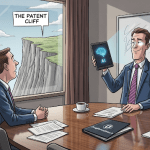
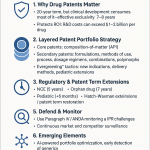
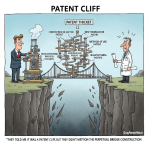
Strategic Timing: Delaying patent filings until later in the drug development process, such as after Phase II clinical trials, can extend market exclusivity by aligning the patent term with market entry.
Balancing Risks and Rewards: While this strategy may maximize revenue, it carries risks like potential prior art or public disclosure that could jeopardize patentability.
Industry Practice: Companies like Bristol Myers Squibb and Novartis have used delayed filing and related strategies to extend exclusivity, though outcomes vary.
Controversy: Critics argue that delaying patents, often called “evergreening,” may limit access to affordable generics, raising ethical concerns.
Complexity: The strategy requires careful navigation of legal, regulatory, and competitive landscapes to be effective.
What Is Delayed Patent Filing?
Delayed patent filing involves waiting to file patent applications until later stages of drug development, typically after Phase II or even Phase III clinical trials. Unlike traditional early filing, which secures intellectual property (IP) at the discovery stage, this approach aims to maximize the period a drug can be sold without generic competition. By filing later, companies ensure that the 20-year patent term starts closer to the drug’s market launch, potentially extending exclusivity.
Why Does It Matter?
In the pharmaceutical industry, where developing a single drug can cost over $1 billion, market exclusivity is critical for recouping investments. Research suggests that the effective market exclusivity for most drugs is only 7-8 years due to lengthy development timelines [3]. Extending this period by even a few years can mean billions in additional revenue, making strategies like delayed patent filing highly attractive.
How Does It Work?
Typically, patents are filed early in the research and development (R&D) process to protect novel compounds or methods. However, since drug development takes 12-13 years on average, early filing means much of the patent term is spent before the drug reaches the market. Delaying filing until after key clinical trial data is available can align the patent term with commercialization, reducing the “wasted” years. For example, filing after Phase II trials, when efficacy data is clearer, can help craft stronger patents while extending market protection.
Is It Controversial?
The strategy isn’t without debate. Some critics, like Tahir Amin from the Initiative for Medicines, Access & Knowledge, argue that delaying patents or filing secondary patents (evergreening) delays generic competition, keeping drug prices high [6]. Supporters, however, view it as a legitimate way to protect innovation in a high-risk industry. The evidence leans toward delayed filing being a common practice, but its ethical implications depend on one’s perspective on balancing innovation with affordability.
In-Depth Analysis: Delaying Patents in the Pharmaceutical Industry
Introduction
Imagine a chess game where every move is calculated years in advance, and a single misstep could cost billions. That’s the pharmaceutical industry, where innovation, investment, and intellectual property (IP) protection intersect in a high-stakes dance. Patents are the knights and rooks of this game, guarding a company’s ability to profit from its discoveries. But what if the key to winning lies not in moving early but in waiting patiently? Delaying patent filings to enhance market exclusivity is a strategy that embodies this power of patience, offering pharmaceutical companies a way to extend their market dominance and maximize returns.
In an industry where developing a single drug can cost over $1 billion and take more than a decade, every year of exclusivity is a golden opportunity [5]. With generic and biosimilar competition waiting in the wings, companies are under pressure to stretch their monopoly as long as possible. This article explores the strategy of delayed patent filing, its benefits, challenges, and real-world applications, providing actionable insights for business professionals aiming to turn patent data into a competitive advantage. Drawing on expert opinions, case studies, and industry trends, we’ll uncover how patience can transform the patent landscape.
Understanding Patents and Exclusivity in Pharma
To grasp the significance of delayed patent filing, we must first understand the distinction between patents and exclusivity, two pillars of IP protection in the pharmaceutical industry.
Patents: The Foundation of IP Protection
A patent is a property right granted by the United States Patent and Trademark Office (USPTO), allowing the holder to exclude others from making, using, selling, or importing the patented invention. In pharmaceuticals, patents can cover a drug’s active ingredient, formulation, method of use, manufacturing process, or even delivery devices. These patents are typically filed early in the R&D process—often during discovery or before clinical trials—and last for 20 years from the filing date [1]. However, because drug development takes 12-13 years on average, the effective market exclusivity is often reduced to 7-8 years [3].
Exclusivity: A Regulatory Shield
Exclusivity, granted by the FDA upon drug approval, is a regulatory mechanism that delays or prohibits the approval of competitor drugs, such as generics or biosimilars. Unlike patents, exclusivity is tied to specific statutory requirements and does not depend on the patent term. Common types include:
Type of Exclusivity
Duration
Purpose
New Chemical Entity (NCE)
5 years
Protects new active ingredients not previously approved
Orphan Drug Exclusivity
7 years
Encourages development of drugs for rare diseases
Pediatric Exclusivity
6 months (added to existing)
Incentivizes studies in pediatric populations
New Clinical Investigation
3 years
Protects new uses or formulations based on new clinical data
Biosimilar Exclusivity
12 years (for biologics)
Balances innovation and competition for biologic drugs
Table 1: Types of FDA Exclusivity and Their Durations [2]
Exclusivity and patents may or may not run concurrently, and their interplay is critical for maximizing market protection. While patents protect the IP, exclusivity ensures a period of market monopoly, allowing companies to charge premium prices before generics enter.
Why Exclusivity Matters
Market exclusivity is the lifeblood of pharmaceutical companies. With R&D costs soaring and only about 12% of drugs in clinical trials reaching approval, the ability to maintain exclusivity is crucial for financial viability [5]. Tools like DrugPatentWatch provide invaluable data on patent expirations and exclusivity periods, helping companies strategize their IP portfolios to stay ahead of competitors [3].
The Strategy of Delayed Patent Filing
Delayed patent filing is a strategic approach where companies wait to file patent applications until later in the drug development process, typically after Phase II clinical trials or even into Phase III. This contrasts with the traditional practice of filing as soon as a novel compound or method is identified, often years before clinical trials begin.
Why Delay?
The rationale is simple yet profound: the 20-year patent term begins the moment the application is filed. If filed early—say, during the discovery phase—much of the patent term is consumed during the lengthy R&D process, leaving a shorter window for market exclusivity. For example, if a patent is filed at the start of Phase I trials (around year 5 of development), and the drug takes 12 years to reach the market, only 8 years of exclusivity remain [3]. By filing after Phase II or III, companies can shift the patent term closer to market entry, potentially adding years to their exclusivity period.
When to File?
The optimal timing for delayed filing often hinges on clinical trial phases:
Phase I: Focuses on safety in healthy volunteers, typically not generating data considered public use under patent law (35 U.S.C. § 102(a)) [4].
Phase II: Tests efficacy in a small patient population, providing critical data that can strengthen patent claims. Filing after Phase II is often recommended to balance risk and reward [4].
Phase III: Confirms efficacy and safety in larger populations. Filing after Phase III can further extend exclusivity but increases the risk of prior art or public disclosure [4].
Alex Trimble, a member of IAM, argues, “Clinical trial-related patents should be filed later in the process to avoid prematurely starting the patent term clock” [4]. This approach ensures that the patent term aligns more closely with the drug’s market entry, maximizing commercial value.
“Filing patents later in the R&D process can maximize the period of market exclusivity, thereby enhancing the commercial value of the patent.” — Alex Trimble, Member of IAM [4]
Benefits of Delaying Patent Filing
The decision to delay patent filing is a calculated gamble, but the potential rewards are significant. Here are the key benefits:
Extending Market Exclusivity
The primary advantage is extending the period during which a drug enjoys market exclusivity. By filing later, companies can ensure that more of the 20-year patent term coincides with the drug’s commercial life. For instance, the 12 best-selling U.S. drugs in 2017 enjoyed an average of 38 years of exclusivity, far exceeding the standard patent term, thanks to strategic patent management, including delayed filings and secondary patents [3].
Reducing Risk of Patent Invalidation
Filing early can expose patents to invalidation risks, particularly if clinical trials are deemed public use under U.S. patent law (35 U.S.C. § 102(a)). Phase I trials, which focus on safety, are generally not considered public use, as supported by legal precedents like Eli Lilly v. Zenith (471 F.3d 1369, Fed. Cir. 2006) [4]. By filing after Phase II, when efficacy data is available, companies can craft stronger, more defensible patents while minimizing invalidation risks.
Enhancing Commercial Value
A longer exclusivity period directly translates to higher revenue. Dr. Peter Feldschreiber, a barrister specializing in pharmaceutical law, notes, “Drug research and development is a high-risk investment for the pharmaceutical company” [3]. Extending exclusivity helps companies recoup these investments and fund future innovation. For blockbuster drugs, even a single additional year of exclusivity can generate billions in revenue.
Case Studies and Examples
Real-world examples illustrate how delayed patent filing and related strategies have been used to extend market exclusivity.
Bristol Myers Squibb (BMS) and Revlimid
BMS, through its acquisition of Celgene, inherited a robust patent portfolio for Revlimid, a blood cancer drug. By leveraging secondary patents and legal strategies, BMS extended Revlimid’s exclusivity until 2026, well beyond the initial patent term. This approach allowed Revlimid to maintain a sales trajectory similar to biologics, which typically face slower declines post-patent expiration [6].
Novartis and Entresto
Novartis faced a patent cliff for Entresto, a heart failure drug, set to lose exclusivity in July 2025. In September 2022, the company filed a citizen petition with the FDA to block generic approvals, citing specific patents. Although the FDA denied the petition in July 2024, Novartis secured a last-minute stay against a generic competitor, MSN Pharmaceuticals, while its patent complaint remains open. Additionally, Novartis anticipates pediatric exclusivity to soften the blow of the patent cliff [7].
Regeneron and Eylea
Regeneron has employed a multifaceted approach to protect Eylea, a treatment for eye diseases. Facing biosimilar competition in 2024, the company pursued legal actions against competitors like Samsung Bio and Sandoz. Regeneron also developed a high-dose version of Eylea, approved in August 2023, which secured new patents and extended exclusivity [7].
Company
Drug
Expiry Year
Strategy
Outcome
Bristol Myers Squibb
Revlimid
2026
Secondary patents and legal maneuvers
Extended exclusivity to 2026, delayed generic competition
Ongoing legal efforts, potential extension via pediatric exclusivity
Regeneron
Eylea
2024
Legal actions, high-dose formulation with new patents
Delayed biosimilar entry, extended market life with new formulation
Table 2: Case Studies of Patent Strategies to Extend Exclusivity [6, 7]
Legal and Regulatory Framework
Implementing delayed patent filing requires navigating a complex legal and regulatory landscape. Key considerations include:
Patent Types
Pharmaceutical patents can cover various aspects, such as:
Composition Patents: Protect the drug’s active ingredient or formulation.
Method-of-Use Patents: Cover specific therapeutic uses.
Process Patents: Protect manufacturing methods.
Delivery System Patents: Cover devices or formulations for drug delivery.
Secondary patents, filed later in the development process, are often used to extend exclusivity by covering new formulations, dosages, or indications [9].
Regulatory Exclusivities
Understanding the interplay between patents and FDA exclusivities is crucial. For example, pediatric exclusivity can add six months to existing patents or exclusivity periods, providing a valuable extension [2]. Companies must also comply with regulations like the Hatch-Waxman Act, which governs generic drug approvals and patent challenges.
Legal Challenges
Generic and biosimilar manufacturers often challenge patents through litigation or Paragraph IV certifications, claiming non-infringement or invalidity. Companies must build robust patent portfolios and be prepared for legal battles to defend their exclusivity.
Challenges and Risks
While delayed patent filing offers significant benefits, it’s not without risks:
Risk of Prior Art
Delaying filing increases the chance that another party could publish or file a patent on similar technology, creating prior art that jeopardizes patentability [8]. Companies must monitor the competitive landscape and ensure confidentiality during clinical trials.
Public Disclosure Risks
Clinical trials, especially in later phases, can lead to public disclosures (e.g., via clinicaltrials.gov or press releases) that may be considered prior art. Strict confidentiality agreements and limited participant disclosures are critical to mitigate this risk [4].
Balancing Early and Late Filing
Companies must balance the need for early IP protection with the benefits of delayed filing. Filing too late could allow competitors to claim similar inventions, while filing too early reduces effective exclusivity. Best practices include:
Using confidentiality agreements for investigators.
Limiting participant disclosures to drug and dose.
Assessing publication risks to determine optimal filing timing [4].
Industry Trends and Future Outlook
The pharmaceutical industry is evolving, and so are patent strategies. Recent trends include:
Rise of Secondary Patents
Secondary patents covering new formulations, dosages, or indications are increasingly common. For example, Amgen’s Enbrel has enjoyed over 30 years of protected market time through strategic patenting, including secondary patents [7].
Biosimilar Challenges
With biologics facing patent cliffs, companies are using delayed filing and secondary patents to delay biosimilar competition. However, regulatory scrutiny of “patent thickets” is increasing, with the U.S. government targeting practices that may stifle competition [7].
Technological Advancements
Advancements like AI-driven drug discovery may shorten R&D timelines, potentially altering the optimal timing for patent filings. Companies must adapt their strategies to stay competitive.
Patent Activity Trends
According to GlobalData, patent filings in the pharmaceutical industry decreased by 14.2% in Q3 2024 compared to the previous quarter, reflecting a cautious approach to IP strategy amid economic and regulatory pressures [5].
Increased litigation and regulatory scrutiny of patent thickets
Pressure to balance innovation with competition
AI in Drug Discovery
Potential to shorten R&D timelines
May shift optimal patent filing timing
Declining Patent Filings
14.2% decrease in Q3 2024 (GlobalData)
Reflects strategic caution in IP management
Table 3: Current Trends in Pharmaceutical Patent Strategies [5, 7, 9]
Conclusion
The power of patience in delaying patent filings lies in its ability to align the 20-year patent term with a drug’s market entry, maximizing exclusivity and revenue. By filing after Phase II or III clinical trials, companies can reduce invalidation risks, strengthen patent claims, and enhance commercial value. However, this strategy requires careful navigation of legal, regulatory, and competitive challenges.
Companies like Bristol Myers Squibb, Novartis, and Regeneron have demonstrated the effectiveness of delayed filing and related strategies, though outcomes vary based on execution and legal defenses. As the industry faces patent cliffs, biosimilar competition, and regulatory scrutiny, the strategic use of patent data—accessible through platforms like DrugPatentWatch—will be critical for maintaining a competitive edge [3].
In a world where every year of exclusivity counts, delayed patent filing is not just a strategy—it’s a testament to the power of patience in a high-stakes game.
Key Takeaways
Extended Exclusivity: Delaying patent filing aligns the patent term with market entry, potentially adding years to exclusivity.
Reduced Invalidation Risk: Filing after Phase II trials minimizes public use challenges, as supported by legal precedents.
Commercial Impact: Longer exclusivity periods can generate billions in additional revenue, critical for recouping R&D costs.
Strategic Complexity: Success requires balancing risks like prior art and public disclosure with the benefits of delayed filing.
Industry Examples: Companies like BMS, Novartis, and Regeneron have used delayed filing and secondary patents to extend market dominance.
FAQ Section
What is delayed patent filing in the pharma industry? Delayed patent filing involves waiting to file patent applications until later in the drug development process, typically after Phase II clinical trials, to maximize market exclusivity.
How does delayed patent filing benefit pharma companies? It extends market exclusivity, reduces the risk of patent invalidation, and enhances the commercial value of the patent by aligning the patent term with market entry.
What are the risks of delaying patent filing? Risks include the emergence of prior art, public disclosures during clinical trials, and the potential for competitors to claim similar inventions.
Which companies have successfully used this strategy? Bristol Myers Squibb (Revlimid), Novartis (Entresto), and Regeneron (Eylea) have employed delayed filing and related strategies to extend exclusivity.
How does FDA exclusivity differ from patents? Patents are IP rights lasting 20 years from filing, while exclusivity is a regulatory mechanism providing fixed periods of market protection upon drug approval.