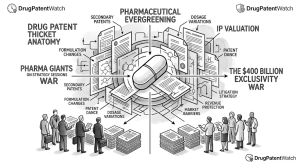
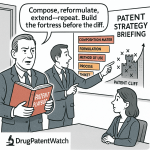
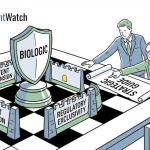
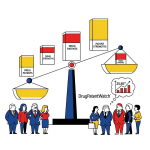
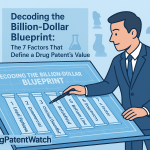
AbbVie built 311 patent applications around a single rheumatoid arthritis antibody and extracted more than $200 billion in cumulative revenue before biosimilars reached American patients. Merck is executing the same playbook in real time on Keytruda, the world’s top-selling drug, ahead of a 2028 primary patent expiration. This pillar page maps every mechanism, values the underlying IP estates, and gives pharma IP teams and institutional investors the analytical framework to act on what those patent portfolios actually mean for market timing, enterprise value, and reform risk.
Section 1: The Legal Architecture of a Patent Thicket
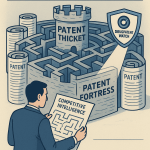
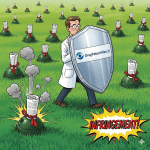
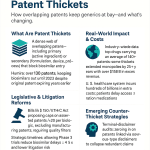
A pharmaceutical patent thicket is a dense cluster of overlapping, often mutually reinforcing patents covering a single drug molecule and its every commercial variation. The term describes a legal structure, not a single filing. The thicket works because each individual patent triggers independent litigation rights, meaning a generic or biosimilar manufacturer who defeats one patent still faces dozens more waiting in reserve. When the drug at the center of the thicket generates $18 billion per year in U.S. revenue, the brand manufacturer will spend whatever is necessary to keep each of those patents alive, while the challenger must defeat every single one to launch. The asymmetry is structural and intentional.
Primary Patents vs. Secondary Patents
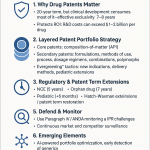
Every pharmaceutical patent thicket rests on two distinct layers. The primary patent covers the active pharmaceutical ingredient (API) itself, the core molecular structure that defines the drug. Under 35 U.S.C. § 154, the USPTO grants a 20-year term from the filing date. For a drug that spends years in clinical development and regulatory review before generating revenue, the effective commercial life of a primary patent is often closer to 11 or 12 years after FDA approval, not 20. That gap is what the rest of the thicket is designed to close.
Secondary patents cover everything downstream of the molecule: polymorphic crystal forms of the API, specific salt or ester formulations, methods of manufacturing and purification, pharmaceutical compositions combining the API with excipients, dosage regimens covering specific doses and dosing intervals, delivery devices such as auto-injectors or prefilled syringes, and methods of treatment covering each FDA-approved indication individually. Because 66% of new pharmaceutical patent applications are filed after FDA approval of the original drug, secondary patents are not primarily about protecting the innovation that created the drug. They protect the commercial period of that innovation.
The Hatch-Waxman Framework and the Orange Book Mechanism
The Drug Price Competition and Patent Term Restoration Act of 1984, known as Hatch-Waxman, created the modern generic entry pathway. An abbreviated new drug application (ANDA) allows a generic manufacturer to rely on the brand’s safety and efficacy data rather than conducting full clinical trials, provided the generic proves bioequivalence. The brand manufacturer must list all patents covering the approved drug product in the FDA’s Orange Book, formally titled ‘Approved Drug Products with Therapeutic Equivalence Evaluations.’
The Orange Book listing is the central mechanism by which patent thickets function in the small-molecule space. When a generic files a Paragraph IV certification, challenging one or more Orange Book-listed patents as invalid or not infringed, the brand manufacturer can file suit within 45 days. That filing automatically triggers a 30-month stay of ANDA approval, regardless of the merits of the underlying patent claim. A brand company that lists ten patents in the Orange Book can generate ten independent Paragraph IV certifications, each capable of triggering the 30-month stay sequentially if the brand staggers its filings. The FTC has described serial patent litigation — filing suit on newly-issued secondary patents after the challenger wins round one — as the tactic that forces generic developers to spend millions more in legal fees before a single tablet reaches the pharmacy.
The BPCIA and the Patent Dance for Biologics
Biologics operate under a separate regime: the Biologics Price Competition and Innovation Act of 2010 (BPCIA). BPCIA grants reference biologics 12 years of regulatory exclusivity from approval, running independently of any patent. A biosimilar applicant cannot even file with the FDA until four years after the reference product’s approval.
After the biosimilar applicant files its 351(k) application, BPCIA triggers the ‘patent dance,’ a structured information-exchange process in which the biosimilar applicant discloses its manufacturing process and the reference product sponsor identifies patents it believes are infringed. Unlike Hatch-Waxman, BPCIA places no statutory cap on the number of patents a brand can assert. AbbVie asserted 61 patents against Amgen’s adalimumab biosimilar in a single pre-litigation exchange. The cost of litigating 61 patents simultaneously runs into the hundreds of millions of dollars. This unlimited assertion right is the feature of BPCIA that makes biologic patent thickets qualitatively different from small-molecule thickets: the legal costs facing a biosimilar developer are not bounded by statute.
Biosimilar development already costs more than $100 million and takes 8 to 10 years before an applicant reaches FDA submission. The BPCIA patent dance adds years of litigation risk on top of that sunk cost. Most biosimilar developers eventually settle, not because the brand’s patents are valid and infringed, but because the cost and timeline of proving otherwise exceeds the economic value of being first to market.
Terminal Disclaimer Stacking and Obviousness-Type Double Patenting
One of the least-discussed mechanics of biologic patent thickets is terminal disclaimer stacking. Under USPTO rules, an applicant cannot obtain a second patent on an invention that is ‘not patentably distinct’ from a previously patented invention without filing a terminal disclaimer, which ties the new patent’s expiry to the older one. This rule was designed to prevent a single inventor from obtaining what amounts to a second 20-year monopoly on a trivially different version of the same thing.
What terminal disclaimers do not prevent is the accumulation of dozens of patents on a single drug, all tied together in a web of disclaimers and all expiring at the same terminal date, but each independently triggering litigation rights. An independent analysis of Humira’s U.S. patent portfolio found that approximately 80% of the patents were non-patentably distinct from one another, linked by terminal disclaimers, yet each capable of generating a separate infringement suit with its own discovery phase, expert witness costs, and appellate risk. In the EU, where the European Patent Office applies stricter inventive step requirements, AbbVie’s adalimumab portfolio consisted of eight non-duplicative patents. The U.S. portfolio ran to more than 130 granted patents covering the same molecule.
Key Takeaways — Section 1
The 30-month stay under Hatch-Waxman and the unlimited patent assertion right under BPCIA are the two structural features that make U.S. patent thickets economically viable for brand manufacturers. Neither feature exists in its current form in major ex-U.S. markets. Secondary patents cover manufacturing processes, formulations, dosage regimens, delivery devices, and individual indications — filed after FDA approval in 66% of cases. Terminal disclaimer stacking allows a brand to accumulate dozens of independently assertable patents without technically extending the monopoly term, while making litigation so expensive that no challenger can survive a multi-year fight. The U.S.-EU patent assertion gap for biologics runs 9 to 12 times: U.S. biosimilar challengers face 9 to 12 times more patent assertions than their Canadian and UK counterparts on the same reference products. BPCIA’s 12-year exclusivity period means biosimilar competition cannot begin regardless of patent status until year 12; any secondary patent expiring after year 12 functions as a pure monopoly extension.
Section 2: The Economics of Thicket Construction — IP Valuation as a Core Asset
Pharma analysts who model patent expiries using only the primary compound patent date systematically underestimate brand revenue duration and overestimate the magnitude of the resulting price drop. The correct unit of analysis for a thicket-protected asset is not the primary patent expiry date but the ‘last enforced patent’ date, defined as the latest patent that either prevails in litigation or forces a settlement, along with the settlement’s specific terms: whether it includes a launch date, a volume cap, a royalty, or some combination.
How Secondary Patent Portfolios Are Valued
IP valuation in biopharma has three primary methodologies. The income approach values the patent by the net present value of revenue it protects, discounted by litigation probability and adjusted for the probability of invalidation. The market approach compares the patent estate to transaction multiples from recent licensing deals or acquisition premia. The cost approach estimates what it would cost a competitor to design around the portfolio entirely, which sets a floor on the settlement value.
For a blockbuster drug generating $10 billion in annual U.S. revenue, a single secondary patent that delays generic entry by 12 months protects approximately $9.2 billion in revenue, after accounting for the gross-to-net discount of roughly 8%. At a risk-adjusted discount rate of 10%, the NPV of that one-year delay is approximately $8.4 billion. A package of 60 secondary patents that collectively delays entry by five years on a $10 billion annual revenue asset is worth, at a 10% discount rate, approximately $37.9 billion in NPV terms. AbbVie spent an estimated $1 to $2 billion filing, prosecuting, and litigating its Humira secondary portfolio. The return on that legal investment was $14.4 billion in excess monopoly revenue, conservatively measured.
The NPV of a 5-Year Biosimilar Delay
Metric
Value
NPV of 5-year biosimilar delay, $10B/yr asset (10% discount rate)
$37.9 billion
Estimated excess U.S. revenue from Humira’s 5-year delay (2018–2023)
$14.4 billion
Share of Humira’s U.S. core portfolio classified as non-patentably distinct
~80%
More patents asserted against biosimilars in U.S. vs. Canada/UK
9–12×
AbbVie secondary patent prosecution ROI (estimated)
700–1,400×
The financial logic drives behavior at every level of the organization. When AbbVie’s IP team files for a patent on a 100 mg/mL citrate-free high-concentration formulation of adalimumab, the patent prosecution cost is roughly $50,000 to $150,000 including filing fees and attorney time. If that patent delays one biosimilar competitor by one quarter, on a drug generating $47.5 million per day in pre-biosimilar revenue, the patent pays for itself in roughly 10 hours. No rational finance department says no to that trade.
Patent Portfolio Quality Scoring
Not all patents in a thicket carry equal weight. IP analysts use several proxy metrics for quality: the forward citation rate (how often other patent applicants cite the patent), the number of independent claims (broader claims command higher litigation value), prior art density in the claim space, and prosecution history estoppel (whether the applicant narrowed claims during prosecution). Portfolios with high average independent claim counts and low prosecution history estoppel are more likely to survive inter partes review (IPR) at the USPTO.
AbbVie’s adalimumab portfolio, analyzed in a published PMC study, contained a significant share of patents with single broad independent claims covering formulation parameters — relatively easy to assert but also relatively easy to invalidate via IPR. The strategic value of the portfolio was never primarily about winning in court. AbbVie openly told biosimilar applicants they would face four to five years of litigation even if every patent was ultimately invalidated. The litigation cost, not the patent quality, was the barrier.
Key Takeaways — Section 2
The correct unit of analysis for any thicket-protected asset is the ‘last enforced patent’ date and the terms of any settlement, not the primary compound patent expiry. A single secondary patent delaying entry by 12 months on a $10 billion annual revenue drug is worth approximately $8.4 billion in NPV at a 10% discount rate — the economics of secondary patent prosecution are nearly always favorable for the brand. Portfolio quality metrics including forward citation rate, independent claim breadth, and prosecution history estoppel determine which patents are likely to survive IPR; most thicket patents are designed to delay, not to win. The ROI on Humira’s secondary patent prosecution is conservatively 700 to 1,400:1, measured as excess revenue attributable to the delay divided by estimated portfolio costs.
Investment Strategy — Section 2
When modeling a biologic asset’s loss-of-exclusivity (LOE) date, build a three-scenario model: the base case uses the last-settling patent’s expiry from SEC disclosures and BPCIA litigation filings; the bear case assumes a successful IPR challenge or ETHIC Act passage that forces settlement 18 to 24 months earlier; the bull case assumes every pending secondary patent application is granted and no challengers attempt IPR. The spread between these scenarios on a $10 billion asset can exceed $30 billion in enterprise value. Most sell-side models collapse all three into one ‘primary patent expiry’ date and are systematically wrong. Screen for brands that filed more than 50% of their patent applications post-FDA approval — that ratio correlates with thicket depth and settlement leverage. Track the BPCIA ‘3A list’ via PACER and BPCIA litigation complaints; the 3A list patents, not total portfolio size, determine the settlement leverage the brand actually holds. FTC Orange Book enforcement actions and PTAB IPR institution decisions are leading indicators of earlier-than-modeled generic entry.
Section 3: Case Study — AbbVie and Humira (Adalimumab)
Humira (adalimumab) received FDA approval in December 2002 for rheumatoid arthritis. Abbott Laboratories had acquired the drug’s progenitor compound, then called D2E7, through its 2000 purchase of Knoll Pharmaceuticals from BASF. Analysts at the time forecast peak annual sales of $500 million to $1 billion. After Abbott spun out AbbVie in 2013, Humira became the highest-grossing pharmaceutical in history, reaching peak U.S. annual sales above $18 billion and cumulative global revenues exceeding $200 billion before biosimilar competition arrived in January 2023.
IP Portfolio Architecture
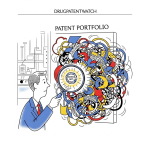
AbbVie filed 311 patent applications related to Humira in the U.S., 90% of them after the drug received FDA approval. The primary compound patent on adalimumab itself expired in 2016. AbbVie then held approximately 165 granted patents and over 100 pending applications covering the drug’s many downstream elements: high-concentration formulations removing citrate as a buffer, manufacturing process parameters for the CHO cell line used in production, specific dosing intervals for each of Humira’s indications, methods of treating pediatric patients, auto-injector device designs, and storage stability parameters. An independent analysis found roughly 80% of these patents non-patentably distinct from one another, linked by terminal disclaimers.
In the EU, AbbVie held eight non-duplicative patents on adalimumab. European biosimilars launched in October 2018, immediately after the European data exclusivity period expired. U.S. biosimilars did not reach patients until January 2023, nearly five years later. That 5-year gap is entirely a product of U.S. legal structure, not patent validity.
The Settlement-Forced Slope
No biosimilar challenger won a decisive court victory against AbbVie. Every challenger that litigated, settled. AbbVie’s litigation posture was explicit: any challenger would face 4 to 5 years of contested proceedings before any trial. AbbVie asserted 61 patents against Amgen’s Amjevita in the first wave of BPCIA litigation alone. Amgen settled. So did every subsequent challenger.
The settlement terms followed a consistent pattern: AbbVie granted biosimilar manufacturers licenses to launch in Europe in October 2018, extracted royalty commitments on future U.S. sales, and secured U.S. launch delays until January 2023. Each settling biosimilar company agreed to pay AbbVie royalties on U.S. sales even after launch, ensuring that AbbVie continued to collect revenue from the adalimumab market even after it technically lost exclusivity. The royalty terms were confirmed in SEC filings and litigation documents but specific percentages were not disclosed publicly.
IP Valuation of the Humira Patent Estate
Parameter
Value
Notes
Total U.S. patent applications filed
311
90% post-FDA approval (2002)
Granted U.S. patents (peak)
~165 granted; 100+ pending
Per BPCIA 3A list disclosures
EU patent portfolio (comparable period)
8 non-duplicative
PMC comparative study (2022)
Primary compound patent expiry (U.S.)
2016
Base molecule patent
First U.S. biosimilar launch
January 2023 (Amjevita)
AbbVie settlement terms
Biosimilar delay vs. EU launch
~5 years
EU launch: October 2018
Estimated excess U.S. revenue from delay
$14.4 billion
Academic estimate, 5-year period
AbbVie revenue at peak (U.S., 2022)
$18.0 billion
AbbVie 10-K
Price inflation (list price, 2003–2023)
+470%
Evernorth/Express Scripts analysis
Post-biosimilar price decline (2023)
~38% effective price drop
Formulary-weighted
The IP estate that AbbVie built around Humira is the most valuable secondary patent portfolio ever constructed around a single pharmaceutical product. The 5-year U.S. delay generated approximately $14.4 billion in retained monopoly revenue above what AbbVie would have earned under EU competition timing. At AbbVie’s actual gross margins on Humira (approximately 80%), the profit contribution from that delay was approximately $11.5 billion pretax. Total prosecution and litigation costs for the portfolio were estimated at $1 to $2 billion. The resulting ROI on secondary patent investment is conservatively 575 to 1,150 times the invested capital.
The PBM Rebate Wall
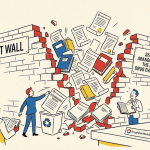
One underappreciated component of the Humira IP strategy is how AbbVie used the period of patent-enforced exclusivity to build a commercial infrastructure that continued to function even after biosimilar entry. AbbVie spent years constructing deep rebate arrangements with pharmacy benefit managers (PBMs). When Amjevita launched in January 2023 at an 85% discount to Humira’s list price, CVS Caremark, Express Scripts, and OptumRx still kept Humira as the preferred agent on their largest commercial formularies, because their contracts with AbbVie provided guaranteed rebates that biosimilar manufacturers could not match without the volume scale to generate comparable rebate dollars. The low-list-price biosimilar was effectively inaccessible to most commercially insured patients for much of 2023. The patent thicket created the period of exclusivity. The PBM rebate wall extended the commercial monopoly beyond it. AbbVie retained approximately 77% U.S. market share through Q2 2024.
Key Takeaways — Section 3
AbbVie filed 311 patent applications on Humira, 90% after FDA approval; the primary compound patent expired in 2016 but the last meaningful U.S. biosimilar entry barrier held until January 2023, 11 years after the first biosimilar received FDA approval. Approximately 80% of Humira’s U.S. core portfolio consisted of non-patentably distinct patents linked by terminal disclaimers — in the EU, the comparable portfolio was 8 non-duplicative patents. AbbVie’s settlement strategy extracted royalties from every biosimilar competitor, converting potential litigation losses into ongoing income streams. The PBM rebate wall is a commercial extension of the patent thicket: biosimilar manufacturers with low list prices but low sales volumes cannot offer the rebate dollars that retain formulary position. Global Humira sales fell 32.2% in 2023 to $14.4 billion and continued declining through 2024, confirming that biosimilar entry does eventually erode revenue — but the trajectory is far more gradual than the standard small-molecule cliff model predicts.
Investment Strategy — Section 3
The Humira case provides the analytical template for evaluating any biologic asset approaching patent expiry. Model the settlement trajectory explicitly: volume-capped settlements vs. unrestricted license settlements produce entirely different revenue trajectories post-LOE. AbbVie’s settlements produced a managed slope, not a cliff. Factor PBM contracting depth into the post-LOE revenue model, not just the patent timeline — AbbVie held ~77% U.S. market share through Q2 2024, which no pre-launch biosimilar penetration model forecast. Evaluate whether the brand company facing LOE has sufficiently commercialized successor assets to cushion the transition: AbbVie’s Skyrizi and Rinvoq were generating $17.5 billion combined by 2025. The short-entry thesis on brand manufacturers at biosimilar entry is poorly timed for biologics with dominant PBM relationships. AbbVie stock rose during much of 2023 and 2024. The managed slope is the correct model; the cliff is not.
Section 4: Case Study — Merck and Keytruda (Pembrolizumab)
Keytruda (pembrolizumab) received its first FDA approval in September 2014 for unresectable or metastatic melanoma. Merck has since won FDA approval for more than 40 indications across oncology, making Keytruda the broadest-labeled cancer immunotherapy in history and the world’s best-selling pharmaceutical as of 2024, with global revenues of $29.5 billion. Keytruda accounted for approximately 42% of Merck’s total 2024 revenue. The U.S. primary patent on the IV formulation expires in 2028. By any measure, this is the largest single loss-of-exclusivity event in pharmaceutical history.
Patent Portfolio Architecture
Merck sought 129 patents on Keytruda, covering claims ranging from the antibody structure and variable domain sequences, to manufacturing cell culture conditions, purification chromatography methods, specific dose and weight-based dosing regimens for each indication, combination regimens pairing pembrolizumab with chemotherapy or other biologics, patient biomarker selection methods (PD-L1 expression thresholds and tumor mutational burden cutoffs), and delivery device parameters for both the IV and subcutaneous formulations. In February 2023, four members of Congress wrote to the USPTO specifically asking the agency to scrutinize Merck’s Keytruda portfolio for ‘anti-competitive business practices,’ citing patent thicketing and a product hop in progress.
Merck’s 2017 lawsuit settlement with Bristol-Myers Squibb and Ono Pharmaceutical over the fundamental use of anti-PD-1 antibodies required a $625 million upfront payment and ongoing royalties on Keytruda sales through 2026. The royalty burden ran to hundreds of millions of dollars annually through 2026, illustrating that even a dominant thicket-protected asset carries overlapping IP obligations.
The Product Hop Playbook
On September 19, 2025, the FDA approved pembrolizumab and berahyaluronidase alfa-pmph (Keytruda Qlex), a subcutaneous injection formulation, for adult and pediatric patients across most of Keytruda’s approved solid tumor indications. The strategy is a textbook product hop: Merck shifts a significant proportion of the patient base to the SC formulation, which carries a new and distinct set of patents, before IV biosimilars can reach the market. Merck’s CEO Rob Davis has stated publicly that the company expects the SC formulation to capture 30% to 40% of the U.S. Keytruda patient base, describing the approaching competition as ‘more of a hill than a cliff.’
The SC formulation uses Halozyme’s ENHANZE drug delivery technology (hyaluronidase). Halozyme filed a separate patent infringement suit against Merck in 2025, claiming that Keytruda Qlex uses Halozyme’s patented technology without adequate compensation. The litigation is ongoing. Biosimilar developers including Celltrion, Samsung Bioepis, and Amgen have IV pembrolizumab biosimilar programs in late-stage development. Patent lawsuits over Keytruda IV biosimilars are expected no later than 2026, two years before IV exclusivity expires.
IP Valuation of the Keytruda Patent Estate
Parameter
Value
Notes
Total U.S. patent applications filed
129+
Includes SC formulation applications
Primary IV formulation patent expiry (U.S.)
2028
Two active ingredient patents extend to 2029
EU/SPC protection
2030–2031
SPCs pending
2024 global revenue
$29.5 billion
Merck 10-K 2024; 42% of total Merck revenue
U.S. revenue (2023)
$17.9 billion
>25% of Merck total
SC formulation FDA approval
September 19, 2025
38 solid tumor indications; not hematologic
Expected SC market capture
30–40% of U.S. patient base
CEO Davis guidance, 2024
IRA price negotiation
Selected 2026; new price active January 2028
CMS Medicare negotiation
Expected biosimilar litigation start
2026
~2yr pre-LOE industry pattern
Prior art royalty obligation
$625M upfront + royalties to 2026
2017 BMS/Ono settlement
Keytruda’s IP estate is more complex to value than Humira’s because of two compounding factors. First, the IRA’s Medicare price negotiation selected Keytruda in 2026 for a discounted negotiated price effective January 2028, the same window as the primary patent expiry. Second, the product hop creates a bifurcated revenue stream: IV sales are subject to biosimilar entry from 2028, while SC sales are protected by later-expiring patents. If Merck successfully migrates 30 to 40% of patients to Keytruda Qlex before IV biosimilars launch, the effective revenue at risk from IV biosimilar competition is $10.7 to $12.5 billion per year rather than the full $17.9 billion. A full-value income approach to the Keytruda IV patent estate values the remaining exclusivity at approximately $35 to $40 billion in NPV based on the two-year remaining window at current revenue levels discounted at 10%. The SC formulation’s estate adds an estimated $12 to $18 billion in incremental NPV depending on adoption rate and patent durability.
The IRA Compounding Factor
The Inflation Reduction Act of 2022 introduced Medicare’s first direct drug price negotiation authority. Keytruda’s selection for negotiation in 2026, with new negotiated prices effective January 2028, creates a situation in which the drug’s two largest revenue headwinds arrive simultaneously. A negotiated Medicare price typically runs 30 to 50% below list price, meaning that even before a single biosimilar reaches a patient, the gross-to-net economics on Merck’s largest revenue driver will deteriorate materially in January 2028. The net annual revenue trajectory is far harder to model than a standard small-molecule generic entry event: IRA negotiated price cut in January 2028, IV biosimilar entry in 2028 affecting Part D and commercial payer channels, and SC formulation partially buffering both through a maintained protected revenue stream.
Key Takeaways — Section 4
The Keytruda product hop to the SC formulation is among the most transparent LOE-management strategies in industry history. Merck’s CEO described the financial rationale publicly, giving regulators and antitrust authorities a documented record of intent. Two patents tied to Keytruda’s active ingredient extend to 2029, one year past the primary patent date, and Merck expects vigorous biosimilar litigation beginning in 2026. The IRA negotiation compounds the LOE impact: a government-mandated price reduction in January 2028 coincides with biosimilar entry. The SC formulation’s IP protection is not unlimited: biosimilar developers are already tracking Keytruda Qlex’s patent portfolio and will file BPCIA applications for SC pembrolizumab biosimilars. The Halozyme litigation adds IP title risk to the SC formulation that is not currently priced into most analyst models.
Investment Strategy — Section 4
Model Keytruda’s revenue in two separate streams: IV revenue subject to biosimilar entry from 2028 (discounted by IRA negotiated price from January 2028), and SC revenue protected by distinct patent claims for 3 to 5 additional years. The bifurcated model produces a revenue trajectory significantly less severe than a single-LOE model. For biosimilar developers, the likely outcome is not a litigated win but a series of staggered settlements — follow BPCIA 3A list disclosures for patent assertion scope. Merck’s pipeline buffer (Winrevair projected at $4.9 billion by 2029) is the primary earnings cushion; the base case is 15 to 20% EPS dilution through 2028 to 2030, with recovery if pipeline execution holds. A PTAB institution decision on any Keytruda core antibody patent is a material valuation event that would force earlier settlement and should be monitored actively by any portfolio with Merck equity exposure above 1%.
Section 5: Case Study — Celgene/BMS and Revlimid (Lenalidomide)
Revlimid (lenalidomide), a thalidomide derivative and immunomodulatory imide drug (IMiD), received FDA approval in December 2005 for transfusion-dependent anemia in myelodysplastic syndrome patients and was subsequently approved as a backbone therapy for multiple myeloma. Under Celgene’s management, Revlimid grew to approximately $12.8 billion in global annual sales by 2021, representing nearly one-third of Celgene’s revenue base — which is why Bristol-Myers Squibb paid $74 billion to acquire Celgene in 2019. The Revlimid strategy combines a dense secondary patent portfolio with REMS weaponization and volume-limited settlements that engineered a revenue slope rather than a cliff even after primary patent expiry.
Patent Portfolio Architecture
Celgene filed 206 patent applications on lenalidomide, of which 117 were granted. The primary compound patent on lenalidomide expired in 2019. What kept generic competition from reaching scale for years afterward was a thicket of secondary patents covering specific polymorphic crystal forms (Form A, Form B, Form D) of lenalidomide, the ’21 out of 28 days’ dosing cycle standard in multiple myeloma treatment, methods of treating specific patient subpopulations, and pharmaceutical compositions with particular particle size distributions. The polymorphic form patents were particularly difficult to design around: any lenalidomide API manufactured via a different process is likely to produce one of the patented crystal forms rather than an amorphous alternative.
REMS Weaponization
Lenalidomide is a thalidomide derivative, and the FDA mandated a Risk Evaluation and Mitigation Strategy (REMS) program called RevAssist, requiring strict prescriber registration, patient certification, mandatory pregnancy testing, and controlled distribution to prevent exposure to pregnant patients. This is a legitimate patient safety program. Celgene converted it into a competitive barrier.
To conduct bioequivalence studies required for ANDA approval, a generic manufacturer needs samples of the reference drug. Celgene refused to provide samples, arguing that RevAssist’s controlled distribution prevented selling lenalidomide to any entity not registered in the REMS program, including generic manufacturers conducting bioequivalence studies. Celgene spent years litigating this position, generating delay while generic development programs stalled without samples. The FTC later cited REMS weaponization as a distinct anticompetitive tactic requiring its own legislative response. Celgene also raised Revlimid’s price more than 22 times over its commercial life. A one-month supply that cost approximately $5,900 at launch reached over $19,000 by the time competition finally arrived, a 222% increase on top of an already high-priced specialty drug. Total Revlimid revenue over the monopoly period exceeded $90 billion globally.
Volume-Limited Settlements: Engineering the Patent Slope
Having brought generic challengers Natco, Alvogen, Cipla, and Dr. Reddy’s to the negotiating table through patent litigation costs and REMS delays, Celgene structured settlements that permitted generic entry beginning in March 2022, three years after the primary patent expired, but capped each generic manufacturer’s permitted market share at a single-digit percentage of total lenalidomide sales per period through January 31, 2026. The cap schedules increased gradually each year, reaching approximately 7% of the total market in the final volume-limited period.
The economic consequence of the volume cap is not merely that BMS retained market share. The cap destroyed the generic pricing mechanism. When a generic manufacturer cannot capture more than 7% of the market regardless of how aggressively it prices, there is no incentive to slash prices. A generic selling at 80% below Revlimid’s list price but capped at 7% market share earns less absolute revenue than one selling at 50% below with the same cap. The rational generic pricing in a volume-capped market is the highest price consistent with capturing the capped volume, not the competitive floor price that would drive mass substitution. BMS retained Revlimid pricing power through 2026 even after nominally facing generic competition. Full unrestricted generic entry did not occur until February 1, 2026, seven years after the primary patent expired.
Parameter
Value
Notes
Total U.S. patent applications filed
206
117 granted
Primary compound patent expiry
2019
U.S. compound patent
Full unrestricted generic entry date
February 1, 2026
BMS SEC settlement filings
Phase 1 volume cap (initial)
~7% max market share per generic
March 2022 – January 2026
Key differentiating tactic
REMS weaponization + polymorphic form patents
FTC cited separately
List price at launch (2006)
~$5,900/month
List price before generic entry
>$19,000/month
>22 price increases
Peak global annual revenue
~$12.8 billion
2021
BMS acquisition of Celgene (2019)
$74 billion
Revlimid primary value driver
Key Takeaways — Section 5
Celgene/BMS structured Revlimid generic settlements as volume-limited licenses beginning in March 2022, capped at approximately 7% market share per challenger, with full unrestricted entry not until February 2026 — seven years after the primary patent expired in 2019. REMS weaponization adds a distinct delay mechanism not captured in standard patent thicket analysis. Volume-limited settlements preserve branded pricing power because generic manufacturers under a volume cap have no incentive to compete aggressively on price. Celgene’s polymorphic form patents represent a particularly durable secondary patent category: any API manufactured via different synthetic routes is likely to produce one of the patented crystal forms, making design-around commercially impractical. The $74 billion BMS acquisition price reflected the assumption that Revlimid would generate $11 to $13 billion annually through 2026 with only nominal competition — that projection proved largely accurate.
Investment Strategy — Section 5
The Revlimid volume-limited settlement structure is the template for BMS’s Eliquis (apixaban) franchise, which faces generic entry beginning in 2028 with a formulation patent (the ‘945 patent, expiring 2031) still in force. BMS and Pfizer have settled with some Eliquis generic challengers on terms delaying entry until at least April 2028; apply the slope model. For Revlimid post-February 2026, the full competition phase has arrived — model 70 to 85% revenue decline over 18 to 24 months as volume caps expired and multiple generics began competing without restriction. When evaluating pharma acquisitions where the primary target is a drug with expired compound patents but active volume-limited settlements, pressure-test settlement terms against FTC enforcement risk before assigning full settlement-duration credit to acquisition value.
Section 6: The Technology Roadmap for Evergreening
Evergreening describes the practice of obtaining new patents on incremental modifications to an existing drug to extend effective market exclusivity beyond the compound patent term. IQVIA’s analyses estimate that 78% of new pharmaceutical patent grants cover existing drug molecules rather than new chemical entities. The following roadmap describes each major mechanism, its IP lifecycle implications, and its approximate contribution to exclusivity extension.
Small Molecule Evergreening Tactics
The most common small-molecule evergreening tactic is the salt or polymorph patent. An API can exist in multiple physical forms, including different salt forms and crystalline polymorphs, each with potentially distinct solubility or stability properties. Filing a patent on a specific, commercially valuable form blocks generic manufacturers who would otherwise use the same API in a different physical form. Celgene’s lenalidomide polymorph patents are the canonical example, appearing across the small-molecule drug catalog.
Formulation patents cover the combination of an API with specific inactive ingredients, buffers, excipients, or release mechanisms. Extended-release formulations that reduce dosing frequency represent genuine patient benefit but are routinely filed as secondary patents to capture new exclusivity periods. The FDA’s Hatch-Waxman framework grants a 3-year new clinical investigation exclusivity period for approved changes in conditions of use, which compounds the patent term extension. Formulation patents add an average of 6.5 years of effective exclusivity to a drug’s commercial life.
Method-of-use patents cover specific methods of treating a disease using a known compound, filed for each newly approved indication. If a generic carves out the patented indication from its label, it may still face an inducement of infringement suit if the FDA requires the drug’s labeling to reference the patented use’s data as part of the approval basis. The 2021 GSK v. Teva decision on carvedilol created substantial uncertainty around skinny labeling, forcing many generic manufacturers to either delay launch until method-of-use patents expire or accept higher litigation risk.
Patent term extensions (PTEs) under 35 U.S.C. § 156 allow pharmaceutical patent holders to recover patent term lost during FDA review, up to 5 additional years capped at 14 years of post-approval protection. For Eliquis (apixaban), which had a nearly five-year FDA review period, the PTE extended patent protection to 2026, substantially past the nominal compound patent expiry.
Pediatric exclusivity grants 6 additional months of market exclusivity for any drug completing pediatric studies under an FDA Written Request, regardless of whether those studies demonstrate pediatric efficacy. The studies cost a few million dollars. The 6-month extension on a $10 billion annual revenue asset is worth $5 billion in retained revenue. The ROI is in the thousands of percent.
The authorized generic (AG) strategy sits at the boundary of patent tactics and commercial tactics. When a primary patent expires and a generic manufacturer earns 180-day first-filer exclusivity, the brand can immediately launch its own AG through a subsidiary. The AG does not extend exclusivity but captures revenue that would otherwise go entirely to the independent generic and reduces the first-filer’s incentive to price aggressively.
Biologic Evergreening: A Distinct and More Complex Roadmap
Biologic evergreening follows the same conceptual logic as small-molecule evergreening but differs in mechanism because biologics cannot be perfectly replicated by a competing manufacturer. The molecular complexity of a large-protein therapeutic means each manufacturer produces a biologic with minor structural variations (glycosylation patterns, charge variants, aggregation profiles) that distinguish it from the reference product. This structural complexity creates natural product differentiation that does not exist for small molecules.
Indication expansion is the primary biologic evergreening mechanism. A monoclonal antibody approved for one autoimmune disease may take 10 to 15 years to accumulate approvals across five or six indications. Each new indication generates a new method-of-use patent with a 20-year term from its filing date. AbbVie filed method-of-use patents for Humira in uveitis, pediatric Crohn’s disease, hidradenitis suppurativa, and multiple other indications, each adding independent IP coverage years after the adalimumab compound patent expired.
Concentration and formulation engineering produces commercially valuable and patentable improvements that also serve as thicket components. AbbVie’s high-concentration, citrate-free Humira formulation (Humira CF) reduced injection-site pain by removing the citrate buffer — a genuine patient benefit that the company then used to migrate patients from the original formulation before biosimilars could launch, a product hop within a product hop.
Manufacturing process patents cover specific cell culture conditions, purification column sequences, viral inactivation steps, and formulation parameters that define how a biologic is manufactured. Biosimilar developers cannot use the reference manufacturer’s exact process without infringing these patents, forcing them to develop alternative manufacturing routes that may produce a product with slightly different analytical profiles, requiring additional comparability data for FDA submission. Manufacturing process patents typically carry high technical specificity and are harder to invalidate via IPR than formulation or dosing regimen patents, making them the most durable component of a biologic thicket.
Key Takeaways — Section 6
78% of new pharmaceutical patent grants cover existing drug molecules. The patent system’s primary function in commercial biopharma is not incentivizing the creation of new drugs but extending the revenue period of existing ones. Formulation patents add an average of 6.5 years of effective exclusivity; pediatric exclusivity adds 6 months at a cost-to-benefit ratio of approximately 1:1,000 or higher for blockbuster drugs. The product hop is the highest-risk evergreening tactic from an antitrust perspective — Merck’s transparent, CEO-acknowledged Keytruda SC product hop gives regulators and private plaintiffs a documented record of monopoly-extending intent. Biologic manufacturing process patents are the most durable thicket component because they require biosimilar developers to use distinct processes that may alter the product’s analytical profile. A biologic accumulating indications from year 1 can hold meaningful IP protection in some uses through year 35 or later from original filing.
Section 7: Economic and Health System Impact
Patent thickets impose costs across four categories: direct consumer costs from maintained monopoly pricing, system-level waste from foregone generic competition, innovation distortion from misallocated R&D incentives, and competitive suppression that reduces the number of biosimilar and generic entrants in thicket-heavy markets. The aggregate annual cost of patent thicket-enabled monopoly extension in the U.S. runs into the tens of billions of dollars across all methodologies.
The $400 Billion Patent Cliff and Consumer Cost
Between 2025 and 2033, U.S. pharmaceutical companies are projected to lose over $400 billion in revenue as major drug patents expire. The IQVIA projection estimates that new biosimilar and generic market introductions would increase projected losses for originator products from $111 billion to $192 billion by end of 2028, of which $59 billion is attributable specifically to biologics. A U.S. PIRG analysis of three specific drugs — Humira, Keytruda, and Revlimid — estimated that consumers and payers collectively wasted $167 billion in excessive drug spending that would not have occurred had generic and biosimilar competition arrived on the schedule that European patients experienced.
One in four Americans currently rations prescribed medications, skipping doses or not filling prescriptions because of cost. That rationing behavior has documented clinical consequences: disease progression, increased hospitalizations, and reduced treatment adherence in chronic conditions where adherence directly determines outcome. In ophthalmology, Eylea (aflibercept) costs approximately $1,800 per dose in the U.S. The EU equivalent runs roughly 40% lower, with biosimilar competition accelerating further price compression as biosimilars enter European markets.
Innovation Distortion: Evergreening vs. Novel Drug R&D
The standard industry defense of patent thickets is that patent revenue funds future R&D. The argument is not wrong in principle, but the empirical record on how companies allocate resources between novel drug development and IP portfolio management is less favorable to the industry’s position than the argument implies. Merck spent substantial IP resources patenting Keytruda’s subcutaneous delivery method and new dosing regimens rather than developing the next checkpoint inhibitor mechanism. AbbVie’s post-Humira pipeline depended on Rinvoq (upadacitinib), a JAK1 inhibitor competing in a crowded drug class, and Skyrizi (risankizumab), an IL-23 inhibitor entering a market Janssen had already built with Stelara.
Startup suppression is a documented consequence of dense patent thickets in biologic markets. Small firms working in spaces dominated by thicket-protected biologics face 25% higher litigation risks than those in less thicket-dense areas, according to ProMarket research published in 2024. This directly raises the cost of capital for early-stage companies developing competing or biosimilar products, reducing the number of entrants and the competitive pressure on innovation.
Key Takeaways — Section 7
Humira, Keytruda, and Revlimid account for an estimated $167 billion in excess U.S. payer spending attributable to thicket-enabled monopoly extension above what those payers would have paid under European competition timelines. The $400 billion patent cliff projected through 2033 represents the aggregate revenue at stake — the share that becomes actual consumer savings depends entirely on biosimilar penetration rates, which are in turn a function of patent settlement terms, biosimilar interchangeability status, and PBM formulary decisions. The R&D investment argument for patent thickets loses empirical support when 78% of new pharma patents cover existing molecules rather than novel mechanisms. Biologic biosimilars achieve approximately 53% market share and produce a 53% reduction in average drug costs after five years of competition, per Samsung Bioepis’ Q1 2025 report. The five-year lag is entirely consistent with managed-entry settlement structures characterizing every major biologic LOE event since Humira.
Section 8: The Regulatory and Legislative Response
The U.S. government’s response to pharmaceutical patent thickets has intensified since 2022, spanning three separate regulatory fronts: FTC enforcement against Orange Book patent listings, USPTO review standards for secondary patent applications, and Congressional legislation targeting both Hatch-Waxman and BPCIA patent assertion rules. Each front operates on a different timeline and faces distinct legal and political constraints.
FTC and the Orange Book Enforcement Campaign
The FTC has treated improper Orange Book listings as an unfair method of competition under FTC Act Section 5 since at least 2002. What changed under Chair Lina Khan was the scale. In 2024, the FTC challenged over 100 patent listings held by Teva, GSK, and Boehringer Ingelheim, arguing that patents on drug-device combination components (inhaler caps, counter mechanisms, strap assemblies) do not claim the ‘drug product’ within the meaning of Hatch-Waxman and cannot be listed in the Orange Book to trigger the 30-month stay. By December 2025, Teva had agreed to delist more than 200 patent listings following FTC pressure, involving patents for asthma, diabetes, and COPD medications. The campaign through early 2026 generated Orange Book delistings across 22 branded products.
The legal theory is defensible but not settled. The 30-month stay’s scope — specifically whether device component patents trigger it — has never been definitively adjudicated by a circuit court. FTC enforcement actions are administratively binding on companies that settle them but do not create binding precedent for all Orange Book filers.
Legislative Proposals: The ETHIC Act and Cornyn-Blumenthal
The ETHIC Act (Ensuring Timely Healthcare Innovation and Competition) proposes to cap the number of patents a brand manufacturer can assert against a biosimilar or generic challenger in litigation, forcing originators to focus on their strongest and most novel claims rather than overwhelming challengers with volume. The Affordable Prescriptions for Patients Act, supported by Senators Cornyn and Blumenthal, frames patent thicketing and product hopping as potential antitrust violations, providing the FTC with explicit statutory authority to challenge them. The Congressional Budget Office estimated the bill would save Medicare and private insurance billions over the ten-year budget window. The Association for Accessible Medicines, representing generic and biosimilar manufacturers, has noted that assertion caps may increase incentives for pre-litigation settlement activity, with uncertain net effects on market entry timing.
USPTO Post-Grant Review and IPR Invalidation Rates
Inter partes review (IPR) at the Patent Trial and Appeal Board (PTAB) allows third parties to challenge the validity of issued patents on prior art grounds. From the PTAB’s perspective, pharma patent challenges have a reasonably favorable institution rate: roughly 60 to 70% of IPR petitions are instituted, and approximately 38% of challenged pharma patents were invalidated in 2024. IPR proceedings typically require 18 to 24 months from petition to final decision, adding significant capital carrying cost for challengers who have already sunk development capital. In December 2025, the USPTO proposed new examination guidelines for secondary pharmaceutical patents, specifically targeting obvious formulation and dosing regimen patents that lack demonstrated technical advance over the prior art.
The IRA’s Effect on Thicket Economics
The Inflation Reduction Act fundamentally alters the financial calculus for patent thickets on drugs entering Medicare price negotiation. For a drug under negotiation, extending the patent beyond the negotiation effective date does not recover the pre-negotiation price: the drug is already subject to government pricing. For Keytruda, facing negotiated Medicare pricing from January 2028 and primary patent expiry also in 2028, the thicket’s remaining financial value is limited to the window between now and January 2028, and to non-Medicare revenue that the negotiated price does not directly cover. The IRA narrows the financial window over which patent extension generates full monopoly pricing, reducing the marginal return on late-stage secondary patent prosecution for drugs entering or likely to enter Medicare negotiation.
Key Takeaways — Section 8
The FTC’s Orange Book enforcement campaign delisted patents from 22 branded products by early 2026, generating pathway clearance for earlier generic entry on combination device products. The campaign does not address the core BPCIA biologic patent assertion problem, where no Orange Book listing is required. The ETHIC Act’s patent assertion cap proposal would change biologic litigation dynamics by forcing brand companies to concentrate litigation on their strongest patents. PTAB invalidated approximately 38% of challenged pharma patents in 2024; the 18 to 24-month IPR timeline limits the tool’s utility for challengers who need clearance quickly. The IRA’s Medicare price negotiation reduces the financial return on secondary patent prosecution for drugs already selected for negotiation, because the government price applies regardless of patent status after the negotiation effective date.
Section 9: Global Comparative Analysis
U.S. vs. EU Patent Assertion Rates
The published PMC comparative study of biosimilar patent assertions across the U.S., Canada, and the United Kingdom found that on average, 9 to 12 times more patents were asserted against biosimilar challengers in the U.S. than in Canada and the UK for the same reference products. Adalimumab biosimilars faced 61 patent assertions from AbbVie in U.S. BPCIA proceedings against 8 patents in the EU. EU adalimumab biosimilars launched in October 2018 and produced 80 to 90% price declines in national tender markets within two years. U.S. AbbVie retained approximately 77% market share through Q2 2024. The divergence reflects the combined effect of the patent delay, PBM rebate contracts, and the lack of automatic substitution rights for biosimilars in the U.S. The differential is entirely a function of U.S. legal structure, not innovation quality or patent validity.
Regulatory Pathways for Biosimilar Interchangeability
Biosimilar interchangeability status allows a pharmacist to substitute an interchangeable biosimilar for the reference product without a new prescription, matching the automatic substitution right that AB-rated generics have for small molecules. Under BPCIA, a biosimilar applicant must conduct switching studies before the FDA grants interchangeability designation. These studies cost tens of millions of dollars and require 12 to 18 additional clinical trial months beyond standard biosimilar approval. The EU does not maintain a formal interchangeability distinction: an EMA-approved biosimilar is substitutable by prescriber guidance without additional switching studies. The interchangeability requirement functions as an additional regulatory barrier compounding the patent thicket delay.
The Biosimilar Red Tape Elimination Act, reintroduced in June 2025 by Senator Mike Lee, proposes to eliminate the separate interchangeability designation and deem all FDA-approved biosimilars interchangeable upon approval. If enacted, it would remove the switching study burden and materially accelerate formulary-level substitution for all approved biosimilars.
Key Takeaways — Section 9
The U.S. asserts 9 to 12 times more patents per biologic against biosimilar challengers than Canada or the UK. The differential is a function of U.S. legal structure (BPCIA unlimited assertion right), not patent validity. EU adalimumab biosimilar entry in October 2018 produced dominant biosimilar market share by 2024; U.S. AbbVie retained ~77% market share through the same date. The EU’s approach to biosimilar substitutability, treating EMA-approved biosimilars as substitutable without separate interchangeability studies, has produced faster price competition than the U.S. BPCIA pathway. The Biosimilar Red Tape Elimination Act would align U.S. rules more closely with the EU standard and represents the legislative change most directly beneficial to patients at minimal trade-off cost.
Section 10: Investment Strategy and Analyst Framework
Patent thicket analysis is a quantitative input to drug asset valuation, enterprise value modeling, and M&A due diligence. The analysts who correctly modeled the Humira managed slope outperformed those who used a standard biologic cliff model by wide margins in AbbVie equity positioning from 2021 through 2024. The same analytical gap will appear across every major biologic LOE between 2025 and 2033.
Identifying ‘Patent Slope’ vs. ‘Patent Cliff’ Assets
The ‘patent cliff’ model, where a drug loses 70 to 90% of market share within 12 months of generic entry, applies to small-molecule drugs with multiple simultaneous generic entrants and automatic pharmacist substitution. It does not apply to biologic drugs under BPCIA with volume-limited settlements, PBM rebate arrangements, and biosimilar interchangeability barriers.
Asset Type
Typical LOE Revenue Loss (Yr 1)
Revenue Loss by Yr 5
Key Slope Drivers
Small molecule, multiple generics, no thicket
70–90%
90–95%
Price competition, auto-substitution
Small molecule, volume-limited settlement
20–35%
65–80%
Volume cap terms, settling generic count
Biologic, full competitive entry (EU model)
30–50%
70–85%
Formulary decisions, national tender pricing
Biologic, managed settlement + PBM rebate wall (Humira U.S. model)
10–20%
40–60%
PBM formulary placement, settlement terms
Biologic, product hop pre-LOE (Keytruda SC model)
0–15% (on migrated share)
25–45% (blended IV+SC)
SC adoption rate, separate SC patent life
Red Flags and Due Diligence Checklist
Post-approval patent filing ratio: What percentage of the patent portfolio was filed after FDA approval? A ratio above 60% indicates a thicket strategy rather than a compound-protection strategy.
BPCIA 3A list scope: How many patents has the brand listed in BPCIA pre-litigation exchanges with biosimilar applicants? Pull PACER filings from BPCIA litigation complaints to identify actual assertion scope. The 3A list, not the total portfolio count, defines the litigation exposure any single challenger faces.
Settlement terms in SEC filings: Has the brand settled with any biosimilar or generic challengers? Are volume caps disclosed? Volume-capped settlements indicate a managed-slope LOE event. Model accordingly.
PBM rebate depth: What share of the brand’s formulary position is protected by multi-year rebate contracts with the three major PBMs? AbbVie’s formulary position pre-biosimilar entry was so entrenched that PBMs retained Humira as preferred on their largest commercial books well into 2024. This is not captured in patent models.
Orange Book listing status: Has the FTC challenged any Orange Book listings for the target drug? An FTC warning letter or administrative challenge is a leading indicator of listing removal, which would eliminate the 30-month stay for challenged patents and accelerate generic entry.
IPR petition history: Has any generic or biosimilar developer filed an IPR against the brand’s thicket patents? A PTAB institution decision reduces the probability-weighted patent life and directly affects NPV calculations.
Product hop timeline: Is the brand developing a new formulation with separate patent protection? Has the company filed for a new FDA approval allowing patient migration before the primary formulation’s LOE date? If yes, model the IP-protected migrated patient share as a separate revenue stream with its own patent expiry date.
Investment Strategy — Section 10
The pharma LOE super-cycle of 2025 to 2033 represents $400 billion in cumulative revenue at risk for brand manufacturers. Long managed-slope brands: companies with deep PBM contracts, volume-limited settlements, and product-hop pipelines will show revenue resilience through LOE events the market underestimates. Screen for similar setups in the Eliquis franchise (BMS/Pfizer), Stelara (J&J, LOE 2025), and Eylea (Regeneron, LOE 2025 to 2026). Short brittle thickets: assets where primary thicket patents have high IPR vulnerability, no product hop is in development, and settlement terms permit unrestricted generic entry on the primary LOE date are candidates for earlier-than-modeled revenue decline. Biosimilar developer screening: the first-filing biosimilar developer on any major biologic earns a commercially meaningful exclusivity window before competition from other biosimilar manufacturers. Track BPCIA litigation filings for first-to-file status across Celltrion, Samsung Bioepis, Coherus, and Organon. IRA pricing interaction: model each biosimilar opportunity against the IRA negotiated price timeline — if the reference drug’s negotiated Medicare price arrives before biosimilar entry, the biosimilar’s pricing ceiling is lower than the reference list price, compressing margin on the launch.
Section 11: The Path Forward — Reform Options Assessed
Patent thickets exist because the legal and commercial architecture of the U.S. pharmaceutical market makes them profitable. Eliminating thickets without undermining genuine IP protections that fund pharmaceutical R&D requires targeted changes to specific mechanisms rather than broad reductions in patent rights. The reform proposals currently under Congressional or regulatory consideration fall into four categories, each with distinct effects on brand manufacturer economics, generic market dynamics, and drug pricing.
Patent Litigation Reform: Assertion Caps and Serial Litigation Rules
Capping the number of patents a brand can assert against a single biosimilar or generic challenger in a single proceeding is the most direct structural remedy for biologic thickets. BPCIA currently has no such cap. The ETHIC Act’s proposed cap would force originators to commit to their best patents early in litigation, reducing the leverage of a 60-patent portfolio to the 10 to 15 patents most likely to be valid and infringed. This changes the negotiating dynamics: a brand that can only assert 15 patents has less threat volume than one that can assert 61, even if the underlying patent quality is identical.
Patent Quality Reform: USPTO and Post-Grant Review
The proposed USPTO guidance on secondary pharmaceutical patents, announced in December 2025, targets obvious formulation and dosing regimen applications that form the bulk of most thickets. If the USPTO requires applicants to demonstrate actual technical advance in efficacy, stability, or bioavailability for secondary applications, fewer low-quality thicket patents would issue. This is a two-sided reform: it reduces the quantity of thicket patents while potentially increasing the quality (and durability) of those that survive the higher bar.
Orange Book Reform: Narrowing Eligible Listings
Restricting Orange Book listing eligibility to patents that directly claim the drug product rather than device components of combination products is the FTC’s administrative approach. Legislation codifying this restriction would create uniform market-wide application. Multiple bills introduced in 2024 and 2025 would amend Hatch-Waxman’s Orange Book listing requirements to explicitly exclude device-only patents from 30-month stay eligibility. This is the narrowest and most legally defensible reform on the current legislative agenda.
Biosimilar Interchangeability Reform
The Biosimilar Red Tape Elimination Act would deem all FDA-approved biosimilars interchangeable upon approval, without separate switching studies. This change would not directly reduce the number of patents in any thicket, but it would accelerate pharmacist-level substitution once biosimilars enter the market, shortening the period of commercial brand dominance post-LOE. The practical effect would be most pronounced in therapeutic areas where interchangeability designations have been slow to accumulate, including oncology and ophthalmology.
‘Former FDA Commissioner Scott Gottlieb described patent thickets around reference biologics as purely designed to deter the entry of approved biosimilars. Under the current legal framework, that deterrence function is working exactly as designed.’
A final structural reality underlies all of these reform discussions: the patent system cannot be reformed without trade-offs. The average capitalized cost of bringing a new molecular entity to FDA approval runs approximately $2.6 billion, including the cost of clinical failures that never reach market. Some patent exclusivity period is necessary to recover that investment. The question is not whether pharmaceutical patents should exist, but whether the specific mechanisms of the U.S. system — the unlimited BPCIA assertion right, the Orange Book 30-month stay for device patents, terminal disclaimer stacking, and REMS weaponization — are proportionate to the R&D recovery objective or substantially exceed it. The evidence from the Humira, Keytruda, and Revlimid cases indicates that several of those mechanisms are generating returns to brand manufacturers that substantially exceed the R&D investment they were designed to protect, at a cost borne by patients, payers, and public budgets rather than the shareholders who benefit.
Key Takeaways — Section 11
The most targeted structural reform is a BPCIA patent assertion cap: limiting the number of patents assertable in a single proceeding forces brand companies to commit to their strongest patents without eliminating patent rights. USPTO guidance requiring demonstrated technical advance for secondary patent grants would reduce thicket volume while potentially increasing patent durability, requiring careful calibration of the ‘technical advance’ threshold. Orange Book listing reform, codifying the restriction on device-only patent listings, eliminates one specific delay mechanism without affecting core drug manufacturer patent rights — it is the change with the most favorable legislative trade-off profile currently on the agenda. Biosimilar interchangeability reform would not shorten the patent fight but would shorten the period of commercial brand dominance post-LOE by enabling pharmacist-level substitution. None of the reform proposals, individually or in combination, would eliminate pharmaceutical patents or end investment in biologic drug development. The cumulative impact of all four enacted simultaneously is estimated to reduce effective biologic exclusivity in the U.S. by 2 to 4 years on average, producing tens of billions in annual consumer and payer savings.
Sources: PMC comparative patent assertion studies; AbbVie, Bristol-Myers Squibb, and Merck SEC filings; BPCIA litigation complaints (D. Del. and D.N.J.); FTC administrative filings and warning letters; Congressional Budget Office estimates; IQVIA market projections; Samsung Bioepis Biosimilar Market Reports (Q1 and Q2 2025); Bloomberg Law; DrugPatentWatch patent portfolio data; i-mak.org analysis; Association for Accessible Medicines.
Disclaimer: This document is for informational and analytical purposes only. It does not constitute investment advice or legal counsel. Patent expiry dates, revenue figures, and legislative status are subject to change. Readers should independently verify all material facts through primary source filings before making investment or legal decisions.