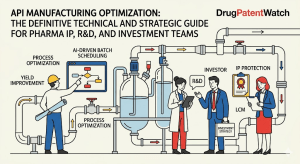
1.1 What an API Is, and Why Its Manufacturing Process Is a Core IP Asset
An active pharmaceutical ingredient (API) is any substance or mixture of substances that furnishes pharmacological activity or other direct effect in the diagnosis, cure, mitigation, treatment, or prevention of disease. That definition, drawn from ICH Q7, is familiar to everyone in this industry. What is less consistently appreciated is that the manufacturing process for an API, not just the molecule itself, constitutes one of the highest-value and most defensible intellectual property assets a pharmaceutical company can hold.
The global API market was valued at approximately $220 billion in 2024 and is projected to reach $310 billion by 2030, driven by oncology pipelines, GLP-1 receptor agonist demand, and the continued expansion of biosimilars. Cardiovascular APIs, central nervous system compounds, and oncology small molecules represent the three largest therapeutic segments by volume, but the fastest-growing segment by dollar value is highly potent APIs (HPAPIs), which now accounts for roughly 25% of all drug development pipelines and commands a manufacturing premium of 30-60% over standard small-molecule production. The HPAPI segment’s growth reflects an industry-wide shift toward targeted therapies with tight therapeutic indices, and it creates significant barriers to entry for contract manufacturers that lack the required containment infrastructure.
APIs split into three broad production categories, each with distinct patent landscapes and process economics. Small molecules, synthesized through multi-step organic chemistry, represent the bulk of marketed products. Biologics, produced through fermentation or mammalian cell culture, carry the most complex upstream and downstream process requirements and, consequently, the richest process IP portfolios. Advanced therapy medicinal products (ATMPs), including gene therapies, somatic cell therapies, and tissue-engineered products, operate under a distinct and continuously evolving regulatory framework that is still generating new IP categories at a rapid pace. This report covers all three, with depth calibrated to where the IP and investment action is concentrated.
1.2 The Complexity Tax: How Molecular Sophistication Erodes Manufacturing Economics
The core economic problem in modern API manufacturing is what can be called the complexity tax. As drug pipelines shift toward more targeted molecules, synthetic routes lengthen. A compound that required three or four synthetic steps in the 1990s might require eight or more today. Each additional step multiplies the risk of yield loss, impurity generation, and scale-up failure. A Phase 1 program for an eight-step small-molecule API with an initial overall yield of 14% is not unusual. At that yield, the cost-of-goods implications are severe before a molecule has even entered Phase 2.
Modern drug candidates frequently carry multiple chiral centers, quaternary carbon atoms, and sterically hindered functional groups. These features demand precise stereocontrol, often requiring asymmetric catalysis or enzymatic resolution steps that are themselves technically demanding to scale. The structural complexity does not just increase synthesis length. It amplifies impurity formation, because longer routes create more opportunities for side reactions, and it makes downstream purification more expensive, because structurally similar impurities are harder to separate by crystallization or chromatography.
The regulatory cost of complexity is equally significant. ICH Q3A requires identification of any impurity present above 0.10% in the final API, and qualification thresholds for genotoxic impurities (GTIs) under ICH M7 are considerably tighter, often set at parts-per-million levels. A longer synthetic route with more potential GTI-generating steps requires a substantially more extensive analytical development program, which adds both time and cost. The total cost of quality, a framework that accounts for batch failures, rework, regulatory delays, and post-approval changes, consistently exceeds the narrower metric of cost-per-kilo when complex APIs are evaluated over their full commercial lifecycle.
1.3 API Categories and Their Manufacturing Process Profiles
Small-molecule API manufacturing depends on a series of controlled chemical transformations: formation of intermediates through condensation, cyclization, reduction, or other reactions; purification by crystallization, distillation, or chromatography; and finishing operations including drying and milling to target particle size distribution. The last two steps, filtration and drying, consistently appear as production bottlenecks at commercial scale, largely because heat and mass transfer limitations do not scale linearly with vessel volume.
Biologic API manufacturing follows a fundamentally different logic. The molecule is produced by living cells, either microbial or mammalian, and the manufacturing process must maintain cell viability, productivity, and product quality across bioreactor scales that can range from 50-liter seed trains to 20,000-liter production bioreactors. Upstream process variables such as dissolved oxygen, pH, temperature, agitation rate, and media composition all interact in ways that affect not just titer but post-translational modifications, including glycosylation patterns, that are themselves critical quality attributes. Downstream processing for a monoclonal antibody typically involves Protein A affinity chromatography, two or more orthogonal chromatography polishing steps, viral inactivation and filtration, and ultrafiltration/diafiltration. The combined upstream and downstream process constitutes a regulatory filing artifact of enormous IP value, because the process defines the product.
ATMP manufacturing sits at the most technically demanding end of the spectrum. Gene therapy vectors, including adeno-associated virus (AAV) serotypes and lentiviral vectors, must be produced in mammalian cell systems, purified to high purity with intact capsid structure and appropriate genome encapsidation ratio, and characterized by a battery of analytical methods that are still being standardized by regulators. Cell therapy products, including CAR-T constructs, require individualized manufacturing processes tied to patient-specific starting material, which drives a per-patient cost structure that is fundamentally different from any other pharmaceutical manufacturing model.
Key Takeaways, Section 1
The API manufacturing sector is not a commodity business. Process complexity, regulatory specificity, and the capital requirements of containment, quality systems, and advanced analytics create durable competitive moats. The transition toward HPAPIs, biologics, and ATMPs is accelerating, and each category shifts value creation from the molecule toward the manufacturing process itself. For IP teams, this means process patents, manufacturing method claims, and crystalline form patents deserve equal or greater attention than compound claims in many pipeline assets.
Investment Strategy, Section 1
Investors tracking API manufacturing should weight companies with demonstrated process chemistry capabilities over those with molecule-only IP positions, particularly in therapeutic areas where generic and biosimilar competition is intensifying. Process complexity, as proxied by step count, yield data in CMC filings, and containment facility investment, is a reasonable leading indicator of manufacturing moat durability. CDMOs with HPAPI suites and biologic manufacturing capacity are currently the most defensible positions in the contract manufacturing segment.
Section 2: IP Valuation in API Manufacturing: How Process Patents Drive Asset Value
2.1 The Hierarchy of Pharmaceutical Patent Types
Pharmaceutical IP portfolios are stratified by patent type, and understanding where manufacturing process patents fit within that hierarchy is essential for accurate asset valuation. The primary patent covering a novel chemical entity (NCE) is typically a composition-of-matter claim. This is the strongest form of protection, but it is also time-limited and erodes predictably. What extends a product’s economic life, and what is frequently undervalued in standard discounted cash flow models, is the cluster of secondary patents covering the manufacturing process, specific crystalline polymorphs, salt forms, formulations, and methods of use. This cluster is the foundation of evergreening strategy, which is addressed in depth in Section 11.
Process patents cover the specific sequence of chemical reactions, reaction conditions, reagents, solvents, catalysts, and purification steps used to manufacture an API. Their strategic value derives from several factors. A patented manufacturing process that achieves superior yield, lower PMI, or reduced impurity burden creates a cost-of-goods advantage that compounds over the product lifecycle. A process patent can be harder for generic entrants to design around than a compound patent, because the starting material and intermediate landscape is often constrained by commercial availability and downstream purification requirements. In the biologic space, where the process is the product, manufacturing process patents are effectively the primary IP barrier to biosimilar competition.
2.2 Valuing Process IP: Methodologies and Key Metrics
Standard pharmaceutical asset valuation uses risk-adjusted net present value (rNPV) models that apply probability of technical success (PTS) factors to projected revenue streams. Process IP complicates this model in useful ways. A company holding a superior manufacturing process patent for an API that will face generic competition can model a cost-of-goods advantage that translates directly into margin durability post-patent cliff. The incremental value of a process patent is most accurately captured by modeling two scenarios: one where the process patent is in force and competitors cannot replicate the preferred route, and one where it has expired or been invalidated, assuming competitor convergence on similar process economics.
Key metrics that drive process IP valuation include yield at commercial scale (expressed as overall yield across all synthesis steps), PMI (a lower PMI reduces solvent, energy, and waste disposal costs), cycle time from starting material to finished API, facility footprint per kilogram of output, and regulatory dossier complexity, which affects post-approval change (PAC) filing costs. A one-percentage-point improvement in overall yield for a high-volume API producing several hundred tonnes per year can represent tens of millions of dollars in annual COGS reduction, and that improvement, if protected by a process patent, has a calculable and often substantial rNPV contribution.
2.3 Patent Linkage and the Orange Book: Process Patent Strategy for Generic Entrants
Under the Hatch-Waxman framework in the United States, an ANDA applicant who wants to market a generic version of an Orange Book-listed drug before the expiration of a listed patent must file a Paragraph IV certification, asserting that the patent is invalid, unenforceable, or will not be infringed. This certification triggers a 30-month stay of FDA approval, giving the branded company time to litigate. The critical strategic point for generic entrants is that Orange Book listings cover compound and formulation patents, not typically process patents. A generic manufacturer can use a different synthetic route without implicating a branded company’s process patent. However, if the branded manufacturer’s process patent is also a use patent or covers the specific crystalline form that appears in the drug product, the linkage becomes more complicated and can affect the generic’s ANDA strategy.
For generic API developers, process patent freedom-to-operate (FTO) analysis is a distinct workstream from compound patent clearance. A generic entrant must demonstrate that its proposed synthetic route does not infringe any in-force process patent held by the innovator or by a third-party API manufacturer. This analysis requires mapping the proposed route against the full claim landscape of relevant process patents, including continuation filings and national phase entries of PCT applications. Platforms like DrugPatentWatch that aggregate global patent data, including process patent filings organized by API, are operationally essential for this work.
Key Takeaways, Section 2
Process patents are consistently underweighted in standard pharma IP valuations. For any API approaching its primary composition-of-matter patent expiration, a systematic audit of the process patent estate should precede any asset valuation or M&A diligence. The incremental rNPV contribution of a defensible process patent protecting a low-PMI, high-yield manufacturing route can be material, particularly for high-volume products or HPAPIs with capital-intensive production requirements.
Investment Strategy, Section 2
Analysts building pharma asset models should add a process IP premium to rNPV calculations for assets where the branded manufacturer holds in-force process patents with meaningful remaining life, documented COGS advantages, and technical characteristics that make generic route design-around non-trivial. Companies with deep process chemistry capabilities, such as Dr. Reddy’s Laboratories, Lonza, and Cambrex, are positioned to monetize process IP both through product sales and through licensing, a revenue stream that is rarely captured in consensus estimates.
Section 3: Foundational Quality Frameworks: QbD, PAT, and the Green Chemistry Mandate
3.1 Quality by Design: The Engineering Logic of Pharmaceutical Manufacturing
Quality by Design (QbD) is not a regulatory checkbox. It is the application of engineering first principles to pharmaceutical manufacturing, and it was formally introduced into the regulatory framework through ICH Q8 (Pharmaceutical Development), Q9 (Quality Risk Management), and Q10 (Pharmaceutical Quality Systems). The organizing logic is straightforward: quality is a function of process understanding, not of end-product testing. A manufacturer that understands, in quantitative terms, how every input variable affects every output attribute can design a process that reliably produces a quality product. A manufacturer that relies on end-product testing to confirm quality is, by definition, operating with incomplete process knowledge, which means it is also operating with elevated batch failure risk.
The QbD workflow begins with the Quality Target Product Profile (QTPP), a prospective summary of the quality characteristics required of the final drug product to ensure safety and efficacy. The QTPP translates patient and regulatory requirements into measurable development objectives. From the QTPP, the team identifies Critical Quality Attributes (CQAs): the physical, chemical, biological, or microbiological properties of the API or drug product that must be controlled within defined limits. For a small-molecule API, common CQAs include chemical purity, specific impurity levels, polymorphic form, particle size distribution (d10, d50, d90), bulk density, residual solvent content, and water activity.
Critical Process Parameters (CPPs) are the process variables whose variability has a statistically demonstrated impact on one or more CQAs. Identifying CPPs requires formal risk assessment, typically using tools such as failure mode and effects analysis (FMEA) or Ishikawa diagrams, followed by Design of Experiments (DoE) campaigns that quantify the relationship between process inputs and quality outputs. The output of this experimental work is a Design Space: a multidimensional envelope of input variable combinations that have been demonstrated to produce a product meeting all CQA specifications. Operating within the Design Space is not a regulatory violation, even if parameters shift within it, which provides manufacturers with meaningful operational flexibility post-approval and reduces the burden of post-approval change (PAC) filings.
The Control Strategy that emerges from QbD development is a planned set of controls derived from the Design Space knowledge. It specifies which parameters are monitored, which are controlled, and at what frequency. A well-constructed Control Strategy shifts quality assurance from a series of discrete tests on finished material to a continuous, in-process function that generates real-time evidence of manufacturing control.
3.2 Process Analytical Technology: Real-Time Eyes on the Reaction
Process Analytical Technology (PAT) is the measurement and analytical infrastructure that makes QbD operationally real. The FDA’s 2004 PAT guidance defined it as a system for designing, analyzing, and controlling manufacturing through timely measurements of critical quality and performance attributes of raw and in-process materials and processes. The word ‘timely’ is doing significant work in that definition. PAT moves quality data from the offline QC laboratory, where results arrive hours after the event, to the process stream itself, where deviations can be detected and corrected in real time.
The most widely deployed PAT tools in API manufacturing are near-infrared (NIR) spectroscopy, Raman spectroscopy, and focused beam reflectance measurement (FBRM). NIR probes monitor blend uniformity, moisture content, and polymorphic form during processing. Raman spectroscopy tracks reaction progress, crystallization endpoints, and solid-state form transitions. FBRM monitors particle size and count in real time during crystallization, providing the data needed to control crystal habit and size distribution without withdrawing samples. High-performance liquid chromatography (HPLC) has been configured in flow-cell arrangements for near-real-time reaction monitoring in flow chemistry systems. Nuclear magnetic resonance (NMR) spectroscopy is increasingly deployed in flow-cell configurations for quantitative reaction monitoring, particularly for reactions where Raman or NIR lack sufficient specificity.
The full integration of PAT with a validated Design Space creates the conditions for Real-Time Release Testing (RTRT), where the release decision for a batch or for material produced within a defined time window in a continuous process is based entirely on in-process data. RTRT eliminates the hold time associated with off-line analytical testing, which in complex multi-step processes can account for a substantial fraction of total cycle time.
3.3 The Green Chemistry Mandate: Twelve Principles, One Business Case
The 12 Principles of Green Chemistry, developed by Paul Anastas and John Warner in the late 1990s, read like a list of manufacturing engineering objectives. Prevent waste at source, maximize atom economy, use safer solvents and reagents, design for energy efficiency, use catalysis over stoichiometric reagents, design for degradability. The pharmaceutical industry’s initial engagement with green chemistry was largely driven by regulatory and reputational pressure. The more substantive shift came when manufacturers recognized that the principles align precisely with the goals of process optimization.
Process Mass Intensity (PMI), the ratio of total mass input to mass of API produced, is the most operationally useful of the green chemistry metrics. Published pharmaceutical industry PMI data shows median values of 100-200 kg per kg of API for complex small molecules, with solvent and water accounting for the majority of the total mass. Reducing PMI directly reduces solvent procurement, solvent recovery and disposal costs, energy consumption, and waste treatment expense. A process redesign that cuts PMI in half does not just satisfy an ESG reporting requirement. It cuts input costs, which at commercial scale for a high-volume API can represent tens of millions of dollars annually.
The E-Factor (kilograms of waste per kilogram of product) provides a related perspective. In the fine chemical and pharmaceutical industries, E-Factors typically range from 25 to over 100, compared to single digits for bulk chemical production. API emission factors, driven primarily by solvent use and incineration, range from approximately 50 to 1,000 kg CO2 equivalent per kg of API. The Scope 3 emissions from API manufacturing are now routinely included in pharmaceutical company sustainability disclosures, and major procurers including some national health systems are beginning to incorporate API supply chain carbon intensity into procurement criteria.
Key Takeaways, Section 3
QbD and PAT are not independent quality initiatives. They are interdependent components of a process knowledge infrastructure. QbD defines what must be controlled, PAT provides the real-time measurement to achieve that control. Green chemistry metrics, primarily PMI and E-Factor, quantify the material efficiency of a process in ways that translate directly into COGS and carbon intensity data. Together, these frameworks constitute the analytical foundation required before any advanced manufacturing platform, including continuous manufacturing or AI-driven process control, can be implemented and validated.
Investment Strategy, Section 3
Companies with QbD-structured CMC dossiers face a materially lower post-approval change burden than those operating under traditional batch records, which translates into faster manufacturing improvements and lower regulatory risk during the product lifecycle. For analysts evaluating CDMOs, the depth of QbD and PAT implementation is a proxy for process science capability. CDMOs that can demonstrate RTRT capability for specific product classes command pricing premiums that flow directly to margin.
Section 4: Pfizer’s Sertraline Redesign: A Process IP and Green Chemistry Case Study
4.1 The Chemistry of the Original Sertraline Process
Sertraline hydrochloride, the API in Zoloft, is a selective serotonin reuptake inhibitor (SSRI) with peak annual sales that exceeded $3 billion before generic entry. The compound’s structure features a chiral center and a tetralin scaffold, and its original commercial synthesis reflected the chemical technology of the mid-1980s when it was first developed. The process involved three sequential steps. The first two steps constructed the tetralin intermediate using a condensation followed by a Friedel-Crafts cyclization, and the third step performed an asymmetric reductive amination using a chiral amine salt to establish the correct stereochemistry at the single chiral center.
The chemistry itself was well-established, but the process carried several significant liabilities. It required four solvents: methylene chloride, tetrahydrofuran (THF), toluene, and hexane. None of these is benign from a handling or disposal perspective. The asymmetric reduction used titanium tetrachloride as a Lewis acid activator, which generated large quantities of titanium dioxide solid waste and aqueous titanium-containing effluent. The multi-solvent process required solvent exchange steps between stages, with associated material losses and energy consumption. The overall PMI for the original process was high by any standard.
4.2 The Redesigned Process: Chemistry, Yield, and IP Implications
Pfizer’s process chemistry team, working in the late 1990s, systematically re-engineered the sertraline route under the constraints imposed by green chemistry principles. The solution was conceptually elegant: consolidate the three discrete steps into a single, telescoped sequence using ethanol as the sole solvent. The key insight was that the stereoselectivity required for the asymmetric reductive amination could be driven by the differential solubility of the diastereomeric intermediates in ethanol, which eliminated the need for titanium tetrachloride entirely.
The quantitative outcomes were substantial. Overall yield doubled. Ethanol replaced four solvents, eliminating approximately 970,000 pounds of titanium dioxide solid waste annually and reducing hazardous waste generation by roughly 1.8 million pounds per year. Raw material consumption fell by 20-60% across inputs. The process won the U.S. Presidential Green Chemistry Challenge Award in 2002.
From an IP perspective, the redesigned process was protectable as a new manufacturing method, and the specific conditions enabling the one-pot, single-solvent approach represented genuinely novel chemistry. The IP value of this kind of process redesign is not captured in standard compound patent analysis. The redesigned route represented a defensible manufacturing advantage for the duration of its patent life and, at the production volumes Pfizer was running, a very large annual COGS saving that compounded across the remaining years of the product’s patent-protected and early generic-competition period.
4.3 Sertraline IP Landscape: Post-Patent Cliff Dynamics
Sertraline’s primary compound patent expired in 2006 in the United States, and generic entry was rapid and highly competitive, with multiple ANDA approvals from companies including Teva, Greenstone (Pfizer’s own generic subsidiary), Dr. Reddy’s, and Ivax. The economics of the generic market for sertraline are instructive. The branded product held close to 100% market share before patent expiration. Within two years, generic products captured more than 90% of prescriptions. Price erosion for the generic API followed a typical pattern, with reference prices for sertraline HCl bulk drug falling from over $100/kg in the immediate post-cliff period to current levels of approximately $15-25/kg depending on specification and volume.
The process chemistry advantage Pfizer demonstrated with the green synthesis is now replicated, in various forms, by generic API manufacturers in India and China. The key competitive variable in the current sertraline market is not the synthesis route, all patents having long expired, but operational efficiency in the crystallization and drying steps, solvent recovery rates, and compliance cost management under FDA and EMA supplier qualification requirements.
Key Takeaways, Section 4
Pfizer’s sertraline process redesign demonstrates that the highest returns on green chemistry investment come from rethinking the fundamental reaction design, not from incremental improvements to a fixed synthetic route. The elimination of a reagent class (titanium Lewis acids) rather than substitution with a less hazardous alternative produced a process that was categorically better across every metric: yield, waste, cost, and IP defensibility. For process chemistry teams, this case argues for broad retrosynthetic redesign exercises rather than step-by-step optimization of legacy routes.
Section 5: The Continuous Manufacturing Revolution
5.1 Batch vs. Continuous: A Structural Comparison
Batch manufacturing has defined pharmaceutical production for over a century. Its logic is intuitive: process a defined quantity of material through a single unit operation, test the intermediate, transfer to the next step, repeat. The batch is both the production unit and the quality unit. When a batch fails, the loss is confined to that batch. When a batch succeeds, the results are documented and the material released. This approach is familiar to regulators, well-understood by operators, and backed by decades of validated analytical methods.
Continuous manufacturing (CM) operates on different principles. Raw materials feed continuously into one end of an integrated, connected process. The material flows through reaction, workup, crystallization, filtration, and drying without interruption, and the finished API emerges at the other end in a continuous stream. There are no discrete batches in the classical sense. The production unit is defined by run time or quantity of output, not by a vessel loading. Quality is assured by continuous in-process monitoring rather than discrete intermediate testing.
The economics of this structural difference are large. Capital expenditure for a CM facility can be 20-76% lower than for an equivalent-capacity batch facility, because smaller, intensified equipment replaces large steel reactors and their associated building infrastructure. Operating expenditure falls by 9-40% across analyses, driven by reduced labor, lower energy consumption for steady-state versus start-stop cycles, and higher material yields from tighter process control. Production cycle time shrinks from weeks to days. The facility footprint required for a CM process can be up to ten times smaller than its batch equivalent, which has direct implications for construction cost and the speed of capacity deployment.
Quality consistency in CM exceeds batch processing because the process operates at steady state, with narrow parameter variance and continuous PAT monitoring. Batch-to-batch variation, the primary driver of quality investigations and release testing failures in batch operations, is structurally reduced. A well-designed CM process with a validated control strategy can achieve RTRT, eliminating the holding time for off-line quality testing.
5.2 Flow Chemistry and Microreactors: The Enabling Chemistry
Continuous flow chemistry is the chemical foundation of CM. In a flow reactor, reaction mixtures pass through small-diameter tubes or channels rather than sitting in a stirred vessel. The high surface-area-to-volume ratio of tubular reactors provides heat and mass transfer rates that are orders of magnitude higher than those achievable in a conventional batch reactor. This transforms the practical feasibility of several reaction classes that are difficult or dangerous to run in batch.
Highly exothermic reactions, which can generate temperature excursions and runaway conditions in large batch reactors, are straightforwardly managed in flow because the heat is transferred across a large surface area relative to the small volume of material present at any moment. Reactions requiring cryogenic conditions, which are energy-intensive and operationally complex in batch, are practical in flow because the small tube volume equilibrates rapidly to the jacket temperature. Reactions involving hazardous intermediates, such as diazonium salts, nitrations, and organolithium chemistry, can be designed so that the hazardous intermediate is generated and consumed in a continuous sequence without accumulation.
Microreactors, with channel dimensions in the range of 100 micrometers to a few millimeters, represent the most intensified form of flow chemistry. They are used primarily in process development and for reactions requiring extremely precise residence time control. Larger tubular and plug flow reactors, with tube diameters in the range of 10-50 mm, are used for commercial-scale continuous synthesis. The pressure drop, heat transfer, and mixing performance of these reactors are governed by well-understood fluid mechanics, which makes scale-up from development to commercial scale more predictable than the complex, poorly defined mixing dynamics of large stirred tanks.
5.3 Modular Manufacturing: The Economics of Flexibility
Modular CM designs build the continuous process on a series of transportable skids, each containing a specific unit operation. A typical modular API manufacturing line might consist of a continuous reactor skid, a continuous extraction skid, a continuous crystallization skid, and a continuous drying skid. These modules can be pre-engineered, pre-validated, and rapidly assembled into a functional facility. The same modules can, in principle, be reconfigured to produce different APIs, providing a degree of manufacturing flexibility that is genuinely new for the industry.
The supply chain implications of modular CM are significant. A single modular CM line occupying approximately 200-400 square meters of cleanroom space can produce tens or hundreds of tonnes of API per year, depending on the chemistry. This footprint is compatible with installation inside existing warehouse or manufacturing facilities in high-cost regions, without the multi-hundred-million-dollar construction cost of a purpose-built batch API facility. The capital accessibility of modular CM is one of the primary economic arguments for reshoring or near-shoring critical API production to North America or Europe.
5.4 Regulatory Pathway for Continuous Manufacturing
ICH Q13, ‘Continuous Manufacturing of Drug Substances and Drug Products,’ finalized in 2022, provides the globally harmonized regulatory framework for CM. The guideline addresses the key regulatory novelties of CM: how to define a batch in a process without discrete vessel loadings (typically by mass processed or time elapsed), how to handle material produced during process startup and shutdown transitions, how to establish a control strategy for a continuous process with real-time monitoring, and how to manage process disturbances including the diversion of off-specification material.
The FDA’s Emerging Technology Program (ETP), established in 2014, created a pre-submission review pathway for novel manufacturing technologies including CM. Analysis of FDA approval timelines suggests that applications incorporating CM have received approval faster than traditional batch applications in several cases, a finding consistent with the regulatory agencies’ stated preference for advanced manufacturing technologies. The EMA has taken a similarly supportive position through its Innovation Task Force and through guidance on continuous manufacturing for biologics.
5.5 CM Technology Roadmap: Small Molecules to Biologics
The technology roadmap for CM in API manufacturing follows a progression from demonstrated to emerging:
Small-molecule solid oral dosage form CM is mature. Several major manufacturers, including Johnson & Johnson (which received the first FDA approval for a continuously manufactured drug product in 2016 for Prezista), Vertex Pharmaceuticals (Orkambi), and Eli Lilly have demonstrated and commercialized CM at scale. The process configurations for high-throughput small-molecule CM are well-characterized.
Small-molecule API synthesis in continuous flow reactors is in active commercial deployment at several CDMOs including Lonza, CARBOGEN AMCIS, and Almac. The chemistry classes most amenable to continuous synthesis include reactions with fast kinetics, significant exotherms, hazardous intermediates, or strict residence time requirements.
Biologics continuous manufacturing represents the frontier. Continuous upstream processes using perfusion bioreactors, where cells are retained and fresh media supplied continuously, can achieve cell densities 5-10 times higher than fed-batch processes, with corresponding improvements in volumetric productivity. Continuous downstream processing, connecting perfusion bioreactors directly to continuous chromatography systems (including multicolumn countercurrent solvent gradient purification, or MCSGP, and periodic counter-current chromatography, or PCC), is in active development and early commercialization. The integrated continuous biologic process remains technically complex, particularly at the interface between upstream perfusion and downstream continuous capture, but the regulatory pathway through ICH Q13 is established.
Key Takeaways, Section 5
The economics of continuous manufacturing favor early adoption, not incremental consideration. The CapEx reduction of 20-76% and OpEx savings of 9-40% represent a structural manufacturing advantage that compounds over the product lifecycle. For small-molecule APIs with high production volumes and complex chemistry, the transition from batch to continuous is increasingly the default choice for new manufacturing investment. For biologics, the transition to integrated continuous bioprocessing is 5-10 years behind small molecules in terms of commercial maturity, but the productivity and cost arguments are as compelling or stronger.
Investment Strategy, Section 5
CDMOs with established flow chemistry and continuous manufacturing capabilities are structurally advantaged in the current drug development environment. Capital markets should assign a technology premium to CDMOs with validated CM platforms, because these capabilities attract the highest-margin contracts from innovator companies that want to de-risk their late-stage pipeline manufacturing. Pure-play batch API manufacturers serving generic markets face ongoing margin compression that CM adoption can address, but the capital investment required creates a timing risk for smaller operators.
Section 6: The Smart Factory: Industry 4.0, AI, and Robotics in API Production
6.1 The Data Infrastructure of Modern API Manufacturing
A smart factory in pharmaceutical manufacturing is not a marketing concept. It is a specific configuration of sensor networks, data management systems, analytical software, and process control architecture that transforms manufacturing from a manual, observation-based activity to a data-driven, predictive one. The foundational layer is the Industrial Internet of Things (IIoT): a network of sensors, actuators, and connected instruments that generates a continuous stream of process data. Temperature, pressure, flow rate, pH, dissolved oxygen, spectroscopic absorbance, particle counts, equipment vibration, and dozens of other variables are logged at second-level intervals across every unit operation.
This data volume exceeds what can be usefully analyzed by traditional statistical process control (SPC) methods. A single manufacturing batch in a complex API process can generate millions of data points. The value of this data is realized only when it is organized into a structured data architecture: a manufacturing execution system (MES) that tracks material genealogy and process parameters, a laboratory information management system (LIMS) that connects analytical results to batch records, and a data historian that provides time-series access to all process variables. On top of this infrastructure, analytics platforms apply machine learning and multivariate analysis to extract process intelligence.
6.2 AI and Machine Learning: Predictive and Prescriptive Process Control
The application of machine learning to API manufacturing process control follows a progression from descriptive (what happened), to diagnostic (why it happened), to predictive (what will happen), to prescriptive (what should be done). Most current industrial implementations are at the predictive stage for specific use cases.
Principal component analysis (PCA) and partial least squares (PLS) regression models are the most widely deployed multivariate analytical tools in pharmaceutical manufacturing. A PLS model trained on historical process data can relate a set of process parameters, say the temperature profile, reagent addition rate, and pH trajectory of a crystallization step, to the resulting particle size distribution (d50) and yield of the crystallized product. Once trained and validated, this model provides real-time predictions of the final product quality based on in-process measurements, enabling operators to intervene before a deviation becomes a batch failure.
More sophisticated machine learning approaches, including random forest models, gradient boosting algorithms, and neural networks, are being applied to problems with higher-dimensional process data, such as the prediction of reaction yield from the full spectroscopic profile of a reaction mixture over time. These models can capture non-linear relationships that PLS models miss, but they require larger training datasets and careful validation to ensure they generalize reliably beyond the training conditions.
Predictive maintenance is one of the most immediately high-value AI applications in manufacturing. Unplanned equipment downtime, including pump failures, heat exchanger fouling, crystallizer fouling, and centrifuge imbalance events, causes batch losses and production delays that are disproportionately costly relative to the component cost of the failure itself. ML algorithms trained on vibration, temperature, and current data from rotating equipment can detect the signatures of incipient failures days or weeks before the failure occurs, enabling scheduled maintenance that prevents unplanned shutdowns.
Generative AI is entering the process optimization space through a different route. Platforms that use large language models trained on chemistry and process data are beginning to suggest process modifications, identify candidate experimental conditions for DoE optimization, and propose novel synthetic routes. Insilico Medicine used generative AI to advance a drug candidate from target identification to preclinical stage in 18 months, a timeline that compared favorably to the 4-6 year industry average for that development stage. This precedent is driving investment in AI-driven process development platforms across both drug discovery and manufacturing contexts.
6.3 Automation and Robotics: Precision, Safety, and Throughput
Automation in API manufacturing encompasses both hard automation, fixed or programmable systems that perform specific physical tasks, and soft automation, software-driven process control that executes sequences of operations without human intervention. The combination of both in a well-designed manufacturing system can increase throughput by 30-50%, reduce product defects by up to 80%, and reduce direct labor costs substantially.
Robotic dispensing systems are deployed for the precise weighing and transfer of HPAPIs and other potent compounds, where manual handling poses unacceptable containment risk. Robotic systems equipped with gravimetric confirmation provide dispensing accuracy to milligram levels with full electronic audit trail. For sterile API manufacturing and aseptic fill-finish operations, robotic systems reduce the microbial risk associated with human presence in cleanroom environments. The FDA’s ongoing enforcement focus on aseptic processing contamination events makes robotics investment in this area a risk management necessity as well as a productivity improvement.
Quality control automation is accelerating in parallel. Automated liquid handling workstations, often integrated with plate readers, HPLC systems, and dissolution apparatus, can process sample backlogs that previously required large analytical teams. Automated visual inspection systems, using high-resolution cameras and machine vision algorithms, perform inspection tasks on solid dosage forms and parenteral products with consistency and throughput that exceeds manual inspection. These systems generate complete image records for every unit inspected, which creates an audit trail that supports regulatory compliance and investigation management.
Key Takeaways, Section 6
Industry 4.0 technologies do not operate independently. AI and machine learning require the data infrastructure of IIoT sensors and integrated data systems. Automation and robotics require the process understanding generated by QbD and PAT. The smart factory is an integrated system, and the return on investment in any single component is limited without investment in the others. Companies that have built the data infrastructure layer will realize disproportionate returns on subsequent AI and automation investments.
Investment Strategy, Section 6
Technology providers serving the pharmaceutical smart factory market, including process analytical instrument companies (Mettler-Toledo, Bruker, Kaiser Optical), process data management and MES providers (Körber, WERUM, Honeywell), and pharmaceutical automation integrators (Syntegon, IMA, Bosch), represent the enabling infrastructure layer of this transformation. Pharmaceutical companies and CDMOs investing in AI-driven process development should be evaluated on the robustness of their data architecture as well as their algorithm capabilities. An AI initiative without a quality data infrastructure will produce models that overfit to training data and fail in production.
Section 7: GSK’s Upper Merion Hub: Smart Manufacturing IP and Capital Analysis
7.1 The Investment and Its Strategic Rationale
GlaxoSmithKline’s manufacturing facility in Upper Merion, Pennsylvania is one of the most thoroughly documented examples of smart factory implementation at commercial pharmaceutical scale. The site received a $120 million investment to transform it from a conventional batch manufacturing facility into a digitally integrated production hub. The investment rationale was not simply productivity improvement. Upper Merion produces several of GSK’s core respiratory and HIV franchise products, and the site’s operational performance has a direct bearing on the supply reliability of medicines that collectively generate billions in annual revenue.
The strategic logic for concentrating technology investment at Upper Merion also had a supply chain dimension. As a U.S.-based facility, Upper Merion sits inside the domestic production boundary that increasingly features in pharmaceutical supply chain policy discussions in Washington. A high-technology, automated, U.S.-based facility with demonstrated efficiency metrics is a competitive and political asset, particularly as the discussion around domestic API and drug product manufacturing capacity has intensified since 2020.
7.2 Technology Stack and Operational Outcomes
The technology implementation at Upper Merion spans several integrated layers. A digitalized scheduling system driven by a real-time operations modeling engine continuously optimizes the allocation of production lines, equipment, and personnel across the facility’s manufacturing schedule. This system identified and eliminated scheduling inefficiencies that translated into a 10% increase in usable plant capacity, without any capital investment in physical equipment.
A digital twin of the manufacturing operations provides a real-time virtual representation of every process stream and piece of equipment on site. Operators monitor the digital twin for deviations, which are flagged before they affect product quality. The predictive maintenance algorithms embedded in the digital twin have reduced unplanned downtime by detecting equipment health signals hours or days before a failure would have occurred. A central digital control room aggregates data from across the site, providing end-to-end visibility that was structurally impossible in the pre-integration era.
In the quality control laboratories, robotic systems handle sample preparation and loading of analytical instruments, including HPLC, dissolution testing apparatus, and Karl Fischer titration. The reduction in manual sample handling has cut the rate of analyst-error-driven investigations and improved analytical throughput, reducing the holding time for batch release.
7.3 IP and Asset Valuation Implications of Smart Manufacturing Investment
The $120 million invested at Upper Merion is not directly IP-generative in the patent sense. GSK does not hold patents on digital twins or predictive maintenance algorithms for pharmaceutical manufacturing. What the investment generates, however, is a manufacturing know-how estate of substantial strategic value. The specific process models, trained machine learning algorithms, digital twin parameterizations, and operational protocols developed at Upper Merion are trade secrets that competitors cannot easily replicate, even with the same underlying technology stack.
The asset valuation implication is that manufacturing know-how, while difficult to quantify using standard IP valuation methodologies, creates a durable operational moat. A facility with demonstrated predictive maintenance capability, real-time process control, and 10% capacity uplift from scheduling optimization has measurably higher throughput per square foot, lower cost per unit, and lower quality failure rate than a conventional batch facility. These metrics translate directly into margin contribution, and when a product’s commercial supply depends on a single site, the operational resilience of that site is a material driver of the product’s revenue risk profile.
Key Takeaways, Section 7
The Upper Merion case provides a documented financial return on smart manufacturing investment: 10% capacity uplift from scheduling optimization alone, with additional unquantified returns from reduced downtime and lower investigation rates. For financial modeling purposes, a 10% capacity increase at a site with substantial revenue exposure represents a high-return, low-risk capital allocation. The trade secret estate generated by smart manufacturing implementation, while off-balance-sheet, is a real competitive asset that should be considered in acquisition and partnership diligence.
Section 8: Innovations in Synthesis and Catalysis
8.1 Computer-Aided Retrosynthesis: From Art to Algorithm
Synthetic route design has historically been one of the most skilled and least systematized activities in pharmaceutical process chemistry. An expert medicinal or process chemist brings a decade of pattern recognition and chemical intuition to the problem of designing a practical synthesis of a complex API. Computer-Aided Retrosynthesis (CAR) tools encode that expertise in algorithms, making it accessible to a much wider range of practitioners and enabling systematic exploration of a vastly larger route design space than any individual chemist can access.
The SYNTHIA platform, developed by Sigma-Aldrich (now part of Merck KGaA) and commercialized from the former Chematica project, uses a database of expert-coded reaction rules to perform retrosynthetic analysis computationally. The user inputs the target structure, and SYNTHIA generates a tree of synthetic pathways, each characterized by the required starting materials, reagents, reaction conditions, and estimated yield. The platform can filter results by criteria including starting material commercial availability, route length, estimated cost, and regulatory compliance of reagents (for example, excluding solvents on ICH Class 1 or 2 restricted lists).
The IBM RXN for Chemistry platform takes a different approach, using neural networks trained on the chemical literature to predict reaction outcomes and propose retrosynthetic disconnections. AstraZeneca, Pfizer, and Novartis have published on their internal AI-assisted route design platforms, and several pharmaceutical companies have reported using AI-generated route suggestions as starting points for experimental development, reporting meaningful reductions in the time required to identify a viable synthetic route for Phase 1 candidate APIs.
8.2 Multi-Target Retrosynthesis: Designing for Manufacturing Efficiency
A particularly high-value application of CAR technology is multi-target retrosynthesis, where the algorithm analyzes a portfolio of target molecules simultaneously to identify shared intermediates and common reaction steps. This approach enables the design of manufacturing platforms that produce multiple APIs from a common core of chemical operations, dramatically improving the asset utilization of dedicated synthesis infrastructure.
A study from Loughborough University demonstrated the practical impact of this approach by applying multi-target CAR to a set of 11 thiazole-containing APIs and identifying the Hantzsch thiazole synthesis as a shared, central transformation applicable to the entire set. The identified transformation was then implemented in continuous flow chemistry, achieving an isolated yield of 95% compared to 84% in batch, operating at 50 degrees Celsius versus 110 degrees in batch, and improving the GreenMotion environmental score by 25%. The combination of digital route design and continuous flow execution represents the most complete current embodiment of integrated process optimization.
8.3 Biocatalysis: Replacing Metal Catalysts with Evolved Enzymes
Biocatalysis, the use of enzymes to catalyze synthetic transformations, is one of the fastest-growing areas of API process chemistry. Enzymes offer exceptional selectivity, including chemoselectivity, regioselectivity, and, most critically for chiral API synthesis, enantioselectivity. They operate under mild conditions, typically aqueous buffer at 20-50 degrees Celsius, which reduces energy consumption and enables the use of water as the primary reaction solvent, eliminating the PMI contribution of organic solvents from enzymatic steps.
The commercial availability of protein engineering services, including directed evolution platforms from companies such as Codexis, Almac Biocatalysis, and c-LEcta, has transformed the practical accessibility of biocatalysis for pharmaceutical synthesis. Protein engineering can optimize a wild-type enzyme’s activity, selectivity, and stability toward a non-natural substrate, typically the synthetic intermediate of interest, through iterative rounds of mutation and selection. The result is a custom enzyme optimized for a specific pharmaceutical synthesis application.
Ketoreductases (KREDs) for asymmetric ketone reduction, transaminases for asymmetric reductive amination, monoamine oxidases for oxidative desymmetrization, and cytochrome P450s for selective C-H oxidation are among the most industrially deployed enzyme classes in API synthesis. The evolution of these catalysts for specific substrates can achieve enantiomeric excesses exceeding 99.9% under process conditions, a level of stereocontrol that is difficult or expensive to achieve with traditional chemical asymmetric catalysts.
8.4 Merck’s Sitagliptin Synthesis: Biocatalysis as Process IP
The synthesis of sitagliptin, the API in Januvia (Merck’s DPP-4 inhibitor for type 2 diabetes), provides the pharmaceutical industry’s most cited case study in applied biocatalysis. The original commercial synthesis of sitagliptin used a rhodium-catalyzed asymmetric hydrogenation step to install the critical chiral center in the molecule. This step required high-pressure hydrogen, expensive chiral rhodium catalyst, and a process engineering setup that added capital and operating cost.
Merck’s process chemistry team, working with Codexis, developed a custom transaminase enzyme through directed evolution that could catalyze the asymmetric reductive amination of the prochiral ketone intermediate directly to the chiral amine product, sitagliptin free base, with greater than 99.95% enantiomeric excess. The engineered enzyme, designated ATA-117, required 27 rounds of directed evolution to achieve the required activity, selectivity, and stability toward the bulky pharmaceutical intermediate.
The industrial implementation of the ATA-117 process replaced the rhodium hydrogenation step entirely, eliminated the need for high-pressure hydrogen, reduced total waste by 19%, improved overall yield by 13%, and reduced the PMI of the synthesis. The process earned the 2010 U.S. Presidential Green Chemistry Challenge Award.
The IP implications of this development were substantial. The specific protein sequence and production method for ATA-117, the process conditions developed for its industrial use, and the integration of the enzymatic step with the rest of the sitagliptin synthesis constitute a layered IP estate covering both the catalyst itself and its manufacturing application. This biocatalysis IP is independent of the sitagliptin compound patent and remained operative regardless of the status of the compound IP position.
8.5 Sitagliptin IP Valuation: Patent Landscape Analysis
Sitagliptin’s primary composition-of-matter patent in the United States expired in 2022, and Merck had previously agreed to a settlement with several generic manufacturers granting patent licenses for generic sitagliptin entry at that date. The branded Januvia franchise generated approximately $3.1 billion in annual revenue at peak, making the post-patent cliff dynamics of direct relevance to investors.
The sitagliptin IP estate at expiration included, in addition to the primary compound patent, multiple Orange Book-listed formulation patents, method-of-use patents covering specific patient populations, and polymorphic form patents covering the specific crystalline form used in the drug product. The process patents covering the ATA-117 biocatalysis route were not Orange Book-listed, but they represent significant manufacturing IP. Generic manufacturers targeting the sitagliptin API market face the choice of designing around the Merck/Codexis enzymatic route or paying a licensing fee, which affects the COGS structure of their generic API production.
Key Takeaways, Section 8
Catalysis innovation, specifically the development of highly selective biocatalytic transformations for API synthesis, generates a category of process IP that is distinct from and complementary to compound IP. Biocatalysis IP is particularly durable because the specific evolved enzyme sequence is protectable, the process conditions are trade-secret-eligible, and the difficulty of replicating directed evolution results without access to the original protein sequence library creates a practical barrier that is separate from the formal patent protection.
Investment Strategy, Section 8
Enzyme engineering companies with pharmaceutical synthesis track records, including Codexis and c-LEcta, are positioned at a high-value node in the pharma manufacturing supply chain. Their products, custom-engineered enzymes, are cost-effective relative to the COGS savings they enable, and they create sticky, long-term commercial relationships with pharmaceutical manufacturers. For pharma company IP teams, biocatalysis IP should be analyzed as a manufacturing moat with a valuation contribution distinct from the compound patent estate.
Section 9: The Biologics Manufacturing Roadmap
9.1 Upstream Bioprocessing: From Flask to Fermenter
Biologic API manufacturing begins with cell line development and upstream process development, stages that are substantially different from small-molecule synthesis in both technical requirements and timeline. A Chinese hamster ovary (CHO) cell line expressing a monoclonal antibody is the dominant production platform for therapeutic proteins, accounting for approximately 70% of approved biologics. Other platforms include E. coli for smaller proteins and peptides where glycosylation is not required, Pichia pastoris for some enzymes and hormones, and NS0/Sp2/0 murine hybridoma lines for older antibody products.
Upstream process development for a CHO-expressed mAb involves media optimization, feeding strategy development, process parameter optimization (temperature, pH, dissolved oxygen, agitation), and cell culture process scale-up from shake flask through benchtop bioreactor to pilot and commercial scale. Fed-batch processes at commercial scale typically operate at 10,000-20,000 liter bioreactor volumes, with production runs of 12-14 days, achieving mAb titers of 5-10 g/L in well-optimized processes. Perfusion processes, where cells are retained and media exchanged continuously, achieve cell densities of 100-200 million cells/mL compared to 10-30 million for fed-batch, with volumetric productivities 3-10 times higher.
Critical quality attributes for biologic APIs include protein primary sequence (confirmed by peptide mapping), glycosylation profile (N-glycan site occupancy and glycoform distribution), aggregation level (high molecular weight species by size exclusion chromatography), charge variant distribution (by ion exchange chromatography or capillary isoelectric focusing), potency (by cell-based bioassay), and host cell protein (HCP) content. Most of these attributes are sensitive to upstream process conditions, which is why the regulatory principle that ‘the process is the product’ is particularly true for biologics.
9.2 Downstream Bioprocessing: Purification Science and Platform Processes
Downstream processing for a monoclonal antibody has converged on a ‘platform process’ consisting of three primary chromatography steps and two viral clearance steps. The platform begins with Protein A affinity chromatography, which captures the antibody with high selectivity from the harvested cell culture fluid, removing greater than 99% of host cell proteins in a single step. The eluate is then subjected to low pH viral inactivation, typically at pH 3.5-3.8 for 60 minutes, to inactivate lipid-enveloped viruses. Two polishing chromatography steps, typically a combination of cation exchange, anion exchange, and/or hydrophobic interaction chromatography, remove residual HCPs, aggregates, DNA fragments, and process-related impurities. A virus filtration step using a nanofiltration membrane provides a final viral clearance barrier. Ultrafiltration and diafiltration concentrate the antibody and exchange it into the final formulation buffer.
This platform downstream process is used, with minor variations, for the majority of commercial mAb products. Its wide adoption facilitates the regulatory review process, because agencies have accumulated substantial experience with the platform. It also creates a common IP landscape: the Protein A resin used in the capture step is manufactured primarily by Cytiva (formerly GE Healthcare Life Sciences) and Repligen, and the use of Protein A affinity chromatography for antibody purification is now well beyond patent protection. The competitive differentiation in downstream processing lies in process optimization, specifically in resin cycling and column loading density for Protein A (which directly affects resin COGS), and in the selectivity and throughput of the polishing steps.
9.3 Biosimilar Interchangeability: Analytical and Regulatory Requirements
Biosimilar interchangeability, the regulatory designation allowing a biosimilar to be substituted for the reference product without prescriber intervention at the pharmacy level, has specific analytical and clinical requirements in the United States under the 351(k) pathway. An interchangeable biosimilar must demonstrate, through switching studies, that alternating between the biosimilar and the reference product does not produce a greater risk of adverse effects or diminished efficacy compared to continued use of the reference product alone.
The analytical comparability package for a biosimilar, whether targeting interchangeability or standard biosimilarity, requires extensive characterization of the proposed biosimilar against the reference product across a battery of structural and functional assays. This characterization covers primary sequence, higher-order structure (including circular dichroism and hydrogen-deuterium exchange mass spectrometry), glycosylation profile, charge variants, aggregation, potency, Fc receptor binding, and complement activation, among other attributes.
The depth of the analytical characterization required for a biosimilar submission, typically 50-100 individual analytical comparability experiments, reflects the complexity of the biologics IP ecosystem. Every detectable difference between the biosimilar and the reference product must be assessed for its potential clinical relevance. Analytical methods developed specifically to detect and quantify specific quality attributes of a given biologic represent IP assets in their own right, particularly when they use novel measurement principles or proprietary data analysis algorithms.
9.4 Biosimilar Market Dynamics: Adalimumab as Case Study
Adalimumab (Humira), the anti-TNF-alpha monoclonal antibody developed by AbbVie, is the world’s highest-revenue drug product, with peak annual sales exceeding $21 billion. AbbVie pursued one of the most aggressive evergreening strategies in pharmaceutical history for adalimumab, building a patent estate of over 100 U.S. patents covering the compound, formulation, dosing regimen, manufacturing process, and device used for self-injection. This strategy delayed biosimilar entry in the United States until January 2023, nearly a decade after European biosimilar entry began in 2018.
The U.S. adalimumab biosimilar market launched with seven biosimilars approved as of January 2023, including products from Amgen (Amjevita), Sandoz (Hyrimoz), Boehringer Ingelheim (Cyltezo, the first interchangeable biosimilar), AbbVie itself (Hadlima, licensed from Samsung Bioepis), and others. High-concentration formulations matching AbbVie’s Humira Citrate-Free 100 mg/mL were required to compete with the preferred citrate-free formulation that AbbVie had switched the market to during the litigation period. This is a documented example of formulation evergreening as a competitive strategy that materially delayed biosimilar uptake.
The manufacturing process for adalimumab is protected by process patents covering specific CHO cell culture conditions, downstream purification steps, and formulation composition. Biosimilar manufacturers must either design around these process patents or seek licenses. The cost of the analytical comparability program for an adalimumab biosimilar, typically $50-100 million including clinical studies, must be weighed against the revenue opportunity from a market that was generating over $20 billion annually at peak.
Key Takeaways, Section 9
Biologic manufacturing quality attributes are analytically intensive and process-dependent in ways that create durable IP barriers distinct from compound patents. Biosimilar interchangeability is a higher regulatory bar than standard biosimilarity and requires switching study data that adds clinical development cost. The adalimumab biosimilar market entry provides a documented case study in how a sophisticated patent estate, including process patents, formulation patents, and device patents, can delay biosimilar competition by years beyond the primary composition-of-matter patent expiration.
Investment Strategy, Section 9
Investors tracking the biologics patent cliff should analyze the full secondary patent estate for each biologic approaching loss of exclusivity, not just the primary compound or formulation patents. Process patents protecting specific bioreactor conditions, purification steps, or analytical methods can create meaningful barriers that are not captured in standard patent expiration analyses. The practical costs of biosimilar entry, including analytical comparability programs, clinical switching studies, and process patent design-around, favor well-capitalized biosimilar developers over smaller entrants.
Section 10: Evergreening Tactics Roadmap
10.1 The Strategic Logic of Secondary Patent Accumulation
Evergreening is the practice of extending the effective market exclusivity of a pharmaceutical product beyond the initial composition-of-matter patent term through accumulation of secondary patents covering related aspects of the product or its manufacturing. The term is sometimes used pejoratively in policy discussions, but from a strategic IP perspective, it describes rational and legally defensible portfolio management. A pharmaceutical company that invests $2-3 billion in a drug’s development has a clear incentive to protect that investment through every available IP mechanism.
The primary composition-of-matter patent for a small molecule API typically provides a 20-year term from filing date, which translates to approximately 8-12 years of effective market exclusivity after launch, given the time required for clinical development and regulatory approval. Secondary patents can extend protection by 5-15 years beyond primary expiration, depending on the breadth of coverage and the outcome of any litigation challenges.
10.2 Evergreening Tactics: A Technical Classification
Polymorphic form patents cover the specific crystalline form of an API that is used in the marketed drug product. A compound may exist in multiple polymorphic forms with different crystal structures, solubilities, bioavailabilities, and physical stability profiles. A patent covering the specific polymorph that is most commercially advantageous, typically the most stable and bioavailable form, can provide protection that is independent of the primary compound patent and often expires later.
Salt and co-crystal patents cover specific acid-base salt forms or co-crystal arrangements of the API with pharmaceutical excipients. As with polymorphs, different salt forms can have meaningfully different physical and pharmacokinetic properties. The patent covering a particular salt or co-crystal form is separate from any patent on the free base or free acid form.
Formulation patents cover the specific drug product composition, including the ratios and identities of excipients, the dosage form design, the release mechanism, and the particle size or dispersion characteristics of the API within the formulation. These patents protect the finished drug product rather than the API itself. Extended-release formulations, specifically engineered particle dispersions, and fixed-dose combinations are common subjects of formulation patents with commercial exclusivity implications.
Method-of-use patents cover the specific therapeutic applications of a compound, including new indications, specific dosing regimens, and patient subpopulations. A compound approved for a first indication that is subsequently approved for a second indication can obtain new method-of-use patents on the second indication with independent expiration dates. Dosing regimen patents, which cover specific frequency, dose, or administration sequence, are common in highly competitive therapeutic areas including oncology and immunology.
Manufacturing process patents, as discussed in Section 2, cover specific synthetic routes, reaction conditions, catalysts, crystallization methods, and purification steps. In the biologics context, process patents covering specific cell culture conditions, purification sequences, and formulation processes constitute the primary IP barrier to biosimilar competition.
Pediatric exclusivity and patent term extensions (PTEs), including Hatch-Waxman extensions in the United States and supplementary protection certificates (SPCs) in the European Union, extend the patent term by up to five years to compensate for time spent in regulatory review. These mechanisms are well-understood and are standard components of patent lifecycle planning.
10.3 Evergreening Technology Roadmap: From Filing to Enforcement
The practical implementation of an evergreening strategy follows a lifecycle structure:
During clinical development, the process chemistry and formulation development teams characterize the API’s polymorphic landscape, identify the optimal commercial salt form, and develop the formulation composition that will become the NDA drug product. Each of these activities generates IP-eligible inventions that should be filed before any public disclosure. The timing of patent filings relative to public disclosures, including clinical trial registrations and regulatory submissions, requires careful management to avoid prior art issues.
At NDA submission, all Orange Book-eligible patents, including compound, formulation, and method-of-use patents, are listed. Orange Book listing triggers the Paragraph IV certification requirement for ANDA filers, which is the mechanism through which the 30-month stay and subsequent litigation are initiated. Process patents are generally not Orange Book-listable and are enforced separately through district court litigation if a generic manufacturer uses an infringing process.
During the commercial period, continuation patent applications based on the original priority filings are a standard tool for adding claims that are specifically tailored to the most commercially significant aspects of the product, including the specific polymorphic form in the drug product, the specific patient population most likely to benefit, and any manufacturing process improvements that have been implemented since the original filing.
When ANDA filings appear, typically beginning 5-7 years before primary patent expiration, the IP team conducts rapid FTO analysis of the proposed generic routes and formulations to identify any infringement of secondary patents not challenged by the Paragraph IV certification. Process patents, which the generic manufacturer may not have considered, can be a source of injunctive relief or licensing revenue in this phase.
Key Takeaways, Section 10
Evergreening is a legitimate and well-documented commercial strategy. Its effectiveness depends on the breadth and quality of the secondary patent portfolio built during development, the robustness of those patents against invalidity challenges, and the speed of enforcement when generic entry is attempted. Process patents are an underutilized component of many evergreening portfolios, particularly for products manufactured using proprietary catalytic or continuous manufacturing technologies.
Investment Strategy, Section 10
Analysts evaluating the revenue durability of a pharmaceutical product approaching its primary patent cliff should conduct a systematic audit of the full secondary patent estate, including formulation, polymorph, method-of-use, and process patents. The breadth of this estate, the presence of issued claims versus pending applications, the geographic coverage, and the track record of any prior litigation over those claims are all material inputs to a credible post-exclusivity revenue model. Tools including DrugPatentWatch, Derwent Innovation, and Clarivate Patent Intelligence are operational requirements for this analysis.
Section 11: Strategic Outlook
11.1 Personalized Medicine and the On-Demand Manufacturing Model
The clinical logic of precision medicine is clear: therapies targeted to specific genetic, biomarker, or patient subgroup characteristics produce better outcomes with fewer adverse effects than broadly applied treatments. Oncology, autoimmunity, and rare disease are the therapeutic areas where this approach is most advanced. The manufacturing logic of precision medicine is considerably more challenging. A manufacturing model optimized for producing millions of units of a single product does not scale down efficiently to producing small quantities of dozens of individualized products.
The technologies that enable on-demand, flexible API manufacturing are continuous manufacturing at small scale, modular process equipment, and AI-driven process control. A modular CM system that can be rapidly reconfigured to produce different APIs by changing starting materials and process conditions is the practical foundation of a flexible manufacturing model. The same CM platform could produce a set of oncology APIs sharing a common intermediate, switching between products by changing the downstream processing conditions rather than rebuilding the manufacturing process. This model, sometimes called ‘scale-out’ manufacturing (producing more by running longer or adding parallel modules) rather than ‘scale-up’ (producing more by using larger equipment), is inherently compatible with small-batch, high-variety production requirements.
The endpoint of this trajectory is decentralized, near-patient manufacturing, where a hospital pharmacy or regional manufacturing hub could produce a patient-specific medicine on demand from a standardized, qualified manufacturing module using a validated process recipe. This model faces significant regulatory, logistical, and quality system challenges that are not fully resolved. The analytical infrastructure required to confirm the quality of a medicine produced in a decentralized setting is substantial, and the current regulatory frameworks for pharmaceutical manufacturing are built around centralized, licensed facilities. These are solvable problems, and academic, government, and industry research programs are actively working on them, but a 10-15 year timeline to widespread clinical deployment is more realistic than a 3-5 year one.
11.2 Supply Chain Resilience: The Reshoring Calculation
The concentration of global API manufacturing in India and China, which together account for approximately 80% of global bulk drug manufacturing capacity and over 90% of key starting material production for many critical APIs, represents a strategic vulnerability that the COVID-19 pandemic made visible and politically consequential. Drug shortages during the pandemic, caused by disruptions to Chinese and Indian API supply chains, directly affected patient care in the United States and Europe and triggered legislative and regulatory responses in both regions.
The economics of API manufacturing reshoring have historically been unfavorable for high-wage regions. Labor costs in India and China are a fraction of those in the United States or Germany, and the capital cost of large-scale batch API facilities compounds this disadvantage. Continuous manufacturing changes this calculation. A modular CM facility with high automation requires fewer operators, many of the productivity gains from CM reduce the impact of higher per-hour labor costs, and the smaller physical footprint dramatically reduces construction costs. The economics of a greenfield modular CM facility in the United States or Europe are now competitive with a conventional batch facility in a low-cost region for certain product categories, particularly for HPAPIs, sterile products, and APIs with complex manufacturing processes that require proximity to technical expertise.
Government policy is accelerating this shift. The U.S. BIOSECURE Act, passed in committee in 2024, aims to restrict the use of Chinese contract manufacturers by U.S. pharmaceutical companies receiving federal funding, creating a regulatory push toward domestic and allied-country manufacturing. The EU Medicines Strategy and the creation of HERA (the European Health Emergency Preparedness and Response Authority) include explicit mandates for strategic API stockpiling and domestic manufacturing capacity. These policy tailwinds improve the return on investment calculation for domestic API manufacturing infrastructure and are creating a new market for advanced manufacturing technology providers.
11.3 A Technical Blueprint for API Manufacturing Excellence
The synthesis of this analysis produces five operational imperatives for pharmaceutical manufacturers seeking to achieve and sustain competitive position in API production.
Embed QbD as the operating philosophy, not the regulatory compliance activity. This means funding formal Design Space development for all new APIs, implementing real-time PAT monitoring for all critical unit operations, and building RTRT capability for priority products. The investment pays off in lower batch failure rates, faster post-approval changes, and the data infrastructure required to support advanced analytics.
Design new APIs for continuous manufacturing from the first process chemistry experiment. This means selecting synthetic routes with continuous flow chemistry compatibility in mind, designing crystallization and purification steps for continuous operation, and partnering with CDMOs that have validated CM platforms during Phase 2/3 process development rather than retrofitting at the NDA stage.
Build the data infrastructure before the AI applications. IIoT sensor networks, integrated MES and LIMS systems, and data historians are the foundation on which machine learning models are trained and deployed. An AI initiative deployed on top of fragmented, low-quality process data will produce unreliable models. Sequence the investment correctly.
Manage the full secondary patent estate with the same discipline applied to the primary compound patents. Conduct systematic polymorphism screens, characterize all commercially relevant salt forms, file process patents for novel manufacturing routes, and ensure Orange Book listings are complete and accurate. The return on this IP management investment is measured in years of exclusivity, which at peak product revenues can represent hundreds of millions of dollars in retained margin.
Plan for the post-cliff manufacturing cost structure before the patent expires. The generic API market for a product that loses exclusivity rewards the lowest-cost producer. Process patents protecting a proprietary low-PMI route, combined with CM infrastructure, create a COGS structure that is difficult for generic entrants to match. Companies that have built this manufacturing efficiency before the cliff maintain margin durability that conventional batch producers cannot.
Key Takeaways, Section 11
The API manufacturing industry is in a genuine structural transition. Continuous manufacturing, smart factory technologies, advanced catalysis, and precision medicine demands are converging on a new competitive model where smaller, more agile, and technologically sophisticated manufacturers can compete effectively with operations an order of magnitude larger. The basis of competition is shifting from scale to knowledge, from labor cost to process intelligence, and from capital intensity to technological capability.
Investment Strategy, Section 11
Portfolio construction for institutional investors with pharmaceutical manufacturing exposure should include positions across the enabling technology stack: CDMO operators with validated CM and biologic manufacturing capabilities, process analytical technology instrument providers, pharmaceutical software and automation companies, and enzyme engineering firms. Pure-play batch generic API manufacturers in high-cost regions without a CM transition roadmap face structural margin pressure that will worsen as CM adoption accelerates among both innovators and generic entrants. The risk-adjusted return on CM infrastructure investment, given the demonstrated CapEx savings, OpEx reduction, and quality improvement data, is among the most favorable capital allocation opportunities in pharma manufacturing today.
This analysis was prepared using data available through March 2026. Patent data, approval timelines, and market figures are sourced from public filings, regulatory agency databases, and published industry analyses. This document does not constitute investment advice. Readers should conduct independent due diligence before making investment decisions based on information contained herein.
Key data sources: ICH Q7, Q8, Q9, Q10, Q13; FDA ETP program documentation; EMA Guideline on Continuous Manufacturing; U.S. EPA Presidential Green Chemistry Challenge Award records; Pfizer sertraline process publications; GSK Upper Merion case study documentation; Merck/Codexis sitagliptin biocatalysis publications; Loughborough University multi-target CAR study; DrugPatentWatch patent and regulatory intelligence platform; McKinsey API decarbonization analysis; ACS Green Chemistry PMI benchmark data.