What Branded Generics Actually Are — and Why the Definition Matters for IP Teams
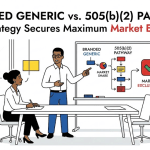
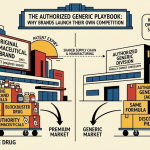
The pharmaceutical industry uses ‘branded generic’ loosely enough that two analysts at the same firm can mean different things by it. That ambiguity costs money. For the purposes of this guide, a branded generic is a drug product that is bioequivalent to a reference listed drug (RLD), approved under an Abbreviated New Drug Application (ANDA) or equivalent regulatory pathway, and marketed under a proprietary trade name owned by the filing company rather than sold under its International Nonproprietary Name (INN). The distinction from an authorized generic is structural: an authorized generic is manufactured by the originator under a license, whereas a branded generic is a fully independent product with its own brand equity, manufacturing footprint, and IP stack.
That IP stack is where most portfolio managers undervalue the asset. A branded generic is not simply a commodity with a logo. When structured correctly, it carries trademark registrations on the trade name and trade dress, trade secrets covering manufacturing process parameters, potentially Orange Book-listed patents on formulation or delivery technology, and regulatory data exclusivity that can run independently of the originator compound’s patent life. Each of these layers has a calculable value, and together they determine whether the product is a durable revenue line or a race-to-the-bottom commodity.
The global branded generics market was valued at approximately $378 billion in 2023 and is tracking toward $513 billion by 2028 on a CAGR of roughly 6.3%, according to IQVIA data. That growth is not uniform. It concentrates in markets where physicians prescribe by brand name rather than INN, where pharmacy substitution laws are weak or absent, and where regulatory capacity limits the volume of ANDA equivalents that can realistically enter the market within five years of LOE. Those structural conditions create genuine pricing power that unbranded generics simply cannot replicate.
Key Takeaways
Branded generics carry a multi-layer IP stack that includes trademarks, trade dress, manufacturing trade secrets, and potentially formulation patents. Each layer has distinct valuation methodology and expiry timeline. Conflating branded generics with authorized generics or unbranded ANDAs leads to systematic undervaluation in both M&A due diligence and portfolio ROI modeling.
The IP Architecture of a Branded Generic: What You’re Actually Buying
Trademark and Trade Dress Valuation
The trade name is the most durable IP asset in a branded generic. A compound patent expires. A formulation patent expires. A trademark, renewed diligently and defended against infringement, does not. The Marlboro brand analogy is overused in pharma, but the structural point holds: once a prescribing physician, pharmacist, or patient associates a specific visual identity with clinical performance, that association has a replication barrier that no ANDA filer can easily overcome.
Trademark valuation in pharma follows the royalty relief method, discounting projected future royalty savings attributable to the trade name. For a mid-tier branded generic generating $150 million in annual net sales at a brand premium of 22% over the INN price, and applying a royalty rate of 3-5% derived from comparable pharmaceutical licensing transactions in the RoyaltySource and ktMINE databases, the trademark asset alone can carry a present value of $40-70 million on a 15-year discounted cash flow basis. IP teams that omit this from LOE planning leave substantial value on the table.
Trade dress covers packaging design, color schemes, tablet shape, and embossing. These elements are registrable separately from the trade name under the Lanham Act in the U.S. and under equivalent trademark statutes in the EU and India. In markets where pharmacists have substitution authority, non-obvious trade dress can create enough cognitive friction at the dispensing counter to measurably reduce generic erosion rates. Teva has used this deliberately in several European markets where its branded generic portfolio competed against its own unbranded ANDA products.
Orange Book Listings and Secondary Patent Strategy
Every pharma IP team knows that the Orange Book is a competitive battleground, but branded generic filers approach it differently than originators. An originator files primary compound patents, method-of-treatment patents, and formulation patents with the intention of maximizing exclusivity duration. A branded generic filer’s Orange Book strategy is the inverse: identify which secondary patents are listable, which are challengeable via Paragraph IV certification, and which represent genuine barriers versus litigation bluffs.
For a branded generic company building on top of an expired primary patent, listable secondary patents fall into several categories. Polymorphic form patents cover specific crystalline structures of the API; these are listable if the approved product uses that form, and they are vulnerable to IPR petitions challenging obviousness or novelty. Particle size patents and salt form patents are similarly vulnerable, with inter partes review success rates on formulation patents running at approximately 67% in 2023 per USPTO data. Controlled-release mechanism patents, particularly those covering osmotic pump technology (OROS) or multiparticulate systems, are more defensible because the manufacturing know-how to replicate them is non-trivial.
The branded generic company’s IP team should conduct a freedom-to-operate (FTO) analysis not only against listed Orange Book patents but also against unlisted patents covering manufacturing processes, which are not Orange Book eligible but can support trade secret claims or be asserted in district court under Section 271(g) if the patented process is practiced outside the U.S. to make a product imported for sale domestically.
Regulatory Data Exclusivity as an IP Asset
The Drug Price Competition and Patent Term Restoration Act of 1984, the Hatch-Waxman Act, provides data exclusivity that runs independently of patent protection. A new chemical entity receives five years of exclusivity during which the FDA cannot accept an ANDA referencing the originator’s safety and efficacy data. A new clinical investigation exclusivity, the three-year period under 21 CFR 314.108(b)(4), attaches to supplemental applications containing new clinical studies, including studies supporting new dosage forms, new routes of administration, or new indications.
For a branded generic company, the three-year new clinical investigation exclusivity is a strategic asset worth modeling explicitly. A branded generic filer that conducts a genuine pharmacokinetic study supporting a modified-release formulation of an off-patent compound can list that study as the basis for a three-year exclusivity period that blocks subsequent ANDA filers from relying on the branded generic’s own data. This is the regulatory analog to a secondary patent: it extends the data moat around the product independent of the compound’s patent status, at a cost of roughly $1.5-4 million for the PK study versus the $40-150 million cost of a Phase III trial.
Manufacturing Trade Secrets and Process IP
Trade secrets covering API synthesis routes, particle engineering methods, and drug-product manufacturing parameters do not appear in any public registry, which makes them simultaneously the most underestimated and the most persistently valuable IP in a branded generic’s portfolio. Unlike a patent, a trade secret does not expire as long as reasonable secrecy measures are maintained. The Defend Trade Secrets Act of 2016 provides federal civil remedies, including injunctive relief and treble damages for willful misappropriation, that make enforcement credible.
For a branded generic product built on a complex formulation, the manufacturing trade secrets covering dissolution control, spray drying parameters, or hot melt extrusion conditions can represent a replication barrier equivalent to 18-36 months of delayed competitive entry, even after all Orange Book patents expire. Quantifying this barrier requires modeling competitor capital investment timelines for equivalent equipment, ANDA filing and review timelines under the current FDA queue, and bioequivalence study design complexity. A well-structured trade secret program around a complex branded generic formulation is worth $20-60 million in NPV in a mid-size product context.
Key Takeaways
IP valuation for branded generics requires four distinct asset analyses: trademark/trade dress on royalty relief methodology, Orange Book patent defensibility assessed against IPR success rate benchmarks, regulatory data exclusivity modeled against the 3-year new clinical investigation provision, and manufacturing trade secrets valued by competitive replication timeline. Each has a different discount rate and a different risk profile. Portfolio managers who use a single discount rate across all four consistently underprice durable branded generics assets.
The Patent Cliff Mechanics: What Actually Happens to Revenue at LOE
Primary Patent Expiry vs. Pediatric Exclusivity Extensions
Loss of exclusivity does not happen in a single event. It happens in layers, and understanding the sequence is the difference between a well-timed branded generic launch and one that runs into an unanticipated six-month exclusivity extension. The most common source of surprise is pediatric exclusivity under the Best Pharmaceuticals for Children Act, which adds six months to all patents and exclusivity periods listed in the Orange Book if the originator has conducted FDA-requested pediatric studies. That six-month extension does not appear separately in the Orange Book; it attaches to each listed patent and exclusivity period. A branded generic team relying on patent expiry dates from the Orange Book without checking for pending or granted pediatric exclusivity can miscalculate launch timing by exactly six months.
Patent Term Extension under 35 USC 156 compensates originators for regulatory review time. The maximum extension is five years, and the total patent term including the extension cannot exceed 14 years from NDA approval. For high-revenue compounds, originators consistently maximize available PTE. The branded generic planner must pull the actual PTE grant from the USPTO Patent Term Extension database, not simply rely on the original patent expiry. The gap between the nominal expiry and the PTE-extended expiry can be as large as 60 months.
The First-Filer 180-Day Exclusivity Mechanism
Under Hatch-Waxman, the first ANDA applicant to file a Paragraph IV certification against each patent listed in the Orange Book earns 180 days of generic exclusivity, during which the FDA cannot approve a subsequent ANDA for the same drug. This 180-day window is the most valuable temporary monopoly in generic pharmaceuticals. Its NPV depends on the molecule’s sales volume, but for blockbuster products it has historically reached $1-3 billion for oral solid dosage forms with high market penetration.
A branded generic company considering whether to file Paragraph IV or wait for the 180-day market period to expire faces a specific calculus. A Paragraph IV challenge requires filing a detailed patent challenge notice to the NDA holder, which triggers automatic 30-month stay of ANDA approval if the originator files suit within 45 days. The litigation cost typically runs $5-15 million per patent through trial. For a mid-tier branded generic company with a drug generating $400 million in annual U.S. sales, winning a Paragraph IV challenge and capturing the 180-day exclusivity period at a modest 20% market share and 60% price preservation versus the originator produces an expected value of roughly $80-120 million net of litigation costs, which makes the bet clearly rational.
For the same company on a drug generating $60 million in annual sales, the expected value math inverts. The litigation cost dominates, and the rational strategy is to wait for exclusivity expiry and compete on the basis of brand equity and distribution quality rather than first-mover regulatory advantage.
The Revenue Erosion Curve: Empirical Data and What It Means for Branded Generic Pricing
Generic erosion is faster and steeper than most financial models assume at the time of launch planning. For oral solid dosage forms in the U.S., branded products lose approximately 70-80% of their prescription volume within 12 months of first generic entry, according to IMS Health longitudinal data. The price erosion runs separately: unbranded generics typically price at 10-15% of the originator’s list price within 24 months when six or more ANDA holders are actively marketing.
Branded generics do not follow this curve. In markets where physician prescribing behavior and pharmacy stocking patterns favor branded products, specifically the EU’s Germany, France, Italy, and Spain, and in most emerging markets including India, Brazil, Turkey, and Indonesia, branded generics sustain 20-40% price premiums over unbranded ANDAs for five to ten years post-LOE. The premium is supported by physician inertia, pharmacist incentive structures, and patient familiarity. It narrows over time as generic penetration deepens, but it does not collapse in the way originator branded prices do.
The strategic implication for pricing at launch is that a branded generic should not be priced as a discount to the originator. It should be priced as a premium to the unbranded generic field, calibrated by the physician prescribing rate in the target market, the pharmacy substitution law environment, and the number of existing ANDA competitors. A pricing model that treats branded generics as ‘originator minus 30%’ systematically underprices the asset in physician-driven markets and overprices it in pharmacist-substitution markets.
Key Takeaways
Patent cliff analysis for branded generic launch planning requires pulling pediatric exclusivity grants and PTE awards separately from the Orange Book nominal expiry dates. First-filer Paragraph IV exclusivity NPV depends directly on the originator’s annual sales volume; below approximately $100 million, waiting-out the exclusivity period is typically more rational than litigating for it. Branded generic price erosion follows a fundamentally different curve than originator price erosion, governed by prescriber behavior and market pharmacy substitution law rather than ANDA count alone.
Evergreening Tactics: How Originators Defend, and How Branded Generic Teams Counter
Formulation Evergreening and the XR/ER Patent Cluster
Originator companies routinely file extended-release or modified-release formulation patents in the five to seven years before primary compound patent expiry, with the explicit intent of migrating the prescribing base to the new formulation before LOE. The mechanism is straightforward: convert the market to a new dosage form that carries its own Orange Book-listed patents, then withdraw or stop promoting the original immediate-release formulation. Branded generic companies that plan against only the primary compound patent expiry miss the full blocking structure.
The extended-release patent cluster typically includes the delivery mechanism patent itself, which may cover osmotic pump technology, matrix tablet construction, or multiparticulate bead systems; the specific release profile patent, covering the in vitro dissolution profile or the in vivo PK curve; the polymer or excipient combination patent; and the method-of-use patent covering the clinical benefit derived from the extended-release profile, such as reduced dosing frequency or lower Cmax-driven adverse events. A branded generic team building on an off-patent compound needs FTO clearance or a challenge strategy against all four layers before committing development capital.
AstraZeneca’s conversion of metoprolol from the tartrate salt immediate-release formulation to Toprol-XL, the succinate salt controlled-release version, is the textbook execution. Toprol-XL’s primary compound patent expired in 2007, but formulation patents held off competitive products until litigation settlements authorized entry beginning in 2006 for KV Pharmaceutical and 2008 for additional filers. The originator extracted approximately three additional years of near-exclusivity pricing through formulation migration alone.
Salt and Polymorph Patent Strategy: The Nexium Playbook
AstraZeneca’s esomeprazole, marketed as Nexium, is the canonical example of polymorph-driven evergreening. When omeprazole, the racemate, faced patent expiry, AstraZeneca isolated the S-enantiomer, filed composition-of-matter patents on esomeprazole magnesium, and launched Nexium at a price point 23% above Prilosec OTC while positioning the product as clinically superior despite the FDA’s equivalence finding. The compound patents on esomeprazole expired in 2014, but a cluster of formulation and process patents extended effective exclusivity several years further. Ranbaxy (now Sun Pharma) and Dr. Reddy’s Laboratories both filed Paragraph IV challenges; the resulting patent litigation consumed six years and eight-figure legal costs on each side.
For a branded generic team targeting a proton pump inhibitor or any compound with chiral centers, the enantiomer strategy raises a specific IP question: has the originator obtained a composition-of-matter patent on the active enantiomer, or only a method-of-use patent? A composition-of-matter patent on the enantiomer is the stronger barrier. A method-of-use patent can potentially be designed around by labeling the branded generic for a different indication or by carve-out labeling under 21 CFR 314.127(a)(7), a strategy known as skinny labeling, which has been the subject of significant litigation including the GlaxoSmithKline v. Teva case that produced a 2021 Federal Circuit decision confirming induced infringement risk even with carve-out labels when the branded generic company’s marketing activity is directed at the patented indication.
Pediatric Indication Extensions and BPCA Evergreening
The six-month pediatric exclusivity extension described earlier is not merely a timing issue for branded generic entry planning. It also represents an active evergreening mechanism. Originators who receive a Written Request from the FDA for pediatric studies and complete those studies receive exclusivity that attaches across all Orange Book-listed patents and exclusivity periods, regardless of whether the drug has any pediatric indication utility. The extension is automatic on completion of the studies, not contingent on clinical success. AbbVie received pediatric exclusivity on several Humira patents, extending exclusivity periods on the world’s highest-revenue biologic by six months per applicable patent.
A branded generic team monitoring competitive drugs for expected LOE must therefore track FDA Written Request issuances and pediatric study completion status, both of which are publicly available in the FDA’s Pediatric Study Database and via docket search on regulations.gov. Failure to track this adds a six-month error to LOE dates that materially affects NPV calculations on launch investments running in the tens of millions.
The REMS Strategy: When Safety Programs Become Access Barriers
Risk Evaluation and Mitigation Strategies, REMS programs, are FDA-mandated safety frameworks for drugs with serious safety concerns. They range from simple medication guides to complex programs with Elements to Assure Safe Use, ETASU, which may restrict dispensing to certified pharmacies, require prescriber training enrollment, or mandate patient monitoring. For drugs subject to REMS with ETASU, the originator controls the shared REMS system infrastructure, which historically created access barriers for ANDA applicants seeking to conduct bioequivalence studies.
The FDA’s 2023 draft guidance on shared REMS systems tightened the agency’s position that originators cannot use REMS infrastructure to block bioequivalence sample access, following the Federal Trade Commission’s lawsuit against AbbVie and Boehringer Ingelheim over alleged REMS abuse with Humira biosimilar access. But litigation on this front continues, and branded generic teams targeting REMS-covered drugs need to build REMS compliance costs and potential access negotiation timelines into development budgets. The cost of building out a compliant certified pharmacy network for a restricted ETASU drug can reach $2-8 million in first-year implementation.
Key Takeaways
Originator evergreening operates across at least five distinct vectors: extended-release formulation patent clusters, salt and polymorph patents, enantiomer composition-of-matter patents, pediatric exclusivity extensions, and REMS-based access barriers. A branded generic development program that conducts FTO analysis only against the primary compound patent misses the most common and most expensive litigation risks. Skinny labeling carve-outs under 21 CFR 314.127(a)(7) can address method-of-use patent exposure but carry induced infringement litigation risk under the GlaxoSmithKline v. Teva precedent.
Investment Strategy Note: Branded generic companies that have demonstrated systematic FTO analysis capability across all five evergreening vectors command a 15-25% premium in M&A transactions relative to companies with only compound-level patent clearance. In buyside due diligence, request FTO opinions for each SKU in the pipeline and assess their vintage, the scope of prior art searched, and whether the opinion covers process patents separately from formulation patents.
Market Segmentation: Where Branded Generics Actually Win
Physician-Driven Markets vs. Pharmacist-Substitution Markets
The single most important market-level variable determining branded generic ROI is the prescribing authority structure. In systems where pharmacists have broad generic substitution authority, such as the U.S., Canada, and the UK, branded generics face substitution at the dispensing level regardless of physician prescribing intent. The U.S. FDA’s interchangeability designation for biosimilars, and equivalent substitution laws for small-molecule generics under state pharmacy practice acts, mean that a pharmacist can legally dispense an unbranded ANDA product against a brand-name prescription in most states without contacting the prescriber.
In these markets, branded generics compete primarily on institutional formulary placement and pharmacy contracting, not on physician prescribing behavior. The branded generic company’s value proposition must reach the pharmacy chain’s category manager and the PBM formulary committee before it reaches the prescribing physician. That requires a fundamentally different commercial infrastructure than the detailing model that drives branded drug sales.
In physician-driven markets, including India, the MENA region, Sub-Saharan Africa, and most of Latin America, branded generics win on physician relationships, medical representative presence, and clinical endorsement from key opinion leaders. The Indian ethical pharmaceutical market, worth approximately $21 billion in 2024, operates almost entirely on brand-name prescribing despite mandatory generic prescribing policies introduced by the Medical Council of India in 2017. Those policies have had limited practical effect because the prescribing habit is reinforced by medical representative detailing and physician incentive structures that are difficult to legislate away. Abbott’s Established Pharmaceuticals Division, which generated $4.9 billion in revenue in 2023, built its position almost entirely on branded generics in exactly these markets.
Disease Category Selection: Where Brand Equity Persists Longest
Not all therapeutic categories retain branded generic pricing power equally. The categories where brand equity survives longest post-LOE share several characteristics: complex dosing regimens where patient adherence is a clinical concern, drugs with narrow therapeutic indices where prescribers are reluctant to substitute, conditions with active physician follow-up, and drugs where adverse event profiles vary meaningfully by formulation even among bioequivalent products.
Antiretrovirals in developing markets represent the strongest branded generic pricing environment. Gilead Sciences granted voluntary licenses to generic manufacturers for tenofovir disoproxil fumarate and emtricitabine in countries covered by the Medicines Patent Pool, but those licenses explicitly allow the licensee to brand the product under a proprietary name. Cipla’s antiretroviral branded generic portfolio in Sub-Saharan Africa has maintained 18-22% price premiums over equivalent unbranded generics for over a decade, supported by physician confidence in Cipla’s API sourcing and manufacturing standards, both of which are audited under WHO prequalification.
Anticoagulants, particularly the oral vitamin K antagonists and newer direct oral anticoagulants at LOE, are another high-persistence branded generic category. Warfarin has both a narrow therapeutic index and INR monitoring requirements that make prescriber substitution anxiety high; the branded generic market for warfarin remained commercially viable in multiple European markets for over 15 years post-LOE. Apixaban’s primary compound patents begin expiring in 2026-2028 in various jurisdictions, and the branded generic opportunity in markets with physician-driven prescribing is substantial.
Oncology presents a more complex picture. Branded generics for cytotoxic chemotherapy agents have historically underperformed in high-income markets because oncology pharmacists operate under strict formulary controls and unbranded ANDAs receive rapid formulary uptake when bioequivalence is established. In mid-income markets with less developed generic substitution infrastructure, branded generics from established manufacturers, particularly Sun Pharma and Mylan/Viatris, have held durable positions in oral oncology.
Emerging Market Entry: The Regulatory and Pricing Architecture
Emerging markets for branded generics require dedicated regulatory and pricing strategies that differ substantially from high-income market playbooks. In India, the drug regulatory authority CDSCO operates a hybrid approval pathway: products approved by stringent regulatory authorities, defined as ICH member countries plus Australia, can seek accelerated Indian registration, but the process still requires local bioequivalence data unless a waiver is granted. The Drug Price Control Order (DPCO) 2013, administered by the National Pharmaceutical Pricing Authority (NPPA), caps prices for drugs on the National List of Essential Medicines (NLEM) using a market-based price averaging formula. Drugs not on the NLEM can be priced freely but are subject to a 10% annual price increase ceiling.
The pricing architecture creates a specific strategic choice for a branded generic entering India: apply for NLEM inclusion, which provides formulary visibility and government tender access but subjects the product to price controls, or operate outside NLEM with pricing freedom in the private market. The government tender channel (central and state government procurement) typically prices at 20-40% below the private market and provides high volume. The private ethical market prices are higher but require sustained medical representative investment to maintain. Most mid-tier branded generic companies in India operate in both channels under different brand names and packaging configurations, a practice the NPPA monitors for pricing arbitrage but has not effectively stopped.
Brazil’s ANVISA approval process for branded generics requires bioequivalence studies conducted in Brazilian healthy volunteers under ANVISA-accredited CROs, a requirement that effectively adds 18-24 months and R$3-6 million to market entry timelines versus a simple reference to a U.S. or EU approval. The Camara de Regulacao do Mercado de Medicamentos (CMED) controls maximum sale prices using a cost-plus formula that incorporates the ICMS tax component and a productivity factor adjusted annually. Branded generics in Brazil have historically been able to price at 65-75% of the reference drug price before generic entry, declining to 45-55% once substantial generic competition enters.
Key Takeaways
Market selection for branded generic investment requires explicit analysis of four factors: the pharmacy substitution law environment, the prescribing authority structure, disease category adherence sensitivity, and the target country’s pricing regulation mechanism. Physician-driven markets with freely priced branded generics and bioequivalence-based approval pathways, specifically India’s private ethical market, Southeast Asia ex-Thailand, and MENA, offer the best risk-adjusted branded generic ROI for mid-tier manufacturers. High-income markets favor branded generics only in narrow therapeutic categories with documented prescriber substitution reluctance.
Investment Strategy Note: Portfolio managers evaluating branded generic companies should weight geographic revenue mix heavily. A company with 60% of branded generic revenue in physician-driven markets with free pricing has structurally superior margin durability compared to a company with equivalent revenue concentrated in U.S. or UK pharmacist-substitution markets. The multiple compression that hits the latter when PBM formulary contracts are renegotiated is predictable and should be priced in.
Branded Generics ROI Modeling: Building a Defensible Financial Framework
The Core Revenue Variables
A branded generic product’s revenue model has six primary input variables, each requiring separate market intelligence to populate accurately. The annual revenue projection is the product of total addressable market size, addressable market share at steady state, the price per unit net of channel discounts and government rebates, patient days per prescription, compliance rate in the target population, and treatment prevalence growth rate. Each of these is independently uncertain, and the standard practice of modeling a single ‘base case’ with +/-20% sensitivity ranges does not capture the interaction effects between pricing compression and market share loss that characterize competitive generic markets.
The model should instead be built as a Monte Carlo simulation with explicit probability distributions for each input. Price compression distributions are asymmetric: prices fall faster than expected when additional ANDA filers enter, and they fall slower than expected in physician-driven markets with brand loyalty. Market share distributions are bimodal in first-mover scenarios: the first branded generic in a market typically captures 35-50% share if the only competition is unbranded generics, but share drops to 15-25% when a second branded generic competitor enters within 18 months.
IP Lifecycle Revenue Mapping
The IP lifecycle map integrates patent expiry dates, regulatory exclusivity periods, trademark renewal schedules, and competitive entry timelines into a single revenue probability timeline. It should be built at the SKU level, not the molecule level, because different dosage forms, strengths, and markets carry different IP timelines and different competitive entry probabilities.
For a branded generic that is itself protected by secondary formulation patents, the revenue curve has three distinct phases. During the secondary patent protection period, the product commands a near-originator price premium with limited ANDA competition. In the transition period between secondary patent expiry and first ANDA market entry, price begins declining from that premium toward the typical branded generic premium of 20-35% over unbranded ANDAs. After multiple ANDA entry, the price stabilizes at whatever brand premium the market will sustain given physician and patient brand loyalty, which is the terminal value assumption in the DCF model.
The terminal value is where most branded generic financial models introduce the most error. A naive terminal value assumption projects the unbranded generic price as the floor and assumes branded generics converge to it over a 10-year horizon. In physician-driven emerging markets, that assumption is wrong: well-positioned branded generics sustain brand premiums indefinitely. Abbott’s established pharmaceuticals brands in India and developing markets have carried price premiums for 20 years in some cases because the brand equity has been reinvested in manufacturing reputation and physician education programs.
ROI Benchmarking: What the Data Actually Shows
EvaluatePharma and IQVIA data on branded generic launches between 2016 and 2023 show median ROI at five years from launch of approximately 140% on total development and launch costs for products in physician-driven emerging markets. High-income market branded generics showed median five-year ROI of 85%, with wider variance reflecting the sensitivity to formulary placement outcomes. Products with Orange Book-listed secondary patents that survived Paragraph IV challenge showed five-year ROI of 210%, reflecting the temporary monopoly premium.
Development cost benchmarks for branded generics depend heavily on the regulatory pathway and dosage form complexity. A straightforward oral solid dosage form ANDA in the U.S. requires a bioequivalence study costing $300,000-800,000, formulation and analytical development of $500,000-1.5 million, regulatory fees (the GDUFA user fee is $249,493 for fiscal year 2025), and total development costs of $2-5 million for a simple product. A complex ANDA, defined by the FDA as requiring clinical endpoint bioequivalence studies or presenting significant formulation complexity, can cost $15-40 million in development before the first dollar of revenue.
The complex ANDA category is where branded generic strategy most directly intersects with IP value creation. Products that are sufficiently complex to require clinical endpoint bioequivalence studies have a structural barrier to entry that protects the branded generic’s price premium for the duration of competitors’ development timelines. The FDA’s complex drug substance and complex drug product designation list, updated quarterly, is the first screen for identifying which molecules offer this kind of development-derived protection.
Key Takeaways
Branded generic financial modeling requires Monte Carlo simulation architecture rather than single-point DCF, with asymmetric distributions for price compression and bimodal distributions for market share in first-mover scenarios. The terminal value assumption is the single largest source of model error: physician-driven markets support permanent brand premiums that naive convergence-to-commodity models structurally understate. Median five-year ROI in emerging physician-driven markets is approximately 140% on total development and launch cost, compared to 85% in high-income formulary-dependent markets.
Investment Strategy Note: When screening branded generic companies for investment, examine the percentage of the pipeline classified as ‘complex ANDAs’ under FDA definition. A company with more than 40% of its U.S. pipeline in complex ANDAs has both higher development cost exposure and higher sustainable margin potential than a simple ANDA-heavy filer. The valuation multiple should reflect the asymmetry: higher entry cost, but structurally more durable pricing after approval.
Commercial Strategy: Distribution, Detailing, and Formulary Architecture
Pharmacy Channel Architecture
Distribution strategy for branded generics differs by market structure, and getting the channel architecture wrong is the fastest way to leave revenue on the table. In the U.S., where approximately 64% of retail prescriptions are dispensed through four pharmacy chains (CVS, Walgreens, Walmart Pharmacy, and Rite Aid combined) and two dominant mail-order platforms, the critical commercial decision is whether to pursue independent pharmacy networks versus chain pharmacy preferred placement.
Chain pharmacy preferred placement requires a contract with the chain’s category management team. For a branded generic, the relevant contract structure is typically a rebate agreement that provides a back-end payment to the chain in exchange for preferred shelf placement or pharmacist recommendation in the absence of a specific brand prescription. The rebate rates for branded generics in chain pharmacy contracts typically run 12-20% of wholesale acquisition cost. Combined with the gross-to-net adjustments for PBM rebates, government program pricing (340B, Medicaid best price), and distribution fees, a branded generic with a WAC of $120 per 30-day supply can generate net revenue of $65-80 at the manufacturer level, a gross-to-net discount of 33-46%.
Independent pharmacy networks, particularly those served by regional wholesalers such as McKesson’s Health Mart network or AmerisourceBergen’s Good Neighbor Pharmacy, are less scale-efficient but provide brand-name prescribing environments where physician detailing has more purchase. For branded generics targeting specialist physicians, including cardiologists, neurologists, or psychiatrists, whose patients are less likely to accept pharmacist substitution, independent pharmacy channel investment outperforms chain contracts.
Medical Representative Infrastructure and ROI
Medical representative detailing remains the primary driver of branded generic prescribing in physician-driven markets. The economics are well documented: in India, a territory medical representative calling on 8-10 physicians per day with a daily cost of approximately Rs 2,500 (including salary, incentives, and sample costs) generates an average of Rs 350,000 in monthly prescription revenue at steady state, producing a representative-level ROI of approximately 4.5x annual cost. The model works because Indian physicians actively request samples, retain prescribing memory for branded products, and are accessible to medical representatives at clinic and hospital settings in ways that have become structurally impossible in the U.S. or Germany.
The Sun Pharmaceutical Industries model is instructive. Sun built its Indian domestic branded generic business on a disciplined therapeutic-area-focused detailing force: separate divisions for psychiatry/neurology, cardiovascular, dermatology, and oncology, each with its own prescriber database, sampling protocol, and key opinion leader program. Sun’s domestic formulations revenue was Rs 11,872 crore in FY2024, with operating margins approximately 7-10 percentage points above the company’s international generics business, directly reflecting the pricing power that physician relationship management generates.
For mid-tier branded generic companies entering new therapeutic areas, the build-vs.-buy decision on medical representative infrastructure is primarily a time-to-market calculation. Building a new therapeutic division organically takes 18-36 months to reach prescribing traction. Acquiring a company with existing physician relationships and territory coverage in the target area typically costs a 25-40% premium but compresses that traction timeline to 6-9 months. The NPV of the time-to-traction gap usually justifies the acquisition premium for products with more than $50 million in first-year revenue potential.
Digital Health Integration: Value Creation or Distraction?
The thesis that branded generics paired with digital health tools create durable prescribing advantages is empirically mixed. The strongest evidence base is in adherence-sensitive conditions: diabetes, heart failure, hypertension, and mental health. A 2022 randomized study of a branded antihypertensive generic paired with a connected blood pressure monitoring device showed 23% higher 12-month medication persistence versus the unbranded equivalent, translating to approximately 3.4 additional refills per patient per year. At a branded generic price premium of $15 per 30-day supply over the unbranded equivalent, the digital integration generated incremental revenue of $51 per patient per year, with a device cost of $28. The contribution was positive, but the commercial infrastructure required to distribute and support the connected device consumed $6 million in first-year SG&A, requiring approximately 120,000 active device-using patients to break even on the integration investment.
The lesson from failed digital-pharma integrations is that the device or app must be inseparably connected to clinical benefit, not simply awareness. Programs that deliver medication reminders or condition education without closed-loop clinical monitoring consistently show less than 5% adoption rates at 6 months and do not produce measurable prescribing lift. Programs with real clinical feedback, including remote monitoring with prescriber alert systems, show adoption rates of 18-35% in motivated patient populations and generate the prescribing loyalty that justifies the investment.
Key Takeaways
U.S. branded generic commercial strategy centers on gross-to-net architecture: chain pharmacy rebate rates of 12-20% of WAC combined with PBM and government pricing adjustments routinely reduce manufacturer net revenue to 55-70% of WAC. Independent pharmacy channel investment outperforms for specialist-physician-driven prescribing categories. In emerging markets, medical representative ROI of 4-5x annual cost is achievable with disciplined therapeutic-area focus and physician relationship management, as demonstrated by Sun Pharma’s domestic India operating margin profile. Digital health integration generates positive ROI only when the connected device produces closed-loop clinical feedback and reaches minimum patient adoption thresholds of 18-20%.
Biosimilars as Branded Generics: The Strategic and Regulatory Distinction
Biosimilar Interchangeability: The Highest-Value Regulatory Designation
The Biologics Price Competition and Innovation Act of 2009, BPCIA, created a 12-year reference product exclusivity period for biologic drugs approved under the Public Health Service Act, after which biosimilars can enter under an abbreviated 351(k) pathway. The regulatory and IP complexity of biologics is qualitatively different from small molecule generics, but the strategic logic of branded biosimilars maps directly onto the branded generic framework.
The FDA’s interchangeability designation is the biologics equivalent of the ANDA approval for small molecules. An interchangeable biosimilar can be substituted for the reference product by a pharmacist without prescriber intervention in states with biosimilar substitution laws, which as of 2025 includes 48 U.S. states. Achieving interchangeability requires switching study data demonstrating no clinically meaningful difference in safety or efficacy when patients alternate between the reference product and the biosimilar. The switching study adds approximately $15-30 million in clinical cost beyond the analytical and PK similarity data required for basic biosimilar approval.
For a branded biosimilar company, the interchangeability designation is the single most valuable IP-adjacent regulatory asset available. It creates automatic formulary substitution authority that bypasses the prescriber, generating volume conversion rates of 35-60% within 12 months in retail pharmacy settings, compared to 10-20% for non-interchangeable biosimilars that require active prescriber acceptance. The NPV of interchangeability designation for a high-revenue biologic like adalimumab (Humira reference product, approximately $14 billion in 2022 U.S. net sales) is in the range of $2-5 billion across all approved interchangeable entrants.
Adalimumab Biosimilar Market: The Case Study in Branded Biosimilar Competition
AbbVie’s patent estate around adalimumab contained over 250 patents at peak, covering the compound, manufacturing process, formulation, dosing regimen, device, and various method-of-use claims. The settlement agreements AbbVie reached with biosimilar manufacturers beginning in 2016 authorized U.S. market entry in January 2023 for most entrants and July 2023 for the remainder. The settlement structure typically included a royalty-bearing license, U.S. entry date, and non-U.S. entry dates varying by country, but did not grant interchangeability designation, which requires separate FDA action.
Amgen’s Amjevita (adalimumab-atto), approved in 2016, obtained interchangeability designation in 2023 and launched in January 2023 at a 55% list price discount to Humira. Coherus BioSciences’ Yusimry launched at an 85% discount. Sandoz, Pfizer, Boehringer Ingelheim, Samsung Bioepis (via Organon), and several others entered across 2023-2024. The market structure as of early 2025 shows branded biosimilars sustaining significant volume through PBM formulary placement contracts, exclusive formulary positions with major PBMs like CVS Caremark’s ExtraCare formulary, and manufacturer rebate programs that functionally replicate the payer rebate structure of the originator branded drug market.
The IP valuation of a branded biosimilar at this stage includes the interchangeability designation itself, which cannot be transferred separately from the product approval but contributes to the product’s formulary negotiating leverage; the manufacturing process trade secrets, which for monoclonal antibodies involve cell line selection, upstream and downstream bioprocess parameters, and glycosylation profile control; and the brand equity built through launch marketing investment, which for major biosimilar launches has run $80-200 million in first-year promotional spend.
Key Takeaways
Biosimilar interchangeability designation is the highest-value regulatory asset in biologics competition, generating 2-3x the volume conversion rate of non-interchangeable biosimilars in retail pharmacy substitution settings. The adalimumab biosimilar launch cohort of 2023-2025 shows that branded biosimilars compete primarily on PBM formulary placement and rebate architecture rather than on list price alone. Manufacturing process trade secrets around cell line and glycosylation control are the most durable IP asset in a biosimilar’s portfolio, with replication barriers of 36-60 months for new entrants.
Investment Strategy Note: Biosimilar companies without a clear interchangeability study pathway in their development plan for key pipeline products carry a structural commercial disadvantage in U.S. retail pharmacy channels that is quantifiable: 15-40 percentage point lower market penetration at 12 months versus interchangeable competitors. This gap should be modeled explicitly in revenue forecasts and reflected in company valuation multiples.
Strategic Partnerships, Licensing, and M&A in Branded Generics
In-Licensing Strategy: Acquiring Brand Equity vs. Building It
Building branded generic brand equity from scratch in a new therapeutic area or new geography typically requires 3-5 years of sustained medical representative investment and KOL engagement before prescribing traction is established. In-licensing an established branded generic from a company exiting a market or rationalizing its therapeutic portfolio is fundamentally a brand equity acquisition at a premium over development cost replacement value.
The valuation framework for an in-licensing transaction on an established branded generic centers on three components: the remaining IP protection period (patents, trademarks, data exclusivity), the existing physician prescribing base represented as a revenue retention probability curve, and the incremental cost of maintaining versus rebuilding the brand equity. Transactions where the licensee pays more than 3x trailing 12-month EBITDA for a branded generic with less than seven years of remaining effective IP protection consistently underperform, because the brand equity depreciation outpaces the contribution from the acquired revenue base.
The Viatris spin-off of its branded generics portfolio to Biocon Biologics in India in 2022, in a transaction valued at $3.335 billion, is the most recent large-scale branded generic portfolio M&A transaction. Viatris transferred 13 branded biosimilar products and 170 generic product registrations in 165 countries. The deal’s structure included milestone payments contingent on biosimilar market share thresholds, reflecting the acquirer’s recognition that branded biosimilar market penetration is outcome-dependent rather than mechanically predictable.
Co-Promotion and Regional Licensing Architecture
Co-promotion agreements in branded generics allow a company with strong physician relationships in a target geography to market a product in its own brand name under a license from the molecule owner. The structure is particularly common in India, where large domestic companies license molecule rights from multinational originators or mid-tier generic manufacturers for domestic branded marketing. Abbott’s Established Pharmaceuticals Division in India operates partly on this model, co-promoting with or licensing from local manufacturers to extend its branded portfolio without bearing full development risk on each product.
The critical IP term in a co-promotion agreement is the brand ownership clause. If the licensee markets the product under its own brand name and invests in physician education and detailing, the trademark value accrues to the licensee, not the licensor. A molecule owner that grants co-promotion rights without retaining ownership of the resulting brand trademark can find, at contract expiry, that the commercial value of the product in that geography now resides entirely in the licensee’s brand, not in the molecule itself.
Key Takeaways
In-licensing established branded generics makes financial sense when the acquired brand equity can be maintained at lower cost than building new equity, and when the remaining IP protection period justifies the premium over development cost replacement value. Transactions above 3x trailing EBITDA on products with less than seven years of effective IP protection carry structural underperformance risk. Co-promotion agreement IP terms, particularly trademark ownership clauses, determine where commercial value ultimately accrues at contract expiry.
Regulatory Intelligence: Tools and Data Sources for Branded Generic Planning
Orange Book and Purple Book Monitoring
The FDA’s Orange Book (Approved Drug Products with Therapeutic Equivalence Evaluations) and Purple Book (Lists of Licensed Biological Products) are the primary public databases for patent and exclusivity information. The Orange Book is updated monthly with new ANDA approvals, patent listings, and patent expiry dates. The Purple Book, relevant for biosimilar planning, lists 12-year reference product exclusivity periods, biosimilar approvals, and interchangeability designations.
DrugPatentWatch provides a parsed, searchable version of both databases with enhanced fields including Paragraph IV filing history, litigation status, and litigation outcome tracking. For a branded generic team monitoring a target molecule, the combination of Orange Book patent expiry dates, Paragraph IV filing dates (which are not directly in the Orange Book but are published in the FDA’s ANDA acceptance letters and in the Federal Register), and litigation docket status from PACER provides the full competitive entry map.
The European Medicines Agency’s Community Register and the national patent linkage registers in Canada (the Patent Register administered under the Patented Medicines Regulations) and Australia (the Patent Linkage Register) provide equivalent data for those jurisdictions. Canada’s PM(NOC) Regulations, recently amended in 2017, introduced a patent register linkage system that more closely resembles Hatch-Waxman, with 24-month stays of generic approval when an innovator commences an action for patent infringement.
Competitive Intelligence Platforms
Patent analytics platforms, including Derwent Innovation, PatSnap, and Clarivate’s Patent Intelligence, allow IP teams to map originator patent filing activity around a target molecule in real time, identify divisional and continuation application trends, and model the projected patent cluster expansion over a five-to-seven-year horizon. For branded generic pipeline planning, a molecule entering the patent cliff planning horizon at T-7 years should already have a full patent landscape map, an FTO analysis of the current patent cluster, and a litigation risk assessment.
Litigation analytics platforms, including Lex Machina and Docket Alarm, provide statistical modeling of Hatch-Waxman litigation outcomes by district, by judge, and by technology type. Federal Circuit reversal rates on patent validity versus infringement decisions, by technology category, are a material input to the probability-weighted litigation outcome used in Paragraph IV NPV models. For soft formulation patents (polymer excipient combinations, dissolution profiles), the probability of invalidity finding in Paragraph IV litigation runs approximately 55-65% based on outcomes from 2018-2023.
Key Takeaways
A complete branded generic competitive intelligence infrastructure combines Orange Book and Purple Book monitoring for patent/exclusivity dates, Paragraph IV filing tracking from FDA docket and Federal Register sources, patent landscape mapping from Derwent or PatSnap at minimum T-7 years before target LOE, and Hatch-Waxman litigation outcome statistics from Lex Machina for probability-weighted NPV modeling. Companies that integrate these data sources into their pipeline planning tools rather than running one-time analyses at product selection consistently identify entry timing opportunities and litigation risks that ad hoc analysis misses.
Key Takeaways: Branded Generics as Durable IP and Commercial Assets
The branded generic model is not a consolation prize for companies that missed the originator drug cycle. It is a distinct commercial and IP strategy with its own architecture, its own ROI profile, and its own sources of durable competitive advantage. The companies that execute it well, Sun Pharma in India, Abbott’s Established Pharmaceuticals Division in emerging markets, Amgen with branded biosimilars in the U.S., do not treat branded generics as commodity products with marketing budgets. They treat them as IP assets with calculable trademark value, regulatory exclusivity positions, manufacturing trade secret moats, and physician relationship capital that compounds over time.
The market is structurally growing. Patent expirations between 2024 and 2030 will expose over $300 billion in annual global drug sales to generic competition, including first LOEs on several major biologics. The branded generic opportunity embedded in those expirations, particularly in physician-driven markets and in complex dosage form categories, is larger than the simple LOE calendar suggests.
The discipline required to capture that opportunity is analytical: rigorous FTO analysis across all five evergreening vectors, Monte Carlo revenue modeling with asymmetric price compression distributions, IP portfolio valuation across trademark, exclusivity, and trade secret layers, and commercial channel architecture built for the specific prescribing authority structure of the target market. Firms that bring that analytical discipline to branded generic strategy will systematically outperform those treating it as a marketing problem rather than an IP and portfolio management problem.