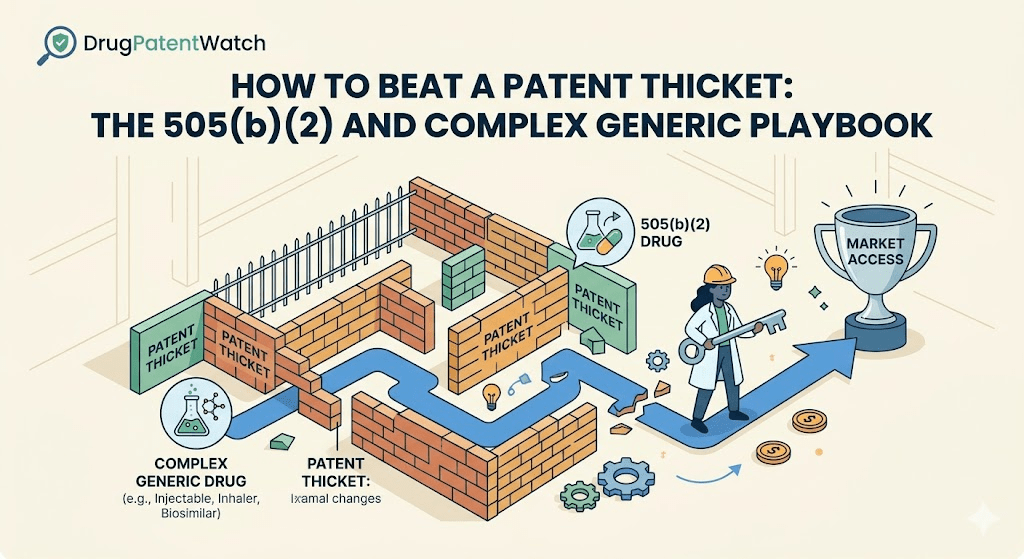
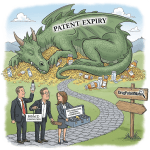
There is a moment, familiar to every generic drug executive, when a promising target drug goes from ‘opportunity’ to ‘nightmare.’ The active pharmaceutical ingredient (API) patent has expired, or is close to it. The sales data looks excellent. Then someone pulls the Orange Book listing and the team stares at two dozen patents covering the drug’s salt form, its crystal polymorph, its modified-release polymer matrix, its delivery device, its dosing regimen, its packaging, and, if the brand company was sufficiently industrious, a method-of-use patent for the particular shade of yellow the tablet turns when it dissolves.
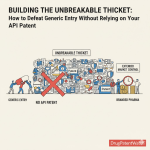
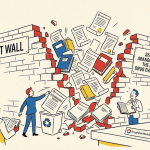
This is the patent thicket: a dense, overlapping cluster of intellectual property rights surrounding a commercial drug product, designed to make generic entry economically painful or legally impossible long after the core molecule enters the public domain. The tactic is not illegal—in most circumstances it is perfectly lawful—and it has been deployed with extraordinary sophistication by some of the largest pharmaceutical companies in the world.
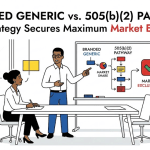
Two strategic tools exist that can get around it, or at least reduce the cost of getting through it. The first is the 505(b)(2) New Drug Application pathway, a regulatory mechanism embedded in the Hatch-Waxman Act of 1984 that allows a company to develop a modified version of an approved drug, rely on the FDA’s existing safety and efficacy findings for the original product, and potentially generate new regulatory exclusivity that changes the competitive math entirely. The second is the complex generic strategy: filing an Abbreviated New Drug Application (ANDA) for a drug product whose complexity—arising from its dosage form, route of administration, or device integration—has historically made generic development difficult, thereby limiting the field of competitors and preserving unusually wide profit margins for those who succeed.
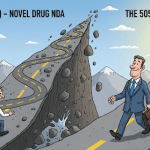
Neither tool is a magic bypass. Both require sophisticated science, careful regulatory strategy, and a clear-eyed understanding of how the Hatch-Waxman patent certification system actually operates in practice—not in theory. But used correctly, they represent two of the highest-return strategic opportunities in pharmaceutical development today. This article examines how they work, where they fail, and what the competitive landscape looks like in 2025 and beyond.
The Hatch-Waxman Framework: What It Was Designed to Do and What It Actually Does
The Drug Price Competition and Patent Term Restoration Act of 1984—the Hatch-Waxman Act—was a legislative compromise between two constituencies that rarely agree on anything. Brand pharmaceutical companies wanted patent term extensions to compensate for time lost during the FDA review process. Generic manufacturers and consumer advocates wanted a streamlined approval pathway so that drugs could enter the market faster after brand exclusivity expired.
The deal Senator Orrin Hatch and Representative Henry Waxman brokered gave both sides something. Brand companies received patent term extensions of up to five years under 35 U.S.C. § 156, limited to restore a portion of the patent life consumed by regulatory review. Generic companies received the Abbreviated New Drug Application (ANDA) pathway, under which a company does not need to repeat the full clinical development program of the reference drug—it needs only demonstrate bioequivalence to the reference listed drug (RLD), providing the same active ingredient in the same dosage form and route of administration at the same strength [1].
The Act also created a patent certification system that remains, four decades later, one of the most litigation-intensive commercial frameworks in U.S. law. When an ANDA filer believes one or more Orange Book-listed patents are invalid, unenforceable, or would not be infringed by the generic product, it files a Paragraph IV certification. That certification constitutes an artificial act of patent infringement, giving the NDA holder the right to sue within 45 days and thereby trigger an automatic 30-month stay on FDA approval of the ANDA [2].
The 30-month stay is the economic fulcrum of the entire system. It transforms the brand company’s patent portfolio from a collection of legal rights into a procurement tool: by listing additional patents in the Orange Book after filing successive supplements, and by suing on each one when challenged, a brand company can stack stays and extend effective exclusivity well beyond the life of its primary compound patent. The Federal Trade Commission has catalogued this practice in detail and characterized it as extracting exclusivity through litigation procedure rather than patent merit [3].
The incentive on the other side is correspondingly powerful. The first ANDA applicant to file a substantially complete application containing a Paragraph IV certification earns 180 days of marketing exclusivity—a period during which the FDA cannot grant final approval to any subsequent ANDA for the same drug [4]. In a large market, that exclusivity window is worth hundreds of millions of dollars. In the very largest markets, it has exceeded $1 billion [5]. Generic companies estimate that 60 to 80 percent of their potential profit for any single product comes from that exclusivity period [6].
That prize is what drives the system. It is also what makes the patent thicket such an effective deterrent: even if a generic company is confident it can invalidate the primary patent, the prospect of fighting through ten or twenty additional secondary patents—each triggering its own 30-month stay, each costing $5–10 million in litigation—can make the economics of the challenge unattractive. The thicket does not need to be impenetrable. It just needs to be expensive enough to deter entry.
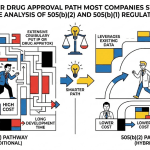
The Three Pathways: NDA, 505(b)(2), and ANDA
The Hatch-Waxman framework created three distinct regulatory routes to FDA drug approval, each suited to a different commercial situation. Understanding when to use each one—and how they interact with the patent system—is the foundation of pharmaceutical lifecycle management and generic entry strategy.
The 505(b)(1) NDA is for new molecular entities. An applicant submits a complete dossier of preclinical and clinical data demonstrating safety and efficacy from scratch. Approval generates five years of new chemical entity (NCE) exclusivity during which no ANDA or 505(b)(2) application can be submitted, plus whatever patent protection exists under the Orange Book listings. This is the pathway for genuine pharmaceutical innovation.
The 505(j) ANDA is for standard generics. An applicant demonstrates pharmaceutical equivalence and bioequivalence to an approved RLD. No independent clinical data is required. The pathway is fast, relatively cheap, and produces a product that the FDA designates as therapeutically equivalent (the ‘A’ rating in the Orange Book). It is the workhorse of the generic industry—and it is the pathway most directly threatened by a well-constructed patent thicket.
Between them sits the 505(b)(2) NDA. An applicant files a full NDA but relies, in part, on published literature or the FDA’s prior findings of safety and efficacy for an already-approved drug—the RLD. The applicant supplies its own data for whatever modification it is developing: a new dosage form, a new route of administration, a new indication, a new strength, a new delivery system, a new combination [7]. The applicant need not repeat every clinical study from the ground up, but it must demonstrate that its product is safe and effective, relying on the RLD’s data only where that reliance is scientifically justified.
The 505(b)(2) pathway also triggers the Hatch-Waxman patent certification system, just as ANDAs do. A 505(b)(2) applicant must certify against every Orange Book-listed patent for the RLD, and a brand company can sue within 45 days to trigger the 30-month stay. But here is where the strategic picture diverges: a 505(b)(2) approval generates its own regulatory exclusivity, which can be listed in the Orange Book and used to protect the new product against subsequent competition. The 505(b)(2) applicant becomes, in effect, a mini-brand company, generating new IP and exclusivity on top of—or alongside—the original product’s franchise.
Anatomy of a Patent Thicket: How Brand Companies Build Them and What They Cost
The defining modern case study in patent thicketing is AbbVie’s management of Humira (adalimumab). Humira was the world’s best-selling drug, generating over $20 billion annually at its peak [8]. The primary patent on the adalimumab molecule expired in 2016. AbbVie had spent the preceding decade filing over 300 patent applications related to Humira, of which approximately 160 were issued—and over 90 percent of those applications were filed after the drug’s FDA approval in 2002 [9].
The strategy is sometimes called ‘drip-feeding.’ As one cluster of patents neared expiration, new ones covering slightly modified formulations, new concentrations, new dosing regimens, and new delivery devices were granted, ensuring continuous overlapping protection. Biosimilar applicants who settled with AbbVie agreed to launch dates of January 2023 in the U.S. market—nearly 20 years after adalimumab’s original FDA approval [10]. AbbVie secured at least seven additional years of U.S. monopoly without winning a single patent trial on a secondary patent. The threat of litigation was enough.
To be precise about the regulatory framework: Humira operates under the BPCIA (Biologics Price Competition and Innovation Act), not Hatch-Waxman. The patent dance and litigation structure differ. But the IP layering strategy—stacking formulation patents, device patents, and method-of-use patents on top of an expiring composition patent—is structurally identical to what small-molecule brand companies do under Hatch-Waxman. The BPCIA simply places no statutory cap on the total number of patents a brand company can assert in litigation, making the strategy even more potent in the biologics space [11].
For small-molecule drugs under Hatch-Waxman, the patent thicket mechanics are well-documented. Consider Astellas’s overactive bladder drug mirabegron (Myrbetriq). After an initial Hatch-Waxman case settled in 2020 with generic entry expected in 2024, Astellas pursued four additional lawsuits, each built on new but substantively indistinguishable continuation patents [12]. This delayed broad competition, leaving only two firms to launch in 2024 under the ongoing threat of substantial damages. Similar serial litigation patterns have been documented with bimatoprost (Latisse), aflibercept (Eylea), and tasimelteon (Hetlioz).
The economic consequences are not trivial. Pay-for-delay settlements—in which brand companies compensate generic challengers to delay market entry—cost consumers and taxpayers an estimated $3.5 billion per year, according to FTC analysis [13]. The FTC began challenging the accuracy and relevance of Orange Book patent listings in late 2023, targeting over 100 patents listed by companies including AbbVie, AstraZeneca, and Teva. By May 2024, the commission had expanded that investigation to flag over 300 additional listings it characterized as ‘junk’ from eight companies [14].
What a Thicket Actually Consists Of
Brand pharmaceutical companies build exclusivity by layering multiple patent types around a core molecule. Each layer serves a different legal and strategic function.
Composition-of-matter patents, covering the active pharmaceutical ingredient itself, are the most valuable and the hardest to design around. They are also usually the first to expire. Everything that follows is an attempt to extend commercial exclusivity beyond the composition patent’s life.
Formulation patents cover specific physical or chemical forms of the drug: particular polymorphs or crystal forms, specific salt forms, defined particle size distributions, or proprietary excipient combinations. These are the second line of defense. A generic company that develops its own formulation—even one using a different excipient—may avoid these patents, but must do so carefully and document the design-around thoroughly.
Method-of-use patents cover specific therapeutic applications or dosing regimens. A generic company can sometimes avoid these through a ‘skinny label’—omitting the patented indication from its product labeling under the Section viii carveout. However, the 2021 Federal Circuit decision in GlaxoSmithKline v. Teva significantly elevated the risk of induced infringement liability even for skinny-label products if the generic manufacturer’s marketing foreseeably leads prescribers to use the drug for the patented indication [15].
Device patents cover the delivery system—inhalers, auto-injectors, transdermal patches, implants. These have been a particular concern in recent years. A federal appeals court ruled that certain device patents listed in the Orange Book—those with no mention of active ingredients in their claims—may be improperly listed [16]. The FTC has cited this as a systemic problem, particularly for inhaler products where device patents have been used to delay generic entry long after API patents expired.
Secondary patents—covering manufacturing processes, packaging, or minor reformulations—fill the gaps. Taken individually, most secondary patents are relatively weak. Taken together, they create a litigation burden that transforms patent challenge from a legal strategy into a financial gamble.
‘In a very large market, first-filer generic exclusivity can exceed $1 billion. The 180-day provision is the economic centerpiece of Hatch-Waxman for generics—and the reason the patent thicket exists at all. Brand companies are not irrational; they are responding to the incentive they face.’DrugPatentWatch, ‘Generic Drug Formulation: The Complete Technical and Strategic Playbook,’ March 2026 [5]
The 505(b)(2) Pathway: Strategic Architecture
The 505(b)(2) New Drug Application pathway has traveled a long road from regulatory obscurity to strategic mainstream. In the decade following the Hatch-Waxman Amendments of 1984, the pathway was largely overlooked. The industry focused on the new ANDA framework, which was simpler and cheaper for standard generics. The 505(b)(2) was seen as a niche tool for unusual products that didn’t fit cleanly into the ANDA box.
That changed in the early 2000s. By 2009, a remarkable 47 percent of all New Drug Applications approved by the FDA were 505(b)(2) submissions [17]. The pathway had transformed from an obscure provision into the primary engine of pharmaceutical lifecycle management and specialty drug strategy. In recent years, 505(b)(2) approvals have consistently outnumbered traditional 505(b)(1) NME approvals, reflecting a fundamental shift in where the pharmaceutical industry places its development bets [18].
The reasons for that shift are structural. The cost of bringing a new molecular entity to market has ballooned to an estimated $2.6 billion [19]. R&D productivity has declined. The patent cliff—the revenue loss that occurs when a branded drug loses exclusivity—has become a continuous rather than discrete event, eroding cash flows year by year. In that environment, the 505(b)(2) pathway offers a more capital-efficient route to market: lower clinical development costs, faster timelines, and, crucially, the ability to generate new regulatory exclusivity for a product that builds on an existing safety and efficacy foundation.
How the 505(b)(2) Actually Works: The Regulatory Mechanics
Under Section 505(b)(2) of the Federal Food, Drug, and Cosmetic Act, an applicant may submit an NDA that relies on published literature or the FDA’s prior findings of safety and efficacy for a previously approved drug. The applicant must supply its own data for whatever distinguishes its product from the RLD—a different dosage form, a different strength, a new route of administration, a new indication, or a new delivery technology [7].
The FDA’s prior findings do the heavy lifting on the molecular safety and efficacy profile. The applicant typically conducts pharmacokinetic and relative bioavailability studies—not full bioequivalence studies as in an ANDA—to characterize the relationship between its product and the RLD. For more significant modifications, particularly new routes of administration or new indications, the applicant may need clinical safety or efficacy data. The scope of additional clinical work depends on how far the modification departs from the approved product [20].
This structure creates the 505(b)(2)’s core value proposition: a drug development investment substantially below a full NME program, but producing an NDA approval that carries its own regulatory exclusivity and can be listed in the Orange Book with its own patents. The applicant occupies a middle tier—not a full innovator, not a commodity generic—with commercial characteristics that can be highly attractive.
Regulatory exclusivity under 505(b)(2) comes in several forms. Three-year new clinical investigation exclusivity attaches when the NDA includes new clinical data essential to approval—commonly used for new dosage forms, new routes of administration, and new combinations. Five-year NCE exclusivity attaches when the active ingredient has never been approved in any form. Orphan drug exclusivity can attach when the product targets a rare disease affecting fewer than 200,000 people in the United States. These exclusivity periods run independently of patent protection and cannot be challenged or invalidated through patent litigation—they are regulatory rights, not IP rights.
Patent Certification in a 505(b)(2): Where It Gets Complicated
Every 505(b)(2) applicant must certify against the Orange Book-listed patents for its RLD—the same four-certification framework that applies to ANDA filers. Paragraph I certification states that no patent is listed. Paragraph II certifies that the patent has expired. Paragraph III acknowledges the patent has not expired and the applicant will wait. Paragraph IV certifies that the patent is invalid, unenforceable, or will not be infringed by the proposed product [2].
A Paragraph IV certification by a 505(b)(2) applicant triggers the same 30-month stay mechanism as an ANDA Paragraph IV. The NDA holder has 45 days to sue and can thereby freeze approval for up to 30 months. This is the mechanism through which patent thickets reach into the 505(b)(2) space.
But there is an asymmetry that sophisticated 505(b)(2) applicants exploit. If the 505(b)(2) product is sufficiently differentiated from the RLD—a different dosage form, a different route, a different indication—many of the secondary patents in the RLD’s Orange Book may simply not apply. A formulation patent covering the RLD’s specific polymer matrix may not read on a completely different extended-release architecture. A device patent covering the RLD’s auto-injector may not apply to a 505(b)(2) product delivered as a subcutaneous patch. The 505(b)(2) applicant’s design-around strategy operates at the product development level, not just at the litigation level.
This is the most underappreciated aspect of 505(b)(2) strategy: the degree of product differentiation is a patent avoidance tool as much as a regulatory positioning tool. Designing a product that genuinely differs from the RLD in ways that make secondary patents inapplicable is more reliable—and cheaper—than litigating those patents in federal district court.
The Authorized Reformulation: Product Hopping from the Inside
One of the most sophisticated uses of the 505(b)(2) pathway is what is sometimes called the ‘authorized reformulation’ strategy. A brand company with an aging product approaching generic competition develops a superior or differentiated version of the drug—a different release mechanism, a once-daily formulation replacing a twice-daily one, a fixed-dose combination with a complementary molecule—files a 505(b)(2) NDA, and obtains approval. The new version carries fresh three-year or five-year regulatory exclusivity. The company then invests its sales and marketing resources in migrating the patient population from the old formulation to the new one before the ANDAs for the original product receive final approval [21].
AstraZeneca’s shift from Prilosec (omeprazole) to Nexium (esomeprazole) is the canonical example. When Prilosec faced generic competition, AstraZeneca introduced Nexium—the S-enantiomer of omeprazole, developed under a 505(b)(2) NDA. Prescribers were aggressively marketed the new product. When Prilosec generics entered the market in 2001, they largely captured the Prilosec patient population—which had already been substantially migrated to Nexium, where generic competition would not arrive for years. The strategy worked: Nexium became a larger commercial success than Prilosec had been.
The practice is more constrained today than it was in the early 2000s. The FTC has challenged product hopping under antitrust theory in several cases, arguing that a brand company that actively pulls the old product from the market—rather than simply offering a better alternative—engages in exclusionary conduct. Courts have been inconsistent in how they apply this doctrine. But companies that manage the transition carefully—maintaining the old product’s availability, not disparaging it commercially, and relying on genuine clinical differentiation to drive physician adoption—have generally been able to execute the strategy [22].
Complex Generics: The Other Route Around the Thicket
While the 505(b)(2) pathway is primarily a brand-side or lifecycle management tool, complex generics represent the generic industry’s equivalent strategic weapon: a class of products whose technical difficulty, regulatory complexity, or scientific uncertainty has historically limited competition, creating unusually favorable economics for companies that overcome those barriers.
The FDA defines complex drug products as those with complex active ingredients (peptides, complex mixtures, polymeric compounds), complex formulations (liposomes, colloids), complex routes of delivery (locally acting drugs in the GI tract, complex ophthalmics), or complex drug-device combinations (metered-dose inhalers, transdermal patches, prefilled syringes) [23]. For any of these product types, demonstrating bioequivalence to the RLD is substantially more difficult than a conventional pharmacokinetic BE study—and the FDA’s product-specific guidance documents for complex products are more demanding, more uncertain, and more recently developed than those for simple oral dosage forms.
That difficulty is the opportunity. A molecule with a strong original patent position may eventually see its primary IP expire—but if the drug product is a complex metered-dose inhaler or a locally acting gastrointestinal suspension, the generic development timeline is measured in years longer than for a standard tablet. The effective market exclusivity for the brand product extends well beyond its nominal patent expiration, not because of additional IP but because of scientific and regulatory barriers that limit the field of qualified competitors.
Inhalation Products: The Most Contested Complex Generic Category
Orally inhaled and nasal drug products (OINDPs) represent the most technically demanding category of complex generics. Products like GlaxoSmithKline’s Advair Diskus (fluticasone propionate/salmeterol), AstraZeneca’s Symbicort (budesonide/formoterol), and Boehringer Ingelheim’s Spiriva (tiotropium) combined complex API mixtures with proprietary dry-powder or pressurized metered-dose inhaler devices. The patent estate for these products was layered across the molecule, the device, the manufacturing process, and the inhalation technique—creating, in effect, a total system protection strategy rather than a conventional drug patent portfolio [24].
Generic development for inhalation products requires demonstrating not just pharmacokinetic bioequivalence but local pharmacodynamic equivalence at the site of action in the lung. For locally acting drugs, systemic PK studies are often insufficient—the drug may not even reach detectable systemic levels at therapeutic doses. The FDA has developed product-specific guidance documents for major inhaler products, but the science underlying in vitro-in vivo correlations for inhalation remains contested, and the agency’s GDUFA III science and research program continues to fund multiple projects specifically to resolve knowledge gaps in this area [25].
The commercial consequence of this complexity was visible in the Advair generic market. Mylan (now Viatris) filed an ANDA for a generic Advair in 2009. The FDA issued its first Complete Response Letter in 2013. After repeated rounds of additional data requests, a generic fluticasone/salmeterol dry powder inhaler did not receive approval until 2019—a decade after initial filing [26]. During that decade, GlaxoSmithKline collected revenue from Advair with no meaningful generic competition despite the product’s primary patents having long expired. The thicket was scientific as much as legal.
The FDA’s data resources like DrugPatentWatch track the patent and exclusivity landscape for inhalation products in granular detail, including device patents, API patents, and Orange Book expiry dates. Sophisticated generic companies use those data sets to map the full IP landscape of target products before committing development resources—identifying which patents are most likely to fall first, which device patents may be improperly listed, and where design-around space exists.
Topical and Locally Acting Products
Topical dermatological products—creams, ointments, gels, and lotions—present a different but equally potent set of generic development barriers. Unlike systemic drugs where plasma concentration profiles serve as an acceptable surrogate for drug effect, topical drug products act at the skin surface or in the dermis, and their clinical performance depends on the complex interplay of drug concentration, vehicle properties, permeation enhancers, and skin physiology.
The FDA requires generic topical products to demonstrate pharmaceutical equivalence (same active ingredient, same strength, same dosage form, same route of administration) and bioequivalence. For topical products, bioequivalence is typically demonstrated through in vivo pharmacodynamic studies or dermatopharmacokinetic studies measuring drug concentration in the stratum corneum. These studies are expensive, difficult to design, and subject to high regulatory uncertainty [27].
The IP landscape for topical products can be particularly dense. A proprietary cream formulation may carry patents on the vehicle composition, the emulsifier system, the penetration enhancer, the manufacturing process, and potentially the specific skin condition indication. A generic developer must navigate this landscape while simultaneously designing a Q1/Q2 qualitatively and quantitatively equivalent formulation (same inactive ingredients in the same amounts, generally required for topical BE) or presenting compelling data supporting a different vehicle with equivalent performance. The two requirements—IP avoidance and formulation equivalence—can be in direct tension.
Drug-Device Combinations: The Fastest Growing Complex Category
Drug-device combination products—auto-injectors, prefilled syringes, transdermal patches, implants, inhalers with electronic monitoring components—represent the fastest-growing area of complex product development, both for brands extending their franchises and for generics attempting to follow. The regulatory pathway for generic combination products involves both CDER and CDRH review, and establishing equivalence to the reference combination product requires demonstrating not just pharmaceutical equivalence to the RLD but also equivalence of the device component’s performance [28].
Device patents have been a source of significant controversy. A 2022 Federal Circuit decision held that certain device patents listed in the Orange Book—specifically those that made no mention of the drug’s active ingredient in their claims—may be improperly listed [16]. The court found that the Hatch-Waxman Act requires Orange Book-listed patents to claim the drug or method of using the drug, not merely the delivery device standing alone. The FTC cited this reasoning in its 2023–2024 Orange Book delisting campaign, focusing particularly on inhaler device patents listed by major respiratory drug manufacturers.
The practical consequence of successful device patent delisting is significant. If a device patent is removed from the Orange Book, a generic ANDA filer is no longer required to certify against it, and the brand company can no longer use it to trigger the 30-month stay. The IP may still exist and be enforceable in ordinary patent litigation, but it no longer functions as an automatic approval blocker. For complex combination products with thick device patent portfolios, Orange Book delisting can materially accelerate the generic entry timeline.
Patent Certification Strategy: Choosing the Right Weapon
For both 505(b)(2) applicants and complex ANDA filers, the patent certification decision is among the most consequential choices in the regulatory strategy. There are four options, each with a different risk-reward profile.
Paragraph III: Wait Them Out
Filing a Paragraph III certification—acknowledging that listed patents have not expired and agreeing to wait until they do—is the lowest-risk option. It avoids litigation entirely. It also means that no revenue is generated until the last relevant patent expires, which in a densely thicketed product can be decades away. Paragraph III is appropriate when the patent estate is strong and genuinely novel, when the product market does not justify the cost of litigation, or when the applicant is pursuing a 505(b)(2) NDA specifically designed to generate its own exclusivity and is not trying to compete with the brand product on price.
Paragraph IV: Challenge and Win (or Settle)
A Paragraph IV certification is a declaration that one or more Orange Book patents are invalid, unenforceable, or would not be infringed by the proposed product. It triggers the 30-month stay and almost invariably triggers litigation. The typical outcome in Hatch-Waxman Paragraph IV litigation is not a trial verdict but a settlement: the brand company licenses the generic’s entry at a future date (typically before patent expiration), and the generic company avoids the uncertainty of trial. Pay-for-delay settlements, where the brand company transfers value—cash, product licenses, or exclusive distribution rights—to the generic in exchange for delayed entry, were the dominant outcome pattern for much of the 2000s and 2010s [29].
The economics are well understood. First-filer 180-day exclusivity makes early Paragraph IV challenges enormously valuable. A generic company that successfully challenges a patent for a $2 billion annual brand product and obtains final approval as first filer will generate more revenue in its 180-day window than many small-molecule brand products generate in their entire commercial lives. Tools like DrugPatentWatch allow patent analysts to identify Orange Book listings, track Paragraph IV certifications as they are published by the FDA, monitor litigation dockets, and model the expected exclusivity timeline for any given target product—data that is indispensable for making rational filing decisions.
Section viii Skinny Label: Avoid the Method Patent
Section viii of the Hatch-Waxman Act allows a generic or 505(b)(2) applicant to carve out patented method-of-use claims from its product labeling, seeking approval only for indications not covered by a listed patent. This ‘skinny label’ approach avoids the obligation to certify against method-of-use patents and therefore avoids triggering litigation over those patents.
The strategy is sound in concept but has become riskier since the Federal Circuit’s GlaxoSmithKline v. Teva decision in 2021. The court found that Teva could be liable for induced infringement of GSK’s patented heart failure indication for carvedilol even though Teva’s label carved out that indication—because Teva’s marketing materials and product information foreseeably led to use of carvedilol for heart failure. The case created significant uncertainty about how much a skinny-label generic manufacturer must do to avoid inducement liability, and some companies have responded by choosing Paragraph IV challenges over Section viii carveouts for widely prescribed drugs [30].
Paragraph II: The Natural Expiration Play
In a thicketed product, Paragraph II certifications—certifying that listed patents have expired—will appear with increasing frequency as the brand company’s oldest patents fall away. A sophisticated ANDA or 505(b)(2) filing strategy often involves a combination of Paragraph II certifications (for genuinely expired patents) and Paragraph IV challenges (for weaker secondary patents), while reserving Section viii carveouts for method patents that can be cleanly avoided through labeling architecture. The FDA’s 30-month stay rules apply only to patents that remain listed in the Orange Book—if a patent expires before the ANDA is filed, there is nothing to certify against.
Building a 505(b)(2) Strategy That Generates New Exclusivity
The most powerful use of the 505(b)(2) pathway is not as a defensive tactic against a patent thicket but as an offensive strategy to build a new IP and exclusivity position on top of an existing therapeutic franchise. Done correctly, the 505(b)(2) product does not just bypass the thicket—it creates a new thicket of its own.
Identifying the Right Product Profile
The ideal 505(b)(2) target combines an established safety and efficacy record with a specific unmet need or clinical limitation in the existing product. A drug that requires multiple daily doses could be reformulated as an extended-release once-daily product. A drug with significant food-effect variability could be reformulated using a solubilization technology that eliminates the interaction. A drug available only as an IV infusion could be reformulated for subcutaneous self-administration. A combination of two drugs with complementary mechanisms could be developed as a fixed-dose combination product.
Each of these modifications generates new clinical data—pharmacokinetic studies, food-effect studies, or limited efficacy data—that qualifies for three-year new clinical investigation exclusivity under Hatch-Waxman. Three years is not five years of NCE exclusivity, but it is three years during which the FDA cannot approve an ANDA or 505(b)(2) application for the same drug that relies on the same clinical investigations. When combined with new formulation patents covering the modified product, the effective exclusivity window can be substantially longer.
Building the New IP Estate
A 505(b)(2) applicant can list its own patents in the Orange Book upon approval, covering its new formulation, new delivery system, and new method of treatment. These patents then apply to any subsequent ANDA or 505(b)(2) application that would rely on the new product as an RLD. The applicant has, in effect, created its own mini-thicket—smaller and less elaborate than the patent fortresses assembled by major brand companies, but sufficient to extend commercial exclusivity for several years beyond the original product’s IP.
The timing of patent filings relative to the 505(b)(2) NDA submission matters enormously. Patents must be listed in the Orange Book within 30 days of NDA approval. But provisional patent applications can be filed years before NDA submission, establishing priority dates well in advance of approval. The 12-month window between provisional filing and PCT or U.S. nonprovisional filing provides time to characterize the inventive contribution precisely, incorporate data from clinical studies, and draft claims that are both broad enough to cover likely design-arounds and narrow enough to be defensible over the prior art.
DrugPatentWatch provides pharmaceutical IP teams with the ability to monitor Orange Book listing activity, track new patent filings against specific molecules, and model how a proposed new listing would interact with existing ANDA applications—intelligence that is routinely used by both 505(b)(2) applicants protecting their newly approved products and by generic companies assessing the vulnerability of those listings.
The NCE Exclusivity Question
Five-year new chemical entity (NCE) exclusivity is the most valuable regulatory protection available under Hatch-Waxman. It blocks all ANDAs and 505(b)(2) applications from being submitted for four years after approval, and prevents final approval for five years. For a 505(b)(2) product, NCE exclusivity is available only if the active moiety—the molecule responsible for physiological activity—has never been previously approved in any form.
This creates a strategic question that pharmaceutical development teams actively debate: is it worth investing in a modified molecule—a prodrug, an active metabolite, a novel salt or ester that constitutes a new active moiety—rather than a pure formulation change of an existing molecule? The answer depends on the commercial magnitude of the market, the technical feasibility of developing a truly new moiety with the desired performance characteristics, and the competitive threat posed by the existing generic field.
In markets where generic competition is already established or imminent, a pure formulation change generating three years of exclusivity may be insufficient. In those markets, the 505(b)(2) applicant needs to generate either a new moiety (for NCE exclusivity) or a sufficiently novel product that its own patent portfolio, rather than regulatory exclusivity, provides the primary commercial protection.
Case Studies: Where 505(b)(2) Strategy Delivered and Where It Failed
Nexium: The Canonical Success
AstraZeneca’s development of esomeprazole (Nexium) from omeprazole (Prilosec) remains the most-cited successful application of 505(b)(2)-adjacent lifecycle management strategy. Omeprazole is a racemic mixture of R- and S-enantiomers. AstraZeneca isolated the S-enantiomer, demonstrated superior and more consistent acid suppression compared to the racemate in clinical studies, and obtained 505(b)(2) approval in 2001 for the new compound. Because esomeprazole had a different chemical structure than omeprazole (it is a single enantiomer, not a racemate), it qualified for full five-year NCE exclusivity as a new chemical entity under FDA’s active moiety definition.
The commercial result was extraordinary. When Prilosec lost exclusivity in 2001 and generic omeprazole entered the market at prices 80 to 90 percent below brand, AstraZeneca had already migrated a significant portion of its prescribing base to Nexium. Generic esomeprazole would not enter the U.S. market until 2015—14 years after Nexium’s approval—during which time AstraZeneca generated billions in Nexium revenue. The strategy did not prevent generic competition indefinitely; it shifted the competitive clock by more than a decade.
Purdue OxyContin: Where the Strategy Collided with Public Health
Purdue Pharma’s development of an abuse-deterrent reformulation of OxyContin (oxycodone extended-release) illustrates both the legal sophistication and the ethical limits of 505(b)(2) lifecycle strategy. Purdue obtained approval in 2010 for a reformulated OxyContin that used a tamper-resistant polymer technology making the tablets harder to crush or dissolve—the standard methods used to abuse the product. The FDA subsequently declined to approve generic versions of the original formulation as clinically equivalent to the new formulation, effectively clearing the market of original-formula oxycodone ER.
The strategy generated significant IP: process patents for the abuse-deterrent polymer technology, composition patents for the new formulation, and method-of-use patents for the dosing regimen of the abuse-deterrent product. Generic challengers faced a new patent thicket that had not existed six months earlier. Purdue had successfully executed a product hop and a regulatory-based market clearing simultaneously.
The subsequent opioid litigation exposed the other dimension of this strategy. Purdue’s marketing of OxyContin had been central to the opioid crisis, and the abuse-deterrent reformulation—whatever its genuine technical merits—was also a mechanism for extending a franchise that had caused substantial public harm. The company’s 2019 bankruptcy and the subsequent Department of Justice settlement brought criminal accountability for misleading marketing practices. The OxyContin story is not a warning against 505(b)(2) strategy as such; it is a warning against confusing legal permissibility with ethical soundness in pharmaceutical lifecycle management.
Copaxone: The Battle That Defined Complex Generic Strategy
Teva’s defense of Copaxone (glatiramer acetate) against generic entry is perhaps the most instructive case study in using both formulation complexity and patent thicketing to delay competition for a non-standard molecule. Glatiramer acetate is a complex mixture of four amino acids in a specific ratio—not a simple chemical entity with a defined molecular structure, but a heterogeneous polymer mixture whose biological activity derives from its statistical composition rather than a single identifiable molecule.
This complexity made generic development enormously difficult. Demonstrating that a proposed generic glatiramer acetate is pharmaceutically equivalent to Copaxone required showing not just that the amino acid composition was the same but that the molecular weight distribution, amino acid sequence patterns, and three-dimensional structure were sufficiently similar to ensure equivalent immunological activity. Mylan and Sandoz worked for years on ANDA submissions for generic glatiramer acetate while Teva simultaneously filed dozens of patents covering everything from the manufacturing process to the specific polydispersity index of the product [31].
Teva introduced a 40 mg/mL three-times-weekly formulation (Copaxone 40 mg) in 2014, just as generic competition to the original 20 mg/mL daily formulation was becoming imminent. The new formulation, developed under a 505(b)(2) strategy, generated three-year exclusivity and its own patent listings. When generic daily glatiramer acetate eventually entered the market, Teva had already migrated a substantial portion of its patient population to the new formulation. The playbook worked—though generic entry to the 40 mg formulation eventually followed as well.
Complex Generics: The Science Driving Market Entry
The FDA’s GDUFA Science Program: Closing Knowledge Gaps
The Generic Drug User Fee Amendments, first enacted in 2012 and reauthorized as GDUFA III through 2027, fund an FDA science and research program specifically designed to address the scientific knowledge gaps that limit complex generic development. The program targets areas where generic development has been constrained not by patent law but by regulatory uncertainty—where the FDA itself lacks the scientific tools to evaluate whether a proposed generic product is equivalent to the RLD.
GDUFA III science priorities for FY 2025 included bioequivalence methodology for inhalation and nasal drug products, in vitro characterization methods to correlate product quality attributes with in vivo performance, in silico methods for complex formulations, and immunogenicity assessment for complex API generics [32]. The practical significance of progress in these areas is substantial: when FDA publishes a product-specific guidance document that provides a clear bioequivalence methodology for a complex drug, the generic development risk for that product drops sharply and the number of ANDA filers increases accordingly.
Companies tracking GDUFA science priorities—either directly through FDA publications or through patent and regulatory intelligence platforms—can anticipate which complex products are likely to see accelerated generic development in the near term. A new PSG (product-specific guidance) for a complex inhaler product that had previously lacked clear BE methodology signals that the regulatory path to approval has become substantially clearer. That signal typically precedes a surge in ANDA filings by 18 to 36 months.
Bioequivalence for Complex Products: The Scientific Challenge
For standard oral solid dosage forms—tablets and capsules—bioequivalence is established through pharmacokinetic studies measuring plasma concentrations of the drug and its metabolites over time. The AUC (area under the concentration-time curve) and Cmax (peak concentration) of the test product must fall within 80 to 125 percent of the reference product’s values in a study of healthy volunteers. This methodology is well-established, generally reproducible, and understood by both industry and FDA reviewers.
For complex products, no such universally accepted methodology exists. For locally acting inhalation products, the FDA requires a combination of in vitro aerodynamic particle size distribution studies, pharmacokinetic studies to assess systemic exposure, and in some cases clinical endpoint bioequivalence studies in actual patients. Each element of this package requires specialized analytical equipment, specialized clinical trial infrastructure, and specialized statistical methodology. The cost and complexity of a complex generic BE package can approach $50 million—compared to $1–5 million for a standard oral generic [33].
Topical dermatological products require dermatopharmacokinetic (DPK) tape strip studies or, for some products, clinical endpoint studies comparing the treatment effect of the generic and RLD in actual patients with the target skin condition. These studies are expensive, require specialized research sites, and historically had high failure rates due to variability in study execution and patient population characteristics.
Drug-device combination products require demonstrating equivalence of both the drug component and the device component. Device equivalence includes human factors studies showing that patients can use the generic device safely and effectively—a requirement that involves device usability testing, instructions for use development, and sometimes clinical studies of device-related outcomes. For auto-injectors and pre-filled syringes, the FDA’s combination products office evaluates both the drug and device components under separate regulatory frameworks that must be coordinated carefully.
The First ANDA Premium for Complex Products
The economic logic of complex generics differs from standard generic economics in one important respect: because so few companies can successfully develop and obtain approval for a complex product, the first ANDA approval for a complex generic often faces a market with only one or two competitors for years. The 180-day first-filer exclusivity still applies formally, but the relevant market structure is determined less by the statutory exclusivity period and more by the practical difficulty of the development program.
A generic company that is first to market with an approved fluticasone/salmeterol combination inhaler, or a generic glatiramer acetate, or a generic liposomal doxorubicin, may face only one subsequent competitor within 24 months, and may hold a near-duopoly position for two to three years before the market approaches anything like competitive parity. Price erosion in this environment is slower than in the standard generic market, where seven or eight approved ANDAs within the first year of generic entry drives prices down 80 to 90 percent within 12 months. The complex generic market may sustain 30 to 50 percent price discounts for years, generating margins that justify the higher development investment.
Navigating the Orange Book: Real Intelligence for Real Decisions
What the Orange Book Actually Contains
The FDA’s Approved Drug Products with Therapeutic Equivalence Evaluations—universally called the Orange Book—is the master reference for pharmaceutical patent and exclusivity information in the United States. It lists every NDA-approved drug product, all patents submitted by NDA holders and certified by them as covering the drug or method of use, and all regulatory exclusivity dates. It is also the mechanism through which Paragraph IV certifications trigger litigation rights and 30-month stays.
What the Orange Book does not do is verify the accuracy or relevance of the patents listed in it. The FDA accepts NDA holder certifications of patent listing without independent review of whether the patents actually cover the approved product. The FTC’s 2023–2024 challenges to hundreds of Orange Book listings were premised precisely on this lack of FDA gatekeeping: companies had listed patents of dubious applicability—device patents with no API claims, method patents that were later invalidated, process patents that did not cover the commercial product—and used those listings to trigger 30-month stays against generic challengers.
A 2022 amendment to the Federal Food, Drug, and Cosmetic Act clarified that NDA holders must ensure their patent listings are accurate and lawful, and that the FDA may require delisting of improperly listed patents. The consequence is that patent listings that were routinely maintained for years as automatic litigation shields are now subject to heightened scrutiny, and the costs of maintaining improperly listed patents have increased substantially.
Using DrugPatentWatch for Competitive Intelligence
For pharmaceutical strategy teams conducting competitive analysis, the Orange Book is the raw data. Making it actionable requires enrichment: tracking patent expiry dates, monitoring ANDA filings and their certification types, identifying first-filer positions, modeling exclusivity windows, and correlating patent expirations with the drug’s commercial profile. Platforms like DrugPatentWatch aggregate Orange Book data, patent filing information, FDA ANDA approval notices, and litigation docket data into an integrated intelligence framework that enables systematic opportunity identification and competitive monitoring.
The practical applications are broad. A generic company evaluating whether to file an ANDA for a complex inhaler product can use DrugPatentWatch to map the complete Orange Book patent estate, identify which patents are likely to be Paragraph IV challengeable based on prosecution history and prior art, determine whether any first-filer positions are already occupied, and estimate the commercial window that would remain if all patents were successfully challenged. A brand company managing its Copaxone-style lifecycle can use the same tools to monitor competitive ANDA filings, track the progress of challengers through the approval process, and anticipate when and where it needs to accelerate its next-generation product strategy.
The data is also used by investors, payers, and policy analysts. An institutional investor evaluating a specialty pharmaceutical company needs to understand not just the company’s current patent portfolio but how vulnerable that portfolio is to Paragraph IV challenge, whether its Orange Book listings would survive FTC scrutiny, and what the realistic competitive entry timeline looks like for its most important products. That analysis requires access to the same Orange Book and ANDA filing data that the pharmaceutical companies themselves use.
Regulatory Strategy: Where 505(b)(2) and Complex Generics Intersect
The Hybrid Application: Complexity Meets Reform
Some of the most interesting 505(b)(2) opportunities involve precisely those product categories that are also complex generics targets. An extended-release formulation of an inhaled drug, a liposomal preparation of a chemotherapy agent, a fixed-dose combination of two drugs with complex PK interactions—these products sit at the junction of 505(b)(2) strategy (relying on the existing safety record of the individual components) and complex product development (requiring sophisticated science to demonstrate equivalence or improved performance).
For a 505(b)(2) applicant in this space, the strategic calculus is rich. The application generates regulatory exclusivity. The product’s complexity limits subsequent ANDA competition even after exclusivity expires—because demonstrating bioequivalence to a complex 505(b)(2) product is at least as difficult as demonstrating bioequivalence to the original RLD. The product’s IP estate can be built specifically to cover the novel technical features, creating a more defensible patent position than a simple formulation change. And the FDA review process, while more demanding than for a standard 505(b)(2), follows a well-defined pathway for which the agency has substantial prior review experience.
The GDUFA Meeting Process: An Underutilized Tool
GDUFA III created a structured meeting framework between FDA’s Office of Generic Drugs and ANDA applicants that is substantially more accessible than the meeting programs available to NDA filers. Complex generic developers can obtain pre-ANDA Type B meetings to discuss the proposed BE approach for a complex product, Type C meetings for general scientific and regulatory questions, and drug-specific meeting programs for products on FDA’s reference standard program list.
These meetings are strategically underutilized by companies that default to proceeding directly to ANDA filing without formal FDA engagement. A pre-ANDA meeting for a complex inhaler product can establish FDA agreement on the proposed bioequivalence methodology, identify any areas where additional data will be needed, and surface agency concerns that would otherwise appear in a Complete Response Letter two years after filing. The cost of a pre-ANDA meeting program—in both time and fees—is small relative to the cost of a failed ANDA cycle. For complex products where BE methodology is uncertain, pre-ANDA FDA engagement is not optional; it is standard practice among the most successful generic development programs [34].
The Reform Landscape: What Is Changing and What It Means
FTC Enforcement and the Orange Book Challenge Program
The Federal Trade Commission’s 2023–2024 Orange Book challenge campaign represents the most aggressive federal regulatory intervention in pharmaceutical patent listing practices in the history of the Hatch-Waxman Act. The commission used a provision of the Inflation Reduction Act—which amended the FD&C Act to allow third parties to challenge improper Orange Book listings—to file challenges against over 400 listings across multiple major pharmaceutical companies, alleging that the listed patents did not meet the statutory requirements for Orange Book inclusion.
The initial targets included patents that were device-only (claiming delivery devices with no API-specific limitations), patents that did not cover the specific approved dosage form, and patents that were arguably listed to trigger 30-month stays rather than to protect genuine innovation in the approved product. The practical effect of a successful delisting is that the listed patent can no longer trigger the 30-month stay mechanism—the generic company is no longer required to certify against it, and the brand company loses the automatic approval delay it would otherwise receive from that listing.
The campaign has produced a wave of voluntary delisting by NDA holders, who chose to remove borderline listings rather than defend them publicly. This is the regulatory equivalent of a thicket pruning exercise. It does not eliminate secondary patents as enforceable IP rights, but it removes them as automatic ANDA approval blockers—a meaningful acceleration of the generic entry timeline for affected products.
Legislative Proposals: What Might Actually Pass
Congress has introduced multiple bills targeting patent thicket practices, including the ETHIC Act (Ending the Term-based Harms from Evergreening and Thicketing Act), the PREVAIL Act, and various transparency provisions that would require public disclosure of pay-for-delay settlement terms. None of these bills have been enacted as of 2025, reflecting the difficulty of achieving consensus in a Congress that receives substantial pharmaceutical industry contributions from both parties [35].
The Inflation Reduction Act provisions that took effect in 2023, while primarily focused on Medicare drug price negotiation, do have indirect effects on the Hatch-Waxman system. By reducing the commercial value of certain small-molecule drugs subject to price negotiation, the IRA changes the lifecycle management economics for affected products—reducing the return on investment for late-stage evergreening strategies that were designed to preserve revenues after the initial patent cliff. Companies must now calculate whether the cost of a 505(b)(2) reformulation program is worth pursuing if the resulting product will itself be subject to price negotiation after a relatively short commercial window.
The post-IRA calculus is a genuine strategic shift. For drugs that will be selected for Medicare negotiation, the effective commercial window for any extension strategy—505(b)(2) reformulation, new indication development, fixed-dose combination—is compressed. Companies are recalibrating their lifecycle investment thresholds accordingly, and in some cases choosing to accelerate authorized generic programs rather than invest in 505(b)(2) reformulations that may not generate sufficient post-negotiation returns.
The Biologics Parallel: BPCIA and the Post-Humira Landscape
The biosimilar market in the United States entered a new phase in 2023 with the first U.S. launches of adalimumab biosimilars. The Humira patent thicket, assembled over two decades by AbbVie, had delayed biosimilar entry by nearly seven years relative to Europe—but it did not prevent entry permanently. By mid-2023, seven biosimilar adalimumab products had received FDA approval, and by 2024 the market had begun the price erosion trajectory that biosimilar advocates had been waiting for since the BPCIA was enacted in 2010 [36].
The biosimilar adalimumab launch offers several lessons for small-molecule Hatch-Waxman strategy. First, the thicket can buy years but not decades—eventually the patents expire or are settled around, and competition arrives. Second, settlement terms matter as much as patent strength: AbbVie’s settlement strategy allowed it to control the timing and terms of U.S. market entry in ways that a patent trial verdict could not have guaranteed. Third, the U.S.-Europe divergence in biosimilar entry timing was a direct function of the difference between the BPCIA and European IP frameworks—the BPCIA’s unlimited patent assertion structure created a thicket that European patent law could not sustain.
Competitive Intelligence Frameworks: How to Systematically Find Opportunities
The Opportunity Screen: Four Questions for Any Target Product
A rigorous opportunity screen for 505(b)(2) or complex generic development begins with four questions. None of them is novel; all of them are necessary.
First: what is the commercial value of the target? This means current annual U.S. sales of the RLD, projected sales trajectory through the patent expiration window, and estimated price premium the brand product commands over potential generic competition. A $100 million annual drug with heavy generic competition and thin margins is a different proposition from a $1.5 billion drug with a dense patent estate but weak secondary patents. The commercial analysis drives the maximum justifiable development investment and the minimum acceptable probability of success.
Second: what is the IP timeline? This means mapping every Orange Book-listed patent for the RLD, identifying expiry dates, characterizing each patent’s claim scope, assessing the validity risk based on available prior art, and modeling the worst-case and best-case approval timelines under different Paragraph IV litigation outcomes. DrugPatentWatch’s structured database makes this analysis systematic rather than anecdotal—providing expiry dates, patent numbers, claim summaries, and linked litigation records for every listed patent on any Orange Book-listed product.
Third: what is the scientific barrier to development? For standard generic development, this means assessing whether the dosage form and RLD characteristics support a conventional bioequivalence approach or require more complex methodology. For complex generics, it means evaluating FDA product-specific guidance, identifying any ongoing GDUFA science projects that may resolve current knowledge gaps, and estimating the investment required to develop a BE package that meets the FDA’s expectations for the specific product type.
Fourth: what is the competitive landscape? How many companies have already filed ANDAs for this product? Who holds the first-filer position, and when was it filed? Are there pending 505(b)(2) applications that might create a new IP barrier between the RLD and a proposed ANDA? Has the brand company indicated plans for a next-generation product that might migrate the prescriber base? The answers determine whether the opportunity is worth pursuing at all, and if so, whether the right approach is a Paragraph IV first-filer race, a complex generic development program, or a 505(b)(2) application targeting a differentiated market position.
Timing the 505(b)(2) Filing Window
The 505(b)(2) patent certification timeline creates specific strategic windows that applicants must manage carefully. A 505(b)(2) application for a product that relies on an RLD with significant remaining patent life will need to file Paragraph III or IV certifications against those patents. If the applicant files Paragraph IV and the NDA holder sues within 45 days, the 30-month stay begins running. The 505(b)(2) product cannot receive final approval until the stay expires—or until a court rules in the applicant’s favor—unless the applicant’s product is differentiated enough that the Orange Book patents simply do not apply.
The strategic timing question is therefore: when should the 505(b)(2) NDA be filed relative to the RLD’s patent expiration timeline? Filing too early, when multiple stays are available, may delay approval by years. Filing close to a key patent expiration may allow the stay to expire naturally before the FDA completes its review. Filing after key patents have expired eliminates the stay risk entirely but may leave the 505(b)(2) product exposed to ANDA competition sooner than if it had established a first-to-market position.
DrugPatentWatch’s patent timeline modeling tools—built specifically to map the interaction between Orange Book patent listings, 30-month stay mechanics, regulatory exclusivity periods, and ANDA filing histories—are used by 505(b)(2) applicants’ patent counsel to construct optimal filing schedules. The analysis requires integrating multiple data sources simultaneously: FDA ANDA and NDA filing databases, Orange Book current listings, litigation docket records, and real-world commercial forecasts. The output is not a simple date but a probabilistic model of approval timelines under different certification and litigation scenarios.
Economics of the Strategy: Where the Return Actually Comes From
The 505(b)(2) ROI Model
A 505(b)(2) program generates returns along two distinct dimensions. The regulatory exclusivity value is the direct product of the commercial size of the new product’s market and the length of time that exclusivity prevents generic competition. Three-year new clinical investigation exclusivity for a $500 million annual market generates approximately $1.5 billion in protected revenue—before discounting the probability of approval, the commercial execution risk, and the development investment required. Five-year NCE exclusivity for a $1 billion annual market is worth far more than a comparable 505(b)(2) program with only three-year protection.
The patent estate value is harder to quantify but often more durable. Regulatory exclusivity expires on a fixed date and cannot be extended. A well-constructed patent portfolio for the new 505(b)(2) product can extend commercial protection for 10 to 15 years beyond the regulatory exclusivity period—or longer, if the original IP was filed early relative to development timelines. The patent value depends heavily on claim quality: broadly drafted claims that are defensible over the prior art are worth far more than narrowly drafted claims that cover only a single implementation of the new technology.
The development cost for a 505(b)(2) program ranges from $5 million to over $100 million depending on the complexity of the modification and the data package required. A simple strength extension requiring only PK studies costs less than $10 million. A new route of administration requiring a full clinical program in the target patient population may approach Phase II NME development costs. The capital efficiency argument for 505(b)(2) relative to full NCE development holds only when the development investment is genuinely reduced relative to the commercial return—which requires accurate scoping of the required data package early in the program.
Complex Generic Economics: The Barrier Premium
The complex generic ROI model differs from standard generic economics primarily in timeline and competition density. Standard oral generics in major markets typically face seven to ten approved ANDAs within the first year of generic entry, driving prices to 20 percent of the brand price or lower within 18 months. Complex generics in limited-competition markets may face only one or two competitors for the first two to three years, sustaining prices at 50 to 70 percent of the brand product through the initial market phase.
That competition density differential has a substantial impact on cumulative returns. A complex generic that enters a $500 million market with one competitor and sustains a 60 percent brand-price position for two years before price erosion accelerates generates far more cumulative revenue than a standard generic entering the same market as the eighth approved product at 15 percent of brand price. The higher development cost of the complex generic—often 10 to 20 times the cost of a standard ANDA program—can be justified by this premium if the market is large enough and the competitive moat is durable.
The data supporting this calculus is available in detail from FDA ANDA approval databases, commercial pricing services, and patent expiry data aggregators. For any specific complex product target, a company can model the distribution of possible competitive outcomes—from solo entry to five-competitor entry—weight them by probability based on the known ANDA filing landscape, and compute the expected NPV of the development program. This analysis is standard practice among sophisticated generic companies and is indistinguishable methodologically from the option pricing models used in financial derivatives markets: the development program is an option, the exercise price is the development cost, and the underlying asset is the future revenue stream under competitive uncertainty.
What the Next Five Years Look Like
The Pipeline of Expiring Exclusivity
The patent expiration calendar through 2030 includes a significant cohort of complex and specialty products whose primary patent protection will expire within that window. Among the most closely tracked are several major biologic products facing BPCIA biosimilar competition, multiple complex inhaler products that survived the initial GDUFA generic development push in the mid-2010s, and a cohort of specialty oncology drugs with dense Orange Book portfolios assembled through the 2010s’ lifecycle management boom.
The FDA received 127 ANDAs targeting 2025 expirations in 2024 alone—a 27 percent jump from the prior year [37]. That surge reflects both improved generic development capabilities for complex products (driven partly by GDUFA science program outputs) and more systematic use of Orange Book intelligence tools to identify high-value filing windows. The trend toward earlier and more aggressive Paragraph IV challenges for complex products will continue as development costs fall and BE methodologies become more clearly defined.
Artificial Intelligence in Formulation and BE Design
Computational methods—including machine learning-based prediction of physicochemical properties, physiologically based pharmacokinetic (PBPK) modeling, and AI-assisted formulation optimization—are reducing the cost and time required to develop complex generic and 505(b)(2) products. The FDA’s GDUFA science program identified artificial intelligence and machine learning as a specific 2024 research priority, and FDA scientists are actively developing AI-based tools for quality signal detection in generic drug submissions [38].
For complex inhalation products, PBPK modeling combined with computational fluid dynamics can predict the deposition of inhaled particles in the lung under different device and formulation conditions—providing a mechanistic basis for in vitro-in vivo correlation that can reduce or potentially replace some traditional BE studies. For topical dermatological products, ML models trained on molecular permeation data can inform formulation design for Q1/Q2-equivalent generic vehicles. The regulatory acceptance of these modeling tools is still evolving, but FDA’s openness to model-informed BE approaches is greater than it was five years ago, particularly where the models are well-validated and their assumptions are transparent.
The Inflation Reduction Act’s Long Shadow
The Inflation Reduction Act’s Medicare drug price negotiation provisions are reshaping the commercial calculus for lifecycle management strategies in ways that were not fully anticipated at enactment. By imposing mandatory price reductions on high-expenditure small-molecule drugs after nine years of market exclusivity and biologics after 13 years, the IRA compresses the effective commercial window for new 505(b)(2) product generations that would previously have generated returns well into their second decade of commercial life.
The response from pharmaceutical companies is still developing, but early indications suggest a shift toward either early generic entry (authorized generic partnerships or accelerated ANDA licensing) as an alternative to late-stage 505(b)(2) reformulation, or a focus on genuinely differentiated 505(b)(2) products—new indications, new patient populations, new combination therapies—that are more likely to demonstrate sufficient clinical value to sustain commercial pricing even under negotiation pressure. Reformulation strategies that generate only modest clinical differentiation (a minor convenience improvement in dosing frequency, for example) are harder to justify commercially when the resulting product faces price negotiation within a decade of approval.
Key Takeaways
Key Takeaways
1. The 505(b)(2) pathway is the pharmaceutical industry’s most powerful lifecycle extension tool. By relying on the FDA’s prior safety and efficacy findings for a reference listed drug and combining them with new data supporting a meaningful modification, applicants can generate new regulatory exclusivity and new Orange Book-listable patents at a fraction of the cost of a full NME development program. By 2009, 47 percent of all FDA-approved NDAs were 505(b)(2) submissions—that share has grown since.
2. Patent thickets are not impenetrable; they are expensive. AbbVie’s Humira thicket—130-plus issued patents, virtually all filed after initial FDA approval in 2002—never needed to be litigated to a verdict. The litigation cost and risk itself deterred competition. But the thicket ultimately failed: biosimilars entered the U.S. market in 2023 under settlement terms that AbbVie negotiated precisely because indefinite delay was not achievable. Understanding that cost-of-litigation deterrence is the mechanism helps both brand companies defending thickets and generic companies deciding whether to challenge them.
3. Complex generics earn a competition-density premium that justifies higher development investment. A complex generic entering a large market as one of two approved products can sustain 50–70 percent of brand pricing for years. That margin profile justifies development programs costing $20–50 million that would be economically irrational for standard oral solid dosage forms. The premium depends on barriers—scientific, regulatory, and manufacturing—that must be assessed product by product.
4. The FTC’s Orange Book challenge campaign has materially changed the brand defense landscape. Hundreds of improperly listed patents have been voluntarily delisted since 2023, reducing the 30-month stay firepower available to several major brand companies. The implication for generic challengers is that some product targets that appeared heavily thicketed are more accessible than the Orange Book listing count suggested. Systematic patent listing quality analysis should precede any Paragraph IV challenge decision.
5. The Inflation Reduction Act changes the calculus for late-stage reformulation, but not for first-generation 505(b)(2) strategy. For products subject to Medicare price negotiation, late reformulation strategies with modest clinical differentiation generate lower expected returns than they did before the IRA. Early-cycle 505(b)(2) programs—those that generate five-year NCE exclusivity, orphan drug exclusivity, or a genuinely new indication—are less affected, because their commercial window largely precedes the negotiation eligibility window.
Frequently Asked Questions
1. Can a 505(b)(2) applicant obtain 180-day first-filer exclusivity the same way an ANDA filer can?
No. The 180-day first-filer exclusivity under Hatch-Waxman applies only to ANDA applicants, not to 505(b)(2) NDA filers. A 505(b)(2) applicant that files a Paragraph IV certification and prevails in litigation does not earn a 180-day market exclusivity period. Instead, the 505(b)(2) applicant earns its own regulatory exclusivity—three years or five years depending on the type of innovation—which runs from the approval date and prevents subsequent ANDA and 505(b)(2) applications from being approved during that period. The commercial value is different in structure: the 505(b)(2) applicant competes as a branded product during its exclusivity window, typically at a price substantially above what a first-filer generic would command, rather than sharing a generic market during a time-limited exclusivity sprint.
2. What makes a drug product a ‘complex generic’ in FDA’s view, and why does that distinction matter for development strategy?
FDA identifies complex drug products as those with complex active ingredients (peptides, polymers, nanomaterials, complex mixtures), complex formulations (liposomes, emulsions, colloids), complex routes of delivery (locally acting gastrointestinal drugs, complex ophthalmics, inhalation products), or complex drug-device combinations (metered-dose inhalers, auto-injectors, implants, transdermal systems). The classification matters strategically because FDA’s bioequivalence standards for complex products are substantially more demanding than for standard oral solids, and in many cases FDA has not yet published product-specific guidance that defines an accepted BE approach. Companies that choose to develop complex generics before clear PSG exists are making a regulatory risk bet: the development investment proceeds under uncertainty about what FDA will ultimately require for approval. Companies that wait for PSG publication move more slowly but with higher approval probability. The optimal timing depends on competitive dynamics and the company’s tolerance for regulatory risk.
3. How does the Section viii skinny-label strategy interact with the induced infringement risk established in GlaxoSmithKline v. Teva?
The GSK v. Teva decision (Federal Circuit, 2021) held that Teva could be liable for induced infringement of GSK’s method-of-use patent for carvedilol in heart failure, even though Teva’s label explicitly carved out the heart failure indication. The court found that a totality-of-the-circumstances analysis—including the Teva label’s description of carvedilol’s general cardiac properties, Teva’s marketing communications, and the prescribing patterns that resulted—supported a finding that Teva had knowingly induced infringing use. The practical implication for skinny-label strategy is that carving out a patented indication from the proposed label is a necessary but not sufficient step to avoid inducement liability. Generic manufacturers must also carefully manage their marketing materials, their communications to pharmacy benefit managers and formulary committees, and their product information to ensure they are not foreseeably inducing prescribers to use the product for the carved-out indication. Legal review of all commercial communications—not just the label—is now standard practice for any skinny-label ANDA program.
4. Is there a systematic way to identify 505(b)(2) opportunities before the competition does?
The most reliable method is systematic monitoring of three data streams simultaneously. First, Orange Book patent expiry calendars: products whose primary compound patents are approaching expiration in the next three to five years are candidates for 505(b)(2) reformulation if a meaningful modification is scientifically achievable. Second, FDA ANDA filing activity: a product that already has multiple ANDAs filed against it is closer to generic competition, making lifecycle management more urgent and the commercial window for a 505(b)(2) product narrower. Third, clinical literature: publications describing limitations of the current approved product—food effects, dosing frequency burden, administration site reactions, drug interactions—identify the clinical gaps that a 505(b)(2) modification could address. Companies that integrate these data streams systematically—using tools like DrugPatentWatch for patent and ANDA intelligence, IQVIA or equivalent for commercial data, and PubMed monitoring for clinical literature—identify 505(b)(2) targets one to three years before those targets appear on competitors’ development agendas.
5. How have pay-for-delay settlements changed after FTC v. Actavis, and what should a generic company expect if it wins a Paragraph IV litigation today?
The Supreme Court’s 2013 decision in FTC v. Actavis held that reverse payment patent settlements (in which the brand company pays the generic challenger to delay market entry) are subject to antitrust scrutiny under a rule-of-reason analysis, rather than being automatically legal as the brand industry had argued. The practical consequence has been a shift in settlement structures: direct cash payments to generic companies have been largely replaced by non-cash forms of value transfer—co-promotion rights, supply agreements, authorized generic licenses, and product licenses in adjacent therapeutic areas—that are harder for the FTC to characterize as straightforward reverse payments. Authorized generic licenses are particularly common: the brand company grants the challenging generic the right to sell an ‘authorized generic’ (a version of the brand product marketed as a generic) during the 180-day exclusivity window, in exchange for a delayed market entry date for the challenging company’s independently manufactured ANDA product. Generic companies that prevail in Paragraph IV litigation outright—without settlement—still face a period of commercial uncertainty even after a court judgment of invalidity or non-infringement, because the brand company typically appeals, and an injunction on FDA approval may be sought during the appellate period. Planning for the appellate phase—including cash reserves for operations during the appeal and commercial readiness for at-risk launch if the appeal is delayed—is now a standard component of Paragraph IV litigation strategy.
References
Drug Price Competition and Patent Term Restoration Act, Pub. L. No. 98-417, 98 Stat. 1585 (1984). Retrieved from https://www.congress.gov/bill/98th-congress/house-bill/3605
Axinn, Veltrop & Harkrider LLP. (2024). Hatch-Waxman Overview. Bloomberg Industry Group. Retrieved from https://www.axinn.com/en/insights/publications/hatch-waxman-overview
Federal Trade Commission. (2024). Pay for Delay. Retrieved from https://www.ftc.gov/news-events/topics/competition-enforcement/pay-delay
Wikipedia. (2026). Drug Price Competition and Patent Term Restoration Act. Retrieved from https://en.wikipedia.org/wiki/Drug_Price_Competition_and_Patent_Term_Restoration_Act
DrugPatentWatch. (2026, March 24). Generic drug formulation: The complete technical and strategic playbook. Retrieved from https://www.drugpatentwatch.com/blog/a-beginners-guide-to-generic-drug-formulation-from-lab-bench-to-market-leadership/
Hemphill, C. S., & Lemley, M. A. (2011). Earning exclusivity: Generic drug incentives and the Hatch-Waxman Act. Stanford Law Review. Retrieved from https://law.stanford.edu
MMS Holdings. (2024, September 9). Part 1: 505(b)(2) NDA – Navigating the regulatory pathway. Retrieved from https://mmsholdings.com/perspectives/part-1-505b2-nda-navigating-the-regulatory-pathway/
Glasure, E. (2018). A look at Humira’s journey to proven efficacy. BioSpace.
DrugPatentWatch. (2026, January 16). Evergreening by lawsuit: Strategic patent actions and generic entry stagnation. Retrieved from https://www.drugpatentwatch.com/blog/evergreening-by-lawsuit-strategic-patent-actions-and-generic-entry-stagnation/
DrugPatentWatch. (2025, August 25). File smarter, launch first: The 505(b)(2) patent timing playbook. Retrieved from https://www.drugpatentwatch.com/blog/the-art-of-the-nudge-timing-your-505b2-nda-with-precision-using-drug-patent-data/
DrugPatentWatch. (2026, March 22). Drug patent evergreening works, until it doesn’t. Retrieved from https://www.drugpatentwatch.com/blog/does-drug-patent-evergreening-prevent-generic-entry/
Hwang, T. J., Kesselheim, A. S., & Sarpatwari, A. (2025). Serial patent litigation: an emerging strategy to delay entry of generic competition. JAMA. Retrieved from https://www.ncbi.nlm.nih.gov/pmc/articles/PMC12757684/
Federal Trade Commission. (2023). Pay for delay: How drug company pay-offs cost consumers billions. Retrieved from https://www.ftc.gov
Chemistry World. (2024, September 20). Explainer: How is the US pharmaceutical patent system being misused? Retrieved from https://www.chemistryworld.com/news/explainer-how-is-the-us-pharmaceutical-patent-system-being-misused/4019798.article
GlaxoSmithKline LLC v. Teva Pharmaceuticals USA, Inc., 7 F.4th 1320 (Fed. Cir. 2021).
Sarpatwari, A., Barenie, R., Choudhry, N. K., Gagne, J. J., & Kesselheim, A. S. (2019). Patents and regulatory exclusivities on FDA-approved insulin products: A longitudinal database study, 1986–2019. PLOS Medicine. Retrieved from https://www.ncbi.nlm.nih.gov/pmc/articles/PMC10653475/
DrugPatentWatch. (2025, December 11). The art of the pivot: Mastering 505(b)(2) hybrid patent strategies for market dominance. Retrieved from https://www.drugpatentwatch.com/blog/the-art-of-the-pivot-mastering-505b2-hybrid-patent-strategies-for-market-dominance/
DrugPatentWatch. (2025, November 26). Review of drugs approved via the 505(b)(2) pathway: Uncovering drug development trends and regulatory requirements. Retrieved from https://www.drugpatentwatch.com/blog/review-of-drugs-approved-via-the-505b2-pathway-uncovering-drug-development-trends-and-regulatory-requirements/
DiMasi, J. A., Grabowski, H. G., & Hansen, R. W. (2016). Innovation in the pharmaceutical industry: New estimates of R&D costs. Journal of Health Economics, 47, 20–33.
Soefje, S. A., & Irvine, C. C. (2025). 505(b)(2) drugs: New chaos for infusion centers. Presented at HOPA 2025 Annual Conference, Portland, OR. Journal of Hematology Oncology Pharmacy. Retrieved from https://www.jhoponline.com/web-exclusives/505-b-2-drugs
DrugPatentWatch. (2025, August). The art of the nudge: Timing your 505(b)(2) NDA with precision. Retrieved from https://www.drugpatentwatch.com
DrugPatentWatch. (2026, March 8). The evergreening playbook: How pharma extends drug exclusivity—and what it actually costs. Retrieved from https://www.drugpatentwatch.com/blog/the-evergreening-playbook-how-pharma-extends-drug-exclusivity-and-what-it-actually-costs/
U.S. Food and Drug Administration. (2024). Complex drug substances, formulations, and delivery systems: GDUFA research priorities. Retrieved from https://www.fda.gov
DrugPatentWatch. (2025, November 4). The thicket maze: A strategic guide to navigating and dismantling drug patent fortresses. Retrieved from https://www.drugpatentwatch.com/blog/the-thicket-maze-a-strategic-guide-to-navigating-and-dismantling-drug-patent-fortresses/
U.S. Food and Drug Administration. (2025, October 7). Advancing generic drug development: Translating science to approval 2025 workshop. Retrieved from https://www.fda.gov/drugs/news-events-human-drugs/advancing-generic-drug-development-translating-science-approval-2025-10072025
Aitken, M. et al. (2019). Generic access in the U.S. inhalation market. IQVIA Institute for Human Data Science.
U.S. Food and Drug Administration. (2024). FY 2024 GDUFA science and research report. Retrieved from https://www.fda.gov/drugs/generic-drugs/fy-2024-gdufa-science-and-research-report
U.S. Food and Drug Administration, Center for Drug Evaluation and Research & Center for Devices and Radiological Health. (2019). Guidance for industry: Submissions for combination products.
DrugPatentWatch. (2026, March 24). Drug patent challenges: The complete strategic playbook for IP teams and portfolio managers. Retrieved from https://www.drugpatentwatch.com/blog/when-science-meets-law-the-art-and-strategy-of-challenging-drug-patents/
DrugPatentWatch. (2026, March 24). The regulatory pathway for generic drugs: A strategic guide to market entry and competitive advantage. Retrieved from https://www.drugpatentwatch.com/blog/the-regulatory-pathway-for-generic-drugs-explained/
DrugPatentWatch. (2025). Multi-district litigation in Paragraph IV cases: The complete litigation and IP strategy playbook. Retrieved from https://www.drugpatentwatch.com/blog/multi-district-litigation-in-para-iv-cases-strategic-considerations/
U.S. Food and Drug Administration. (2025, March 25). FY 2025 GDUFA science and research report. Retrieved from https://www.fda.gov/drugs/generic-drugs/fy-2025-gdufa-science-and-research-report
U.S. Food and Drug Administration. (2025, June 3). Fiscal year 2025 generic drug science and research initiatives public workshop. Retrieved from https://www.fda.gov/drugs/news-events-human-drugs/fiscal-year-2025-generic-drug-science-and-research-initiatives-public-workshop-06032025
Yang, Y. T., & Vernon, J. A. (2022). Economic value of complex generic development. Journal of Managed Care & Specialty Pharmacy, 28(2), 145–152.
Hustad, B. (2022). Competing with patent thickets. Boston University Law Review. Retrieved from https://www.bu.edu/bulawreview/files/2022/03/HUSTAD.pdf
IQVIA Institute for Human Data Science. (2024). The impact of the Inflation Reduction Act on the economic lifecycle of a pharmaceutical brand. Retrieved from https://www.iqvia.com
Hernandez, I., Sampathkumar, S., Good, C. B., & Gellad, W. F. (2021). The timing of 30-month stay expirations and generic entry: A cohort study of first generics, 2013–2020. Clinical Pharmacology & Therapeutics, 110(5), 1231–1239. Retrieved from https://pmc.ncbi.nlm.nih.gov/articles/PMC8504843/
U.S. Food and Drug Administration. (2024). Fiscal year 2024 generic drug science and research initiatives public workshop transcript. Retrieved from https://www.fda.gov/media/187978/download