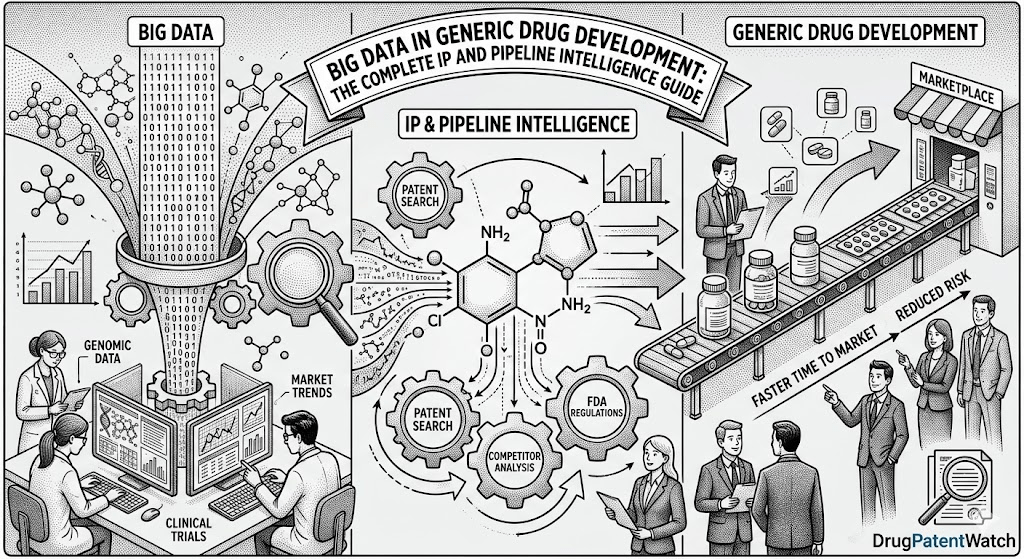
Generic drug development is a precision game, not a volume game. The companies pulling consistent margin out of a commoditized market are not doing it on manufacturing scale alone. They are doing it by knowing which patents to challenge, which molecules to prioritize, and which ANDAs to file before anyone else loads the gun. Big data, applied correctly, is the operational infrastructure that makes those calls possible.
This guide covers the full stack: patent intelligence and IP valuation, ANDA filing strategy, bioequivalence optimization, real-world evidence (RWE) integration, evergreening countermeasures, and the data architecture needed to run all of it at scale. It is written for IP teams, portfolio managers, R&D leads, and institutional investors who need specifics, not summaries.
Why Generic Drug Development Is a Data Problem First
The Economics of the ANDA Race
The 180-day exclusivity period granted to the first applicant to file a substantially complete Paragraph IV ANDA certification is, in practical terms, the most valuable regulatory asset a generic manufacturer can hold for a given molecule. FDA data shows that first-to-file generics can capture between 75% and 90% of the available market volume within the exclusivity window, after which erosion from subsequent filers compresses margins by 40 to 80 percent depending on the number of entrants.
That exclusivity is not guaranteed by manufacturing capability or formulation skill alone. It is won in patent databases, litigation dockets, and Orange Book records months or years before a tablet is pressed. The generic companies that file first, and survive the subsequent Hatch-Waxman litigation, did the intelligence work earlier and better than their competitors.
The average cost to bring a generic small molecule to market runs from roughly $1 million for simple oral solid dosage forms to upward of $15 million for complex formulations such as inhalation products, transdermals, or modified-release injectables, with development timelines stretching three to seven years depending on formulation complexity and the litigation environment. Complex generics command those higher development costs precisely because the patent thickets surrounding them are denser, the bioequivalence science is harder to execute, and the number of competing ANDA filers is, at least initially, lower.
Big data does not eliminate those costs. It concentrates them on the candidates most likely to generate positive returns.
What ‘Big Data’ Actually Means in This Context
In generic drug strategy, ‘big data’ describes the integration of at least four distinct data streams: structured patent and regulatory records (Orange Book listings, USPTO filings, European Patent Register), unstructured legal and litigation text (Paragraph IV certifications, district court decisions, PTAB inter partes review petitions), clinical and pharmacokinetic datasets (historical bioequivalence studies, FDA Complete Response Letters, pharmacovigilance records), and market and pricing data (WAC and ASP trends, IMS/IQVIA prescription data, formulary coverage records).
None of these datasets is individually novel. What changed over the past decade is the ability to cross-index them at scale, run predictive models across them, and surface actionable signals in near-real-time rather than through quarterly analyst reports. The firms with proprietary infrastructure to do this are not just faster. They make structurally different decisions about which markets to enter.
Patent Intelligence: The Foundation of Generic Drug Strategy
How the Orange Book Works and Why It Is Incomplete
The FDA’s Approved Drug Products with Therapeutic Equivalence Evaluations, universally called the Orange Book, lists patents that a brand manufacturer has certified cover the approved drug product or its approved method of use. A generic applicant filing a Paragraph IV certification is asserting that those listed patents are invalid, unenforceable, or will not be infringed by the generic product. That certification triggers a statutory 30-month stay on FDA approval while litigation plays out.
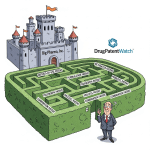
The Orange Book is not a complete map of the IP landscape around any given drug. Brand manufacturers routinely hold patents on synthesis routes, intermediates, specific impurity profiles, or manufacturing processes that are not Orange Book-listed because they do not cover the drug product or its approved use directly. These unlisted patents can still be asserted in litigation, and NLP-driven patent landscape tools that index USPTO and EPO records against active NDAs have become essential for identifying this shadow IP before a Paragraph IV filing is made public.
DrugPatentWatch’s database, which tracks expiration dates, litigation events, and Orange Book listings across tens of thousands of active and lapsed U.S. drug patents, is one of the tools IP teams use to map this terrain. The value it provides is not simply showing which patents expire when. The more operationally relevant output is identifying which patents in a thicket are prosecution history-weakened, which have survived prior inter partes review challenges, and which are tied to pending continuation applications that could extend the blocking period if granted.
IP Valuation of Key Generic Targets: Case Studies
Eliquis (Apixaban): The Multi-Layered Thicket
Apixaban, marketed by Bristol Myers Squibb and Pfizer as Eliquis, generated $12.2 billion in combined U.S. net revenues in 2023. The compound patent (U.S. Patent No. 6,967,208) expired in November 2022, at which point generic filers expected relatively straightforward market access. Instead, BMS and Pfizer asserted a suite of formulation and method-of-use patents extending effective exclusivity, the most significant of which was U.S. Patent No. 10,828,024, covering crystalline apixaban formulations. Generic manufacturers including Mylan (now Viatris) and Sigmapharm filed Paragraph IV certifications; the subsequent litigation produced a settlement in which BMS and Pfizer granted authorized generic licenses to multiple filers, with launch rights contingent on the outcome of ongoing proceedings.
The IP valuation lesson from apixaban is not simply that the compound patent expiry date printed on a patent cliff calendar is the wrong number to anchor. The more precise framing is that the economic value of the apixaban generic opportunity was effectively impounded inside the settlement terms, not at the Orange Book expiry date. A portfolio manager pricing the 2022 compound patent expiry as an imminent revenue event was working from the wrong data. A patent intelligence infrastructure that tracked every asserted patent, every continuation filing, and the litigation posture in parallel would have placed the realistic commercial launch 18 to 24 months later.
Revlimid (Lenalidomide): The Authorized Generic Settlement Architecture
Celgene, acquired by Bristol Myers Squibb in 2019 for $74 billion, structured Revlimid’s IP protection through a combination of compound patents, use patents, and REMS (Risk Evaluation and Mitigation Strategy) program restrictions. The compound patent expired in June 2022. But Celgene had settled Paragraph IV litigation with Natco Pharma, Sun Pharmaceutical, and others on terms that staggered entry through capped-volume authorized generic licenses: generic manufacturers could sell, but only up to specified volume thresholds that escalated over time, preventing the usual 80 to 90 percent price erosion from occurring immediately.
By January 2026, unrestricted generic entry is underway, but the staggered structure protected approximately $7 to $8 billion in Revlimid revenues over the 2022 to 2025 period that would have evaporated under immediate full generic competition. BMS investors who understood the settlement architecture priced the stock accordingly. Generic investors who tracked the volume caps in the public litigation settlements knew exactly how much market they could actually access and when.
Humira (Adalimumab): The Biosimilar Thicket and IP Valuation Collapse
AbbVie’s adalimumab franchise illustrates the biologic analog to small-molecule evergreening. AbbVie built a portfolio of more than 250 U.S. patents around Humira, covering not just the antibody sequence but manufacturing processes, formulation, dosing devices, and concentration. Several of these patents ran to 2034 and beyond. The company settled Paragraph IV-equivalent biosimilar patent litigation with Amgen, Samsung Bioepis, Mylan, Sandoz, and others on terms that granted U.S. market entry no earlier than January 2023, despite earlier biosimilar approvals in Europe.
The IP valuation of AbbVie’s Humira franchise was, at peak, approximately $21 billion in annual U.S. net revenues. Post-biosimilar entry, that franchise is on a predictable erosion curve. By Q3 2024, AbbVie reported U.S. Humira net revenues of approximately $1.6 billion quarterly, down from $4.3 billion in the same quarter of 2022, a decline driven by both price concessions to maintain formulary coverage and volume loss to interchangeable biosimilar competition from Hadlima (Samsung Bioepis/Organon), Hyrimoz (Sandoz), and Cyltezo (Boehringer Ingelheim), which received FDA interchangeable designation.
For biosimilar developers, the Humira case demonstrates that patent thicket intelligence has to operate at the antibody manufacturing and device level, not just the molecule level. NLP tools indexing AbbVie’s patent prosecution history at the EPO and USPTO, cross-referenced against FDA device registration records, would have identified the citrate-free, high-concentration formulation patents as the primary residual IP risk years before the U.S. settlement terms were made public.
Key Takeaways: Patent Intelligence
Patent cliff calendars based solely on compound patent expiry dates are misleading inputs for generic pipeline decisions. IP valuation of any target requires mapping the full patent family: compound, formulation, method-of-use, manufacturing process, and device patents, including continuation applications pending at the USPTO. Settlement structures in Paragraph IV litigation routinely impound economic value inside volume caps and entry date terms that make the legal expiry date commercially irrelevant. For biosimilars, patent thicket analysis must include device and manufacturing process patents alongside antibody sequence claims.
Investment Strategy: Patent Intelligence
Institutional investors building generic pharma exposure should treat FDA Orange Book expiry dates as a starting point, not a conclusion. The correct analytical framework values a molecule’s generic opportunity against the complete litigation environment, settlement probability, and realistic commercial launch date. Firms with proprietary NLP-driven patent landscape tools that track real-time USPTO prosecution activity have a structural information advantage over those relying on published cliff calendars. Teva’s 2023 full-year results, for instance, showed that its revenues from complex generics and specialty generics (which require more sophisticated IP clearing) were growing while its plain oral solid dosage generic revenues were under continued margin pressure.
ANDA Filing Strategy: Using Data to Win the Paragraph IV Race
First-to-File Mechanics and the 180-Day Exclusivity Window
Under the Hatch-Waxman Act framework, the first applicant to file a substantially complete ANDA with a Paragraph IV certification for each Orange Book-listed patent is eligible for 180-day exclusivity. The exclusivity is triggered either by commercial marketing of the generic or by a court decision finding the relevant patent(s) invalid or not infringed. The FDA cannot approve a subsequent ANDA during the exclusivity period, meaning a first filer can charge near-brand prices for six months before the second wave of generics compresses the market.
The commercial value of 180-day exclusivity varies considerably by drug. For Lipitor (atorvastatin), Ranbaxy secured first-to-file exclusivity on a U.S. patent worth more than $600 million in revenues during its exclusivity window. For a smaller-market drug, the same exclusivity period might generate $20 million. Data-driven pipeline prioritization uses prescription volume data, net price modeling, and generic substitution rate estimates to score these opportunities before development resources are committed.
Predictive Filing Analytics: How Data Teams Identify High-Value Paragraphs IV
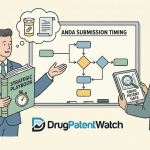
The operational workflow at a data-mature generic manufacturer starts with a patent surveillance layer that monitors FDA ANDA dockets, Orange Book update feeds, and USPTO continuation filings simultaneously. When a new Orange Book listing appears, it is automatically cross-referenced against active ANDA filings to determine whether any competitor has already established first-to-file position. If not, the IP team receives an alert with the relevant patent prosecution history and a model-generated estimate of litigation risk based on prior art density and examiner history.
This is materially different from the quarterly patent cliff reports that dominated generic strategy a decade ago. The gap between a brand manufacturer listing a new formulation patent in the Orange Book and a generic company identifying it, completing a Paragraph IV certification opinion, and filing the ANDA can now be compressed from months to weeks. Companies that cannot operate at that speed are effectively locked out of first-to-file position on the most valuable targets.
Paragraph IV Certification Risk Scoring
Not all Paragraph IV filings are created equal. The litigation risk attached to a Paragraph IV certification depends on the strength of the asserted patent claims, the quality of prior art, and the brand manufacturer’s litigation history. Some brands, particularly specialty pharma companies with small legal teams, accept settlements quickly. Others, like AbbVie, have demonstrated a pattern of sustained litigation across multiple filers.
Machine learning models trained on historical Hatch-Waxman litigation outcomes, including district court decisions and PTAB IPR outcomes, can score the litigation risk of a proposed Paragraph IV certification before the ANDA is filed. Inputs include: the forward citation count of the asserted patents (highly cited patents are harder to invalidate), the prosecution history (arguments made during prosecution can create prosecution history estoppel limiting doctrine-of-equivalents infringement claims), the chemical similarity of the proposed generic formulation to the asserted claims, and the brand manufacturer’s win/loss ratio in prior Paragraph IV litigation.
Teva, Mylan/Viatris, Sandoz, and Sun Pharmaceutical have all built or licensed versions of this infrastructure. Smaller generic manufacturers without it are pricing litigation risk on intuition, which systematically underprices the risk of 30-month stays on complex formulations.
Key Takeaways: ANDA Filing Strategy
The 180-day exclusivity period is not a passive benefit of patent expiry. It is won through active, data-driven surveillance of Orange Book updates, USPTO filings, and competitive ANDA dockets. First-to-file position on a high-revenue molecule can generate hundreds of millions in exclusivity-period revenues. Litigation risk scoring using historical Hatch-Waxman outcomes and PTAB IPR data is now a standard component of Paragraph IV strategy at major generic manufacturers. Companies that cannot produce real-time Orange Book and ANDA docket alerts are structurally disadvantaged in the first-to-file race.
Evergreening: Data-Driven Countermeasures for Generic IP Teams
The Anatomy of Evergreening
Evergreening is the practice of obtaining secondary patents, that is, patents on formulations, delivery devices, metabolites, polymorphs, or new indications rather than the original compound, that extend effective market exclusivity beyond the compound patent term. It is legal, widespread, and a primary reason why the compound patent expiry date is an unreliable proxy for generic entry timing.
The pharmaceutical industry’s most documented evergreening tactics include: filing patents on new salt forms or polymorphs of the active compound; switching from an immediate-release to an extended-release formulation before the IR compound patent expires (the IR-to-ER switch); obtaining new use patents for additional indications; and patenting the active metabolite of a compound rather than the compound itself.
AstraZeneca’s omeprazole-to-esomeprazole switch (Prilosec to Nexium) is the textbook example. As omeprazole generic competition mounted in the early 2000s, AstraZeneca patented the S-enantiomer of omeprazole (esomeprazole), launched it as Nexium, and invested heavily in direct-to-consumer advertising to shift prescribers and patients to the patented product before the generic wave on omeprazole completed. By 2003, Nexium was generating over $3.8 billion in annual U.S. sales. The compound patent on esomeprazole expired in May 2014, at which point generic esomeprazole launched, but AstraZeneca had extracted over a decade of exclusivity premium from a molecule whose predecessor had been genericized.
NLP-Based Evergreening Detection
Modern patent intelligence platforms use natural language processing to detect evergreening patterns in real time. The workflow monitors continuation patent applications at the USPTO that reference the NDA number or active ingredient of a specific brand drug. When a continuation application is published, NLP classifies whether the claims are compound-level (high blocking potential), formulation-level (medium blocking potential, often vulnerable to design-around), or use-level (lower blocking potential, can be addressed through skinny labeling).
Skinny labeling, formally called carve-out labeling under 21 C.F.R. Section 314.54, lets a generic manufacturer omit patented indications from its label while gaining approval for non-patented uses. The commercial viability of skinny labeling depends on whether the non-patented use represents a commercially meaningful prescription volume. Data tools that cross-reference ICD-10 diagnosis codes from prescription claims data against FDA-approved indications can quantify what fraction of prescriptions are written for patented versus non-patented uses, which directly informs the skinny-label strategy decision.
GlaxoSmithKline sued Teva over Teva’s skinny-label generic carvedilol in a case that wound through district courts and the Federal Circuit for years, ultimately resulting in a $235 million jury verdict against Teva that was later partially addressed on appeal. The litigation illustrated that skinny labeling is not zero-risk; it requires detailed claims mapping against prescribing data to avoid induced infringement exposure.
The Extended-Release Switch: Technology Roadmap and Generic Counterstrategy
The IR-to-ER formulation switch is the most common and commercially potent evergreening tactic for oral solid dosage forms. The brand manufacturer reformulates an immediate-release product as extended-release or modified-release, patents the new formulation, and then works to shift prescribers and payers to the new product before the IR patent cliff. If successful, when IR generics launch, a significant portion of the market has already migrated to the ER product, which remains patent-protected.
The technology roadmap for ER formulations typically follows one of several platform architectures: OROS (osmotic release oral systems, pioneered by ALZA and now widely used), multi-particulate systems using coated beads in capsules, matrix tablet systems using hydrophilic polymers such as HPMC, and membrane-coated tablets. Each platform generates a distinct IP signature. OROS systems, for example, have a recognizable patent cluster covering the semipermeable membrane, push layer composition, and drug release orifice geometry. NLP tools that classify ER patents by platform architecture help generic IP teams rapidly identify which prior art is most relevant to invalidation and which design-arounds are technically feasible.
Concerta (methylphenidate HCl extended-release), which uses the OROS delivery system, demonstrated how these dynamics play out. Janssen Pharmaceuticals held multiple patents covering the OROS formulation. Actavis, Kudco, and others launched generic versions that were therapeutically equivalent by FDA standards but not rated as pharmaceutically equivalent to Concerta because they did not use the OROS system. The FDA later updated guidance to clarify that not all FDA-approved methylphenidate ER generics were considered substitutable for Concerta by pharmacies, a regulatory nuance that had real commercial consequences for both generics manufacturers and payers.
Polymorph and Salt Form Patents: The Crystallography Arms Race
Polymorph patents represent one of the most technically dense evergreening fronts. The same API in a different crystalline form may have meaningfully different solubility, bioavailability, or stability characteristics, or the differences may be commercially irrelevant and the patent primarily serves to extend exclusivity. IP teams at generic manufacturers use solid-state characterization data, X-ray powder diffraction (XRPD) databases, and prior literature to assess whether a patented polymorph is genuinely novel or whether Form I and Form II of a given API were both described in earlier literature.
Clopidogrel bisulfate (Plavix) is the canonical polymorph patent case. Sanofi patented the bisulfate salt of clopidogrel as Form I in U.S. Patent No. 4,847,265, while a prior Canadian patent by the same inventors disclosed the base compound. Apotex filed a Paragraph IV certification asserting invalidity and won at the district court level, but Sanofi appealed and won a 30-month stay, during which clopidogrel generated over $6 billion in U.S. revenues. The compound eventually genericized in May 2012, but the litigation trajectory delayed mass generic entry for years after the first patent challenge.
Key Takeaways: Evergreening
Evergreening is not a single tactic. It is a layered IP strategy combining formulation patents, salt and polymorph patents, use patents, and device patents. Generic IP teams need platform-level evergreening detection, not just patent expiry date monitoring. NLP-based classification of continuation applications by claim type (compound, formulation, use) is the starting point for mapping the residual blocking period after a compound patent expires. Skinny labeling is a viable counterstrategy for use patents but requires prescribing data analysis to quantify infringement risk before the strategy is committed.
Investment Strategy: Evergreening
Brand pharmaceutical companies with robust evergreening strategies, specifically those with diversified patent portfolios built around proprietary delivery platforms, command a valuation premium over those relying on single compound patents. For generic investors, the practical implication is that compound patent expiry dates should be discounted by a probability-weighted estimate of successful formulation or use patent challenges. Portfolio managers tracking Paragraph IV litigation outcomes can build this probability estimate empirically using historical win rates by patent type and asserting company.
Bioequivalence Optimization: Where Clinical Data Science Meets Generic Economics
The Bioequivalence Standard and Its Commercial Implications
FDA requires that a generic drug demonstrate bioequivalence to its reference listed drug (RLD), meaning that the rate and extent of absorption of the active ingredient from the generic product does not differ significantly from the RLD under the same conditions. The statistical standard is a 90% confidence interval for the ratio of the geometric means of Cmax and AUC falling within the 80 to 125 percent bioequivalence limits.
For straightforward oral solid dosage forms with well-characterized pharmacokinetics, meeting this standard is technically routine. The challenge arises with narrow therapeutic index (NTI) drugs, where FDA applies a tighter 90 to 111 percent standard for the AUC and Cmax ratios, requiring larger study populations to achieve the necessary statistical power. Drugs such as warfarin, tacrolimus, levothyroxine, and lithium carry NTI designations, and the bioequivalence data packages for their generics require correspondingly more expensive and complex clinical studies.
Machine Learning in Bioequivalence Prediction
The traditional bioequivalence development pathway runs a series of formulation iterations through in vitro dissolution testing, in vivo pharmacokinetic studies in healthy volunteers, and, if those studies fall outside the confidence interval bounds, reformulation followed by repeat testing. The cost of failed in vivo bioequivalence studies is not just the study itself; it is the timeline delay and the opportunity cost of holding back an ANDA filing.
Physiologically based pharmacokinetic (PBPK) modeling has become the primary in silico tool for predicting whether a proposed generic formulation will achieve bioequivalence before the in vivo study is run. PBPK models simulate drug absorption, distribution, metabolism, and excretion using compound-specific physicochemical parameters (pKa, logP, solubility, permeability) and physiological parameters (gastric pH, gastrointestinal transit time, regional blood flow). FDA has accepted PBPK-based bioequivalence predictions as supporting data in biowaivers for certain BCS (Biopharmaceutics Classification System) Class II and Class IV drugs.
Machine learning models trained on historical in vitro-in vivo correlation (IVIVC) datasets for specific drug classes are increasingly used to predict whether a dissolution profile will translate into acceptable Cmax and AUC ratios in humans. Sandoz, Teva, and several academic groups have published models for proton pump inhibitors, statins, and antiepileptics. The commercial value of accurate PBPK and ML-based bioequivalence prediction is the reduction of failed in vivo studies, each of which can cost between $500,000 and $3 million depending on the drug’s complexity and the study design required.
Complex Generics: Inhalation, Transdermal, and Injectable Formulations
Complex generic formulations, particularly orally inhaled drug products (OIDPs) and locally acting drugs like topical corticosteroids and liposomal injectables, require demonstrating bioequivalence through methods that go beyond standard PK studies in healthy volunteers. FDA’s product-specific guidances (PSGs) for complex generics specify the studies required, which for inhalation products typically include in vitro aerodynamic particle size distribution testing, in vitro drug delivery rate studies, and frequently clinical endpoint bioequivalence studies or pharmacodynamic studies (for bronchodilators, bronchoconstriction challenge studies).
The data requirements for inhalation product generics illustrate why the complex generic market commands higher margins. Advair Diskus (fluticasone propionate/salmeterol), one of the most commercially significant respiratory products in U.S. history, generating over $4.5 billion in peak annual U.S. revenues for GlaxoSmithKline, defeated multiple ANDA attempts for years partly because FDA’s bioequivalence standards for combination dry powder inhalers were not fully settled. The first FDA-approved generic Advair (Wixela Inhub, from Mylan) launched in January 2019, approximately 17 years after Advair’s initial approval.
For liposomal injectables, Doxil (doxorubicin hydrochloride liposome injection) posed analogous challenges. Sun Pharmaceutical’s Lipodox received FDA approval as the first generic Doxil in February 2013, but the characterization requirements for liposomal particle size distribution, encapsulation efficiency, and drug release profiles required bioanalytical methods that were specific to the liposomal formulation class. These characterization datasets are now a core competency at companies targeting complex injectable generics.
Real-World Evidence Integration in Bioequivalence Dossiers
FDA has been progressively open to real-world evidence (RWE) as supportive data in generic drug submissions, particularly for post-marketing safety assessments and for demonstrating comparable clinical outcomes for drugs where traditional bioequivalence study designs are impractical. The Agency’s 2021 draft guidance on RWE for regulatory decision-making outlined a framework where electronic health record data, insurance claims data, and patient registry data can support ANDA submissions in specific contexts.
The most operationally mature use of RWE in generic dossier preparation is for demonstrating post-market bioequivalence in real-world patient populations. Sandoz’s regulatory strategy for certain generic biologics has incorporated observational data from European markets, where biosimilar penetration rates and switching studies are more extensive than in the U.S., to support FDA discussions. For NTI drugs, RWE datasets showing equivalent therapeutic outcomes (e.g., INR stability for generic warfarin versus the RLD) can support the bioequivalence dossier and reduce post-approval regulatory scrutiny.
Key Takeaways: Bioequivalence
PBPK modeling and ML-based IVIVC prediction reduce in vivo bioequivalence study failure rates, with direct implications for development cost and ANDA filing timelines. Complex generic formulations (inhalation, transdermal, liposomal) require product-specific bioequivalence study designs that FDA specifies in PSGs. The Advair case illustrates that complex generics can face 15 to 20 year development timelines if PSG guidance is not settled. RWE integration in ANDA submissions is early-stage but represents a meaningful data science opportunity for teams with EHR data access and FDA interaction experience.
Regulatory Intelligence: FDA Predictive Analytics and ANDA Approval Optimization
Complete Response Letter Pattern Analysis
FDA issues a Complete Response Letter (CRL) when an ANDA is not approved in its current form. The CRL specifies the deficiencies that must be addressed before approval. Analyzing CRL patterns across therapeutic categories, manufacturing facility types, and specific chemistry, manufacturing, and controls (CMC) parameters identifies the most common deficiency categories and allows manufacturing and regulatory teams to front-load their submissions with the documentation FDA consistently flags as insufficient.
NLP models trained on public ANDA CRL data (FDA publishes CRL summaries for certain applications) have identified persistent deficiency clusters. Dissolution method validation deficiencies account for a disproportionate share of CMC-related CRLs. Impurity specification deficiencies, particularly for ICH Q3A out-of-specification process-related impurities or for mutagenic impurity (nitrosamine) assessments, have become more frequent since FDA’s 2019 to 2022 nitrosamine contamination alerts affecting metformin, ranitidine, and ARB (angiotensin receptor blocker) products. Facility inspection deficiencies tied to data integrity failures at API manufacturers, particularly at Indian and Chinese API suppliers, remain a major source of approval delay.
Ranbaxy’s regulatory history is instructive at the extreme end. FDA issued import alerts and warning letters to multiple Ranbaxy facilities between 2008 and 2014, ultimately resulting in a consent decree and a $500 million criminal and civil settlement. The data integrity failures at Ranbaxy’s Paonta Sahib and Dewas plants affected ANDA approvals across its entire U.S. portfolio. Teams with regulatory intelligence infrastructure tracking FDA warning letter issuances, import alert status, and facility inspection outcomes by API supplier can identify supply chain regulatory risk before it materializes as a CRL.
FDA Priority Review, Expedited Programs, and Their Relevance to Generics
FDA’s Complex Drug Substance and Complex Drug Product designations for certain ANDAs, plus the Competitive Generic Therapy (CGT) designation for drugs with fewer than three approved generics, provide pathways to accelerated review. CGT designations trigger 180-day exclusivity similar to first-to-file Paragraph IV filers, but for products where there simply are no other FDA-approved generics rather than where Paragraph IV litigation is being pursued.
The CGT program, created by the FDA Reauthorization Act of 2017, has generated meaningful exclusivity opportunities for generic manufacturers willing to invest in complex or low-competition formulations. Data teams that monitor the FDA’s Drug Competition Action Plan drug shortage lists and CGT eligibility criteria can identify CGT-qualifying drugs before competitors target them.
Key Takeaways: Regulatory Intelligence
CRL pattern analysis using NLP on FDA deficiency data lets manufacturing and regulatory teams address the most common deficiency categories before submission, reducing approval cycles. API supplier regulatory status, including warning letter history, import alert status, and 483 observation trends, is a material input to generic development risk assessment. CGT designations for drugs without adequate generic competition represent a data-identifiable exclusivity opportunity distinct from Paragraph IV.
Market Entry Strategy: Pricing, Formulary, and Real-World Commercial Positioning
Generic Pricing Dynamics: The Competitive Entry Cascade
Generic drug pricing follows a predictable but time-compressed cascade. At first-to-file launch, the generic manufacturer typically prices at 20 to 30 percent below WAC of the brand. When the 180-day exclusivity expires and the second and third wave of generic filers receive FDA approval, pricing compresses rapidly. With five or more generic entrants, WAC prices typically fall to 10 to 20 percent of the original brand price. With ten or more, prices can fall to 5 percent or below brand WAC for commodity oral solid dosage forms.
The strategic question for generic manufacturers is not whether price compression will occur, but how to position product supply contracts with wholesalers, pharmacy benefit managers, and health systems to capture volume during the compression cycle. IMS/IQVIA prescription data, cross-referenced against formulary tier assignments and PBM preferred product lists, identifies which channels and payer segments maintain generic substitution rates above the national average, which is where volume concentrates fastest post-launch.
Specialty Generic and Authorized Generic Dynamics
The authorized generic, a version of the branded drug sold under a separate label at generic prices by the brand manufacturer or its licensed partner, has become a central competitive variable in generic market entry. Brand manufacturers launch authorized generics specifically to participate in the first-to-file exclusivity period alongside the generic challenger, diluting the challenger’s market share during the period that was supposed to generate peak returns.
The authorized generic strategy has been documented across dozens of launches. AstraZeneca launched an authorized generic of Nexium (esomeprazole) at the same time that Dr. Reddy’s Laboratories launched its generic, capturing a substantial portion of the generic esomeprazole market. The commercial effect on first-to-file generics can be significant: an authorized generic reduces the first-to-file exclusivity return by 30 to 50 percent depending on how aggressively the brand’s authorized generic is priced and distributed.
Data tools that track FDA ANDA approvals and NDC registrations in real time allow generic commercial teams to detect authorized generic launches within days and adjust their wholesaler contract terms accordingly.
Key Takeaways: Market Entry
The authorized generic is a standard brand manufacturer response to Paragraph IV entry and should be modeled as a base case, not a downside scenario, in any first-to-file commercialization forecast. Generic pricing cascades by number of entrants are predictable from historical IQVIA data and should be integrated into NPV models for generic pipeline prioritization. Formulary positioning with PBMs, particularly preferred generic tier status, is a primary commercial lever that can sustain volume share through the competitive entry cascade.
Investment Strategy: Market Entry
For institutional investors evaluating generic pharma companies, the key metric is not gross margin per se but the proportion of revenues derived from first-to-file exclusivity periods and from complex generics (which have fewer entrants and slower price erosion) versus commodity oral solid dosage forms (which face rapid margin compression). Teva’s investor presentations consistently separate ‘complex products’ from its standard generic portfolio for this reason. Companies with a higher proportion of revenues from complex generics, authorized generic income, or CGT-qualifying products trade at a justified valuation premium.
The Data Architecture Stack: Building or Buying the Infrastructure
Patent Intelligence Platforms
The minimum viable patent intelligence stack for a serious generic manufacturer includes a patent database with Orange Book cross-referencing, a litigation docket monitoring layer, and a USPTO prosecution activity feed. DrugPatentWatch, Derwent Innovation (now part of Clarivate), and PatSnap represent the three most widely used commercial platforms, each with different strengths. DrugPatentWatch emphasizes pharmaceutical-specific Orange Book and ANDA cross-referencing. Derwent Innovation provides broader patent analytics with stronger visualization tools. PatSnap has invested heavily in AI-driven prior art search and patent strength scoring.
For organizations with the technical capacity to build proprietary tools, the USPTO’s bulk data download program provides access to the full-text USPTO patent corpus, and FDA’s publicly available Orange Book data, ANDA docket, and CRL database can be integrated into custom analytics environments. The limitation of the build-it-yourself approach is the ongoing maintenance burden; FDA’s data schemas and publication formats change frequently, and keeping proprietary integrations current requires dedicated engineering resources.
Clinical and Market Data Integration
IQVIA (formerly IMS Health) is the dominant source of prescription volume and market share data for U.S. pharmaceutical markets, with products including MIDAS (for global market tracking) and LAAD (longitudinal anonymized individual patient data). IQVIA’s data is expensive but widely regarded as the authoritative source for prescription demand forecasting. Symphony Health (now part of PurpleLab) provides an alternative claims-based dataset with different coverage characteristics, and is sometimes preferred for specialty drug markets where IQVIA’s sample methodology underrepresents low-volume prescribers.
For generic commercial teams, the specific analytical need is accurate first-fill and refill substitution rate data by channel (retail chain, independent pharmacy, mail order, specialty pharmacy), because substitution rates vary significantly by channel and determine where volume will concentrate at generic launch. Longitudinal patient-level claims data, available from IQVIA or PurpleLab under commercial license, provides the most granular view of substitution dynamics.
Regulatory Monitoring Infrastructure
Real-time monitoring of FDA ANDA dockets, Orange Book updates, Paragraph IV certification notifications, and Warning Letter issuances requires a combination of FDA API access and NLP processing. FDA’s Drug@FDA database provides ANDA approval actions in near-real-time. The Orange Book is updated monthly, but strategic updates to patent listings can occur more frequently and must be monitored to identify new blocking patents. Third-party services that aggregate and alert on Orange Book changes include DrugPatentWatch, Citeline (formerly Informa), and several boutique regulatory intelligence vendors.
Key Takeaways: Data Architecture
No single platform covers the full data stack required for serious generic drug strategy. Patent intelligence, clinical and market data, and regulatory monitoring require separate tools or a custom integration layer. Smaller generic manufacturers typically find that commercial platform subscriptions (DrugPatentWatch for patent intelligence, IQVIA for market data) are more cost-effective than building proprietary systems. Larger manufacturers with dedicated data engineering teams build proprietary alert systems on top of FDA bulk data to achieve faster notification of Orange Book changes and ANDA approvals than commercial platforms provide.
Biosimilar Development: Where Patent Intelligence and Clinical Data Science Converge
The Biosimilar Regulatory Pathway and Its IP Dimensions
The Biologics Price Competition and Innovation Act (BPCIA) of 2009 created the biosimilar and interchangeable biologic pathways at FDA, broadly analogous to Hatch-Waxman for small molecules but with significant structural differences. The patent dance, the formal information exchange between the biosimilar applicant and the reference product sponsor, allows the RPS to disclose patents it intends to assert and negotiate a litigation schedule. Unlike Hatch-Waxman’s automatic 30-month stay, the BPCIA does not provide an automatic stay, though preliminary injunctions are frequently sought.
Biosimilar interchangeability, the FDA designation that allows pharmacists to substitute a biosimilar for the reference biologic without physician intervention (as permitted by state law), is a separate and higher evidentiary standard requiring data demonstrating that alternating or switching between the biosimilar and the reference product does not produce greater risk than continuous use of the reference product. Hadlima (adalimumab-bwwd) from Samsung Bioepis received interchangeable designation in July 2023, making it one of the first Humira biosimilars to achieve this status.
The commercial importance of biosimilar interchangeability is subject to ongoing market analysis. Early evidence suggests that interchangeable designation does not dramatically accelerate formulary access or pharmacy-level substitution in the U.S. market compared to non-interchangeable biosimilars, because payer formulary decisions are primarily driven by rebate contracting rather than automatic substitution at the pharmacy counter. This is a developing area where real-world formulary coverage data is more predictive of commercial outcomes than regulatory designation alone.
Biosimilar Patent Thicket Clearing: A Technical Roadmap
Clearing the patent thicket around a biologic reference product requires characterizing the manufacturing process, cell line, formulation, and device at sufficient resolution to identify freedom to operate. For monoclonal antibodies, the primary IP risks are: cell line patents (covering the CHO cell line used in upstream manufacturing), manufacturing process patents (covering cell culture conditions, purification steps, and glycosylation profiles), formulation patents (covering excipient composition, concentration, and pH), and device patents (covering autoinjector or pen design).
The analytical workflow for biosimilar IP clearance begins with a freedom-to-operate search across the USPTO, EPO, and WIPO for patents naming the reference biologic’s INN or the company’s own monoclonal antibody platform. This search returns hundreds to thousands of patent documents for a major biologic like adalimumab or etanercept. NLP classification reduces this to a manageable set by filtering for patents with claims that cover manufacturing process steps, formulation components, or device elements that are technically necessary for the biosimilar’s production.
For the Humira biosimilar development programs, the primary engineering challenge was formulating adalimumab at 100 mg/mL concentration without citrate buffer (to reduce injection site pain, which was a key differentiating feature of Humira’s citrate-free formulation introduced in 2016). AbbVie’s citrate-free formulation patent (U.S. Patent No. 9,546,219) was a significant obstacle, and biosimilar developers had to either design around the excipient system or challenge the patent. Several biosimilar manufacturers licensed the patent as part of their settlement agreements.
Key Takeaways: Biosimilars
Biosimilar development requires patent thicket clearing at the manufacturing process, formulation, and device levels, all of which must be addressed before an abbreviated BLA is filed. Biosimilar interchangeability designation provides regulatory recognition but may not deliver proportional commercial benefit in the current U.S. payer environment, where formulary access is primarily determined by rebate negotiations. The BPCIA patent dance timeline, including the information exchange period and subsequent litigation, should be modeled into biosimilar development timelines from day one of the program.
Investment Strategy: Biosimilars
The biosimilar market opportunity in the U.S. is substantial. Humira biosimilar revenues from the eight or more competing products collectively reached several billion dollars annually by 2025, but no single biosimilar manufacturer captured the economics that first-to-file Hatch-Waxman exclusivity would have provided in a small-molecule context. Investors should model biosimilar revenues as a portfolio play across multiple products rather than expecting a single biosimilar to dominate its reference product’s market. Companies with proprietary formulation and device design-around capabilities, specifically those that can differentiate their biosimilar on patient experience rather than price alone, are better positioned for sustainable margin.
Emerging Applications: AI in Generic Drug Strategy
Large Language Models for Patent Prosecution Analysis
Large language models trained on patent corpora are now being deployed for first-pass patent prosecution history analysis. The commercial applications include: identifying arguments made by the applicant during prosecution that limit claim scope through prosecution history estoppel, extracting claim limitations that narrow the patent’s coverage compared to the claim language read in isolation, and summarizing the prior art record that the examiner considered during prosecution (which informs the prior art search for invalidity arguments in litigation).
These tools do not replace patent attorneys, but they compress the time to initial analysis. A patent prosecution history summary that previously required a paralegal two days to prepare can now be produced by an LLM in minutes, with the attorney reviewing and supplementing the output. For generic IP teams managing large Paragraph IV portfolios with dozens of asserted patents across multiple ANDAs, this compression is commercially material.
Generative AI for ANDA Regulatory Document Drafting
FDA’s ANDA submission format is highly structured, with specific modules covering CMC data, labeling, bioequivalence data, and patent certifications. Generative AI tools trained on approved ANDA submissions and FDA guidance documents are being used by regulatory affairs teams at generic manufacturers to draft CMC sections, generate table of contents structures, and flag common deficiency categories before submission. The FDA has not formally endorsed AI-generated submissions but has signaled openness to AI-assisted regulatory science in its 2024 AI action plan.
The risk in AI-assisted regulatory drafting is that LLMs trained on historical submission data can perpetuate outdated guidance compliance if not updated to reflect current FDA expectations. Teams using these tools need active maintenance processes to incorporate new FDA guidances, ANDA pilot program outcomes, and CRL deficiency patterns into the training data or retrieval-augmented generation (RAG) configuration.
Key Takeaways: AI Applications
LLM-based patent prosecution analysis is a near-term, deployable tool for generic IP teams managing large Paragraph IV portfolios. Generative AI for ANDA regulatory drafting is early-stage but commercially viable for document structuring and deficiency pre-screening. Both applications require active maintenance to stay current with FDA guidance changes and evolving patent office practice. They are force multipliers for skilled regulatory and IP attorneys, not replacements.
Data Governance, Privacy, and Compliance Infrastructure
HIPAA, GDPR, and Real-World Data Licensing
Real-world evidence drawn from EHR and claims data is subject to HIPAA de-identification requirements in the U.S. and GDPR data processing restrictions in the EU. Commercially licensed RWE datasets from IQVIA, PurpleLab, and similar vendors come pre-de-identified to HIPAA Safe Harbor or Expert Determination standards, but the terms of use restrict how the data can be combined with other datasets, what commercial uses are permitted, and whether derived insights can be disclosed in regulatory submissions or publications.
For generic manufacturers using RWE in ANDA submissions, FDA’s 2021 draft guidance specifies that RWE data sources must be fit for purpose, meaning that the dataset’s collection method, coverage, and data completeness are appropriate for the specific analytical question. A claims dataset with low capture rates for a specialty drug administered in hospital outpatient settings, for example, may not be adequate to support a bioequivalence validation study using RWE.
Data Integrity and Supply Chain Regulatory Risk
FDA’s data integrity guidance, most recently updated in December 2018, specifies requirements for ALCOA-plus principles (Attributable, Legible, Contemporaneous, Original, Accurate, plus Complete, Consistent, Enduring, and Available) in pharmaceutical manufacturing records. Data integrity failures, particularly at API manufacturers in India and China, have been a major source of ANDA CRLs and facility-specific import alerts.
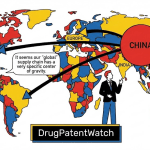
The generic industry’s API supply chain is heavily concentrated in India and China. The FDA’s Foreign Inspection Program has expanded its unannounced inspection capacity at international facilities, and data from FDA’s inspection database (available through the FDA’s Open Data portal) shows that ‘data integrity’ is consistently among the top three observations cited in 483s issued to Indian pharmaceutical manufacturing facilities. Monitoring this data proactively allows generic manufacturers to identify API supplier regulatory risk before it materializes as a supply chain disruption or an ANDA delay.
Key Takeaways: Data Governance
RWE dataset fitness for purpose must be assessed against the specific regulatory or commercial question before the dataset is licensed. API supplier data integrity risk, tracked through FDA 483 observations and warning letter issuances, is a supply chain risk input that should be integrated into vendor qualification processes. HIPAA and GDPR compliance in RWE analysis is non-negotiable but should not be treated as a barrier to RWE use; commercially licensed pre-de-identified datasets address the primary compliance requirement.
Summary: What Separates Data-Mature Generic Companies from the Rest
The generic pharmaceutical companies consistently generating above-market returns are not winning on formulation science alone. They win because they resolve specific information problems faster and more accurately than competitors: which patents are genuinely blocking versus litigation-vulnerable, which ANDAs will be first-to-file, which bioequivalence studies will succeed on the first attempt, and which authorized generic threats need to be priced into launch models before a single tablet ships.
Big data infrastructure, at its most useful, is a decision support system for those specific questions. Patent surveillance tools flag Orange Book changes and USPTO continuation filings in real time. Litigation risk models score Paragraph IV certifications before they are filed. PBPK and ML-based bioequivalence prediction reduces costly in vivo study failures. RWE databases provide commercial and clinical signal earlier in the development process. Regulatory pattern analysis on CRL histories guides CMC submission quality.
The competitive gap between generic manufacturers that operate with this infrastructure and those that do not is measurable in first-to-file rates, ANDA approval cycle times, and the proportion of revenues derived from complex generics and exclusivity periods versus commoditized oral solid dosage forms. For investors, that gap translates directly into valuation.
Key Takeaways: Full Article
The compound patent expiry date is an insufficient proxy for generic market entry. Full IP valuation of any generic target requires mapping the complete patent family: compound, salt, polymorph, formulation, method-of-use, device, and manufacturing process patents, plus active continuation applications.
Paragraph IV first-to-file position is won through real-time patent surveillance and rapid certification opinion generation, not through quarterly cliff calendars. Companies that cannot produce Orange Book change alerts and ANDA docket updates in near-real-time are structurally disadvantaged.
Evergreening countermeasures require platform-level patent classification using NLP, not just expiry date monitoring. Skinny labeling strategy for use patents requires prescribing data analysis to quantify the infringement risk exposure before the label is committed.
PBPK modeling and ML-based IVIVC prediction reduce failed bioequivalence studies, with direct effects on ANDA filing timelines and development costs. FDA product-specific guidances for complex generics define the exact study requirements and should be the first document read before a complex generic program is initiated.
Biosimilar interchangeability designation matters less commercially than formulary positioning and rebate contracting. The patent dance timeline and formulation design-around requirements for biologic reference products must be mapped at program initiation, not after the abbreviated BLA is filed.
AI-assisted patent prosecution analysis and generative AI for ANDA regulatory drafting are deployable today and provide force-multiplier value for IP and regulatory teams managing large portfolios. Both require active maintenance to reflect current FDA and USPTO practice.
API supplier regulatory risk, tracked through FDA 483 observations and warning letters, is a supply chain input that should be part of vendor qualification and ongoing supplier monitoring programs.