The United States pharmaceutical market is a theater of paradoxes. It is the undisputed global engine of biomedical innovation, producing life-saving and life-altering therapies at an unparalleled rate. Yet, it is also home to the world’s highest drug prices, creating a persistent and often painful tension between the remarkable achievements of science and the fundamental need for affordable healthcare access. For any professional operating within this ecosystem—be it a brand-name drug manufacturer, a generic competitor, a biotech innovator, a healthcare provider, or an investor—understanding the intricate dance between intellectual property, regulatory frameworks, market forces, and political pressures is not just an academic exercise. It is the cornerstone of survival, growth, and strategic success.
This is a world where a single patent expiration can erase billions in revenue overnight, an event so common it has its own ominous moniker: the “patent cliff.” It’s a landscape where a savvy generic company can capture 80% of a market within months of entry, and where brand-name manufacturers deploy sophisticated, multi-pronged strategies to defend their blockbuster assets for every possible day. It’s a market shaped by landmark legislation like the Hatch-Waxman Act, which masterfully balanced incentives for both innovation and competition, and now faces a new era of disruption from the Inflation Reduction Act.
How do you navigate this complex terrain? How do you transform the chaos of patent litigation, the opaqueness of drug pricing, and the relentless pressure of competition into a coherent, actionable business strategy?
The Paradox of Innovation and Affordability: Setting the Stage
At its core, the pharmaceutical industry operates under a dual mandate that is both its greatest strength and its most profound challenge. On one hand, it must invest astronomical sums of capital—often billions of dollars over a decade or more—into high-risk research and development (R&D) to bring a new drug to market. The Tufts Center for the Study of Drug Development estimated the pre-tax cost of developing a new prescription medicine to be $2.6 billion in 2014, a figure that, when adjusted for post-approval R&D, climbs to nearly $3 billion [1]. This staggering investment requires a period of market exclusivity to recoup costs and generate profits that can fund the next wave of innovation. This is the argument for strong patent protection and high initial prices.
On the other hand, the products of this innovation are not luxury goods; they are essential for health, well-being, and life itself. The societal expectation is for broad and affordable access to these medicines. This creates a powerful countervailing force, pushing for lower prices and faster availability of cheaper alternatives once the initial period of exclusivity has been justified. This is the driving force behind generic competition.
The Dual Mandate of the Pharmaceutical Industry
Think of the pharmaceutical market as an ecosystem with two powerful, symbiotic yet opposing forces. The innovator, like a keystone predator, requires a large territory (market exclusivity) and significant resources (revenue) to thrive and maintain the health of the ecosystem (the R&D pipeline). The generic competitor, like a resourceful scavenger, plays the crucial role of cleaning up and recycling resources (making drugs affordable and accessible) once the predator has had its fill.
The entire regulatory and legal framework of the US market is designed to manage the delicate transition of power between these two players. When this balance works, it fosters a cycle of innovation and access. When it breaks down or is perceived as unfair, it leads to intense public scrutiny, political intervention, and strategic uncertainty for everyone involved.
Why the US Market is a Unique Beast
Unlike most other developed nations, the United States does not directly regulate or negotiate drug prices for the entire country at the point of launch. The government is the largest single payer through Medicare and Medicaid, but for decades it was legally prohibited from negotiating prices directly for the massive Medicare Part D program. This free-market orientation allows manufacturers to set launch prices based on their assessment of a drug’s value, R&D costs, and what the market—composed of a complex web of private insurers and Pharmacy Benefit Managers (PBMs)—will bear.
This unique structure leads to several key outcomes:
Highest Prices, Highest Profits: It makes the US the most profitable pharmaceutical market in the world, which is why it receives a disproportionate amount of global R&D investment.
The Centrality of the Patent Cliff: Because launch prices are so high, the loss of exclusivity is a cataclysmic event for a brand manufacturer, making the strategies around patent life cycle management paramount.
Fierce Generic Competition: The enormous potential savings create a powerful incentive for generic companies to challenge patents and enter the market at the earliest possible moment, leading to some of the most aggressive price competition in the world post-exclusivity.
The Core Thesis: Turning Market Dynamics into Strategic Advantage
This article is not just a description of the market; it is a strategic guide. We will dissect each component of this complex system—from the legal intricacies of patents and exclusivities to the economic realities of price erosion and the tactical maneuvers of brand defense. Our journey will take us through the halls of the FDA, the courtrooms where patent battles are fought, and the backrooms where PBMs negotiate rebates.
The core thesis is this: in the US pharmaceutical market, sustainable success is achieved not by mastering one area, but by integrating intelligence across all of them. A generic company cannot succeed by only understanding the chemistry of bioequivalence; it must also master patent law. A brand company cannot defend its franchise with marketing alone; it must have a deeply sophisticated intellectual property and regulatory strategy. And in the modern era, no player can afford to ignore the rising tide of government intervention and public opinion.
This comprehensive analysis will provide the framework to connect these dots, empowering you to move from simply observing market events to anticipating them, and ultimately, shaping them to your advantage.
The Bedrock of the US Pharmaceutical Market: Patents and Exclusivity
Before we can discuss competition, we must first understand what the competitors are fighting over: time. In the pharmaceutical world, time is measured in years of market exclusivity, a period during which a company is shielded from direct generic competition. This protection is the financial engine that powers the entire industry, and it comes from two primary sources: patents, which are a form of intellectual property granted by the U.S. Patent and Trademark Office (USPTO), and regulatory exclusivities, which are granted by the Food and Drug Administration (FDA). Understanding the difference, and the interplay between them, is fundamental.
The Patent Cliff: A Precipice of Opportunity and Peril
The term “patent cliff” has become a dramatic, almost cliché, shorthand in financial and pharmaceutical reporting. But the metaphor is apt. For a brand-name company, the expiration of key patents on a blockbuster drug—one with over $1 billion in annual sales—is like driving towards the edge of a cliff. On one side lies massive, stable revenue. On the other, a sheer drop, as generic competition floods the market and sales plummet by as much as 90% within a year or two.
For a generic manufacturer, that same cliff edge is a launchpad. It represents a massive market opportunity, the culmination of years of development, legal preparation, and regulatory navigation. The date of that patent expiration is circled in red on calendars in boardrooms across the world.
What is a Drug Patent? The Basics of Intellectual Property
A patent grants its owner the right to exclude others from making, using, selling, or importing the patented invention for a limited period—typically 20 years from the earliest filing date of the application. The crucial word here is exclude. A patent doesn’t give the owner the right to sell the drug; that right is granted by the FDA. Rather, it gives them the right to sue anyone who tries to sell the same thing.
Pharmaceutical products are often protected by a constellation of patents, not just one. These can be broadly categorized:
Composition of Matter Patents: This is the crown jewel. It covers the active pharmaceutical ingredient (API) itself—the molecule. This is typically the strongest and most important patent, and its expiration date is the one most closely watched. It provides the broadest protection.
Method-of-Use and Formulation Patents: These patents cover how a drug is used (e.g., to treat a specific disease) or how it is formulated (e.g., as an extended-release tablet, a transdermal patch, or a specific crystalline form). These are often referred to as “secondary” patents. While they can provide valuable additional protection, they can sometimes be more easily “designed around” by a generic competitor. For example, a generic might seek approval for only one of the approved uses of a drug if another use is still protected by a patent.
The “Patent Cliff” Metaphor: More Than Just an Expiration Date
The 20-year term of a patent is misleading for pharmaceuticals. A significant portion of that term is consumed by the lengthy process of drug discovery, preclinical testing, and human clinical trials required for FDA approval. A company might file a patent on a promising molecule but not actually get the drug on the market for 8-12 years, leaving only a fraction of the patent term as a period of commercial sales.
This erosion of the effective patent life is a primary concern for innovators. It is the reason why a complementary system of regulatory exclusivities was created, and why mechanisms exist to extend the life of a patent.
The Role of Patent Term Extension (PTE)
To compensate innovators for the time lost during the FDA approval process, the Hatch-Waxman Act created Patent Term Extension (PTE). This allows a company to restore some of the patent term that was lost while the drug was under regulatory review.
The rules are complex, but the essence is this: a company can get back up to half the time spent in the clinical testing phase and the full time spent under FDA review. However, the total extension is capped at 5 years, and the resulting patent term cannot exceed 14 years from the date of the drug’s approval [2]. PTE can only be applied to one patent, usually the most critical composition of matter or method-of-use patent. This extension is a vital component of lifecycle management and can add billions of dollars to a drug’s revenue stream.
Beyond Patents: The Intricate Web of Market Exclusivities
Patents are not the only game in town. The FDA grants its own forms of protection, known as exclusivities. These run concurrently with patents and are independent of them. An exclusivity prevents the FDA from approving a competing generic application for a set period, regardless of the patent status. A drug can have patent protection but no exclusivity, exclusivity but no patent protection, or both. If both exist, the effective monopoly period is the longer of the two.
The Hatch-Waxman Act: A Landmark Legislation
The Drug Price Competition and Patent Term Restoration Act of 1984, universally known as the Hatch-Waxman Act, is the foundational text of the modern US pharmaceutical market. It was a grand bargain designed to achieve two goals: incentivize innovation and facilitate the approval of low-cost generics. It did this by creating the Abbreviated New Drug Application (ANDA) pathway for generics (more on that later) and by establishing key FDA-granted exclusivities for innovators [3].
New Chemical Entity (NCE) Exclusivity (5 Years): This is one of the most important exclusivities. When the FDA approves a drug containing an active ingredient that has never before been approved (a New Chemical Entity), it grants the drug a five-year period of data exclusivity. During this time, the FDA cannot even accept an ANDA from a generic competitor, unless that ANDA contains a “Paragraph IV certification” challenging a patent, in which case it can be submitted after four years. This four-year mark is a critical date for generic planning. The five-year NCE exclusivity provides a guaranteed minimum period of protection, even if the drug has weak patents or no patents at all.
New Clinical Investigation Exclusivity (3 Years): This exclusivity is granted for new uses or other significant changes to a previously approved drug, provided the application is supported by new, essential clinical investigations. For example, if a company gets its drug, originally approved for hypertension, approved for a new indication like heart failure, that new indication receives three years of exclusivity. This doesn’t block generics from the original hypertension indication, but it does prevent them from marketing their product for heart failure for three years. This is a key incentive for companies to continue investing in R&D for their existing products.
The Orphan Drug Act (ODA): Incentivizing Niche Markets
Some diseases are so rare that the potential market is too small to justify the massive cost of drug development. To spur innovation in these areas, Congress passed the Orphan Drug Act of 1983. A drug designated as an “orphan” drug—one for a disease affecting fewer than 200,000 people in the US—is eligible for special incentives, including tax credits and, most importantly, a seven-year period of market exclusivity upon approval [4].
7-Year Orphan Drug Exclusivity (ODE): This exclusivity prevents the FDA from approving another company’s application for the same drug for the same orphan indication for seven years. This is a powerful incentive and has been incredibly successful in stimulating the development of treatments for rare diseases. However, it has also become a source of controversy, with some critics arguing that companies exploit the ODA for “salami-slicing” indications to gain exclusivity for what ultimately become blockbuster drugs.
Pediatric Exclusivity: The “Pediatric Bolt-On”
Many drugs are not tested in children during their initial development, leading to a lack of proper dosing and safety information for pediatric populations. To address this, the FDA can issue a Written Request to a company to conduct pediatric studies. If the company completes these studies to the FDA’s satisfaction, it is granted an additional six months of market exclusivity [5].
This “pediatric bolt-on” attaches to any existing patents and other exclusivities (like NCE or Orphan Drug exclusivity) that the drug has. For a blockbuster drug generating billions per year, those six months are incredibly valuable, often representing a return on investment for the pediatric trials that is orders of magnitude greater than the cost of the studies themselves. It is a powerful and widely used lifecycle management tool.
Biologics and the BPCIA: A Different Pathway
The rules described above primarily apply to traditional, small-molecule chemical drugs. A different class of drugs, known as biologics, are large, complex molecules derived from living organisms (e.g., vaccines, monoclonal antibodies). Think of a small molecule like a bicycle, which is easy to replicate perfectly. A biologic is like a jumbo jet, incredibly complex and impossible to replicate with 100% certainty; you can only make a highly similar version.
For years, there was no abbreviated pathway for “generic” biologics. This was rectified by the Biologics Price Competition and Innovation Act (BPCIA) of 2009, passed as part of the Affordable Care Act. The BPCIA created a pathway for “biosimilars” and established a unique exclusivity period for the innovator biologic [6].
12-Year Data Exclusivity for Biologics: The BPCIA grants an innovator biologic a full 12 years of data exclusivity from the date of FDA approval. During this time, the FDA cannot approve a biosimilar version of the product. This is a much longer period of guaranteed protection than the five years granted to small-molecule NCEs and is a reflection of the higher cost and complexity of developing biologics. This 12-year term is a cornerstone of the US biotech industry’s business model and a subject of ongoing debate, with some arguing it is too long and stifles competition.
This complex tapestry of patents and exclusivities forms the defensive wall that protects a brand-name drug’s revenue stream. Each element—PTE, NCE, ODA, Pediatric, BPCIA—is a strategic lever that can be pulled to maximize a product’s commercial life. For competitors, each element represents a hurdle to be overcome or a timeline to be tracked with meticulous precision.
The Engine of Affordability: The Generic Drug Revolution
If patents and exclusivities are the shield of the innovator, the generic drug industry is the sword of competition. Its emergence, supercharged by the Hatch-Waxman Act, has fundamentally reshaped the economics of the US pharmaceutical market and is responsible for staggering levels of healthcare savings. The Association for Accessible Medicines (AAM) reports that in 2023 alone, generic and biosimilar drugs saved the U.S. healthcare system $408 billion, with a 10-year savings figure reaching a colossal $2.9 trillion [7]. This is the force that makes the patent cliff so precipitous.
The Generic Entry Playbook: From ANDA to Market Launch
A generic drug manufacturer’s journey to market is a masterclass in scientific execution, regulatory navigation, and legal strategy. It is fundamentally different from the path of an innovator. A generic company does not need to prove that its drug is safe and effective from scratch; the innovator has already done that. Instead, it must prove that its drug is a pharmaceutical equivalent and bioequivalent copy of the innovator product, known as the Reference Listed Drug (RLD).
The Abbreviated New Drug Application (ANDA) Pathway
The vehicle for generic approval is the Abbreviated New Drug Application (ANDA). It’s “abbreviated” because it does not require new, large-scale clinical trials in thousands of patients. Instead, it relies on the FDA’s previous finding of safety and efficacy for the RLD. The core of an ANDA is demonstrating sameness.
Proving Bioequivalence: The Scientific Hurdle: This is the scientific heart of the ANDA. The generic manufacturer must conduct a study, typically in a small number of healthy volunteers, to show that its product delivers the same amount of active ingredient into the bloodstream over the same period of time as the brand-name drug. The two key pharmacokinetic (PK) parameters measured are:
AUC (Area Under the Curve): This represents the total exposure of the body to the drug over time.
C_max (Maximum Concentration): This represents the peak concentration the drug reaches in the bloodstream.
To be considered bioequivalent, the 90% confidence interval for the ratio of the generic’s geometric mean AUC and C_max to the brand’s must fall entirely within the range of 80% to 125% [8]. This is a rigorous statistical standard that ensures the generic product is therapeutically interchangeable with the brand.
Chemistry, Manufacturing, and Controls (CMC): The ANDA must also contain extensive data demonstrating that the generic manufacturer can consistently produce the drug with the same quality, strength, purity, and identity as the brand. This includes details on the manufacturing facility, the process, and the testing procedures for the finished dosage form. The FDA is just as stringent on CMC for generics as it is for brands.
The First-to-File (FTF) Incentive: The 180-Day Exclusivity Gold Rush
Hatch-Waxman didn’t just create an approval pathway; it created a powerful incentive for generics to challenge innovator patents. This incentive is the 180-day exclusivity period.
When a generic company files an ANDA, it must make a certification regarding the patents listed for the brand drug in the FDA’s “Orange Book.” A “Paragraph IV” (PIV) certification is a declaration by the generic firm that it believes a listed patent is either invalid, unenforceable, or will not be infringed by the generic product [3]. This is a direct challenge to the innovator.
The first company to file a “substantially complete” ANDA containing a PIV certification is potentially eligible for a 180-day period of marketing exclusivity. During this six-month period, the FDA cannot approve any other generic versions of the same drug. This means the first-filer gets to compete only with the high-priced brand, or perhaps an authorized generic, allowing it to capture significant market share at a relatively high price before the floodgates of multi-generic competition open.
This 180-day exclusivity is the grand prize in the generic world. It has created a veritable “gold rush” mentality, where generic companies race to be the first to file a PIV challenge, often on the very first day it is legally possible (four years after the approval of an NCE). The ensuing process is a high-stakes game of legal chess.
The High-Stakes Litigation Game: Filing a PIV certification is an act of patent infringement, and it requires the generic company to notify the patent holder. The brand company then has 45 days to file a patent infringement lawsuit. If they do, it triggers an automatic 30-month stay on the FDA’s ability to approve the ANDA, giving the parties time to litigate the patent dispute. The outcome of this litigation—whether the patent is upheld or invalidated—determines when, and if, the generic can come to market.
The Economic Impact of Generic Competition
The entry of a generic drug into the market triggers a predictable, yet dramatic, economic cascade. The initial price reduction is significant, and it deepens rapidly as more competitors enter.
The Price Erosion Curve: A Predictable Cascade
First Generic Entry: The first generic, especially one with 180-day exclusivity, typically enters the market at a discount of 20-30% off the brand’s list price. This is enough to get favorable placement on pharmacy and PBM formularies, driving rapid uptake.
Second Generic Entry: The entry of a second generic marks a major inflection point. With two players, price becomes the primary basis for competition. Prices can quickly fall to 50% or more below the brand price.
Multiple Generics: Once three, four, or more generics are on the market, the environment becomes highly commoditized. Prices can plummet to 80-90% below the original brand price. The brand’s market share, which may have held at 40-50% against a single generic, can collapse to less than 10%.
Factors Influencing the Speed and Depth of Price Decay: The classic curve isn’t always followed perfectly. Several factors can alter the dynamics:
Complexity of the Drug: It’s harder to manufacture a complex injectable or a transdermal patch than a simple tablet. Fewer competitors mean a slower price decline.
Market Size: A blockbuster drug will attract many generic challengers, leading to rapid and deep price erosion. A smaller niche drug may only attract one or two.
Authorized Generics: A brand company launching its own “authorized generic” can disrupt the 180-day exclusivity of the first-filer and accelerate price declines.
Case Study: The Lipitor (Atorvastatin) Story – A Classic Patent Cliff Scenario
Perhaps no drug better illustrates the patent cliff than Pfizer’s Lipitor, once the best-selling drug in the world. Lipitor, a statin used to lower cholesterol, generated over $13 billion in annual revenue at its peak. Its main U.S. patent expired on November 30, 2011.
The Lead-Up: Pfizer employed numerous lifecycle management strategies, including securing secondary patents and litigating fiercely.
The Entry: Ranbaxy Laboratories of India was the first-to-file generic challenger, but its launch was delayed by FDA manufacturing compliance issues. Watson Pharmaceuticals (now part of Teva) struck a deal with Pfizer to launch an authorized generic on day one.
The Cliff: In the first six months (the 180-day exclusivity period), Lipitor’s US sales fell by over 40% as it competed with Ranbaxy’s generic and Pfizer’s own authorized generic.
The Flood: Once the 180-day period ended in May 2012, multiple other generic atorvastatin manufacturers entered the market. Within a year of the initial patent loss, Lipitor’s US sales had plummeted by over 80%. By 2013, the brand was generating a fraction of its former revenue, and the price of generic atorvastatin had fallen by over 95% [9].
The Lipitor saga is a textbook example of the forces at play: the value of a blockbuster, the race for 180-day exclusivity, the strategic use of authorized generics, and the ultimate, inevitable power of multi-generic price competition.
Beyond Small Molecules: The Dawn of Biosimilars
The world of biologics operates on a different, slower timeline. The BPCIA created the pathway for biosimilars, but their entry and market impact have been more measured compared to small-molecule generics.
The Scientific and Regulatory Complexity of Biosimilars
As noted, biologics are vastly more complex than small molecules. A manufacturer cannot create an identical copy. The goal is to create a product that is “highly similar” to the reference product with “no clinically meaningful differences” in terms of safety, purity, and potency [6]. Proving this requires far more than a simple bioequivalence study. A biosimilar development program can involve extensive analytical characterization, animal studies, and often, a confirmatory clinical trial in patients. This makes developing a biosimilar far more expensive and time-consuming—costing $100-$300 million versus just $1-$5 million for a simple generic [10].
Interchangeability: The Holy Grail for Biosimilar Manufacturers
The BPCIA created a higher designation beyond biosimilarity: “interchangeability.” An interchangeable biosimilar can be automatically substituted for the reference product at the pharmacy level without the intervention of the prescribing physician, much like a generic small-molecule drug [6]. Achieving this designation requires additional studies, often involving multiple switches between the brand and the biosimilar to prove there is no increased risk or diminished efficacy. For biosimilar manufacturers, interchangeability is the ultimate prize, as it dramatically accelerates market uptake.
Market Adoption and Pricing Dynamics: A Slower Burn
The biosimilar market has not produced the same dramatic price cliffs as the generic market. The reasons are multifaceted:
Higher Development Costs: The high cost of entry limits the number of competitors.
Physician and Patient Confidence: Because biosimilars are not identical copies, there can be a learning curve and a need to build trust with prescribers and patients.
Litigation and “Patent Thickets”: Biologic products are often protected by dozens or even hundreds of patents covering the manufacturing process, formulations, and methods of use. This “patent thicket” can lead to complex and prolonged litigation, delaying biosimilar entry. The legal framework for biologics patent litigation, known as the “patent dance,” is also incredibly complex.
Rebate Traps: Brand manufacturers often use rebates and contracting strategies with PBMs and insurers to protect market share, making it difficult for a biosimilar to gain preferred formulary status even with a lower list price.
As a result, biosimilar discounts are typically more modest, often in the range of 15-40% off the reference product’s price, and market share conversion is a slower, multi-year process [11]. The competition is less about a sheer price drop and more about strategic contracting and demonstrating value to payers and providers.
Brand-Name Defense Strategies: Holding the Line Against Generics
For a pharmaceutical company that has invested billions to bring a blockbuster drug to market, the end of its monopoly period is an existential threat. It is no surprise, then, that these companies have developed a sophisticated and multifaceted arsenal of strategies designed to extend the commercial life of their products and soften the landing of the patent cliff. These strategies range from legitimate lifecycle management to controversial tactics that have attracted significant antitrust scrutiny.
The Proactive Arsenal: Extending the Product Lifecycle
The best defense is a good offense. The most effective strategies are those implemented years before the primary patent expires. The goal is to build a fortress of protection around the core product, making it harder, more expensive, and more legally risky for a generic to enter.
Patent Thickets and Evergreening: A Controversial Tactic
“Evergreening” is a term used to describe strategies by which a brand manufacturer obtains multiple secondary patents on a single drug to extend its protection beyond the expiration of the original composition of matter patent. This collection of patents is often referred to as a “patent thicket.”
Filing Secondary Patents: This is the core of the strategy. After the initial patent on the active molecule is filed, R&D continues. Scientists may discover:
New formulations (e.g., an extended-release version that only needs to be taken once a day).
New delivery methods (e.g., a patch instead of a pill, an auto-injector pen).
New crystalline forms (polymorphs) of the molecule that have better stability or solubility.
New methods of using the drug (e.g., for a new disease indication).
New combinations with other drugs.
Each of these innovations can be the subject of a new patent application. While a generic company might be able to copy the original molecule after its patent expires, it may still be blocked by a newer patent on the popular extended-release formulation that now dominates the market. AbbVie’s Humira (adalimumab) is the poster child for this strategy, famously protected by over 130 patents, which helped delay US biosimilar competition until 2023, nearly two decades after its initial approval [12].
Product Hopping and Forced Switches: This is a more aggressive tactic that often follows the creation of a newly patented formulation. Just before the patent on the original version of the drug is set to expire, the brand company may pull the old version from the market and heavily promote the new, patent-protected version. This is called “product hopping” or a “hard switch.” By effectively destroying the market for the old version, they force patients and doctors to switch to the new one. When the generic for the original version finally launches, it finds its reference product (and its market) has largely vanished, making it difficult to gain traction. This practice has been the subject of numerous antitrust lawsuits, with mixed results in the courts [13].
Authorized Generics: The “If You Can’t Beat ‘Em, Join ‘Em” Strategy
An authorized generic (AG) is a drug produced under the brand company’s own New Drug Application (NDA) but marketed as a generic. It is the exact same drug as the brand product, just with a different label and price. Why would a brand company compete with itself?
The Strategic Rationale for Launching an Authorized Generic:
Disrupting the 180-Day Exclusivity: The primary reason is to neutralize the huge advantage of the first-to-file (FTF) generic. By launching its own AG, the brand company introduces immediate generic-on-generic competition. This forces the FTF to lower its price more than it otherwise would have, significantly reducing the value of the 180-day exclusivity period.
Capturing a Share of the Generic Market: Instead of ceding 100% of the generic market to a competitor, the brand company can retain a significant portion of that revenue stream through its AG, albeit at a lower margin.
Softening the Revenue Cliff: While total revenue will still decline sharply, the AG provides an additional stream of income that can help cushion the fall and provide a smoother transition for the company.
Maintaining Manufacturing Volume: It allows the company to keep its production lines running, maintaining economies of scale.
The decision to launch an AG is a complex one. It requires balancing the immediate erosion of high-margin brand sales against the long-term strategic benefits of blunting a competitor’s advantage and retaining market share.
Building a Fortress: Beyond the Pill Strategies
In an increasingly competitive environment, savvy companies realize that defending the franchise is about more than just patents. It’s about creating an ecosystem around the product that adds value and builds loyalty.
Companion Diagnostics: For targeted therapies, particularly in oncology, a companion diagnostic test may be required to identify patients who are eligible for the treatment. By controlling the diagnostic, or tightly integrating its use with the therapy, a company can create an additional hurdle for competitors.
Patient Support Programs and Brand Loyalty: Brand companies invest heavily in patient services, such as reimbursement assistance, nurse support hotlines, and adherence programs. These services build goodwill and create “sticky” relationships with both patients and providers, making them less likely to switch to a generic, even if it is cheaper. This is particularly effective for drugs that treat chronic, complex conditions.
Device and Delivery Systems: For injectable biologics or inhaled drugs, the delivery device itself can be a major differentiator and a source of intellectual property. A superior auto-injector that is easier to use or less painful can create strong patient and physician preference that persists even after a biosimilar using a different device becomes available.
The Reactive Playbook: Navigating Litigation and Settlements
Even with the best proactive strategy, litigation is an almost inevitable part of the generic entry process. How a brand company manages this phase is critical.
The 30-Month Stay of Approval: A Strategic Pause
As mentioned, when a brand company sues a generic challenger for patent infringement within 45 days of receiving the PIV notification, it triggers an automatic 30-month stay on the FDA’s ability to approve the ANDA. This provides a crucial breathing room of up to two and a half years. During this period, the brand product remains shielded from competition while the patent case proceeds through the courts. This stay is a powerful defensive tool, providing certainty and time to prepare for the eventual generic entry or to reach a settlement.
“Pay-for-Delay” or Reverse Payment Settlements: An Antitrust Minefield
What if the brand company is not confident it will win the patent lawsuit? Rather than risk a court ruling that invalidates its patent—which would open the floodgates to all generic competitors—it might choose to settle. Sometimes, these settlements involve the brand company paying the generic challenger to drop its patent challenge and agree to delay its market entry until a specified future date.
These are known as “reverse payment” or, more pejoratively, “pay-for-delay” settlements. The payment flows from the patent holder (the plaintiff) to the alleged infringer (the defendant), which is the reverse of a typical patent settlement.
From the companies’ perspective, this can be a rational business decision. The brand eliminates the risk of losing its patent and secures a longer period of monopoly than it might have otherwise had. The generic company receives a guaranteed, risk-free payment and a certain launch date.
However, from the perspective of consumers and antitrust regulators, these deals can be seen as a conspiracy to keep a low-cost generic off the market, thereby keeping drug prices artificially high. The Federal Trade Commission (FTC) has aggressively challenged these agreements. In 2013, the Supreme Court ruled in FTC v. Actavis that these settlements are not presumptively illegal but can be subject to antitrust scrutiny under the “rule of reason” [14]. This means courts must weigh the pro-competitive justifications against the anti-competitive harms of each specific agreement. This remains one of the most contentious and legally complex areas at the intersection of patent law and antitrust law.
At-Risk Launches: The Ultimate Gamble for Generic Firms
Sometimes, a generic firm is so confident in its legal position that it will launch its product “at risk.” This means launching before the patent litigation is fully resolved. It’s a massive gamble. If the generic firm ultimately wins the patent case, it reaps enormous profits by being the only generic on the market. But if it loses, it can be liable for colossal damages, potentially including the brand’s lost profits, which could be financially ruinous. Teva Pharmaceutical’s at-risk launch of its generic version of Pfizer’s Protonix is a famous cautionary tale; after losing the patent case, Teva and its partner were ultimately on the hook for a $2.15 billion settlement [15]. An at-risk launch is the ultimate power play for a generic, but it carries the ultimate risk.
The battle between brand and generic is a dynamic chess match, with each side deploying a range of proactive and reactive moves. For the brand, the goal is to maximize the value of its innovation. For the generic, the goal is to bring competition to the market as efficiently as possible. The strategies they use define the competitive landscape for every major drug in the US.
The Pricing Labyrinth: How Drug Prices Are Set in the US
Perhaps no aspect of the US pharmaceutical market is more complex, more opaque, or more controversial than the way drug prices are determined. The journey from a manufacturer’s announced “list price” to the final “net price” paid by an insurer is a convoluted path through a shadowy world of powerful intermediaries, confidential rebates, and intricate formularies. Understanding this labyrinth is essential to grasping why US drug costs are so high and why recent policy interventions like the Inflation Reduction Act represent such a monumental shift.
The Brand-Name Conundrum: Value, R&D, and What the Market Will Bear
Unlike in other countries with single-payer healthcare systems, there is no government body in the US that approves or sets the launch price of a new drug for the entire population. A brand manufacturer sets its initial list price, known as the Wholesale Acquisition Cost (WAC), based on a complex calculation of several factors.
The Role of Research & Development (R&D) Costs
The most frequently cited justification for high drug prices is the need to recoup the enormous costs of R&D. As noted earlier, bringing a single new drug to market can cost billions of dollars, and for every successful drug, there are countless failures in the lab and in clinical trials that must also be paid for. The profits from one blockbuster drug are expected to not only pay for its own development but also fund the entire R&D engine for future innovation. While this is a valid and critical component of the financial model, critics argue that it is often used as a blanket justification for any price, without a clear, transparent link between the R&D cost of a specific drug and its price.
Value-Based Pricing vs. Cost-Plus Pricing
Most innovative drug companies today argue that they use a “value-based” pricing model. Instead of simply taking their costs and adding a profit margin (cost-plus pricing), they attempt to price the drug based on the economic value it provides to the healthcare system and to society. This value can be measured in several ways:
Clinical Benefit: Does the drug cure a disease, extend life, or significantly improve quality of life compared to the existing standard of care? A breakthrough cancer therapy that adds years to a patient’s life will be priced much higher than a “me-too” drug with marginal benefits.
Economic Offsets: Does the drug reduce other healthcare costs? For example, a new hepatitis C cure, while expensive upfront, might prevent the need for costly liver transplants down the road. A new schizophrenia medication might reduce hospitalizations.
Societal Value: Does the drug allow a patient to return to work, increasing their economic productivity and reducing disability costs?
While conceptually appealing, value-based pricing is difficult to implement objectively. Who determines the “value” of an extra year of life? How are indirect savings accurately calculated? In practice, this often translates to “what the market will bear”—pricing the drug as high as possible without payers refusing to cover it.
The Shadowy World of Pharmacy Benefit Managers (PBMs)
It’s a common misconception that pharmaceutical companies are paid the high list prices seen in news headlines. The reality is far more complicated, thanks to the central role of Pharmacy Benefit Managers (PBMs). PBMs are intermediaries hired by health insurance plans, large employers, and government programs to manage their prescription drug benefits. The three largest PBMs—CVS Caremark, Express Scripts (owned by Cigna), and OptumRx (owned by UnitedHealth Group)—control roughly 80% of the market [16].
PBMs wield immense power through two key mechanisms: formularies and rebates.
Rebates, Formularies, and Net vs. List Price: A formulary is the list of drugs that a health plan will cover. To get a drug placed on a formulary, especially in a “preferred” tier with low patient co-pays, drug manufacturers must pay a rebate to the PBM. This rebate is a confidential, negotiated discount off the list price.
This system creates a bizarre set of incentives. A manufacturer might set a very high list price to be able to offer a large rebate, which makes the PBM and the health plan look good. The final price the health plan actually pays, after the rebate, is the net price. The gap between the list price and the net price has grown enormous, often exceeding 50% for some drug classes like insulin [17].
This “rebate trap” can stifle competition. A new, lower-list-price drug may struggle to get formulary access because it cannot offer as large a rebate as an incumbent drug with an inflated list price. The PBM’s revenue is often tied to the size of the rebate it secures, creating a disincentive to favor lower-list-price products.
“The gross-to-net bubble for brand-name drugs refers to the growing gap between the publicly reported list prices for prescription drugs and the net prices that manufacturers realize after rebates, discounts, and other price concessions… While list prices for brand-name drugs have been rising, net prices have been declining since 2017, and in 2022 the aggregate gross-to-net bubble reached a record $250 billion.” — IQVIA Institute for Human Data Science, “The Use of Medicines in the U.S. 2023” [18]
This dynamic explains why a manufacturer might continue to raise the list price of a drug year after year, even as the net price they receive is flat or declining. They are chasing the formulary placement dictated by the PBM rebate system.
Government Intervention and Price Controls: A Shifting Landscape
For decades, the idea of direct government price negotiation in the US was a political third rail. But soaring costs and public outrage have changed the calculus, culminating in the most significant drug pricing reform in American history.
The Inflation Reduction Act (IRA): A New Paradigm
Passed in 2022, the Inflation Reduction Act (IRA) contains several landmark provisions that fundamentally alter the US drug pricing environment, particularly for the massive Medicare market [19].
Medicare Drug Price Negotiation: For the first time, the law authorizes the Secretary of Health and Human Services (HHS) to directly negotiate the prices of certain high-expenditure drugs covered under Medicare Part D (pharmacy benefit) and Part B (physician-administered).
The Process: The negotiation process is being phased in. The first 10 Part D drugs subject to negotiation were selected in 2023, with the negotiated prices taking effect in 2026. The list will expand each year, eventually including Part B drugs as well.
Eligibility: The law targets older, single-source drugs (both small molecules and biologics) that lack generic or biosimilar competition and are among the highest total spending for Medicare. Drugs are generally exempt for their first 9 years (small molecules) or 13 years (biologics) on the market.
The “Negotiation”: The law sets a ceiling price based on how long the drug has been on the market. Manufacturers who refuse to negotiate face a crippling excise tax of up to 95% of the drug’s sales. This has led many to characterize the process as price-setting rather than a true negotiation. The impact is profound, representing a direct intervention into the market-based pricing system.
Inflationary Rebates: The IRA also requires drug manufacturers to pay a rebate back to Medicare if they raise the price of their drugs covered by Part B or Part D faster than the rate of inflation. This provision, which took effect in 2023, is designed to curb the routine annual price hikes on established drugs. It has already had a noticeable effect, with many companies limiting their price increases to below the inflation rate to avoid paying the penalty [20].
The long-term consequences of the IRA are still unfolding. Pharmaceutical companies argue it will stifle innovation by reducing the expected returns on investment, potentially leading them to de-prioritize R&D for small-molecule drugs (due to the shorter 9-year exemption period) or for diseases that primarily affect the elderly. Proponents argue it is a necessary corrective to an unsustainable system and will save taxpayers and beneficiaries billions of dollars. Regardless of the viewpoint, the IRA has irrevocably changed the strategic calculations for drug pricing and lifecycle management in the US.
Other Legislative and Regulatory Pressures
Beyond the IRA, other pressures continue to shape the pricing environment:
Importation Policies: The idea of allowing the importation of cheaper drugs from Canada and other countries is perennially popular politically. While full-scale implementation has been blocked by logistical and safety concerns, some states are moving forward with limited programs, keeping the pressure on manufacturers.
Price Transparency Laws: Numerous states have passed laws requiring manufacturers to justify price increases and report various pricing data. While these “sunshine” laws don’t directly control prices, they increase public scrutiny and reputational risk for companies seen as engaging in price gouging.
The pricing labyrinth is becoming more constrained. The era of unchecked pricing power is waning, replaced by a new reality where government negotiation, inflationary caps, and intense public transparency are becoming permanent features of the landscape.
Strategic Intelligence: Leveraging Data for Competitive Advantage
In the high-stakes, information-driven world of pharmaceuticals, the company with the best intelligence wins. The ability to anticipate a competitor’s move, identify a market opportunity before others, or foresee a regulatory shift is invaluable. Success is no longer just about having a great molecule or a strong sales force; it’s about synthesizing vast amounts of patent, clinical, regulatory, and market data into a coherent and forward-looking strategy.
The Power of Patent Intelligence
For both brand and generic companies, the entire strategic timeline revolves around one set of dates: patent and exclusivity expirations. This information is the bedrock upon which all competitive strategy is built.
Why Tracking Patent Expiration is Mission-Critical
For Generic/Biosimilar Companies: The patent expiration date is Day Zero for a potential market launch. But the strategy begins years earlier. A generic firm needs to know:
Which patents protect the target drug?
When do they expire? Can any be extended?
Which patents are strong and which are vulnerable to a legal challenge?
When is the earliest date to submit an ANDA with a Paragraph IV certification (the 4-year mark for NCEs)?
Who else is likely to be developing a generic version?
For Brand Companies: The patent cliff is not an unforeseen event. A brand team must have a precise, multi-year countdown for its key assets. This intelligence informs every aspect of lifecycle management:
When should we invest in developing a next-generation follow-on product?
What is the timeline for our patent litigation defense?
When do we need to finalize our authorized generic strategy?
How will the expiration impact our revenue forecasts and R&D budget?
For Investors and Business Development: For M&A, licensing, and investment decisions, patent intelligence is paramount. An acquiring company needs to know the true remaining commercial life of a target company’s products. A venture capitalist needs to understand the competitive landscape that a new startup’s drug will eventually face.
Using Databases for Strategic Planning: The Role of DrugPatentWatch
The data required for this level of intelligence is complex and scattered across multiple sources—the USPTO, the FDA’s Orange Book and Purple Book, court records, and SEC filings. Manually compiling and continuously updating this information for a portfolio of drugs is a herculean task.
This is where specialized business intelligence services become indispensable. Platforms like DrugPatentWatch are designed specifically to aggregate, analyze, and present this critical data in an actionable format for pharmaceutical professionals. By providing a comprehensive view of the patent and regulatory landscape, these services empower strategic decision-making in several key areas:
Identifying Generic and Biosimilar Opportunities: A generic business development team can use such a platform to screen for upcoming patent expirations, filtering by therapeutic area, market size, and drug formulation. They can quickly identify high-value targets for their development pipeline. For instance, a firm specializing in injectable drugs can focus its search on parenteral products losing exclusivity in the next 5-7 years, giving them ample time for development.
Monitoring Competitor IP Portfolios: A brand company can use a service like DrugPatentWatch to monitor the patenting activities of its rivals. Are they trying to “evergreen” their own products? Are they filing patents in a therapeutic area you’re planning to enter? This provides an early warning system for competitive threats.
Forecasting the Patent Cliff for Specific Drugs: The platform can provide detailed profiles for individual drugs, outlining the entire “patent thicket,” including expiration dates, patent term extensions, and any relevant exclusivities (NCE, Orphan, Pediatric). It can also provide intelligence on ongoing patent litigation, helping analysts forecast the most likely date of generic entry—is it the patent expiration date, or will a settlement lead to an earlier launch? This is crucial for financial modeling and strategic planning.
By leveraging these powerful data aggregation tools, companies can move beyond a reactive stance and proactively shape their future. They can place their bets more wisely, allocate resources more effectively, and avoid being blindsided by the moves of a competitor.
Integrating Market and Regulatory Intelligence
Patent data, while critical, is only one piece of the puzzle. The most sophisticated strategies integrate this IP intelligence with other data streams to create a holistic view of the market.
Combining Patent Data with Clinical Trial Data
Knowing when a patent expires is useful. Knowing who is in Phase III clinical trials for a competing product is powerful. By cross-referencing patent expiration timelines with data from clinical trial registries (like ClinicalTrials.gov), a company can build a detailed map of the future competitive landscape.
For example, a brand company might see that its blockbuster drug’s patent expires in four years. Patent intelligence shows that three generic companies have filed ANDAs. But by integrating clinical trial data, they might also discover that two other companies have innovative, next-generation drugs in late-stage development that could make both the brand and the future generics obsolete. This completely changes the strategic calculus, shifting the focus from fighting generics to competing with a new wave of innovation.
Monitoring FDA Communications and Citizen Petitions
The FDA is the ultimate gatekeeper. Monitoring its communications—from warning letters about manufacturing issues to guidance documents that signal shifts in regulatory thinking—can provide vital clues.
A particularly important tool for both brand and generic companies is the Citizen Petition. Anyone can file a Citizen Petition asking the FDA to take or refrain from taking a specific action. Brand companies have sometimes been accused of using last-minute Citizen Petitions to raise questions about the science or safety standards for generic approval, hoping to create a delay [21]. Conversely, generic companies can use petitions to challenge the listing of a patent in the Orange Book. Monitoring these petitions provides real-time insight into the regulatory battles being fought behind the scenes.
Understanding PBM Formulary Decisions
In the modern market, FDA approval is just the first hurdle; securing favorable formulary access from PBMs is the second. Market intelligence must include tracking the formulary decisions of the major PBMs. Are they showing a preference for biosimilars over the brand? Are they excluding certain high-list-price drugs in favor of alternatives? Are they implementing new utilization management tools like step therapy or prior authorization?
This intelligence is vital for pricing and contracting strategy. A brand company facing biosimilar entry might see from PBM decisions that a 20% discount isn’t enough to maintain preferred status; they may need to offer a 40% rebate. This information directly impacts the bottom line and is a critical input for forecasting post-exclusivity revenue.
Strategic intelligence is the discipline of converting data into foresight. In the US pharmaceutical market, where timelines are long and the stakes are astronomical, the ability to see around the corner is the ultimate competitive advantage.
Future Trajectories: The Evolving Dynamics of Price and Competition
The US pharmaceutical market is not a static system. It is a constantly evolving ecosystem, shaped by scientific advancement, regulatory shifts, and economic pressures. While the core dynamics of patent-driven innovation and generic competition will remain, their character is changing. Looking ahead, several key trends are set to redefine the strategic landscape for all players.
The Rise of Complex Generics and Specialty Drugs
The era of simple, easy-to-copy blockbuster pills like Lipitor is waning. The future of competition is increasingly focused on more complex products.
Complex Generics: These are not your standard tablets or capsules. They include drug-device combinations (like auto-injectors or metered-dose inhalers), long-acting injectables, transdermal patches, and products with complex active ingredients or formulations. These products have much higher barriers to entry for generic manufacturers. The science of demonstrating bioequivalence is more difficult, and the manufacturing process is far more sophisticated.
Shifting Dynamics: This means that instead of a dozen competitors flooding the market and crashing the price by 90%, a complex product might only attract two or three generic challengers. The resulting price erosion will be slower and less severe. This makes these “complex generics” a more attractive and potentially more profitable area for specialized generic companies. For brand companies, it means the patent cliff for these products may be less of a cliff and more of a managed slope.
The majority of drug spending is now on “specialty” drugs, which are high-cost medications (often biologics) for treating complex or chronic conditions like cancer, autoimmune disorders, and rare diseases. The competition here is not from traditional generics, but from other branded drugs and, increasingly, biosimilars. This is a world of patent thickets, sophisticated PBM contracting, and intense focus on physician and patient support services.
The Impact of Digital Therapeutics and Personalized Medicine
Science is moving beyond the “one-size-fits-all” pill. The future includes highly personalized treatments and digital tools that are integrated with the drug itself.
Personalized Medicine: Treatments like CAR-T cell therapy, which involves genetically engineering a patient’s own cells to fight cancer, are hyper-personalized. They don’t fit the traditional models of manufacturing, pricing, or competition. What does “generic” even mean for a treatment that is unique to each patient? New models of intellectual property and reimbursement will have to be developed for this new frontier.
Digital Therapeutics (DTx): These are software-based interventions that can be used to treat, manage, or prevent disease. They can be prescribed alone or in conjunction with a drug. A drug paired with a sophisticated smartphone app that helps a patient manage their symptoms and adherence could create a powerful, “sticky” product. The app itself can be a source of IP and a competitive differentiator, creating new “beyond the pill” strategies for brand defense. How will generic competition work when the value is tied to both the molecule and the software?
The Globalization of the Supply Chain and its Vulnerabilities
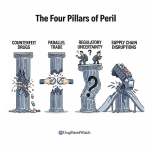
The COVID-19 pandemic laid bare the vulnerabilities of the global pharmaceutical supply chain. A significant portion of the active pharmaceutical ingredients (APIs) for both brand and generic drugs sold in the US are manufactured overseas, primarily in China and India [22].
This globalization has been a key factor in keeping generic drug costs low. However, it also introduces significant risks, including:
Geopolitical Instability: Tensions between the US and China, or regional conflicts, could disrupt the supply of critical medicines.
Quality Control Issues: The FDA has a harder time inspecting overseas facilities, leading to potential quality and safety concerns that can cause drug shortages.
National Security Concerns: There is a growing movement to “onshore” or “near-shore” the manufacturing of essential medicines to ensure a secure domestic supply.
These pressures could lead to higher manufacturing costs for generics, potentially altering the economics of price competition. A more resilient but more expensive supply chain could mean that the 90% price drops of the past become less common.
The Persistent Public and Political Scrutiny
The issue of high drug prices is not going away. It is one of the few topics with bipartisan consensus among the American public. The Inflation Reduction Act was a watershed moment, but it is unlikely to be the final word.
Future political and public pressure will likely focus on several areas:
The Role of PBMs: The “black box” of the rebate system is under intense fire. There is a growing legislative push for more transparency and for reforms that would force PBMs to pass more of the rebates they receive on to patients and health plans.
Patent System Reform: The use of “patent thickets” and “evergreening” strategies will continue to be a target for critics who argue they are an abuse of the patent system designed to stifle competition. Expect more legislative proposals aimed at curbing these practices.
Expanding Government Negotiation: The IRA’s negotiation powers are currently limited to Medicare. A future Congress could seek to expand those powers to the commercial insurance market, which would represent an even more fundamental shift in the US pricing model.
The operating environment for all pharmaceutical companies will be one of heightened scrutiny. A successful strategy will require not just scientific and commercial excellence, but also a sophisticated understanding of public policy and a proactive approach to demonstrating value and responsible citizenship.
Conclusion: Synthesizing Complexity into Actionable Strategy
The U.S. pharmaceutical market is a breathtakingly complex interplay of science, law, economics, and politics. It is a system built on a foundational, necessary tension: the need to reward high-risk innovation with a period of profitable monopoly, and the societal imperative to provide widespread, affordable access to the fruits of that innovation.
We have journeyed from the bedrock of intellectual property—the patents and exclusivities that form the innovator’s shield—to the powerful engine of generic and biosimilar competition that ensures the system ultimately serves affordability. We’ve explored the tactical chess match of brand defense strategies, from proactive lifecycle management to the high-stakes world of patent litigation and controversial settlements. We’ve navigated the opaque labyrinth of drug pricing, demystifying the roles of PBMs and rebates, and analyzed the paradigm-shifting impact of the Inflation Reduction Act.
From Data Points to Decision-Making
The central theme of our analysis is the critical importance of integrated, strategic intelligence. In this market, you cannot succeed by looking at a single piece of the puzzle in isolation.
A patent strategy is meaningless without an understanding of the regulatory exclusivities that run in parallel.
A generic launch plan is incomplete without a deep analysis of the brand’s potential defensive maneuvers, including the likelihood of an authorized generic.
A pricing strategy built on “value” is destined to fail if it ignores the practical realities of PBM formularies and the new constraints imposed by government negotiation.
A long-term R&D investment is unwise if it doesn’t account for the future competitive landscape, including next-generation therapies and shifting political winds.
Success requires a holistic view. It requires seeing the patent cliff not just as a date on a calendar, but as the culmination of dozens of strategic decisions made by both sides over the preceding decade. It means using powerful tools and analytics, like those offered by DrugPatentWatch, to transform a deluge of data into clear-sighted foresight.
The Enduring Tension and the Path Forward
The core tension between innovation and affordability will endure. There are no easy answers, and every policy change creates new, often unintended, consequences. The IRA may lower costs for seniors but could also shift R&D priorities. PBM reform may simplify the pricing chain but could alter the negotiating leverage of health plans.
For the business and pharmaceutical professionals navigating this world, the path forward is not about finding a single, simple solution. It is about embracing the complexity. It is about building organizations that are agile, data-driven, and cross-functionally fluent in the languages of science, law, and market access. It is about understanding that in the dynamic ecosystem of the US pharmaceutical market, the ability to anticipate, adapt, and execute is the most valuable asset of all.
Key Takeaways
Dual Exclusivity System: US drug monopolies are protected by two independent systems: patents (from the USPTO) and regulatory exclusivities (from the FDA). The effective monopoly period is the longer of the two. Key exclusivities include 5-year NCE, 7-year Orphan Drug, and 12-year Biologic protection.
Hatch-Waxman Act is Foundational: This 1984 law created the modern generic industry via the ANDA pathway and incentivized patent challenges with the 180-day first-to-file (FTF) exclusivity, which is the primary driver of early generic entry.
Price Erosion is Predictable but Variable: The entry of the first generic typically cuts prices by 20-30%. With multiple generics, prices can fall by over 80-90%. However, the speed and depth of this erosion are slower for complex generics and biosimilars due to higher barriers to entry.
Brand Defense is a Multi-Pronged Strategy: Innovators use proactive strategies like filing secondary patents (“patent thickets”), launching new formulations (“product hopping”), and marketing their own “authorized generics” to soften the patent cliff. Reactive strategies involve litigation, which triggers a 30-month stay, and controversial “pay-for-delay” settlements.
Net Price, Not List Price, is Reality: The true price of a brand-name drug is the net price after confidential rebates are paid to Pharmacy Benefit Managers (PBMs). This “gross-to-net” bubble obscures the true economics of the market and can create perverse incentives that favor high-list-price/high-rebate drugs.
The Inflation Reduction Act (IRA) is a Game-Changer: The IRA introduced two major changes for the Medicare market: direct price negotiation for certain high-spend drugs and inflationary rebates to penalize price hikes that outpace inflation. This represents the most significant government intervention in US drug pricing in history.
Strategic Intelligence is a Competitive Necessity: Success depends on leveraging data. Companies use services like DrugPatentWatch to track patent expirations, monitor litigation, and identify market opportunities. Integrating this IP data with clinical trial, regulatory, and market access intelligence is crucial for building a winning strategy.
The Future is Complex: The market is shifting towards specialty drugs, biologics, and complex generics. This, along with trends like personalized medicine, supply chain pressures, and persistent political scrutiny, will continue to evolve the dynamics of competition and pricing.
Frequently Asked Questions (FAQ)
1. What is the difference between a patent and FDA exclusivity, and why does it matter?
A patent is a form of intellectual property granted by the U.S. Patent and Trademark Office (USPTO) that gives the owner the right to exclude others from making, using, or selling the invention for a term of 20 years from filing. FDA exclusivity is a separate right granted by the Food and Drug Administration (FDA) upon a drug’s approval that prevents the FDA from approving a competing generic or biosimilar application for a set period (e.g., 5 years for a New Chemical Entity, 12 years for a biologic). They are independent and can run concurrently. This matters because a drug’s market protection lasts as long as the longer of the two. A drug could have its patents expire but still be protected by FDA exclusivity, or vice-versa. A comprehensive competitive analysis must track both timelines.
2. How can a generic drug be approved without conducting the same large-scale clinical trials as the brand-name drug?
The generic approval pathway, known as the Abbreviated New Drug Application (ANDA), relies on the FDA’s prior finding that the original brand-name drug (the Reference Listed Drug) is safe and effective. The generic manufacturer’s task is not to re-prove this, but to prove “sameness.” The core requirement is demonstrating bioequivalence through a scientific study. This study measures the rate and extent to which the active ingredient is absorbed into the bloodstream (C_max and AUC). If the generic’s performance is statistically equivalent to the brand’s within a pre-defined range (80-125%), it is considered therapeutically equivalent and can be substituted for the brand. This abbreviated process is what makes low-cost generics possible.
3. What is an “authorized generic” and why do brand companies launch them?
An authorized generic (AG) is the exact same drug as the brand-name product, produced by the brand manufacturer (or with their permission), but marketed as a generic. Brand companies launch AGs for strategic reasons, primarily to disrupt the market. The main goal is to neutralize the lucrative 180-day exclusivity period awarded to the first generic challenger. By launching its own AG, the brand company immediately introduces price competition for that first filer, reducing their profits and market share. It also allows the brand company to retain a portion of the generic market revenue for itself, thereby softening its own “patent cliff.”
4. The Inflation Reduction Act (IRA) allows Medicare to “negotiate” drug prices. How does this actually work, and is it really a negotiation?
The IRA authorizes the government to select a certain number of high-spend, single-source drugs covered by Medicare for price negotiation. The law establishes a “Maximum Fair Price” (MFP) ceiling, which is a percentage of the drug’s average non-federal price. This percentage gets lower the longer a drug has been on the market. The government and the manufacturer then negotiate a price that cannot exceed this ceiling. However, if a manufacturer refuses to participate or rejects the negotiated price, they face a severe excise tax, starting at 65% and rising to 95% of the drug’s US sales. Because of this steep penalty, most critics and industry participants argue it is less of a true negotiation and more of a system of government-administered pricing.
5. What is a “patent thicket,” and how does it delay biosimilar competition more than it does for small-molecule generics?
A “patent thicket” refers to the practice of obtaining a large, dense web of overlapping patents on a single product. While the core patent might cover the molecule itself, dozens or even hundreds of secondary patents can cover manufacturing processes, formulations, methods of use, and delivery devices. This strategy is particularly effective for biologics because they are incredibly complex to manufacture. A biosimilar developer not only has to avoid infringing the main patent but must also navigate this “thicket” of manufacturing and process patents. Each patent represents a potential lawsuit, making litigation incredibly expensive and risky for the biosimilar company. This legal complexity, combined with the high scientific and manufacturing barriers, is a primary reason why biosimilar competition has emerged much more slowly than traditional generic competition.
References
[1] DiMasi, J. A., Grabowski, H. G., & Hansen, R. W. (2016). Innovation in the pharmaceutical industry: New estimates of R&D costs. Journal of Health Economics, 47, 20–33.
[2] U.S. Patent and Trademark Office. (n.d.). Patent Term Extension. Retrieved from USPTO.gov.
[3] U.S. Food and Drug Administration. (2019). Hatch-Waxman Letters. Retrieved from FDA.gov.
[4] U.S. Food and Drug Administration. (2018). Orphan Drug Act – Relevant Excerpts. Retrieved from FDA.gov.
[5] U.S. Food and Drug Administration. (2023). Pediatric Exclusivity Provision. Retrieved from FDA.gov.
[6] U.S. Food and Drug Administration. (2017). Biosimilar and Interchangeable Products. Retrieved from FDA.gov.
[7] Association for Accessible Medicines. (2024). 2024 Generic Drug & Biosimilars Access & Savings in the U.S. Report. AAM.
[8] U.S. Food and Drug Administration. (2021). Bioavailability and Bioequivalence Studies Submitted in NDAs or INDs — General Considerations. Guidance for Industry.
[9] Greene, J. A., & Kesselheim, A. S. (2011). Why do the same drugs cost so much more in the United States? JAMA, 305(23), 2429–2430. (Note: Specific sales data post-2011 cliff compiled from various financial reports and industry analyses).
[10] McCamish, M., & Woollett, G. (2013). Worldwide experience with biosimilar development. mAbs, 3(2), 209-217.
[11] IQVIA Institute for Human Data Science. (2022). Biosimilars in the United States: The Evolving Landscape.
[12] I-MAK (Initiative for Medicines, Access & Knowledge). (2021). Overpatented, Overpriced: How Excessive Patenting on Humira and Other Bestselling Drugs Is Harming Public Health.
[13] Carrier, M. A., & Shadowen, S. C. (2017). Product Hopping: A New Framework. Notre Dame Law Review, 92(1), 167-213.
[14] Federal Trade Commission v. Actavis, Inc., 570 U.S. 136 (2013).
[15] Stempel, J. (2013). Teva, Sun to pay Pfizer $2.15 billion in patent case. Reuters.
[16] Drug Channels Institute. (2023). The Top Pharmacy Benefit Managers (PBMs) of 2022.
[17] Wineinger, N. E., et al. (2019). The Substantial Gap Between Insured and Uninsured Patient Drug Costs: A Cross-Sectional Analysis of Retail Pharmacy Prices for Brand-Name Drugs. JAMA Internal Medicine, 179(10), 1433-1435.
[18] IQVIA Institute for Human Data Science. (2023). The Use of Medicines in the U.S. 2023: Usage and Spending Trends and Outlook to 2027.
[19] The White House. (2022). Inflation Reduction Act Guidebook.
[20] KFF. (2023). Prices for 48 Prescription Drugs Rose Faster Than Inflation in the First Year of the Inflation Reduction Act’s Inflation Rebate Program.
[21] Kesselheim, A. S., & Gagne, J. J. (2014). Strategies for today’s industry: citizen petitions and the FDA. New England Journal of Medicine, 370(23), 2161–2163.
[22] U.S. Government Accountability Office. (2021). Drug Supply Chain: FDA’s Overarching Data Strategy Needed to Help Identify and Mitigate Risks. GAO-21-309.