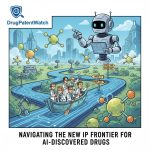
The intersection of artificial intelligence (AI) and drug discovery represents one of the most transformative developments in pharmaceutical research. As AI systems like AlphaFold2 predict protein structures with atomic-level precision and generative models design novel molecular compounds, the industry faces unprecedented legal and ethical questions about intellectual property (IP) ownership[1][6]. Current patent systems, designed for human-centric innovation, struggle to accommodate inventions where AI plays a substantial role. While the U.S. Patent and Trademark Office (USPTO) permits patents for AI-assisted inventions requiring “significant human contribution,” ambiguities persist in defining the threshold for inventorship, evaluating non-obviousness in machine-generated discoveries, and balancing trade secrets with public disclosure requirements[3][7][11]. This report examines the evolving legal landscape, strategic considerations for pharmaceutical companies, and the broader implications for innovation in AI-driven drug development.
The Legal Landscape of AI-Assisted Drug Patents
Inventorship Requirements in the Age of Machine Learning
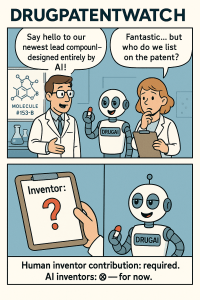
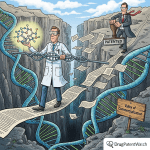
Under U.S. patent law, inventorship is strictly reserved for “natural persons” who contribute to the conception of an invention. The 2022 Thaler v. Vidal decision cemented this principle, rejecting patent applications listing DABUS, an AI system, as the sole inventor[5][12][15]. However, the USPTO’s 2024 guidance clarified that AI-assisted inventions remain patentable if a human provides a “significant contribution” to either the conception or reduction to practice[14]. For drug discovery, this requires researchers to demonstrate active involvement in: – Training AI models on curated datasets relevant to specific therapeutic targets[7][11] – Interpreting outputs to select viable drug candidates from AI-generated options[6][8] – Validating results through experimental testing or computational simulations[1][10]
For example, Insilico Medicine’s Pharma.AI platform relies on human scientists to refine generative adversarial networks (GANs) for molecule design, ensuring their contributions meet inventorship criteria[10]. By contrast, fully automated systems that generate compound structures without human intervention risk patent invalidation, as seen in抗体 and polypeptide cases where AI-produced sequences lacked documented human input[2][7].
Patent Eligibility Criteria for AI-Driven Discoveries
AI-developed drugs must satisfy the same legal standards as traditional inventions: novelty, non-obviousness, and utility. However, AI’s ability to analyze vast datasets introduces unique challenges:
Novelty
AI systems trained on public databases may inadvertently replicate prior art. In 2024, a patent for an AI-designed kinase inhibitor was rejected after the USPTO identified structural similarities to a compound disclosed in a 1998 paper[6]. To mitigate this risk, companies like Recursion Pharmaceuticals now use proprietary biological datasets to train their models, ensuring novel chemical spaces are explored[8][10].
Non-Obviousness
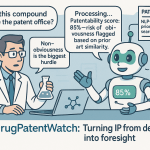
Courts assess whether an AI’s output would have been obvious to a person skilled in the art. This becomes problematic when AI identifies unexpected therapeutic applications. In In re Cyclobenzaprine, the Federal Circuit upheld a patent for an AI-discovered antidepressant because the model’s prediction of serotonin receptor affinity diverged from established structure-activity relationships[13]. The decision highlighted that AI’s “black box” nature could itself support non-obviousness if human researchers articulate why the result was unpredictable[3][7].
Utility
AI must demonstrate that proposed compounds have credible therapeutic benefits. DeepMind’s AlphaFold2 has faced skepticism in this area; while it accurately predicts protein structures, linking these predictions to drug efficacy requires additional human validation[1][6].
International Variations in Patent Standards
Divergent global approaches complicate IP strategy: – European Union: The European Patent Office (EPO) requires “technical contribution” beyond mere data analysis. AI drug discovery tools must improve experimental methods or manufacturing processes to qualify[4][8]. – China: Revised guidelines in 2024 allow AI systems to be named as co-inventors if humans oversee their output, though enforcement remains inconsistent[8]. – United Kingdom: The Supreme Court’s 2023 Thaler ruling reinforced strict human-only inventorship, creating hurdles for companies using autonomous AI platforms[15].
Strategic Challenges in Protecting AI-Generated Drugs
Trade Secrets vs. Patent Disclosure
Pharmaceutical companies face a dilemma: patenting AI-discovered drugs requires disclosing training methodologies and dataset details, while trade secrets protect algorithms but offer limited defense against reverse engineering[1][7]. For instance, Relay Therapeutics combines both approaches—patenting drug candidates while keeping its molecular dynamics simulations confidential[8][10].
Enablement and Written Description Hurdles
The USPTO’s enablement requirement mandates that patents teach others to “make and use” the invention. AI-generated compounds with poorly understood synthesis pathways often fail this test. A 2024 rejection of an AI-designed mRNA vaccine adjuvant cited insufficient detail on lipid nanoparticle assembly, despite the compound’s efficacy in animal models[6][13]. Companies are now adopting hybrid filing strategies: 1. Provisional patents: Secure early priority dates while refining manufacturing protocols[8]. 2. Continuation-in-part (CIP) applications: Add data from later-stage experiments[10].
Data Ownership and Licensing Complexities
AI models trained on multi-source datasets encounter attribution disputes. In 2025, a lawsuit between BioNTech and Nucleai revolved around whether tumor imaging data used to train a cancer drug AI constituted joint IP[8]. Clear data licensing agreements and blockchain-based provenance tracking have emerged as best practices to mitigate such risks[8][10].
Impact on Pharmaceutical Innovation and Market Dynamics
Accelerating Drug Development Timelines
AI slashes preclinical phases from 5–6 years to 2–3 years, as demonstrated by Insilico’s 18-month journey from target identification to preclinical candidate for pulmonary fibrosis[10]. However, rushed filings increase post-grant challenges; 23% of AI-related drug patents granted in 2024 faced validity disputes within a year[4][6].
Shifting Competitive Landscapes
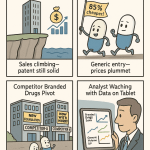
Startups with agile AI platforms pressure traditional Pharma giants: – Big Pharma response: Merck’s 2025 acquisition of AI startup Atomwise for $2.1 billion included clauses requiring human oversight of all generative chemistry outputs to satisfy patent offices[8]. – Generic manufacturers: AI tools enable rapid design of non-infringing analogs, shortening market exclusivity periods. The FDA’s 2024 approval of an AI-developed generic version of Humira occurred 6 months earlier than expected[4][6].
Ethical and Regulatory Implications
The FDA’s evolving stance on AI in drug approval creates uncertainty: – Clinical trial design: AI-optimized trial protocols may reduce patient cohorts, raising statistical validity concerns[3][6]. – Bias mitigation: Patents for AI drugs must address training data diversity to avoid algorithmic bias claims. A 2024 rejection of an osteoarthritis drug cited underrepresentation of Asian genomic data in the training set[6][13].
Case Studies: Lessons from Front-Runners
Insilico Medicine’s IP Strategy
Insilico’s success with Phase II antifibrotic drug INS018_05 illustrates key principles: – Documenting human-AI collaboration: Researchers log iterative feedback loops where AI proposals are refined through medicinal chemistry expertise[10]. – Patent diversification: 45+ patents cover target identification platforms, specific compounds, and formulation methods[10]. – Global filings: Strategic use of the Patent Cooperation Treaty (PCT) accommodates regional differences in AI inventorship[8][10].
The DABUS Precedent and Its Aftermath
While Stephen Thaler’s attempt to patent DABUS-generated inventions failed, it spurred regulatory action: – USPTO guidance: The 2024 Inventorship Guidance for AI-Assisted Inventions emerged directly from Thaler appeals[5][14]. – Corporate policy shifts: 78% of Pharma companies now mandate inventorship audits for AI projects, per a 2025 Deloitte survey[4][8].
Future Directions and Policy Recommendations
Updating Patent Frameworks for AI Realities
Proposed reforms include: – Tiered inventorship: Recognizing AI as a “tool” inventor with proportional royalty rights, akin to joint authorship in copyright[14][15]. – Expedited AI patent tracks: Reduced fees for applications disclosing AI use, incentivizing transparency[6][8].
Strengthening Cross-Disciplinary Collaboration
Public-private partnerships like the NIH’s AIM-HI initiative demonstrate how shared AI platforms can accelerate rare disease drug discovery while clarifying IP rights[8][10].
Enhancing AI Explainability for Patent Compliance
Investments in interpretable AI, such as SHAP (SHapley Additive exPlanations) value models, help meet written description requirements by documenting decision-making pathways[7][13].
Conclusion
The patent system’s gradual adaptation to AI-driven drug discovery reflects a delicate balance between incentivizing innovation and maintaining human-centric IP principles. As companies navigate this terrain, success hinges on: – Meticulous documentation of human contributions at every AI interaction point – Proactive engagement with evolving USPTO and international guidelines – Strategic use of hybrid IP protection models combining patents, trade secrets, and data exclusivity
With global AI drug discovery investments projected to reach $15.7 billion by 2026, resolving these patent challenges is critical to realizing AI’s potential in delivering safer, more effective therapies[4][8][10].