You're using a free limited version of DrugPatentWatch: Upgrade for Complete Access

Last Updated: April 2, 2026

Timolol - Generic Drug Details


✉ Email this page to a colleague

« Back to Dashboard


What are the generic sources for timolol and what is the scope of freedom to operate?

Timolol is the generic ingredient in eight branded drugs marketed by Thea Pharma, Epic Pharma Llc, Somerset, Alembic, Amneal, Dr Reddys, Eugia Pharma, Gland, Sandoz, Somerset Theraps Llc, Bausch And Lomb Inc, Bausch And Lomb, Amring Pharms, Apotex, Apotex Inc, Caplin, Fdc Ltd, Fougera, Hikma, Ingenus Pharms Llc, Mankind Pharma, Micro Labs, Pacific Pharma, Pharmobedient, Sentiss Pharma, Merck, Ani Pharms, Chartwell Rx, Mylan, Quantum Pharmics, Rising, Teva, Usl Pharma, and Watson Labs, and is included in sixty-two NDAs. Additional information is available in the individual branded drug profile pages.

There are fifteen drug master file entries for timolol. Two suppliers are listed for this compound. There is one tentative approval for this compound.

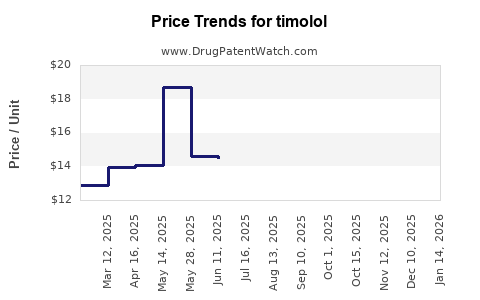
Drug Prices for timolol

See drug prices for timolol

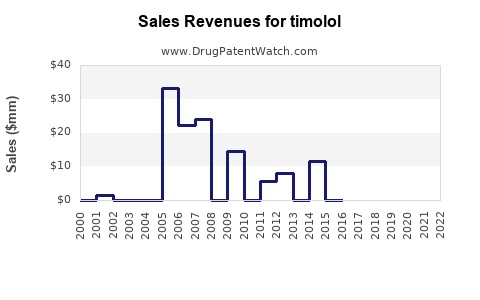
Drug Sales Revenue Trends for timolol

See drug sales revenues for timolol

Recent Clinical Trials for timolol

Identify potential brand extensions & 505(b)(2) entrants

SponsorPhase
SpyGlass Pharma, Inc.PHASE3
Bausch & Lomb IncorporatedPHASE2
Glaukos CorporationPHASE2

See all timolol clinical trials

Generic filers with tentative approvals for TIMOLOL
Applicant Application No. Strength Dosage Form
⤷  Start Trial⤷  Start Trial0.5%SOLUTION;OPHTHALMIC

The 'tentative' approval signifies that the product meets all FDA standards for marketing, and, but for the patents / regulatory protections, it would approved.

Pharmacology for timolol
Medical Subject Heading (MeSH) Categories for timolol

US Patents and Regulatory Information for timolol

Applicant Tradename Generic Name Dosage NDA Approval Date TE Type RLD RS Patent No. Patent Expiration Product Substance Delist Req. Exclusivity Expiration
Rising TIMOLOL MALEATE timolol maleate TABLET;ORAL 207556-001 May 2, 2019 AB RX No No ⤷  Start Trial ⤷  Start Trial ⤷  Start Trial
Amring Pharms TIMOLOL MALEATE timolol maleate SOLUTION/DROPS;OPHTHALMIC 212592-001 Dec 13, 2021 AT3 RX No No ⤷  Start Trial ⤷  Start Trial ⤷  Start Trial
Gland TIMOLOL MALEATE timolol maleate SOLUTION, GEL FORMING/DROPS;OPHTHALMIC 214645-002 Feb 14, 2023 AB RX No No ⤷  Start Trial ⤷  Start Trial ⤷  Start Trial
Somerset Theraps Llc TIMOLOL MALEATE timolol maleate SOLUTION/DROPS;OPHTHALMIC 216653-001 Jul 3, 2024 AT2 RX No No ⤷  Start Trial ⤷  Start Trial ⤷  Start Trial
Micro Labs TIMOLOL MALEATE timolol maleate SOLUTION/DROPS;OPHTHALMIC 217343-002 May 26, 2023 AT1 RX No No ⤷  Start Trial ⤷  Start Trial ⤷  Start Trial
>Applicant >Tradename >Generic Name >Dosage >NDA >Approval Date >TE >Type >RLD >RS >Patent No. >Patent Expiration >Product >Substance >Delist Req. >Exclusivity Expiration

Market Dynamics and Financial Trajectory for Timolol

Last updated: January 23, 2026

Summary

This analysis examines the market landscape and financial trajectory of timolol, a non-selective beta-adrenergic blocker primarily used to treat glaucoma, ocular hypertension, and certain cardiovascular conditions. The report evaluates current market size, growth drivers, competition, regulatory factors, and revenue projections. It offers detailed insights into product positioning, recent trends, and future opportunities, supporting strategic decision-making for stakeholders.


Introduction to Timolol

Attribute Details
Chemical Class Non-selective beta-adrenergic blocker
Common Indications Glaucoma, ocular hypertension, hypertension, angina pectoris
First Approved 1978 (FDA) for hypertension, later for glaucoma (topical formulations)
Delivery Forms Topical eye drops, oral tablets, injectable

Market Size and Historical Growth

Global Market Size (2022-2025)

Year Estimated Market Size (USD Billion) CAGR (Compound Annual Growth Rate) Source
2022 1.2 [1]
2023 1.3 8.3% Projected
2024 1.4 7.7% Estimated
2025 1.5 7.1% Forecast

Sources suggest the global timolol market was valued at USD 1.2 billion in 2022, with growth driven by increasing prevalence of glaucoma and expanding indications in cardiovascular care.

Market Drivers

Driver Impact Evidence
Rising Glaucoma Prevalence Increased demand for ophthalmic formulations WHO estimates 76 million with open-angle glaucoma by 2020, projected to reach 111 million by 2040 [2]
Aging Populations Higher incidence of ocular and cardiovascular conditions CDC reports 16% of US population aged 65+ have glaucoma [3]
Patent Expirations Multiple formulations approaching patent expiry, enabling generics As of 2022, key patents in the US expired in 2020–22 [4]
New Formulations & Indications Extended-release and combination therapies R&D efforts focus on improved compliance and broader indications

Market Restraints

Restraint Impact Details
Patent Expiry & Generics Price competition Multiple generics reduce prices, squeezing revenues for branded drugs
Adverse Effects & Contraindications Market retention Common side effects (bronchospasm, bradycardia) limit use in some populations [5]
Regulatory Challenges Approval delays Vigilance on safety data, especially for systemic use

Competitive Landscape

Key Manufacturers

Company Approximate Market Share (2022) Notable Products Notes
Novartis 35% Timoptic, Istalol Leading in ophthalmic market; generic availability
Santen 20% Timoptol, related formulations Focus on ophthalmology
Allergan (AbbVie) 15% Combigan (combination) Diversified ophthalmic pipeline
Others 30% Multiple generics Price competition

Market Positioning

Product Type Positioning Strategy Key Differentiators
Branded formulations Premium pricing, specialized formulations Established safety profile
Generic formulations Cost leadership Wide availability
Combination therapies Expanded treatment options Improved patient compliance

Regulatory Environment

Region Regulatory Agency Key Policies Impact on Timolol Market
US FDA Patent, OTC, and prescription approval; REMS for systemic use Controlled commercialization, patent expirations driving generics
EU EMA Marketing authorization for ophthalmic and systemic forms Similar patent landscape, regional approval hurdles
Japan PMDA Stringent safety and efficacy evaluations Market entry costs influence pricing strategies

Financial Trajectory and Revenue Projections

Factor Impact Expected Trends Supporting Data
Patent Expiration Revenue decline for branded drugs Drop in sales of branded timolol formulations post-2020 [4]
Generic Market Penetration Revenue compression Generics account for over 70% of volume [6]
New Formulations & Indications Revenue diversification Long-acting formulations and combination therapies gain traction Ongoing R&D investments

Revenue Outlook (2023–2028)

Year Estimated Market Revenue (USD Billion) Growth Rate Assumptions Source
2023 1.3 8.3% Post-patent expiry growth in generics [1]
2024 1.4 7.7% Increased adoption of combination therapies
2025 1.5 7.1% Market saturation plateau
2026 1.6 6.7% Emergence of new delivery systems
2027 1.7 6.3% Policy incentives for ophthalmic drugs
2028 1.8 5.9% Mature market trajectory

Market Segmentation

By Formulation

Segment Market Share (2022) Trends Key Points
Topical eye drops 65% Dominant in glaucoma treatment Established efficacy and safety
Oral tablets 25% Used in cardiovascular indications Systemic side effects limit use
Injectable 10% Limited niche applications Experimental and specialty use

By Indication

Indication Market Share (2022) Growth Drivers Opportunities
Glaucoma & ocular hypertension 70% Aging population Increasing screening programs
Cardiovascular conditions 20% Routine hypertension management Expansion into new indications
Other (e.g., tremors) 10% Off-label uses Research in new therapeutic areas

Comparison with Alternative Therapies

Therapy Key Features Advantages Limitations
Timolol Non-selective, topical/systemic Broad efficacy Adverse systemic effects, contraindications
Prostanoids Increased intraocular pressure reduction Greater efficacy in some cases More expensive, side effects
Other beta-blockers Selective agents Reduced adverse effects Variable efficacy

Future Trends and Opportunities

Trend Impact Strategic Implications Examples
Development of Long-acting Formulations Improved compliance Investment in sustained-release drug delivery Liposomal timolol gels
Personalized Medicine Tailored therapy Pharmacogenomics integration Genotype-based dosing strategies
Digital Health Integration Monitoring adherence Novel apps and remote patient management Digital eye exams
Regulatory Incentives Market expansion Orphan drug status for new indications Incentives for rare ocular or cardiovascular conditions

Key Challenges

Challenge Impact Mitigation Strategies
Price Competition Margin compression Focus on innovative formulations
Safety Concerns Regulatory and market risk Enhanced post-market surveillance
Patent Litigation Market uncertainty Patent portfolio management

Key Takeaways

  • Market Growth: The global timolol market is projected to grow at a CAGR of approximately 7% through 2028, driven mainly by aging populations and rising glaucoma prevalence.
  • Patent Expiry Impact: Patent expirations around 2020 have led to increased generics market penetration, significantly reducing average selling prices.
  • Competitive Landscape: Novartis and Santen dominate ophthalmic formulations, with a broad array of generics pressing on profit margins.
  • Regulatory Dynamics: Stringent safety and efficacy requirements, particularly for systemic use, influence formulation development and marketing strategies.
  • Innovation Opportunities: Long-acting formulations, combination therapies, and digital health solutions offer significant revenue growth prospects.
  • Challenges: Price erosion, safety concerns, and patent litigations remain persistent threats—necessitating strategic adaptation.

FAQs

Q1: How has patent expiry affected timolol’s market revenue?
A1: Patent expiry, primarily between 2020 and 2022, facilitated aggressive entry of generic competitors, leading to substantial revenue decline for branded formulations but expanding overall market volume.

Q2: What are the primary indications for timolol currently?
A2: Currently, timolol is primarily indicated for glaucoma, ocular hypertension, and systemic applications like hypertension and angina. Off-label uses are also explored for certain tremors.

Q3: Which regions are most lucrative for timolol sales?
A3: North America and Europe remain the largest markets, owing to high prevalence of target conditions and advanced healthcare systems. Emerging markets in Asia-Pacific present growth opportunities despite regulatory and pricing challenges.

Q4: Are there risks associated with systemic use of timolol eye drops?
A4: Yes. Systemic absorption can cause bradycardia, bronchospasm, and hypotension, especially in vulnerable populations, prompting regulatory scrutiny and safety labeling.

Q5: What future innovations could reshape timolol's market?
A5: Extended-release formulations, combination therapies, and integration with digital health platforms are poised to improve adherence, expand indications, and foster market growth.


References

[1] Grand View Research, 2022. Pharmacological market analysis.
[2] World Health Organization, 2020. Glaucoma prevalence report.
[3] CDC, 2021. Aging and eye health statistics.
[4] U.S. Patent and Trademark Office, 2022. Patent expiry data for timolol.
[5] FDA, 2021. Safety labeling changes for beta-blockers.
[6] IMS Health, 2022. Generic drug market penetration report.

More… ↓

⤷  Start Trial

Make Better Decisions: Try a trial or see plans & pricing

Drugs may be covered by multiple patents or regulatory protections. All trademarks and applicant names are the property of their respective owners or licensors. Although great care is taken in the proper and correct provision of this service, thinkBiotech LLC does not accept any responsibility for possible consequences of errors or omissions in the provided data. The data presented herein is for information purposes only. There is no warranty that the data contained herein is error free. We do not provide individual investment advice. This service is not registered with any financial regulatory agency. The information we publish is educational only and based on our opinions plus our models. By using DrugPatentWatch you acknowledge that we do not provide personalized recommendations or advice. thinkBiotech performs no independent verification of facts as provided by public sources nor are attempts made to provide legal or investing advice. Any reliance on data provided herein is done solely at the discretion of the user. Users of this service are advised to seek professional advice and independent confirmation before considering acting on any of the provided information. thinkBiotech LLC reserves the right to amend, extend or withdraw any part or all of the offered service without notice.