The FDA approved Keytruda Qlex on September 19, 2025. [12] Merck lists the US expiry year of the original Keytruda patent protection as 2028. [14] Merck lists the US expiry year for Keytruda Qlex as 2043. [14] The gap is 15 years (our calculation). Both products contain the same antibody, pembrolizumab. The new product changes the route of administration and adds an enzyme. [12]
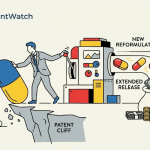
Most teams file a reformulation under R&D. The stated goals are convenience, adherence and patient comfort. The patent record shows a second effect. A reformulation changes which patents protect the revenue and when those patents expire. It also changes the date on which a generic or biosimilar competitor can reach the same patient.
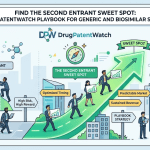
This article tests that claim against five documented cases: Namenda XR, Doryx, Suboxone film, Keytruda Qlex and Opdivo Qvantig. We add the statutory rules that set the clock, two recent Orange Book events, and a revenue model with stated assumptions. We separate documented facts from our own analysis throughout.
The Short Answer: When Is a Reformulation a Patent-Timing Decision?
Is a reformulation an R&D decision or a patent-timing decision?
It is both, but the timing decision has the larger effect on revenue. A new formulation is only worth the patents and exclusivity that protect it, and only for the patients who convert before the original product loses exclusivity. The science sets what is possible. The calendar sets what is useful.
The Seven Findings That Matter
Keytruda Qlex reached approval about 2.3 to 3.3 years before the 2028 US expiry year that Merck reports for Keytruda. This range is our calculation from the approval date [12] and the company-reported expiry year [14].
Merck reports a US expiry year of 2043 for Keytruda Qlex. Bristol Myers Squibb reports a US minimum market exclusivity date of 2028 for Opdivo Qvantig, the same year as Opdivo. [14][15] Two subcutaneous PD-1 products carry different reported protection dates.
Forest Laboratories announced the Namenda IR withdrawal on February 14, 2014. Generic Namenda IR entry was expected on July 11, 2015. [1] That is 512 days (our calculation).
The Second Circuit upheld an injunction against the Namenda “hard switch” on May 22, 2015, 50 days before the expected generic date (our calculation from [1]).
The Third Circuit reached the opposite result for Doryx on September 28, 2016. Generic versions were already on the market, and Warner Chilcott did not face a patent cliff. [11]
Merck expects 30% to 40% of Keytruda uses to move to the subcutaneous form within about 18 months to two years. [20] This conversion time leaves 0.3 to 1.8 years of slack inside the Keytruda lead time (our calculation).
The Federal Circuit held on December 20, 2024 that patents claiming only device components do not qualify for Orange Book listing. [6] The FTC then challenged more than 200 listings in May 2025. [7]
“$31.7 Billion (7% Growth Both Nominally and ex-FX).”
Merck & Co., describing full-year 2025 sales of Keytruda and Keytruda Qlex combined. [13]
That sales figure is the exposure. The Keytruda family earned $31.7 billion in 2025, and the company reports a 2028 US date for the original product. [13][14] Any conversion plan has to finish before that date.
Methodology: What We Analyzed and How
Which records are in the data set?
We included reformulation events that meet three tests. The event changed the dosage form, the route of administration or the delivery method of an approved active ingredient. The patent or exclusivity timing is public. A court, an agency or a company filing documents the event.
Five cases passed: Namenda XR (memantine), Doryx (doxycycline hyclate), Suboxone film (buprenorphine and naloxone), Keytruda Qlex (pembrolizumab and berahyaluronidase alfa) and Opdivo Qvantig (nivolumab and hyaluronidase-nvhy). We counted each product once. We treated the original and the reformulated product as separate records.
How did we calculate the figures?
We calculated day counts as calendar differences between two documented dates. Where a source gives only a year, we set the lower bound at January 1 and the upper bound at December 31 of that year. We report the resulting range. We label every calculated figure as our calculation or as analysis.
The period covered runs from the Namenda IR launch in January 2004 [1] to court and PTAB events in May 2026 [18].
What are the limits of this analysis?
Five limits apply. The sample is small and not random. Several expiry dates are company-reported “estimated minimum market exclusivity” years, not patent-by-patent calculations. [15] For the older cases we used law-firm summaries of court opinions, not the opinions themselves. We did not recompute patent counts from the FDA Orange Book data files for this article. Biologics follow a different statute and appear in the FDA Purple Book, so the Hatch-Waxman rules below do not govern Keytruda Qlex or Opdivo Qvantig directly.
Definitions and the Reformulation Clock Framework
What is a product hop?
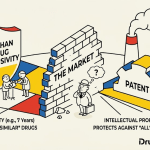
In this article, a product hop means a brand company moves patients from one version of a drug to a new version that has different patent or exclusivity protection. The move can happen before, during or after generic entry for the old version.
What is the difference between a hard switch and a soft switch?
In a hard switch, the company removes the old version from the market. In a soft switch, the old version stays available and the company promotes the new one. These are our working definitions. Courts have treated the two forms differently. [1][11]
The Reformulation Clock: an original framework
The Reformulation Clock is our own framework. It is not an established industry classification. It reduces a reformulation decision to three dates and one rule.
The three dates
T(LOE) is the date on which generic or biosimilar competition can enter against the original product. T(approve) is the date on which the new formulation gains approval. T(convert) is the time the company needs to move enough patients to the new product.
The decision rule
The rule is simple: T(approve) plus T(convert) plus any time lost to disputes must be earlier than T(LOE). If the sum is later, the reformulation protects fewer patients than planned. The scenario analysis below tests this rule with numbers.
Three timing archetypes (original classification)
We sort the five cases into three archetypes. Archetype A is a hard switch before LOE: Namenda IR to XR, and Suboxone tablets to film (as alleged). Archetype B is a soft switch before LOE: Keytruda to Keytruda Qlex, and Opdivo to Opdivo Qvantig. Archetype C is a series of variants after generic entry: Doryx. Each archetype carries a different legal risk. The product-hop section below explains why.
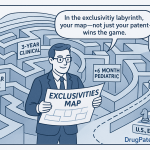
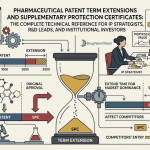
How Exclusivity and Patent Terms Set the Clock
How long does exclusivity last for a new formulation?
Three years, when the application contains new clinical investigations that were essential to approval. The FDA regulation says it “will not approve a 505(b)(2) application or an ANDA for the conditions of approval of the NDA” for “a period of 3 years after the date of approval of the application.” [2]
Five-year NCE exclusivity versus three-year exclusivity
New chemical entity exclusivity lasts five years from approval of the first NDA for an active moiety. The period drops to four years if the generic application includes a patent challenge. [2] A reformulation of an approved active moiety cannot earn a new five-year period. It can earn the three-year period, and only if it relies on new clinical investigations.
What does the three-year period block?
It blocks approval of a 505(b)(2) application or an ANDA for the conditions of approval of that NDA. [2] It does not block a competitor from selling the original product. The three-year period is short. Namenda XR gained approval in June 2010 and launched in July 2013. [1] The three-year period therefore ended close to the launch date (our calculation).
How does patent term extension work?
Patent term extension (PTE) gives back part of the time a product spent in regulatory review. The statute adds one-half of the testing phase and the full approval phase. It caps the extension at five years. It also caps the total remaining term after approval at 14 years. [3] Only one patent can be extended for the same regulatory review period of a product. [3]
This rule matters for reformulations. The extension attaches to a single patent for a single review period. Later formulation patents depend on their own terms. The ICIJ reports that primary patents typically last 20 years from the filing date. [22] A patent filed years after the compound patent can therefore expire years after it.
How does the 30-month stay change the timing?
A timely infringement suit lets the FDA hold effective approval until a 30-month period ends. The suit must come within 45 days after the brand company receives the paragraph IV notice. [4] A listed formulation patent can therefore delay a competitor even when the compound patent has expired. The Orange Book listing is the entry point. The Orange Book section below covers recent limits on listing.
What does pediatric exclusivity add?
It adds six months to all existing patents and exclusivity. It does not stand alone. It attaches to existing protection. [5] A brand team can therefore add six months to the clock for each protected feature, if the product qualifies.
Namenda XR: The Timeline That Defined the Hard Switch
What did the Second Circuit decide in New York v. Actavis?
The Second Circuit upheld a preliminary injunction. It found that the hard switch would likely violate Section 2 of the Sherman Act. [1] The court wrote that “neither product withdrawal nor product improvement alone is anticompetitive.” [1] It then found that combining the withdrawal with other conduct coerced patients and impeded competition. [1]
The court also rejected the patent defense. It reasoned that the combination of withdrawal and introduction fell outside the scope of the patent rights. [1] Forest had to keep Namenda IR on the market until generic entry in July 2015. [1]
What do the Namenda numbers show?
The documented dates support three calculations. All three are our analysis.
512 days from announcement to generic entry
Forest announced the withdrawal on February 14, 2014. Generic entry was expected on July 11, 2015. [1] The gap is 512 days. The planned discontinuation in August 2014 fell about six months after the announcement and about 11 months before generic entry.
The company chose its announcement date inside a window that was shorter than two years. The decision was a calendar decision. The formulation had existed since 2010. [1]
The size of the prize
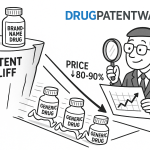
The Namenda record projected that generic entry would cut Forest’s share of the immediate-release market by more than 80% within six months. [1] Newly issued patents on Namenda XR blocked generic XR entry until 2029 as of that case. [1] The XR patent horizon therefore sat 14 years beyond the July 2015 date for generic IR (our calculation). The reformulation moved the revenue from a product with a fixed end date to a product with a later one.
What happened to generic Namenda XR?
FDAnews reported a settlement under which Amneal could market generic Namenda XR from January 31, 2020, pending FDA approval. [23] That date is nine years before the 2029 horizon that the Namenda court record described. [1][23] The settlement date shows that a patent horizon is a negotiating position. It is not a fixed outcome.
Hard Switch vs. Soft Switch: What Courts Decided in Namenda, Doryx and Suboxone
Why did the Third Circuit reach a different result for Doryx?
The Third Circuit affirmed dismissal of the Doryx claim on September 28, 2016. Warner Chilcott sold Doryx, a delayed-release doxycycline hyclate product for acne. Mylan alleged four sequential changes, from capsules to tablets and then to differently scored tablets. [11]
The court found three facts decisive. Generic manufacturers had entered the market before the challenged conduct. Warner Chilcott did not face a patent cliff. The district court had defined the market as all oral tetracyclines for acne, where Warner Chilcott held an 18% share. [11] The court distinguished Namenda as an attempt “by stringing together new periods of patent exclusivity in order to completely bar generics from entering the market.” [11]
Suboxone film: tablet withdrawal, class certification and the FTC settlement
The Suboxone case is an alleged hard switch. The FTC alleges that Reckitt and Indivior developed a dissolvable oral film before generic Suboxone tablets became available and worked to shift prescriptions to it. [9] The FTC also alleges that the company misrepresented the film as safer than tablets because children were less likely to be exposed accidentally. [9]
Direct purchasers brought a class action in the Eastern District of Pennsylvania. Judge Mitchell S. Goldberg certified the class on September 26, 2019. The class period runs from January 1, 2012 through March 14, 2013. The plaintiffs allege “baseless citizen petitions” filed with the FDA. [10]
In the FTC case (Civil Action No. 20-cv-00036, W.D. Va.), Reckitt Benckiser Group plc agreed to pay $50 million. Indivior agreed to pay another $10 million to consumers. The page dates the settlement to July 2020. [9] These are allegations and settlement terms. They are not findings of liability.
Our reading of the table: the closer a product change sits to a generic entry date, and the more it removes patient choice, the greater the legal risk. This reading is analysis. The two appellate courts decided different records.
Keytruda Qlex vs. Opdivo Qvantig: Subcutaneous PD-1 Patent Timelines
What did the FDA approve, and how is Keytruda Qlex given?
The FDA approved Keytruda Qlex (pembrolizumab and berahyaluronidase alfa) on September 19, 2025. [12] A health care provider injects it under the skin of the thigh or abdomen. The injection takes one minute every three weeks (2.4 mL) or two minutes every six weeks (4.8 mL). Merck compares this with a 30-minute IV infusion. [12]
Alteogen developed and manufactures the enzyme, berahyaluronidase alfa. [12] The main study was Phase 3 trial 3475A-D77 (NCT05722015). It randomized 251 patients to the subcutaneous form and 126 to IV pembrolizumab in metastatic NSCLC. The primary outcome was drug exposure, not survival. [12]
The confirmed objective response rate was 45% (95% CI 39 to 52) for the subcutaneous arm and 42% (95% CI 33 to 51) for the IV arm. [12] Merck’s release does not state numeric exposure values. [12]
Keytruda Qlex patent expiry vs. Keytruda: 2043 vs. 2028
Merck’s FY2025 Form 10-K lists a US date of 2028 for Keytruda. A footnote says the compound patent family contains two additional patents that expire in 2029. Merck says it expects those patents to face litigation in the future. [14]
The same table lists Keytruda Qlex with a US date of 2043. A footnote to the Qlex entry states that a patent application is pending which, if granted, would expire in 2040. [14] The US difference is 15 years (our calculation).
Sales context
Keytruda sold $31,641 million in 2025. Keytruda Qlex added $40 million. [13] Qlex therefore made up about 0.13% of the combined figure (our calculation). Qlex sales were $35 million in the fourth quarter. [13] The product was only beginning to move patients when 2025 ended.
Analyst expectations for 2028
BioPharma Dive cited Evaluate consensus forecasts. They show original Keytruda at about $28.5 billion in 2028, down from about $32.6 billion in 2027. They show Keytruda Qlex at about $4.3 billion in 2028, for a total of about $32.7 billion. [19] These are forecasts, not reported results. From these figures we calculate that original Keytruda falls 12.6% from 2027 to 2028, and that Qlex makes up 13% of the 2028 total.
Opdivo Qvantig: the same 2028 date
The FDA approved Opdivo Qvantig (nivolumab and hyaluronidase-nvhy) on December 27, 2024. [16] Bristol Myers Squibb’s FY2025 Form 10-K lists a US estimated minimum market exclusivity date of 2028 for Opdivo. [15] It lists the same US date for Opdivo Qvantig, based on “the expiry of the COM patent for nivolumab.” [15]
What BMS reports
The BMS footnote says the Qvantig dates do not include any exclusivity that might come from pending patent applications for Opdivo Qvantig. [15] BMS therefore reports a floor, not a ceiling.
Why the two companies report different dates
The filings do not state a reason. The documented difference is this: Merck’s table carries a Qlex-specific US year of 2043, and BMS’s table carries the nivolumab compound-patent year of 2028 with a note about pending applications. [14][15] Investors and competitors should read the two entries as different disclosure choices. They should not read them as a measured difference in protection.
How many patients can convert before 2028?
Fierce Pharma reported that Merck expects to switch 30% to 40% of Keytruda uses to the subcutaneous form within about 18 months to two years. [20] An MMIT consultant quoted by BioPharma Dive gave the same range. The consultant also said that 60% to 70% of Keytruda patients take it with another IV drug, which makes a switch unnecessary for them. [19]
Lead-time arithmetic
Qlex approval came 2.28 years before January 1, 2028 and 3.28 years before December 31, 2028 (our calculation). Subtract Merck’s reported conversion time of 1.5 to 2.0 years. The slack is between 0.28 and 1.78 years. This is the Reformulation Clock rule applied to documented numbers.
What a one-year delay does
A one-year delay in approval would reduce the slack to between negative 0.72 and positive 0.78 years (our calculation). The low end of the range means the conversion would not finish before the earliest possible 2028 date. The decision to start the subcutaneous program therefore needed to precede the Keytruda patent year by several years.
Why 2028 carries a second risk
Merck’s annual filing, as reported by Fierce Pharma in February 2025, expects the US government to select Keytruda for price setting under the Inflation Reduction Act in 2026. Negotiated prices would take effect in January 2028. Merck states: “As a result, U.S. sales of Keytruda will decline after that time.” [21] Patent expiry and price setting land in the same year. A reformulation plan that addresses only one of them leaves a gap.
Halozyme v. Merck: When the Reformulation Brings Its Own Patent Risk
What did Halozyme assert against subcutaneous Keytruda?
Halozyme filed suit against Merck Sharp & Dohme in the US District Court for the District of New Jersey on April 24, 2025 (case 2:25-cv-03179-ES). It asserted 15 patents. It alleges that subcutaneous Keytruda uses modified PH20 enzyme technology covered by its MDASE patents. [17]
Halozyme asks for an injunction against making, using, selling or importing the product before the patents expire. It also asks for damages and a finding of willful infringement. [17]
What did the PTAB decide on May 12, 2026?
The Patent Trial and Appeal Board issued a final written decision on May 12, 2026 in PGR2025-00003. It found claims 1 to 4 and 8 to 21 of US 11,952,600 invalid for lack of enablement and failure to meet the written description requirement. Halozyme had disclaimed claims 5 to 7. [18]
How many challenges are pending?
Merck filed post-grant review petitions against 15 Halozyme patents between November 2024 and November 2025. Of the 14 petitions other than the ‘600 patent, 13 reached institution. One was denied. Merck also filed three IPR petitions on March 23, 2026 against US 11,066,656, 11,041,149 and 10,865,400. Those were not yet instituted when the source was published. [18]
What does Halozyme v. Merck mean for the clock?
A reformulation can import patents that belong to a third party. Merck planned to launch Qlex despite the pending Halozyme litigation. [20] The Reformulation Clock therefore needs a fourth input: the time and cost of resolving platform patents. The PTAB result on one patent removes one asserted patent from the case. [18] It does not end the case. Fourteen other asserted patents remain in suit as of the source we used. [17][18]
Orange Book Listings: Teva v. Amneal and the FTC Letters
What did the Federal Circuit hold on December 20, 2024?
The Federal Circuit affirmed a delisting order in Teva v. Amneal (No. 24-1936). A patent must claim the drug in the NDA, meaning at least the active ingredient, to qualify for Orange Book listing. Patents that claim only device components do not qualify. [6] Judge Stanley Chesler of the District of New Jersey had ordered Teva to delist five patents on the ProAir HFA inhaler that claim device components such as a dose counter and a canister. [6]
Amneal’s antitrust counterclaims, which rest on the listings and alleged sham litigation, survived a motion to dismiss. That part of the case continues. [6]
What did the FTC do in 2025?
On May 21, 2025, the FTC sent warning letters challenging more than 200 Orange Book patent listings tied to 17 brand-name drugs. The letters went to eight named entities, including Teva, Novartis, Amphastar and Mylan Specialty. [7] Recipients had 30 days to withdraw or amend the listings, or to certify under penalty of perjury that the patents comply. [7]
What happened after the letters?
In a press release dated December 10, 2025, the FTC said most of the disputed listings had been withdrawn. [8] Chairman Andrew Ferguson said that improper listings that limit generic competition harm consumers financially. [8]
What does this mean for device-based reformulations?
It narrows one tool. A new autoinjector, pen or inhaler may carry device patents. Those patents cannot support an Orange Book listing unless they claim the active ingredient. [6] They therefore cannot trigger a 30-month stay through the listing. [4][6] Patents that claim the formulation with the active ingredient still qualify under the Federal Circuit’s test. [6]
The practical result is a shift in drafting. A reformulation program that depends on device patents for its protection has less value in the Orange Book than it had before December 2024. This statement is analysis.
Scenario Analysis: What Is a Pre-LOE Conversion Worth?
What is the revenue retention model?
This model is hypothetical. It does not forecast any product. It uses two assumptions. The variable x is the share of treated volume that has moved to the protected new formulation before LOE. The variable e is the share of the remaining original-product volume lost to generic or biosimilar competition after LOE. Price per patient stays equal across forms. The new formulation stays protected for the whole period.
The retained share of revenue is x plus (1 minus x) times (1 minus e). The formula is our own simplification.
Results table
Share converted before LOE (x)
Retained revenue if original loses 50% (e = 0.5)
Retained revenue if original loses 80% (e = 0.8)
10%
55%
28%
20%
60%
36%
30%
65%
44%
40%
70%
52%
How should readers use the table?
Each 10 points of conversion adds 5 points of retained revenue when e is 0.5. It adds 8 points when e is 0.8. The benefit of conversion therefore grows with the severity of generic erosion. The table uses the 30% to 40% range that Merck is reported to expect. [20] It does not predict that Merck will reach it.
The model also shows why the patients who stay on the original product matter. At 40% conversion and 80% erosion, the original product still holds 60% of volume that faces erosion. Retained revenue is 52%, not 100%. A conversion program narrows the loss. It does not remove it.
What This Means for Generic and Biosimilar Developers
Watch the conversion, not only the patent. A competitor that waits for the original expiry date may find that a large share of patients has already moved to a protected form. The Namenda record shows the scale: the Namenda record projected an IR share loss of more than 80% within six months of generic entry. [1]
Check the listing basis. Amneal obtained a delisting order against device-only patents. [6] A challenger can review each Orange Book entry for whether it claims the active ingredient. The FTC has also shown that it will review such listings. [7][8]
Map the platform patents. In the Keytruda case, the main open question after approval is a third party’s enzyme patent family, not Merck’s own. [17][18] A developer who plans a competing subcutaneous product faces the same platform issue.
What This Means for Brand Manufacturers
Five questions to ask before approving a reformulation program
What is T(LOE) for the original product, including any additional compound-family patents? Merck’s footnote on two 2029 patents shows why this question needs care. [14]
How many years separate expected approval from T(LOE)? Keytruda Qlex had about 2.3 to 3.3 years. [12][14]
How long will conversion take, and what share of patients can convert? Merck’s reported range is 30% to 40% over about 18 months to two years. [20]
Which third-party patents cover the delivery technology? Halozyme asserted 15. [17]
Does the conversion method add antitrust risk? A hard switch near a generic date drew an injunction in Namenda. [1] A soft switch has not drawn the same ruling in the cases we reviewed.
The last answer is a limited statement. We reviewed five cases. Courts decide each record on its own facts. [11]
How to Track Reformulation Timing with DrugPatentWatch and Primary Sources
DrugPatentWatch is a database that organizes drug patent, exclusivity and litigation information by product. Its Keytruda page describes coverage of patent expiration dates, 505(b)(2) developments, international patents and litigation. We did not use DrugPatentWatch data for the calculations in this article. We took them from the filings and sources cited above.
A practical workflow has four steps. First, pull the patent and exclusivity list for the original product and for any reformulated version. Second, confirm each entry against the FDA Orange Book or Purple Book and the USPTO record. Third, enter the dates into a Reformulation Clock table with T(LOE), T(approve) and T(convert). Fourth, track the court and PTAB dockets for the patents that carry the dates.
A database can show where to look. The primary record sets the date.
Key Takeaways
Keytruda Qlex was approved about 2.3 to 3.3 years before the 2028 US expiry year that Merck reports for Keytruda (our calculation). [12][14]
Merck reports a 2043 US year for Qlex. BMS reports 2028 for Opdivo Qvantig, based on the nivolumab compound patent. [14][15]
Forest announced the Namenda IR withdrawal 512 days before the expected generic date. The Second Circuit upheld an injunction 50 days before that date. [1]
The Third Circuit dismissed the Doryx claim because generics already competed and no patent cliff existed. [11]
Three-year exclusivity, patent term extension and the 30-month stay set the statutory clock. [2][3][4]
Device-only patents cannot support Orange Book listing. The FTC challenged more than 200 listings in May 2025. [6][7]
Third-party platform patents can add a new dispute to a reformulation. Halozyme asserted 15 patents against subcutaneous Keytruda. [17]
FAQ
What is a product hop in pharmaceuticals?
A product hop is a move from an old version of a drug to a new version, typically near generic entry. We define a hard switch as removal of the old version and a soft switch as promotion of the new version while the old version stays available. Courts have judged these two forms on different facts. [1][11]
Is product hopping illegal?
Not by itself. The Second Circuit wrote that “neither product withdrawal nor product improvement alone is anticompetitive.” It found a likely violation only when withdrawal combined with other coercive conduct. [1] The Third Circuit affirmed dismissal of the Doryx claim. [11]
How long does exclusivity protect a new formulation?
The FDA regulation gives three years for an NDA that relies on new clinical investigations essential to approval. [2] Patents can run longer or shorter than that period.
Can a reformulation extend protection past the original expiry?
It can, if separate patents cover the new product. Merck reports 2043 for Keytruda Qlex against 2028 for Keytruda. [14] BMS reports 2028 for both Opdivo and Opdivo Qvantig. [15] The result depends on the patents, not on the reformulation alone.
Does the 30-month stay apply to formulation patents?
It applies when the patent is listed and the brand company sues within 45 days after it receives the paragraph IV notice. [4] The patent must also meet the Federal Circuit’s listing test. [6]
Can device patents appear in the Orange Book?
Not when they claim only device components. The Federal Circuit held on December 20, 2024 that a listed patent must claim at least the active ingredient. [6]
What did the FTC challenge in 2025?
The FTC challenged more than 200 Orange Book listings tied to 17 brand-name drugs on May 21, 2025. [7] By December 10, 2025 most of the listings had been withdrawn. [8]
How is Keytruda Qlex given compared with IV Keytruda?
Qlex is injected under the skin over one minute every three weeks or two minutes every six weeks. Merck compares this with a 30-minute IV infusion. [12]
Why did Halozyme sue Merck?
Halozyme alleges that the enzyme in subcutaneous Keytruda includes modifications covered by its MDASE patents. It filed suit on April 24, 2025 and asserts 15 patents. [17]
How early must a brand company start converting patients before loss of exclusivity?
The documented example is Merck’s reported conversion time of about 18 months to two years. [20] Against a lead time of 2.3 to 3.3 years, that leaves 0.3 to 1.8 years of slack (our calculation). A longer conversion needs an earlier approval.
References
Mintz. (2015, June). Second Circuit holds “hard switch” between drugs unlawful product hop. https://www.mintz.com/insights-center/viewpoints/2015-06-second-circuit-holds-hard-switch-between-drugs-unlawful-product
Exclusivity for new drugs, 21 C.F.R. § 314.108. Electronic Code of Federal Regulations. https://www.ecfr.gov/current/title-21/chapter-I/subchapter-D/part-314/subpart-D/section-314.108
Extension of patent term, 35 U.S.C. § 156. Legal Information Institute, Cornell Law School. https://www.law.cornell.edu/uscode/text/35/156
New drugs, 21 U.S.C. § 355. Legal Information Institute, Cornell Law School. https://www.law.cornell.edu/uscode/text/21/355
U.S. Food and Drug Administration. Frequently asked questions on patents and exclusivity. https://www.fda.gov/drugs/development-approval-process-drugs/frequently-asked-questions-patents-and-exclusivity
Cooley LLP. (2025, January 2). Teva v. Amneal ruling interprets Orange Book listing statute, affirms delisting of device patents. https://www.cooley.com/news/insight/2025/2025-01-02-teva-v-amneal-ruling-interprets-orange-book-listing-statute-affirms-delisting-of-device-patents
TechTarget. (2025, May 30). FTC targets 200 Orange Book patents to boost generic drug access. https://www.techtarget.com/pharmalifesciences/news/366624851/FTC-targets-200-Orange-Book-patents-to-boost-generic-drug-access
Federal Trade Commission. (2025, December 10). Press release on improper Orange Book patent listings. https://www.ftc.gov/node/326986
Federal Trade Commission. FTC v. Indivior Inc., File No. 131-0036, Civil Action No. 20-cv-00036 (W.D. Va.). https://search.ftc.gov/legal-library/browse/cases-proceedings/1310036-indivior-inc
Faruqi & Faruqi, LLP. Direct purchasers of Suboxone certified as a class in product hop case. https://www.faruqilaw.com/blog/338/direct-purchasers-of-suboxone-certified-as-class-in-product-hop-case
WilmerHale. (2016, September 29). Doryx: Third Circuit affirms dismissal of product hopping claim. https://www.wilmerhale.com/insights/publications/2016-09-29-doryx-third-circuit-affirms-dismissal-of-product-hopping-claim
Merck & Co., Inc. (2025, September 19). FDA approves Merck’s Keytruda Qlex (pembrolizumab and berahyaluronidase alfa-pmph) injection for subcutaneous use. https://www.merck.com/news/fda-approves-mercks-keytruda-qlex-pembrolizumab-and-berahyaluronidase-alfa-pmph-injection-for-subcutaneous-use-in-adults-across-most-solid-tumor-indications-for-keytruda-pem/
Merck & Co., Inc. (2026, February 3). Announces fourth-quarter and full-year 2025 financial results. https://www.msd.com/news/merck-co-inc-rahway-n-j-usa-announces-fourth-quarter-and-full-year-2025-financial-results-highlights-progress-advancing-broad-diverse-pipeline/
Merck & Co., Inc. (2026). Form 10-K for the fiscal year ended December 31, 2025. U.S. Securities and Exchange Commission. https://www.sec.gov/Archives/edgar/data/310158/000031015826000063/mrk-20251231.htm
Bristol-Myers Squibb Company. (2026). Form 10-K for the fiscal year ended December 31, 2025. U.S. Securities and Exchange Commission. https://www.sec.gov/Archives/edgar/data/14272/000001427226000004/bmy-20251231.htm
Optum Rx. Drug approval: Opdivo Qvantig (approved December 27, 2024). https://business.optum.com/en/support/professionalrx-resources/drugapproval-opdivo-qvantig-2025-0102.html
Halozyme, Inc. v. Merck Sharp & Dohme Corp., No. 2:25-cv-03179-ES (D.N.J. filed April 24, 2025), complaint. https://www.statnews.com/wp-content/uploads/2025/06/halozyme-v-merck-re-keytruda-patents.pdf
Pearce IP. (2026, May 12). MSD invalidates US Halozyme patent in SC pembrolizumab dispute. https://www.pearceip.law/2026/05/12/msd-invalidates-us-halozyme-patent-in-sc-pembrolizumab-dispute/
BioPharma Dive. (2025, October 2). Merck Keytruda subcutaneous cancer sales drug delivery. https://www.biopharmadive.com/news/merck-keytruda-subcutaneous-cancer-sales-drug-delivery/801889/
Fierce Pharma. (2025). Merck scores FDA approval for subcutaneous Keytruda, securing potential blockbuster protection. https://fiercepharma.com/pharma/merck-scores-fda-approval-subcutaneous-keytruda
Fierce Pharma. (2025, February 26). Merck expects oncology king Keytruda to face IRA “price setting” process starting in 2026. https://www.fiercepharma.com/pharma/merck-expects-keytruda-fall-ira-price-cuts-2028
International Consortium of Investigative Journalists. Cancer Calculus: Keytruda evergreening patents (Merck). https://www.icij.org/investigations/cancer-calculus/keytruda-evergreening-patents-merck/
FDAnews. Amneal to market generic version of Allergan’s Alzheimer’s drug pending FDA approval. https://fdanews.com/articles/173143-amneal-to-market-generics-version-of-allergans-alzheimers-drug-pending-fda-approval