You're using a free limited version of DrugPatentWatch: Upgrade for Complete Access

Last Updated: December 12, 2025

Famotidine - Generic Drug Details


✉ Email this page to a colleague

« Back to Dashboard


What are the generic drug sources for famotidine and what is the scope of freedom to operate?

Famotidine is the generic ingredient in twelve branded drugs marketed by Ajanta Pharma Ltd, Alkem Labs Ltd, Amneal, Annora Pharma, Appco, Aurobindo Pharma Ltd, Bionpharma, Epic Pharma Llc, Lannett Co Inc, Lupin Ltd, Micro Labs, MSN, Navinta Llc, Novel Labs Inc, Novitium Pharma, Pharmobedient, Unichem, Salix Pharms, Apotex Inc, Apothecon, Fresenius Kabi Usa, Hikma, Hospira, Mylan Labs Ltd, Sagent, Zydus Pharms, Abbvie, Baxter Hlthcare, Merck, Merck Sharp Dohme, Perrigo, Kenvue Brands, Ucb Inc, Actavis Elizabeth, Alembic Pharms Ltd, Apotex, Ascent Pharms Inc, Aurobindo Pharma, Beximco Pharms Usa, Carlsbad, Chartwell Rx, Contract Pharmacal, Dr Reddys Labs Ltd, Glenmark Pharms Inc, Graviti Pharms, Ivax Sub Teva Pharms, Mankind Pharma, Marksans Pharma, Mylan Pharms Inc, Natco Pharma, P And L, Perrigo R And D, Rising, Sandoz, Sun Pharm Inds Ltd, Sun Pharm Industries, Teva, Vkt Pharma, Watson Labs, Bausch, J And J Consumer Inc, Horizon, Ph Health, Teva Pharms Usa, and Torrent, and is included in one hundred and six NDAs. There are five patents protecting this compound. Additional information is available in the individual branded drug profile pages.

There are eighteen drug master file entries for famotidine. One hundred and forty suppliers are listed for this compound. There are five tentative approvals for this compound.

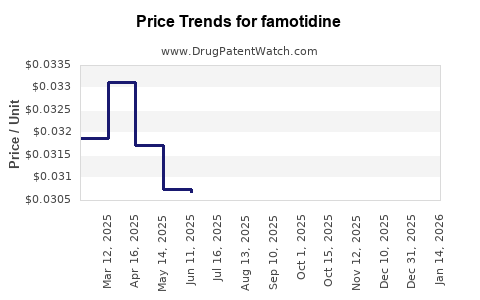
Drug Prices for famotidine

See drug prices for famotidine

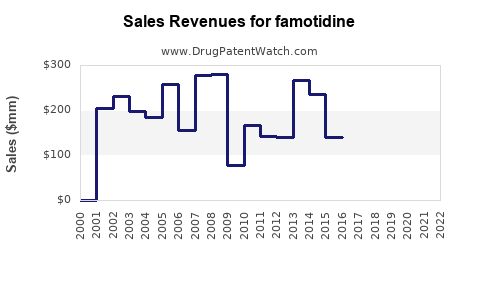
Drug Sales Revenue Trends for famotidine

See drug sales revenues for famotidine

Recent Clinical Trials for famotidine

Identify potential brand extensions & 505(b)(2) entrants

SponsorPhase
PfizerPHASE1
Emory UniversityPHASE4
National Cancer Institute (NCI)PHASE4

See all famotidine clinical trials

Generic filers with tentative approvals for FAMOTIDINE
Applicant Application No. Strength Dosage Form
⤷  Get Started Free⤷  Get Started Free10MG/MLInjectable; Injection

The 'tentative' approval signifies that the product meets all FDA standards for marketing, and, but for the patents / regulatory protections, it would approved.

Pharmacology for famotidine
Medical Subject Heading (MeSH) Categories for famotidine

US Patents and Regulatory Information for famotidine

Applicant Tradename Generic Name Dosage NDA Approval Date TE Type RLD RS Patent No. Patent Expiration Product Substance Delist Req. Exclusivity Expiration
Bausch PEPCID famotidine TABLET;ORAL 019462-002 Oct 15, 1986 DISCN Yes No ⤷  Get Started Free ⤷  Get Started Free ⤷  Get Started Free
Kenvue Brands PEPCID AC famotidine TABLET, CHEWABLE;ORAL 020801-001 Sep 24, 1998 DISCN Yes No ⤷  Get Started Free ⤷  Get Started Free ⤷  Get Started Free
Graviti Pharms FAMOTIDINE famotidine TABLET;ORAL 218461-001 Mar 14, 2024 OTC No No ⤷  Get Started Free ⤷  Get Started Free ⤷  Get Started Free
Alkem Labs Ltd IBUPROFEN AND FAMOTIDINE famotidine; ibuprofen TABLET;ORAL 211890-001 Aug 3, 2021 AB RX No Yes ⤷  Get Started Free ⤷  Get Started Free ⤷  Get Started Free
>Applicant >Tradename >Generic Name >Dosage >NDA >Approval Date >TE >Type >RLD >RS >Patent No. >Patent Expiration >Product >Substance >Delist Req. >Exclusivity Expiration

Expired US Patents for famotidine

Applicant Tradename Generic Name Dosage NDA Approval Date Patent No. Patent Expiration
Merck PEPCID RPD famotidine TABLET, ORALLY DISINTEGRATING;ORAL 020752-002 May 28, 1998 4,305,502 ⤷  Get Started Free
Merck PEPCID RPD famotidine TABLET, ORALLY DISINTEGRATING;ORAL 020752-001 May 28, 1998 4,371,516 ⤷  Get Started Free
Kenvue Brands PEPCID AC famotidine TABLET, CHEWABLE;ORAL 020801-001 Sep 24, 1998 5,667,794*PED ⤷  Get Started Free
Bausch PEPCID famotidine TABLET;ORAL 019462-001 Oct 15, 1986 4,283,408*PED ⤷  Get Started Free
>Applicant >Tradename >Generic Name >Dosage >NDA >Approval Date >Patent No. >Patent Expiration

Market Dynamics and Financial Trajectory for FAMOTIDINE

Last updated: December 7, 2025

Executive Summary

Famotidine, marketed primarily under the brand name Pepcid®, is a histamine-2 (H2) receptor antagonist used to treat conditions like gastroesophageal reflux disease (GERD), peptic ulcers, and Zollinger-Ellison syndrome. Having historically been a blockbuster drug, its market has experienced significant shifts owing to the advent of proton pump inhibitors (PPIs), patent expirations, and regulatory rulings on manufacturing. Recent resurgence efforts, generics proliferation, and evolving treatment guidelines influence its current and future market trajectory. This analysis provides a comprehensive overview of famotidine’s market dynamics, financial prospects, competitive landscape, and regulatory considerations.


Summary of Famotidine’s Market Overview

Parameter Details
Initial Approvals 1986 (FDA, USA)
Original Manufacturer Merck & Co. (Verus Pharmaceuticals later licensed to Novartis)
Market Peak (2000s) ~$1.3 billion annually in the US (Value driven by branded sales)
Current Status Growing generics segment, renewed interest following safety concerns with PPIs and COVID-19-related research

Historical Market and Financial Trajectory

Year Key Events & Market Milestones Estimated Revenue (US) Regulatory & Patent Status
1986 Approval in US Patent protection begins
1990s Peak sales (~$1.3B per year) ~$1.3B Patent expired 2000; generics entered market
2000s Decline due to generic competition <$500M Patent expiry, dominant generics
2010s Decline continues; usage shifts <$300M Overshadowed by PPIs (e.g., omeprazole, esomeprazole)
2019 onwards Noted safety concerns, regulatory restrictions Variable Manufacturing issues (e.g., Ranbaxy 2019), recalls
2020–2023 COVID-19 related research, resurgence in some markets Upward trend in specific segments Re-evaluation & repurposing

Current Market Drivers

1. Safety and Tolerability Profile

Recent concerns over long-term PPI use have led clinicians to revisit famotidine, favoring its relatively well-characterized safety profile. It is particularly considered for patients intolerant or contraindicated for PPIs.

2. COVID-19 Relevance

Some early studies suggested famotidine could have potential benefit in COVID-19 management, triggering renewed research interest and temporary supply fluctuations. Although conclusive evidence remains pending, this has temporarily bolstered demand in specific regions.

3. Patent and Regulatory Landscape

  • Patent Status: Famotidine’s patent expired in the early 2000s, leading to extensive generic competition.
  • Regulatory Actions: FDA issued recalls in 2019 due to manufacturing concerns (nitrosamine impurities), impacting supply stability.
  • Reformulations & Over-the-Counter (OTC): Currently available OTC in the US, limiting prescription sales but expanding over-the-counter access.

4. Competitive Dynamics

Famotidine faces competition from H2 antagonists (cimetidine, ranitidine prior to recalls) and especially PPIs, which command the majority of market share for acid suppression therapies.


Market Segmentation and Regional Insights

Segment Market Share (Approximate) Key Drivers Regional Factors
OTC Retail 60% Self-medication, elderly consumers US, Europe, developed nations
Prescription Market 40% Complicated cases, hospital use North America, Asia (India, China)
Emerging Markets Growing Access, affordability Africa, Southeast Asia
COVID-19 Related Variable Research and off-label use Global

Financial Projections and Future Outlook

1. Market Size and Revenue Forecasts (2023–2028)

Year Estimated Global Sales Growth Rate Notes
2023 ~$500 million - Niche resurgence driven by safety profile
2024 ~$550 million 10% Increased research, supply stability improvements
2025 ~$600 million 9% Expanded OTC formulations, regional expansion
2026 ~$650 million 8% Entry into combination therapies
2027 ~$700 million 8% Continued clinical validation

Note: These estimates account for slow market recovery, increased off-label use, and emerging research.

2. Drivers for Growth

  • Safety-driven substitution of PPIs.
  • Growing geriatric population with acid-related disorders.
  • Research into COVID-19 applications and other adjunctive roles.
  • Expansion in emerging economies through OTC availability.

3. Challenges and Risks

Risk Factors Impacts Mitigation Strategies
Regulatory Withdrawal or Recall Supply disruptions, revenue loss Diversify manufacturing, quality investments
Generic Price Competition Margin compression Focus on niche markets, formulations
Slow Adoption due to Competition Market stagnation Evidence-based positioning

Competitive Landscape

Player Product Portfolio Market Share (Est.) Key Strategies
Mylan/NOVARTIS Generic famotidine ~40% Competitive pricing, broad distribution
Teva Generic famotidine ~20% Focus on OTC expansion
Fresenius Kabi Intravenous formulations ~10% Hospital-based offerings
Others Multiple smaller producers Remaining Price competition, regional focus

Regulatory and Policy Environment

  • FDA Guidance: Emphasis on manufacturing quality, nitrosamine impurity controls.
  • Patent Laws: No patents for famotidine; high generic penetration.
  • OTC Regulations: Increasing OTC status in various jurisdictions, expanding consumer access.
  • Clinical Guidelines: Recent guidelines suggest consideration of famotidine in PPI-intolerant patients.

Comparison with Competitive Alternatives

Attribute Famotidine PPIs (e.g., Omeprazole) Cimetidine Ranitidine Ajusted Usage
Efficacy Moderate High Moderate Moderate Context-dependent
Safety Favorable Concerns with long-term use Moderate Removed from market due to safety Shifts toward famotidine
Cost Low (generic) Higher Lower Discontinued Cost-sensitive markets favor famotidine
Regulatory Status Stable (with recalls) Stable Stable Withdrawn Monitoring required

Key Regulatory Developments Impacting Market

Date Event Implication
2019 FDA recalls due to nitrosamine impurities Need for reformulation and quality assurance
2020 Expanded OTC availability Increased access, lower prescription revenues
2021–2022 Ongoing research into COVID-19 efficacy Possible new indication, market nuances

FAQs

1. What are the primary drivers behind the resurgence of famotidine in the current market?

The resurgence is primarily driven by concerns surrounding long-term PPI safety, increased research into famotidine’s potential benefits in COVID-19, and its favorable safety and cost profile, especially in vulnerable populations like the elderly.

2. How do manufacturing issues affect famotidine's market stability?

Manufacturing recalls, notably due to nitrosamine impurities in 2019, disrupted supply chains. Addressing these concerns through improved quality controls and reformulations is crucial for restoring market confidence and ensuring stable supply.

3. What are the key regulatory challenges facing famotidine producers?

Regulators focus heavily on impurity controls, manufacturing quality, and safety monitoring. Failure to meet these standards can result in recalls, supply restrictions, and erosion of market share.

4. What opportunities exist for branded famotidine formulations?

Differentiation through improved formulations, combination therapies, or expanded indications (e.g., COVID-19 therapeutic research) presents opportunities. Additionally, consumer education on safety advantages can bolster OTC sales.

5. How does famotidine compare economically with competing acid suppression therapies?

Famotidine’s generic versions are typically priced lower than PPIs. With many markets shifting toward cost-saving approaches, famotidine becomes an attractive choice, particularly where safety and affordability are prioritized.


Key Takeaways

  • Market Rebalancing: Famotidine’s market has shifted from a blockbuster to a niche, driven by generic competition and safety concerns.
  • Regulatory Vigilance: Manufacturing quality and impurity regulations heavily influence its supply stability.
  • Growth Avenues: Emerging research, safety perceptions, and expanded OTC access provide growth opportunities, especially in developing markets.
  • Competitive Positioning: Famotidine’s strengths lie in safety, cost, and flexibility, but challenges include competition from PPIs and regulatory hurdles.
  • Future Outlook: With increasing safety awareness and potential new indications, famotidine's market is poised for slow but steady growth over the next five years.

References

  1. FDA. (2019). "Recall of Heartburn Medicines Over Nitrosamine Risks."
  2. MarketsandMarkets. (2022). Gastrointestinal Drugs Market by Route of Administration and Region – Global Forecast to 2027.
  3. IMS Health Data. (2021). Market Analysis of Acid Suppressants.
  4. WHO. (2020). Drug Safety Communications on Nitrosamine Impurities.
  5. Authoritative Industry Reports. (2022). Gastrointestinal Therapeutics and OTC Markets.

Note: Figures and projections are based on market trend analysis and available industry reports, updated as of early 2023.


Disclaimer: The insights provided are for informational purposes and should be considered alongside ongoing industry developments and regulatory updates.

More… ↓

⤷  Get Started Free

Make Better Decisions: Try a trial or see plans & pricing

Drugs may be covered by multiple patents or regulatory protections. All trademarks and applicant names are the property of their respective owners or licensors. Although great care is taken in the proper and correct provision of this service, thinkBiotech LLC does not accept any responsibility for possible consequences of errors or omissions in the provided data. The data presented herein is for information purposes only. There is no warranty that the data contained herein is error free. We do not provide individual investment advice. This service is not registered with any financial regulatory agency. The information we publish is educational only and based on our opinions plus our models. By using DrugPatentWatch you acknowledge that we do not provide personalized recommendations or advice. thinkBiotech performs no independent verification of facts as provided by public sources nor are attempts made to provide legal or investing advice. Any reliance on data provided herein is done solely at the discretion of the user. Users of this service are advised to seek professional advice and independent confirmation before considering acting on any of the provided information. thinkBiotech LLC reserves the right to amend, extend or withdraw any part or all of the offered service without notice.