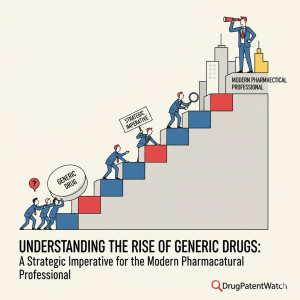
The generic drug industry, often relegated to the background of high-profile blockbuster headlines and breakthrough therapy announcements, is not merely a discount segment of the pharmaceutical market. It is the foundational pillar of modern healthcare, an indispensable engine of affordability, and a complex strategic landscape that demands the attention of every professional, from the research and development lab to the boardroom. This report is not a superficial overview; it is a definitive guide designed for the experienced business and pharmaceutical professional who understands that turning hard data into a competitive advantage is the only path to success. The goal is to provide a nuanced, evidence-based roadmap to the legal, economic, and operational forces that have shaped, and will continue to define, the rise of generic drugs.
The Unseen Revolution: The Foundational Pillar of Healthcare Affordability
In the world of drug development, we often celebrate the flashy, the innovative, and the groundbreaking. We talk about targeted therapies for cancer, life-changing gene treatments, and novel biologics that command premium prices. But what if the most significant revolution in modern medicine was not a breakthrough discovery, but a breakthrough in accessibility? This is the paradoxical story of the generic drug industry. It is a market that operates in the shadows of its brand-name counterparts, but its impact on public health and healthcare economics is impossible to overstate.
The sheer scale of the generic market’s contribution is nothing short of staggering. By any metric, generics are the bedrock of medicine in the United States. They account for a phenomenal 90% of all prescriptions filled.1 Yet, despite this overwhelming volume, they represent only a tiny fraction of total drug spending.4 This fundamental disparity is the central economic puzzle of the industry, and it is the direct source of its immense value. Over the last decade, the widespread adoption of generic and biosimilar medicines has saved the U.S. healthcare system a cumulative $3.1 trillion.4 On an annual basis, the savings are just as impressive, reaching $445 billion in 2023.4 These figures are not incidental features of the market; they are the direct result of a meticulously constructed legal and scientific framework that has been perfected over decades.
The Generic Promise: A Definition Beyond the Price Tag
There is a common, and often deeply ingrained, misconception that generic drugs are somehow of a lesser quality than their brand-name counterparts. This narrative is frequently fueled by a basic human tendency to equate lower price with lower quality. For professionals who are building a business on this market, this perception is a critical challenge to overcome, and the first step is to understand the precise regulatory definition of a generic drug.
According to the U.S. Food and Drug Administration (FDA), a generic drug is not a cheap alternative; it is a product of exacting scientific standards. A generic is defined not by its lower price, but by its proven sameness to its brand-name counterpart, which the FDA calls the “Reference Listed Drug” (RLD).6 To be approved, a generic drug must be “pharmaceutically equivalent,” meaning it must contain the same active ingredient, in the same strength, and in the same dosage form as the brand-name product.7 It must also be “bioequivalent,” a critical measure of its performance in the body.9 This stringent regulatory requirement is what guarantees that a generic drug will provide the exact same therapeutic effect as the brand-name drug.1
The core principle of bioequivalence warrants a closer look. It is a measure of how closely two drugs with the same active ingredients perform at releasing the active substance into the bloodstream at the same rate and extent, thereby ensuring they have a similar therapeutic effect.9 To prove this, a generic drug company must conduct studies with human volunteers, comparing the performance of their product against the brand-name drug.1 FDA scientists then analyze the data from these trials to ensure the generic drug will produce the same result as the brand-name drug.7
The FDA’s standard for bioequivalence is a 90% confidence interval for key pharmacokinetic parameters such as the maximum concentration (Cmax) and the area under the concentration-time curve (AUC), which must fall between 80% and 125%.10 This statistical range is a legal requirement, but the actual scientific data reveals a far more precise reality. One analysis of FDA data showed that the average difference in absorption (AUC) between a generic and a brand-name drug was only about 3.5%.12 This remarkable fact directly refutes any claim of inferiority; it demonstrates that the generic product is, on average, a nearly perfect match for the brand. The reason for the generic’s lower price is not rooted in its quality, but in the streamlined regulatory pathway that allows it to enter the market without repeating the expensive and time-consuming clinical trials that were already conducted by the brand company.12
Generics vs. The Rest: A Comparative Look at Biosimilars and Hybrids
As the pharmaceutical industry continues its rapid evolution from traditional small-molecule drugs to complex biologics, it has become essential for professionals to understand the fundamental differences between the generic pathway and its newer counterparts. While generic drugs are identical chemical copies of their brand-name references, their cousins, biosimilars, inhabit a different regulatory and scientific universe.
The distinction between a generic and a biosimilar is a matter of molecular size and complexity.13 Generics are typically low-molecular-weight chemical compounds with simple, well-defined structures that are easily synthesized in a lab.13 The manufacturing process for a generic drug results in a finished product with an active ingredient that is the same within each manufactured lot and between lots.14
Biologics, on the other hand, are large, high-molecular-weight molecules derived from living organisms.13 Their complex structures make an “identical” copy scientifically impossible.13 The manufacturing process, which often involves genetically engineered cells, naturally results in small, unavoidable variations.14 Consequently, a biosimilar is not an identical copy, but rather a product that is “highly similar” to its reference biological product, with no clinically relevant differences in terms of safety, purity, or potency.13
This scientific divide created the need for a separate regulatory pathway. The Biologics Price Competition and Innovation Act of 2010 (BPCIA) established a new approval process for biosimilars, distinct from the traditional Abbreviated New Drug Application (ANDA) pathway.13 Unlike generics, which only need to prove bioequivalence, biosimilars must demonstrate that they have “no clinically meaningful differences” from the brand-name product.14 This often requires additional clinical data, a reflection of their inherent complexity.13 The distinction is crucial for strategic teams, as it signals a different level of investment, risk, and time required to bring these products to market.
The Legal Bedrock: How a Landmark Act Changed Everything
To truly appreciate the strategic landscape of today’s generic market, one must first understand its legislative origins. Prior to 1984, the process for generic drug approval was slow, burdensome, and lacked a clear, streamlined pathway. While the 1962 Kefauver-Harris Amendments had established the requirement that all new drugs prove their safety and effectiveness, the subsequent generic approval process was inconsistent and slow.16 From 1979 to 1983, for instance, only 19 generics were approved for drugs that had been released after 1962.16
This all changed with the signing of the Drug Price Competition and Patent Term Restoration Act of 1984, universally known as the Hatch-Waxman Act.16 This landmark legislation was designed to resolve a fundamental tension in pharmaceutical policy: the need to incentivize the costly and risky development of new drugs versus the need to ensure affordable access to medicines for patients.12 Hatch-Waxman achieved this by creating a balanced framework with key provisions for both brand-name and generic manufacturers. For brand companies, the Act established patent term extensions to compensate for the time lost during the lengthy FDA approval process.17 For generic manufacturers, it created the ANDA pathway, allowing them to rely on the brand’s established safety and efficacy data, dramatically reducing the time and cost of gaining FDA approval.12 This legislative efficiency is the fundamental source of the cost savings associated with generic drugs; they are less expensive because the development and approval process is streamlined, not because their quality is inferior.12
The American Generics Engine: A Deep Dive into the Hatch-Waxman Act
The Hatch-Waxman Act did not just create a new pathway for generic approval; it codified a new form of market-based competition, a dynamic that has been described as a strategic chessboard. This framework, anchored by a series of legal and procedural mechanisms, forces both brand and generic companies into a high-stakes game where every move is calculated and every decision can have multi-million dollar consequences.
The Abbreviated New Drug Application (ANDA): A Streamlined Path to Market
The ANDA is the central regulatory mechanism for generic market entry. Unlike a New Drug Application (NDA) for a brand-name drug, which requires a robust set of safety and efficacy data from extensive clinical trials, the ANDA is an “abbreviated” application that relies on the FDA’s prior approval of the brand drug.6 This reliance on the brand’s established safety and efficacy data is the single most important factor in lowering the barrier to market entry for competing manufacturers.12
To secure approval through the ANDA pathway, a generic company must submit a dossier of detailed information. This includes data proving that the generic is pharmaceutically equivalent to the brand, as well as evidence that its manufacturing process can consistently produce a high-quality product.1 Crucially, the generic company must provide data demonstrating that its product is bioequivalent to the brand-name drug, ensuring that it will behave the same way in patients.1
For R&D teams, it is also essential to understand a strategic alternative: the 505(b)(2) pathway. While a standard ANDA is for a drug that is identical to a previously approved drug, the 505(b)(2) pathway is used when a drug has modifications, such as a new dosage form or formulation.6 This pathway allows the manufacturer to leverage existing data from an approved drug while also submitting additional new data to support the differences, representing a strategic hybrid approach that can be a highly profitable alternative to a simple generic copy.6
The Orange Book: The Central Nervous System of Generic IP
In the strategic game of generic market entry, the Orange Book, formally known as the Approved Drug Products With Therapeutic Equivalence Evaluations, is the single most important document. This official FDA publication serves as a central repository for all approved small-molecule drugs and, crucially, for the patents and regulatory exclusivities that protect them.8
The Orange Book creates the patent linkage system, a legal mechanism that connects generic drug approval to the patent status of the brand drug.18 Brand manufacturers are required to list any patents that claim the drug substance, the drug product, or methods of use.15 Certain types of patents, such as process patents, are specifically excluded.15 For a generic manufacturer, the transparency of the Orange Book is an enormous strategic asset. It allows companies to analyze the patent landscape, identify expiration dates, and plan their R&D and regulatory submissions with surgical precision, a point that will be explored in greater detail in the next chapter.
The High-Stakes Game: Paragraph IV Challenges and the Race to 180-Day Exclusivity
The Hatch-Waxman Act created a powerful financial incentive to challenge a brand’s patents. For each patent listed in the Orange Book, a generic applicant must provide a certification. While most certifications simply state that a patent has expired (Paragraph II) or that the generic will not be marketed until the patent expires (Paragraph III), the most critical and strategic certification is Paragraph IV (PIV).19
A Paragraph IV certification is a direct and bold assertion that a brand’s patent is invalid, unenforceable, or will not be infringed by the generic product.19 This is a calculated risk, but the potential reward is immense. The first generic company to file an ANDA with a PIV certification is granted a 180-day period of market exclusivity.19 During this six-month period, the FDA will not approve any other generic applications for that drug, effectively creating a duopoly between the brand and the first generic.19 This period yields substantially higher margins than the post-exclusivity market where multiple competitors drive prices down to their lowest point. This enormous financial prize is what drives the high-stakes, multi-million dollar legal battles that define the generic industry.
The Anatomy of a Lawsuit: Navigating the 30-Month Stay
Filing an ANDA with a PIV certification is considered an “artificial act of patent infringement” under U.S. law, which allows the brand manufacturer to sue before the generic is even commercialized.19 Upon receiving a PIV notice letter, the brand manufacturer has 45 days to file a patent infringement lawsuit.20 If a lawsuit is filed within this window, the FDA is required to grant an automatic 30-month stay of the ANDA’s final approval.18
This stay is not just a procedural delay; it is a critical strategic tool for the brand. It provides a valuable window of time to resolve the patent dispute and to implement what are known as “lifecycle management” strategies.19 These tactics can include converting patients to new formulations with separate patent protection, launching new dosage forms, or implementing pricing and rebate strategies to maintain formulary position.19 For the generic company, the 30-month stay is a legal gauntlet that must be navigated, but for the brand, it is a precious period to control the narrative and mitigate the impending financial erosion.
Case Study in Controlled Competition: The Viagra Exception
The strategic genius of the Hatch-Waxman framework is best illustrated by the contrast between two of the most significant patent expirations in history: Lipitor and Viagra. The case of Lipitor represents the classic, unmitigated “patent cliff”.22 With sales exceeding $10 billion annually for its manufacturer, Pfizer, its patent expiration on November 30, 2011, in the U.S. was a watershed event.23 Generic atorvastatin flooded the market, and despite Pfizer’s efforts to hold on to market share with coupons and side deals, the price dropped precipitously and its sales plummeted.23 The brand tried to “hold back the tide,” but the market erosion was rapid and complete.
In contrast, the story of Viagra’s generic entry is a masterclass in modern, proactive lifecycle management.24 The anticipated “patent cliff” for Viagra (sildenafil citrate) did not result in a typical “free-for-all” market influx.24 Instead of fighting a protracted legal battle to the bitter end, Pfizer made a series of calculated strategic decisions.24 The company leveraged pediatric exclusivity to extend its patent, settled its litigation with a key generic competitor (Teva), and, most critically, launched its own authorized generic (AG) through its subsidiary, Greenstone, on the same day as the generic launch.24 By immediately competing with its own AG, Pfizer was able to dilute Teva’s market advantage and prevent it from fully capitalizing on the lucrative 180-day exclusivity period.24 This strategy allowed Pfizer to control the timing and terms of generic entry, retain a significant portion of the sildenafil market, and ultimately mitigate the sharp revenue decline commonly associated with patent expirations.24
The Global Arena: A Comparative Regulatory Analysis
The modern pharmaceutical industry is a global enterprise, and for companies with international ambitions, understanding the differences in regulatory frameworks is a strategic necessity. While the Hatch-Waxman Act governs the U.S. market, other major markets, such as the European Union and Canada, operate under their own distinct, though scientifically aligned, systems.
The European Union: Navigating the EMA and Centralized Procedures
In the European Union, the European Medicines Agency (EMA) assesses applications from companies to market generic medicines.25 The EMA operates under a Centralised Procedure, which allows for a single application, a single evaluation, and a single authorization that provides direct access to the entire EU market.25
The core scientific principles of pharmaceutical equivalence and bioequivalence are the same, and the EMA applies similar standards for approval.10 For a generic drug to be considered bioequivalent to the branded product, the mean
Cmax and AUC must fall within a 90% confidence interval of 80% to 125%.10 The process can be complex, however, particularly for generic and hybrid applications of products that were not originally authorized through the Centralised Procedure, requiring applicants to justify why their product should be accepted for consideration under that pathway.25
Beyond Borders: Generic Drug Regulation in Canada and Other Key Markets
Canada’s regulatory body, Health Canada, also relies on bioequivalence standards to approve generic drugs.11 A generic drug must contain the same active ingredients, in the same amounts, as its brand-name equivalent, and must meet the same federal standards for quality and manufacturing.11 A notable distinction in the Canadian system is the existence of a “critical dose drugs” category, which includes drugs like cyclosporine and warfarin.11 For these products, Health Canada applies stricter bioequivalence standards to account for the fact that small differences in concentration can lead to potentially serious adverse reactions or therapeutic failures.11
The Great Regulatory Paradox: A World of Scientific Alignment, But Staggered Timelines
A curious paradox emerges when comparing the U.S. and European regulatory environments. While both the FDA and the EMA are built on a foundation of rigorous scientific standards, a study of generic applications submitted to both agencies between 2017 and 2020 revealed a 95% concordance in their final approval decisions.5 This high degree of scientific alignment would seem to suggest that a company could run a single, unified global development program.
However, the same study noted a critical caveat: the timing of those approvals often differed by several years.5 This disparity reveals that the systems are far from harmonized. For a generic manufacturer, a multi-year delay in a major market can completely upend a product’s business case.5 It means duplicated effort, staggered launches, and an inability to efficiently leverage a single global development program.5 This reality compels modern generic portfolio strategies to incorporate a “regulatory risk score” for each candidate, weighing not just the cost of filing in one market but the fully-loaded, risk-adjusted cost to achieve and maintain global market access.5
The Economics of Erosion: Quantifying the Impact of Generic Competition
The purpose of the generic drug industry is to provide affordability, and its impact on healthcare costs has been nothing short of transformative. The enormous scale of the savings it has generated for patients, payers, and the entire healthcare system is the core justification for its existence. The savings are not theoretical; they are tangible, quantifiable, and growing year after year.
The savings are broken down by key segments of the healthcare system. In 2021, generic and biosimilar drugs generated a record $373 billion in savings for America’s patients and healthcare system, including $119 billion for Medicare, $53.8 billion for Medicaid, and $178 billion for commercial health plans.12 By 2022, these figures climbed to $130 billion for Medicare and $194 billion for commercial plans, reaching $206 billion in 2023.12 The impact at the patient level is just as significant. The average copay for a generic prescription is a mere $6.16, in stark contrast to the average out-of-pocket cost of over $55 for a brand-name drug.27
The Price Cliff: How Competition Reshapes the Market
The rapid and substantial price erosion following patent expiration is the primary mechanism through which generics generate savings. The price of a drug in a post-exclusivity market is directly and inversely proportional to the number of generic competitors.2 This simple economic principle is a brutal reality for companies competing in the space, and the data on price decline provides a powerful strategic blueprint for understanding market dynamics.
A single generic competitor typically slashes the brand price by a significant margin, ranging from 30% to 39%.5 The real price cascade begins with just a few competitors. With two or three generic entrants, the price plummets by 50% to 70%.5 The competition intensifies from there, with prices continuing to fall to 70-80% below the brand price in markets with 10 or more competitors.2 In some cases, prices can fall by as much as 95%.5 This intense competition and relentless price pressure, while a triumph for public health, is also what threatens the long-term sustainability of the industry itself, a subject that will be explored in the final chapter.
The table below provides a clear, data-driven visualization of this fundamental market dynamic, illustrating how the level of competition directly correlates with the severity of price erosion.
The Economics of Generic Entry – Price vs. Competition
Number of Generic Competitors
Approximate Price Reduction vs. Brand Price
Strategic Implication
1
30% to 39% 5
The most profitable period for generic entry; duopoly profits are substantial.
2-3
50% to 70% 5
Significant market share erosion for the brand and the first generic; prices stabilize at a much lower level.
4-9
73% to 79% 2
High competition drives a sustained price decline.
10+
70% to 95% 5
Margins are razor-thin or non-existent. Only the most efficient, high-volume manufacturers can sustain profitability.
The Modern Generic Playbook: Turning Patent Data into Competitive Advantage
In a market defined by intense competition and razor-thin margins, a company’s success is no longer determined by its ability to simply make a pill; it is determined by its ability to move with strategic precision. This requires a profound shift in mindset, one that elevates competitive intelligence from a support function to a central, strategic imperative.
A New Era of Intelligence: The Central Role of Patent Data
In the past, patent information was often seen as a domain reserved for the legal department. In today’s high-stakes environment, that view is a recipe for failure. Patent intelligence is now a core function of business development, R&D, and portfolio management.21 A thorough understanding of the patent landscape allows companies to proactively identify barriers to entry, map out which patents are still in effect, and inform the development strategy for generics.30 For generic companies, this is the fundamental step that allows them to identify first-to-file opportunities and align their product development with patent expiration timelines.21
Identifying the Next Opportunity: Using Platforms like DrugPatentWatch
Navigating the complex, interconnected web of drug patents, regulatory filings, and market data requires a sophisticated approach. It is no longer possible to rely on fragmented or outdated information.21 A comprehensive, centralized database is essential for gaining a competitive edge. This is where platforms like
DrugPatentWatch provide an invaluable service. The platform provides business intelligence on both biologic and small-molecule drugs, giving executives the tools to identify and evaluate commercial opportunities, track drug pipelines, and analyze competitor activity.19 By providing transparent, daily updated information on patent expirations and litigation, DrugPatentWatch allows professionals to turn raw data into actionable insights, providing a path to market domination and a clear return on intelligence investment.19
Beyond the Pill: The Strategic Pursuit of Value-Added and Complex Generics
As the economics of simple generics become increasingly challenging, companies are forced to evolve their strategies. The strategic pursuit of value-added and complex generics is no longer a choice; it is a necessity for survival.
Complex generics are a class of drugs that are more difficult and expensive to copy, offering a higher barrier to entry and, consequently, higher profit margins.5 This category includes products like injectables, patches, and other complex delivery systems that require a higher level of expertise and investment to develop.5 This strategic shift requires generic manufacturers to take on many of the risks and costs traditionally associated with innovator companies.
Navigating the Development Gauntlet: The Challenges of a Complex Generic
The development of complex generics is a gauntlet defined by a formidable set of scientific, regulatory, and financial challenges. Unlike simple generics, there is often a lack of clear guidance from regulatory agencies, which adds significant risk to the planning and study design process.32 The development plan for a complex generic will often require clinical studies that go beyond what is typical for a simple generic product.32 The FDA, for instance, has increased its scrutiny of quality systems and data integrity for these products.32
The financial reality of this strategic shift is equally daunting. The cost, time, and risk are exponentially higher for complex generics.32 The significant, non-refundable user fees imposed by the Generic Drug User Fee Amendments (GDUFA) in the U.S. act as a major barrier to entry, particularly for smaller companies.5 For example, the ANDA filing fee alone is $321,920, and the annual program fees for a large company are nearly $2 million.5 These upfront costs transform the decision to pursue a generic candidate from a simple scientific and legal one into a major capital allocation decision, forcing companies to be highly selective and prioritize products with a high probability of success and a sufficient market size to justify the investment.5
The Supply Chain Under Siege: A Fragile Future for the Generic Market
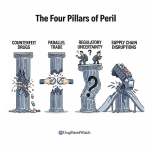
The generic drug industry’s mission to provide affordable medicines was, for decades, achieved by optimizing for cost. This led to a globalized supply chain built on “just-in-time” inventory and a heavy reliance on a handful of low-cost foreign suppliers, particularly from China and India.33 As of 2025, nearly 65% to 70% of active pharmaceutical ingredients (APIs) used globally are sourced from these two countries.34 This model, while economically efficient, has created a profound vulnerability that has been exposed by recent events.
The 2025 Tariff Shockwave: Unpacking the Impact on Costs and Supply
Recent government-imposed tariffs have emerged as a significant new disruptor in 2025, sending shockwaves across the entire pharmaceutical value chain.33 These tariffs have triggered inflationary pressures, with some firms reporting API cost increases of 12% to 20% for widely used molecules like amoxicillin, acetaminophen, and metformin.33 The Association for Accessible Medicines (AAM) has warned that generic manufacturers simply cannot absorb these new costs, as they already operate on razor-thin margins and are often forced to sell products at a loss.3
The direct link between tariffs and drug shortages is a major cause for concern. Generic drugs make up 90% of U.S. prescriptions, and tariffs on APIs from China and India risk disrupting supply chains, increasing drug costs, and worsening already problematic shortages of critical medications.3
From Shortages to Solutions: Building a More Robust Generic Supply Chain
Drug shortages, once considered occasional, have become persistent and are now threatening critical care and public health readiness.34 In early 2025, the American Society of Health-System Pharmacists reported more than 323 active shortages in the U.S. alone, affecting essential drugs for oncology, antibiotics, and cardiovascular care.34
This crisis of scarcity reveals a fundamental paradox: the very system that made generics so affordable is also what makes the supply chain fragile. The industry is facing a profound trade-off between cost efficiency and long-term resilience. The path forward involves a significant re-evaluation of the current model, with proposed solutions including diversifying sourcing, investing in local manufacturing (“onshoring”), and using digital tools and predictive analytics to improve resilience.34 While these efforts are underway globally, experts caution that domestic manufacturing alone cannot resolve persistent shortages without parallel reforms that address the structural issues of thin profit margins in the generic sector.34
Conclusion: The Future of Generics—Navigating a New Era of Complexity
The rise of generic drugs is a powerful testament to the triumph of a brilliant legal and scientific framework designed to balance innovation with access. The Hatch-Waxman Act created an engine of affordability that has saved healthcare systems trillions of dollars and given patients access to essential medicines at a fraction of the cost.
However, the future of the generic industry is no longer about simple replication. The unsustainable economics of the race to the bottom for simple generics, combined with the profound fragility of a globally concentrated supply chain, demands a new strategic playbook. The future will belong to companies that can master the complex intersection of law, science, economics, and geopolitics. It will require a shift toward strategic innovation (the pursuit of complex and value-added generics), a mastery of competitive intelligence (using tools like DrugPatentWatch to secure the first-to-file advantage), and a commitment to building a more resilient, geographically diverse supply chain. The generic drug market is and will remain a high-stakes arena, but for those who can navigate its intricate complexities, the opportunities for competitive advantage are greater than ever.
Key Takeaways
Generics are a Public Health Triumph: They account for approximately 90% of prescriptions but only a fraction of total drug spending, saving the U.S. healthcare system hundreds of billions annually.2
Hatch-Waxman is the Engine: The Act created the ANDA pathway and a powerful legal framework, including the PIV challenge and 180-day exclusivity, that incentivizes generic market entry and drives competition.17
Competition Drives Price: The price of a generic drug is directly tied to the number of competitors. Prices can drop by 70-95% with 10 or more competitors, creating razor-thin margins.2
Lifecycle Management is Evolving: Brand companies are moving from an “uncontrolled cliff” model (Lipitor) to a “controlled descent” model (Viagra), using authorized generics to preserve market share and revenue streams.22
The Future is Complex: The generic industry is moving beyond simple pills to complex generics and value-added drugs, a shift that increases the cost and risk of development but is necessary for sustainability and profitability.5
The Supply Chain is Fragile: Decades of optimizing for cost have created a vulnerable, concentrated global supply chain. Recent tariffs in 2025 and persistent shortages highlight a new trade-off between affordability and long-term resilience.33
Frequently Asked Questions (FAQ)
Q1: How can a brand-name company use the Hatch-Waxman Act to strategically delay generic competition?
A: A brand-name company can employ a strategy known as “evergreening,” which involves filing multiple patents on different aspects of a drug, such as new formulations or methods of use, and listing them in the Orange Book.30 When a generic company files a Paragraph IV certification, the brand can trigger an automatic 30-month stay by filing a lawsuit.19 This stay provides a valuable window for the brand to launch a new, separately patented formulation or implement other lifecycle management strategies to switch patients before generic entry.19
Q2: What is an authorized generic, and why would a brand-name company launch its own?
A: An authorized generic is a brand-name drug that is sold under a generic name, often by the brand company itself or a subsidiary.18 A brand company will launch an AG to directly compete with the first generic on the day of its launch, thereby preventing the generic from fully capitalizing on its lucrative 180-day exclusivity period.24 This strategy helps the brand mitigate market share erosion and retain a revenue stream from the generic market.24
Q3: How does the rise of biologics and biosimilars affect the traditional generic drug market?
A: The rise of biologics and biosimilars signals a new era in the pharmaceutical landscape, creating a separate market with its own distinct regulatory pathway (the BPCIA) and a different set of development challenges.9 The increasing focus on complex generics within the traditional generic industry 5 suggests a convergence of the two markets, where generic companies must now invest in more advanced R&D and clinical studies similar to brand companies to remain competitive.32
Q4: Given the immense cost savings of generics, why do drug shortages persist, and what is the underlying issue?
A: The economics of the generic market are both its greatest strength and its greatest vulnerability. Intense price competition, where prices can fall by as much as 95%, has made many essential, low-margin generic drugs unprofitable.5 This, combined with a reliance on a concentrated global supply chain for APIs from a handful of countries like China and India, has led to a fragile market where manufacturing issues or geopolitical events can cause widespread shortages of critical medicines.33
Q5: How can IP, R&D, and business development teams use patent data for competitive advantage beyond simply knowing the expiration date?
A: Patent data is a strategic intelligence tool that can inform every stage of a drug’s lifecycle. By analyzing patents listed in the Orange Book and other databases, teams can identify specific weaknesses in a brand’s patent portfolio, anticipate litigation arguments, and identify first-to-file opportunities for high-margin products.19 R&D can use this data to focus on value-added or complex generics that are not covered by existing patents, providing a higher return on investment than a simple, easily copied drug.19