In an era defined by scientific convergence, combination drugs—pairing small molecules with biologics—represent one of the most sophisticated frontiers in pharmaceutical innovation. These therapies blend the precision of biologics with the pharmacological versatility of chemical compounds, creating novel therapeutic paradigms for complex diseases such as cancer, autoimmune disorders, and infectious diseases. Yet, their growing clinical and commercial potential brings immense intellectual property (IP) challenges. Protecting inventions that straddle two fundamentally different scientific and regulatory domains demands inventive, multi-layered patenting strategies.
This comprehensive article explores global patenting strategies for combination drugs, integrating perspectives from U.S., European, Asian, and emerging-market jurisdictions. Drawing on insights from DrugPatentWatch, it examines how companies can strategically manage and extend exclusivity through layered IP portfolios, regulatory exclusivities, and competitive intelligence. The goal: to help business, legal, and R&D leaders translate patent data into actionable advantage in a rapidly evolving landscape.
I. Understanding Combination Drug Architectures
A. Defining Combination Therapies
Combination drugs can take multiple forms, including:
Fixed-Dose Combinations (FDCs): Multiple active ingredients in a single formulation.
Co-Packaged Products: Distinct components marketed together for concurrent use.
Hybrid Regimens: Separate products used in combination under clinical or labeling guidance.
These architectures create distinct challenges for patenting because the invention may encompass composition, method of use, manufacturing, or delivery mechanisms that span both small-molecule and biologic categories.
B. Examples of Leading Combination Drugs
Keytruda + Lenvima (Merck/Eisai): Biologic checkpoint inhibitor with kinase inhibitor.
Each of these illustrates how inventive combinations can generate incremental or breakthrough value, while introducing complexity in defining patent scope.
II. The Dual Nature of IP Protection: Biologic + Chemical Frameworks
A. Divergent Patent Landscapes
Biologics are typically protected by sequence, production, or formulation claims, while small molecules rely on structure-based composition, polymorph, or salt forms. When combined, inventors must bridge these frameworks, ensuring both components are adequately protected under a unified patent strategy.
B. Claim Types Relevant to Combination Drugs
Key categories include:
Composition Claims – Covering the mixture or co-formulation.
Method of Treatment Claims – Covering therapeutic synergy.
Dosage Regimen Claims – Particularly relevant in biologic-small molecule combinations.
Delivery Mechanism Claims – Enabling co-administration or bioavailability optimization.
Manufacturing Process Claims – Especially important where biologic handling differs from small-molecule stability requirements.
III. The Global Patent Landscape for Combination Therapies
A. United States: USPTO and FDA Interplay
U.S. patent strategy hinges on leveraging both patent term extensions (PTE) and data exclusivities under the Hatch-Waxman and Biologics Price Competition and Innovation Act (BPCIA). Combination products can sometimes benefit from overlapping exclusivities if novel interactions or synergistic effects are demonstrated.
Notable Cases:
AstraZeneca v. Apotex (2007) confirmed that combination patents can be upheld if synergistic therapeutic effects are demonstrated.
FDA’s “combination product rule” allows biologic-small molecule co-packaged products to be regulated under a lead-center framework (CDER or CBER), influencing patent listing and Orange Book eligibility.
B. European Union: EMA and EPO Perspectives
In Europe, the European Patent Office (EPO) tends to scrutinize inventive step claims more stringently. Demonstrating a synergistic technical effect beyond additive efficacy is often essential.
Key principles:
EPO Boards of Appeal often require quantifiable synergy supported by experimental data.
SPC (Supplementary Protection Certificates) can extend exclusivity, but combination eligibility varies by precedent (notably Medeva BV v. Comptroller-General, C-322/10).
C. Japan, China, and India: Evolving Standards
Japan: The JPO acknowledges synergy-based inventive step; case law emphasizes pharmacological rationale.
China: The CNIPA allows combination patents if clear technical contribution is demonstrated; increasing recognition of biologic-small molecule synergies.
India: Section 3(d) scrutiny demands proof of “enhanced efficacy,” posing a challenge for incremental combinations unless clinically superior.
IV. Strategies for Drafting Robust Combination Patents
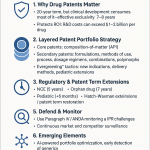
A. Layered Claim Drafting
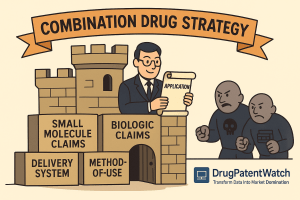
Robust portfolios are constructed through layered claims that cover:
Each component individually
The combination as a whole
The therapeutic method
The formulation or delivery system
B. Data-Driven Claim Support
Patent offices globally require experimental evidence of synergy. Including pharmacodynamic and pharmacokinetic data, ideally supported by dose-response studies, enhances patent robustness.
C. Strategic Use of Markush Claims
Markush structures can broaden coverage across small molecule variants used in combination with a single biologic scaffold.
D. Avoiding Double Patenting Pitfalls
Applicants must carefully coordinate filing families to prevent overlap or obviousness-type double patenting, particularly where biologic and chemical patents emerge from separate divisions.
V. Regulatory Exclusivity Synergies
A. Interplay of Patent and Regulatory Systems
Regulatory exclusivities (e.g., data exclusivity, orphan drug protection) can reinforce or supplement patent rights.
Jurisdiction
Biologic Exclusivity
Small Molecule Exclusivity
Notes
U.S.
12 years (BPCIA)
5 years (NCE)
Overlaps may yield additive exclusivity periods
EU
8+2(+1) years
8+2(+1) years
SPCs can extend up to 5 additional years
Japan
8 years
8 years
Generally harmonized for hybrids
Combination drugs can exploit staggered regulatory clocks, especially when one component qualifies as a new active ingredient.
B. Orphan and Pediatric Incentives
Both small molecule and biologic designations can trigger pediatric and orphan extensions, adding valuable time to market exclusivity.
VI. Patent Term Extensions (PTE) and Supplementary Protection Certificates (SPCs)
A. U.S. Patent Term Extensions
Combination products can benefit if at least one component contributes to the product’s regulatory approval delay. However, the FDA and USPTO require demonstration that the approved combination relies on the claimed invention.
B. European SPC Strategies
SPC eligibility hinges on whether the product’s active ingredients were individually or jointly protected in the basic patent. Teva v. Gilead (C-121/17) reshaped SPC eligibility for combination products, emphasizing explicit disclosure.
C. Emerging Market Trends
China and Brazil have begun piloting mechanisms analogous to SPCs, recognizing the commercial importance of hybrid therapies.
VII. Life-Cycle Management of Combination Drugs
A. Evergreening Through Innovation
Companies extend exclusivity via secondary patents covering:
New ratios or dosing regimens
Delivery systems (e.g., auto-injectors)
Formulation improvements enhancing stability or bioavailability
B. Digital and Companion Diagnostic Integration
Patent protection may also encompass software or diagnostic tools enabling optimized co-administration—expanding the protection scope.
C. Strategic Patent Family Planning
Maintaining parallel biologic and chemical patent families allows staged expiration and defensive leverage in licensing negotiations.
VIII. Litigation and Enforcement Trends
A. Small Molecule–Biologic Interface Litigation
Patent enforcement for combination drugs often centers on proving synergy and non-obviousness. Litigation commonly targets generic and biosimilar entrants attempting to decouple one component from the protected combination.
B. Global Case Examples
Merck Sharp & Dohme v. Sandoz (2021): Upheld biologic–small molecule combination patent due to novel synergistic mechanism.
Pfizer v. Generics UK (2010): Reinforced the requirement for empirical evidence of synergy.
C. Jurisdictional Nuances
U.S. courts emphasize claim construction and enablement; EU courts prioritize inventive step substantiation. Asian jurisdictions increasingly align with EPO reasoning but vary in procedural timelines.
IX. Strategic Use of Patent Analytics and Competitive Intelligence
A. Using Patent Data as a Strategic Asset
DrugPatentWatch provides an integrated view of global patent expiration timelines, exclusivity overlaps, and competitive filings—empowering firms to model time-to-generic scenarios and anticipate biosimilar entry.
B. Benchmarking Competitor Portfolios
Advanced patent analytics can identify:
Which firms are pioneering hybrid formulations
Overlapping targets or pathways
Cross-licensing and joint venture opportunities
C. Case Example: Oncology Combinations
By analyzing DrugPatentWatch data, companies have identified key therapeutic spaces—PD-1/PD-L1 plus small molecule inhibitors—where patent clustering predicts emerging competition.
X. Collaboration, Licensing, and IP Sharing Models
A. Co-Development and Joint IP Ownership
Combination therapies often arise from partnerships. Early IP agreements should define:
Ownership of shared inventions
Enforcement responsibility
Freedom-to-operate boundaries
B. Cross-Licensing Dynamics
Cross-licensing between biologic and small-molecule innovators can accelerate time-to-market, particularly when each party contributes a protected asset.
C. Academic and Biotech Collaborations
Startups developing synergistic molecules for use with established biologics must secure clear background IP rights to attract investors and avoid infringement risk.
XI. Emerging Technologies and Future Trends
A. AI-Driven Drug Combination Discovery
Machine learning models are predicting optimal biologic–chemical synergies, raising new questions around inventorship and algorithmic contribution to IP.
B. Gene and Cell Therapy Combinations
Combining small molecules with cell therapies (e.g., CAR-T enhancements) creates a new frontier for IP layering and regulatory harmonization.
C. Sustainable Manufacturing and Green IP
Eco-efficient co-formulation technologies are emerging as patentable differentiators under the World Intellectual Property Organization (WIPO)’s green innovation initiatives.
XII. Challenges and Ethical Considerations
A. Pricing and Access Concerns
Critics argue that combination patents can unduly extend monopoly pricing, limiting access in low-income markets.
B. Policy Responses
Regulators are increasingly scrutinizing “patent thickets” around combination products, encouraging transparency in Orange Book and equivalent listings.
C. The Innovation-Access Balance
Sustainable innovation in combination drugs requires balancing legitimate reward with societal benefit—a theme echoed across WHO, WTO, and TRIPS discussions.
XIII. Regional Case Studies
A. United States: Keytruda + Lenvima
Merck and Eisai’s collaboration demonstrates how co-patenting strategies can protect synergistic regimens while allowing independent commercialization pathways.
B. Europe: Roche’s Herceptin Combinations
Roche leveraged SPCs and method-of-use patents to sustain market dominance for antibody combinations in HER2-positive cancer.
C. Asia: China’s Biosimilar Combination Initiatives
Chinese firms are pursuing aggressive filing of small molecule–biologic combinations, aided by evolving CNIPA acceptance of pharmacological synergy evidence.
XIV. The Future of Patent Harmonization for Combination Drugs
Efforts under WIPO’s Standing Committee on the Law of Patents (SCP) seek to align standards for combination inventions. Mutual recognition frameworks, data-sharing agreements, and digital examination tools may streamline cross-jurisdiction filings.
XV. Conclusion
The convergence of biologics and small molecules marks a transformative chapter in pharmaceutical innovation. Yet, realizing commercial success demands mastery of both science and IP strategy. Companies that effectively layer patent protection, synchronize regulatory exclusivities, and leverage data-driven intelligence platforms like DrugPatentWatch will outperform competitors as hybrid therapies redefine therapeutic paradigms.
Key Takeaways
Combination drugs require dual-domain IP mastery—balancing biologic and small molecule frameworks.
Demonstrating synergistic efficacy is critical for patentability in major jurisdictions.
Layered claims and regulatory exclusivity stacking enhance life-cycle value.
Patent analytics from sources like DrugPatentWatch are vital for predicting competition and aligning R&D investments.
Global harmonization is evolving but still fragmented; proactive multi-jurisdiction filing remains essential.
Frequently Asked Questions (FAQ)
1. What makes patenting combination drugs more complex than single agents? Because they merge two scientific domains—chemical and biologic—requiring distinct yet integrated claim strategies, testing standards, and regulatory pathways.
2. Can a combination drug qualify for multiple regulatory exclusivities? Yes. In many regions, if at least one component qualifies as a new active substance, it can trigger its own exclusivity, potentially overlapping with the combination’s protection.
3. How can DrugPatentWatch assist in combination drug strategy? It enables benchmarking of patent expiration timelines, competitor filings, and exclusivity overlaps—empowering proactive R&D and market-entry decisions.
4. Are SPCs available for all combination drugs in Europe? Not always. Eligibility depends on whether the basic patent explicitly covers the combination and whether both actives are necessary for therapeutic efficacy.
5. What trends will shape combination drug IP over the next decade? AI-driven discovery, personalized medicine, and new biologic-modifier pairings will redefine how patents are drafted, examined, and enforced globally.