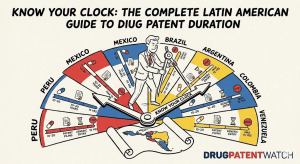
Ask a pharmaceutical executive how long a drug patent lasts in Latin America and you will get a number: 20 years. Ask a patent attorney in São Paulo the same question and you will get a three-part answer involving filing dates, regulatory delays, backlog years at the patent office, and a recent Supreme Court ruling that retroactively stripped patent term extensions from hundreds of pharmaceutical patents. Ask a generic manufacturer in Buenos Aires and they will tell you the number is irrelevant because Argentina does not have patent linkage, so they do not need to wait for the patent to expire anyway.
All three answers are correct. That is the problem.
The 20-year statutory term from filing date, established as the international baseline by the Agreement on Trade-Related Aspects of Intellectual Property Rights (TRIPS) in 1994 [1], is where the simple part of drug patent duration in Latin America ends. What follows is a patchwork of national implementations, bilateral trade agreement obligations, regional IP regimes, administrative examination backlogs, domestic court interpretations, data exclusivity systems, pipeline patent legacies, and compulsory licensing histories that varies country by country – and sometimes within the same country over time.
This guide maps that patchwork systematically. It covers the 20-year baseline and its exceptions, the eight largest pharmaceutical markets in the region in granular detail, and the specific mechanisms – patent term extensions, data exclusivity, patent linkage, evergreening, and compulsory licensing – that determine when a branded drug actually faces generic competition. It is aimed at IP managers, business development professionals, transaction counsel, regulatory affairs teams, and anyone who needs to know not just the nominal patent term but the effective period of market protection in each country.
Tools like DrugPatentWatch, which tracks patent expiration timelines, Orange Book equivalents, and regulatory exclusivity data for pharmaceutical products across jurisdictions, appear throughout this analysis because accurate regional patent intelligence requires structured, current data rather than reliance on the statutory text alone.
Part One: The Framework
The 20-Year Rule and Why It Rarely Produces 20 Years of Protection
Every Latin American country that is a WTO member – which includes all significant pharmaceutical markets in the region – has adopted the TRIPS Article 33 minimum standard: a patent term of at least 20 years from the filing date of the application [1]. In that narrow sense, the question of how long a drug patent lasts has a straightforward answer.
The practical divergence begins immediately. Drug development timelines mean that a compound patent is typically filed during pre-clinical or early clinical research, often 10 to 15 years before the drug reaches pharmacy shelves. By the time a branded pharmaceutical product is approved, tested, and commercially launched in a Latin American market, the patent may have consumed six to twelve years of its nominal 20-year term at the office of the first patent examiner it encountered. What reaches patients is rarely more than 8 to 14 years of statutory protection, and often less.
In the United States and Europe, patent term restoration mechanisms compensate patent holders partially for this regulatory delay. The U.S. Hatch-Waxman Act’s Patent Term Extension under 35 U.S.C. § 156 provides up to five additional years [2]. The EU’s Supplementary Protection Certificate regime adds up to five years beyond the basic 20-year term [3]. Japan, Canada, and Australia have analogous systems. Latin America, as a region, does not.
Brazil is the partial exception, and even that exception has been dramatically curtailed, as described below. Mexico provides no term restoration. Argentina, Colombia, Chile, Peru, and Ecuador provide none. The effective patent term gap between a top-selling drug’s protection in the United States and its protection in Brazil or Colombia is therefore systematically shorter in Latin America, not by a few months, but by years.
This has concrete competitive implications. A molecule with 14 years of protected revenue in the United States may have eight years of meaningful protection in Colombia and seven in Argentina – assuming the patent was granted at all, which in some countries is an assumption worth examining carefully.
The Filing Date Calculation Problem
The 20-year term runs from the “effective filing date” of the patent application. In countries that recognize priority under the Paris Convention – which all major Latin American markets do – the effective filing date can be the date of the earliest related application filed anywhere in the world, provided the subsequent filing in the Latin American country occurs within 12 months of the first filing [4].
This creates the following practical situation: a pharmaceutical company files a compound patent in the United States in January 2010. It files the same application in Brazil, Colombia, Mexico, and Chile via the Paris Convention priority route in December 2010. The 20-year term in all four countries runs from January 2010, the U.S. priority date. The patent expires in January 2030 in all jurisdictions.
But the Brazilian patent office (INPI) may not grant the Brazilian application until 2018, leaving only 12 years of granted exclusivity in Brazil rather than 20. The Colombian patent office (SIC) may grant it in 2016, leaving 14 years. Patent examination delays – driven by staffing, technical review requirements, and examination backlog – systematically erode the effective granted term even though the nominal 20-year period is preserved on paper.
The Brazilian situation has been severe enough to trigger legislative intervention, as discussed in detail below. The broader point is that understanding drug patent duration in Latin America requires tracking both the filing date (which sets the term) and the grant date (which determines when protection actually begins, and therefore how many years of that term are commercially useful).
TRIPS and Its Variable Implementation Across Latin America
TRIPS sets minimum standards, not maximum ones. WTO member states are free to provide stronger IP protection than TRIPS requires, and many Latin American countries have done so through bilateral free trade agreements with the United States, the European Union, and other major trading partners. These TRIPS-plus obligations have been among the most contentious aspects of pharmaceutical IP in the region for the past two decades.
TRIPS-plus provisions commonly found in LatAm bilateral trade agreements include:
Data exclusivity obligations that require protecting regulatory test data submitted for drug approval for a defined period (typically five to eight years), preventing competitors from relying on that data for their own regulatory submissions.
Patent linkage requirements that connect the regulatory approval process for generic drugs to the patent status of the corresponding branded product.
Extended terms for pharmaceutical patents to compensate for regulatory approval delays, approximating the U.S. Patent Term Extension framework.
Restrictions on the issuance of compulsory licenses, tightening the conditions under which governments can authorize generic production without patent holder consent.
Not all of these provisions have been fully implemented in every country that signed the relevant agreement. The gap between treaty text and domestic law implementation has been a persistent feature of pharmaceutical IP in the region, and in several countries, implementation has been partial, delayed, or subject to domestic legal challenges.
The Andean Community – Bolivia, Colombia, Ecuador, and Peru – operates under a regional IP regime established by Decision 486, which provides a harmonized patent law framework across member states [5]. This regional overlay adds a further layer of complexity for multinationals operating across Andean markets.
Part Two: Country-by-Country Analysis
Brazil: The Largest Market, The Most Complex Patent History
Brazil’s pharmaceutical market is the largest in Latin America by a wide margin, representing roughly $30 billion in annual sales and roughly 40 percent of the region’s total pharmaceutical revenue [6]. What happens to patent protection in Brazil matters enormously for the region’s overall branded drug economics.
INPI Backlog: Where Years Go
Brazil’s national patent office, the Instituto Nacional da Propriedade Industrial (INPI), has operated under structural examination delays for decades. Studies conducted by INPI itself identified average examination times for pharmaceutical patents exceeding 10 years in the early 2010s [7]. A patent filed in 2005 with a priority date running from that year would not be granted until 2015 or later – consuming two-thirds of its 20-year term before a single day of granted exclusivity began.
To address this structural problem, Brazilian law historically included an administrative provision under Article 40 of the Industrial Property Law (Law 9,279/1996) that guaranteed pharmaceutical patent holders a minimum of 10 years of protection from the grant date, even if the 20-year term from filing had already been substantially consumed by examination delays [8]. Under this provision, a patent filed in 2000, granted in 2015, would expire in 2025 – 10 years from grant – rather than in 2020, the 20-year-from-filing date that would otherwise apply.
This extension was significant. It meant that for a generation of pharmaceutical patents filed in the 1990s and early 2000s, Brazilian protection extended well beyond what TRIPS technically required, partially compensating for INPI delays.
The 2021 STF Decision: Retroactive Term Reduction
In May 2021, Brazil’s Supreme Court (Supremo Tribunal Federal, STF) declared the minimum-term guarantee provision of Article 40 unconstitutional, in Direct Unconstitutionality Action (ADI) 5529 [9]. The decision had immediate retroactive effect on pharmaceutical and agrochemical patents – the court applied it as of the date of the ruling, not prospectively.
The practical consequence was dramatic. Hundreds of pharmaceutical patents that had been calculated to expire years in the future were immediately recalculated to expire on their 20-year-from-filing dates, which in many cases had already passed or were imminent. INPI published revised expiration dates for affected patents, and generic manufacturers who had been waiting for those expiration dates scrambled to revise their entry timelines.
Industry estimates suggested the STF ruling accelerated generic entry for more than 100 pharmaceutical products, with total branded drug revenue exposed to earlier-than-anticipated generic competition running into billions of dollars [10].
For current portfolio analysis in Brazil, the 2021 STF decision means that any pharmaceutical patent granted before the ruling with an extension under Article 40 must be re-evaluated against the 20-year-from-filing calculation. DrugPatentWatch’s tracking of Brazilian patent expiration dates reflects post-ADI 5529 corrections where disclosed, but companies operating in Brazil should verify INPI’s current official expiration records for any patent material to their market position.
Brazil’s ANVISA Prior Consent Requirement
Brazil maintains a unique dual-review system for pharmaceutical patents. Under Law 10,196/2001, INPI is required to seek prior consent (anuência prévia) from the national health surveillance agency, ANVISA, before granting pharmaceutical patents [11]. ANVISA reviews pharmaceutical patent applications for consistency with public health interests and can reject consent on grounds that go beyond INPI’s technical patentability analysis.
This mechanism has generated extensive litigation and policy controversy. ANVISA has used the prior consent process to challenge secondary pharmaceutical patents – those covering new formulations, salts, polymorphs, and esters of known active ingredients – more aggressively than INPI’s examination guidelines alone would produce.
For patent term purposes, the ANVISA prior consent process adds another layer of examination-driven delay to the time between filing and grant, compressing the effective granted term even when both INPI and ANVISA ultimately approve the application.
Pipeline Patents: Brazil’s Retroactive Grant Legacy
Between 1997 and 2000, Brazil implemented a “pipeline” patent mechanism under Articles 230 and 231 of the Industrial Property Law. This mechanism allowed applications for patents on technologies already in the public domain internationally (but never patented in Brazil due to Brazil’s pre-TRIPS exclusion of pharmaceutical patents) to be filed and granted in Brazil retroactively, with the term running from the original foreign application date [12].
Pipeline patents were highly controversial from their inception. Critics, including domestic generic manufacturers and public health advocates, argued they extended monopoly protections over medicines that had already become generic in other markets and had never been patentable under Brazilian law. Pharmaceutical multinationals argued the mechanism was an appropriate transition to TRIPS compliance.
The pipeline period is now closed – no new pipeline applications can be filed – but the legacy patents remain in force until their calculated expiration dates. Several blockbuster drugs, including first-generation HIV antiretroviral agents that drove Brazil’s landmark compulsory licensing decisions, trace their Brazilian protection to pipeline patents rather than normal prosecution.
Mexico: USMCA Obligations and COFEPRIS Linkage
Mexico’s pharmaceutical patent system operates under a set of obligations that grew substantially more complex with the entry into force of the United States-Mexico-Canada Agreement (USMCA, known in Mexico as T-MEC) in 2020. The new agreement replaced NAFTA and imposed pharmaceutical IP commitments that Mexico has been in the process of implementing, not all of which were immediately operative.
Basic Patent Term: Mexican Institute of Industrial Property
Under Mexico’s Industrial Property Law (Ley Federal de Protección a la Propiedad Industrial, LFPPI), patents have a 20-year term from the filing date with no patent term extension available [13]. The Mexican Institute of Industrial Property (IMPI) processes pharmaceutical patent applications, and while IMPI’s examination times have historically been faster than INPI’s in Brazil, delays of three to five years between filing and grant are common for technically complex pharmaceutical applications.
Mexico provides no equivalent to the U.S. Patent Term Extension or European Supplementary Protection Certificate. A pharmaceutical compound filed in Mexico in 2005 and approved by COFEPRIS (the Federal Commission for Protection against Sanitary Risks, Mexico’s drug regulatory authority) in 2012 receives at most 13 remaining years of patent protection from the regulatory approval date, and no mechanism extends the 20-year-from-filing calculation.
USMCA Pharmaceutical IP Obligations
USMCA Article 20.F contains pharmaceutical IP commitments that exceed TRIPS baseline requirements in several respects [14]. Key provisions include:
A patent term adjustment requirement for “unreasonable delays” in patent examination at IMPI, obligating Mexico to compensate patent holders for examination time that exceeds prescribed periods. The implementing regulations define the specific delay thresholds and adjustment calculations.
An enhanced data exclusivity regime for biologic drugs, providing 10 years of protection for regulatory data submitted in support of biologic approvals – significantly stronger than the five-year protection available for small-molecule drugs.
Strengthened patent linkage requirements that connect COFEPRIS’s marketing authorization process for generic drugs to the patent status of reference products.
Mexico’s implementation of USMCA pharmaceutical provisions has been subject to ongoing dispute. The United States formally requested consultations under USMCA’s dispute settlement procedures in 2021, alleging that Mexico had not fully implemented its obligations under several IP chapters, including pharmaceutical-specific provisions [15]. The dispute has progressed through formal consultation processes, with Mexico maintaining that its implementation is complete and the United States disputing that assessment.
For practical patent term purposes, the USMCA patent term adjustment obligation is the most significant provision for branded pharmaceutical companies. If IMPI’s examination of a pharmaceutical application exceeds the defined reasonable periods, the patent holder becomes entitled to additional term. The exact calculation depends on the specific delay and the implementing regulations, but adjustments of six months to two years are plausible for applications that spent extended periods in examination.
COFEPRIS Patent Linkage: The Regulatorium Connection
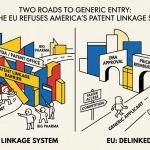
Mexico operates a formal patent linkage system through which COFEPRIS will not grant marketing authorization for a generic drug that references a patented product unless the generic applicant certifies that the relevant patents will have expired by the time of launch, or challenges their validity [16]. The mechanism approximates the U.S. Hatch-Waxman Paragraph IV certification framework, though with distinct procedural features under Mexican law.
The list of patents eligible for linkage protection is published in Mexico’s Official Gazette (Diario Oficial de la Federación) – the functional equivalent of the U.S. FDA’s Orange Book. Brand manufacturers must proactively register patents with COFEPRIS to obtain linkage protection. Patents not registered in the linkage list do not benefit from the 30-day standstill period that triggers when a generic application is filed.
For patent duration purposes, COFEPRIS linkage means that the effective date of generic market entry is controlled not only by the patent expiration date but by the resolution of any linkage challenge. A generic manufacturer that disputes the validity of a registered patent triggers a 45-day window in which the brand manufacturer can initiate litigation before COFEPRIS can proceed with the generic approval. This mechanism, while not extending the patent term per se, delays the practical commercial consequence of expiration by the duration of any resulting litigation.
Argentina: The Anti-Evergreening Pioneer
Argentina occupies a distinctive position in Latin American pharmaceutical IP. It has the third-largest pharmaceutical market in the region and one of the most developed domestic generic industries. Its patent examination guidelines, issued jointly by the National Institute of Industrial Property (INPI-Argentina) and the ANMAT (Administración Nacional de Medicamentos, Alimentos y Tecnología Médica), are among the most restrictive in the region toward secondary pharmaceutical patents.
Argentina’s 2012 Joint Guidelines
In 2012, Argentina’s INPI and Ministry of Health published joint examination guidelines that established heightened standards for pharmaceutical patent applications covering new uses, new formulations, polymorphs, metabolites, salts, and combinations of known substances [17]. The guidelines specify that patent applications in these categories must demonstrate a new and non-obvious technical effect beyond what would be expected from the known compound, and that the improvement must be not merely disclosed but specifically claimed and supported. <blockquote> “Secondary patents – those covering new formulations, dosage forms, routes of administration, or new uses of known compounds – account for approximately 65 percent of all pharmaceutical patent applications in low- and middle-income countries, according to research published in the journal PLOS ONE, yet they extend market exclusivity without introducing new active substances.” [18] </blockquote>
The practical effect of the Argentine guidelines has been a higher rate of refusal of secondary pharmaceutical patent applications than in most comparable jurisdictions. Generic manufacturers operating in Argentina have benefited from the guidelines because a patent that is refused cannot delay their market entry. Branded pharmaceutical companies operating in Argentina have challenged the guidelines’ legality on the grounds that they impose requirements exceeding TRIPS’ patentability standards, though these challenges have not succeeded in reversing the guidelines.
No Patent Linkage in Argentina
Argentina has no patent linkage system. ANMAT’s process for approving generic drugs does not involve verification of patent status for the reference product. A generic manufacturer can obtain an ANMAT marketing authorization for a product whose compound patent remains in force, and ANMAT will grant the approval. The patent holder’s remedy in that case is to seek a civil injunction against the generic manufacturer in ordinary courts – a slower and less certain remedy than the automatic linkage protections available in Mexico or under Hatch-Waxman in the United States.
The absence of linkage reflects a deliberate domestic pharmaceutical policy choice that prioritizes generic access over extended brand exclusivity. For pharmaceutical companies calculating the effective patent term in Argentina, this distinction is material: the nominal 20-year term from filing provides legal rights, but those rights require active enforcement through commercial courts rather than through the regulatory process.
Argentina’s Treatment of Biologic Patents
Argentina’s Biotechnology Law (Law 26,270) and subsequent ANMAT resolutions govern the regulatory pathway for biosimilars in Argentina. The country does not provide the enhanced biologic data exclusivity period that USMCA imposed on Mexico, and its biosimilar regulatory pathway does not include a mandatory patent resolution process equivalent to the U.S. BPCIA “patent dance” [19].
The result is that biologic drugs in Argentina face a patent term structure similar to small-molecule drugs under national law – 20 years from filing, no extension, no linkage protection – with the practical caveat that the technical complexity of biologics limits the number of manufacturers capable of developing and launching biosimilars, which provides de facto market protection beyond the patent term in a way that small-molecule generics do not.
Colombia: The Andean Regime and Compulsory License History
Colombia’s pharmaceutical patent system operates under a dual framework: Decision 486 of the Andean Community provides the regional baseline for patentability and patent term, while Colombia’s obligations under the U.S.-Colombia FTA (PTPA, entered into force 2012) overlay additional TRIPS-plus requirements [20].
Decision 486: The Andean Patent Term Baseline
Decision 486 establishes a 20-year patent term from the filing date for all Andean Community member states, conforming to TRIPS Article 33 [5]. The decision also establishes Andean-level patentability standards that, in practice, are moderately restrictive toward secondary pharmaceutical patents – requiring that new formulations or salts demonstrate enhanced efficacy, not merely changed properties, to qualify for separate patent protection.
Colombia’s patent examination at the Superintendencia de Industria y Comercio (SIC) has historically involved delays of three to seven years for pharmaceutical applications, compressing the effective granted term. Unlike Brazil, Colombia has not had a minimum-term guarantee provision, meaning the full examination delay falls directly on the effective commercial life of the patent.
Colombia-U.S. FTA: Data Exclusivity and Linkage Commitments
The Colombia-U.S. FTA required Colombia to implement a five-year data exclusivity regime for small-molecule pharmaceutical products and a presumptive linkage mechanism connecting drug regulatory approvals to patent status [21]. Colombia’s implementation of these commitments has been contested domestically.
The data exclusivity provision, implemented through Colombian Decree 2085 of 2002, protects undisclosed clinical trial data submitted to INVIMA (the Colombian drug regulatory authority) for new chemical entities. The five-year protection period runs from the date of the first INVIMA approval, not from the original global approval date – a distinction that benefits brand manufacturers in cases where the Colombian approval comes years after the U.S. or European approval.
Colombia’s Compulsory License: Imatinib (2016)
In March 2016, the Colombian government declared imatinib (sold by Novartis as Gleevec for treatment of chronic myeloid leukemia) to be of public interest and issued a compulsory license authorizing the health ministry to import generic versions from India without patent holder authorization [22]. The decision reduced Colombia’s cost for imatinib from approximately $15,000 per year to $1,000 per year for government-procured doses.
The Novartis imatinib patent in Colombia had faced challenges on grounds both of patentability (under Andean Decision 486’s standards for secondary patents covering new polymorphic forms) and of excessive pricing. The Colombian government’s decision relied on TRIPS Article 31, which permits compulsory licensing for public non-commercial use, and on the Doha Declaration’s affirmation of WTO members’ rights to use TRIPS flexibilities to promote access to medicines [23].
The compulsory license was notable as the first issued by Colombia, and it triggered intensive pressure from the U.S. pharmaceutical industry and the U.S. Trade Representative’s office. It remains in force and has influenced Colombian government policy on pharmaceutical pricing negotiations.
For patent term purposes, a compulsory license does not terminate the patent – the patent remains in force, and the patent holder retains rights against commercial infringers who are not authorized under the license. But the economic value of the patent during the compulsory license period is dramatically reduced, which for valuation purposes approximates an effective term shortening.
Chile: FTA Obligations and Secondary Patent Restrictions
Chile entered a free trade agreement with the United States in 2003 (USCFTA) that included pharmaceutical IP provisions more extensive than the TRIPS baseline [24]. Chile was the first Latin American country to sign a bilateral FTA with the United States including these provisions, and the experience foreshadowed subsequent debates in Colombia, Peru, and other markets.
Patent Term and the Five-Year Data Exclusivity Regime
Chile’s Industrial Property Law (Law 19,039) provides a 20-year patent term from filing with no patent term extension [25]. Chile does not have a patent term adjustment or supplementary protection certificate regime. The effective patent term for pharmaceutical products is therefore directly determined by the examination timeline at INPI-Chile (Instituto Nacional de Propiedad Industrial).
Chile’s data exclusivity regime, implemented under Article 91 of Law 19.039 as modified following the USCFTA, provides five years of data protection for new chemical entities from the date of marketing approval in Chile [24]. For biological products, the protection period is five years as well, though proposals to extend this to match USMCA’s 10-year biologics standard have been discussed.
The absence of patent term extension in Chile means the data exclusivity period is commercially significant in cases where the patent’s effective remaining term is shorter than five years at the time of Chilean approval. In such cases, data exclusivity provides protection beyond what the patent alone would deliver.
Chile’s Approach to Secondary Patents
Chile’s patent examination practice applies Decision 486 standards by reference for pharmaceutical applications, and Chilean examiners have been relatively active in refusing patents on polymorphic forms and new uses of known compounds. A 2013 study by the University of Chile examined a sample of pharmaceutical patent applications at INPI-Chile and found refusal rates for secondary applications running approximately 40 percent higher than for applications claiming new chemical entities [26].
This examination practice is commercially relevant to any assessment of the effective patent portfolio for a drug in the Chilean market. Brand manufacturers cannot assume that secondary patents granted in the United States or Europe will receive equivalent protection in Chile.
Peru: Pipeline Legacy and TLC Obligations
Peru’s pharmaceutical patent landscape combines three distinct elements: residual effects of its own pipeline patent mechanism (implemented in the 1990s like Brazil’s), obligations under the Peru-U.S. Trade Promotion Agreement (PTPA, 2009), and membership in the Andean Community under Decision 486.
Peru’s Pipeline Patents
Peru implemented a pipeline patent mechanism analogous to Brazil’s in 1996 under Legislative Decree 823 [27]. Applications were filed for products and processes that were already in the international public domain but had never been patented in Peru. Peru’s mechanism was somewhat narrower than Brazil’s in geographic scope – it required that the product have been commercially developed after the convention date – but its structure and controversy were similar.
The pipeline period closed in 1997, one year after implementation, and no new pipeline applications are possible. But pipeline patents on key pharmaceutical compounds remain in the Peruvian registry, with term running from the original foreign application date. Their effective expiration dates vary, and for some second-generation compounds in therapeutic areas like HIV and hepatitis, pipeline patents represent the controlling protection.
Peru-U.S. PTPA: Enhanced IP Commitments
The Peru-U.S. PTPA entered into force in 2009 and includes pharmaceutical-specific IP provisions including data exclusivity (five years for new chemical entities, ten years for biologics), a patent linkage requirement that DIGEMID (Peru’s drug regulatory authority) must respect patent status when approving generic applications, and obligations regarding the transparency of patent registration systems [28].
Peru’s implementation of these provisions has been studied by researchers at the Instituto de Estudios Peruanos, who documented a 20 to 30 percent reduction in new generic drug registrations in the five years following PTPA implementation compared to the five-year pre-PTPA period, attributing the reduction partly to the strengthened IP regime and partly to increased bioequivalence requirements [29].
The Andean Bloc: Bolivia and Ecuador
Bolivia and Ecuador, both members of the Andean Community, operate under Decision 486’s 20-year patent term from filing with no extension mechanisms. Both countries have smaller pharmaceutical markets than Brazil, Mexico, Colombia, and Chile, and both have historically been less targeted by multinational pharmaceutical patent prosecution.
Ecuador issued a compulsory license for HIV antiretrovirals in 2010, the first in the Andean region, covering lopinavir/ritonavir for non-commercial government health system procurement [30]. The license reduced Ecuador’s antiretroviral procurement cost substantially and served as a precedent for subsequent Latin American compulsory licensing decisions.
Bolivia maintains a notoriously slow patent examination process and limited pharmaceutical patent enforcement capacity. The practical effect is that brand manufacturers who rely on Bolivian patent protection without supplementary legal infrastructure face significant challenges in enforcing their rights, even when the nominal patent term has not expired.
Central America and the Caribbean: CAFTA-DR Obligations
The Dominican Republic-Central America Free Trade Agreement (CAFTA-DR), covering Costa Rica, El Salvador, Guatemala, Honduras, Nicaragua, and the Dominican Republic, imposed pharmaceutical IP obligations in 2004 analogous to those in the Peru-U.S. and Colombia-U.S. FTAs [31]. These include five-year data exclusivity for small molecules, enhanced patent protection for biologics, and requirements for patent linkage between drug regulatory approvals and patent status.
Costa Rica has the most developed pharmaceutical regulatory system in the Central American group and has implemented CAFTA-DR obligations most fully, including a formal patent linkage mechanism administered by the CCSS (Caja Costarricense de Seguro Social). Guatemala and Honduras have partially implemented these obligations; Nicaragua has implementation gaps that have drawn U.S. government attention in trade reviews.
For patent term calculation purposes, the 20-year from filing date applies across all CAFTA-DR member states without extension. The commercially relevant variation is in the data exclusivity period and the presence or absence of functional patent linkage, which together determine the effective market protection period beyond the patent term itself.
Part Three: The Pipeline Patent Legacy
What Pipeline Patents Are and Why They Matter
Pipeline patents were a mechanism unique to Latin America’s TRIPS implementation period. Before TRIPS, many Latin American countries excluded pharmaceutical compounds from patent protection under the rationale that medicines required public access. Brazil excluded pharmaceutical inventions from patentability until 1997. Peru, Argentina, and other countries had similar exclusions.
When TRIPS obligated these countries to extend patent protection to pharmaceuticals, legislators faced a choice about how to handle compounds that were already commercialized and patented elsewhere but had never been patentable domestically. The pipeline mechanism was the industry-preferred solution: allow applications for these already-developed compounds to be filed in the domestic patent office, using the original foreign application date to establish the 20-year term.
The effect was to grant monopoly protection, for the remaining term of the foreign patent, over drugs that had been freely producible domestically before TRIPS. Generic manufacturers who had been producing these drugs domestically – in full compliance with then-current law – suddenly found themselves potential patent infringers.
Brazil and Peru implemented formal pipeline mechanisms. Argentina and Colombia did not, relying instead on standard Paris Convention priority filings for newly developed drugs and leaving pre-existing generics in a legal gray zone.
Which Countries Still Have Active Pipeline Patents
As of 2025, the generation of pipeline patents filed in the 1996-2000 window is approaching its collective expiration. Patents claiming priority from original applications filed in 1987 to 1997 would expire, under the 20-year rule, between 2007 and 2017 – which means the vast majority have already expired.
The exceptions are pipeline patents that claimed priority from applications filed in the early to mid-1990s on compounds still in commercial use. First-generation protease inhibitors for HIV treatment, second-generation quinolone antibiotics, and specific oncology compounds represent the residual population of pipeline patents that may still carry active protection in Brazil and Peru.
Tracking the current status of pipeline patents requires consulting INPI-Brazil and INDECOPI-Peru (Peru’s national IP office) directly, since the complex term calculations – original foreign priority date, pipeline application date, examination delay, and post-STF recalculations in Brazil – cannot be reliably reconstructed from secondary databases alone. DrugPatentWatch’s Brazil patent data includes pipeline patent identifiers where the information is available in INPI’s public records, providing a useful starting point for any audit.
Part Four: Data Exclusivity Across the Region
Data exclusivity is a form of market protection entirely distinct from patent rights. Where patents protect specific inventions defined by claims, data exclusivity protects the confidential clinical trial data submitted to regulatory authorities during the drug approval process. A generic manufacturer who wants to rely on that data to support its own abbreviated application – rather than conducting its own full clinical program – cannot do so during the exclusivity period.
The TRIPS Article 39.3 Baseline
TRIPS Article 39.3 requires WTO member states to protect “undisclosed test or other data” submitted to regulatory authorities against “unfair commercial use,” but the provision is notoriously vague about what form that protection must take and how long it must last [1]. The WTO dispute settlement body has never definitively interpreted Article 39.3 to require a specific exclusivity period, and countries have implemented the obligation with dramatically different approaches.
The range across Latin America reflects this flexibility: some countries provide no formal data exclusivity period, relying on a general confidentiality obligation that may or may not prevent regulatory authorities from relying on originator data; others provide the TRIPS-plus five-year period imposed by bilateral FTAs; and USMCA-committed Mexico provides ten years for biologics.
Country-by-Country Data Exclusivity Periods
Brazil provides no formal data exclusivity period beyond ANVISA’s general data confidentiality obligations. Generic manufacturers in Brazil can reference branded drug approval data to support ANDA applications without waiting for any exclusivity period to expire, provided the drug is not subject to a separate patent protection period.
This absence of data exclusivity is commercially significant for biologic drugs in Brazil. A biosimilar manufacturer in Brazil does not face a 10-year data exclusivity barrier analogous to what would apply under U.S. law or USMCA. The regulatory pathway for biosimilar approval in Brazil is governed by ANVISA Resolution RDC 55/2010, which permits abbreviated registration pathways relying on the reference biologic’s established safety and efficacy profile [32].
Mexico provides five years of data exclusivity for small-molecule drugs and, under USMCA implementation, ten years for biologic drugs. The biologics protection period was a significant USMCA concession that directly affects the timeline for biosimilar entry in the Mexican market. A biologic drug approved in Mexico in 2022 cannot face an abbreviated biosimilar registration until 2032 at the earliest under data exclusivity law, regardless of patent status.
Colombia provides five years of data exclusivity under Decree 2085 of 2002, as noted above. The protection runs from the date of first Colombian approval, not from global first approval, which can extend effective protection for drugs whose Colombian approval followed the originator market by several years.
Chile provides five years of data exclusivity under Law 19.039. Argentina provides no formal data exclusivity under domestic law, consistent with its broader approach to pharmaceutical IP. Peru provides five years for small-molecule drugs and eight years for biologics under its PTPA obligations.
The Interaction Between Data Exclusivity and Patent Term
Data exclusivity and patent protection interact in ways that extend overall market protection beyond what either mechanism provides independently. A drug approved in Colombia in 2010 with a compound patent expiring in 2020 is protected by data exclusivity until 2015. That sequential protection is straightforward.
The more commercially interesting case is a drug where the data exclusivity period extends beyond the patent term. A drug with a compound patent expiring in 2018 but with a Colombian approval date of 2015 – triggering data exclusivity until 2020 – retains a two-year period of regulatory data protection after the patent expires. During those two years, a generic manufacturer can obtain its own marketing authorization, but cannot rely on the originator’s clinical data to do so. If the generic manufacturer lacks its own adequate data, regulatory approval may be delayed regardless of patent status.
This layering effect is particularly pronounced for biologic drugs in Mexico, where 10-year data exclusivity can extend effective market protection well beyond the compound patent term for products with late regulatory approvals.
Part Five: Evergreening in Latin America
The practice described by critics as “evergreening” – filing successive secondary patents on formulations, dosage regimens, polymorphic forms, and new therapeutic uses of a known compound to extend effective market exclusivity – is a contested reality across the Latin American pharmaceutical landscape.
The Specific Tactics and Their Patent Term Implications
A secondary patent filed on a new formulation of a compound whose compound patent expires in 2025 does not extend the compound patent. It creates a separate patent, with its own 20-year-from-filing term, that may expire in 2030 or 2035 depending on when it was filed. A generic manufacturer who launches a product identical to the original formulation on the day the compound patent expires does not infringe the formulation patent – as long as the generic’s formulation is different from the patented one. But a generic manufacturer seeking to replicate the specific commercially successful formulation (which may be the only one patients and prescribers are familiar with) faces the formulation patent as an obstacle.
The practical evergreening concern in Latin America therefore centers on formulation and polymorphism patents that cover the commercially preferred version of a product rather than the compound itself, and on new-use patents that capture the primary therapeutic indication even after the compound patent expires.
The countries most aggressive in combating these secondary patents through examination practice are Argentina (via its 2012 guidelines), the Andean Community members (via Decision 486’s efficacy enhancement requirement), and, increasingly, Brazil (where ANVISA’s prior consent process applies heightened scrutiny).
The countries where secondary pharmaceutical patents face less restrictive examination practice include Mexico (where IMPI has historically applied relatively standard TRIPS-level patentability analysis) and Chile (where examination practice has been somewhat more permissive than Andean standards but less permissive than U.S. or European standards).
NGO and Government Monitoring of Secondary Patents
The role of civil society organizations in monitoring and challenging pharmaceutical patent applications in Latin America is substantial and growing. Organizations including Missao Paz in Brazil, IFARMA in Colombia, and Fundacion Episteme in Ecuador have developed specific expertise in reviewing pharmaceutical patent applications and filing third-party observations and oppositions.
In Brazil, the civil society and academic research network around access to medicines has produced systematic analyses of pharmaceutical patent applications at INPI, including studies identifying the percentage of applications covering secondary rather than primary inventions [33]. These analyses have informed ANVISA’s prior consent review criteria and have been cited in legislative debates about patent policy.
In Colombia, IFARMA published analyses showing that a substantial portion of pharmaceutical patent applications filed at SIC in the 2000s and 2010s covered secondary inventions that would not have qualified for patent protection under strict application of Decision 486 standards [34]. These analyses contributed to SIC’s increased enforcement of the Decision 486 efficacy requirement.
This civil society monitoring function operates as a de facto patent examination quality check in several Latin American markets. Companies relying on secondary patents for market protection in these jurisdictions face a higher probability of post-grant challenge than they might in markets where civil society monitoring is less organized.
Part Six: Compulsory Licensing
Legal Framework: TRIPS Article 31 and the Doha Declaration
Compulsory licensing under TRIPS Article 31 permits WTO member states to authorize the use of a patented invention without the patent holder’s consent, subject to conditions including adequate remuneration to the patent holder and limitation of the license to the domestic market for non-commercial government use or public health emergencies [1].
The Doha Declaration on TRIPS and Public Health, adopted by WTO members in 2001, clarified that TRIPS shall be interpreted and implemented to support WTO members’ rights to promote access to medicines and to protect public health [23]. It specifically confirmed that countries are free to determine the grounds on which compulsory licenses are granted, that a public health emergency is not a prerequisite for compulsory licensing, and that any country can take steps to protect public health.
The Doha Declaration did not change the formal legal text of TRIPS, but it provided political authorization for developing country governments to use compulsory licensing provisions without the risk of being found in TRIPS violation.
The Latin American Record
Brazil has the most extensive compulsory licensing history in Latin America. The government issued a compulsory license for efavirenz, then Merck’s branded HIV antiretroviral Sustiva, in 2007, authorizing the health ministry to import generic efavirenz from India at a fraction of the branded price [35]. The decision followed years of negotiation in which Merck declined to offer Brazil a price reduction consistent with what the government considered affordable for public health system procurement.
The efavirenz license was legally straightforward under TRIPS Article 31’s non-commercial government use provision. It covered government procurement only, not private-market sales. Merck continued to supply the private market and received a compulsory license royalty of 1.5 percent of the generic product’s value for government purchases.
The Brazilian compulsory licensing framework has been used as leverage in subsequent drug pricing negotiations. When the government threatens a compulsory license, branded manufacturers have typically offered price reductions that avoid the formal issuance of a license. Sofosbuvir for hepatitis C treatment was the subject of extended compulsory licensing negotiations in Brazil, culminating in a voluntary license arrangement with Gilead that provided significantly reduced prices for government procurement without a formal government-mandated license [36].
Ecuador’s 2010 compulsory license for lopinavir/ritonavir (Abbott’s Kaletra) and the 2016 Colombian license for imatinib (Novartis’s Gleevec) completed the three most significant compulsory licensing events in the region. All three demonstrated that compulsory licensing is a viable policy tool in the Latin American context, that TRIPS Article 31 provides adequate legal authority for government use licenses, and that the pharmaceutical industry’s response is primarily political and diplomatic rather than legal.
Compulsory Licensing and Patent Term: The Practical Interaction
A compulsory license does not reduce the legal term of a patent. The patent expires on its 20-year-from-filing date regardless of whether a compulsory license is in force. What the compulsory license eliminates is the patent’s ability to exclude generic competition in the government procurement channel during the license period.
For patent valuation purposes, the relevant question is what percentage of a drug’s market in a given country flows through government procurement channels. In Brazil, Colombia, and Ecuador, government health systems account for a substantial share of pharmaceutical spending – particularly for hospital drugs, antiretrovirals, hepatitis treatments, and oncology products procured under public health programs. For these drugs in these countries, the probability of a compulsory license or voluntary license negotiation is a material valuation factor that reduces the expected economic value of the patent below what the nominal term would suggest.
Part Seven: Generic Entry Timelines and Market Dynamics
The Abbreviated Registration Pathway Landscape
In the United States, the ANDA system enables generic manufacturers to reference the innovator’s clinical data for abbreviated approval, triggering a defined Paragraph IV patent challenge process. Latin American equivalents vary significantly in their structure, completeness, and administrative efficiency.
Brazil’s ANVISA manages generic registration through Resolution RDC 204/2017 and subsequent norms, which require demonstrated pharmaceutical equivalence and bioequivalence for solid oral dosage forms [37]. The ANVISA registration process for generics typically takes 18 to 36 months from submission to approval, with variation depending on product complexity and queue position. Generic registration is not formally linked to patent status – a manufacturer can obtain ANVISA approval for a product whose compound patent remains in force.
Mexico’s COFEPRIS manages generic registration under the abbreviated marketing authorization process established in the General Health Law and LFPPI. As noted above, Mexico’s linkage mechanism creates an intersection between the COFEPRIS approval process and patent status for products on the patent linkage list, but this linkage produces a delay of weeks to months rather than years.
Argentina’s ANMAT registration process for generic drugs (abbreviated as “productos similares” in the Argentine regulatory framework) does not involve a patent linkage step. Colombian INVIMA, Peruvian DIGEMID, and Chilean ISP all operate registration processes that are nominally linked to patent status (under their respective FTA obligations) but with variable enforcement in practice.
Bioequivalence Requirements and Their Effect on Generic Entry Timing
Bioequivalence requirements, which vary across Latin American regulatory agencies in their scope and stringency, affect generic entry timing independently of patent term. A generic manufacturer who has satisfied all patent-related obstacles (waited for expiration or obtained a compulsory license) still needs to demonstrate bioequivalence before regulatory approval.
Brazil’s comprehensive bioequivalence program, established through ANVISA’s Generic Drug Law (Law 9,787/1999), requires full in vivo bioequivalence studies for most solid oral dosage forms [38]. This requirement added technical rigor to the Brazilian generic approval process and created a period of several years after the law’s enactment when bioequivalence testing was unavailable or limited in Brazil, delaying generic entry for drugs whose patents expired after 1999.
Countries with less developed bioequivalence requirements – including several Central American markets and Bolivia – may see faster generic entry after patent expiration in terms of regulatory timeline, but the resulting products may face prescriber resistance due to uncertainty about therapeutic equivalence.
Price Erosion After Patent Expiration
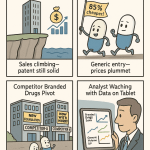
The economic consequences of patent expiration in Latin America follow distinct patterns from the U.S. experience. In the United States, generic entry on major products rapidly drives volume away from the branded product, producing the familiar “patent cliff” where branded sales collapse within 12 to 24 months of generic launch.
Latin American markets show more varied erosion patterns. Brazil and Mexico, with large and well-developed generic industries, show relatively rapid volume erosion after patent expiration for oral solid dosage forms – comparable to U.S. patterns though somewhat slower. But price erosion in these markets is often moderated by regulatory pricing frameworks, public procurement substitution policies, and the continued brand loyalty of private-market prescribers in markets where generic substitution is not mandatory.
Argentina’s extensive generic industry and ANMAT’s bioequivalence requirements produce a market structure in which generic drugs occupy a large share of prescriptions but branded generics (products with invented brand names rather than INN names) maintain substantial market presence even after originator patent expiration.
In smaller markets – Central America, Ecuador, Bolivia – the generic industry capacity is more limited, and patent expiration does not always produce rapid competitive entry because no manufacturer has invested in the production infrastructure and regulatory submissions needed to serve the market. This structural limitation on generic entry means that effective market exclusivity can persist beyond the nominal patent term in smaller markets, not because of legal protection but because of competitive dynamics.
Part Eight: Strategic Implications for Pharmaceutical Operations
Filing Strategy: Where to Protect and When
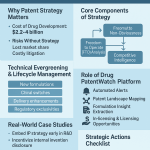
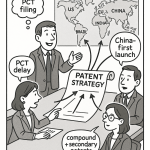
A pharmaceutical company with a new compound in Phase II clinical development faces a filing strategy decision for Latin America. The theoretical answer is straightforward: file Patent Cooperation Treaty (PCT) applications preserving entry into all 150-plus PCT member states, then select national phase entry in markets where commercial development justifies the investment.
The practical decision is more nuanced, and the metrics that should drive it include:
Market size and growth projections for the specific therapeutic area, using sources like IQVIA’s quarterly pharmaceutical market data for the region.
The probability that the patent will survive examination in each jurisdiction, given the jurisdiction’s track record on applications in the relevant patent category (compound, formulation, biological).
The availability of patent linkage protection, which determines whether the patent can delay generic registration rather than merely provide a legal right requiring court enforcement.
The likelihood of regulatory delays in patent examination (INPI-Brazil’s historic backlog being the primary concern) and the remaining useful term that will survive those delays.
The therapeutic area’s political sensitivity for compulsory licensing risk, with HIV, hepatitis, oncology, and rare disease drugs representing higher compulsory licensing risk than drugs in categories without this political history.
For major Latin American markets, the investment in full national phase prosecution is generally justified for any product with projected peak annual sales exceeding $50 million in the region. For smaller products, selective prosecution – covering Brazil and Mexico at minimum, with Colombia and Chile as the next tier – is the common approach.
Using Patent Intelligence Databases in LatAm Strategy
Effective pharmaceutical patent strategy in Latin America requires current, integrated data across multiple national patent offices, regulatory agencies, and litigation databases. This is operationally more challenging than in the United States, where PAIR (Patent Application Information Retrieval) and the FDA’s Orange Book provide comprehensive coverage in a single national system.
DrugPatentWatch provides structured pharmaceutical patent and exclusivity data that covers U.S. patents and FDA exclusivities as a primary data source, with international patent family tracking that extends to Latin American counterpart patents where data is available from PATENTSCOPE and ESPACENET. For Latin American-specific coverage, DrugPatentWatch data should be supplemented with direct access to national patent office databases:
INPI-Brazil’s online patent database (basis.inpi.br) provides the most current information on Brazilian patent status, prosecution stage, and post-ADI 5529 recalculated expiration dates.
IMPI-Mexico’s MARCANET system provides information on Mexican patent registration and linkage list status, though the database requires navigation in Spanish and does not always reflect real-time prosecution status.
SIC-Colombia’s patent search portal and INDECOPI-Peru’s information system provide national coverage for Andean Community member states.
For companies managing large Latin American patent portfolios, the manual cross-referencing task across these national systems is substantial. Several commercial legal technology providers have developed Latin America-specific pharmaceutical patent databases that aggregate national office data, but coverage consistency varies, and direct national office verification remains necessary for any patent material to commercial decisions.
Patent Expiration Modeling for LatAm Products
Modeling the patent expiration timeline for a pharmaceutical product across Latin American markets requires a systematic approach that accounts for the specific variables in each jurisdiction. A practical framework processes each product through the following variables for each national market:
The effective filing date for the controlling compound patent, either as the direct national filing date or the Paris Convention priority date from the first-filed application.
The examination delay at the relevant national patent office, estimated from the applicant’s historical prosecution experience or publicly available examination statistics.
The grant date of the patent, if already granted, or the projected grant date based on prosecution progress.
The presence of any data exclusivity protection, its start date, and its duration under applicable law.
The existence of patent linkage protection and the registered patents list in the relevant market.
Any active compulsory licensing risk based on the therapeutic area and the drug’s pricing relative to local market affordability benchmarks.
Any post-grant challenges, including IPR equivalents, opposition proceedings, or administrative validity reviews, and their current procedural status.
Aggregating these variables across a portfolio of twenty products and eight major Latin American markets produces a matrix of approximately 160 data points, each requiring independent verification. The payoff is a realistic forecast of when each product faces generic competition in each market – the true commercial patent cliff, not the nominal statutory term.
Biosimilar Strategy: The Biologic Patent Landscape
Biologic drugs – including monoclonal antibodies, protein therapeutics, and recombinant hormones – present a distinct patent landscape in Latin America compared to small-molecule drugs. The patent protection for a biologic typically involves multiple overlapping patents: patents on the protein sequence, patents on manufacturing processes and cell lines, patents on formulations (particularly stabilizers and excipients), and patents on specific therapeutic uses.
Brazil’s biosimilar regulatory framework, established under ANVISA Resolution RDC 55/2010, has produced a growing biosimilar market in oncology and inflammatory diseases [32]. Brazilian biosimilar approvals for adalimumab (Humira), trastuzumab (Herceptin), and bevacizumab (Avastin) reference products have demonstrated that ANVISA’s abbreviated pathway is functional, though the pathway requires comparative quality and non-clinical data that exceeds what small-molecule generic registration demands.
The absence of data exclusivity for biologics in Brazil means that biosimilar development in Brazil is not legally blocked by data protection beyond whatever patent terms remain. The practical barriers are scientific and regulatory rather than IP-based: demonstrating biosimilarity to a complex biologic reference product requires substantial analytical and clinical investment regardless of patent status.
In contrast, Mexico’s 10-year biologic data exclusivity under USMCA implementation means that biosimilar development in Mexico is legally blocked for that period, creating a stronger effective protection for biologic innovators in Mexico than in Brazil. The strategic implication is that Mexico offers longer effective biologic protection than Brazil, despite both countries nominally adhering to the same TRIPS 20-year patent term standard.
M&A Due Diligence: What LatAm IP Diligence Must Cover
Acquisitions of pharmaceutical companies or product rights with significant Latin American exposure require IP diligence that specifically addresses the regional variables described in this article. Standard diligence frameworks built around U.S. patent analysis will miss material risks.
The key additions for LatAm-specific diligence include:
Post-ADI 5529 verification of all Brazilian patent expiration dates, confirming that the parties’ representations about patent term are based on INPI’s corrected post-ruling calculations rather than pre-2021 estimates.
Verification that compound patents in each major market have been properly nationalized from PCT applications, that maintenance fees are current, and that examination status is accurately reflected in the transaction disclosure.
Assessment of compulsory licensing risk for the specific therapeutic categories involved, using Colombia, Brazil, and Ecuador’s historical licensing targets as a pattern for identifying higher-risk categories.
Analysis of the data exclusivity status in each market, distinguishing between markets where data exclusivity provides protection supplementary to or extending beyond patent term and markets where it provides no additional protection.
Identification of any pending secondary patent applications whose grant or refusal would materially affect the effective protection timeline for key products.
Review of the pipeline patent status for any product approved before 1997 in markets where pipeline mechanisms were implemented.
This due diligence scope is substantially broader than what would be required for a U.S.-focused pharmaceutical transaction, and the timeline for completing it reliably should not be compressed below 45 to 60 days for any transaction where Latin American revenue represents a material portion of the deal value.
Part Nine: The Policy Debate and Its Commercial Implications
Access to Medicines vs. Innovation Incentives
The structural tension between pharmaceutical patent protection and access to medicines has been a defining policy debate in Latin America for three decades. It manifests in the specific legal structures described throughout this article – Argentina’s anti-evergreening guidelines, Brazil’s compulsory licensing history, the Andean Community’s restrictive examination standards – but its commercial implications extend beyond the specific mechanisms.
A pharmaceutical company operating in Latin America must recognize that the political environment in most countries in the region is broadly skeptical of pharmaceutical patent protection, particularly for products treating diseases with high public health burden. Pricing, access, and patent policy are interconnected in public discourse in a way that is less pronounced in the U.S. or European markets.
This environment creates specific operational risks that do not appear in patent databases:
Government procurement pricing pressure that may effectively cap revenue from patented products regardless of patent status, because government health systems constitute the majority purchasers and can simply refuse to purchase at patent-protected prices.
Political pressure to negotiate voluntary licenses or price reductions as an alternative to compulsory licensing, which brand manufacturers generally accept because the alternative is a formal government license at lower royalty rates.
Administrative actions by regulatory authorities – like ANVISA’s prior consent refusals – that delay patent grant or reduce patent scope for reasons that go beyond technical patentability.
Legislative proposals to modify pharmaceutical IP law, which have been a recurring feature of political discourse in Brazil, Argentina, Colombia, and Chile. Some proposals have been enacted; others have not; all create uncertainty.
The 2024-2030 Outlook: What Is Changing
Several active policy developments will affect the Latin American pharmaceutical patent landscape over the next several years.
Brazil’s post-ADI 5529 patent term adjustment is still working through the full implications of the 2021 STF ruling. INPI is processing applications for recalculated expiration dates, some of which involve complex interactions between pipeline patent terms, PTA-equivalent adjustments claimed by applicants, and the constitutional ruling’s scope. Litigation over specific patent expiration dates under the new framework is ongoing as of 2025.
Mexico’s USMCA implementation disputes, including the U.S. consultation requests, may produce further regulatory changes or formal dispute settlement proceedings that affect the pharmaceutical IP framework in ways not yet final. Companies with significant Mexican pharmaceutical patent portfolios should monitor these proceedings as a material operational variable.
Colombia’s draft patent reform legislation, circulated in various forms since 2020, proposes changes to examination standards for pharmaceutical patents that would codify stricter anti-evergreening criteria in statute rather than relying on SIC administrative practice. If enacted, the reform would formalize the limitations on secondary patent protection that already exist informally in Colombian examination practice.
The expansion of regional patent prosecution harmonization initiatives – including potential development of an Andean Community patent authority analogous to the EPO – has been discussed periodically without reaching agreement. If such a mechanism were established, it could dramatically change the cost and complexity of patent prosecution across Bolivia, Colombia, Ecuador, and Peru by enabling a single regional application to substitute for four separate national applications.
Key Takeaways
The baseline drug patent term across all Latin American markets is 20 years from the filing date of the application, as required by TRIPS Article 33. No country in the region provides a patent term extension equivalent to the U.S. Hatch-Waxman extension or the European Supplementary Protection Certificate.
Brazil’s 2021 Supreme Court ruling (ADI 5529) retroactively eliminated the minimum-term guarantee that had extended pharmaceutical patents beyond their 20-year-from-filing dates. All Brazilian patent expiration dates for affected patents must be re-verified against INPI’s post-ruling calculations.
INPI-Brazil’s historical examination delays, typically 10 or more years for complex pharmaceutical applications, compress the effective granted term even without any legal mechanism to extend it. The combination of long examination delay and no extension mechanism makes Brazil one of the most restrictive effective-term environments in the world for pharmaceutical patents, despite nominal TRIPS compliance.
Mexico’s USMCA obligations introduced a 10-year data exclusivity period for biologic drugs, making Mexico the strongest effective-protection environment for biologics in the region. Mexico also provides a patent term adjustment for unreasonable IMPI examination delays, the only major Latin American market to do so.
Argentina has no patent linkage system. Generic manufacturers can obtain ANMAT approval for products covered by active patents without a mandatory patent challenge process. Brand manufacturers must enforce rights through ordinary commercial courts after the fact.
The Andean Community’s Decision 486 applies across Bolivia, Colombia, Ecuador, and Peru, requiring that secondary pharmaceutical patents demonstrate enhanced therapeutic efficacy to qualify for protection. This standard is routinely applied to refuse formulation, polymorph, and new-use applications that would be granted under U.S. or European examination practice.
Data exclusivity provides protection supplementary to or independent of patent term in Colombia (five years), Chile (five years), Peru (five to eight years), and Mexico (five to ten years). Brazil and Argentina provide no formal data exclusivity for small-molecule drugs.
The compulsory licensing history of Brazil (efavirenz, 2007), Ecuador (lopinavir/ritonavir, 2010), and Colombia (imatinib, 2016) demonstrates that compulsory licensing is a realistic tool for drugs treating high-burden diseases at prices above government procurement affordability thresholds. Therapeutic areas of HIV, hepatitis C, and oncology carry materially higher compulsory licensing risk.
Pipeline patents in Brazil and Peru – covering compounds patented abroad in the 1980s and 1990s under retroactive grant mechanisms – are nearing collective expiration and represent a diminishing but still active set of IP rights for specific compounds.
Effective Latin American pharmaceutical patent strategy requires jurisdiction-specific analysis. A standard U.S.-centric patent portfolio review will miss the post-ADI 5529 Brazilian recalculations, Argentina’s lack of linkage, Mexico’s USMCA biologic exclusivity, the Andean efficacy enhancement requirement, and the compulsory licensing risk profiles of each market.
FAQ
Q1: If a drug patent expired earlier than expected in Brazil due to the 2021 STF ruling, does the brand manufacturer have any legal remedy?
A1: The direct answer is: not against the ruling itself, which was a final constitutional decision of the STF with no higher appellate recourse. However, some brand manufacturers have pursued two categories of secondary strategy. First, some companies filed legal challenges in lower courts arguing that the STF’s decision should not be applied retroactively to patents where the patent holder had invested in reliance on the prior law – these challenges have largely been unsuccessful because the STF explicitly applied the ruling retroactively to pharmaceutical and agrochemical patents. Second, companies have accelerated prosecution of continuation-equivalent applications covering the same compounds under different claim scopes, attempting to establish secondary patent coverage that provides some protection even after the compound patent’s recalculated expiration. The success of this strategy depends heavily on the specific claim scope available, the prosecution history of the family, and ANVISA’s prior consent analysis. There is no legal mechanism to restore term that the STF ruling eliminated.
Q2: How do Latin American countries handle patent applications for drugs approved in the United States years before the Latin American filing – is prior art a problem?
A2: This depends on the country and the specific application. For compound patents on genuinely new chemical entities, the prior art problem is typically not the U.S. approval itself – the compound was patented first, and the patent application establishes novelty and non-obviousness as of the priority date. For secondary patents, however, the U.S. approval (and the clinical and marketing information surrounding it) can create prior art problems. If a new formulation or new use was disclosed in FDA submissions, clinical publications, or marketing materials before the Latin American application’s priority date, those disclosures constitute prior art that examiners in Andean Community countries in particular will cite against secondary applications. For brand manufacturers filing secondary applications in Latin America, the key discipline is ensuring that any Latin American secondary patent application is filed (or has a Paris Convention priority date from a U.S. or European application) before the relevant disclosures appear in the public record – which in practice means filing secondary applications alongside the clinical data that supports them, not years after approval.
Q3: What is the practical difference, for a generic manufacturer, between operating in Argentina (no linkage) versus Mexico (full linkage)?
A3: The difference is substantial and operational rather than merely theoretical. In Argentina, a generic manufacturer can submit an ANMAT registration application for a product whose compound patent is active, complete the bioequivalence studies, and obtain ANMAT marketing authorization without any mandatory interaction with the patent holder. The generic manufacturer then makes its own commercial decision about when to launch – either waiting for patent expiration (to avoid infringement) or launching at risk (accepting that the brand manufacturer may seek a court injunction). Courts in Argentina can grant injunctions, but the process is slower and less predictable than an administrative linkage mechanism. In Mexico, a generic manufacturer filing with COFEPRIS for a product whose patent is registered on the linkage list must certify its position on each registered patent. If it asserts the patent is invalid or not infringed (the equivalent of a U.S. Paragraph IV certification), it triggers a 45-day window during which the brand manufacturer can file a lawsuit in civil court. COFEPRIS then holds the generic approval in abeyance while the court proceedings run. If the brand manufacturer does not file within 45 days, COFEPRIS can proceed with the generic approval regardless of patent status. The practical effect is that Mexico’s linkage system gives brand manufacturers an administrative notice-and-hold opportunity that Argentina’s system does not provide.
Q4: How does the Andean Community’s Decision 486 handle the situation where a patent is granted by SIC in Colombia but the equivalent application is refused by INDECOPI in Peru on patentability grounds?
A4: Decision 486 provides harmonized minimum standards for patentability but does not create a single Andean patent. Each Andean Community member state examines patent applications independently under its national implementation of the Decision 486 standards, and one member state’s grant decision does not bind another’s. In practice, divergent outcomes do occur for pharmaceutical patent applications across the Andean bloc – particularly for secondary patents where the “enhanced efficacy” requirement is applied with different stringency by different national examiners. A patent granted in Colombia can be validly refused in Peru without any procedural inconsistency under Decision 486. For brand manufacturers, this means that each Andean market requires separate prosecution and produces separate, independent patent rights. There is no Andean Community patent office analogous to the EPO, and there is no mechanism for centralizing grant or opposition proceedings across the four member states. If a company wants to challenge an SIC-granted Colombian secondary patent, it must file a nullity action at SIC. If it wants to challenge the corresponding Peruvian application, it files an opposition at INDECOPI. The two proceedings are legally independent.
Q5: If a pharmaceutical company receives a compulsory license threat in Colombia for an oncology drug, what is the practical response strategy?
A5: The Colombian compulsory licensing process for non-commercial government use begins with a declaration of public interest by the Ministry of Health, which is preceded by public consultation and, in practice, by extended pricing negotiations between the government and the brand manufacturer. The imatinib case demonstrates both the timeline (the declaration followed years of negotiation) and the response options. The brand manufacturer has several practical levers. First, offer a voluntary price reduction or voluntary license for government procurement that makes the compulsory license unnecessary on economic grounds – this is what most companies eventually do, either before the formal declaration or in its early stages. Second, engage the U.S. Trade Representative and industry associations, whose political pressure has historically slowed or reversed compulsory license proceedings in Colombia, though it did not do so in the imatinib case. Third, contest the validity of the declared public interest on procedural grounds in Colombian administrative courts – this buys time but rarely prevents a determined government action. What the brand manufacturer cannot do effectively is rely on the patent’s nominal validity alone to prevent a compulsory license, since the compulsory license mechanism in TRIPS and Colombian law operates precisely because the patent is acknowledged to be valid. The commercial strategy therefore needs to account for the realistic probability of a negotiated outcome rather than a binary patent/no-patent outcome.
Sources
[1] World Trade Organization. (1994). Agreement on Trade-Related Aspects of Intellectual Property Rights (TRIPS). WTO. https://www.wto.org/english/docs_e/legal_e/27-trips_01_e.htm
[2] 35 U.S.C. § 156. (2024). Extension of patent term. United States Code.
[3] European Parliament and Council of the European Union. (1992). Council Regulation (EEC) No 1768/92 concerning the creation of a supplementary protection certificate for medicinal products. Official Journal of the European Communities.
[4] Paris Convention for the Protection of Industrial Property, Art. 4. (1967, as amended). World Intellectual Property Organization.
[5] Andean Community. (2000). Decision 486: Common Intellectual Property Regime. Andean Community General Secretariat.
[6] IQVIA Institute for Human Data Science. (2023). Latin American pharmaceutical market report 2023. IQVIA.
[7] Instituto Nacional da Propriedade Industrial. (2013). Relatório de gestão INPI 2012. INPI.
[8] Lei No. 9.279, de 14 de maio de 1996, Art. 40. Regula direitos e obrigações relativos à propriedade industrial. Diário Oficial da União, Brasil.
[10] Interfarma. (2021). Impacto da ADI 5529 na indústria farmacêutica brasileira. Associação da Indústria Farmacêutica de Pesquisa.
[11] Lei No. 10.196, de 14 de fevereiro de 2001. Altera e acresce dispositivos à Lei no 9.279, de 14 de maio de 1996. Diário Oficial da União, Brasil.
[12] Lei No. 9.279/1996, Arts. 230-231. Regula direitos e obrigações relativos à propriedade industrial. Diário Oficial da União, Brasil.
[13] Ley Federal de Protección a la Propiedad Industrial (LFPPI). (2020). Diario Oficial de la Federación, México.
[14] United States-Mexico-Canada Agreement (USMCA), Chapter 20F. (2020). Office of the United States Trade Representative.
[15] Office of the United States Trade Representative. (2021). United States requests USMCA consultations with Mexico. USTR. https://ustr.gov/about-us/policy-offices/press-office/press-releases/2021/august/united-states-requests-usmca-consultations-mexico
[16] Comisión Federal para la Protección contra Riesgos Sanitarios (COFEPRIS). (2012). Procedimiento para la vinculación de patentes en el registro sanitario. Secretaría de Salud, México.
[17] Ministerio de Industria, Comercio y Minería; Ministerio de Salud de la Nación. (2012). Resolución Conjunta 118/2012 y 546/2012: Directrices de Patentamiento. Boletín Oficial, Argentina.
[18] Correa, C., Musungu, S., & Seuba, X. (2015). Secondary pharmaceutical patents: A study on patent applications in developing countries. PLOS ONE, 10(4), e0124463.
[19] Administración Nacional de Medicamentos, Alimentos y Tecnología Médica (ANMAT). (2019). Disposición 7729/2011: Medicamentos biosimilares. ANMAT, Argentina.
[20] United States-Colombia Trade Promotion Agreement (PTPA). (2012). Office of the United States Trade Representative.
[21] Decreto 2085 de 2002. Por el cual se reglamenta el artículo 14 de la Ley 170 de 1994. Diario Oficial No. 44.990, Colombia.
[22] Ministerio de Salud y Protección Social de Colombia. (2016). Resolución 2475 de 2016: Declaración de interés público del imatinib. Ministerio de Salud, Colombia.
[23] World Trade Organization. (2001). Declaration on the TRIPS Agreement and Public Health, WT/MIN(01)/DEC/2. WTO Ministerial Conference, Doha.
[24] United States-Chile Free Trade Agreement, Chapter 17. (2003). Office of the United States Trade Representative.
[25] Ley No. 19.039 de Propiedad Industrial. (1991, as amended). Ministerio de Economía, Fomento y Turismo, Chile.
[26] Villarreal, P. A. (2013). Patentes farmacéuticas secundarias y salud pública en Chile. Universidad de Chile, Facultad de Derecho.
[28] United States-Peru Trade Promotion Agreement (PTPA), Chapter 16. (2009). Office of the United States Trade Representative.
[29] Léon, L., & Suárez, D. (2014). Impactos del TLC Perú-EE.UU. en el mercado farmacéutico peruano. Economía y Sociedad, 85, 12-24. Instituto de Estudios Peruanos.
[30] Ministerio de Salud Pública de Ecuador. (2010). Decreto Ejecutivo 118: Licencia obligatoria para el lopinavir/ritonavir. Registro Oficial, Ecuador.
[31] Dominican Republic-Central America Free Trade Agreement (CAFTA-DR), Chapter 15. (2004). Office of the United States Trade Representative.
[32] Agência Nacional de Vigilância Sanitária (ANVISA). (2010). Resolução RDC No. 55/2010: Medicamentos biológicos. Diário Oficial da União, Brasil.
[33] Cassier, M., & Correa, M. (2010). Patents, innovation and public health: Brazilian public-sector laboratories’ experience in copying AIDS drugs. In Economics of AIDS and access to HIV/AIDS care in developing countries (pp. 89-107). Agence Nationale de Recherches sur le Sida.
[34] IFARMA. (2014). Análisis de las solicitudes de patentes farmacéuticas en Colombia 2000-2013. Fundación IFARMA, Colombia.
[35] Ministerio da Saúde do Brasil. (2007). Decreto de 4 de maio de 2007: Licença compulsória do efavirenz. Diário Oficial da União, Brasil.
[36] Barros, F. (2016). O licenciamento compulsório de medicamentos no Brasil: Avanços e perspectivas. Cadernos de Saúde Pública, 32(4), e00025115.
[37] Agência Nacional de Vigilância Sanitária (ANVISA). (2017). Resolução RDC No. 204/2017: Registro de medicamentos genéricos. Diário Oficial da União, Brasil.
[38] Lei No. 9.787, de 10 de fevereiro de 1999. Altera a Lei no 6.360, de 23 de setembro de 1976. Diário Oficial da União, Brasil.