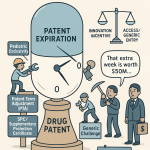
Twenty years. Ask anyone in the pharmaceutical industry how long a drug patent lasts, and that is the number you will hear. It appears in introductory pharmacoeconomics courses, patient advocacy white papers, and congressional testimony. It is also, in practice, a misleading answer to the question being asked.
The statutory term of a U.S. patent is 20 years from the earliest effective filing date [1]. For most industries, that 20-year clock is a reasonable guide to how long a company can exclude competitors from its technology. For pharmaceuticals, it is a starting point for a far more complicated calculation that can push effective exclusivity well below 20 years or, in specific circumstances, well above it.
The reason is timing. A pharmaceutical company files a patent application early in the drug development process, often before the drug has even entered clinical trials. The FDA review process then consumes anywhere from 8 to 12 years of that 20-year term before the drug reaches pharmacies. By the time a drug is commercially available, the patent protecting it may have only 7 to 12 years of statutory life remaining.
Those numbers matter enormously for everyone who interacts with the pharmaceutical system: the company deciding whether to develop a drug, the investor funding that development, the insurer modeling future formulary costs, the patient waiting for a generic version, and the policymaker writing the rules that govern all of them.
This article explains the actual mechanics of pharmaceutical patent duration: the statutory framework, the extension mechanisms, the exclusivity periods that operate independently of patents, the practical factors that compress effective exclusivity below the statutory maximum, and the litigation dynamics that can either add or subtract years from competitive protection. It is grounded in U.S. law but covers major international frameworks where they produce meaningfully different outcomes. <blockquote> “The average effective patent life for new molecular entities approved by the FDA is approximately 11.5 years from the date of first U.S. approval, compared to the nominal 20-year statutory term — reflecting years lost to pre-clinical research, clinical trials, and regulatory review.” [2] </blockquote>
Part One: The Statutory Framework
The 20-Year Clock and When It Starts
Under 35 U.S.C. § 154(a)(2), a U.S. patent term runs 20 years from the date on which the earliest application in the patent’s priority chain was filed [1]. This is a change from the pre-1995 system, under which patents ran 17 years from the date of grant. The shift to filing-date calculation was part of the Uruguay Round Agreements Act implementing the Agreement on Trade-Related Aspects of Intellectual Property Rights (TRIPS), which required member countries to provide a minimum 20-year term [3].
The switch matters because it affects how pharmaceutical companies behave. Under the old 17-from-grant system, prolonged prosecution – keeping a patent application pending in the USPTO for many years while technology developed around it – could extend effective protection well past what the legislature intended. The 20-from-filing system eliminates that advantage: every year of prosecution delay is a year subtracted from the back end of the patent term.
The “earliest effective filing date” calculation deserves careful attention because it drives more confusion than any other aspect of pharmaceutical patent duration. If a company files an original application in January 2000, files a continuation in 2003 claiming priority to the original, and files another continuation in 2006 claiming priority to both predecessors, all three patents expire in January 2020 – 20 years from the original filing. The continuations do not get a fresh 20-year clock simply because they were filed later.
This has major practical consequences for pharmaceutical patent strategy. A compound patent filed before clinical trials begin will expire 20 years later, regardless of when the drug was approved. A continuation filed to cover the commercial embodiment of that drug – say, a specific polymorphic form or formulation identified during development – traces its priority back to the original filing and expires on the same date.
Why Pharmaceutical Patents Expire Earlier Than They Appear
The mismatch between nominal and effective patent life originates in the pre-filing research pipeline. A pharmaceutical company typically identifies a promising compound, files a patent application covering it, and then spends the next 8 to 12 years running preclinical studies, Phase I through Phase III clinical trials, and navigating FDA review before the drug reaches patients.
The FDA approval timeline breaks down roughly as follows under current averages:
Preclinical research through Investigational New Drug (IND) application: 3-5 years.
Phase I clinical trials (safety, dosing): 1-2 years.
Phase II trials (preliminary efficacy, dose-ranging): 2-3 years.
Phase III trials (pivotal efficacy and safety): 2-4 years.
FDA review of the New Drug Application: 1-2 years (standard review); 6-10 months (priority review for serious conditions with unmet need).
The total clock from patent filing to approval frequently runs 10 to 14 years for new molecular entities. A drug approved 12 years after its compound patent was filed has only 8 years of patent life remaining. A drug approved 14 years after filing has 6.
The Tufts Center for the Study of Drug Development estimated in its 2016 study that the average time from synthesis of a new compound to approval is 14.4 years [4]. Updated data from the same institution and from the PhRMA foundation shows this timeline has not compressed meaningfully in recent years despite process improvements at the FDA, partly because clinical trial complexity has increased and partly because the diseases being targeted have become harder to treat.
Priority Dates, Provisional Applications, and the One-Year Window
A provisional patent application is a lower-cost placeholder that establishes a priority date but does not itself mature into a patent. It expires 12 months after filing, at which point the applicant must file a non-provisional application to preserve the priority date [5]. The provisional filing establishes the priority date, but the 20-year term runs from the non-provisional filing date.
This creates a one-year window that pharmaceutical researchers use to their advantage: file the provisional to lock in a priority date while completing experiments, then file the non-provisional within 12 months with a complete application. The non-provisional’s 20-year term runs from its own filing date, not the provisional. So a provisional filed in January 2000 followed by a non-provisional in December 2000 gives a patent expiring in December 2020 – 11 months later than if the non-provisional had been filed immediately.
For drugs with years of development ahead of them, this 11-month difference is commercially meaningful. It can translate to months of additional revenue exclusivity on a drug generating hundreds of millions of dollars annually.
International patent applications add another layer of priority date strategy. The Paris Convention allows an applicant who files in one member country to file corresponding applications in other member countries within 12 months while claiming priority to the first filing [6]. A company that files a U.S. provisional application, followed by a U.S. non-provisional, followed by a Patent Cooperation Treaty (PCT) application designating 150+ countries, has established a priority date chain whose management is central to effective pharmaceutical patent portfolio strategy.
Part Two: Patent Term Extension – Getting Time Back
Congress recognized in 1984 that pharmaceutical patent holders lose substantial patent term to FDA regulatory review. The solution was the Drug Price Competition and Patent Term Restoration Act of 1984, commonly known as the Hatch-Waxman Act, which created two major mechanisms: an expedited pathway for generic drug approval (the ANDA system) and a patent term extension system to compensate innovators for regulatory delay [7].
How Patent Term Extension Works
Under 35 U.S.C. § 156, the owner of a patent claiming a drug product, method of using a drug product, or method of manufacturing a drug product can apply for a patent term extension (PTE) to compensate for FDA regulatory review time [8]. The extension calculation has a specific formula:
The extension equals one-half of the testing period (the time between IND filing and NDA submission) plus the full length of the approval review period (the time between NDA submission and FDA approval), minus any time the applicant failed to act with “due diligence” in prosecuting the NDA.
The maximum extension is five years. After the extension, the total remaining patent term cannot exceed 14 years from the date of FDA approval. If the remaining term is already more than 14 years at approval, no extension is granted. If the remaining term is less than 14 years but the calculated extension would push it past 14 years, the extension is capped.
Only one patent per drug product is eligible for PTE [9]. When a drug has multiple listed patents – compound, formulation, method-of-treatment – the patent holder must choose which one to extend. This strategic decision can have major commercial consequences. The conventional wisdom is to extend the broadest compound patent, because it covers the most ground and is hardest for generic manufacturers to design around. But in specific circumstances – when the compound patent is already set to run past the 14-year cap, for example – extending a narrower formulation patent might actually add more commercially useful time.
PTE in Practice: The Numbers
The USPTO granted PTE to 163 pharmaceutical products between 2018 and 2022, with extensions averaging approximately 3.2 years [10]. The practical benefit is that a drug generating $3 billion annually and protected by a compound patent extended by 3 years carries a PTE value of roughly $9 billion in nominal revenue – before discounting and before accounting for the revenue erosion that follows generic entry.
These are not hypothetical numbers. When Pfizer’s atorvastatin (Lipitor) faced loss of exclusivity in 2011, the compound patent had been extended under PTE, and the final months before generic entry saw Pfizer implementing aggressive patient retention strategies specifically calibrated to the PTE-extended exclusivity period [11]. The extension added months of protected revenue that Pfizer’s financial planning treated as a distinct commercial phase.
PTE applications must be filed within 60 days of FDA approval [12]. Missing this deadline forfeits the extension entirely, with no exception for inadvertent delay. The USPTO has uniformly refused to accept late PTE applications, and federal courts have upheld this strict deadline. For pharmaceutical companies managing multiple product launches, the 60-day window is a calendar item that the IP department tracks with the same priority as NDA submission deadlines.
PTE Challenges by Generic Manufacturers
Generic manufacturers can challenge a granted PTE on several grounds: that the patent does not claim the approved drug product, that the extension was calculated incorrectly, or that the patent holder failed to act with due diligence during regulatory review [13]. These challenges are brought in district court as part of Paragraph IV litigation, not through any USPTO administrative process.
The most common PTE challenge attacks the “due diligence” calculation, arguing that extended periods in the NDA review were attributable to applicant delay rather than FDA delay and should be excluded from the extension calculation. If a company voluntarily withdrew and re-filed an NDA, or failed to respond promptly to FDA information requests, those periods may not count toward the extension.
PTE calculation disputes have produced major litigation outcomes. In Photocure ASA v. Kappos [14], the Federal Circuit addressed whether the PTE period should be measured against the U.S. approval of a specific product or a prior approval of a closely related product, ruling in a way that significantly limited PTE availability for products with prior art approvals. Pharmaceutical IP teams routinely commission independent PTE calculations before relying on USPTO-granted extensions.
Pediatric Exclusivity: The Six-Month Premium
A related but distinct extension mechanism is pediatric exclusivity under 21 U.S.C. § 355a. If an NDA holder conducts pediatric studies requested by the FDA under a Written Request, the FDA grants six months of additional exclusivity that attaches to any existing patent or non-patent exclusivity [15]. This is not a patent extension – it is an FDA regulatory hold on approving competing applications.
The six months of pediatric exclusivity applies at the end of each exclusivity period and at the end of each patent term. A drug with a compound patent expiring on June 1, 2027, and pediatric exclusivity, would see generic FDA approval delayed until December 1, 2027.
For drugs with annual revenues in the billions, six months of additional exclusivity is worth hundreds of millions of dollars. The pediatric exclusivity mechanism has been widely used, and some critics have argued it has been exploited for drugs with minimal pediatric patient populations – generating small pediatric studies primarily to harvest the exclusivity extension [16]. Congress has periodically examined the program but has not substantially altered the basic framework.
Part Three: Patent Term Adjustment – Compensating for USPTO Delays
Patent term extension addresses FDA review delay. A separate mechanism, patent term adjustment (PTA) under 35 U.S.C. § 154(b), addresses delays caused by the USPTO itself during patent examination [17].
The PTA Calculation Framework
PTA adds days to the patent term for specific types of examiner delay, specifically:
“A delays”: The USPTO failed to take action within defined timeframes – for example, failing to issue a first Office Action within 14 months of filing, or failing to respond to applicant communications within defined periods.
“B delays”: The USPTO failed to issue the patent within three years of filing.
“C delays”: Delays caused by appeals, interferences, or other proceedings.
These additions are reduced by days of “applicant delay” – periods during which the applicant failed to respond to USPTO actions within three months.
PTA can be substantial for pharmaceutical applications, which often involve complex chemistry and long examination histories. Extensions of one to three years are common, and extensions above five years appear in the USPTO’s records. A compound patent with five years of PTA has an effective term of 25 years from filing, which – combined with PTE for regulatory review – can push nominal patent life well past what the 20-year statutory baseline suggests.
PTA Litigation: The Wyeth v. Kappos Line of Cases
The PTA calculation methodology was contentious from the outset. In Wyeth v. Kappos [18], the Federal Circuit rejected the USPTO’s methodology for calculating PTA in cases where A-delay and B-delay overlapped, ruling that the correct calculation avoided double-counting overlapping delay periods in a way that benefited patent holders. The decision resulted in recalculation of PTA for thousands of pharmaceutical patents, adding days or weeks of additional patent term.
Subsequent cases have continued to define the boundaries of PTA entitlement, with pharmaceutical companies routinely challenging USPTO PTA calculations in district court when the stakes justify the litigation cost. For a drug with annual revenues exceeding $500 million, a few weeks of additional patent term is worth the cost of a district court PTA challenge.
Generic manufacturers have standing to challenge PTA calculations after they file ANDAs. Under the Hatch-Waxman framework, an ANDA filer who contests a patent’s validity or infringement effectively challenges the entire patent term – including any PTA calculation they believe was too generous.
The Interaction Between PTA and PTE
PTA and PTE can both apply to the same patent, but they interact in a specific way. Under 35 U.S.C. § 154(b)(2)(B), the PTE calculation assumes a patent term that does not include any PTA – and any overlap between PTA days and the period used to calculate PTE is eliminated [19]. The intent is to prevent double-recovery for the same period of delay.
This interaction matters most when a patent has substantial PTA from a long prosecution history. A patent with three years of PTA that is also eligible for a five-year PTE may not receive the full benefit of both extensions simultaneously, depending on how the overlap calculation falls. Pharmaceutical IP teams managing products approaching FDA approval should commission detailed PTA-PTE interaction analyses before finalizing their extension strategy.
Part Four: Regulatory Exclusivity – The Non-Patent Protection System
Patent protection is only half the exclusivity story. The FDA grants separate market exclusivity periods that prevent the agency from approving competing applications, regardless of patent status. These exclusivity periods operate independently of patents, can overlap with patent protection, and in some cases provide the only meaningful market protection available.
New Chemical Entity Exclusivity: The Five-Year Shield
When the FDA approves a drug containing an active moiety that has never previously been approved in any form, it grants five years of New Chemical Entity (NCE) exclusivity [20]. During this period, no generic manufacturer can submit an ANDA, and no 505(b)(2) applicant relying on the original drug’s safety and efficacy data can have their application approved. An ANDA with a Paragraph IV certification – challenging the original drug’s patents as invalid or not infringed – can be submitted after four years, but cannot receive approval until the five-year period ends.
NCE exclusivity is the pharmaceutical industry’s most commercially significant regulatory protection, precisely because it is automatic, does not require any separate application, and applies even to drugs whose patent coverage is weak or absent. A drug could theoretically lack any valid patent protection and still enjoy five years of market exclusivity through NCE status.
The combination of NCE exclusivity and patent protection creates a layered defense that defines the competitive entry timeline. For a drug approved in 2024 with NCE exclusivity and a compound patent expiring in 2034, generic ANDA submissions cannot be made until 2028 (after the four-year submission bar). Even if the ANDA is submitted immediately in 2028 and triggers patent litigation, the 30-month stay would extend through mid-2031 – at which point the patent still has three years to run.
Understanding where NCE exclusivity fits in the timeline is why tools like DrugPatentWatch organize pharmaceutical IP data the way they do. The relevant entry date for a generic manufacturer is not simply the compound patent expiration – it is the latest of all applicable exclusivity and patent expiration dates stacked against each other. DrugPatentWatch’s layered timeline view, which shows both patent and exclusivity expiration dates side by side for any approved drug product, is built specifically to answer this question.
New Clinical Investigation Exclusivity: The Three-Year Addition
When an NDA applicant conducts new clinical investigations that are essential to approval – not just studies previously submitted for an earlier application – the FDA grants three years of exclusivity protecting that specific label change or formulation [21]. This is commonly called “3-year exclusivity” or “New Clinical Investigation exclusivity.”
Unlike NCE exclusivity, 3-year exclusivity does not block ANDA submissions. It blocks ANDA approvals, but only for the specific condition of use, formulation, or indication supported by the new clinical investigations. A generic applicant can still submit an ANDA for the original indication during the 3-year exclusivity period for a new indication.
The 3-year exclusivity is a workhorse mechanism for pharmaceutical companies extending effective protection beyond the initial NCE period. By conducting new clinical investigations for new indications, new dosage forms, or new patient populations – and securing FDA approval for those expansions – a company can layer successive 3-year exclusivity periods over a drug’s commercial life, keeping specific uses protected long after the original NCE exclusivity expires.
Orphan Drug Exclusivity: Seven Years for Rare Diseases
The Orphan Drug Act of 1983 created a seven-year exclusivity period for drugs approved for rare diseases – defined as conditions affecting fewer than 200,000 people in the United States, or where there is no reasonable expectation of recovering development costs from U.S. sales [22]. During the seven-year period, the FDA will not approve another application for the same drug in the same indication.
Orphan drug exclusivity is among the longest regulatory exclusivity periods in the U.S. system, and it has attracted substantial controversy because drug developers have applied for orphan designation for subpopulations of common diseases to capture the designation for what is, commercially, a much larger patient population. A drug approved for a specific genetic subtype of a common cancer may qualify for orphan designation, providing seven years of exclusivity for an indication that affects a large enough patient population to generate substantial revenues.
The competitive dynamics of orphan exclusivity differ from NCE exclusivity. Because it is indication-specific, another company can develop the same drug for a different indication and receive its own orphan exclusivity. And critically, another drug that is not the same “drug” as defined by the FDA – a different molecular entity that treats the same rare condition – can still receive approval during the seven-year period, since orphan exclusivity blocks approval of the same drug for the same use, not all drugs for the same use.
Biologics and Biologic Exclusivity: 12 Years Under the BPCIA
Biologic drugs – proteins, antibodies, gene therapies, and other complex molecules made from living systems – receive 12 years of reference product exclusivity under the Biologics Price Competition and Innovation Act (BPCIA) of 2009 [23]. During the first four years, biosimilar manufacturers cannot even submit applications to the FDA. Between four and twelve years, applications can be submitted but not approved.
The 12-year exclusivity for biologics reflects Congress’s recognition that developing a biosimilar is far more complex than developing a generic small-molecule drug. Demonstrating biosimilarity requires extensive analytical, functional, and clinical studies, and the approval process for biosimilars has been considerably slower and more expensive than the ANDA pathway for conventional generics.
Biologics also receive the full range of NCE, orphan, pediatric, and other exclusivity periods that apply to small molecules, and these run alongside the 12-year BPCIA exclusivity. Where multiple exclusivity periods apply to the same product, the FDA will not approve a competing biosimilar application until all applicable periods have expired.
The commercial implications are significant. A biologic drug approved in 2024 will not face biosimilar competition under the BPCIA until at least 2036, regardless of its patent status. For drugs with NCE exclusivity running to 2029, the binding constraint is the BPCIA exclusivity, not the NCE period. Adding patent protection on top of this exclusivity stack – compound patents, formulation patents, manufacturing process patents, and method-of-treatment patents – can push competitive entry far into the future.
Part Five: Secondary Patents and the Evergreening Debate
The compound patent is typically the most important intellectual property protecting a pharmaceutical product. But pharmaceutical companies routinely develop and file secondary patents covering related aspects of their drugs: specific formulations, dosage forms, methods of treatment, patient selection criteria, manufacturing processes, and polymorphic crystalline forms.
What Secondary Patents Cover
A formulation patent covers the specific combination of the active ingredient with excipients, stabilizers, or delivery systems that make the drug commercially viable. The active compound in a long-acting injectable antipsychotic might not be patentable on its own by the time the commercial formulation is developed, but the specific formulation that achieves 30-day sustained release is patentable if it required non-obvious inventive effort.
A dosage regimen patent covers the specific schedule of drug administration – the dose, frequency, and duration of therapy – that produces superior clinical outcomes compared to the prior art. Once-daily dosing regimens have generated numerous successful patents, particularly where the pharmacokinetic profile necessary to support once-daily dosing required specific formulation technology.
Polymorph patents cover specific crystalline forms of the active compound. Many small-molecule drugs can exist in multiple solid-state forms with different physical properties, and the specific polymorph used in the commercial product may be patentable if it was not obvious from the prior art. Polymorph patents have been among the most contested in Paragraph IV litigation because the line between patentable discovery and obvious formulation optimization is genuinely unclear.
Method-of-treatment patents cover the use of a compound for a specific therapeutic indication. The compound itself may be in the public domain, but a new indication discovered through rigorous clinical research is patentable under 35 U.S.C. § 101 as a method of treatment.
The Evergreening Controversy
Critics of the secondary patent system argue that pharmaceutical companies use these patents primarily to extend effective exclusivity without providing genuine innovation – a practice called “evergreening.” Médecins Sans Frontières, Oxfam, and numerous public health academics have argued that evergreening restricts access to essential medicines and imposes costs on health systems that are not justified by corresponding innovation [24].
The empirical evidence on evergreening is mixed. A 2012 study by Hemphill and Sampat in the Journal of Health Economics analyzed 1,304 new molecular entities approved between 1995 and 2005 and found that secondary patents on these drugs added roughly 6.5 years of exclusivity beyond the original compound patent, with formulation patents contributing the most [25]. A 2018 paper by Feldman in the Journal of Law and the Biosciences analyzed 100 top-selling drugs and found that 78 percent of new drug patents filed between 2005 and 2015 were for existing drugs rather than new ones, and 66 percent of new patents on existing drugs were for extensions of the same compound [26].
These findings do not settle the normative debate – genuine formulation improvements that improve patient outcomes deserve patent protection, and distinguishing those from purely exclusivity-extending filings requires case-by-case analysis. But they establish that secondary patents have material effects on the effective duration of market exclusivity.
How Secondary Patents Affect the Competitive Entry Timeline
For generic manufacturers and payers trying to predict when generic competition will begin, secondary patents are a significant planning complication. A drug’s compound patent may expire in 2028, but if it has formulation patents listed in the Orange Book with expiration dates running to 2033, a generic manufacturer must either design around the formulation patents, challenge their validity, or wait until 2033 to launch a commercially identical product.
The practical result is that a drug’s “effective patent expiration” – the date on which unencumbered generic competition actually begins – is often determined by secondary patents or regulatory exclusivity periods rather than by the compound patent itself. For competitive intelligence purposes, tracking only compound patents substantially understates the period of market protection.
DrugPatentWatch’s product pages reflect this complexity by listing all Orange Book patents for a given drug alongside their expiration dates, distinguished by patent type (compound, formulation, method-of-treatment). The layered view allows analysts, payers, and generic manufacturers to identify the last-expiring patent and the last-expiring exclusivity period, which together determine the earliest possible date for unencumbered generic entry.
Part Six: Paragraph IV Litigation and Its Effect on Patent Duration
The Hatch-Waxman Act created not just the ANDA system for generic drug approval but also a specific mechanism for challenging pharmaceutical patents before generic entry: the Paragraph IV certification.
The Paragraph IV Mechanism
An ANDA applicant who believes that listed Orange Book patents are invalid, unenforceable, or will not be infringed by their generic product can include a Paragraph IV certification stating this belief [27]. This triggers a requirement that the generic manufacturer notify the patent holder, who then has 45 days to file an infringement suit in district court.
If the patent holder sues within 45 days, an automatic 30-month stay prevents FDA final approval of the ANDA. The stay expires when: (a) the 30 months elapse, (b) a court enters final judgment on the patent questions, or (c) the parties settle on terms that include a consent judgment. If the patent holder does not sue within 45 days, the FDA can approve the ANDA immediately upon completion of its review.
The first ANDA applicant to submit a Paragraph IV certification and meet other threshold requirements is entitled to 180 days of generic exclusivity – a period during which the FDA will not approve competing ANDA applications from other generic manufacturers [28]. This 180-day exclusivity creates the commercial incentive for generic manufacturers to invest in Paragraph IV patent challenges: the first successful challenger captures a six-month duopoly with the branded manufacturer, generating substantially higher margins than would be possible in a fully competitive generic market.
The Commercial Effect of Paragraph IV Challenges
A successful Paragraph IV challenge can eliminate years of patent protection. If a court finds an Orange Book patent invalid or not infringed, the effective exclusivity period ends with the court decision – not when the patent was originally scheduled to expire. A compound patent with five years of remaining term can be judicially eliminated through a successful Paragraph IV challenge, advancing the generic entry date by five years.
The inverse is also true. The 30-month stay triggered by a Paragraph IV filing delays FDA approval of the ANDA, potentially extending the brand’s effective market exclusivity even if the challenged patents are ultimately invalidated. A patent holder who files a Paragraph IV infringement suit knowing the patents are of questionable validity can still extract 30 months of protected revenue from the litigation delay – which prompted the FTC’s extensive study of “reverse payment” or “pay-for-delay” settlements and the Supreme Court’s FTC v. Actavis decision establishing that such settlements are subject to antitrust scrutiny [29].
Litigation Outcomes and Their Distribution
Empirical data on Hatch-Waxman litigation outcomes shows a consistent pattern across the 2000-2020 period. Generic manufacturers prevailed in approximately 48 percent of fully-litigated Hatch-Waxman cases, with patent holders prevailing in the remainder [30]. However, only a fraction of cases reach final judgment – the majority settle, with terms that typically include an authorized generic license and an agreed entry date for the generic product that falls before the patent expiration date.
The settlement pattern means that actual generic entry dates are distributed earlier than the nominal patent expiration calendar would suggest. For an analyst modeling the generic entry timeline for a drug portfolio, using patent expiration dates alone, without accounting for the probability and timing of Paragraph IV settlements, will systematically overestimate remaining exclusivity.
DrugPatentWatch tracks Paragraph IV certification filings and their associated litigation history for Orange Book products, allowing competitive intelligence functions to monitor the litigation status of specific products and the settlement patterns for specific patent categories – compound patents, formulation patents, and method-of-treatment patents each have different empirical settlement distributions.
Part Seven: International Patent Duration – Where the U.S. System Diverges
U.S. pharmaceutical patent duration rules are not universal. While TRIPS established a 20-year minimum across member countries, the implementation details differ in ways that can dramatically affect competitive entry timelines outside the United States.
European Patent System
The European Patent Office (EPO) grants patents with a 20-year term from filing, like the U.S. system [31]. Europe’s equivalent of PTE is the Supplementary Protection Certificate (SPC), which compensates for regulatory review time and can add up to five years beyond the compound patent term, with the total protection period capped at 15 years from first marketing authorization in any EU member state [32].
The SPC system produces important differences from U.S. PTE. First, SPCs are granted at the national level by member state patent offices, not centrally by the EPO – meaning a company must apply separately in each EU country where it wants supplementary protection. Second, the cap calculation uses the date of first EU marketing authorization rather than U.S. approval, so a drug approved earlier in Europe than in the United States may receive less European supplementary protection than U.S. PTE. Third, SPC calculations are subject to different eligibility rules that have been extensively litigated before the Court of Justice of the European Union.
The EPO opposition system provides another mechanism that can shorten European pharmaceutical patent life significantly. Within nine months of grant, any third party can file an opposition to an EPO patent, challenging its validity [33]. A successful opposition can revoke the patent across all designated EPO member states simultaneously. Major pharmaceutical patents routinely face EPO oppositions filed by generic manufacturers, biosimilar developers, or competitors, and the opposition success rate has historically run around 30 percent for opposed patents.
Data Exclusivity in Europe
European pharmaceutical exclusivity includes a specific framework known as the “8+2+1” system: eight years of data exclusivity during which no generic application can reference the originator’s data, followed by two years during which the generic application can be submitted but not approved, and an optional one additional year if the originator receives approval for a new indication during the data exclusivity period [34].
This 10 or 11 year period runs from first EU marketing authorization, independently of patent protection. A drug whose compound patent has expired but which retains data exclusivity cannot face generic competition in Europe during the data exclusivity period – the regulatory pathway is simply unavailable.
The interaction of SPCs, data exclusivity, and patent protection in Europe creates a multi-layered exclusivity structure that differs product by product and country by country. For a global pharmaceutical company managing a multi-product portfolio, the European competitive entry timeline requires separate analysis from the U.S. analysis.
Japan: 20-Year Patents and Regulatory Reexamination Periods
Japan provides 20-year patent terms from filing, with extension available for up to five years to compensate for regulatory review periods, similar in structure to the U.S. PTE system [35]. Japan’s pharmaceutical regulatory system requires reexamination periods – typically 6 to 10 years for new molecular entities – during which the Ministry of Health, Labour and Welfare (MHLW) will not approve generic versions. These reexamination periods operate alongside patent protection, providing a regulatory exclusivity layer that functions similarly to U.S. NCE exclusivity.
Japan’s pharmaceutical market has historically been characterized by significantly lower rates of generic penetration than either the United States or Europe, a feature attributable in part to the regulatory system and in part to prescribing practices. For competitive entry timeline analysis, Japan requires separate modeling from other major markets.
Developing Countries: TRIPS Flexibilities and Compulsory Licensing
TRIPS allows developing countries to use compulsory licensing – government authorization to produce a patented drug without the patent holder’s consent – under specific circumstances including public health emergencies [36]. The Doha Declaration on TRIPS and Public Health, adopted in 2001, confirmed that TRIPS should not prevent member states from taking measures to protect public health, and that compulsory licensing was available for this purpose [37].
Compulsory licenses have been issued by multiple developing countries for HIV antiretroviral drugs, hepatitis C treatments, and cancer drugs. When a compulsory license is in force, the patent remains valid but is effectively unenforceable against the licensed manufacturer in that jurisdiction. For global pharmaceutical portfolio valuation, markets where compulsory licensing risk is meaningful require separate exclusivity modeling.
Part Eight: Specific Drug Categories and Their Patent Duration Profiles
The general framework above applies differently to specific categories of drugs. Understanding these category-specific patterns requires separate treatment.
Small-Molecule Drugs: The Classic Hatch-Waxman Framework
Small-molecule drugs – the traditional orally-administered tablets and capsules that represent most prescription drug volume by units – are the paradigm case for the analysis above. NCE exclusivity, compound patent PTE, formulation and method-of-treatment secondary patents, and Paragraph IV litigation under Hatch-Waxman define the competitive entry dynamics.
The typical effective exclusivity period for a successful small-molecule drug – compound patent combined with PTE, NCE exclusivity, and the practical deterrence effect of secondary patents – runs 10 to 14 years from FDA approval. Best-case scenarios, with full PTE, strong secondary patent coverage, and favorable Paragraph IV litigation outcomes, can push effective exclusivity toward 15 years. Worst-case scenarios, with PTE limitations, successful secondary patent challenges, and early Paragraph IV settlements, can compress it toward 7 years.
Biologics: The 12-Year Exclusivity Baseline
Biologic drugs receive a guaranteed minimum of 12 years of market exclusivity under the BPCIA, regardless of patent status. This statutory minimum is significantly longer than the practical lower bound for small-molecule drugs and reflects the greater complexity of the biosimilar development pathway.
The biologic patent portfolio structure also differs from small-molecule portfolios. Biologic companies file patents covering the amino acid sequence of the biologic molecule, its manufacturing processes, its formulations, and its methods of treatment. Because the biologic molecule itself is typically too complex to be characterized by a simple chemical formula in the same way as a small molecule, the patent claims are written differently and the scope of protection is evaluated differently.
Post-approval, biologic companies have often pursued extensive secondary patent filings – AbbVie’s Humira portfolio, which grew to over 130 U.S. patents, is the most cited example [38]. The commercial effect is that the nominal 12-year BPCIA exclusivity can be extended substantially by the secondary patent web, though each patent in that web is subject to challenge in district court and before the PTAB.
A drug-device combination – an inhaler, autoinjector, or drug-eluting medical device – can draw from both pharmaceutical and medical device patent protections. The drug component may have NCE exclusivity and compound patent protection. The device component may have device patents. The combination product may have combination patents covering the interface between drug and device.
The resulting exclusivity structure is complex and has attracted regulatory scrutiny. Following the FTC’s challenge to AstraZeneca’s inhaler device patents and similar actions against other combination products [39], the FDA has tightened its Orange Book listing criteria for device patents, reducing the ability of pharmaceutical companies to use device patents to trigger Hatch-Waxman litigation stays. But device patents remain potentially enforceable outside the Orange Book framework, meaning they can still affect competitive entry timelines through regular patent infringement litigation.
Controlled Substances and Abuse-Deterrent Formulations
Opioid medications and other controlled substances have generated a specific category of secondary patent: abuse-deterrent formulations (ADF) that make the drug harder to abuse by crushing, injection, or other routes. ADF patents typically claim specific polymer systems or physical structures that resist manipulation.
Purdue Pharma’s OxyContin reformulation in 2010, which received ADF-based patents and triggered the withdrawal of original-formula OxyContin from the market shortly after generic approvals, illustrates the competitive use of ADF patents [40]. By replacing the non-abuse-deterrent formulation with a patented ADF version and then withdrawing the original formulation, Purdue effectively pushed generic manufacturers toward the ADF version, which was separately patented. Courts and the FDA eventually addressed this strategy through restrictions on reference drug withdrawal for competitive purposes.
Part Nine: Generic Entry Modeling – Predicting When Patents Actually Expire
For investors, payers, and competitive intelligence functions, the practical question is not theoretical patent duration but predicted generic entry dates. These require integrating all the layers described above into a single analytical model.
The Patent Expiration Calendar
Building an accurate patent expiration calendar for a drug product requires assembling the following data points in order of expiration:
Compound patent expiration: statutory term from priority filing date, adjusted for PTA, further adjusted for PTE. This is the foundational date.
Secondary patent expirations: each Orange Book-listed formulation, polymorph, method-of-treatment, and dosage regimen patent, adjusted for any applicable PTA, ordered by expiration date.
Regulatory exclusivity expirations: NCE (five years from approval), orphan drug (seven years from approval), pediatric (six months added to existing periods), 3-year NCI exclusivity (three years from approval for specific label elements), and for biologics, BPCIA exclusivity (12 years from first licensure).
Effective exclusivity expiration: the last date on which any combination of patent protection or regulatory exclusivity prevents ANDA/biosimilar approval.
The practical generic entry date is the effective exclusivity expiration plus the time required for an ANDA to be filed and approved – typically 12 to 36 months from ANDA submission to FDA approval, with the longer end reflecting complex products, manufacturing issues, or inspection backlogs.
DrugPatentWatch maintains patent expiration calendars for Orange Book products, including both patent and exclusivity expiration dates, accessible by product, by active ingredient, or by assignee. For generic manufacturers building development pipelines, this calendar view is the foundation of opportunity identification – which products are approaching the end of their protected period, and which have specific patent vulnerabilities that might support successful Paragraph IV challenges ahead of the nominal expiration dates.
The First-Filer Advantage and Its Effect on Entry Timing
The 180-day first-filer exclusivity for Paragraph IV ANDA filers creates a strategic dynamic that affects generic entry timing. Because the first approved ANDA holder has 180 days of duopoly pricing before additional generic competitors enter, first-filer ANDAs are highly valuable. Generic manufacturers invest heavily in patent challenges specifically targeted at the first-filer prize.
This dynamic means that for drugs approaching their effective exclusivity expiration, there is often a cluster of ANDA filings as multiple generic manufacturers compete to be first. The FDA’s current transparency system publishes ANDA filing dates (though not always immediately), and tracking Paragraph IV certification notices provides competitive intelligence about which generic manufacturers are targeting which drugs – and when they expect to prevail.
The practical consequence for patent duration analysis is that drugs with significant revenue approaching their exclusivity windows will almost always attract Paragraph IV challenges before the patent nominally expires. The effective competitive entry date for such drugs is generally earlier than the nominal expiration date, and the specific discount depends on the strength of the challenged patents and the historical pattern of Paragraph IV settlements in the relevant therapeutic class.
Patent Cliffs vs. Patent Slopes
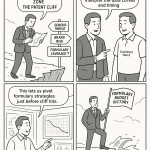
Industry analysts distinguish between “patent cliffs” – abrupt losses of exclusivity when a single compound patent expires, leading to rapid generic entry – and “patent slopes” – gradual erosion of exclusivity as successive secondary patents expire over several years, with generic competition intensifying in stages.
The cliff scenario is most common for single-patent drugs where the compound patent is the primary protection and no meaningful secondary patents cover the commercial product. When the cliff arrives, well-funded generic manufacturers are often already approved and launch simultaneously on the first day of generic eligibility, driving prices down by 80-90 percent within months [41].
The slope scenario is more common for drugs with multi-layered secondary patent portfolios and stacked regulatory exclusivity. The first generic entrant may target a specific formulation that is no longer covered by secondary patents while the compound patent still runs. A second wave of generic entry may occur when dosage regimen patents expire. A third wave, with full price competition, may not arrive until all exclusivity layers are exhausted.
For investors modeling the revenue impact of patent expiration, the cliff vs. slope distinction drives meaningfully different financial projections. A cliff scenario produces a step-change in revenue in the year of generic entry. A slope scenario produces several years of partial revenue erosion before full generic competition.
Part Ten: Patent Strategy Decisions and Their Duration Consequences
Pharmaceutical patent duration is not just a fact to be calculated. It is a strategic outcome that companies actively manage through filing and prosecution decisions.
The Filing Timing Decision
The most consequential patent duration decision is when to file. A compound patent filed on the first day of synthesis gives the maximum patent term, but the drug is furthest from commercial viability at that point, so the term runs maximally against development years. A compound patent filed at the start of clinical trials reduces development time consumed by patent duration but may face stronger prior art challenges if the compound was disclosed in scientific literature before the patent filed.
The optimal filing timing depends on the disclosure environment, the competitive landscape, and the expected development timeline. A compound discovered in a basic research context with significant publication pressure should be patented quickly to prevent public disclosure from creating prior art. A compound discovered in a commercial setting with no publication obligations can be kept as a trade secret until filing is necessary to prevent competitor patenting.
The Continuation Strategy
Continuation applications – new applications claiming priority to an earlier filing but presenting different claims – allow patent holders to maintain pending applications while earlier-filed claims are being examined. A well-managed continuation strategy can result in patents issuing at staggered intervals throughout a drug’s commercial life, with later-issued continuations covering the specific commercial embodiments that were identified during development.
The pharmaceutical industry’s most sophisticated continuation strategies extend patent coverage well past the compound patent expiration. Continuation claims can cover dosing regimens identified in clinical trials, formulations optimized during development, combination therapies identified in post-marketing studies, and patient subpopulations identified through biomarker research. Each of these continuation patents carries a 20-year term from the original filing date, but because they issue years after the original filing, their remaining term at issuance is meaningfully shorter than the compound patent.
The limit on continuation strategy is the disclosure contained in the original specification. New claims must be supported by the original specification as filed – you cannot add new technical content to support new claims that were not described in the original application. This requirement keeps continuation prosecution from becoming a mechanism for extending the patent term indefinitely by filing new applications with incrementally expanded disclosures.
The Extension Election Decision
For drugs eligible for PTE, the election of which patent to extend is a high-stakes strategic decision. The conventional choice – extending the compound patent – is not always optimal.
If the compound patent has sufficient remaining term that the PTE cap (14 years from FDA approval) would not be reached, extending the compound patent adds the maximum available term. But if the compound patent would expire long after 14 years from approval even without extension – a scenario possible when the FDA approval occurred unusually early in the patent’s 20-year term – then extending the compound patent yields zero benefit, and extending a formulation or method-of-treatment patent with less remaining term may be more valuable.
The election becomes genuinely complex for drugs with multiple patents with different remaining terms, PTA histories, and commercial relevance profiles. A pharmaceutical company managing a major NDA approval should begin the extension election analysis before FDA approval, so the decision can be executed within the 60-day deadline without rushing the analysis.
Part Eleven: The Impact of Patent Duration on Drug Pricing and Access
The question of how long drug patents last is not merely technical. It drives the economics of pharmaceutical pricing, the structure of health insurance formularies, and the affordability of medicines for patients worldwide.
The Fundamental Bargain
The patent system’s justification for granting pharmaceutical exclusivity is rooted in the economics of drug development. The Tufts Center for the Study of Drug Development estimated average capitalized costs of $2.6 billion per new drug approved by the FDA, including the costs of failed compounds [42]. With approximately 12 percent of drugs that enter clinical trials ultimately receiving FDA approval [43], the expected investment required to produce a single approval is enormous.
Patent exclusivity allows the innovator to recover this investment through monopoly pricing during the protected period. Once exclusivity expires, generic competition drives prices toward marginal manufacturing cost – a reduction of 80 to 90 percent in the first two years for most oral solid dosage drugs. The patent system provides the temporary monopoly in exchange for public disclosure of the invention, and the entire system depends on the balance being struck correctly: long enough to incentivize innovation, short enough that consumers eventually benefit from competitive pricing.
Whether the current effective patent duration achieves the right balance is one of the most debated questions in health policy. PhRMA argues that effective patent life has shrunk as clinical trials and FDA review have grown more complex, reducing returns on investment in pharmaceutical R&D [44]. Critics argue that secondary patents and regulatory exclusivity have extended effective monopoly periods far beyond what innovation economics justify.
Generic Penetration Following Patent Expiration
The speed and depth of generic penetration following patent expiration has been extensively studied. The FDA’s data consistently shows that generic drugs capture approximately 80 to 90 percent of dispensed unit volume within two years of market entry when multiple generic manufacturers compete [45]. The price reduction is equally dramatic: branded drug prices typically hold in the first year of generic competition but face sharp erosion as the number of generic competitors increases beyond two or three.
From a payer perspective, the generic entry date is the most important near-term financial variable for each high-cost branded drug on the formulary. A pharmacy benefit manager managing a self-insured employer plan can project annual savings from generic conversion with reasonable precision once the generic entry date is established – typically $200-$400 per patient per year for common specialty drugs and significantly more for high-cost biologics.
The value of accurate patent duration information is directly proportional to the cost of the drug and the size of the patient population. For a $150,000-per-year specialty drug covering 50,000 plan members, each additional year of branded exclusivity beyond what was projected represents $7.5 billion in plan costs that was not anticipated. This scale of financial exposure explains why PBMs and large health plans subscribe to pharmaceutical patent intelligence tools – the cost of the subscription is trivial compared to the financial materiality of knowing when exclusivity actually ends.
The Biosimilar Access Problem
The 12-year BPCIA exclusivity for biologics – combined with secondary patent protection that can extend competitive entry dates well past 12 years – has created access problems for high-cost biologic therapies. Humira, approved in 2002, did not face U.S. biosimilar competition until July 2023 – 21 years after approval. The drug generated cumulative U.S. revenues exceeding $100 billion during this period [46].
The biosimilar access delay for Humira reflected both the 12-year BPCIA exclusivity and the extensive secondary patent litigation that followed. European biosimilar competition began in 2018, creating a five-year window during which U.S. patients and payers paid substantially more for adalimumab than their European counterparts.
The AbbVie case has become the reference point in policy discussions about whether biologic exclusivity terms are too long. Proposals to shorten BPCIA exclusivity to 7 years – matching the orphan drug period – have been advanced by both the Biden and Trump administrations, though none have been enacted. The Inflation Reduction Act’s drug price negotiation program, which can negotiate Medicare prices for biologics beginning 13 years after approval, partially addresses the problem without changing the underlying exclusivity framework [47].
Part Twelve: Monitoring Patent Expiration – The Intelligence Function
For any organization whose financial outcomes depend on pharmaceutical patent status – insurance companies, hospital systems, generic manufacturers, pharmaceutical investors, and branded drug companies themselves – ongoing monitoring of patent expirations is a competitive intelligence function.
The Data Sources
The primary data sources for U.S. pharmaceutical patent expiration are:
The FDA Orange Book, which lists all patents and exclusivities for approved drug products by application number. The Orange Book is updated monthly and is the authoritative source for what a brand manufacturer has certified as covering their product.
The USPTO patent database, which provides the complete text of patents, prosecution histories, PTA records, and assignment data. The USPTO’s Patent Center replaced the older PAIR system and provides improved access to prosecution history files.
The USPTO’s PTAB docket, which provides the status of IPR petitions and decisions that can affect the validity and remaining term of listed pharmaceutical patents.
The FDA’s Orange Book download files, available in machine-readable format, which enable automated monitoring of changes to listed patents and exclusivities.
DrugPatentWatch integrates these sources with additional ANDA filing data, Paragraph IV certification records, and litigation status information, providing a unified view of competitive entry timelines. The platform’s watch-list and alert functionality allows subscribers to monitor specific drugs, assignees, or active ingredients for changes in patent or exclusivity status – a practical necessity for organizations tracking large portfolios across multiple products.
The Competitive Intelligence Workflow
A pharmaceutical competitive intelligence function monitoring drug patent expirations for a generic drug company typically runs three analytical workflows simultaneously:
Near-term opportunity identification: drugs whose effective exclusivity expires within 36 months, for which ANDA development timelines make commercial entry feasible. The analysis sorts products by revenue opportunity (applying a generic price discount to current branded revenue) and patent challenge difficulty (using the claims strength and litigation history metrics discussed in earlier analysis).
Medium-term pipeline positioning: drugs whose effective exclusivity expires in 36-84 months, for which ANDA submissions should begin now or within 12 months to position for first-filer eligibility. The analysis focuses on identifying which of these products have vulnerable patents worth challenging with Paragraph IV certifications.
Regulatory exclusivity monitoring: products where patent expiration has already occurred but regulatory exclusivity prevents ANDA approval, and the specific dates on which those exclusivity periods expire. These represent zero-litigation-risk opportunities that require only development and manufacturing preparation.
Part Thirteen: Recent Developments Affecting Pharmaceutical Patent Duration
The pharmaceutical patent landscape has changed materially over the past decade, and several ongoing developments will continue to reshape how long drug patents effectively last.
PTAB and the IPR Revolution
The America Invents Act’s creation of inter partes review in 2011 introduced a mechanism that has fundamentally altered the risk profile of pharmaceutical patents. Before IPR, challenging a patent’s validity required a full district court litigation, which was expensive, slow, and often required invalidation by clear and convincing evidence. IPR provides a faster, cheaper, and historically petitioner-favorable forum with a lower evidentiary standard (preponderance of the evidence) [48].
Between 2012 and 2023, the PTAB instituted IPR in approximately 62 percent of pharmaceutical patent petitions that requested institution [49]. The effect on effective patent duration is that patents once considered safe from challenge have become vulnerable to systematic IPR attacks by well-organized generic manufacturers. A compound patent that would previously have provided reliable protection to its expiration date now faces a real probability of cancellation if a credible IPR petition is filed.
PTAB outcomes affect the statistical expected value of pharmaceutical patent protection. A patent with a 30 percent probability of IPR cancellation is worth only 70 percent of what it would be worth with zero cancellation probability, all else equal. This probabilistic framing of patent validity has become standard in pharmaceutical portfolio valuation and in generic manufacturer investment decisions about Paragraph IV programs.
Orange Book Listing Reform
The FTC has pursued an aggressive policy of challenging what it considers improper Orange Book listings since 2021, targeting primarily device patents on drug-device combinations. The agency has submitted citizen petitions to the FDA requesting delisting of hundreds of patents it considers non-qualifying, and has filed federal lawsuits against pharmaceutical companies for maintaining improper listings [50].
If the FTC’s campaign succeeds in broadly narrowing Orange Book eligibility for device patents, the effective patent duration for drug-device combination products will shorten materially. Without Orange Book listing, a patent cannot trigger the Hatch-Waxman litigation 30-month stay, which is a major component of the effective exclusivity extension that device patents currently provide.
The Inflation Reduction Act and Patent Economics
The Inflation Reduction Act of 2022 established Medicare drug price negotiation that creates a ceiling on what the federal government pays for certain high-revenue drugs without generic or biosimilar competition. For small-molecule drugs, negotiation can begin nine years after FDA approval; for biologics, thirteen years [51].
The IRA does not shorten patents or exclusivity periods. It creates a price ceiling that operates independently of patent status. But the economic effect is similar to a partial reduction in exclusivity value: the revenues that patent protection generates during the negotiated period are lower than they would be in a free-pricing environment.
For drugs where IRA negotiation is probable – those with high Medicare revenues and no near-term competitive entry – the financial value of patent protection after the negotiation period begins is lower than the pre-IRA baseline. Portfolio valuations conducted without modeling this regulatory pricing overlay will overstate the economic value of those patents’ remaining terms.
Artificial Intelligence and Patent Prosecution
Artificial intelligence tools are beginning to affect pharmaceutical patent prosecution in ways that may alter effective patent duration over time. AI-assisted prior art search can identify prior art that was previously difficult to locate, potentially increasing the successful challenge rate against pharmaceutical patents. AI-assisted claim drafting can produce broader and more resilient claims, potentially increasing the defensive strength of newly-filed patents.
The USPTO has issued guidance on AI-assisted inventions, requiring human inventors to have made a genuine creative contribution even when AI tools were used in the discovery process [52]. This guidance has specific implications for pharmaceutical companies using AI drug discovery platforms, where the inventive contribution of human scientists may be more distant from the specific chemical structure being claimed.
The net effect of AI on pharmaceutical patent duration is uncertain. Better prior art search may increase validity challenges. Better claim drafting may increase patent resilience. The overall outcome will depend on which effect dominates – and both are accelerating simultaneously.
Key Takeaways
The nominal 20-year patent term is not the effective protection period for pharmaceutical drugs. By the time a drug is approved, the patent often has 7 to 12 years of statutory life remaining, after years of preclinical and clinical development consumed the earlier portion of the term.
Patent term extension under 35 U.S.C. § 156 can restore up to five years of term lost to FDA regulatory review, subject to a 14-year cap on total post-approval exclusivity. Only one patent per drug product is eligible, making the extension election a significant strategic decision.
Patent term adjustment under 35 U.S.C. § 154(b) compensates for USPTO prosecution delays and can add additional years beyond the standard 20-year term. Both PTE and PTA can be challenged and have been litigated extensively.
Regulatory exclusivity periods – NCE exclusivity (five years), orphan drug exclusivity (seven years), BPCIA exclusivity (twelve years for biologics), and pediatric exclusivity (six-month addition) – operate independently of patents and frequently determine when competitive entry is actually possible.
Secondary patents covering formulations, dosage regimens, polymorphs, and methods of treatment can extend effective exclusivity well beyond compound patent expiration. Empirical research shows secondary patents have added an average of 6.5 years to effective exclusivity for surveyed small-molecule drugs.
Paragraph IV certifications and the resulting Hatch-Waxman litigation directly affect effective patent duration. Generic manufacturers who successfully challenge patents accelerate competitive entry by years. Settlements under FTC v. Actavis antitrust scrutiny frequently include early generic entry dates that compress brand exclusivity below the nominal patent term.
The European, Japanese, and emerging market systems each have distinct patent term, extension, and exclusivity frameworks that require separate analysis from the U.S. system. A global drug’s effective exclusivity timeline is different in every major market.
For biologics, the 12-year BPCIA exclusivity floor substantially extends effective protection beyond what patent analysis alone would suggest, and secondary patent webs – exemplified by Humira’s 130+ patent portfolio – can push U.S. competitive entry dates far beyond the BPCIA baseline.
The PTAB inter partes review system has introduced a material probability of premature patent cancellation for all pharmaceutical patents, reducing the expected economic value of patent protection below what the nominal remaining term implies.
Accurate pharmaceutical patent duration analysis requires integrating patent term data, PTA and PTE records, regulatory exclusivity periods, ANDA filing activity, Paragraph IV litigation history, and PTAB petition status – data that tools like DrugPatentWatch organize into product-level competitive entry timelines that no single public data source provides in integrated form.
The Inflation Reduction Act’s Medicare drug price negotiation mechanism reduces the economic value of patent exclusivity for high-revenue drugs, even though it does not shorten the patent term itself. Portfolio valuations must account for this regulatory pricing ceiling when modeling the revenue-generating value of remaining patent protection.
Understanding effective pharmaceutical patent duration is not an academic exercise. For payers, it determines when formulary costs will fall. For investors, it determines the revenue runway of branded drug assets. For generic manufacturers, it identifies the specific date on which development investment becomes commercially viable. Getting the number right – accounting for all the extensions, exclusivities, and litigation variables described here – is worth the analytical effort.
FAQ
Q1: If a pharmaceutical company files a patent before the drug is even in clinical trials, why doesn’t it just wait until clinical approval to file, maximizing time on market?
A1: Waiting for FDA approval to file a patent would be commercially fatal for two reasons. First, the public disclosure bar in U.S. patent law under 35 U.S.C. § 102 means that once a compound is publicly disclosed – in a scientific paper, conference presentation, or any other public forum – the one-year grace period for filing a U.S. patent begins. Miss that window and the compound cannot be patented in the United States. Second, most international patent systems have absolute novelty requirements with no grace period at all. Public disclosure before filing permanently bars patentability in Europe, Japan, and most other jurisdictions. Academic research environments in particular generate publication pressure that makes early filing essential. The economic answer to the timing problem is PTE, which is specifically designed to compensate for the years lost between early filing and late commercialization.
Q2: Can a company extend a drug’s patent protection indefinitely by filing continuation applications with new claims?
A2: Not indefinitely, and not without genuine innovation. Continuation applications must claim subject matter supported by the original specification – you cannot add new technical content. All continuations claiming priority to the same original application expire on the same date as the parent: 20 years from the original filing date. What continuations do allow is claims tailored to specific commercial embodiments identified during development, dosing regimens discovered in clinical trials, and patient subpopulations identified in post-approval studies, all supported by the original disclosure. The protection these continuations provide is real and commercially significant, but the expiration date is fixed. PTE and regulatory exclusivity are the only mechanisms that can push protection past the 20-year statutory baseline.
Q3: How does the 180-day first-filer exclusivity actually get triggered, and can a brand company use it strategically?
A3: The 180-day exclusivity attaches to the first ANDA applicant who submits a Paragraph IV certification against a specific Orange Book patent, provided their ANDA is otherwise approvable. Brand companies cannot claim the 180-day exclusivity – it belongs exclusively to generic manufacturers as an incentive to challenge patents. However, brand companies have historically tried to manage the 180-day dynamic through “authorized generic” strategies: launching their own generic version during the 180-day period, marketed under a contract manufacturer, which competes with the first-filer generic and reduces the financial value of the first-filer exclusivity. The FTC has studied authorized generics extensively. Courts have generally upheld them as legal, though they have been criticized for reducing the incentive to challenge pharmaceutical patents. Some settlements include provisions limiting the brand’s ability to launch an authorized generic during the 180-day period, which is itself a form of value transfer subject to antitrust scrutiny under Actavis.
Q4: What happens to a drug’s market protection if the compound patent is invalidated in an IPR proceeding, but formulation patents with later expiration dates survive?
A4: Generic manufacturers gain the right to enter with a product that does not infringe the surviving formulation patents. They can launch with a generic version of the drug in a formulation or dosage form that avoids the formulation patent claims, or they can challenge the formulation patents separately. In practice, if the commercial product is covered by the surviving formulation patents, generic manufacturers must either design around them – which may require reformulating the drug in a way that reduces its clinical performance or commercial appeal – or file Paragraph IV certifications against the formulation patents and engage in additional litigation. Formulation patents therefore continue to provide meaningful protection even after compound patent invalidation, but their protection is narrower and more susceptible to design-around. The brand manufacturer may also accelerate continuation prosecution to attempt to obtain claims that cover the generic’s proposed formulation. This scenario – compound patent invalidated, formulation patents surviving and contested – describes the litigation dynamic for several major pharmaceutical products and typically extends generic entry delay by one to three years beyond the compound patent invalidation date.
Q5: How do pharmaceutical companies account for patent duration uncertainty in their R&D investment decisions?
A5: The industry standard is to use probability-weighted cash flow models that explicitly treat patent duration as a distribution rather than a point estimate. These models assign probabilities to different scenarios: the compound patent surviving to full term, being invalidated in IPR proceedings, being found not infringed in Hatch-Waxman litigation, and expiring in a settlement with early generic entry. Each scenario generates a different revenue trajectory, and the model weights them by their estimated probabilities to produce an expected net present value for the development program. The inputs for the probability weights come from empirical data on IPR outcomes, Paragraph IV litigation settlement patterns, and specific assessment of the patent’s vulnerability based on the prior art landscape. Companies also model the PTE benefit probabilistically, accounting for uncertainty about approval timing and PTE calculation outcomes. The result is not a single number but a range – and investment decisions about which R&D programs to advance use the expected value and the variance of that range, not just the nominal patent term. This is also why DrugPatentWatch and similar competitive intelligence tools are valued by pharmaceutical strategy teams: the probability distributions they need to calibrate these models require current, accurate data on patent outcomes across the industry.
Sources
[1] 35 U.S.C. § 154(a)(2). (2024). Contents and term of patent. United States Code.
[2] Ernst & Young LLP. (2023). Biotechnology industry report: Beyond borders 2023. Ernst & Young Global Limited.
[3] Agreement on Trade-Related Aspects of Intellectual Property Rights, art. 33, Apr. 15, 1994, 33 I.L.M. 1197. (1994). World Trade Organization.
[4] DiMasi, J. A., Grabowski, H. G., & Hansen, R. W. (2016). Innovation in the pharmaceutical industry: New estimates of R&D costs. Journal of Health Economics, 47, 20-33. https://doi.org/10.1016/j.jhealeco.2016.01.012
[5] 35 U.S.C. § 111(b). (2024). Provisional application. United States Code.
[6] Paris Convention for the Protection of Industrial Property, art. 4, Mar. 20, 1883. World Intellectual Property Organization.
[7] Drug Price Competition and Patent Term Restoration Act of 1984, Pub. L. No. 98-417, 98 Stat. 1585 (1984).
[8] 35 U.S.C. § 156. (2024). Extension of patent term. United States Code.
[9] 35 U.S.C. § 156(c)(4). (2024). Limitation on patent term extensions per drug product. United States Code.
[10] United States Patent and Trademark Office. (2023). Patent term extension data. USPTO. https://www.uspto.gov/patent/laws-and-regulations/patent-term-extension/patent-term-extension-data
[11] Grabowski, H., Long, G., Mortimer, R., & Boyo, A. (2016). Updated trends in US brand-name and generic drug competition. Journal of Medical Economics, 19(9), 836-844.
[12] 35 U.S.C. § 156(d)(1). (2024). Application for extension of patent term: Filing deadline. United States Code.
[13] 35 U.S.C. § 156(h). (2024). Disputes regarding patent term extension. United States Code.
[15] 21 U.S.C. § 355a. (2024). Pediatric studies of drugs: Market exclusivity. United States Code.
[16] Kesselheim, A. S., Myers, J. A., & Avorn, J. (2011). Characteristics of clinical trials to support approval of orphan vs. nonorphan drugs for cancer. JAMA, 305(22), 2320-2326.
[17] 35 U.S.C. § 154(b). (2024). Patent term guarantee. United States Code.
[18] Wyeth v. Kappos, 591 F.3d 1364 (Fed. Cir. 2010).
[19] 35 U.S.C. § 154(b)(2)(B). (2024). Interaction of patent term adjustment and patent term extension. United States Code.
[20] 21 U.S.C. § 355(j)(5)(F)(ii). (2024). New chemical entity exclusivity. United States Code.
[21] 21 U.S.C. § 355(j)(5)(F)(iii). (2024). New clinical investigation exclusivity. United States Code.
[22] Orphan Drug Act of 1983, 21 U.S.C. § 360cc (1984).
[23] Biologics Price Competition and Innovation Act of 2009, 42 U.S.C. § 262(k)(7) (2010).
[24] Médecins Sans Frontières. (2016). Overpatented, overpriced: How excessive pharmaceutical patenting is extending monopolies and driving up drug prices. MSF Access Campaign.
[25] Hemphill, C. S., & Sampat, B. N. (2012). Evergreening, patent challenges, and effective market life in pharmaceuticals. Journal of Health Economics, 31(2), 327-339. https://doi.org/10.1016/j.jhealeco.2011.02.009
[26] Feldman, R. (2018). May your drug price be ever green. Journal of Law and the Biosciences, 5(3), 590-647. https://doi.org/10.1093/jlb/lsy022
[27] 21 U.S.C. § 355(j)(2)(A)(vii)(IV). (2024). Paragraph IV certification. United States Code.
[28] 21 U.S.C. § 355(j)(5)(B)(iv). (2024). First applicant exclusivity. United States Code.
[29] FTC v. Actavis, Inc., 570 U.S. 136 (2013).
[30] Federal Trade Commission. (2011). Authorized generic drugs: Short-term effects and long-term impact. Federal Trade Commission.
[31] European Patent Convention, art. 63. (2000). Duration of the European patent. European Patent Office.
[32] Regulation (EC) No. 469/2009 of the European Parliament and of the Council concerning the supplementary protection certificate for medicinal products. (2009). Official Journal of the European Union.
[33] European Patent Convention, art. 99. (2000). Opposition. European Patent Office.
[34] Directive 2001/83/EC of the European Parliament and of the Council, art. 10. (2001). Community code relating to medicinal products for human use: Data exclusivity. Official Journal of the European Communities.
[35] Patent Act of Japan, art. 67. (2023). Duration of patent rights: Extension for regulatory review. Government of Japan.
[36] Agreement on Trade-Related Aspects of Intellectual Property Rights, art. 31. (1994). Other use without authorization of the right holder. World Trade Organization.
[37] World Trade Organization. (2001). Declaration on the TRIPS Agreement and public health (Doha Declaration). WT/MIN(01)/DEC/2.
[38] Feldman, R., & Wang, C. (2021). A new dataset on pharmaceutical patent settlement agreements. UC Hastings Research Paper No. 395. https://doi.org/10.2139/ssrn.3937116
[39] Federal Trade Commission. (2023). FTC takes action against manufacturers for improperly listing patents in the FDA Orange Book. Federal Trade Commission. https://www.ftc.gov/news-events/news/press-releases/2023/09/ftc-takes-action-against-manufacturers-improperly-listing-patents-fda-orange-book
[40] Van Zee, A. (2009). The promotion and marketing of OxyContin: Commercial triumph, public health tragedy. American Journal of Public Health, 99(2), 221-227.
[41] Food and Drug Administration. (2019). Drug competition action plan. FDA. https://www.fda.gov/drugs/drug-approvals-and-databases/drug-competition-action-plan
[42] DiMasi, J. A., Grabowski, H. G., & Hansen, R. W. (2016). Innovation in the pharmaceutical industry: New estimates of R&D costs. Journal of Health Economics, 47, 20-33.
[43] Biotechnology Innovation Organization. (2021). Clinical development success rates and contributing factors 2011-2020. BIO, QLS Advisors, Informa Pharma Intelligence.
[44] PhRMA. (2023). 2023 PhRMA annual membership survey. Pharmaceutical Research and Manufacturers of America.
[45] Food and Drug Administration. (2023). Generic drug facts. FDA. https://www.fda.gov/drugs/generic-drugs/generic-drug-facts
[46] AbbVie Inc. (2023). Annual report 2022 (Form 10-K). U.S. Securities and Exchange Commission.
[47] Inflation Reduction Act of 2022, Pub. L. No. 117-169, § 11001, 136 Stat. 1818 (2022).
[48] Leahy-Smith America Invents Act § 6, Pub. L. No. 112-29, 125 Stat. 284 (2011).
[49] United States Patent and Trademark Office. (2023). PTAB trial statistics: FY2023. USPTO.
[50] Federal Trade Commission. (2023). Policy statement on improper listing of patents in the Orange Book. Federal Trade Commission.
[51] Inflation Reduction Act of 2022, Pub. L. No. 117-169, § 11001(b), 136 Stat. 1818 (2022).
[52] United States Patent and Trademark Office. (2024). Inventorship guidance for AI-assisted inventions. 89 Fed. Reg. 10043.