You're using a free limited version of DrugPatentWatch: Upgrade for Complete Access

Last Updated: December 12, 2025

TIMOLOL - Generic Drug Details


✉ Email this page to a colleague

« Back to Dashboard


What are the generic sources for timolol and what is the scope of freedom to operate?

Timolol is the generic ingredient in eight branded drugs marketed by Thea Pharma, Epic Pharma Llc, Somerset, Alembic, Amneal, Dr Reddys, Eugia Pharma, Gland, Sandoz, Somerset Theraps Llc, Bausch And Lomb Inc, Bausch And Lomb, Amring Pharms, Apotex, Apotex Inc, Caplin, Fdc Ltd, Fougera, Hikma, Ingenus Pharms Llc, Mankind Pharma, Micro Labs, Pacific Pharma, Pharmobedient, Sentiss Pharma, Merck, Ani Pharms, Chartwell Rx, Mylan, Quantum Pharmics, Rising, Teva, Usl Pharma, and Watson Labs, and is included in sixty-two NDAs. Additional information is available in the individual branded drug profile pages.

There are fifteen drug master file entries for timolol. Two suppliers are listed for this compound. There is one tentative approval for this compound.

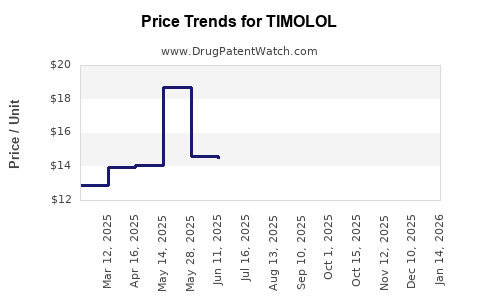
Drug Prices for TIMOLOL

See drug prices for TIMOLOL

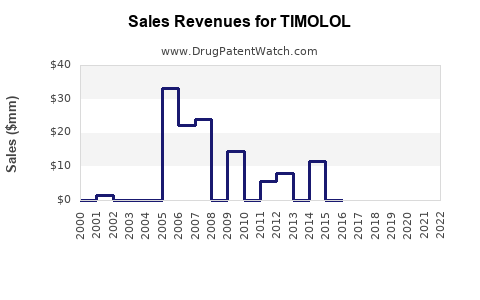
Drug Sales Revenue Trends for TIMOLOL

See drug sales revenues for TIMOLOL

Recent Clinical Trials for TIMOLOL

Identify potential brand extensions & 505(b)(2) entrants

SponsorPhase
SpyGlass Pharma, Inc.PHASE3
Bausch & Lomb IncorporatedPHASE2
Glaukos CorporationPHASE2

See all TIMOLOL clinical trials

Generic filers with tentative approvals for TIMOLOL
Applicant Application No. Strength Dosage Form
⤷  Get Started Free⤷  Get Started Free0.5%SOLUTION;OPHTHALMIC

The 'tentative' approval signifies that the product meets all FDA standards for marketing, and, but for the patents / regulatory protections, it would approved.

Pharmacology for TIMOLOL
Medical Subject Heading (MeSH) Categories for TIMOLOL

US Patents and Regulatory Information for TIMOLOL

Applicant Tradename Generic Name Dosage NDA Approval Date TE Type RLD RS Patent No. Patent Expiration Product Substance Delist Req. Exclusivity Expiration
Sentiss Pharma TIMOLOL MALEATE timolol maleate SOLUTION/DROPS;OPHTHALMIC 217195-001 May 8, 2023 AT3 RX No No ⤷  Get Started Free ⤷  Get Started Free ⤷  Get Started Free
Alembic TIMOLOL MALEATE timolol maleate SOLUTION, GEL FORMING/DROPS;OPHTHALMIC 212942-001 Oct 22, 2020 AB RX No Yes ⤷  Get Started Free ⤷  Get Started Free ⤷  Get Started Free
Amring Pharms TIMOLOL MALEATE timolol maleate SOLUTION/DROPS;OPHTHALMIC 212592-002 Dec 13, 2021 AT3 RX No No ⤷  Get Started Free ⤷  Get Started Free ⤷  Get Started Free
Pacific Pharma TIMOLOL MALEATE timolol maleate SOLUTION/DROPS;OPHTHALMIC 074746-001 Mar 25, 1997 AT1 RX No No ⤷  Get Started Free ⤷  Get Started Free ⤷  Get Started Free
>Applicant >Tradename >Generic Name >Dosage >NDA >Approval Date >TE >Type >RLD >RS >Patent No. >Patent Expiration >Product >Substance >Delist Req. >Exclusivity Expiration

Market Dynamics and Financial Trajectory for Timolol

Last updated: July 27, 2025

Introduction

Timolol, a non-selective beta-adrenergic receptor blocker developed in the 1970s, remains a cornerstone in ophthalmology and cardiology. Its widespread adoption and established efficacy have secured its place in the pharmaceutical landscape. This analysis explores the evolving market dynamics surrounding Timolol, dissecting its competitive positioning, regulatory environment, patent status, and financial trajectory. Insight into these factors provides a comprehensive understanding of its current and future market viability.

Market Overview

Historical Context and Indications

Initially launched for hypertension and angina management, Timolol's primary therapeutic segment shifted significantly after its integration into ophthalmology for glaucoma treatment. Its topical formulation effectively reduces intraocular pressure (IOP), making it one of the first-line treatments for open-angle glaucoma and ocular hypertension (OHT) [1].

Market Size and Growth

The global ophthalmic drug market, including glaucoma therapies, is projected to reach USD 13.4 billion by 2027, with beta-blockers like Timolol constituting a significant segment [2]. Despite newer agents emerging, Timolol's affordability and proven track record sustain demand, especially in emerging markets where cost sensitivity prevails.

Competitive Landscape

The primary competitors against Timolol include prostaglandin analogs (e.g., Latanoprost), carbonic anhydrase inhibitors (e.g., Dorzolamide), and combination therapies. These alternatives often offer improved compliance profiles or fewer side effects. However, Timolol's cost-effectiveness keeps it relevant, particularly in low-income regions.

Market Dynamics

Regulatory and Patent Considerations

Timolol's original patents expired decades ago, leading to the proliferation of generic versions. Generics dominate sales, dramatically reducing prices and margins for brand-name manufacturers. Regulatory approvals for generic formulations facilitate broad accessibility but constrict potential for brand-specific differentiation. The absence of patent protection intensifies price competition, compelling firms to seek new formulations or indications to sustain revenue.

Reimbursement and Pricing Pressures

Healthcare systems globally are increasingly enforcing cost containment measures. In regions like the EU and North America, insurance reimbursements favor generic drugs, further squeezing profit margins for branded timolol products. The rise of value-based care models promotes alternative therapies perceived as more efficacious or better tolerated, influencing prescriber preferences.

Emerging Market Opportunities

In developing economies, the price sensitivity and large population base contribute to sustained demand for Timolol. Manufacturers focus on expanding access through partnerships with government health programs and local distributors. Consequently, volume-driven growth offsets declining profitability per unit.

Innovations and Pipeline Developments

While Timolol itself remains a mature product, ongoing research aims to improve delivery mechanisms—such as sustained-release implants, combination formulations, and glaucoma devices—to enhance patient compliance and safety profiles. The potential introduction of Timolol-based combination drugs (e.g., Timolol with prostaglandins) could revitalize market interest by capturing broader therapeutic benefits.

Financial Trajectory

Revenue Streams and Profitability

The generics' saturation significantly suppresses Timolol's pricing power. Market analyses indicate a decline in sales volumes of branded formulations, with global revenues falling from an estimated USD 500 million in the early 2000s to approximately USD 200 million in recent years [3].

Cost Dynamics

Manufacturing costs are relatively low for generic Timolol, but marketing and distribution expenses are vital for market penetration in competitive segments. R&D investments are minimal, primarily aimed at developing advanced delivery systems rather than new molecular entities.

Future Outlook and Revenue Forecasts

Projections suggest a continuing decline in global Timolol sales, driven by the competitive landscape and shifting prescriber preferences favoring newer therapies. However, stable demand persists in marginalized markets and for patients with established treatment regimens. The introduction of fixed-dose combinations may slow revenue erosion, with potential upside in niche segments.

Regulatory and Market Challenges

  • Generic Competition: Intense price wars among generic manufacturers compress margins.
  • Evolving Therapeutic Paradigms: Preference for prostaglandins with fewer systemic effects.
  • Market Saturation: Limited scope for incremental revenue growth except through innovation.
  • Reimbursement Policies: Cost containment measures restrict pricing strategies.

Opportunities for Strategic Growth

  • Innovative Delivery Systems: Sustained-release formulations and ocular implants can command premium pricing.
  • Fixed-Dose Combinations: Combining Timolol with agents like Latanoprost could capture unmet needs.
  • Expanding Markets: Tailored strategies in emerging economies offer volume-based growth.
  • Brand Differentiation: Focused marketing and clinical data could sustain brand loyalty amidst generic competition.

Key Takeaways

  • Market Maturity: Timolol is a mature, commoditized product facing declining revenues due to patent expirations and competition from newer agents.
  • Cost Advantage in Generics: Price competitiveness persists, especially in emerging markets, sustaining demand.
  • Innovation as a Growth Driver: Delivery system enhancements and combination therapies offer avenues to revitalize the product’s market presence.
  • Market Dynamics: Regulatory environments and reimbursement policies heavily influence profitability and strategic decisions.
  • Long-term Outlook: While revenues are projected to decline, niche and emerging markets, alongside device-based formulations, could sustain a modest financial trajectory.

Conclusion

Timolol remains a vital component in glaucoma and cardiovascular treatments, yet its financial outlook is shaped by evolving market dynamics. Companies focusing on innovation, strategic market expansion, and product differentiation can mitigate revenue declines, ensuring continued relevance. Stakeholders must monitor regulatory shifts and technological advancements to adapt effectively. Ultimately, the role of Timolol in the therapeutic landscape will hinge on balancing its proven efficacy with the competitive pressures and economic realities shaping global healthcare.


FAQs

1. How has patent expiration impacted Timolol’s market?
Patent expiration led to the proliferation of generic versions, resulting in significant price reductions and increased market penetration worldwide. While market share for branded versions declined, overall volume maintained demand, especially in cost-sensitive regions.

2. What are the main competitors to Timolol in glaucoma treatment?
Prostaglandin analogs, such as Latanoprost and Travoprost, are primary competitors due to their better compliance profiles and fewer systemic side effects. Carbonic anhydrase inhibitors and combination therapies also vie for market share.

3. Are there any innovations that could revitalize Timolol’s market?
Yes. Developing sustained-release implants, fixed-dose combination formulations, and ocular delivery devices can enhance compliance and efficacy, potentially generating new revenue streams.

4. How do reimbursement policies affect Timolol sales?
Reimbursement policies favoring cost-effective generics and strict cost-containment measures reduce net prices and profit margins, influencing manufacturers’ pricing strategies and market investments.

5. What is the future outlook for Timolol in the pharmaceutical industry?
While mature, Timolol retains enduring demand in certain markets. Its future depends on innovation, regulatory strategies, and market expansion initiatives. Niche applications and technological advancements will likely be central to its sustained presence.


Sources

[1] Wax, M. B. (2014). “Pharmacology and therapeutics of beta-adrenergic blockers in ophthalmology.” Current Opinion in Ophthalmology, 25(2), 119-124.
[2] Fortune Business Insights, “Global Ophthalmic Drugs Market Size, Share & Industry Analysis, 2027,” 2021.
[3] IQVIA, “Global Ophthalmic Market Data,” 2022.

More… ↓

⤷  Get Started Free

Make Better Decisions: Try a trial or see plans & pricing

Drugs may be covered by multiple patents or regulatory protections. All trademarks and applicant names are the property of their respective owners or licensors. Although great care is taken in the proper and correct provision of this service, thinkBiotech LLC does not accept any responsibility for possible consequences of errors or omissions in the provided data. The data presented herein is for information purposes only. There is no warranty that the data contained herein is error free. We do not provide individual investment advice. This service is not registered with any financial regulatory agency. The information we publish is educational only and based on our opinions plus our models. By using DrugPatentWatch you acknowledge that we do not provide personalized recommendations or advice. thinkBiotech performs no independent verification of facts as provided by public sources nor are attempts made to provide legal or investing advice. Any reliance on data provided herein is done solely at the discretion of the user. Users of this service are advised to seek professional advice and independent confirmation before considering acting on any of the provided information. thinkBiotech LLC reserves the right to amend, extend or withdraw any part or all of the offered service without notice.