Last updated: September 7, 2026
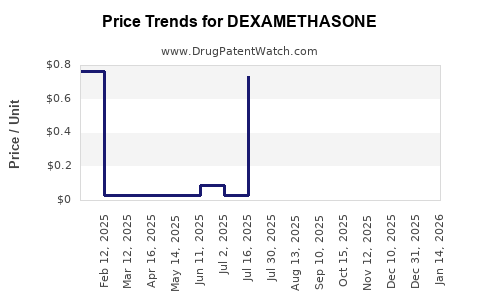
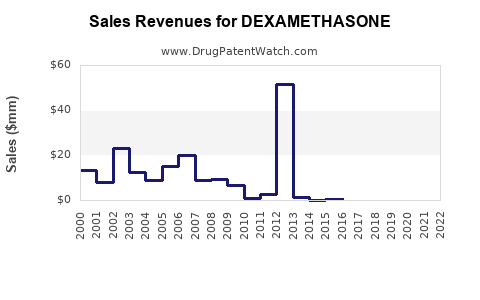
Dexamethasone is a mature, low-cost corticosteroid with broad use across oncology, inflammatory disease, cerebral edema, antiemesis, ophthalmology, respiratory disease, and veterinary medicine. Its commercial profile is driven by high unit volume, many generic manufacturers, and differentiated delivery systems rather than by a single branded product. COVID-19 created a temporary demand and revenue surge after the RECOVERY trial established a mortality benefit in hospitalized patients requiring oxygen or mechanical ventilation. Demand later normalized, while price competition intensified.
The conventional dexamethasone market has limited patent protection and low barriers to generic entry. The strongest remaining intellectual-property positions are linked to specialized products such as intravitreal implants, ophthalmic formulations, combination products, and manufacturing processes.
What is the current market position of dexamethasone?
Dexamethasone is a broad-spectrum glucocorticoid available in tablets, oral solutions, injections, ophthalmic products, otic products, topical preparations, and implantable delivery systems. Common active ingredients include dexamethasone, dexamethasone sodium phosphate, and dexamethasone acetate.
| Market attribute |
Dexamethasone position |
| Therapeutic class |
Synthetic corticosteroid |
| Original approval era |
1950s |
| Primary market structure |
Multisource generic |
| Key branded legacy product |
Decadron |
| Major differentiated product |
Ozurdex intravitreal implant |
| Main administration routes |
Oral, injectable, ophthalmic, topical, implant |
| FDA regulatory status |
Multiple approved generic and branded products |
| Biosimilar exposure |
Not applicable |
| Conventional patent risk |
Low |
| Formulation and device patent risk |
Moderate for selected products |
| Pricing power |
Low for standard tablets and injections |
| Demand volatility |
Moderate, with episodic hospital and infectious-disease surges |
The drug’s economic value comes from clinical breadth and manufacturing scale. Standard dexamethasone tablets and injectable products are generally interchangeable within approved dosage forms, which limits sustained pricing power for individual manufacturers.
How large is the dexamethasone market?
Public market estimates vary substantially because analysts use different definitions of the market. Some estimates include only pharmaceutical dexamethasone products, while others include veterinary products, combination products, implants, hospital procurement, and retail formulations. Company filings generally do not report dexamethasone revenue separately.
The most reliable commercial conclusion is that conventional dexamethasone is a high-volume, low-revenue-per-unit market. It generates meaningful aggregate sales across global manufacturers but lacks the revenue concentration associated with a patented specialty medicine.
Key demand segments
Hospital injections account for a major share of high-value demand. Dexamethasone sodium phosphate injection is used in oncology supportive care, perioperative medicine, emergency care, cerebral edema, allergic reactions, and severe respiratory disease.
Oral tablets and solutions have persistent demand in oncology, hematology, rheumatology, neurology, and palliative care. Oncology remains commercially important because dexamethasone is widely used with multiple myeloma regimens and for prevention or treatment of chemotherapy-related adverse effects.
Ophthalmic products have a smaller volume base but higher formulation value. Intravitreal dexamethasone implants are commercially distinct from conventional generic tablets and injections.
Veterinary demand adds a separate channel, particularly in anti-inflammatory treatment and ophthalmic applications. Human and veterinary markets do not have identical regulatory or reimbursement dynamics.
What caused the dexamethasone financial surge during COVID-19?
The largest recent change in dexamethasone demand followed publication of the RECOVERY trial in June 2020. The trial reported that dexamethasone reduced 28-day mortality in hospitalized COVID-19 patients receiving oxygen or invasive mechanical ventilation. It did not show a benefit in patients not requiring respiratory support (RECOVERY Collaborative Group, 2021).
The World Health Organization subsequently recommended systemic corticosteroids for severe and critical COVID-19, generally for up to 7 to 10 days, while recommending against routine use in non-severe disease (World Health Organization, 2020).
Financial trajectory
| Period |
Market event |
Commercial effect |
| Pre-2020 |
Mature generic demand |
Stable, low-margin sales |
| Mid-2020 |
RECOVERY results and treatment guidance |
Rapid increase in hospital demand |
| 2020-2021 |
Global COVID treatment procurement |
Supply pressure, stockpiling, higher volumes |
| 2022 |
Declining hospitalization and treatment demand |
Normalization from pandemic peak |
| 2023-2024 |
Generic competition and routine clinical use |
Lower growth, stable baseline demand |
| Forward outlook |
Chronic demand plus episodic outbreaks |
Volume stability with limited pricing expansion |
The COVID event increased unit demand more than it improved long-term pricing power. Most manufacturers supplied a generic product in a competitive market. Consequently, the financial benefit was strongest for companies with available manufacturing capacity, hospital distribution, and government procurement access.
Dexamethasone’s post-COVID revenue trajectory is best characterized as a sharp temporary expansion followed by normalization, not as a durable branded growth cycle.
Which companies manufacture or market dexamethasone?
The competitive field includes multinational generic companies, specialty pharmaceutical manufacturers, contract manufacturers, hospital suppliers, and regional producers. Companies with dexamethasone products or related formulations have included Hikma Pharmaceuticals, Fresenius Kabi, Pfizer, Sandoz, Teva Pharmaceutical Industries, Mylan, Sun Pharmaceutical Industries, Cipla, Zydus Lifesciences, Dr. Reddy’s Laboratories, and multiple regional manufacturers.
Product availability differs by country, dosage form, and strength. A manufacturer may hold a strong position in injectable dexamethasone without being a major supplier of oral or ophthalmic products.
Competitive factors
Manufacturers compete on:
- Injectable manufacturing capacity
- Sterile-facility reliability
- Hospital contracting
- Drug-shortage performance
- Product breadth across strengths and routes
- Regulatory approvals in multiple jurisdictions
- Cost-efficient active pharmaceutical ingredient sourcing
- Supply-chain resilience
- Access to government and institutional tenders
The market is vulnerable to temporary shortages because injectable products require sterile manufacturing and have fewer qualified suppliers than standard oral tablets.
What patents protect dexamethasone?
The original dexamethasone composition-of-matter and conventional pharmaceutical patents expired decades ago. Standard dexamethasone tablets and injections therefore have no meaningful remaining composition patent barrier in the United States.
The relevant intellectual-property categories are:
| IP category |
Commercial relevance |
| Original active ingredient |
Expired |
| Standard tablets |
Generally unprotected by blocking patents |
| Standard injectable products |
Generally unprotected by blocking patents |
| Ophthalmic suspensions and solutions |
Possible formulation and use protection |
| Intravitreal implants |
Important device, formulation, and method patents |
| Combination products |
Product-specific patent risk |
| Manufacturing processes |
May affect freedom to operate but rarely block all generic entry |
| Method-of-use patents |
Potentially relevant for specialized indications |
Ozurdex and intravitreal dexamethasone
Ozurdex is an intravitreal dexamethasone implant approved for several retinal conditions, including macular edema associated with retinal vein occlusion and diabetic macular edema. Its commercial protection differs sharply from conventional generic dexamethasone because the product combines an active ingredient with a biodegradable implant delivery system.
The relevant patent estate can include implant composition, polymer matrix, geometry, release characteristics, applicator design, and ophthalmic use claims. Patent expiration dates vary by individual patent, terminal disclaimers, pediatric extensions, and regulatory adjustments. The Orange Book, not the active ingredient’s historical patent record, is the controlling source for current U.S. listed patents (U.S. Food and Drug Administration, 2024a).
What is the Orange Book status of dexamethasone?
The FDA Orange Book includes multiple dexamethasone-related products, but listing status depends on the specific NDA, dosage form, sponsor, and product code. Conventional generic dexamethasone products generally rely on ANDA approvals and do not have a blocking patent estate comparable to newer branded drugs.
Ozurdex is a different regulatory and patent category. Its NDA listing may include patents directed to the implant and delivery system. A patent listed for Ozurdex does not automatically protect every dexamethasone product.
The principal regulatory distinction is:
- Generic tablets and injections: usually ANDA products with abbreviated clinical requirements.
- Branded ophthalmic products: NDA products that may rely on formulation, device, or clinical-use differentiation.
- Intravitreal implants: complex drug-device products with higher development and manufacturing barriers.
When does dexamethasone lose exclusivity?
Dexamethasone lost broad market exclusivity decades ago. The conventional drug has no meaningful single U.S. exclusivity expiration date because it is already a mature generic product.
Exclusivity analysis must be performed by product:
| Product type |
Exclusivity position |
| Conventional dexamethasone tablets |
Long expired |
| Dexamethasone sodium phosphate injection |
Long expired |
| Standard ophthalmic products |
Depends on product-specific patents and approvals |
| Ozurdex implant |
Product-specific patents and regulatory exclusivity |
| New combination products |
Separate product-specific analysis |
For generic entry, the decisive issues are normally ANDA approval, manufacturing capacity, supply reliability, state substitution rules, and reimbursement economics rather than patent expiry for dexamethasone itself.
Are there Paragraph IV challenges to dexamethasone?
Paragraph IV litigation is unlikely to be material for ordinary dexamethasone tablets or injections because the relevant composition patents expired long ago. A Paragraph IV dispute can arise for a branded formulation or implant if an ANDA applicant challenges listed patents.
For specialized products such as Ozurdex, potential challengers would need to address both patent claims and technical development requirements. The commercial risk is higher than for ordinary dexamethasone because the challenge may involve a complex drug-delivery system rather than a simple active-ingredient copy.
A generic applicant may also pursue a Paragraph III certification, wait for patent expiry, or seek approval for a different formulation that avoids listed claims.
What litigation and settlement risks affect dexamethasone?
Dexamethasone-related litigation is more likely to involve:
- Patent disputes over implants, ophthalmic formulations, or combination products.
- Product-liability claims involving steroid-associated adverse events.
- Manufacturing and quality disputes involving sterile injectables.
- Pricing and procurement disputes among generic suppliers.
- Regulatory enforcement involving labeling, compounding, or distribution.
There is no broad litigation pattern comparable to major branded drugs with extensive composition patents. Settlement agreements, where they exist for specialized dexamethasone products, must be evaluated at the individual product level. A settlement affecting an intravitreal implant would not materially change the entry outlook for generic injectable dexamethasone.
Is dexamethasone exposed to biosimilar competition?
No. Dexamethasone is a small-molecule corticosteroid, not a biologic. Biosimilar approval pathways under the Public Health Service Act do not apply.
Competition occurs through generic drug pathways, including ANDAs in the United States and equivalent national procedures in other jurisdictions. The absence of biosimilar risk does not create pricing power. Generic competition is already established and is typically more intense for conventional dosage forms.
How strong is the dexamethasone patent estate?
The patent estate is weak for the conventional drug and stronger for specialized delivery systems.
| Segment |
Patent strength |
Entry barrier |
| Standard oral tablets |
Low |
Low |
| Standard injectable products |
Low |
Moderate manufacturing barrier |
| Ophthalmic solution |
Low to moderate |
Formulation and regulatory barrier |
| Ophthalmic suspension |
Moderate |
Formulation and equivalence barrier |
| Intravitreal implant |
Moderate to strong |
Patent, device, and clinical barrier |
| New combination products |
Product-specific |
Variable |
| Manufacturing processes |
Narrow to moderate |
Process-specific |
Patent strength should not be confused with commercial durability. An implant may have meaningful patents but still face competition after patent expiry through complex generic or 505(b)(2) development.
What generic launch scenarios exist for dexamethasone?
Conventional tablet or injection launch
A new entrant would face low intellectual-property risk but substantial price pressure. The likely strategy would be to compete through manufacturing reliability, hospital tenders, broad strengths, and supply continuity.
Ophthalmic generic launch
The applicant would need to demonstrate pharmaceutical equivalence and bioequivalence or an appropriate alternative standard, depending on the dosage form. Suspension products may create greater technical complexity than simple solutions.
Intravitreal implant launch
The entrant would face the highest barrier. Required capabilities may include polymer-drug formulation, implant manufacturing, applicator development, release testing, ophthalmic clinical evidence, and patent clearance.
How does dexamethasone compare with competing corticosteroids?
| Drug |
Relative market position |
Patent status |
Commercial distinction |
| Dexamethasone |
Broad systemic and specialty use |
Conventional patents expired |
High potency, long clinical history |
| Prednisone |
Large oral market |
Generic |
Greater use in chronic systemic therapy |
| Methylprednisolone |
Hospital and acute-care use |
Generic |
Strong injectable and oral presence |
| Hydrocortisone |
Replacement and acute care |
Generic |
Physiologic steroid positioning |
| Betamethasone |
Dermatology and obstetrics |
Generic |
Overlapping anti-inflammatory use |
| Budesonide |
Inhaled and gastrointestinal products |
Mixed by product |
More targeted delivery and product differentiation |
Dexamethasone competes on potency, low cost, familiarity, and availability. It competes less effectively where clinicians prefer organ-targeted delivery, lower systemic exposure, or disease-specific formulations.
What is the financial outlook for dexamethasone?
The baseline outlook is stable volume with limited revenue growth. The main financial drivers are:
- Hospital utilization
- Oncology treatment volume
- Ophthalmic implant sales
- Generic price erosion
- Sterile manufacturing capacity
- Government tenders
- New outbreaks or respiratory disease waves
- Supply-chain disruptions
- Expansion in emerging markets
Standard dexamethasone products are unlikely to produce sustained premium pricing. Growth opportunities are concentrated in differentiated formulations, combination products, implants, and geographic expansion.
For investors and licensing teams, the economic value is usually in manufacturing scale or product differentiation rather than ownership of the active ingredient. A company with a low-cost sterile platform may capture more value than a company holding narrow method-of-use claims.
Key Takeaways
- Dexamethasone is a mature, multisource generic corticosteroid.
- The original active-ingredient patent estate has expired.
- COVID-19 produced a temporary demand surge after the RECOVERY trial.
- Post-pandemic demand has normalized, with stable baseline use across hospitals, oncology, ophthalmology, and chronic disease.
- Standard tablets and injections have low patent barriers and high generic price pressure.
- Ozurdex and other specialized delivery systems have stronger formulation, device, and method-of-use protection.
- Dexamethasone is not subject to biosimilar competition.
- Future commercial growth is more likely in implants, ophthalmic products, combinations, and emerging markets than in standard tablets.
- Sterile manufacturing, hospital contracts, and supply reliability are the main competitive barriers for injectable products.
- Revenue is fragmented across manufacturers, and most companies do not disclose dexamethasone sales separately.
FAQs
What is the main commercial use of dexamethasone?
The main uses are systemic anti-inflammatory treatment, oncology supportive care, cerebral edema, antiemesis, severe respiratory disease, ophthalmic inflammation, and intravitreal treatment of retinal disorders.
Is dexamethasone still profitable for generic manufacturers?
It can be profitable at scale, particularly in injectable and institutional channels, but standard products face low prices and intense competition. Profitability depends on manufacturing efficiency, volume, supply reliability, and procurement access.
Can a company obtain a new patent on dexamethasone?
A company generally cannot obtain a new composition patent on the known active ingredient. It may obtain patents on novel formulations, delivery systems, combinations, manufacturing processes, or specific clinical uses if the statutory requirements are met.
Does dexamethasone have orphan-drug exclusivity?
Dexamethasone itself does not have a general orphan-drug exclusivity position. A particular formulation or indication could receive separate regulatory exclusivity if it satisfies applicable FDA requirements.
Which dexamethasone product has the highest entry barrier?
The intravitreal implant has the highest entry barrier because it combines drug formulation, biodegradable-device engineering, specialized manufacturing, ophthalmic delivery, clinical development, and product-specific patent analysis.
References
-
RECOVERY Collaborative Group. (2021). Dexamethasone in hospitalized patients with Covid-19. New England Journal of Medicine, 384(8), 693-704. https://doi.org/10.1056/NEJMoa2021436
-
U.S. Food and Drug Administration. (2024a). Approved drug products with therapeutic equivalence evaluations: Orange Book. https://www.accessdata.fda.gov/scripts/cder/ob/
-
U.S. Food and Drug Administration. (2024b). Drugs@FDA: FDA-approved drugs. https://www.accessdata.fda.gov/scripts/cder/daf/
-
World Health Organization. (2020). WHO welcomes preliminary results about dexamethasone use in treating critically ill COVID-19 patients. https://www.who.int/news/item/16-06-2020-who-welcomes-preliminary-results-about-dexamethasone-use-in-treating-critically-ill-covid-19-patients
-
National Library of Medicine. (2024). DailyMed: Dexamethasone drug labels. https://dailymed.nlm.nih.gov/dailymed/