You're using a free limited version of DrugPatentWatch: Upgrade for Complete Access

Last Updated: December 15, 2025

AMLODIPINE BESYLATE - Generic Drug Details


✉ Email this page to a colleague

« Back to Dashboard


What are the generic sources for amlodipine besylate and what is the scope of freedom to operate?

Amlodipine besylate is the generic ingredient in twenty-one branded drugs marketed by Brillian Pharma, Cmp Dev Llc, Synthon Pharms, Accord Hlthcare, Alkem, Amneal Pharms Ny, Aurobindo Pharma, Chartwell Rx, China Resources, Cipla, Corepharma, Epic Pharma Llc, Gedeon Richter Usa, Genpharm, Graviti Pharms, Hikma, Hikma Pharms, Invagen Pharms, Lupin, Mylan, Orbion Pharms, Oxford Pharms, Pharmobedient, Polygen Pharms, Puracap Pharm, Sciegen Pharms Inc, Sovereign Pharms, Strides Pharma, Sun Pharm Inds Inc, Sun Pharm Inds Ltd, Sun Pharm Industries, Sunshine, Teva, Torrent Pharms, Unichem, Watson Labs, Wockhardt, Zydus Pharms Usa, Viatris, Alembic, Apotex, Dr Reddys, Neocubes Pharma, Pharmacia, Amneal, Aurobindo Pharma Ltd, Dr Reddys Labs Inc, Heritage, Lupin Pharms, Rising, Teva Pharms, Watson Labs Inc, Sandoz, Purple Biotech, Hetero Labs Ltd V, Macleods Pharms Ltd, Ph Health, Piramal, Teva Pharms Usa, Torrent, Cosette, Lupin Ltd, Strides Pharma Intl, Novartis, Azurity, Accord Hlthcare Inc, Ajanta Pharma Ltd, Alkem Labs Ltd, Glenmark Pharms Ltd, Jubilant Generics, Micro Labs, Zydus Pharms, Adhera, Boehringer Ingelheim, Hetero Labs, and Novel Labs Inc, and is included in one hundred and nine NDAs. There are ten patents protecting this compound. Additional information is available in the individual branded drug profile pages.

There are twenty-seven drug master file entries for amlodipine besylate. Forty-four suppliers are listed for this compound. There are three tentative approvals for this compound.

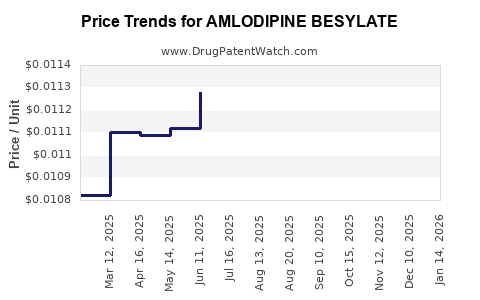
Drug Prices for AMLODIPINE BESYLATE

See drug prices for AMLODIPINE BESYLATE

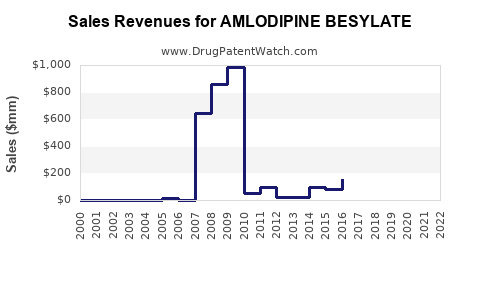
Drug Sales Revenue Trends for AMLODIPINE BESYLATE

See drug sales revenues for AMLODIPINE BESYLATE

Recent Clinical Trials for AMLODIPINE BESYLATE

Identify potential brand extensions & 505(b)(2) entrants

SponsorPhase
Third Military Medical UniversityPHASE4
Overseas Pharmaceuticals, Ltd.Phase 1
Guangzhou Health Start Pharmaceutical Techology Co.,LtdPhase 1

See all AMLODIPINE BESYLATE clinical trials

Generic filers with tentative approvals for AMLODIPINE BESYLATE
Applicant Application No. Strength Dosage Form
⤷  Get Started Free⤷  Get Started FreeEQ 10MG BASETABLET;ORAL
⤷  Get Started Free⤷  Get Started FreeEQ 5MG BASETABLET;ORAL
⤷  Get Started Free⤷  Get Started FreeEQ 2.5MG BASETABLET;ORAL

The 'tentative' approval signifies that the product meets all FDA standards for marketing, and, but for the patents / regulatory protections, it would approved.

US Patents and Regulatory Information for AMLODIPINE BESYLATE

Applicant Tradename Generic Name Dosage NDA Approval Date TE Type RLD RS Patent No. Patent Expiration Product Substance Delist Req. Exclusivity Expiration
Piramal OLMESARTAN MEDOXOMIL, AMLODIPINE AND HYDROCHLOROTHIAZIDE amlodipine besylate; hydrochlorothiazide; olmesartan medoxomil TABLET;ORAL 210718-002 May 14, 2025 AB RX No No ⤷  Get Started Free ⤷  Get Started Free ⤷  Get Started Free
Graviti Pharms AMLODIPINE BESYLATE amlodipine besylate TABLET;ORAL 201380-002 Apr 13, 2012 DISCN No No ⤷  Get Started Free ⤷  Get Started Free ⤷  Get Started Free
Genpharm AMLODIPINE BESYLATE amlodipine besylate TABLET;ORAL 077362-002 Jul 9, 2007 DISCN No No ⤷  Get Started Free ⤷  Get Started Free ⤷  Get Started Free
Azurity WIDAPLIK amlodipine besylate; indapamide; telmisartan TABLET;ORAL 219423-003 Jun 5, 2025 DISCN Yes No ⤷  Get Started Free ⤷  Get Started Free Y ⤷  Get Started Free
Torrent AMLODIPINE AND OLMESARTAN MEDOXOMIL amlodipine besylate; olmesartan medoxomil TABLET;ORAL 202933-004 Nov 25, 2016 DISCN No No ⤷  Get Started Free ⤷  Get Started Free ⤷  Get Started Free
>Applicant >Tradename >Generic Name >Dosage >NDA >Approval Date >TE >Type >RLD >RS >Patent No. >Patent Expiration >Product >Substance >Delist Req. >Exclusivity Expiration

Expired US Patents for AMLODIPINE BESYLATE

Applicant Tradename Generic Name Dosage NDA Approval Date Patent No. Patent Expiration
Viatris NORVASC amlodipine besylate TABLET;ORAL 019787-001 Jul 31, 1992 ⤷  Get Started Free ⤷  Get Started Free
Viatris NORVASC amlodipine besylate TABLET;ORAL 019787-003 Jul 31, 1992 ⤷  Get Started Free ⤷  Get Started Free
Synthon Pharms AMLODIPINE BESYLATE amlodipine besylate TABLET, ORALLY DISINTEGRATING;ORAL 022026-001 Sep 27, 2007 ⤷  Get Started Free ⤷  Get Started Free
Viatris NORVASC amlodipine besylate TABLET;ORAL 019787-002 Jul 31, 1992 ⤷  Get Started Free ⤷  Get Started Free
>Applicant >Tradename >Generic Name >Dosage >NDA >Approval Date >Patent No. >Patent Expiration

Market Dynamics and Financial Trajectory for Amlodipine Besylate

Last updated: July 27, 2025

Introduction

Amlodipine besylate stands as a cornerstone medication within calcium channel blockers, widely prescribed for hypertension and angina. Its global market scope is vast, driven by the escalating prevalence of cardiovascular diseases (CVDs), aging populations, and the expanding therapeutic landscape. As a long-established generic drug, amlodipine besylate’s market dynamics are influenced by patent expirations, competitive forces, regulatory factors, and evolving healthcare priorities. This analysis delineates the current market environment, financial trends, key drivers, challenges, and future outlook.

Market Overview

Global Market Size & Growth

The global amlodipine market is projected to reach approximately USD 4.7 billion by 2027, with a compound annual growth rate (CAGR) of around 4.8% from 2022 to 2027 [1]. The widespread adoption of amlodipine for hypertension management, combined with rising CVD prevalence—expected to affect 1.13 billion people globally by 2030 [2]—fuels sustained demand.

Geographical Distribution

  • North America: Dominates due to high hypertension awareness, healthcare expenditure, and established pharmaceutical infrastructure.
  • Asia-Pacific: Exhibits rapid growth owing to expanding healthcare access, increasing urbanization, and high CVD burden.
  • Europe: Maintains significant market share with mature healthcare systems and emphasis on preventative care.

Patent and Generic Landscape

Originally developed by Pfizer in the late 1980s, amlodipine’s patent expired in the early 2010s, catalyzing a surge in generic entrants. The reduced drug prices have intensified competitive pricing pressures but widened access, expanding market penetration.

Market Drivers

Rising Prevalence of Hypertension and Cardiovascular Disease

Non-communicable diseases (NCDs) such as hypertension directly correlate with age, lifestyle, and urbanization trends. WHO reports hypertension affects 1.28 billion adults globally, with medication like amlodipine serving as frontline therapy [3].

Generic Drug Adoption and Price Competition

Post-patent expiry, generic manufacturers have driven down prices, making amlodipine an affordable and accessible treatment option globally. This has significantly widened its consumer base, especially in emerging markets.

Healthcare Infrastructure Expansion

Health systems worldwide are integrating chronic disease management programs, which emphasize affordable and proven therapies like amlodipine, bolstering demand.

Regulatory Approvals and Label Expansion

Recent approvals for combination therapies and new formulations—such as extended-release versions—have expanded therapeutic options, sustaining market growth.

Public and Private Sector Initiatives

Government strategies to combat NCDs and cardiovascular health campaigns promote amlodipine use, further driving demand.

Market Challenges

Pricing and Competitive Pressures

Intensified generic competition has resulted in aggressive price cuts, pressuring profit margins for manufacturers. Market saturation in developed countries also limits growth potential.

Regulatory Hurdles

Stringent regulatory requirements for formulations, bioequivalence studies, and manufacturing standards can delay entry for new formulations or generic versions, impacting revenue streams.

Patent Disputes and Litigation

While primary patents have expired, secondary patents or formulation patents may pose barriers. Legal disputes can slow market expansion or deter new entrants.

Shift Towards Novel Therapies

Development of novel antihypertensives, combination therapies, and personalized medicine poses competitive threats by offering alternative treatment paradigms.

Manufacturing and Supply Chain Risks

Global supply chain disruptions, especially in raw materials, can impact manufacturing costs and inventory levels.

Financial Trajectory and Revenue Trends

Historical Performance

Amlodipine’s revenue has exhibited steady growth since patent expiry, primarily driven by generic penetration. Leading pharmaceutical companies, including Pfizer, Teva, Mylan, and Sun Pharma, generate substantial revenues from amlodipine formulations.

Current Revenue Dynamics

In 2022, the global amlodipine market generated approximately USD 4.2 billion, with major contributions from North America (38%), Europe (22%), and Asia-Pacific (28%) [1]. The remaining percentage includes Latin America and Middle East/Africa regions.

Pricing Trends

Generic competition has driven per-unit prices down by an average of 35% over the past five years. Despite price erosion, overall revenues remain stable owing to volume increases.

Forecasted Financial Trajectory

Analysts project a compound annual growth rate of approximately 3-5% over the next five years, stabilized by increased regional coverage, formulations, and healthcare initiatives. However, revenue growth may plateau in mature markets due to saturation.

Impact of New Formulations

Introduction of fixed-dose combination products with other antihypertensives (e.g., amlodipine with torasemide or valsartan) anticipates boosting sales, especially in markets emphasizing adherence and simplified regimens.

Future Outlook

Innovation and Formulation Pipelines

While fixed-dose combination therapies are trending, innovative formulations such as once-daily extended-release versions are expected to sustain relevance. Research into biosimilar and biotechnological adjuncts, though limited for small molecules like amlodipine, could influence future competitive dynamics.

Emerging Markets Focus

High growth potential resides predominantly in developing nations where hypertension control remains suboptimal. Market expansion strategies focusing on affordability, patient compliance, and distribution are critical.

Regulatory and Policy Impact

Government health policies advocating for accessible hypertension treatment and expanding insurance coverage can positively influence market size. Conversely, increased regulatory stringency could slow new formulation approvals.

Competitive Landscape Evolution

Consolidation among generic manufacturers and patent litigations will likely shape market shares. Developing low-cost manufacturing capabilities remains advantageous.

Potential Disruptors

Emerging drug classes, such as neprilysin inhibitors or more targeted therapies, could potentially shift the treatment landscape. However, for the foreseeable future, amlodipine’s established efficacy and cost-effectiveness sustain its market position.

Conclusion

Amlodipine besylate’s market trajectory combines resilience, driven by therapeutic efficacy, affordability, and expanding global burden of hypertension. While pricing pressures and competitive dynamics challenge profit margins, ongoing innovation in formulations and strategic market penetration—particularly in emerging economies—will sustain its revenue streams. Stakeholders must navigate regulatory landscapes, competitive pressures, and evolving treatment standards to optimize financial outcomes.


Key Takeaways

  • Stable Demand: Rapidly growing hypertensive population worldwide ensures consistent demand for amlodipine, especially post-patent expiration.
  • Price Competition: Generic proliferation has lowered prices substantially, constraining margins but expanding access.
  • Market Expansion Opportunities: Emerging markets and fixed-dose combinations present significant growth avenues.
  • Innovation Focus: Formulation enhancements and combination therapies are key to maintaining market relevance.
  • Regulatory and Competitive Challenges: Navigating patent litigations, regulatory standards, and competitive strategies are vital for sustained profitability.

FAQs

  1. What factors are driving the global demand for amlodipine besylate?
    The primary drivers include the rising prevalence of hypertension globally, aging populations, increased healthcare infrastructure, and the affordability of generic versions following patent expiry [1][2].

  2. How has patent litigation affected amlodipine’s market?
    Expiration of key patents facilitated generic entry, increasing competition and reducing prices, which has expanded access but pressured manufacturer margins.

  3. What are the future growth prospects for amlodipine besylate?
    Growth is expected to persist through emerging market expansion, new fixed-dose formulations, and strategic formulations, though overall growth may slow as markets mature [1].

  4. Are there emerging alternatives to amlodipine for hypertension treatment?
    Yes, newer drug classes such as angiotensin receptor-neprilysin inhibitors (ARNIs) and personalized medicines could influence future treatment choices, but amlodipine remains a first-line, cost-effective therapy.

  5. What role will regulatory policies play in shaping the amlodipine market?
    Regulations impacting drug approval pathways, patent protections, and health coverage will significantly influence market accessibility, innovation, and financial outlooks.


References

[1] MarketWatch. (2022). Global Amlodipine Market Size, Share & Trends Analysis Report.
[2] World Health Organization. (2021). Global status report on noncommunicable diseases 2021.
[3] WHO. (2019). Hypertension fact sheet.

More… ↓

⤷  Get Started Free

Make Better Decisions: Try a trial or see plans & pricing

Drugs may be covered by multiple patents or regulatory protections. All trademarks and applicant names are the property of their respective owners or licensors. Although great care is taken in the proper and correct provision of this service, thinkBiotech LLC does not accept any responsibility for possible consequences of errors or omissions in the provided data. The data presented herein is for information purposes only. There is no warranty that the data contained herein is error free. We do not provide individual investment advice. This service is not registered with any financial regulatory agency. The information we publish is educational only and based on our opinions plus our models. By using DrugPatentWatch you acknowledge that we do not provide personalized recommendations or advice. thinkBiotech performs no independent verification of facts as provided by public sources nor are attempts made to provide legal or investing advice. Any reliance on data provided herein is done solely at the discretion of the user. Users of this service are advised to seek professional advice and independent confirmation before considering acting on any of the provided information. thinkBiotech LLC reserves the right to amend, extend or withdraw any part or all of the offered service without notice.