Introduction: Beyond the Molecule – The Strategic Value of Intellectual Property
In pharmaceutical development the journey from a single promising molecule to a market-leading blockbuster drug is a marathon fraught with scientific hurdles, regulatory mazes, and staggering financial risk. We often celebrate the scientific breakthrough—the elegant mechanism of action, the life-altering clinical trial results. But what truly transforms that scientific discovery into a durable, revenue-generating asset? What separates a fleeting success from a franchise-defining legacy? The answer, unequivocally, is intellectual property (IP).
IP, in its many forms, is the invisible architecture supporting the entire pharmaceutical industry. It’s the moat around the castle, the legal framework that allows a company to recoup the billion-plus dollars and decade-plus of research invested in a new therapy [1]. Without robust IP protection, a revolutionary drug would be vulnerable to immediate imitation, its immense value dissolving into a sea of generic competition before the innovators could even begin to see a return on their investment. This isn’t just about protecting an invention; it’s about securing market exclusivity, building shareholder value, and, ultimately, funding the next wave of innovation that will tackle humanity’s most pressing diseases.
However, simply having patents isn’t enough. In today’s hyper-competitive landscape, where therapeutic areas are crowded and innovation is incremental as often as it is revolutionary, the quality, breadth, and strategic deployment of your IP portfolio are what truly matter. Are your patents a formidable fortress, or are they a picket fence with gaping holes? This is the billion-dollar question that keeps Chief IP Counsels, R&D heads, and C-suite executives awake at night.
The Billion-Dollar Question: What’s Your IP Really Worth?
The value of a drug’s patent portfolio isn’t a static number on a balance sheet; it’s a dynamic, relative concept. Its true worth can only be understood in the context of the competitive landscape. Your strongest patent might be rendered moot by a competitor’s even stronger, broader patent. A gap in your international filing strategy could create a massive vulnerability in a key emerging market. A competitor’s clever method-of-use patent could box you out of a lucrative new indication for your own drug.
This is where the discipline of IP benchmarking comes into play. It is the systematic process of measuring your own IP portfolio—its strengths, weaknesses, scope, and strategic positioning—against those of your direct and indirect competitors. It’s about moving from a reactive, defensive posture to a proactive, offensive strategy. It’s the difference between navigating the market with a detailed map and satellite imagery versus fumbling in the dark with a compass that might be broken. You wouldn’t launch a new drug without meticulously analyzing the clinical data of competitors, so why would you launch it without an equally rigorous analysis of their IP strategy?
Setting the Stage: The Modern Pharmaceutical Landscape
The urgency for sophisticated IP benchmarking is fueled by several converging trends in the modern pharmaceutical and biotech sectors. First, the cost and complexity of R&D continue to soar. With the “low-hanging fruit” of drug discovery largely picked, companies are pushing into more complex biologics, cell and gene therapies, and precision medicines, where the science is novel and the IP landscape is often uncharted and contentious.
Second, the competitive environment is more intense than ever. It’s not just a battle between a few “Big Pharma” giants anymore. The field is crowded with agile biotechs, well-funded startups, and specialized players, all vying for a piece of the same therapeutic pie. These companies are often nimbler and more aggressive in their IP strategies, seeking to carve out and defend their niche with laser-focused patent filings.
Third, the legal and regulatory environment surrounding patents is constantly evolving. Decisions from patent offices and courts, such as the U.S. Patent and Trademark Office (USPTO) or the European Patent Office (EPO), can shift the goalposts on what is considered patentable subject matter, particularly for diagnostic methods and natural products. Furthermore, post-grant challenges like Inter Partes Review (IPR) in the United States have created a powerful tool for competitors to challenge the validity of issued patents, making a “strong” patent more vulnerable than ever before [2].
What is IP Benchmarking and Why Does it Matter Now More Than Ever?
At its core, IP benchmarking is a form of competitive intelligence focused specifically on the intellectual property that underpins a company’s and its rivals’ drug pipelines. It is a multi-faceted discipline that goes far beyond simply counting the number of patents a competitor holds. It’s about understanding the what, where, when, and how of their IP protection to inform the why of your own strategy.
Defining the Core Concept: A 360-Degree View of Your IP Portfolio
Effective IP benchmarking involves a holistic analysis of several key dimensions:
Portfolio Strength and Quality: Assessing the likely validity and enforceability of your patents versus your competitors’. Are the claims broad or narrow? Are they well-supported by the data in the patent application? How likely are they to withstand a legal challenge?
Strategic Coverage: Analyzing how well the IP covers the commercial product and its potential future uses. Does it cover the specific molecule, the formulation, the method of manufacturing, and all commercially relevant methods of use? Are there gaps a competitor could exploit?
Geographic Scope: Mapping out where in the world protection has been sought and granted. Does the IP footprint align with key commercial markets and manufacturing hubs?
Timing and Longevity: Understanding the patent expiration timelines for both your own and your competitors’ products. When will the “patent cliff” arrive, and what strategies are in place to mitigate it?
Competitive Density: Identifying how crowded the IP landscape is for a particular technology, target, or mechanism of action. Is it a “picket fence” of many smaller patents, or is it dominated by a few foundational patents?
By systematically evaluating these factors, you can create a detailed “IP map” of your therapeutic area. This map reveals not only the fortified positions of your rivals but also the unclaimed territories—the “white space”—where your future innovation can thrive.
The Competitive Imperative: Seeing Your Strengths and Weaknesses Through Your Rival’s Eyes
Imagine you are the general counsel for a mid-sized biotech with a promising new oncology drug, “OncoVant,” entering Phase III trials. You have a solid composition of matter patent on the molecule. On the surface, you feel secure.
But a thorough benchmarking analysis reveals a troubling picture. A major competitor, whose own drug failed in Phase II, has since filed a series of broad patents covering the use of any drug in your class in combination with standard-of-care chemotherapy. Their patents issued while your team was focused on clinical operations. Suddenly, your “secure” path to market is a legal minefield. Your blockbuster potential is now contingent on either invalidating their patents or securing a costly license. This scenario, and countless variations of it, play out every day.
Benchmarking allows you to anticipate these threats. It forces you to look at your own portfolio with the critical eye of an adversary. Where would you attack your own patents? What loopholes would you exploit? This shift in perspective is invaluable. It helps you identify and patch vulnerabilities—by filing new continuation applications with different claim scopes, by shoring up data to support existing claims, or by proactively seeking to invalidate a competitor’s threatening patent—long before they become existential threats. It’s the ultimate “know thy enemy” strategy, applied to the intricate chessboard of pharmaceutical IP.
Deconstructing the IP Fortress: A Granular Look at What to Benchmark
To conduct a meaningful benchmarking analysis, you must first understand the building blocks of a pharmaceutical IP portfolio. It’s a common misconception, especially outside of legal departments, to think of drug protection as a single “patent.” In reality, a successful drug is shielded by a sophisticated, overlapping web of different types of intellectual property, each serving a distinct purpose and having its own lifecycle. Analyzing this complex tapestry—for both your pipeline and your competitors’—is the foundational task of IP benchmarking. A drug’s true protection isn’t a single wall; it’s a fortress with multiple layers of defense.
The Pillars of Pharmaceutical IP: More Than Just Composition of Matter Patents
The strength of a drug’s IP protection is not monolithic. It is a composite score derived from the interplay of various types of patents and other exclusivities. When benchmarking against a competitor, you need to dissect their portfolio and evaluate each of these pillars individually and collectively.
The Crown Jewel: Composition of Matter Patents
This is the quintessential patent in the pharmaceutical world, the one that grants the most comprehensive and powerful form of exclusivity. A composition of matter (CoM) patent covers the drug molecule itself, regardless of how it’s made, formulated, or used. It is the “crown jewel” because it provides a direct bulwark against any competitor seeking to sell the same active pharmaceutical ingredient (API).
H4: Breadth and Scope: Defining the Boundaries of Your Monopoly
When benchmarking CoM patents, the primary question is not just “Do they have one?” but “How strong and broad is it?” The analysis must delve into the patent’s claims.
Genus vs. Species Claims: Does the patent claim a specific molecule (a “species” claim), or does it claim a whole family of related molecules defined by a chemical structure (a “Markush” or “genus” claim)? A competitor with a broad genus claim that reads on your specific molecule can effectively block you, even if you have your own species patent. Conversely, if your patent has a broad genus claim, you may have an advantage over competitors developing similar molecules.
Claim Language and Limitations: Scrutinize the precise wording. Are there limitations in the claims that could be easily designed around? For example, if a patent claims a specific crystalline form (polymorph) of a drug, a competitor might be free to develop an amorphous version or a different polymorph, potentially circumventing the patent entirely.
Enablement and Written Description: A patent’s claims must be fully supported by the data and description in the rest of the patent document. A common point of attack in litigation is that the claims are broader than what the inventors actually enabled. When benchmarking, assess whether a competitor’s broad claims appear to be well-supported by their examples. If not, this could represent a significant vulnerability in their portfolio that you might challenge later.
Consider the case of two companies developing inhibitors for the same kinase. Company A patents its lead compound, Molecule X. Company B, working in parallel, patents a broad genus of compounds that happens to encompass Molecule X, and they file their application a month earlier. Even though Company A invented Molecule X independently, Company B’s earlier and broader patent could create a massive freedom-to-operate (FTO) problem, potentially forcing Company A to license the technology or abandon its project. This is the kind of critical insight that a granular CoM patent benchmarking analysis provides.
H4: The Criticality of Patent Term and Exclusivity
A patent’s value is intrinsically linked to its lifespan. The standard patent term is 20 years from the earliest non-provisional filing date [3]. However, the effective commercial life is often much shorter due to the long development and regulatory approval timeline.
Benchmarking must therefore include a meticulous analysis of patent term:
Patent Term Adjustment (PTA): This is a mechanism in the U.S. to compensate for delays caused by the USPTO during the patent prosecution process. A few months of PTA can translate into hundreds of millions of dollars in revenue for a blockbuster drug. Are your competitors maximizing their PTA? Are you?
Patent Term Extension (PTE): In the U.S., Europe, Japan, and other major markets, patentees can apply to extend the term of one patent covering an approved drug to compensate for the time lost during clinical trials and regulatory review [4]. This is arguably one of the most valuable IP rights available. Your benchmarking should track which specific patent a competitor has chosen for PTE. Their choice reveals which patent they believe is the most critical for protecting their commercial product. It’s a direct signal of their perceived core strength.
Projected Expiration Dates: The ultimate goal is to create a timeline of all relevant patent expirations for both your products and your competitors’. This “patent cliff” analysis is fundamental to long-term strategic planning, forecasting, and life cycle management.
Method-of-Use and Formulation Patents: Extending the Lifeline
While the CoM patent is the foundation, it’s often the follow-on patents that sustain a drug’s profitability long after the original molecule was discovered. These patents are crucial for life cycle management and represent a key area for competitive maneuvering.
H4: New Indications, New Life: The Power of Method-of-Use
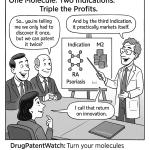
A method-of-use (or method-of-treatment) patent does not cover the drug itself, but rather its use to treat a specific disease or condition. These are incredibly valuable. For example, a drug initially approved for rheumatoid arthritis might later be found effective for psoriasis. A new method-of-use patent covering the treatment of psoriasis with that drug can provide a fresh period of market exclusivity for that new indication, even if the original CoM patent is nearing expiration.
When benchmarking, ask:
What indications are my competitors protecting? Are they only protecting the primary indication, or are they proactively patenting potential secondary uses that are emerging from academic research or early-stage clinical work?
How broad are their use claims? Does the claim cover treating a disease broadly, or is it limited to a specific patient sub-population or a particular dosing regimen? A narrow claim is easier to design around.
Are they creating patent thickets? A common strategy is to file numerous patents covering various nuances of use: use in combination with other drugs, use in specific patient genotypes, use according to a particular biomarker signature. This “patent thicket” can make it very difficult for a generic or biosimilar competitor to enter the market, as they would have to navigate a complex web of overlapping patents.
A savvy biotech might notice that a competitor’s blockbuster drug, whose CoM patent expires in three years, has promising but as-yet-unpatented applications in a new orphan disease. By quickly conducting research and filing a strong method-of-use patent for that indication, the biotech could potentially secure a valuable niche market for itself, using the competitor’s own well-established drug.
H4: Formulation Patents: Enhancing Delivery, Dosing, and Durability
A formulation patent protects the specific composition of the final drug product—the API plus all the inactive ingredients (excipients), as well as the delivery mechanism. This could include a specific extended-release tablet formulation, a subcutaneous injectable form, a transdermal patch, or a specific combination of stabilizers.
These patents are critical for several reasons:
Improved Patient Experience: A new formulation that allows for once-weekly instead of once-daily dosing is a significant commercial advantage and a patentable invention.
Extending Market Exclusivity: Like method-of-use patents, a new formulation patent can provide years of additional market protection after the original CoM patent expires. This is a cornerstone of pharmaceutical life cycle management.
Blocking Generics: A generic competitor must prove that its product is bioequivalent to the branded drug. If the branded drug is protected by a complex formulation patent, it can be technically challenging and legally risky for the generic to create a non-infringing alternative.
Your benchmarking analysis should map out the competitor’s formulation patent strategy. Are they filing for improved formulations well in advance of the CoM patent expiry? What technologies are they using (e.g., nanotechnology, depot injections, oral dissolvable films)? This provides insight into their R&D focus and their long-term plans for the franchise.
Process Patents and Manufacturing Secrets: The Unsung Heroes
How a drug is made can be just as innovative as the drug itself. Process patents cover a specific, novel method of synthesizing a molecule or manufacturing a biologic. While often considered less powerful than CoM patents (as infringement can be harder to detect), they are increasingly vital, especially in the world of biologics.
For complex monoclonal antibodies or cell therapies, the manufacturing process is the product. A slight change in the process can lead to a different product with a different clinical profile. Therefore, patents covering a specific cell line, a purification method, or a fermentation condition can provide formidable protection.
Benchmarking a competitor’s manufacturing IP involves:
Identifying key process patents: These can be harder to find and analyze than CoM patents, often requiring specialized expertise.
Assessing the potential for design-arounds: How easy would it be for a competitor (or for you) to develop an alternative, non-infringing manufacturing process?
Looking for trade secrets: Not all manufacturing know-how is patented. Much of it is held as a trade secret. While you can’t benchmark trade secrets directly, you can look for clues. For instance, a lack of process patents from a company known for its manufacturing prowess might suggest a heavy reliance on trade secrets.
Beyond Patents: Trademarks, Data Exclusivity, and Trade Secrets
A comprehensive IP benchmarking strategy looks beyond the patent portfolio.
Trademarks: The brand name of a drug (e.g., Lipitor®, Humira®) is a hugely valuable asset protected by trademark law. Benchmarking should include an analysis of competitor branding strategies and trademark filings. A strong global brand can retain significant market share even after patent expiry, a phenomenon known as the “branded generic.”
Regulatory Data Exclusivity: This is a critical, non-patent form of exclusivity granted by regulatory agencies like the FDA and EMA upon drug approval. For example, in the U.S., a new chemical entity (NCE) receives five years of data exclusivity, during which the FDA cannot approve a generic application that relies on the innovator’s clinical data [5]. Biologics receive 12 years of exclusivity [6]. These periods run concurrently with patents but provide an independent layer of protection. Your benchmarking timeline must overlay patent expiration dates with data exclusivity expiration dates to get a true picture of when competition can begin.
Orphan Drug Exclusivity (ODE): Drugs developed for rare diseases may be granted a special period of market exclusivity (seven years in the U.S., ten in the EU) that is independent of patent status [7]. Tracking a competitor’s orphan drug designations and exclusivities is a key part of the benchmarking process.
By deconstructing a competitor’s IP fortress into these constituent parts, you move from a superficial overview to a deep, granular understanding of their strategy. You can see which walls are high and thick, where the watchtowers are placed, and, most importantly, where the undefended gaps might be. This detailed knowledge is the raw material for building a superior IP strategy for your own pipeline.
The Strategist’s Toolkit: Methodologies and Data Sources for Effective Benchmarking
Armed with a clear understanding of what to benchmark, the next critical step is to master the how. Effective IP benchmarking is not an abstract academic exercise; it is a data-driven intelligence-gathering operation. It requires a combination of powerful tools, reliable data sources, and sophisticated analytical methodologies to transform a sea of raw patent and clinical data into a coherent strategic narrative. This is where the art and science of competitive intelligence converge, demanding both meticulous technical work and insightful interpretation.
Assembling Your Arsenal: Key Data Sources and Platforms
No single data source can provide a complete picture. A robust benchmarking initiative synthesizes information from a wide array of public and commercial databases. The goal is to cross-reference and build a multi-dimensional view of a competitor’s activities, connecting their IP filings to their R&D pipeline, clinical strategy, and commercial ambitions.
The Foundation: Global Patent Office Databases (USPTO, EPO, JPO, WIPO)
The primary sources of all patent information are the public databases maintained by national and international patent offices. These are the bedrock of any IP analysis.
United States Patent and Trademark Office (USPTO): Its Public PAIR (Patent Application Information Retrieval) system provides detailed, real-time information on the prosecution history of any U.S. patent or application. This includes all correspondence between the applicant and the examiner, rejections, amendments, and arguments, offering a goldmine of information about a patent’s potential weaknesses and the applicant’s strategy [8].
European Patent Office (EPO): The European Patent Register provides similar in-depth information for European applications, including national validation data, opposition proceedings, and examination histories. Given the importance of the European market, this is a critical resource.
World Intellectual Property Organization (WIPO): Its PATENTSCOPE database is the key resource for searching international Patent Cooperation Treaty (PCT) applications. A PCT application is often the first public disclosure of a new invention and signals a company’s intent to seek broad international patent protection [9].
Other National Offices: For a complete picture, analysis must extend to other key markets like Japan (JPO), China (CNIPA), Canada (CIPO), and others relevant to your specific therapeutic area and commercial strategy.
While these direct sources are authoritative, they can be cumbersome and difficult to search and aggregate data from, especially for a large-scale analysis across multiple competitors and technologies. This is where commercial platforms add immense value.
Commercial Intelligence Platforms: The Power of Aggregated Data
Commercial databases are designed to aggregate, clean, and interconnect data from hundreds of global sources, presenting it in a user-friendly, searchable format. They are indispensable for efficient and powerful benchmarking.
“In the pharmaceutical industry, speed to insight is a critical competitive advantage. The ability to quickly parse a competitor’s global patent estate, understand its prosecution history, and link it to clinical and commercial events is not a luxury; it’s a necessity for survival. Integrated data platforms have transformed this from a months-long manual effort into a dynamic, ongoing strategic function.”— Acknowledged Insight from a Chief IP Counsel at a Top 10 Pharmaceutical Company
These platforms integrate patent data with other critical information, allowing for much more sophisticated queries. They can help you visualize patent families, track litigation, and monitor technology trends.
H4: Leveraging Services like DrugPatentWatch for Actionable Insights
For professionals in the pharmaceutical and biotech space, specialized platforms offer the most direct path to actionable intelligence. Services like DrugPatentWatch are specifically designed to serve the needs of this industry, bridging the gap between raw patent data and strategic business decisions.
Instead of just providing a list of patents, these platforms offer curated, high-value information, such as:
Comprehensive Drug-to-Patent Linkage: They meticulously map patents to specific approved drugs and pipeline candidates. This saves countless hours of manual work trying to figure out which of a competitor’s hundreds of patents actually protects their lead asset.
Exclusivity and Expiration Timelines: They provide consolidated, easy-to-understand timelines that integrate patent expirations (including PTA and PTE), regulatory data exclusivities, and orphan drug exclusivities. This is the core data needed for patent cliff analysis and life cycle management planning.
Litigation and Legal Challenge Tracking: Platforms like DrugPatentWatch monitor and report on patent litigation, including Paragraph IV challenges filed by generic companies, and post-grant proceedings like IPRs. This is an early warning system for potential patent invalidation and the erosion of a competitor’s market exclusivity.
Biologic and Biosimilar Intelligence: The world of biologics has its own unique set of IP and regulatory challenges. Specialized services provide dedicated tracking of biosimilar development, the “patent dance” of litigation, and the complex web of patents protecting these high-value products.
Using such a service allows a strategy team to move beyond basic data collection and focus on higher-level analysis: Why did the competitor choose this patent for term extension? What is the pattern of their international filing? How is their litigation strategy evolving? This is the essence of turning data into a competitive weapon.
Clinical Trial Registries and Scientific Literature: Connecting IP to R&D
Patents don’t exist in a vacuum. They are the legal manifestation of an underlying R&D program. To understand a competitor’s IP strategy, you must also understand their clinical strategy.
ClinicalTrials.gov and EU Clinical Trials Register: These are public databases of all clinical trials. By monitoring a competitor’s new trial registrations, you can get early signals about their future plans. Are they exploring a new indication? A new combination therapy? A new patient population? This information can help you predict their next wave of method-of-use patent filings and adjust your own strategy accordingly.
Scientific Publications and Conference Presentations: Often, the scientific data that will eventually support a patent application is first disclosed in a scientific journal or at a major medical conference. Monitoring these sources can provide the earliest possible glimpse into a competitor’s research direction and emerging technologies.
Financial Filings and Investor Reports: Following the Money
Publicly traded companies are required to disclose information that is material to investors in their SEC filings (10-K, 10-Q) and investor presentations. These documents often contain surprisingly candid discussions about the company’s IP portfolio, ongoing litigation, and the perceived strength of their market exclusivity. They provide context directly from the company’s leadership, revealing what they consider to be their most important IP assets and their most significant threats.
Quantitative Benchmarking: The Numbers Game
Once the data is assembled, the analysis can begin. The first layer is often quantitative, focusing on metrics that can be counted and compared. While not the full story, these metrics provide a valuable high-level overview of the competitive landscape.
Patent Counting and Family Size: A First-Pass Analysis
The most basic metric is simply counting the number of patents and applications a company has in a specific technology area. This should be refined by looking at “patent families.” A patent family comprises all the patents and applications filed in various countries that claim priority from the same initial application.
Portfolio Size: Is a competitor’s portfolio in a given area large or small? A large portfolio might indicate a “patent thicket” strategy designed to deter competitors through sheer volume.
Family Size: The number of countries in a patent family indicates the geographic breadth of a competitor’s ambitions. A large family size covering the U.S., Europe, Japan, China, and other major markets signals a high-value asset. A patent filed only in one country might be of lower perceived importance.
However, counting is a crude measure. A company with 100 narrow, weak patents may be in a worse position than a company with one broad, ironclad CoM patent.
Citation Analysis: Measuring Influence and Impact
Patent citations are a more sophisticated quantitative metric. Just as academic papers cite earlier work, patents must cite prior art (earlier patents and publications) that they build upon or are related to.
H4: Forward Citations: Who is Building on Your Work?
Forward citations are the patents that cite your patent. A patent that is frequently cited by later patents (especially those from other companies) is often considered more valuable and foundational. It suggests that others view the invention as a significant step forward that they must either design around or build upon. High forward citation counts for a competitor’s patents can signal a strong, pioneering portfolio.
H4: Backward Citations: Whose Shoulders Are You Standing On?
Backward citations are the prior art that your patent cites. Analyzing the backward citations of a competitor’s portfolio can reveal their technological lineage. Are they building on academic research or their own internal discoveries? Are they frequently citing a particular company’s patents? This can sometimes reveal a hidden dependency or a potential area for in-licensing.
Geographic Filing Strategy: Where in the World is Your IP Protected?
Mapping the geographic footprint of a competitor’s patent families is crucial.
Alignment with Commercial Markets: Does their filing strategy cover all major pharmaceutical markets? Are there any surprising gaps? A lack of protection in a rapidly growing market like China or Brazil could be a significant strategic weakness.
Manufacturing Hubs: Are they filing in countries known for API manufacturing, like India or Ireland? This can be a strategy to block potential sources of generic supply at the source.
Timing of National Filings: When a company enters the “national phase” from a PCT application, they must choose which specific countries to pursue protection in. Tracking these decisions provides a real-time signal of which markets they are prioritizing.
Patent Expiration Timelines: The Looming Patent Cliff
As discussed, creating a comprehensive timeline of all key patent and regulatory exclusivity expirations for your products and your key competitors is a fundamental output of benchmarking. This timeline should be a living document, updated constantly with new filings, grants, extensions, and litigation outcomes. It is the master document that informs R&D investment, business development activities, and long-term financial forecasting.
Qualitative Benchmarking: Beyond the Numbers
While numbers provide a framework, the real strategic insights come from a deeper, qualitative analysis of the patent documents themselves. This is a labor-intensive process requiring legal and scientific expertise, but it is non-negotiable for a truly meaningful benchmark.
Claim Scope Analysis: The Devil is in the Details
This is the most critical element of qualitative analysis. It involves a meticulous reading and interpretation of the patent claims to understand the precise boundaries of the protected invention.
Broad vs. Narrow: As discussed, are the claims broad enough to cover potential workarounds, or are they so narrow that a competitor could make a small, non-infringing modification and compete freely?
Claim Mapping: How well do the claims “read on” the commercial product? Is every feature of the marketed drug covered by a valid patent claim? Sometimes, the final approved product is slightly different from what was originally patented, creating a potential gap in coverage.
Prosecution History Estoppel: During patent prosecution, applicants often have to amend their claims or make arguments to overcome rejections from the patent examiner. These amendments and arguments can later be used to limit the interpretation of the claim scope in litigation [10]. A thorough review of the prosecution history (the “file wrapper”) can reveal significant limitations on a patent’s scope that are not apparent from reading the issued patent alone.
Freedom-to-Operate (FTO) Analysis: Navigating the Patent Minefield
FTO analysis is the process of determining whether a proposed commercial product or process infringes on the valid patent rights of others. In the context of benchmarking, you are essentially performing a preliminary FTO analysis from your competitor’s perspective against your own pipeline, and vice versa.
Identifying Blocking Patents: The analysis seeks to identify any third-party patents that could potentially be used to block the launch or sale of your product.
Assessing Risk: For each potentially blocking patent, you must assess the risk. How likely is it that a court would find your product to infringe? How likely is the patent to be found invalid if challenged?
Informing Strategy: The results of this analysis inform critical decisions. Do you need to design around the competitor’s patent? Do you need to try to invalidate it? Or do you need to approach them for a license? Conducting this analysis early and continuously is a cornerstone of risk management.
Patent Strength and Validity Assessment: Is Your Fortress Made of Stone or Sand?
Finally, qualitative benchmarking involves making an educated judgment about the overall strength and likely validity of a competitor’s key patents. This involves synthesizing all the other analytical threads:
Prior Art Search: Can you find prior art that the patent examiner may have missed, which could potentially invalidate the patent?
Assessing Written Description and Enablement: As mentioned earlier, do the claims seem to be adequately supported by the specification? Biologic and software-related patents are often particularly vulnerable on these grounds.
Litigation and IPR History: How has the patent (or related patents from the same family) fared in past legal challenges? A patent that has survived multiple IPRs is generally considered much stronger.
This multi-pronged approach, combining high-level quantitative overviews with deep qualitative dives, is the engine of effective IP benchmarking. It transforms disparate data points into a strategic mosaic, revealing the competitive landscape with unprecedented clarity and enabling you to navigate it with confidence and precision.
From Data to Dominance: Translating Benchmarking Insights into Competitive Strategy
The ultimate purpose of IP benchmarking is not to create a beautiful report that sits on a shelf. Its value is realized only when its insights are translated into concrete actions that create a tangible competitive advantage. The process of gathering and analyzing data is merely the prelude; the true symphony begins when these insights inform R&D direction, guide business development, mitigate legal risks, and shape long-term corporate strategy. This is the bridge from reactive defense to proactive market shaping, from being a player in the game to defining its rules.
Identifying and Mitigating Risks in Your IP Portfolio
One of the most immediate and crucial applications of benchmarking is defensive: finding and fixing the chinks in your own armor before a competitor can exploit them. This is about proactive risk management and fortifying your core assets.
Pinpointing Gaps in Your Patent Fence
A thorough competitive benchmark will inevitably hold a mirror up to your own portfolio, revealing gaps you may not have been aware of.
Coverage Gaps: The analysis might show that while you have a strong CoM patent, you have neglected to file for a new, once-daily formulation that your competitor is already patenting for their (less effective) drug. This insight is a direct call to action: instruct your R&D and IP teams to prioritize the development and patenting of a similar or better formulation to protect your franchise’s future.
Geographic Gaps: You might discover that a key competitor is consistently filing in Brazil and India for all their pipeline assets, while your strategy has been focused only on the US, EU, and Japan. This could leave you vulnerable to generic manufacturing or even branded competition in those burgeoning markets. The strategic response could be to immediately revise your filing strategy for key assets to include these territories.
White Space You Left Unclaimed: Perhaps the benchmarking reveals that no one in your therapeutic space has yet patented the use of your class of drug in combination with a new, promising immunotherapy. This “white space” is a golden opportunity. By being the first to conduct the necessary research and file for patent protection, you can close a potential gap for yourself while simultaneously creating a barrier for your competitors.
As Dr. Eleanor Vance, a fictional but representative Head of IP Strategy at a biotech firm, might say, “Benchmarking is like having your rival’s playbook. You see the plays they’re running, which allows you to design the perfect defense. But more importantly, you see the plays they aren’t running, and that’s where you can score.”
Assessing Vulnerabilities to Litigation and IPR Challenges
Benchmarking allows you to stress-test your own patents from an adversary’s point of view.
Identifying Weak Claims: By analyzing how competitors have successfully challenged patents similar to yours in IPR proceedings, you can identify which of your own claims might be most vulnerable. For instance, if you see a trend of the Patent Trial and Appeal Board (PTAB) invalidating broad method-of-use claims that are not strongly supported by clinical data, you can reassess your own portfolio.
Proactive Fortification: This insight allows you to take preemptive action. You can file a continuation application to pursue narrower, more defensible claims. You can conduct additional experiments to bolster the data supporting your existing claims. You can even consider filing for a reissue of the patent to correct potential defects before a competitor ever challenges it. This is akin to reinforcing a castle wall before the siege begins.
Anticipating FTO Challenges: If your benchmarking shows that a competitor has a broad, early patent that could potentially read on your lead candidate, you don’t have to wait to be sued after launch. You can proactively begin developing arguments for non-infringement or invalidity. You can initiate a declaratory judgment action to seek clarity from a court, or challenge their patent via an IPR or Post-Grant Review (PGR). Taking the initiative puts you in control of the timing and narrative, a significant strategic advantage in high-stakes litigation.
Seizing Strategic Opportunities
Beyond defense, benchmarking is a powerful tool for offense. It illuminates the path to growth, innovation, and market capture by revealing opportunities that are invisible from a purely internal perspective.
White Space Analysis: Finding Unclaimed Territory for Innovation
White space analysis is the systematic search for unclaimed technological territory within a crowded IP landscape. It answers the question: “Where can we innovate without running into a wall of competitor patents?”
Guiding R&D Investment: Suppose your benchmarking of the Alzheimer’s disease space shows that the landscape is incredibly dense with patents covering beta-amyloid targets, but relatively sparse in patents related to neuroinflammation pathways. This is a powerful signal to your R&D leadership. It suggests that pursuing the neuroinflammation pathway might not only be scientifically novel but also offers a clearer IP runway with less risk of FTO infringement and a greater chance of securing strong, foundational patents. This allows you to allocate your precious R&D budget more intelligently, focusing on areas with the highest potential for both scientific and commercial success.
Identifying New Product Concepts: The analysis might reveal unclaimed “niche” opportunities. For example, in a market dominated by injectable biologics for Crohn’s disease, a white space analysis might show a lack of IP around novel oral formulations or locally-acting gut-restricted therapies. This could spark a new R&D program aimed at developing a first-in-class oral treatment, a potentially huge commercial win.
Licensing and M&A: Acquiring Strength and Outmaneuvering Competitors
IP benchmarking is an indispensable tool for business development and M&A teams. It provides the map for strategic transactions that can accelerate growth and reshape the competitive landscape.
Identifying In-Licensing Targets: Your analysis might identify a small university spin-out or a biotech that holds a key, blocking patent that could derail your future pipeline. Instead of viewing them as a threat, you can now see them as a potential partner. Proactively approaching them to in-license their technology can be a win-win, securing your freedom to operate while providing them with needed capital.
Targeting Acquisitions: Benchmarking can reveal a competitor with a strong pipeline but a weak or poorly managed IP portfolio. This could represent a prime acquisition target. Your company could acquire their promising assets and then leverage your own IP expertise to build a much stronger patent fortress around them, maximizing their value in a way the original company could not. Conversely, you might identify a company with a “troll-like” portfolio of blocking patents that is a constant thorn in the side of the industry. Acquiring that company could be a strategic move to clear the landscape for your own products.
Out-Licensing and Divestiture: The process can also highlight non-core assets in your own portfolio that may be highly valuable to someone else. If you have a portfolio of patents related to a cardiovascular technology but your corporate strategy has shifted entirely to oncology, benchmarking might reveal a mid-sized cardio-focused company for whom that portfolio would be a perfect fit. Out-licensing or selling that portfolio can generate non-dilutive capital that you can reinvest in your core areas.
Life Cycle Management: Proactively Extending Your Product’s Value
For any successful drug, the clock is always ticking towards the patent cliff. Effective life cycle management (LCM) is the art of developing and patenting innovations that extend a product’s commercial life beyond the expiration of its core CoM patent. Benchmarking is central to this process.
Learning from the Best (and Worst): By analyzing the LCM strategies of past blockbusters, you can learn what works. Did a competitor successfully extend their franchise by a decade with a new extended-release formulation and a series of new indications? Or did another competitor fail because their follow-on patents were weak and easily invalidated? This historical analysis provides a blueprint for your own LCM strategy.
Anticipating Generic and Biosimilar Strategies: Benchmarking the IP filings of known generic and biosimilar manufacturers can provide clues as to how they plan to attack your products. Are they patenting alternative formulations or manufacturing processes? This gives you a chance to preemptively strengthen your own IP or develop second-generation products that render their strategies obsolete.
Timing Your Innovations: An effective LCM plan, informed by benchmarking, will time the launch of next-generation products (e.g., a fixed-dose combination, a new delivery device) to coincide with the patent expiry of the original product. This strategic sequencing can seamlessly transition the market to the new, patent-protected product, minimizing the impact of generic entry.
Case Study Deep Dive: A Tale of Two Blockbusters
To illustrate the tangible impact of IP strategy, let’s consider a hypothetical but realistic scenario involving two companies, “Proacta Pharma” and “Reacta Therapeutics,” each with a blockbuster drug in the same class.
Company A (Proactive Benchmarker): Proacta Pharma and “DuraLease”
Proacta launched DuraLease, an injectable therapy, with a strong CoM patent set to expire in 2025.
Early-Stage Benchmarking (2018): From the moment of launch, Proacta’s dedicated IP strategy team began continuous benchmarking of the therapeutic area. They noticed two things: 1) Competitors were patenting oral formulations for their less effective drugs, and 2) Academic literature suggested a potential new use for DuraLease’s mechanism of action in a related pediatric orphan disease.
Strategic Action:
Offensive R&D: They immediately launched a high-priority internal program to develop an oral version of DuraLease.
Proactive Filing: They initiated a small clinical study for the pediatric indication. Based on early positive data, they filed a broad method-of-use patent in 2020.
Portfolio Fortification: They filed a series of patents around the novel oral formulation, covering not just the composition but also the specific dissolution profile and manufacturing method.
The Outcome (2025 and beyond):
The core CoM patent for the original injectable DuraLease expired in 2025, and biosimilars entered the market.
However, in 2024, Proacta launched “DuraLease Oral,” which quickly became the new standard of care due to its convenience. This new product was protected by a fortress of formulation patents extending to 2038.
In 2026, they received approval for the pediatric indication, which came with 7 years of orphan drug exclusivity and was protected by their method-of-use patent until 2040.
Result: Proacta successfully managed the patent cliff, transitioning their franchise to a new, protected revenue stream and extending its life by over a decade.
Company B (Reactive Player): Reacta Therapeutics and “StabiliMax”
Reacta launched its injectable drug, StabiliMax, a year after DuraLease. It had a similar CoM patent, set to expire in 2026.
Static IP View (2018-2023): Reacta’s IP team was lean and focused primarily on prosecuting their existing patents. They viewed their CoM patent as “strong” and did not engage in systematic competitive benchmarking. They were aware of Proacta’s activities but saw them as “non-core” to protecting their existing product.
The Shock (2024): Proacta’s launch of DuraLease Oral came as a strategic surprise. Reacta scrambled to initiate its own oral formulation program, but Proacta’s comprehensive patent thicket made it nearly impossible to find a non-infringing design. They had been completely outmaneuvered.
The Outcome (2026 and beyond):
The StabiliMax CoM patent expired in 2026.
Biosimilar versions of injectable StabiliMax flooded the market, and revenues plummeted by over 80% within two years.
The market had largely shifted to the more convenient oral therapy, dominated by Proacta. Reacta had no next-generation product to offer.
Result: Reacta fell off the patent cliff. Their lack of foresight and proactive IP strategy turned a blockbuster asset into a legacy product, leading to massive value destruction and R&D budget cuts.
This tale highlights a fundamental truth: in the modern pharmaceutical industry, the quality of your science only gets you to the starting line. It is the quality and foresight of your IP strategy, continually informed by rigorous competitive benchmarking, that allows you to win the race.
Conclusion: The Perpetual Cycle of IP Vigilance
In the intricate and unforgiving arena of pharmaceutical innovation, intellectual property is more than just a legal right; it is the lifeblood of the industry, the engine of progress, and the ultimate arbiter of commercial success. As we’ve journeyed through the multifaceted world of IP benchmarking, one principle has emerged with resounding clarity: passive ownership of IP is a strategy for failure. The days of filing a composition of matter patent and resting on one’s laurels for two decades are a distant memory. Today, dominance is achieved and sustained through perpetual vigilance, proactive strategy, and a deeply ingrained understanding of the competitive IP landscape.
Benchmarking is the discipline that enables this vigilance. It is the process of transforming the chaotic noise of global patent databases, clinical trial registries, and legal dockets into a clear, strategic signal. It empowers organizations to see themselves not as they wish to be, but as their competitors see them—a perspective that is both humbling and incredibly powerful. It reveals the subtle cracks in a fortress before they become catastrophic breaches and illuminates the hidden pathways to new territories of innovation and market leadership. From shoring up the legal defenses around a core asset to guiding R&D toward uncontested ground and orchestrating strategic M&A, the insights gleaned from benchmarking are the currency of competitive advantage.
The modern IP professional is no longer just a legal steward but a core commercial strategist. Their toolkit, filled with sophisticated data platforms and analytical methodologies, is as critical to a drug’s success as the scientist’s lab equipment or the clinician’s trial protocols. They are not just building walls; they are playing a dynamic, multi-dimensional game of chess against the sharpest minds in the industry, where every move—every patent filed, every claim drafted, every license negotiated—can influence the fate of billions of dollars in investment and the future of human health.
The Future of Pharma IP Strategy
Looking ahead, the importance of IP benchmarking will only intensify. With the rise of artificial intelligence in drug discovery, we will see an explosion in the number of potential targets and molecules, making the IP landscape even more complex and crowded. The advent of personalized medicine, cell therapies, and digital therapeutics will create entirely new categories of IP that will need to be navigated and protected. In this future, the companies that thrive will be those that treat competitive intelligence not as a periodic project but as a continuous, integrated function at the heart of their organization. They will be the ones who understand that the most valuable invention is not just the next blockbuster drug, but the unbreakable, dynamic strategy that protects it.
Key Takeaways
IP is a Strategic Weapon, Not a Static Asset: Simply owning patents is insufficient. Success depends on the quality, breadth, and strategic deployment of your entire IP portfolio relative to your competitors.
Benchmarking is Non-Negotiable: Systematically comparing your IP strengths and weaknesses against rivals is essential for risk mitigation and opportunity identification. It provides the “competitive map” needed to navigate the market.
Deconstruct the Entire IP Fortress: A thorough analysis goes beyond the core composition of matter patent. It must include method-of-use, formulation, and process patents, as well as regulatory exclusivities, to understand the full picture of market protection.
Leverage a Multi-Source Toolkit: Effective benchmarking relies on synthesizing data from diverse sources, including patent office databases, specialized commercial platforms like DrugPatentWatch, clinical trial registries, and financial filings.
Combine Quantitative and Qualitative Analysis: While metrics like patent counts and citation analysis provide a high-level view, deep strategic insights only emerge from qualitative analysis of claim scope, prosecution history, and patent validity.
Translate Insights into Action: The ultimate goal of benchmarking is to drive strategic decisions. This includes closing IP gaps, guiding R&D investment into “white space,” identifying M&A or licensing targets, and executing a robust life cycle management plan.
Proactivity Wins: The difference between a franchise that thrives for decades and one that falls off the patent cliff often comes down to proactive IP strategy versus reactive defense. Continuous benchmarking is the engine of that proactivity.
FAQ Section
1. How often should a company conduct a full IP benchmarking analysis for a key pipeline asset?
A full, deep-dive benchmarking analysis should not be a one-time event. It should be a cyclical process. A comprehensive baseline analysis should be conducted as a drug candidate is nominated for development (pre-IND) to ensure initial freedom to operate. This should be updated at major milestones: the start of Phase I, Phase III, and pre-launch. However, a “full” analysis is just one part of a continuous process. A truly effective strategy involves ongoing, “real-time” monitoring of key competitors’ filings, litigation activities, and clinical trial updates. Monthly or quarterly intelligence briefings, powered by automated alerts from platforms like DrugPatentWatch, should supplement the periodic deep dives to ensure no strategic threat or opportunity is missed.
2. Our company is a small biotech with a limited budget. How can we afford to conduct this level of sophisticated benchmarking?
This is a critical concern for smaller players. While you may not have the budget for a large internal team or the most expensive enterprise platforms, you cannot afford to ignore benchmarking. The key is to be focused and efficient.
Prioritize Ruthlessly: Focus your efforts exclusively on your lead candidate and your top 2-3 direct competitors in that specific indication. Don’t try to boil the ocean.
Leverage Cost-Effective Tools: Many specialized database providers offer subscription tiers suitable for smaller companies. The cost of a focused subscription is minuscule compared to the cost of a single failed FTO analysis or missed opportunity.
Use Public Databases Strategically: Learn to effectively use free resources like the USPTO’s Public PAIR and WIPO’s PATENTSCOPE for deep dives into specific, high-threat patents identified through other means.
Partner with Expert Counsel: Use your external patent counsel not just for filing patents, but as strategic advisors. A few hours of their time focused on analyzing a key competitor’s portfolio can be a highly valuable investment.The risk of not doing this analysis (e.g., being blocked from the market or forced into a costly license) is far greater than the cost of a focused, pragmatic benchmarking effort.
3. What is the single biggest mistake companies make when it comes to IP benchmarking?
The single biggest mistake is performing the analysis in a vacuum and failing to integrate the findings into the broader business strategy. An IP department might produce a brilliant, 100-page report on a competitor’s patent landscape, but if that report isn’t understood, digested, and acted upon by the heads of R&D, Clinical Development, and Business Development, it’s a wasted effort. The insights must break out of the legal silo. The most successful companies have cross-functional teams (IP, R&D, commercial, business development) that meet regularly to review intelligence and make integrated decisions. The failure is not one of analysis, but of communication and implementation.
4. How can IP benchmarking help in negotiations with a potential partner or acquirer?
It provides you with leverage and credibility. If you are trying to partner your asset, a thorough benchmarking report demonstrates that you have a sophisticated understanding of the competitive landscape. You can show a potential partner not only why your IP is strong but also why your competitors’ IP is vulnerable, and how your asset is positioned to win in the market. It answers their due diligence questions before they even ask them. Conversely, if you are being acquired, this analysis helps you justify a higher valuation. You can definitively map out the period of market exclusivity your IP provides, quantify the strength of your “patent fence,” and demonstrate a clear strategy for life cycle management, all of which are key drivers of an asset’s value. It transforms the negotiation from a debate over opinions to a discussion grounded in data.
5. We have identified a “blocking patent” from a competitor that could impact our lead product. Benchmarking helped us find it, but what are our actual options now?
Finding the blocking patent is the crucial first step. Your options generally fall into three categories, often pursued in parallel:
Attack the Patent: Work with patent counsel to assess the patent’s validity. Can you find “killer” prior art that the examiner missed? Are the claims overbroad or not enabled by the specification? Based on this, you could choose to file an IPR, PGR, or a similar challenge in another jurisdiction to try and invalidate the patent.
Design Around the Patent: Can your scientists modify your product or process to avoid infringing the patent’s claims? This requires a deep, collaborative analysis between your legal and R&D teams. A claim scope analysis from your benchmarking work is the starting point. It may be possible to, for example, change a formulation excipient or alter a manufacturing step to fall outside the scope of their claims.
Seek a License: If the patent appears strong and a design-around isn’t feasible, your business development team may need to approach the competitor to negotiate a license. Your benchmarking work is still valuable here, as a deep understanding of the patent’s weaknesses can give you a stronger negotiating position. You may also have patents they might need, opening the door for a cross-licensing agreement.The choice depends on the perceived strength of their patent, the cost and feasibility of the alternatives, and your company’s tolerance for risk.
References
[1] Wouters, O. J., McKee, M., & Luyten, J. (2020). Estimated Research and Development Investment Needed to Bring a New Medicine to Market, 2009-2018. JAMA, 323(9), 844–853.
[2] U.S. Patent and Trademark Office. (2022). Inter Partes Review. Retrieved from uspto.gov.
[3] U.S. Patent and Trademark Office. (n.d.). Term of Patent. Retrieved from 35 U.S.C. § 154.
[4] U.S. Food and Drug Administration. (2018). Patent Term Extensions and the Hatch-Waxman Act. Retrieved from fda.gov.
[5] U.S. Food and Drug Administration. (n.d.). Frequently Asked Questions on Patents and Exclusivity. Retrieved from fda.gov.
[6] Biologics Price Competition and Innovation Act of 2009 (BPCIA), Public Law 111-148, 124 Stat. 119, 804-821 (2010).
[7] Orphan Drug Act of 1983, Public Law 97-414, 96 Stat. 2049 (1983).
[8] U.S. Patent and Trademark Office. (n.d.). Public PAIR. Retrieved from portal.uspto.gov/pair/PublicPair.
[9] World Intellectual Property Organization. (n.d.). About the Patent Cooperation Treaty (PCT). Retrieved from wipo.int.
[10] Festo Corp. v. Shoketsu Kinzoku Kogyo Kabushiki Co., 535 U.S. 722 (2002).