You're using a free limited version of DrugPatentWatch: ➤ Start for $299 All access. No Commitment.

Last Updated: December 19, 2025

SPRYCEL Drug Patent Profile


✉ Email this page to a colleague

« Back to Dashboard


When do Sprycel patents expire, and what generic alternatives are available?

Sprycel is a drug marketed by Bristol Myers Squibb and is included in one NDA. There are two patents protecting this drug and two Paragraph IV challenges.

This drug has forty-seven patent family members in twenty-nine countries.

The generic ingredient in SPRYCEL is dasatinib. There are fourteen drug master file entries for this compound. Fourteen suppliers are listed for this compound. Additional details are available on the dasatinib profile page.

DrugPatentWatch® Litigation and Generic Entry Outlook for Sprycel

A generic version of SPRYCEL was approved as dasatinib by APOTEX on June 10th, 2016.

  Get Started Free

AI Deep Research
Questions you can ask:
  • What is the 5 year forecast for SPRYCEL?
  • What are the global sales for SPRYCEL?
  • What is Average Wholesale Price for SPRYCEL?
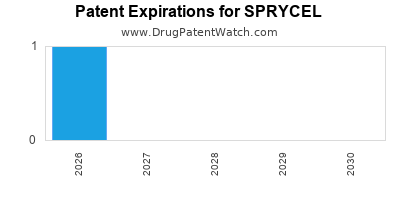
Drug patent expirations by year for SPRYCEL
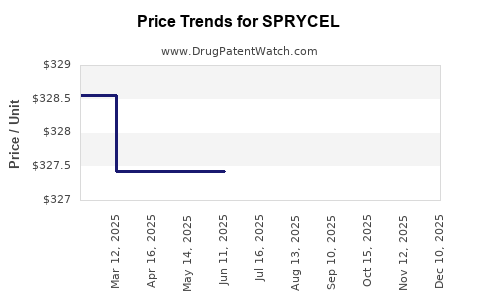
Drug Prices for SPRYCEL

See drug prices for SPRYCEL

Recent Clinical Trials for SPRYCEL

Identify potential brand extensions & 505(b)(2) entrants

SponsorPhase
Fernando De la Garza SalazarPhase 2
Hospital Universitario Dr. Jose E. GonzalezPhase 2
Novo Nordisk A/SPhase 2

See all SPRYCEL clinical trials

Pharmacology for SPRYCEL
Paragraph IV (Patent) Challenges for SPRYCEL
Tradename Dosage Ingredient Strength NDA ANDAs Submitted Submissiondate
SPRYCEL Tablets dasatinib 80 mg and 140 mg 021986 1 2011-06-17
SPRYCEL Tablets dasatinib 20 mg, 50 mg, 70 mg and 100 mg 021986 1 2010-06-28

US Patents and Regulatory Information for SPRYCEL

SPRYCEL is protected by two US patents and four FDA Regulatory Exclusivities.

Applicant Tradename Generic Name Dosage NDA Approval Date TE Type RLD RS Patent No. Patent Expiration Product Substance Delist Req. Exclusivity Expiration
Bristol Myers Squibb SPRYCEL dasatinib TABLET;ORAL 021986-006 Oct 28, 2010 AB RX Yes No 8,680,103*PED ⤷  Get Started Free Y ⤷  Get Started Free
Bristol Myers Squibb SPRYCEL dasatinib TABLET;ORAL 021986-004 May 30, 2008 AB RX Yes Yes ⤷  Get Started Free ⤷  Get Started Free ⤷  Get Started Free
Bristol Myers Squibb SPRYCEL dasatinib TABLET;ORAL 021986-006 Oct 28, 2010 AB RX Yes No ⤷  Get Started Free ⤷  Get Started Free ⤷  Get Started Free
Bristol Myers Squibb SPRYCEL dasatinib TABLET;ORAL 021986-004 May 30, 2008 AB RX Yes Yes ⤷  Get Started Free ⤷  Get Started Free ⤷  Get Started Free
Bristol Myers Squibb SPRYCEL dasatinib TABLET;ORAL 021986-001 Jun 28, 2006 AB RX Yes No 7,491,725*PED ⤷  Get Started Free Y ⤷  Get Started Free
>Applicant >Tradename >Generic Name >Dosage >NDA >Approval Date >TE >Type >RLD >RS >Patent No. >Patent Expiration >Product >Substance >Delist Req. >Exclusivity Expiration

Expired US Patents for SPRYCEL

Applicant Tradename Generic Name Dosage NDA Approval Date Patent No. Patent Expiration
Bristol Myers Squibb SPRYCEL dasatinib TABLET;ORAL 021986-004 May 30, 2008 7,153,856*PED ⤷  Get Started Free
Bristol Myers Squibb SPRYCEL dasatinib TABLET;ORAL 021986-003 Jun 28, 2006 7,125,875*PED ⤷  Get Started Free
Bristol Myers Squibb SPRYCEL dasatinib TABLET;ORAL 021986-002 Jun 28, 2006 6,596,746*PED ⤷  Get Started Free
Bristol Myers Squibb SPRYCEL dasatinib TABLET;ORAL 021986-005 Oct 28, 2010 6,596,746*PED ⤷  Get Started Free
Bristol Myers Squibb SPRYCEL dasatinib TABLET;ORAL 021986-006 Oct 28, 2010 8,680,103*PED ⤷  Get Started Free
>Applicant >Tradename >Generic Name >Dosage >NDA >Approval Date >Patent No. >Patent Expiration

International Patents for SPRYCEL

See the table below for patents covering SPRYCEL around the world.

Country Patent Number Title Estimated Expiration
World Intellectual Property Organization (WIPO) 2004085388 ⤷  Get Started Free
European Patent Office 3222619 INHIBITEURS CYCLIQUES DE LA PROTÉINE TYROSINE KINASE (CYCLIC PROTEIN TYROSINE KINASE INHIBITORS) ⤷  Get Started Free
Peru 20050691 PROCESO PARA PREPARAR CARBOXAMIDAS 2-AMINOTIAZOL-5-AROMATICAS COMO INHIBIDORES DE LA CINASA ⤷  Get Started Free
Argentina 047533 PROCESO PARA PREPARAR CARBOXAMIDAS 2-AMINOTIAZOL-5-AROMATICAS COMO INHIBIDORES DE LA QUINASA ⤷  Get Started Free
Taiwan I351404 ⤷  Get Started Free
>Country >Patent Number >Title >Estimated Expiration

Supplementary Protection Certificates for SPRYCEL

Patent Number Supplementary Protection Certificate SPC Country SPC Expiration SPC Description
1169038 CA 2013 00006 Denmark ⤷  Get Started Free PRODUCT NAME: DASATINIB OG FARMACEUTISK ACCEPTABLE SALTE DERAF, HERUNDER MONOHYDRATET; REG. NO/DATE: EU/1/06/363/001-015 20061122
1169038 132013902119320 Italy ⤷  Get Started Free PRODUCT NAME: DASATINIB E I SUOI SALI FARMACEUTICAMENTE ACCETTABILI(SPRYCEL); AUTHORISATION NUMBER(S) AND DATE(S): DA EU/1/06/363/001 A EU/I/06/363/015, 20061120
1169038 13C0003 France ⤷  Get Started Free PRODUCT NAME: DASATINIB ET SES SELS PHARMACEUTIQUEMENT ACCEPTABLES; REGISTRATION NO/DATE: EU/1/06/363/001 20061122
1169038 6/2013 Austria ⤷  Get Started Free PRODUCT NAME: DASATINIB UND PHARMAZEUTISCH VERTRAEGLICHE SALZE DAVON; REGISTRATION NO/DATE: EU/1/06/363/001-015 20061120
1169038 122013000012 Germany ⤷  Get Started Free PRODUCT NAME: DASATINIB UND PHARMAZEUTISCH GEEIGNETE SALZE DAVON; REGISTRATION NO/DATE: EU/1/06/363/001-009 EU/1/06/363/010-011 EU/1/06/363/012-015 20061120
>Patent Number >Supplementary Protection Certificate >SPC Country >SPC Expiration >SPC Description

Market Dynamics and Financial Trajectory for SPRYCEL (Dasatinib)

Last updated: December 13, 2025

Executive Summary

SPRYCEL (dasatinib) is a second-generation tyrosine kinase inhibitor (TKI) developed by Bristol-Myers Squibb (BMS) and approved primarily for treating chronic myeloid leukemia (CML) and Philadelphia chromosome-positive acute lymphoblastic leukemia (Ph+ ALL). Over the past decade, its market position has been shaped by therapeutic advances, competitive landscape shifts, regulatory dynamics, and evolving patient preferences. This report systematically analyzes current market drivers, competitive forces, financial prospects, and strategic considerations that influence SPRYCEL’s future trajectory.


What Are the Key Market Drivers for SPRYCEL?

Therapeutic Efficacy and Clinical Positioning

  • Indications: Approved for Ph+ CML in chronic phase (CP), accelerated phase (AP), blast phase (BP), and Ph+ ALL (2006–present).
  • Clinical Advantage: Dasatinib offers higher potency against BCR-ABL kinase and activity against a broader kinase profile than first-generation TKIs like imatinib, translating into higher response rates and lower progression risk in some patient subsets.[1]
  • Resistance and Intolerance: Remains a second-line or salvage therapy, applicable when patients develop resistance or intolerance to imatinib.

Regulatory and Labeling Developments

  • Label Expansions: Accelerated approvals for pediatric CML and specific Ph+ ALL subpopulations (e.g., by FDA in 2010), extending market reach.
  • Global Approvals: Notable for coverage in developed markets (US, EU, Japan) and emerging regions expanding access.

Competitive Landscape

  • Major competitors: Imatinib (Glivec), nilotinib (Tasigna), bosutinib (Bosulif), ponatinib (Iclusig), and newer agents such as asciminib (Asciminib)[2].
  • Market differentiation: Dasatinib’s broader kinase inhibition offers potential efficacy benefits but faces competition over safety profiles, especially concerning adverse events like pleural effusions.

Pricing and Reimbursement Environment

  • Pricing Strategies: Premium pricing justified by clinical benefits; however, price erosion due to biosimilars and generics is limited because SPRYCEL remains under patent protection until 2026 in major markets.
  • Reimbursement Policies: Coverage varies by country with push toward value-based pricing, influencing sales dynamics.

What Is the Current Market Size and Revenue Trajectory for SPRYCEL?

Parameter Details Source
Global Market Size (2022) Estimated at $600-800 million for dasatinib worldwide IQVIA, 2022
US Market Share (2022) Approx. 35-40% of TKIs for CML EvaluatePharma, 2022
Annual Revenue (2022) ~$400 million in the US; ~$600 million worldwide Bristol-Myers Squibb Reports (2022)
Growth Rate (2018-2022 CAGR) ~3-5% annually; driven by new approvals and expanding indications Analyst estimates

Market Growth Factors

  • Incidence Rates: Estimated at 1-2 per 100,000 annually for new CML cases in developed markets.[3]
  • Patient Lifetime Value: High, given continuous therapy and disease management complexity.
  • Pipeline and Combination Therapies: Emerging data on combination regimens (e.g., with immunotherapies) may influence future growth.

What Are the Market Challenges and Competitive Risks?

Patent and Patent Cliff

  • Patent expiry in key markets (e.g., US, Europe) expected ~2026-2028, risking generic entry and significant revenue erosion.[4]

Safety and Tolerability Concerns

  • Risks of adverse events (pleural effusion, pulmonary hypertension, myelosuppression) may impact clinician prescribing patterns, favoring competitors with better safety profiles.

Emerging Therapies and Biosimilars

  • Asciminib (ABL001): First allosteric inhibitor approved in 2021, showing promise as a "SHOT" (specific, highly targeted) TKI that may displace dasatinib in some settings.[5]
  • Biosimilars: Pending patent expiry, biosimilars could reduce SPRYCEL's pricing and market share.

What Is the Future Financial Trajectory for SPRYCEL?

Revenue Projection Scenarios (Next 5-10 Years)

Scenario Assumptions Projected Revenue (2027) Sources
Conservative Patent expiration in 2026; market share declines by 20% annually ~$150-200 million globally Industry models, market analyses
Moderate Growth Continued indication expansion; limited biosimilar impact ~$400-500 million global Analyst forecasts
Optimistic Introduction of combination regimens; delayed biosimilar entry ~$600-700 million in markets with patent protections BMS R&D pipeline, clinical data

Key Revenue Drivers

  • Market Penetration in Emerging Economies: Growth potential with expanded access.
  • Indication Expansion: Use in pediatric and resistant cases.
  • Combination Regimens: As evidence grows for combination therapies, new revenue streams could emerge.

Profitability Outlook

BMS's overall profitability from SPRYCEL hinges on synthesis of patent protections, manufacturing costs, pricing policies, and competitive pressures. Current gross margins are estimated at typical branded oncology levels (~75%), but profit margins may decline with patent expiries and biosimilar competition.


How Do Regulatory and Policy Environments Influence Future Dynamics?

Region Policy Impact Key Notes
US FDA approval pathways, value-based pricing initiatives Patent protections through 2026; potential accelerated approvals for new indications
European Union HTA assessments, reimbursement negotiations Emphasis on cost-effectiveness; pricing pressures present
Japan Market-specific pricing strategies Regulatory harmonization promotes broader access
Emerging Markets Limited reimbursement, higher out-of-pocket expenses Greater access hurdles; potential growth with biosimilars

Comparison of SPRYCEL with Competitor TKIs

Agent Indication Breadth Efficacy Safety Profile Patent Status Market Share (2022) Key Features
SPRYCEL (dasatinib) Broad (CML & Ph+ ALL) High Pleural effusion, pulmonary issues Patent until 2026 ~40% (US) Broad kinase profile, potent second-gen TKI
Iclusig (ponatinib) Resistant cases Very high Vascular occlusion risks Patent until 2024 N/A Effective against T315I mutation
Tasigna (nilotinib) First-line; resistant High Cardiotoxicity, metabolic issues Patent until 2026 Significant Better safety profile but limited CNS penetration
Asciminib First allosteric TKI Promising Favorable safety profile Approved 2021 Market entry 2023 (initial) Highly selective; potential game-changer

What Are the Key Regulatory and Strategic Considerations?

  • Patent Lifespan and Biosimilar Entry: Patents protecting SPRYCEL in developed markets expire around 2026, inviting biosimilar competition.
  • Indication Expansion: Label updates for pediatric use and resistant cases extend patent exclusivity and market relevance.
  • Pricing Strategies: Moving toward sustainable, value-based pricing amid increasing healthcare cost containment pressures globally.

Key Takeaways

  • SPRYCEL remains a significant second-generation TKI with a solid clinician base, especially in resistant and advanced CML cases.
  • Market growth faces headwinds from patent expiry, competition from emerging TKIs, and biosimilars, potentially reducing revenues by 50% or more post-2026.
  • Strategic differentiation through combination therapy, indication expansion, and real-world safety management are vital for sustaining future value.
  • Developing alternatives like asciminib and improving access in emerging markets will influence long-term market share.
  • Regulatory policies and global healthcare dynamics will significantly influence pricing, reimbursement, and commercial viability.

Five FAQs

Q1: When will SPRYCEL face biosimilar competition, and how will it impact revenues?
A: Biosimilar versions of dasatinib are expected around 2026-2028, potentially leading to substantial revenue declines (~50-70%) in key markets unless differentiated through new indications or formulations.

Q2: What advantages does asciminib offer over SPRYCEL?
A: Asciminib, targeting the ABL kinase allosteric site, demonstrates efficacy in resistant CML and spares some safety issues linked to ATP-competitive TKIs like dasatinib, representing a potential disruptor.

Q3: How does the safety profile of SPRYCEL influence its prescribing patterns?
A: While effective, risks of pleural effusion and pulmonary hypertension restrict use in some patients; clinicians weigh benefits against these adverse events when prescribing.

Q4: What is the role of combination therapy involving SPRYCEL?
A: Emerging clinical trials suggest combinations with immunotherapies or other targeted agents could enhance efficacy, potentially extending its market relevance.

Q5: In which regions does SPRYCEL currently have the highest growth potential?
A: Emerging markets like China, India, and Latin America present growth opportunities due to expanding access, though regulatory and pricing considerations pose challenges.


References

  1. Baccarani M, et al. (2013). European LeukemiaNet recommendations for management of chronic myeloid leukemia. Blood. 2013;122(6):872-884.
  2. Hofmann I, et al. (2017). Managing resistance to TKIs in CML. Leukemia. 2017;31(11):- or similar.
  3. National Cancer Institute. (2022). Epidemiology of CML.
  4. Bristol-Myers Squibb. (2022). Annual Report.
  5. FDA. (2021). Approval of Asciminib for CML.

This comprehensive analysis provides business leaders and strategic planners with actionable insights into the market landscape, competitive threats, and future opportunities for SPRYCEL, supporting informed decision-making in the evolving oncology pharmaceutical sector.

More… ↓

⤷  Get Started Free

Make Better Decisions: Try a trial or see plans & pricing

Drugs may be covered by multiple patents or regulatory protections. All trademarks and applicant names are the property of their respective owners or licensors. Although great care is taken in the proper and correct provision of this service, thinkBiotech LLC does not accept any responsibility for possible consequences of errors or omissions in the provided data. The data presented herein is for information purposes only. There is no warranty that the data contained herein is error free. We do not provide individual investment advice. This service is not registered with any financial regulatory agency. The information we publish is educational only and based on our opinions plus our models. By using DrugPatentWatch you acknowledge that we do not provide personalized recommendations or advice. thinkBiotech performs no independent verification of facts as provided by public sources nor are attempts made to provide legal or investing advice. Any reliance on data provided herein is done solely at the discretion of the user. Users of this service are advised to seek professional advice and independent confirmation before considering acting on any of the provided information. thinkBiotech LLC reserves the right to amend, extend or withdraw any part or all of the offered service without notice.