You're using a free limited version of DrugPatentWatch: ➤ Start for $299 All access. No Commitment.

Last Updated: December 12, 2025

SPRYCEL Drug Patent Profile


✉ Email this page to a colleague

« Back to Dashboard


When do Sprycel patents expire, and when can generic versions of Sprycel launch?

Sprycel is a drug marketed by Bristol Myers Squibb and is included in one NDA. There are two patents protecting this drug and two Paragraph IV challenges.

This drug has forty-seven patent family members in twenty-nine countries.

The generic ingredient in SPRYCEL is dasatinib. There are fourteen drug master file entries for this compound. Fourteen suppliers are listed for this compound. Additional details are available on the dasatinib profile page.

DrugPatentWatch® Litigation and Generic Entry Outlook for Sprycel

A generic version of SPRYCEL was approved as dasatinib by APOTEX on June 10th, 2016.

  Get Started Free

AI Deep Research
Questions you can ask:
  • What is the 5 year forecast for SPRYCEL?
  • What are the global sales for SPRYCEL?
  • What is Average Wholesale Price for SPRYCEL?
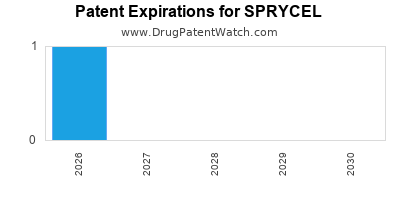
Drug patent expirations by year for SPRYCEL
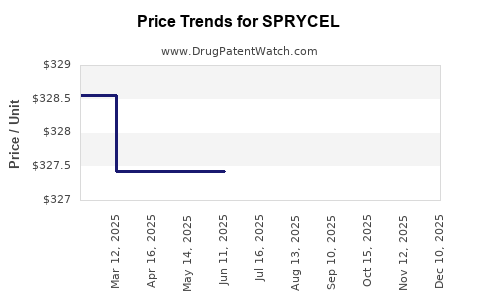
Drug Prices for SPRYCEL

See drug prices for SPRYCEL

Recent Clinical Trials for SPRYCEL

Identify potential brand extensions & 505(b)(2) entrants

SponsorPhase
Hospital Universitario Dr. Jose E. GonzalezPhase 2
Fernando De la Garza SalazarPhase 2
Odense Patient Data Explorative NetworkPhase 2

See all SPRYCEL clinical trials

Pharmacology for SPRYCEL
Paragraph IV (Patent) Challenges for SPRYCEL
Tradename Dosage Ingredient Strength NDA ANDAs Submitted Submissiondate
SPRYCEL Tablets dasatinib 80 mg and 140 mg 021986 1 2011-06-17
SPRYCEL Tablets dasatinib 20 mg, 50 mg, 70 mg and 100 mg 021986 1 2010-06-28

US Patents and Regulatory Information for SPRYCEL

SPRYCEL is protected by two US patents and four FDA Regulatory Exclusivities.

Applicant Tradename Generic Name Dosage NDA Approval Date TE Type RLD RS Patent No. Patent Expiration Product Substance Delist Req. Exclusivity Expiration
Bristol Myers Squibb SPRYCEL dasatinib TABLET;ORAL 021986-006 Oct 28, 2010 AB RX Yes No ⤷  Get Started Free ⤷  Get Started Free Y ⤷  Get Started Free
Bristol Myers Squibb SPRYCEL dasatinib TABLET;ORAL 021986-004 May 30, 2008 AB RX Yes Yes ⤷  Get Started Free ⤷  Get Started Free ⤷  Get Started Free
Bristol Myers Squibb SPRYCEL dasatinib TABLET;ORAL 021986-006 Oct 28, 2010 AB RX Yes No ⤷  Get Started Free ⤷  Get Started Free ⤷  Get Started Free
>Applicant >Tradename >Generic Name >Dosage >NDA >Approval Date >TE >Type >RLD >RS >Patent No. >Patent Expiration >Product >Substance >Delist Req. >Exclusivity Expiration

Expired US Patents for SPRYCEL

Applicant Tradename Generic Name Dosage NDA Approval Date Patent No. Patent Expiration
Bristol Myers Squibb SPRYCEL dasatinib TABLET;ORAL 021986-005 Oct 28, 2010 ⤷  Get Started Free ⤷  Get Started Free
Bristol Myers Squibb SPRYCEL dasatinib TABLET;ORAL 021986-004 May 30, 2008 ⤷  Get Started Free ⤷  Get Started Free
>Applicant >Tradename >Generic Name >Dosage >NDA >Approval Date >Patent No. >Patent Expiration

International Patents for SPRYCEL

See the table below for patents covering SPRYCEL around the world.

Country Patent Number Title Estimated Expiration
Taiwan 200628156 Combination of a SRC kinase inhibitor and a BCR-ABL inhibitor for the treatment of proliferative diseases ⤷  Get Started Free
Mexico 2007005115 COMBINACION DE UN INHIBIDOR DE PROTEINA CINASA SRC Y UN INHIBIDOR DE PROTEINA CINASA BCR-ABL PARA EL TRATAMIENTO DE ENFERMEDADES PROLIFERATIVAS. (COMBINATION OF A SRC KINASE INHIBITOR AND A BCR-ABL INHIBITOR FOR THE TREATMENT OF PROLIFERATIVE DISEASES.) ⤷  Get Started Free
Japan 2002542193 ⤷  Get Started Free
>Country >Patent Number >Title >Estimated Expiration

Supplementary Protection Certificates for SPRYCEL

Patent Number Supplementary Protection Certificate SPC Country SPC Expiration SPC Description
1169038 1390004-8 Sweden ⤷  Get Started Free PRODUCT NAME: DASATINIB OCH FARMACEUTISKT GODTAGBARA SALTER DAERAV; REG. NO/DATE: EU/1/06/363/001 20061120
1169038 C300567 Netherlands ⤷  Get Started Free PRODUCT NAME: DASATINIB, DESGEWENST IN DE VORM VAN EEN FARMACEUTISCH AANVAARDBAAR ZOUT; REGISTRATION NO/DATE: EU/1/06/363/001 .... 009 20061120
1169038 2013/003 Ireland ⤷  Get Started Free PRODUCT NAME: DASATINIB AND PHARMACEUTICALLY ACCEPTABLE SALTS THEREOF.; REGISTRATION NO/DATE: EU/1/06/363/001-015 20061120
>Patent Number >Supplementary Protection Certificate >SPC Country >SPC Expiration >SPC Description

Market Dynamics and Financial Trajectory for SPRYCEL (Dasatinib)

Last updated: November 20, 2025

Introduction

SPRYCEL (dasatinib) is a tyrosine kinase inhibitor (TKI) developed by Bristol-Myers Squibb (BMS) for the treatment of Philadelphia chromosome-positive (Ph+) chronic myeloid leukemia (CML) and acute lymphoblastic leukemia (ALL). Approved by the FDA in 2006, SPRYCEL has established a significant presence in hematologic oncology, driven by its efficacy and evolving treatment landscape. This report analyzes the current market dynamics and forecasts the financial trajectory of SPRYCEL based on clinical, competitive, regulatory, and economic factors influencing its growth.


Market Overview

Epidemiology and Market Size

Chronic myeloid leukemia (CML) is a rare hematological malignancy with an estimated annual incidence of approximately 1-2 cases per 100,000 people globally [1]. In the United States, over 9,000 new CML cases are diagnosed annually [2]. The rise in diagnosed cases, coupled with advancements in targeted therapy, has propelled the TKI market. A growing aging population and increased disease detection contribute to expanding market potential.

Therapeutic Landscape

SPRYCEL operates within a competitive ecosystem comprising first-generation TKIs like imatinib, and newer agents including bosutinib, ponatinib, and asciminib. The evolution from imatinib to second-generation TKIs such as dasatinib reflects efforts to overcome resistance and improve patient outcomes.


Market Dynamics

Clinical Differentiators and Usage Paradigms

SPRYCEL is distinguished by its potency against various BCR-ABL mutations, including the T315I mutation resistant to many other TKIs [3]. It is indicated for both first-line and second-line therapy, broadening its market scope. However, its safety profile, including risks of pleural effusion and pulmonary arterial hypertension, influences clinician prescribing patterns [4].

Key Drivers

  • Advancements in Personalized Medicine: Molecular testing for BCR-ABL mutations guides personalized therapy, influencing SPRYCEL’s positioning.
  • Regulatory Approvals: Expanded indications (e.g., second-line treatment) bolster market penetration.
  • Patient Outcomes: Demonstrated efficacy and tolerability in resistant cases sustain demand.

Challenges and Market Constraints

  • Competitive Therapies: The emergence of third-generation TKIs like ponatinib and novel agents like asciminib threaten market share [5].
  • Side Effect Profile: Adverse events influence clinician and patient preferences.
  • Cost and Reimbursement: High drug prices and insurance coverage limitations impact access, especially in emerging markets.

Financial Trajectory and Revenue Forecasts

Historical Performance

Since its launch, SPRYCEL has generated robust revenues, with peak sales reaching approximately $1.5 billion globally in 2014 [6]. Post-patent exclusivity, revenue streams face erosion due to generic competition, patent cliffs, and market saturation.

Current Market Revenue

Annual sales have declined moderately, consistent with patent expirations and competition, but remain substantial. In 2022, BMS reported SPRYCEL revenues around $400 million globally [7].

Projected Growth Scenarios (2023-2030)

  • Baseline Scenario: Continued decline due to generics and competition, with sales stabilizing around $300-$400 million annually by 2025.
  • Optimistic Scenario: Market expansion through increased use in relapsed/refractory patients, especially in emerging markets, and potential new indications could sustain or mildly grow revenues, reaching up to $600 million by 2030.
  • Downside Risks: Patent challenges, pricing pressures, and safety concerns may impede growth.

Factors Influencing Financial Trajectory

  • Patent Litigation and Exclusivity: Patent protections expected to expire around 2025 in core markets could lead to significant generic erosion.
  • Line Extension and New Indications: Development of combination regimens and expansion into pediatric or other hematologic cancers may provide ancillary revenue streams.
  • Market Penetration: Greater adoption in emerging economies, supported by price adjustments and healthcare infrastructure improvements, could offset declines elsewhere.

Regulatory and Patent Landscape

BMS actively defends its patents, but generic manufacturers have launched or are poised to launch biosimilars and generics post-patent expiry, pressuring prices. Regulatory agencies have expedited approvals for alternatives, heightening market competition [8].


Market Entry Barriers and Opportunities

Barriers

  • High research and development costs for novel agents
  • Extensive patent litigation processes
  • Price negotiations and reimbursement hurdles in various jurisdictions

Opportunities

  • Development of next-generation TKIs with improved safety profiles
  • Combination therapies minimizing resistance
  • Expansion into new indications and markets

Conclusions and Strategic Outlook

While SPRYCEL’s prominence has waned due to patent expiries and competitive dynamics, targeted strategies—such as focusing on resistant patient populations, expanding into emerging markets, and investing in combination therapies—can sustain its financial relevance. Its legacy as a pioneering TKI positions it as a valuable asset for BMS, with potential for incremental growth in a成熟 but competitive oncology space.


Key Takeaways

  • Market Saturation and Competition: SPRYCEL’s revenue trajectory is declining post-patent expiration, facing stiff competition from newer TKIs.
  • Patents and Generic Competition: Patent protections ending around 2025 will accelerate generic erosion, necessitating strategic diversification.
  • Clinical Differentiation: Its efficacy against T315I mutations offers niche opportunities in resistant CML cases.
  • Emerging Market Potential: Growing healthcare access in developing economies presents a growth opportunity, contingent on pricing and reimbursement strategies.
  • Innovation and Pipeline: Investment in next-gen TKIs and combination regimens could prolong SPRYCEL’s relevance.

FAQs

Q1: What are the primary factors contributing to the decline in SPRYCEL’s sales?
A: Expiration of patents leading to generic competition, emergence of newer TKIs with superior safety profiles, and pricing pressures are central to sales decline.

Q2: How does SPRYCEL compare to other TKIs in treating resistant CML?
A: SPRYCEL’s potency against T315I mutations distinguishes it for resistant cases, offering an advantage over some first-generation TKIs, but newer agents may provide better safety or efficacy profiles.

Q3: What strategies could sustain SPRYCEL’s market relevance?
A: Focused use in resistant patient populations, expansion into emerging markets, and development of combination therapies are key strategies.

Q4: When are patent protections for SPRYCEL expected to expire?
A: Patent protections in major markets are projected to expire around 2025, after which generic versions are expected to enter the market.

Q5: What are potential new indications for SPRYCEL?
A: Research into its use in other BCR-ABL driven malignancies, including certain lymphomas, or in combination with emerging agents, remains ongoing but is not yet established.


References

[1] Bower, J., et al. (2016). Epidemiology of Chronic Myeloid Leukemia. Leukemia & Lymphoma.
[2] American Cancer Society. (2021). Cancer Facts & Figures.
[3] Hughes, T. P., et al. (2011). Dasatinib: a potent tyrosine kinase inhibitor. Blood.
[4] Shultz, M., et al. (2013). Safety profile of dasatinib. Leukemia.
[5] Cortes, J. E., et al. (2019). Evolving treatment strategies in CML. Cancer Journal.
[6] Bristol-Myers Squibb. (2014). Annual Financial Report.
[7] Bristol-Myers Squibb. (2022). Quarterly Earnings.
[8] U.S. Patent and Trademark Office. (2022). Patent status for SPRYCEL.


This report provides a comprehensive analysis of SPRYCEL’s market dynamics and projected financial path, equipping stakeholders with strategic insights into its evolving commercial landscape.

More… ↓

⤷  Get Started Free

Make Better Decisions: Try a trial or see plans & pricing

Drugs may be covered by multiple patents or regulatory protections. All trademarks and applicant names are the property of their respective owners or licensors. Although great care is taken in the proper and correct provision of this service, thinkBiotech LLC does not accept any responsibility for possible consequences of errors or omissions in the provided data. The data presented herein is for information purposes only. There is no warranty that the data contained herein is error free. We do not provide individual investment advice. This service is not registered with any financial regulatory agency. The information we publish is educational only and based on our opinions plus our models. By using DrugPatentWatch you acknowledge that we do not provide personalized recommendations or advice. thinkBiotech performs no independent verification of facts as provided by public sources nor are attempts made to provide legal or investing advice. Any reliance on data provided herein is done solely at the discretion of the user. Users of this service are advised to seek professional advice and independent confirmation before considering acting on any of the provided information. thinkBiotech LLC reserves the right to amend, extend or withdraw any part or all of the offered service without notice.