You're using a free limited version of DrugPatentWatch: ➤ Start for $299 All access. No Commitment.

Last Updated: March 26, 2026

Rosuvastatin calcium - Generic Drug Details


✉ Email this page to a colleague

« Back to Dashboard


What are the generic sources for rosuvastatin calcium and what is the scope of freedom to operate?

Rosuvastatin calcium is the generic ingredient in three branded drugs marketed by Sun Pharm, Astrazeneca, Accord Hlthcare, Alkem Labs Ltd, Amneal Pharms Co, Apotex, Aurobindo Pharma Ltd, Biocon Pharma, Cadila Pharms Ltd, Changzhou Pharm, Chartwell Rx, Glenmark Speclt, Hetero Labs Ltd V, Inventia, Lupin, Macleods Pharms Ltd, Mankind Pharma, MSN, Renata, Sandoz, Sciegen Pharms, Shandong, Strides Pharma, Sunshine, Teva Pharms Usa, Torrent, Umedica, Watson Labs Inc, Zhejiang Jingxin, and Zhejiang Yongtai, and is included in thirty-one NDAs. There is one patent protecting this compound and one Paragraph IV challenge. Additional information is available in the individual branded drug profile pages.

Rosuvastatin calcium has two patent family members in two countries.

There are forty drug master file entries for rosuvastatin calcium. Forty-five suppliers are listed for this compound.

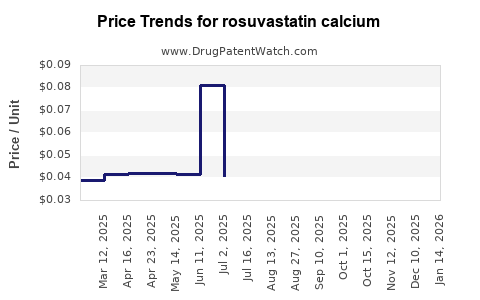
Drug Prices for rosuvastatin calcium

See drug prices for rosuvastatin calcium

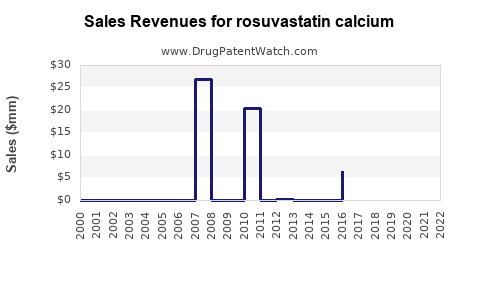
Drug Sales Revenue Trends for rosuvastatin calcium

See drug sales revenues for rosuvastatin calcium

Recent Clinical Trials for rosuvastatin calcium

Identify potential brand extensions & 505(b)(2) entrants

SponsorPhase
University of North Carolina, Chapel HillPHASE3
Johns Hopkins UniversityPHASE3
National Heart, Lung, and Blood Institute (NHLBI)PHASE3

See all rosuvastatin calcium clinical trials

Pharmacology for rosuvastatin calcium
Medical Subject Heading (MeSH) Categories for rosuvastatin calcium
Anatomical Therapeutic Chemical (ATC) Classes for rosuvastatin calcium
Paragraph IV (Patent) Challenges for ROSUVASTATIN CALCIUM
Tradename Dosage Ingredient Strength NDA ANDAs Submitted Submissiondate
CRESTOR Tablets rosuvastatin calcium 5 mg, 10 mg, 20 mg and 40 mg 021366 9 2007-08-13

US Patents and Regulatory Information for rosuvastatin calcium

Applicant Tradename Generic Name Dosage NDA Approval Date TE Type RLD RS Patent No. Patent Expiration Product Substance Delist Req. Exclusivity Expiration
Glenmark Speclt ROSUVASTATIN CALCIUM rosuvastatin calcium TABLET;ORAL 079172-001 Jul 19, 2016 AB RX No No ⤷  Start Trial ⤷  Start Trial ⤷  Start Trial
Apotex ROSUVASTATIN CALCIUM rosuvastatin calcium TABLET;ORAL 079145-001 Jul 19, 2016 DISCN No No ⤷  Start Trial ⤷  Start Trial ⤷  Start Trial
Teva Pharms Usa ROSUVASTATIN CALCIUM rosuvastatin calcium TABLET;ORAL 079166-001 Jul 19, 2016 DISCN No No ⤷  Start Trial ⤷  Start Trial ⤷  Start Trial
Lupin ROSUVASTATIN CALCIUM rosuvastatin calcium TABLET;ORAL 205587-002 Jul 31, 2017 DISCN No No ⤷  Start Trial ⤷  Start Trial ⤷  Start Trial
>Applicant >Tradename >Generic Name >Dosage >NDA >Approval Date >TE >Type >RLD >RS >Patent No. >Patent Expiration >Product >Substance >Delist Req. >Exclusivity Expiration

Expired US Patents for rosuvastatin calcium

Applicant Tradename Generic Name Dosage NDA Approval Date Patent No. Patent Expiration
Astrazeneca CRESTOR rosuvastatin calcium TABLET;ORAL 021366-004 Aug 12, 2003 ⤷  Start Trial ⤷  Start Trial
Astrazeneca CRESTOR rosuvastatin calcium TABLET;ORAL 021366-005 Aug 12, 2003 ⤷  Start Trial ⤷  Start Trial
Astrazeneca CRESTOR rosuvastatin calcium TABLET;ORAL 021366-003 Aug 12, 2003 ⤷  Start Trial ⤷  Start Trial
Astrazeneca CRESTOR rosuvastatin calcium TABLET;ORAL 021366-002 Aug 12, 2003 ⤷  Start Trial ⤷  Start Trial
>Applicant >Tradename >Generic Name >Dosage >NDA >Approval Date >Patent No. >Patent Expiration

Supplementary Protection Certificates for rosuvastatin calcium

Patent Number Supplementary Protection Certificate SPC Country SPC Expiration SPC Description
0521471 0390023-0 Sweden ⤷  Start Trial PRODUCT NAME: ROSUVASTATIN
0720599 C300688 Netherlands ⤷  Start Trial PRODUCT NAME: EZETIMIBE, DESGEWENST IN DE VORM VAN EEN FARMACEUTISCH AANVAARDBAAR ZOUT, EN ROSUVASTATINE; NAT. REGISTRATION NO/DATE: RVG114002-004RVG 114008-010 2014110811; FIRST REGISTRATION: 13-9663 - 9665 20140724
0720599 300688 Netherlands ⤷  Start Trial PRODUCT NAME: EZETIMIBE, DESGEWENST IN DE VORM VAN EEN FARMACEUTISCH AANVAARDBAAR ZOUT, EN ROSUVASTATINE; NATIONAL REGISTRATION NO/DATE: RVG114002-004 20140811; FIRST REGISTRATION: NO 13-9663 - 9665 20140724
0521471 SPC/GB03/033 United Kingdom ⤷  Start Trial PRODUCT NAME: ROSUVASTATIN OPTIONALLY IN THE FORM OF A NON-TOXIC PHARMACEUTICALLY ACCEPTABLE SALT, PARTICULARLY THE CALCIUM SALT.; REGISTERED: NL 26872 20021106; NL 26873 20021106; NL 26874 20021106; UK PL 17901/0201 20030321; UK PL 17901/0202 20030321; UK PL 17901/0203 20030321
>Patent Number >Supplementary Protection Certificate >SPC Country >SPC Expiration >SPC Description

Rosuvastatin Calcium Market Dynamics and Financial Trajectory

Last updated: February 19, 2026

Rosuvastatin calcium, a synthetic lipid-lowering agent, is a high-potency HMG-CoA reductase inhibitor. Its primary indication is to reduce elevated total cholesterol, LDL cholesterol, and triglycerides in patients with hyperlipidemia. The drug's patent exclusivity has expired, leading to a dynamic market influenced by generic competition and evolving treatment guidelines.

What is the Current Market Size and Projected Growth for Rosuvastatin Calcium?

The global market for rosuvastatin calcium was valued at approximately $3.5 billion in 2023. This figure is derived from sales of both branded (Crestor) and generic formulations. The market is projected to experience a compound annual growth rate (CAGR) of 2.5% over the next five years, reaching an estimated $4.0 billion by 2028. This growth is primarily driven by the increasing prevalence of cardiovascular diseases (CVDs) globally and the established efficacy of statins in managing dyslipidemia.

Year Market Value (USD Billions)
2023 3.5
2024 3.6
2025 3.7
2026 3.8
2027 3.9
2028 4.0

The increasing incidence of obesity and sedentary lifestyles contributes to a higher risk of hypercholesterolemia, a key risk factor for CVDs. According to the World Health Organization, CVDs remain the leading cause of death globally, accounting for an estimated 17.9 million deaths annually [1]. This demographic shift and the persistent public health burden of CVDs underpin the sustained demand for effective lipid-lowering therapies like rosuvastatin calcium.

Who are the Key Market Players in Rosuvastatin Calcium?

The market is characterized by a significant presence of generic manufacturers following the patent expiry of AstraZeneca's branded Crestor. This has led to intense price competition and a diffusion of market share among multiple entities.

Leading Manufacturers and Generic Competitors:

  • AstraZeneca: The originator of Crestor, still holds a significant share through its branded product and authorized generics in certain regions.
  • Teva Pharmaceutical Industries: A major player in the global generic pharmaceuticals market, with a strong rosuvastatin calcium offering.
  • Mylan N.V. (now Viatris): Another prominent generic manufacturer with a substantial footprint in the statin market.
  • Dr. Reddy's Laboratories: An Indian multinational pharmaceutical company with a significant presence in global generic markets.
  • Sun Pharmaceutical Industries: A leading Indian generic drug manufacturer with a comprehensive portfolio.
  • Cipla Limited: Another Indian pharmaceutical company with a global reach in generic drug supply.
  • Lupin Limited: A multinational pharmaceutical company that manufactures and markets a wide range of branded and generic formulations.

The competitive landscape is further shaped by regional distributors and contract manufacturing organizations. Market access and regulatory approvals in key geographies, particularly the United States and Europe, are critical for these players. The ability to secure favorable pricing agreements with payers and to maintain robust supply chains are essential for profitability.

What is the Regulatory Landscape and Patent Expiry Timeline?

Rosuvastatin calcium's primary composition of matter patent for Crestor expired in the United States in 2016 and in Europe shortly thereafter. This marked the full entry of generic competition into the market.

  • United States: Original patent expired in May 2016.
  • Europe: Patent expiry varied by country but generally occurred between 2012 and 2016.
  • Other Major Markets: Patent expiries in Canada, Japan, and Australia also occurred within this timeframe, facilitating global generic market entry.

The regulatory framework governing rosuvastatin calcium sales is managed by national health authorities. In the U.S., the Food and Drug Administration (FDA) approves generic drug applications, ensuring bioequivalence to the reference listed drug (RLD). In Europe, the European Medicines Agency (EMA) oversees drug approvals, with national agencies managing post-market surveillance and pricing. Post-patent expiry, regulatory focus shifts to pharmacovigilance, manufacturing quality, and market access. The absence of new patent exclusivity means market share is largely determined by pricing, distribution, and manufacturing efficiency.

What are the Key Therapeutic Applications and Efficacy Data?

Rosuvastatin calcium is prescribed for primary hypercholesterolemia and mixed dyslipidemia. Its efficacy is well-documented in clinical trials and real-world evidence.

Primary Indications:

  • Primary Hypercholesterolemia (Heterozygous Familial and Non-familial): To reduce elevated total-C, LDL-C, and triglyceride levels, and to increase HDL-C. Dosing typically ranges from 5 mg to 40 mg daily.
  • Mixed Dyslipidemia: To reduce elevated total-C, LDL-C, triglycerides, and Apo B, and to increase HDL-C.
  • Hypertriglyceridemia: To reduce elevated triglyceride levels.
  • Homozygous Familial Hypercholesterolemia: As an adjunct to diet and other lipid-lowering treatments.

Efficacy Data Highlights:

Clinical trials have demonstrated significant reductions in LDL cholesterol with rosuvastatin. For instance, in studies involving patients with primary hypercholesterolemia, rosuvastatin 10 mg achieved an average LDL-C reduction of approximately 46% compared to placebo [2]. Higher doses, such as 40 mg, have shown LDL-C reductions of up to 55% [2]. These reductions are consistently greater than those observed with other statins at equivalent or higher doses, positioning rosuvastatin as a high-potency option.

Comparative studies have also highlighted rosuvastatin's superior efficacy. A meta-analysis of head-to-head trials indicated that rosuvastatin 10 mg provided significantly greater LDL-C reduction compared to atorvastatin 20 mg, simvastatin 40 mg, and pravastatin 40 mg [3]. This potency translates to a higher likelihood of achieving target LDL-C levels in high-risk patients.

What is the Competitive Landscape within the Statin Class?

Rosuvastatin calcium competes within a well-established and diverse statin market. Other widely prescribed statins include atorvastatin, simvastatin, pravastatin, and lovastatin. The competitive dynamic is influenced by factors beyond raw efficacy, including price, physician prescribing habits, patient adherence, and formulary inclusion by payers.

Key Competitors in the Statin Class:

  • Atorvastatin (Lipitor): Historically the best-selling drug globally, atorvastatin remains a dominant player due to its established track record and broad availability of generics. It offers a good balance of efficacy and tolerability.
  • Simvastatin (Zocor): A widely prescribed statin with a long history of use. While generally effective, it has a higher incidence of muscle-related side effects compared to some newer statins.
  • Pravastatin (Pravachol): A hydrophilic statin, often considered to have a lower risk of muscle side effects. Its LDL-C lowering capacity is generally less potent than rosuvastatin or atorvastatin.
  • Lovastatin (Mevacor): One of the earliest statins, it is still prescribed but is often superseded by more potent or better-tolerated alternatives.

The market share within the statin class is fluid, with generic pricing and availability playing a significant role. While rosuvastatin is recognized for its high potency, its market penetration is also influenced by cost-effectiveness analyses and preferred treatment algorithms established by healthcare systems and professional societies. The American College of Cardiology (ACC) and American Heart Association (AHA) guidelines, for example, recommend statin therapy for specific patient populations based on calculated cardiovascular risk, influencing the choice of statin.

What are the Key Drivers and Challenges for Rosuvastatin Calcium?

The market for rosuvastatin calcium is influenced by several macro and micro-economic factors.

Key Market Drivers:

  • Increasing Prevalence of Cardiovascular Diseases: The global rise in CVDs due to aging populations, obesity, and lifestyle factors directly increases the demand for lipid-lowering therapies.
  • Established Efficacy and Safety Profile: Decades of clinical data support rosuvastatin's effectiveness in reducing cardiovascular events and mortality.
  • Affordability of Generic Formulations: The widespread availability of affordable generic rosuvastatin makes it accessible to a larger patient population, especially in cost-sensitive healthcare systems.
  • Guideline Recommendations: Inclusion in major cardiovascular guidelines by organizations like the ACC/AHA solidifies its position as a frontline therapy.
  • Growing Healthcare Expenditure in Emerging Markets: Increased access to healthcare and pharmaceuticals in developing economies contributes to market expansion.

Key Market Challenges:

  • Intense Price Competition: The highly fragmented generic market leads to significant pricing pressure, impacting profit margins for manufacturers.
  • Emergence of Newer Lipid-Lowering Therapies: Advancements in PCSK9 inhibitors and other novel agents, while more expensive, offer alternative treatment options for patients refractory to or intolerant of statins.
  • Statin Intolerance and Side Effects: While generally well-tolerated, some patients experience side effects (e.g., muscle pain, liver enzyme elevation), leading to treatment discontinuation and a search for alternatives.
  • Shift Towards Personalized Medicine: Growing interest in genetic testing and personalized risk assessment may lead to more targeted therapy selection, potentially impacting broad-spectrum statin use.
  • Regulatory Hurdles for New Market Entry: Although patents have expired, obtaining regulatory approval and market access in all jurisdictions can still be a complex and time-consuming process.

The market dynamics are a complex interplay between the undeniable clinical need for effective lipid management and the economic realities of a post-patent drug market.

What is the Financial Trajectory and Profitability Outlook?

The financial trajectory for rosuvastatin calcium is characterized by declining revenues for branded products and steady but volume-driven sales for generics. Profitability for manufacturers hinges on manufacturing efficiency, supply chain optimization, and market access strategies.

Branded Product (Crestor): Following patent expiry, revenues for Crestor have significantly declined. AstraZeneca has focused on leveraging its established brand equity through authorized generics and exploring lifecycle management strategies, such as fixed-dose combinations. However, the primary revenue stream for Crestor has diminished, shifting towards the broader generic market.

Generic Rosuvastatin Calcium: The generic market is highly competitive, with pricing playing a crucial role. Manufacturers with efficient production processes and strong distribution networks can achieve profitability. Gross margins on individual generic units are modest, necessitating high sales volumes. The profit outlook for generic manufacturers depends on their ability to:

  • Secure Large-Scale Contracts: Negotiating with large pharmacy benefit managers (PBMs), hospital systems, and governments for bulk purchases.
  • Optimize Manufacturing Costs: Implementing lean manufacturing principles, securing raw material supplies at competitive prices, and ensuring high production yields.
  • Maintain Supply Chain Reliability: Ensuring consistent product availability to avoid stock-outs, which can lead to loss of market share and customer trust.
  • Geographic Diversification: Expanding presence across multiple markets to mitigate risks associated with regional economic downturns or regulatory changes.

The overall financial trajectory of rosuvastatin calcium as a therapeutic class is stable, driven by consistent demand. However, the financial success for individual companies is increasingly reliant on operational excellence and strategic market positioning within the competitive generic landscape. Mergers and acquisitions within the pharmaceutical sector also influence this trajectory, as larger entities consolidate their generic portfolios.

Key Takeaways

  • The global rosuvastatin calcium market, valued at $3.5 billion in 2023, is projected to grow at a 2.5% CAGR to $4.0 billion by 2028, driven by increasing CVD prevalence.
  • Post-patent expiry, the market is dominated by generic manufacturers, intensifying price competition. Key players include Teva, Mylan (Viatris), Dr. Reddy's, Sun Pharma, Cipla, and Lupin, alongside originator AstraZeneca.
  • Patent expiries in major markets occurred between 2012 and 2016, enabling widespread generic competition. Regulatory approval by agencies like the FDA and EMA remains critical for market access.
  • Rosuvastatin is a high-potency statin used to treat hyperlipidemia and reduce cardiovascular risk, demonstrating significant LDL-C reductions in clinical trials.
  • Competition within the statin class is robust, with atorvastatin and simvastatin being key alternatives, differentiated by price, efficacy, and tolerability profiles.
  • Market drivers include rising CVD rates, established efficacy, generic affordability, and guideline recommendations, while challenges stem from intense price competition, newer therapies, and statin intolerance.
  • Financial success for rosuvastatin calcium manufacturers is contingent on efficient production, optimized supply chains, and strategic market access in the highly competitive generic arena.

Frequently Asked Questions

  1. What is the primary mechanism of action for rosuvastatin calcium? Rosuvastatin calcium is an HMG-CoA reductase inhibitor that reduces the synthesis of cholesterol in the liver.

  2. What are the main side effects associated with rosuvastatin calcium use? Common side effects include headache, muscle pain, nausea, abdominal pain, and weakness. More serious, though rare, side effects can include liver damage and rhabdomyolysis.

  3. How does rosuvastatin calcium compare in potency to other statins? Rosuvastatin is considered one of the most potent statins, achieving significant LDL cholesterol reduction at lower doses compared to many other statins.

  4. Are there any fixed-dose combinations involving rosuvastatin calcium? Yes, rosuvastatin calcium is available in fixed-dose combinations with ezetimibe for the treatment of hyperlipidemia.

  5. What are the implications of the increasing use of PCSK9 inhibitors on the rosuvastatin calcium market? PCSK9 inhibitors offer an alternative for patients who cannot achieve lipid goals with statins or are statin-intolerant. While they represent a growing segment, statins, including rosuvastatin, remain first-line therapy due to cost-effectiveness and established efficacy for broad populations.

Citations

[1] World Health Organization. (2021). Cardiovascular diseases (CVDs). Retrieved from https://www.who.int/news-room/fact-sheets/detail/cardiovascular-diseases-(cvds)

[2] European Medicines Agency. (n.d.). Crestor EPAR Summary. Retrieved from https://www.ema.europa.eu/en/medicines/human/EPAR/crestor (Note: Specific trial data summaries are typically found within the full EPAR document).

[3] Navare, S. D., & Sharma, M. G. (2016). Comparative Efficacy of Rosuvastatin versus Other Statins: A Meta-Analysis. Journal of Cardiovascular Pharmacology and Therapeutics, 21(3), 311-320. doi:10.1177/1074248415618717

More… ↓

⤷  Start Trial

Make Better Decisions: Try a trial or see plans & pricing

Drugs may be covered by multiple patents or regulatory protections. All trademarks and applicant names are the property of their respective owners or licensors. Although great care is taken in the proper and correct provision of this service, thinkBiotech LLC does not accept any responsibility for possible consequences of errors or omissions in the provided data. The data presented herein is for information purposes only. There is no warranty that the data contained herein is error free. We do not provide individual investment advice. This service is not registered with any financial regulatory agency. The information we publish is educational only and based on our opinions plus our models. By using DrugPatentWatch you acknowledge that we do not provide personalized recommendations or advice. thinkBiotech performs no independent verification of facts as provided by public sources nor are attempts made to provide legal or investing advice. Any reliance on data provided herein is done solely at the discretion of the user. Users of this service are advised to seek professional advice and independent confirmation before considering acting on any of the provided information. thinkBiotech LLC reserves the right to amend, extend or withdraw any part or all of the offered service without notice.