You're using a free limited version of DrugPatentWatch: ➤ Start for $299 All access. No Commitment.

Last Updated: March 29, 2026

Aspirin - Generic Drug Details


✉ Email this page to a colleague

« Back to Dashboard


What are the generic sources for aspirin and what is the scope of patent protection?

Aspirin is the generic ingredient in fifty-three branded drugs marketed by Hesp, Plx Pharma, Bayer, Savage Labs, Lgm Pharma, Mpp Pharma, Watson Labs, Allergan, Sandoz, Actavis Elizabeth, Fosun Pharma, Halsey, Hikma Intl Pharms, Ivax Pharms, Puracap Pharm, Quantum Pharmics, Strides Pharma, Lannett, Dr Reddys Labs Sa, Novitium Pharma, Stevens J, Sun Pharm Industries, Chartwell Rx, Bausch, Galt Pharms, Alra, Xanodyne Pharm, Ivax Sub Teva Pharms, Teva, Genus, Novast Labs, Oxford Pharms, Meda Pharms, Ingenus Pharms Nj, Boehringer Ingelheim, Amneal Pharms, Ani Pharms, Barr, Chartwell Molecular, Dr Reddys, Glenmark Speclt, Micro Labs, Ph Health, Sun Pharm, Zydus Pharms, Schwarz Pharma, Abbott, Par Pharm, Medpointe Pharm Hlc, Mcneil, Robins Ah, Genus Lifesciences, Actavis Labs Fl Inc, Epic Pharma Llc, Endo Operations, Roxane, Sanofi Aventis Us, Bristol Myers Squibb, and Aaipharma Llc, and is included in eighty-nine NDAs. There are six patents protecting this compound. Additional information is available in the individual branded drug profile pages.

Aspirin has twenty patent family members in nine countries.

There are twenty-two drug master file entries for aspirin. There is one tentative approval for this compound.

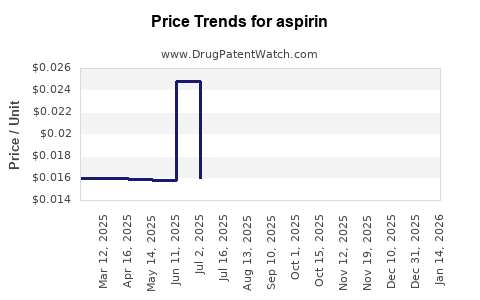
Drug Prices for aspirin

See drug prices for aspirin

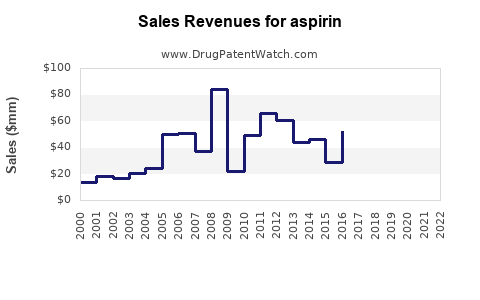
Drug Sales Revenue Trends for aspirin

See drug sales revenues for aspirin

DrugPatentWatch® Estimated Loss of Exclusivity (LOE) Date for aspirin
Generic Entry Date for aspirin*:
Constraining patent/regulatory exclusivity:
Dosage:
CAPSULE;ORAL

*The generic entry opportunity date is the latter of the last compound-claiming patent and the last regulatory exclusivity protection. Many factors can influence early or later generic entry. This date is provided as a rough estimate of generic entry potential and should not be used as an independent source.

Recent Clinical Trials for aspirin

Identify potential brand extensions & 505(b)(2) entrants

SponsorPhase
Stanford UniversityPHASE2
National Institute of Neurological Disorders and Stroke (NINDS)PHASE3
Yale UniversityPHASE3

See all aspirin clinical trials

Generic filers with tentative approvals for ASPIRIN
Applicant Application No. Strength Dosage Form
⤷  Start Trial⤷  Start Trial325MG;40MGTABLET;ORAL
⤷  Start Trial⤷  Start Trial81MG;40MGTABLET;ORAL

The 'tentative' approval signifies that the product meets all FDA standards for marketing, and, but for the patents / regulatory protections, it would approved.

US Patents and Regulatory Information for aspirin

Applicant Tradename Generic Name Dosage NDA Approval Date TE Type RLD RS Patent No. Patent Expiration Product Substance Delist Req. Exclusivity Expiration
Dr Reddys Labs Sa OXYCODONE AND ASPIRIN aspirin; oxycodone hydrochloride TABLET;ORAL 091670-001 Mar 16, 2011 DISCN No No ⤷  Start Trial ⤷  Start Trial ⤷  Start Trial
Dr Reddys Labs Sa BUTALBITAL, ASPIRIN, CAFFEINE, AND CODEINE PHOSPHATE aspirin; butalbital; caffeine; codeine phosphate CAPSULE;ORAL 203335-001 Oct 30, 2015 DISCN No No ⤷  Start Trial ⤷  Start Trial ⤷  Start Trial
Par Pharm MEPROBAMATE AND ASPIRIN aspirin; meprobamate TABLET;ORAL 089126-001 Aug 19, 1986 DISCN No No ⤷  Start Trial ⤷  Start Trial ⤷  Start Trial
Strides Pharma BUTALBITAL, ASPIRIN AND CAFFEINE aspirin; butalbital; caffeine TABLET;ORAL 204195-001 Sep 22, 2016 DISCN No No ⤷  Start Trial ⤷  Start Trial ⤷  Start Trial
Actavis Labs Fl Inc OXYCODONE AND ASPIRIN aspirin; oxycodone hydrochloride TABLET;ORAL 090084-001 Mar 22, 2011 DISCN No No ⤷  Start Trial ⤷  Start Trial ⤷  Start Trial
>Applicant >Tradename >Generic Name >Dosage >NDA >Approval Date >TE >Type >RLD >RS >Patent No. >Patent Expiration >Product >Substance >Delist Req. >Exclusivity Expiration

Expired US Patents for aspirin

Applicant Tradename Generic Name Dosage NDA Approval Date Patent No. Patent Expiration
Plx Pharma VAZALORE aspirin CAPSULE;ORAL 203697-001 Jan 14, 2013 8,865,187 ⤷  Start Trial
Plx Pharma VAZALORE aspirin CAPSULE;ORAL 203697-001 Jan 14, 2013 9,101,637 ⤷  Start Trial
Plx Pharma VAZALORE aspirin CAPSULE;ORAL 203697-001 Jan 14, 2013 9,351,984 ⤷  Start Trial
>Applicant >Tradename >Generic Name >Dosage >NDA >Approval Date >Patent No. >Patent Expiration

International Patents for aspirin

Country Patent Number Title Estimated Expiration
South Korea 20200008032 ⤷  Start Trial
European Patent Office 2760433 VECTEURS DÉPENDANT DU PH POUR LIBÉRATION CIBLÉE DE PRODUITS PHARMACEUTIQUES DANS LE TUBE DIGESTIF, COMPOSITIONS PRÉPARÉES À PARTIR DE CEUX-CI, ET LEUR FABRICATION ET LEUR UTILISATION (pH DEPENDENT CARRIERS FOR TARGETED RELEASE OF PHARMACEUTICALS ALONG THE GASTROINTESTINAL TRACT, COMPOSITIONS THEREFROM, AND MAKING AND USING SAME) ⤷  Start Trial
Mexico 340951 ⤷  Start Trial
Japan 2017222650 胃腸管に沿った医薬の標的化放出のためのpH依存性担体、それによる組成物、ならびにこれらの製造および使用 (PH DEPENDENT CARRIERS FOR TARGETED RELEASE OF PHARMACEUTICALS ALONG THE GASTROINTESTINAL TRACT, COMPOSITIONS THEREFROM, AND MAKING AND USING SAME) ⤷  Start Trial
South Korea 20200118219 위장관을 따라 약물을 표적화 방출하기 위한 pH 감응성 담체, 그로부터의 조성물, 및 이들의 제조 및 사용 방법 (pH PH DEPENDENT CARRIERS FOR TARGETED RELEASE OF PHARMACEUTICALS ALONG THE GASTROINTESTINAL TRACT COMPOSITIONS THEREFROM AND MAKING AND USING SAME) ⤷  Start Trial
>Country >Patent Number >Title >Estimated Expiration

Supplementary Protection Certificates for aspirin

Patent Number Supplementary Protection Certificate SPC Country SPC Expiration SPC Description
0984957 122012000017 Germany ⤷  Start Trial PRODUCT NAME: ASPIRIN UND ESOMEPRAZOL - MAGNESIUM-TRIHYDRAT; NAT. REGISTRATION NO/DATE: 81047.00.00 20110930 FIRST REGISTRATION: PORTUGAL 5402359 5402367 5402375 20110812
0984957 2012/048 Ireland ⤷  Start Trial PRODUCT NAME: A COMBINATION PRODUCT COMPRISING ASPIRIN AND ESOMEPRAZOLE MAGNESIUM TRIHYDRATE; NAT REGISTRATION NO/DATE: PA 970/063/001 20120831; FIRST REGISTRATION NO/DATE: 5402359; 5402367 5402375 20110812
>Patent Number >Supplementary Protection Certificate >SPC Country >SPC Expiration >SPC Description

Market Dynamics and Financial Trajectory for Aspiring: A Comprehensive Analysis

Last updated: October 14, 2025

Introduction

Aspirin, scientifically known as acetylsalicylic acid, remains one of the most iconic and widely used pharmaceuticals in the world. Originally developed in the late 19th century, its applications have expanded from analgesic and antipyretic uses to critical roles in cardiovascular disease management. This report delves into the current market dynamics and financial trajectory of aspirin, considering evolving regulatory landscapes, patent statuses, competitive forces, and emerging therapeutic trends.


Global Market Overview and Historical Context

Aspirin's global market has experienced steady growth over the decades, driven primarily by its established uses in pain relief, fever reduction, and cardiovascular prophylaxis. According to recent industry reports, the global aspirin market was valued at approximately USD 3.5 billion in 2022, with projections indicating modest compound annual growth rates (CAGR) of around 2-3% through 2030 [1].

Historically, aspirin's patent expired in the early 20th century, allowing generic manufacturers to produce and distribute cost-effective formulations worldwide. Its longstanding reputation as a safe, inexpensive medication has cemented its role as a cornerstone of OTC (over-the-counter) and prescription drug markets.


Market Drivers

  1. Cardiovascular Disease (CVD) Prevention:
    Aspirin's antiplatelet properties have established it as a first-line agent for secondary prevention of myocardial infarction and stroke, particularly after the landmark 1988 US Physicians' Health Study [2].

  2. Off-Label Uses:
    Expanding off-label applications, including for certain inflammatory and cancerous conditions, sustain demand despite regulatory scrutiny.

  3. Generic Drug Market Expansion:
    The expiry of patents has facilitated widespread competition, making aspirin accessible and affordable, especially in emerging markets.

  4. Growing Healthcare Access:
    Improved healthcare infrastructure and increased awareness of preventive medicine bolster OTC sales and prescribing patterns.


Market Challenges

  1. Regulatory and Safety Concerns:
    Recent evidence highlighting risks of gastrointestinal bleeding and hemorrhagic stroke has prompted regulatory agencies such as the FDA and EMA to refine guidelines on aspirin use. These restrictions potentially dampen demand, especially for primary prevention in low-risk populations [3].

  2. Evolving Therapeutic Alternatives:
    Introduction of novel antithrombotic agents (e.g., P2Y12 inhibitors like clopidogrel and ticagrelor) offer more targeted or safer options, challenging aspirin’s dominance in certain indications.

  3. Patent and Formulation Issues:
    While the active ingredient is off patent, developments in new formulations (extended-release, combination drugs) face patent cliffs and generic competition, affecting premium pricing opportunities.

  4. Market Saturation in Developed Regions:
    In mature markets such as North America and Europe, growth is plateauing due to market saturation and comparatively conservative prescribing practices.


Emerging Trends Influencing Aspirin’s Financial Trajectory

1. Increasing Focus on Personalized Medicine:
Genetic and biomarker-driven strategies may refine patient selection for aspirin therapy, optimizing benefits and reducing risks, which could influence overall market size.

2. Expansion in Emerging Markets:
Rapid population growth, increased healthcare spending, and higher awareness are propelling aspirin's sales in Asia-Pacific, Africa, and Latin America [4].

3. Development of Novel Delivery Systems:
Innovations such as low-dose coated tablets and combination therapies are expected to enhance adherence and efficacy, unlocking new revenue streams.

4. Regulatory Reconsideration of Prophylactic Use:
Contemporary guidelines have narrowed indications for primary prevention, especially in low-risk groups, which could constrain future sales.


Financial Trajectory Analysis

Historically, aspirin's revenues have been characterized by stability due to its status as a low-cost, over-the-counter medication. However, recent trends point toward a nuanced outlook:

  • In Mature Markets: Revenue growth is stagnant or declining marginally, driven by safety concerns and restrictive guidelines.
  • In Emerging Markets: Significant growth potential exists, with market expansion driven by increasing accessibility and affordability.
  • Impact of Healthcare Policy: Governments emphasizing evidence-based medicine and risk stratification may lead to decreased usage in certain populations, influencing future revenue streams.

Projections suggest that while global aspirin sales may maintain a steady CAGR of around 2-3% up to 2030, the growth will predominantly originate from emerging economies and niche therapeutic segments, such as combination drugs or formulations targeting specific patient groups.

Profitability Outlook:
Generic manufacturing ensures high-volume, low-margin sales. Yet, companies investing in innovative formulations or on-label indications can achieve higher margins. Mergers, acquisitions, and licensing deals are anticipated to influence the competitive landscape, potentially impacting pricing strategies and revenue flows.


Regulatory and Patent Landscape Impact

The absence of active patents on aspirin underscores the commoditization of the active pharmaceutical ingredient (API), fostering price competition. This environment constrains profitability for brands focused solely on the API but opens opportunities for value-added formulations, novel delivery systems, and combination products.

Furthermore, regulatory agencies' evolving stance on low-dose aspirin's prophylactic use influences market size. The US Preventive Services Task Force's recent guidelines recommend more individualized decision-making, which could reduce overall consumption in primary prevention indications [5].


Competitive Landscape

The market landscape is predominantly populated by generic manufacturers, with a handful of branded players emphasizing formulation innovations or niche applications. Large pharmaceutical companies have shifted focus toward pipeline drugs and specialty therapies, often relegating aspirin to a commoditized position.

Key players include: Teva Pharmaceuticals, Solco Healthcare, Bayer Healthcare, and others. Bayer, historically synonymous with aspirin, continues to promote its formulations in niche markets and combination products.


Future Outlook and Strategic Opportunities

  • Innovation in Formulations: Developing targeted, sustained-release, or combination formulations can differentiate offerings and command premium pricing.
  • Strategic Market Penetration: Focused expansion into pediatric, geriatric, and developing nations can sustain growth trajectories.
  • Regulatory Advocacy: Engaging with health authorities to clarify and expand approved indications could sustain or grow market share.
  • Partnerships and Licensing: Collaborations with biotech firms focusing on personalized medicine and biomarker-driven therapy can open avenues for tailored aspirin applications.

Key Takeaways

  • Aspirin remains a staple in cardiovascular prophylaxis, with stable global sales driven primarily by emerging markets and niche formulations.
  • Market challenges—safety concerns, regulatory shifts, and competition from newer antithrombotic agents—are tempering growth prospects in mature markets.
  • Innovation in formulations and targeted therapeutics offers critical avenues for revenue enhancement.
  • Regulatory trends necessitate strategic adaptation, emphasizing personalized medicine and evidence-based indications.
  • Companies focusing on emerging markets and value-added formulations can capitalize on untapped growth potential in a commoditized landscape.

FAQs

1. Is aspirin still a viable investment in the current pharmaceutical landscape?
Yes. Despite market saturation in developed countries, emerging markets and innovative formulation development present growth opportunities. The low-cost, high-volume nature of aspirin ensures continued demand, especially if companies innovate or expand indications.

2. How do safety concerns impact aspirin's market?
Safety concerns, particularly regarding gastrointestinal bleeding and hemorrhagic stroke risk, have led to more restrictive guidelines for primary prevention. These regulatory changes temper future sales, particularly in low-risk populations but have less impact on secondary prevention use.

3. What regulatory trends could influence aspirin's future market?
Guidelines advocating personalized risk assessment and evidence-based indications may lead to decreased usage in certain populations. Conversely, approvals of combination formulations or targeted therapies could create new growth avenues.

4. How significant is the role of generics in the aspirin market?
Generics dominate due to the patent expiration of aspirin, leading to intense price competition. This environment restricts margins but sustains volume-driven revenue, especially in price-sensitive markets.

5. What strategic moves can pharmaceutical companies adopt to enhance aspirin's market position?
Innovation in delivery systems, targeted formulations, and strategic expansion into emerging markets are key. Additionally, engaging with regulatory authorities to adapt and expand approved indications can significantly influence long-term prospects.


References

[1] Research and Markets. (2022). Global Aspirin Market Report.
[2] The New England Journal of Medicine. (1988). The Physicians’ Health Study.
[3] U.S. Food and Drug Administration. (2021). Aspirin and Bleeding Risk.
[4] World Health Organization. (2021). Pharmacovigilance and Medicine Safety in Emerging Markets.
[5] U.S. Preventive Services Task Force. (2022). Aspirin Use in Primary Prevention.

More… ↓

⤷  Start Trial

Make Better Decisions: Try a trial or see plans & pricing

Drugs may be covered by multiple patents or regulatory protections. All trademarks and applicant names are the property of their respective owners or licensors. Although great care is taken in the proper and correct provision of this service, thinkBiotech LLC does not accept any responsibility for possible consequences of errors or omissions in the provided data. The data presented herein is for information purposes only. There is no warranty that the data contained herein is error free. We do not provide individual investment advice. This service is not registered with any financial regulatory agency. The information we publish is educational only and based on our opinions plus our models. By using DrugPatentWatch you acknowledge that we do not provide personalized recommendations or advice. thinkBiotech performs no independent verification of facts as provided by public sources nor are attempts made to provide legal or investing advice. Any reliance on data provided herein is done solely at the discretion of the user. Users of this service are advised to seek professional advice and independent confirmation before considering acting on any of the provided information. thinkBiotech LLC reserves the right to amend, extend or withdraw any part or all of the offered service without notice.