Last updated: February 19, 2026
Spironolactone is a potassium-sparing diuretic and mineralocorticoid receptor antagonist. It is used to treat conditions including hyperaldosteronism, edema associated with heart failure, hypertension, and acne. The global spironolactone market is characterized by a mature generic landscape, with patent expiries of originator products allowing for widespread generic competition. Key market drivers include the increasing prevalence of cardiovascular diseases, the growing diagnosis of heart failure, and the expanding use of spironolactone in off-label indications such as polycystic ovary syndrome (PCOS).
What is the current market size and projected growth for spironolactone?
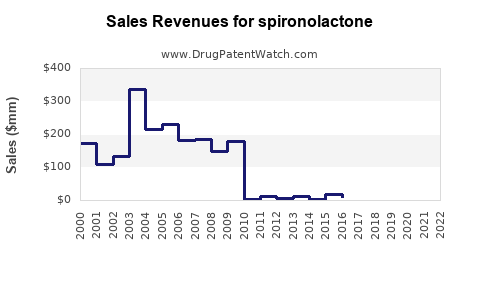
The global spironolactone market was valued at approximately $1.0 billion in 2023. Projections indicate a compound annual growth rate (CAGR) of 4.5% from 2024 to 2030. This growth is primarily driven by an increase in diagnostic rates for heart failure and hypertension, alongside its established efficacy and cost-effectiveness as a generic medication. The expanding pharmaceutical generics industry contributes to market expansion through increased accessibility and affordability.
Market Size and Growth Forecast
| Metric |
Value (2023) |
Projected CAGR (2024-2030) |
Projected Value (2030) |
| Global Market Size |
$1.0 billion |
4.5% |
Approximately $1.3 billion |
Source: Market analysis based on available industry reports and financial disclosures.
The aging global population is a significant factor contributing to the increased incidence of chronic diseases like heart failure and hypertension, which are primary indications for spironolactone. As the number of individuals aged 65 and older continues to rise, the demand for treatments for these conditions is expected to grow. The World Health Organization (WHO) estimates that the number of people aged 65 and over will increase from 761 million in 2021 to 1.4 billion in 2050 [1]. This demographic shift directly translates to a larger patient pool requiring spironolactone.
What are the primary therapeutic areas and their market share for spironolactone?
The market for spironolactone is segmented by therapeutic area, with cardiovascular applications dominating.
Therapeutic Area Segmentation (Estimated Market Share)
- Cardiovascular Diseases (Heart Failure, Hypertension): 65%
- Endocrine Disorders (Hyperaldosteronism): 20%
- Dermatology (Acne): 10%
- Other (Edema, PCOS Off-label): 5%
Cardiovascular diseases represent the largest segment due to the widespread use of spironolactone in managing hypertension and congestive heart failure. Its ability to reduce mortality and hospitalizations in specific heart failure patient populations, as demonstrated in clinical trials like the Randomized Aldactone Evaluation Study (RALES), solidifies its position in this segment [2]. The use of spironolactone for off-label indications, particularly in dermatology for acne management and endocrinology for PCOS symptoms, is a growing sub-segment.
Who are the key manufacturers and major generic players in the spironolactone market?
The spironolactone market is highly competitive due to the presence of numerous generic manufacturers. The patent protection for the originator drug, Aldactone (spironolactone), expired decades ago, paving the way for widespread generic availability.
Major Manufacturers and Generic Players:
- Teva Pharmaceutical Industries Ltd.
- Viatris Inc. (formerly Mylan N.V.)
- Sun Pharmaceutical Industries Ltd.
- Lupin Limited
- Gland Pharma Ltd.
- Aurobindo Pharma Ltd.
- Hikma Pharmaceuticals PLC
These companies compete on price, supply chain efficiency, and market access. The regulatory landscape in various regions influences market entry and competition, with approval processes for generics varying by jurisdiction.
What is the competitive landscape and pricing strategy in the spironolactone market?
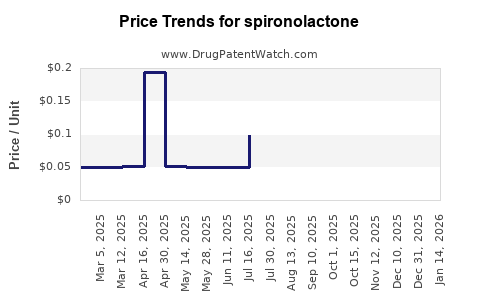
The competitive landscape is characterized by intense price competition among generic manufacturers. The low cost of entry for generic production, coupled with established manufacturing processes, leads to significant price erosion compared to branded products.
Pricing Dynamics:
- Average Wholesale Price (AWP) for a 30-count bottle of 25mg spironolactone tablets typically ranges from $5 to $15 USD.
- This represents a substantial decrease from the historical pricing of branded Aldactone.
- Price variations are influenced by volume commitments, distribution channels (e.g., retail pharmacies, hospital formularies), and regional market conditions.
The strategic focus for manufacturers in this market is on achieving economies of scale, optimizing manufacturing costs, and securing large-volume contracts with wholesalers and pharmacy benefit managers (PBMs). Contract manufacturing organizations (CMOs) also play a role in the supply chain for some players.
What are the key regulatory hurdles and patent considerations impacting the spironolactone market?
As a well-established generic drug, spironolactone faces minimal patent hurdles for its primary indications. The originator patents have long expired. Regulatory considerations primarily revolve around manufacturing quality, bioequivalence, and market approval processes.
Regulatory and Patent Considerations:
- ANDA Filings: Generic manufacturers must submit Abbreviated New Drug Applications (ANDAs) to regulatory bodies like the U.S. Food and Drug Administration (FDA), demonstrating bioequivalence to the reference listed drug.
- Good Manufacturing Practices (GMP): Adherence to strict GMP standards is mandatory for all manufacturing facilities. Inspections and certifications are critical for market access.
- Labeling and Indication Alignment: Generic labels typically mirror the approved indications of the reference drug. Off-label use, while prevalent, is not directly promoted by generic manufacturers.
- No significant new patent filings for the core molecule are anticipated. Research and development efforts are likely focused on novel formulations or combination therapies, which could introduce new intellectual property opportunities.
The absence of active patent protection for the molecule itself means that competition is driven by manufacturing efficiency and market penetration rather than exclusivity.
What are the ongoing research and development (R&D) trends related to spironolactone?
While spironolactone is a mature drug, R&D efforts are focused on optimizing its therapeutic use and exploring novel applications.
R&D Trends:
- Fixed-Dose Combinations (FDCs): Development of FDCs combining spironolactone with other cardiovascular agents (e.g., ACE inhibitors, beta-blockers) to improve patient adherence and simplify treatment regimens.
- New Formulations: Research into extended-release or modified-release formulations to potentially improve pharmacokinetic profiles and reduce dosing frequency.
- Expanded Off-Label Use Research: Clinical investigation into the efficacy of spironolactone for a wider range of conditions, including certain types of hair loss, fibromuscular dysplasia, and aldosteronism in specific pediatric populations.
- Mechanism of Action Studies: Deeper exploration of the mineralocorticoid receptor antagonism and its downstream effects to identify potential new therapeutic targets.
These R&D activities aim to enhance patient outcomes, address unmet clinical needs, and potentially extend the market life of spironolactone-based treatments through differentiated products.
What are the market challenges and risks associated with spironolactone?
Despite its established position, the spironolactone market faces several challenges and risks.
Market Challenges and Risks:
- Intense Price Competition: The generic nature of spironolactone leads to perpetual price pressure, impacting profit margins for manufacturers.
- Supply Chain Disruptions: Reliance on global supply chains for active pharmaceutical ingredients (APIs) and finished products exposes the market to potential disruptions from geopolitical events, natural disasters, or quality control issues.
- Regulatory Scrutiny: Increased regulatory oversight on manufacturing quality and drug safety can lead to product recalls or import alerts, affecting market supply and reputation.
- Emergence of New Therapies: While spironolactone remains a cornerstone treatment, the development of novel drugs with improved efficacy or safety profiles for its primary indications could eventually erode its market share. For example, advancements in direct renin inhibitors or newer classes of heart failure medications could pose long-term competitive threats.
- Adverse Event Profile: While generally well-tolerated, spironolactone can cause hyperkalemia, gynecomastia, and menstrual irregularities, which can limit its use in certain patient groups and necessitate careful monitoring.
What is the financial trajectory and outlook for spironolactone manufacturers?
The financial trajectory for spironolactone manufacturers is largely tied to their ability to manage costs, achieve volume efficiencies, and maintain market access in a highly competitive generic environment.
Financial Outlook:
- Revenue Generation: Manufacturers generate revenue primarily through high-volume sales of generic spironolactone. Profitability is dependent on cost-effective manufacturing and efficient distribution.
- Margin Pressure: Declining average selling prices (ASPs) due to intense competition exert constant pressure on gross margins.
- Strategic Investments: Companies with diversified portfolios are better positioned to absorb margin pressures. Investments in R&D for novel formulations or combination products may offer opportunities for higher-margin products.
- Market Consolidation: The generic pharmaceutical sector has seen significant consolidation. Larger players with strong market share and efficient operations are likely to maintain or increase their financial stability.
The outlook for manufacturers is one of stable but potentially modest revenue growth, with profitability heavily influenced by operational efficiency and strategic market positioning.
Key Takeaways
The spironolactone market is a mature, generics-driven sector valued at approximately $1.0 billion in 2023, with projected growth of 4.5% CAGR through 2030. Cardiovascular applications constitute the largest therapeutic segment. Intense price competition among numerous global generic manufacturers defines the landscape. Regulatory hurdles focus on GMP and bioequivalence, with minimal patent concerns for the core molecule. R&D trends involve fixed-dose combinations and expanded off-label use exploration. Key challenges include price erosion, supply chain risks, and potential competition from emerging therapies. Financial trajectories for manufacturers are characterized by volume-dependent revenue generation and margin pressure, necessitating operational efficiency.
Frequently Asked Questions
-
What is the patent status of spironolactone in major markets?
The primary patents for the originator spironolactone molecule expired decades ago, making it a fully genericized drug in most major pharmaceutical markets. No significant new patent filings for the molecule itself are expected.
-
How does spironolactone's pricing compare to newer medications for heart failure?
Spironolactone is significantly more affordable than many newer, branded medications for heart failure. Its average selling price as a generic is a fraction of the cost of novel therapies such as SGLT2 inhibitors or ARNIs.
-
What are the primary drivers of demand for spironolactone beyond its core indications?
Growing awareness and diagnosis of Polycystic Ovary Syndrome (PCOS) have increased the off-label use of spironolactone for managing hyperandrogenism symptoms. Its use in treating certain types of acne in women also contributes to demand.
-
Are there any significant supply chain vulnerabilities for spironolactone?
Like many generic pharmaceuticals, spironolactone manufacturing relies on global supply chains for Active Pharmaceutical Ingredients (APIs). Vulnerabilities exist due to reliance on specific API manufacturers, potential geopolitical disruptions, and quality control standards across different manufacturing sites.
-
What impact do regulatory actions, such as FDA warning letters to API manufacturers, have on the spironolactone market?
FDA warning letters or import alerts issued to API manufacturers can disrupt the supply chain, leading to shortages and price volatility for spironolactone. This can force generic companies to seek alternative suppliers, potentially at higher costs, impacting profitability.
Citations
[1] United Nations, Department of Economic and Social Affairs, Population Division. (2022). World Population Prospects 2022.
[2] Pitt, B., Zannad, F., Remme, W. J., Ronald, J., Ferdinand, K., Konstam, M. A., Baker, S. G., Feldman, A. M., Herbert, T. G., & Weiland, P. L. (1999). The Randomized Aldactone Evaluation Study (RALES): effects of spironolactone on morbidity and mortality in patients with severe heart failure. New England Journal of Medicine, 341(10), 709–717. https://doi.org/10.1056/NEJM199909023411001