Last updated: September 1, 2026
Oxybutynin is a mature, largely generic antimuscarinic used to treat overactive bladder, urinary urgency, and urge incontinence. Its financial profile has shifted from branded pharmaceutical growth to low-cost, high-volume generic sales. Immediate-release tablets face intense price competition, while extended-release, transdermal, and topical products retain modest differentiation through pharmacokinetics, tolerability, and route of administration.
No major U.S. patent or regulatory exclusivity barrier protects the core oxybutynin market as of June 2024. Commercial performance depends primarily on generic manufacturing costs, pharmacy access, payer formularies, product shortages, and competition from newer agents such as mirabegron, vibegron, and selective antimuscarinics.
What is oxybutynin and how is it used?
Oxybutynin chloride is an anticholinergic drug that relaxes detrusor smooth muscle by inhibiting muscarinic receptors. It is approved for symptoms associated with overactive bladder, including urinary frequency, urgency, and urge incontinence.
The principal dosage forms are:
| Product type |
Typical dosage form |
Commercial position |
| Immediate release |
5 mg tablets and syrup |
Low-cost generic market |
| Extended release |
5, 10, and 15 mg tablets |
Generic and branded competition |
| Transdermal |
Patches |
Differentiated route, limited market |
| Topical gel |
10% gel |
Small specialty segment |
| Oral solution |
Liquid formulations |
Pediatric and selected adult use |
The immediate-release form has the lowest manufacturing and regulatory barriers. Extended-release products require more complex formulation and bioequivalence work. Transdermal and topical products face additional device, adhesive, delivery, stability, and manufacturing requirements.
The U.S. Food and Drug Administration approved immediate-release Ditropan in the 1970s. Ditropan XL, an extended-release formulation, was later approved using controlled-release technology. Oxytrol became the first prescription-to-over-the-counter overactive bladder treatment approved by the FDA in the United States, with the OTC indication limited primarily to women aged 18 and older who meet label criteria. [1][2]
How large is the oxybutynin market?
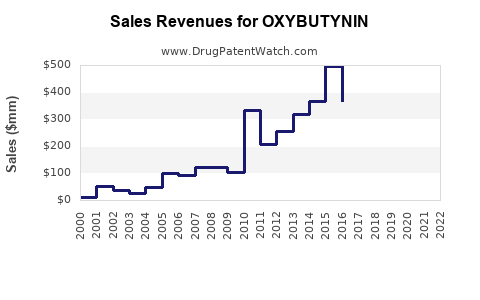
The global oxybutynin market is mature and fragmented. Public companies generally do not report oxybutynin revenue as a separate line item, so precise product-level revenue estimates are not available from audited filings.
The economic structure is clear:
- Branded prescription revenue has contracted following generic entry.
- Immediate-release tablets are exposed to multi-source generic pricing.
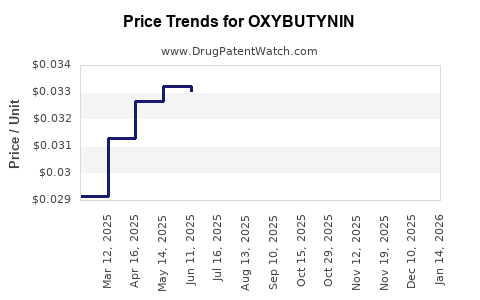
- Extended-release tablets command a higher unit price but remain subject to generic substitution.
- Transdermal and topical products have greater unit economics but smaller patient populations.
- OTC sales provide consumer access but also increase exposure to retailer margins, advertising costs, and self-selection limits.
Janssen and Johnson & Johnson do not separately disclose current Ditropan or Ditropan XL revenue in public financial reporting. The lack of standalone reporting indicates that oxybutynin is not material to the consolidated revenue base of the original branded owner. Generic manufacturers also usually aggregate oxybutynin within broader prescription portfolios. [3]
What drives oxybutynin demand?
Demand is supported by:
- The high prevalence of overactive bladder.
- Low generic prices.
- Broad physician familiarity.
- Multiple dosage forms.
- Use in patients who cannot access or afford newer branded therapies.
Demand is constrained by:
- Dry mouth and constipation.
- Cognitive and central nervous system adverse effects.
- Poor persistence with oral anticholinergic therapy.
- Anticholinergic burden concerns in older adults.
- Competition from beta-3 adrenergic agonists.
- Generic substitution that reduces manufacturer revenue per prescription.
The product remains clinically relevant because it is inexpensive and available in several formulations. Its clinical share is under pressure where physicians prioritize tolerability and persistence over acquisition cost.
When did oxybutynin lose patent and regulatory exclusivity?
The core oxybutynin molecule is long off patent. The commercial protection period ended through a combination of early composition-of-matter expiration, formulation patent expiration, and generic approvals.
| Asset |
Originator |
FDA status |
Exclusivity position |
| Ditropan immediate release |
Alza/Janssen lineage |
Approved prescription product |
Core exclusivity expired |
| Ditropan XL |
Alza/Janssen lineage |
Approved extended-release product |
Generic competition established |
| Oxytrol prescription patch |
Novartis and successor commercial arrangements |
Prescription product |
No current core patent barrier |
| Oxytrol OTC patch |
Consumer-health commercialization |
OTC product |
OTC switch exclusivity expired |
| Generic oxybutynin |
Multiple manufacturers |
ANDA products |
Established multi-source market |
The principal historical patent value was concentrated in extended-release delivery technology rather than the oxybutynin molecule itself. U.S. patents associated with controlled-release oxybutynin products, including patents such as U.S. Patent No. 5,532,276, have expired or no longer create a meaningful market-wide barrier to generic entry. Current commercial protection is therefore based on manufacturing capability, regulatory approvals, supply reliability, and brand recognition rather than patent exclusivity.
FDA Orange Book listings remain relevant for product-specific patent and exclusivity analysis, but an Orange Book listing does not by itself prevent generic entry after expiration or settlement of the listed rights. [4]
What patents protect oxybutynin formulations?
The historical patent estate focused on three technical areas:
Extended-release oral formulations
Ditropan XL used controlled-release technology to deliver oxybutynin over an extended period. The commercial objective was to reduce dosing frequency and potentially improve tolerability relative to immediate-release tablets.
Formulation patents generally covered:
- Drug-containing matrices or osmotic delivery systems.
- Controlled release over a defined period.
- Tablet construction and excipient combinations.
- Release profiles that support once-daily dosing.
These patents created a meaningful delay to generic entry during the branded period. Their value declined sharply after expiration because generic manufacturers could develop equivalent extended-release products through ANDA pathways.
Transdermal delivery
Oxytrol patches and related products use transdermal delivery to bypass first-pass metabolism. The route can reduce peak-related adverse effects and provides an alternative for patients who cannot tolerate or do not prefer oral therapy.
Transdermal protection historically involved:
- Adhesive composition.
- Drug reservoir or matrix design.
- Flux control.
- Patch dimensions and release rate.
- Skin delivery performance.
The device and formulation requirements raise development costs, but they do not create a durable monopoly after relevant patents expire.
Topical gel formulations
Gelnique and generic oxybutynin gel products rely on skin permeation technology. The principal technical issues include:
- Consistent drug delivery through the skin.
- Absorption variability.
- Gel stability.
- Packaging and metered dosing.
- Human-factor considerations.
Topical products remain more difficult to manufacture than standard tablets. That difficulty can support higher prices, but it is a manufacturing and regulatory barrier rather than a broad patent-based exclusivity position.
How strong is the current oxybutynin patent estate?
The current patent estate is weak from a market-exclusion perspective.
| Patent-strength factor |
Assessment |
| Core molecule |
Expired |
| Immediate-release tablets |
Minimal patent protection |
| Extended-release tablets |
Historical patents expired; generics established |
| Transdermal patch |
Limited remaining exclusionary value |
| Topical gel |
Formulation and manufacturing complexity remain |
| Method-of-use patents |
Limited commercial impact |
| Orange Book blocking rights |
No known market-wide barrier as of June 2024 |
| Biosimilar protection |
Not applicable |
The strongest remaining competitive protections are non-patent factors:
- FDA-approved product-specific labeling.
- Demonstrated bioequivalence or comparative performance.
- Specialized transdermal manufacturing.
- Reliable supply of patches, gels, and extended-release tablets.
- Pharmacy and wholesaler relationships.
- Brand recognition for OTC Oxytrol.
Which companies are challenging oxybutynin products?
Oxybutynin is challenged by a broad group of generic manufacturers rather than by a single high-profile entrant. U.S. generic availability has included products from manufacturers such as Teva, Mylan/Viatris, Sandoz, Dr. Reddy's Laboratories, Lupin, Sun Pharma, Apotex, Zydus, and other ANDA sponsors, depending on dosage form and market period.
The competitive field differs by formulation:
| Segment |
Competitive intensity |
Primary barrier |
| Immediate-release tablet |
Very high |
Low-cost production |
| Oral solution |
Moderate |
Liquid manufacturing and demand scale |
| Extended-release tablet |
High |
Controlled-release formulation and bioequivalence |
| Transdermal patch |
Moderate |
Adhesive, coating, and delivery technology |
| Topical gel |
Lower than tablets |
Formulation, packaging, and supply scale |
| OTC patch |
Brand and retail driven |
Consumer awareness and shelf access |
What is the FDA regulatory status of oxybutynin?
Oxybutynin remains an FDA-approved prescription and OTC drug, depending on the formulation and indication.
The regulatory pathways include:
- New Drug Applications for original branded products.
- Abbreviated New Drug Applications for generic tablets, liquids, gels, and patches.
- OTC monograph or approved-switch frameworks for consumer products where applicable.
- Product-specific bioequivalence standards for modified-release formulations.
- Device-related manufacturing controls for transdermal systems.
Oxytrol's OTC switch expanded consumer access but did not materially restore the economics of the prescription brand. OTC commercialization shifts value toward retail distribution, packaging, consumer marketing, and pharmacy placement.
Are there Paragraph IV challenges for oxybutynin?
Paragraph IV litigation was most relevant when generic manufacturers sought approval for extended-release, transdermal, or other differentiated products before expiration of listed formulation patents.
Today, Paragraph IV risk is limited because:
- Core patents have expired.
- Generic oxybutynin products are already widely marketed.
- The commercial upside from challenging a remaining formulation patent is smaller than it was during the original branded period.
- Any remaining dispute would likely be product-specific rather than market-wide.
The primary legal risks now involve product liability, labeling, manufacturing quality, supply interruption, and potential patent disputes over a reformulated or improved delivery system. A new long-acting formulation could create fresh patent exposure, but legacy oxybutynin does not present a significant broad-based Paragraph IV barrier.
What patent litigation affects oxybutynin?
Historical litigation centered on generic attempts to enter the Ditropan XL market before expiry of controlled-release patents. These disputes affected the timing of generic launches and the duration of branded pricing power.
As of June 2024, oxybutynin does not have a major active U.S. patent litigation profile comparable with high-value branded drugs. The litigation risk is more likely to arise from:
- A new drug-delivery system.
- A patent covering a specific patch or gel architecture.
- ANDA certification against a still-listed formulation patent.
- Manufacturing-process claims.
- Product-specific exclusivity disputes.
No current litigation trend indicates a material threat to the established generic market.
What generic launch scenarios exist for oxybutynin?
Immediate-release tablets
The market is fully genericized. New entrants face low clinical risk but substantial price competition. A new manufacturer needs scale, efficient procurement, and reliable quality performance.
Extended-release tablets
The market offers greater unit value than immediate-release tablets, but development requires more complex bioequivalence work. Generic substitution is established, limiting the probability of sustained premium pricing.
Transdermal patches
This is the most defensible commercial segment because production is technically harder and fewer manufacturers may participate. A successful entrant can obtain a stronger position through reliable supply and retailer access. The addressable market is smaller than for tablets.
Topical gel
Gel products occupy a niche position. Manufacturing and packaging complexity can reduce the number of competitors, but demand remains constrained by physician prescribing patterns and patient preference.
How does oxybutynin compare with newer overactive bladder drugs?
| Drug class |
Examples |
Main advantage |
Main commercial disadvantage |
| Antimuscarinic |
Oxybutynin, tolterodine, solifenacin |
Low cost and long clinical history |
Anticholinergic adverse effects |
| Beta-3 agonist |
Mirabegron, vibegron |
Lower anticholinergic burden |
Higher branded or protected pricing |
| Selective antimuscarinic |
Darifenacin, fesoterodine |
Receptor and formulation differentiation |
Still exposed to class-related effects |
| Non-drug therapy |
Behavioral treatment, pelvic-floor therapy |
Avoids systemic drug exposure |
Adherence and access limitations |
Oxybutynin's main advantage is price. Its main disadvantage is tolerability. Newer drugs can capture patients willing to pay for better tolerability, while oxybutynin remains relevant in cost-sensitive formularies and step-therapy protocols.
Mirabegron and vibegron have stronger current commercial positioning in patients who are poor candidates for anticholinergics. Their market access depends on payer restrictions, pricing, and patent or regulatory exclusivity. Oxybutynin remains a low-cost comparator and often an earlier-line or prerequisite therapy.
What licensing deals affect oxybutynin?
Oxybutynin's commercial history includes branded development and commercialization arrangements involving Alza, Janssen, Novartis, and later consumer-health and generic companies. The economically important period was the development and commercialization of extended-release and transdermal products.
No recent licensing transaction is known to have changed the structure of the global oxybutynin market through June 2024. The market is now driven by generic approvals, product transfers, contract manufacturing, and distribution agreements rather than originator-led licensing.
What is the revenue exposure for manufacturers?
Oxybutynin creates limited revenue exposure for diversified pharmaceutical companies because it is generally reported within broad product portfolios.
Revenue risk differs by manufacturer:
- Generic tablet manufacturers face price erosion and low margins.
- Patch and gel manufacturers face lower volume but higher per-unit manufacturing costs.
- OTC marketers face retail competition, consumer advertising costs, and seasonal purchasing patterns.
- Contract manufacturers face customer concentration and supply-quality obligations.
- Branded innovators have minimal direct exposure unless they own a differentiated reformulation.
A manufacturer with a large oxybutynin portfolio is more exposed to FDA inspection findings, recalls, shortages, and wholesaler pricing pressure than to patent loss. The key financial variable is contribution margin per prescription, not market exclusivity.
What manufacturing and intellectual-property barriers remain?
The largest barriers are formulation-specific.
For tablets, barriers are limited to:
- Validated active pharmaceutical ingredient supply.
- Consistent content uniformity.
- Modified-release dissolution performance.
- Bioequivalence compliance.
- Scale economics.
For patches and gels, barriers include:
- Drug loading and uniformity.
- Adhesive performance.
- Skin permeation.
- Packaging integrity.
- Temperature and humidity stability.
- Manufacturing yield.
- Human-use and application instructions.
These barriers can reduce the number of active suppliers. They do not support the level of pricing power historically associated with a protected branded product.
What geographic coverage does oxybutynin have?
Oxybutynin is marketed in multiple regions, including the United States, Europe, Canada, Latin America, and parts of Asia-Pacific. Regulatory status and product mix vary significantly by country.
The United States has the broadest commercial segmentation, with prescription tablets, extended-release products, topical products, and an OTC patch. European markets generally rely more heavily on prescription products and national reimbursement decisions. Emerging markets may favor immediate-release tablets because of lower acquisition cost and simpler distribution.
Geographic growth is limited by the maturity of the molecule. Expansion opportunities are more likely to involve:
- Local generic registration.
- Pediatric liquids.
- Transdermal products.
- Combination products.
- Contract-manufactured regional brands.
What is the outlook for oxybutynin's financial trajectory?
The financial trajectory is structurally flat to declining for branded products and stable to modestly growing in selected generic or differentiated channels.
| Period |
Financial direction |
Main driver |
| Original branded period |
Growth |
New indication and formulation development |
| Generic-entry period |
Sharp decline in branded revenue |
ANDA approvals and substitution |
| Mature generic period |
Stable volume, lower pricing |
High supplier count |
| Current differentiated period |
Niche value in patches and gels |
Manufacturing complexity and route preference |
The most likely commercial outcome is continued generic commoditization, with selective resilience in extended-release, transdermal, topical, and OTC channels. A meaningful increase in total market value would require a new delivery technology, combination product, or clinical positioning that improves tolerability while avoiding the pricing pressure affecting standard tablets.
Key Takeaways
- Oxybutynin is a mature, genericized overactive-bladder drug.
- Core molecule and historical formulation patents no longer create a broad U.S. market barrier.
- Immediate-release tablets are highly commoditized.
- Extended-release, transdermal, and gel products retain higher technical barriers but limited market size.
- Oxytrol's OTC switch expanded access without restoring the economics of the original prescription brand.
- Anticholinergic tolerability concerns support competition from mirabegron, vibegron, and newer selective agents.
- Current commercial risk centers on price erosion, supply reliability, manufacturing quality, and payer positioning.
- No biosimilar risk applies because oxybutynin is a small-molecule drug.
- Product-level revenue is not separately disclosed by major originator companies.
- Future value is most likely to come from differentiated delivery systems rather than legacy oxybutynin tablets.
FAQs
Is oxybutynin still commercially profitable for generic manufacturers?
Yes, but profitability depends on formulation. Immediate-release tablets are low-margin and volume dependent. Patches and gels can provide better unit economics but require more specialized manufacturing and face smaller demand.
Can a new company obtain market exclusivity for an oxybutynin reformulation?
Potentially. A genuinely novel delivery system, combination product, or clinically differentiated formulation could receive patents and, if applicable, FDA regulatory exclusivity. The protection would apply to the new product rather than to oxybutynin generally.
Why do physicians still prescribe oxybutynin despite newer alternatives?
Low cost, broad availability, long clinical experience, and formulary positioning keep oxybutynin in use. It may also be selected when newer products are inaccessible or require prior authorization.
Does oxybutynin have pediatric commercial potential?
Pediatric use can support demand for oral solutions and selected compounded or age-appropriate products. The opportunity is limited by population size, safety considerations, and competition from non-drug treatment.
Could oxybutynin shortages materially change market pricing?
Yes. A shortage among major tablet, patch, or liquid suppliers can temporarily increase prices and shift volume to alternative manufacturers. Sustained pricing power would require a constrained supply base, particularly for transdermal or topical products.
References
- U.S. Food and Drug Administration. (2013). FDA approves first over-the-counter treatment for overactive bladder. https://www.fda.gov
- U.S. Food and Drug Administration. (2023). Ditropan XL prescribing information. https://www.accessdata.fda.gov
- Johnson & Johnson. (2024). 2023 annual report. https://www.jnj.com
- U.S. Food and Drug Administration. (2024). Approved drug products with therapeutic equivalence evaluations: Orange Book. https://www.accessdata.fda.gov