Last updated: August 9, 2026
Naproxen is a mature, off-patent nonsteroidal anti-inflammatory drug (NSAID) with low manufacturing costs, broad generic availability, and durable over-the-counter (OTC) demand. Its financial trajectory is defined by volume stability rather than pharmaceutical-style pricing power. Prescription revenue has largely migrated to generic manufacturers, while Bayer’s Aleve and other consumer brands retain value through distribution, brand recognition, and formulation convenience. No biosimilar risk exists because naproxen is a chemically synthesized small molecule.
Naproxen Market Dynamics and Financial Trajectory
What is the current market position of naproxen?
Naproxen is a widely used NSAID indicated for pain and inflammation associated with osteoarthritis, rheumatoid arthritis, ankylosing spondylitis, tendinitis, bursitis, acute gout, dysmenorrhea, and other conditions. It is marketed as naproxen and naproxen sodium in prescription and OTC forms.
The commercial market has four main segments:
| Segment |
Typical products |
Commercial position |
| Prescription immediate-release |
Naprosyn, generic naproxen |
Highly commoditized |
| Prescription naproxen sodium |
Anaprox, generic naproxen sodium |
Generic-dominated |
| Prescription delayed-release |
Naprelan and generic equivalents |
Smaller, formulation-driven niche |
| OTC analgesics |
Aleve, store brands, private-label products |
Brand and retail-distribution driven |
Naproxen competes with ibuprofen, aspirin, diclofenac, celecoxib, meloxicam, acetaminophen and topical NSAIDs. Its principal commercial advantages are long duration of action, established clinical familiarity, broad indications and relatively low cost. Its principal limitations are NSAID class risks, including gastrointestinal bleeding, cardiovascular events and renal toxicity. The FDA requires prescription NSAID labeling to carry boxed warnings for serious cardiovascular and gastrointestinal risks (U.S. Food and Drug Administration, 2015).
When did naproxen lose patent exclusivity?
Naproxen lost meaningful compound-level exclusivity decades ago. The original U.S. patent covering naproxen chemistry and related compounds expired in the early 1990s, allowing broad generic entry. The prescription market has therefore operated for many years without meaningful compound-patent protection.
Naproxen exclusivity timeline
| Date or period |
Event |
Market effect |
| 1970s |
FDA approval of prescription naproxen products |
Originator market established |
| 1980s |
Expansion of naproxen sodium and extended-release products |
Broader dosing and formulation options |
| Early 1990s |
Expiration of core compound protection |
Generic entry and rapid price erosion |
| 1994 |
OTC Aleve launch in the United States |
Consumer market expanded materially |
| 2000s onward |
Growth of store-brand and generic OTC products |
Retail price competition intensified |
| Current market |
No meaningful compound exclusivity |
Revenue depends on brand, scale and distribution |
The FDA approved Naprosyn in 1976 for Syntex, according to historical FDA approval records and product labeling. Naproxen sodium products followed as separate dosage-form and salt presentations. OTC commercialization later shifted the economics toward consumer healthcare rather than prescription specialty pharmaceuticals (U.S. Food and Drug Administration, 1976).
What patents protect naproxen products today?
No active U.S. compound patent materially protects ordinary naproxen or naproxen sodium products. The relevant intellectual-property position is limited mainly to formulation, manufacturing, packaging or device claims, where applicable.
Potentially relevant patent categories include:
- Delayed-release and extended-release tablets
- Controlled dissolution profiles
- Combination products
- Taste-masked liquid formulations
- Unit-dose packaging and delivery systems
- Manufacturing processes and impurity controls
- Specific salt, crystal or particle-size forms
These rights generally have narrower commercial scope than a composition-of-matter patent. A generic manufacturer can often compete with a noninfringing immediate-release formulation even if a separate extended-release product retains formulation claims.
The Orange Book remains the primary U.S. source for patents and regulatory exclusivity associated with approved prescription products. Current competitive analysis should distinguish patents listed for a specific NDA from patents covering naproxen as a chemical entity. The absence of meaningful compound protection is the central fact governing the market (U.S. Food and Drug Administration, 2024a).
What is the Orange Book status of naproxen?
Naproxen and naproxen sodium prescription products have long been available through abbreviated new drug applications (ANDAs). The Orange Book lists approved products by strength, dosage form, route and reference product.
The commercial implications are:
- Multiple ANDA holders can compete in the same strength and dosage form.
- Standard immediate-release tablets face intense price pressure.
- Delayed-release and extended-release products may have fewer suppliers.
- Brand products can remain commercially relevant despite generic substitution when sold OTC.
- Orange Book patent listings do not create a meaningful barrier for ordinary naproxen tablets.
Naproxen is not a biologic and does not use the biosimilar pathway. Competition occurs through the Hatch-Waxman generic pathway, not through the Biologics Price Competition and Innovation Act.
Which companies sell naproxen and challenge the market leader?
The market is fragmented. Participants include branded consumer-health companies, generic pharmaceutical manufacturers, wholesalers, pharmacy chains and retailers.
Key commercial participants
| Company or group |
Role |
| Bayer |
Owner and marketer of Aleve in major consumer markets |
| Teva |
Generic prescription and OTC naproxen supplier in selected markets |
| Viatris |
Generic NSAID supplier through legacy Mylan operations |
| Sandoz |
Generic naproxen supplier in international markets |
| Perrigo |
Private-label and store-brand OTC manufacturer |
| CVS, Walgreens, Walmart and supermarkets |
Retail and private-label distribution |
| Regional generic companies |
Country-specific prescription supply |
Aleve is the most visible U.S. consumer brand. Its competitive position depends on national retail placement, advertising, pharmacy recommendation, package-size economics and consumer trust. Store brands typically compete on price and can achieve substantial shelf presence because naproxen is familiar and easy to substitute.
Bayer does not generally report Aleve revenue as a separate global line item. It reports broader Consumer Health categories, making product-level revenue and margin analysis difficult from public company filings. Generic manufacturers also rarely disclose naproxen revenue separately because the product is usually included within broader pain, inflammation or established pharmaceutical portfolios (Bayer AG, 2023).
How does naproxen compare with ibuprofen and other NSAIDs?
Naproxen has a longer duration of action than standard immediate-release ibuprofen, which supports twice-daily consumer dosing in common OTC use. Ibuprofen often has stronger retail volume because of extensive pediatric use, multiple dosage forms and broad international penetration.
| Attribute |
Naproxen |
Ibuprofen |
Celecoxib |
Acetaminophen |
| Drug class |
NSAID |
NSAID |
COX-2 selective NSAID |
Non-NSAID analgesic |
| Typical OTC dosing frequency |
Often twice daily |
Often every 4-6 hours |
Prescription |
Often every 4-6 hours |
| Generic availability |
Extensive |
Extensive |
Extensive, but prescription-led |
Extensive |
| OTC brand strength |
Aleve |
Advil, Motrin |
Limited OTC presence |
Tylenol |
| GI risk |
Present |
Present |
Present, with different profile |
Lower GI effect |
| Cardiovascular warning |
Present |
Present |
Present |
Different safety profile |
| Main commercial driver |
Duration and brand |
Volume and broad use |
Prescription positioning |
Familiarity and perceived tolerability |
Naproxen’s longer action supports a differentiated consumer proposition, but this advantage does not create durable pricing power. Generic and private-label products can offer the same active ingredient, strength and dosage form.
How strong is the naproxen patent estate?
The patent estate is weak for the active ingredient and conventional tablets, but stronger in relative terms for differentiated formulations.
Patent strength by product type
| Product type |
Patent strength |
Generic-entry exposure |
| Standard naproxen tablet |
Very low |
Immediate and broad |
| Standard naproxen sodium tablet |
Very low |
Immediate and broad |
| Delayed-release tablet |
Low to moderate |
Depends on formulation claims |
| Extended-release tablet |
Moderate in narrow niches |
Possible design-around risk |
| Combination product |
Product-specific |
Depends on combination and claims |
| OTC branded package |
No meaningful patent barrier |
High private-label exposure |
| Manufacturing process |
Limited commercial leverage |
Alternative processes often available |
Formulation patents can delay or complicate competition only when they cover a commercially important product and withstand validity and infringement challenges. They do not restore exclusivity to naproxen generally.
What generic entry risks exist for naproxen?
Generic entry risk is already realized rather than prospective. Immediate-release prescription naproxen has experienced decades of generic competition. The principal remaining risks affect branded OTC sales and niche formulations.
Current generic and private-label risks
- Retailers can replace branded naproxen with store brands.
- Generic manufacturers can bid aggressively for pharmacy contracts.
- Wholesaler consolidation increases purchasing leverage.
- Supply disruptions can shift share quickly among manufacturers.
- New extended-release ANDAs can erode niche formulation margins.
- OTC shoppers can trade down when inflation increases household budgets.
- E-commerce increases price transparency.
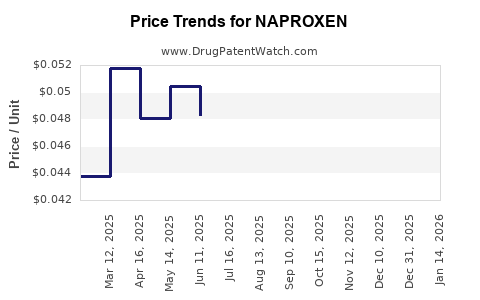
The main constraint on further price erosion is supply concentration. If only a small number of approved manufacturers produce a particular strength or dosage form, temporary shortages can support pricing. That effect is operational, not patent-based.
What is the FDA regulatory status of naproxen?
Naproxen is FDA-approved as a prescription NSAID and is also available in OTC products under the FDA’s OTC monograph framework for internal analgesics. The regulatory status is mature, with established safety labeling, dosage standards and post-market surveillance.
Important regulatory issues include:
- Cardiovascular thrombotic events
- Gastrointestinal bleeding and ulceration
- Renal impairment
- Hypertension and fluid retention
- Drug interactions with anticoagulants, antiplatelet agents and corticosteroids
- Pregnancy-related restrictions, particularly after 20 weeks and late in pregnancy
- Pediatric dosing for approved formulations and indications
The FDA required stronger class-wide NSAID cardiovascular warnings after evidence showed that risk could occur early in treatment and may increase with dose and duration. These warnings affect all manufacturers and reduce the ability of any company to position naproxen as a risk-free alternative (U.S. Food and Drug Administration, 2015).
What patent litigation and Paragraph IV challenges affect naproxen?
Naproxen does not have a current litigation profile comparable with active-patent branded drugs. Core compound protection expired long ago, and ordinary generic products are not dependent on a current Paragraph IV campaign against a commercially important originator patent.
Paragraph IV exposure may still arise for specific delayed-release, extended-release or combination products. In those cases, an ANDA applicant can challenge listed patents by asserting that they are invalid, unenforceable or not infringed. The economic stakes are limited compared with high-value specialty drugs because naproxen products generally have low selling prices and many substitutes.
There is no broad biosimilar litigation risk. The relevant legal risks are formulation patent disputes, manufacturing claims, trademark issues and product-liability litigation.
What licensing deals have shaped the naproxen market?
Naproxen’s commercial history has been shaped more by corporate ownership and brand distribution than by recent high-value licensing transactions.
Syntex originated the prescription product and was acquired by Roche in 1994. The Aleve brand subsequently became part of Bayer’s consumer-health portfolio. The product-level financial terms of historical brand transfers and regional rights arrangements are not generally disclosed in a way that permits reliable naproxen-specific valuation.
Current licensing economics are modest compared with patented medicines. Potential arrangements may involve:
- Regional OTC brand rights
- Contract manufacturing
- Private-label supply
- Distribution agreements
- Formulation technology
- Co-branded retail products
The most valuable asset is usually the Aleve trademark and retail channel access, not the underlying naproxen molecule.
What is the financial trajectory for naproxen?
Naproxen’s financial trajectory follows a four-stage pattern.
1. Originator growth
During the prescription exclusivity period, Syntex and successor companies captured branded pricing and physician demand. Revenue was supported by patent protection and the expansion of approved indications.
2. Generic erosion
After core patent expiry, generic substitution reduced prescription prices and transferred value from the originator to manufacturers with low-cost production and reliable supply. Prescription naproxen became a volume product.
3. OTC expansion
Aleve created a second commercial lifecycle by moving naproxen into consumer self-care. OTC status increased household penetration and reduced dependence on physician prescribing. The value proposition shifted from patent exclusivity to brand recognition, retail availability and dosing convenience.
4. Mature portfolio stability
The current market is mature. Revenue is likely to be relatively resilient in unit terms because pain and inflammation are recurring consumer needs, but net pricing is constrained by private-label competition, retailer bargaining power and generic substitution. Growth is more likely to come from geographic expansion, package architecture, combination products and distribution than from price increases.
Financial profile by channel
| Channel |
Revenue growth |
Margin profile |
Main risk |
| Branded prescription |
Low |
Historically high, now limited |
Generic substitution |
| Generic prescription |
Low to moderate volume growth |
Low per-unit margin |
Price competition and supply costs |
| Branded OTC |
Stable to moderate |
Higher than generic |
Private label and advertising costs |
| Private-label OTC |
Volume-driven |
Low to moderate |
Retailer concentration |
| Specialty formulations |
Potentially higher |
Depends on exclusivity |
Formulation competition |
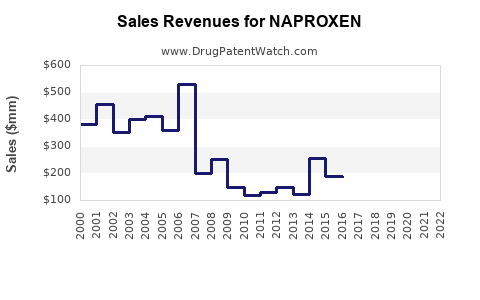
Public disclosures do not support a precise global naproxen revenue figure because sales are spread across Bayer’s Aleve business, generic companies, private-label manufacturers and multiple geographic markets. Market-research estimates also vary materially depending on whether they include OTC products, prescription products, naproxen sodium, combination products and regional sales.
What geographic markets offer the strongest commercial opportunity?
The United States remains the most important branded OTC market because Aleve has high consumer recognition and broad pharmacy distribution. Europe and other developed markets have established naproxen use but more fragmented brand structures, reimbursement systems and OTC rules.
Emerging markets can generate unit growth, but pricing is generally lower and local manufacturers are strong. Geographic opportunity therefore depends on:
- OTC regulatory classification
- Local trademark ownership
- Pharmacy distribution
- Government reimbursement
- Domestic manufacturing requirements
- Tender pricing
- Consumer purchasing power
Patent barriers are minimal in most jurisdictions. Regulatory registration, quality compliance, supply reliability and distribution are more important than exclusivity.
What manufacturing and intellectual-property barriers affect naproxen?
Manufacturing naproxen is technically established, but commercial supply requires compliance with current good manufacturing practices, impurity controls, validated processes and reliable sourcing of active pharmaceutical ingredient. The main operational barriers are:
- API supply concentration
- Cost of environmental and quality compliance
- Stability requirements
- Product serialization and packaging rules
- Retailer qualification
- Recalls and shortage management
- Regional regulatory registrations
These barriers can protect incumbent suppliers temporarily through scale and reliability. They do not create durable monopoly pricing.
What generic launch scenarios are most likely?
For standard naproxen, the launch scenario has already occurred: multiple generic suppliers compete at low prices. For a differentiated product, three scenarios are more relevant.
| Scenario |
Likely outcome |
| New immediate-release generic |
Rapid price erosion and substitution |
| New delayed-release or extended-release generic |
Slower entry, temporary margin opportunity |
| OTC private-label launch |
Retailer-led share transfer from branded products |
A branded OTC product can defend share through advertising, package innovation and retailer relationships, but it cannot rely on compound-patent protection. A generic manufacturer can achieve acceptable returns through scale, automated production and multi-product distribution.
How does naproxen compare with newer pain medicines?
Naproxen has lower commercial growth potential than patented analgesics, targeted anti-inflammatory therapies and novel delivery systems. It has a major cost advantage and an extensive safety history, but limited ability to generate premium pricing.
Newer products may offer improved tolerability, targeted delivery or reduced systemic exposure. Their commercial challenge is proving sufficient benefit over a familiar, inexpensive generic. Naproxen remains difficult to displace in routine pain management because its clinical utility is broad and its price is low.
Key Takeaways
- Naproxen is fully mature and largely off-patent.
- Prescription revenue is generic-dominated and highly price competitive.
- Aleve is the primary branded OTC asset, but Bayer does not separately disclose its revenue.
- The commercial value lies in brand, distribution, supply reliability and formulation execution.
- Standard naproxen products have negligible patent strength.
- Delayed-release, extended-release and combination products may have narrower formulation protection.
- There is no biosimilar pathway or biosimilar risk.
- Paragraph IV challenges are relevant mainly to specific formulation products, not ordinary naproxen.
- FDA safety warnings constrain marketing claims and apply across the NSAID class.
- Long-term financial performance is likely to be stable in volume but modest in revenue growth, with continuing price pressure.
FAQs About Naproxen Market Economics
Is naproxen still profitable for pharmaceutical companies?
Yes, but profitability depends on the channel. Generic manufacturers can earn returns through scale and efficient production. Branded OTC companies can achieve stronger margins through trademark value, retail placement and consumer advertising.
Does Aleve have active patent protection?
Aleve’s commercial position is primarily trademark- and brand-based. The underlying naproxen molecule is off-patent, and generic or store-brand substitutes are widely available.
Can a company obtain new exclusivity for naproxen?
A company may obtain limited protection for a new formulation, combination, manufacturing process or delivery system. That protection would not cover ordinary naproxen tablets broadly.
Is naproxen subject to FDA generic substitution?
Yes. Approved generic naproxen and naproxen sodium products can be substituted under applicable state pharmacy laws and payer policies. Substitution is a major reason prescription prices remain low.
What would most improve naproxen revenue?
The strongest opportunities are branded OTC expansion, regional distribution, differentiated extended-release formulations, combination products and reliable private-label supply. A new indication alone would be difficult to monetize without meaningful differentiation or regulatory exclusivity.
References
Bayer AG. (2023). Annual report 2023. Bayer AG.
U.S. Food and Drug Administration. (1976). Naproxen: Approval history and prescribing information for Naprosyn. U.S. Department of Health and Human Services.
U.S. Food and Drug Administration. (2015). FDA strengthens warning that non-aspirin nonsteroidal anti-inflammatory drugs increase chance of heart attack or stroke. U.S. Department of Health and Human Services.
U.S. Food and Drug Administration. (2024a). Approved drug products with therapeutic equivalence evaluations: Orange Book. U.S. Department of Health and Human Services.