Last Updated: May 10, 2026

IBUPROFEN Drug Patent Profile


✉ Email this page to a colleague

« Back to Dashboard


AI Deep Research
Questions you can ask:
  • What is the 5 year forecast for IBUPROFEN?
  • What are the global sales for IBUPROFEN?
  • What is Average Wholesale Price for IBUPROFEN?
Paragraph IV (Patent) Challenges for IBUPROFEN
Tradename Dosage Ingredient Strength NDA ANDAs Submitted Submissiondate
MOTRIN Intravenous ibuprofen 1000 mg/50 mL 2000 mg/100 mL 020418 2 2025-08-26
PEDIATRIC ADVIL Oral Suspension ibuprofen 50 mg/1.25 mL 020812 1 2007-06-29

US Patents and Regulatory Information for IBUPROFEN

Applicant Tradename Generic Name Dosage NDA Approval Date TE Type RLD RS Patent No. Patent Expiration Product Substance Delist Req. Exclusivity Expiration
Dr Reddys Labs Inc IBUPROFEN ibuprofen TABLET;ORAL 076112-001 Oct 31, 2001 AB RX No No ⤷  Start Trial ⤷  Start Trial ⤷  Start Trial
Marksans Pharma IBUPROFEN ibuprofen TABLET;ORAL 091239-001 Feb 1, 2011 OTC No No ⤷  Start Trial ⤷  Start Trial ⤷  Start Trial
Alkem Labs Ltd IBUPROFEN ibuprofen TABLET;ORAL 214699-001 Sep 13, 2021 AB RX No No ⤷  Start Trial ⤷  Start Trial ⤷  Start Trial
Sun Pharma Canada IBUPROFEN ibuprofen SUSPENSION;ORAL 209204-001 Jun 23, 2017 AB RX No No ⤷  Start Trial ⤷  Start Trial ⤷  Start Trial
Sun Pharm Industries IBUPROFEN ibuprofen TABLET;ORAL 070493-001 Dec 24, 1985 DISCN No No ⤷  Start Trial ⤷  Start Trial ⤷  Start Trial
Strides Pharma IBUPROFEN ibuprofen TABLET;ORAL 206989-001 Jun 29, 2018 DISCN No No ⤷  Start Trial ⤷  Start Trial ⤷  Start Trial
>Applicant >Tradename >Generic Name >Dosage >NDA >Approval Date >TE >Type >RLD >RS >Patent No. >Patent Expiration >Product >Substance >Delist Req. >Exclusivity Expiration

EU/EMA Drug Approvals for IBUPROFEN

Company Drugname Inn Product Number / Indication Status Generic Biosimilar Orphan Marketing Authorisation Marketing Refusal
Recordati Rare Diseases Pedea ibuprofen EMEA/H/C/000549Treatment of a haemodynamically significant patent ductus arteriosus in preterm newborn infants less than 34 weeks of gestational age. Authorised no no no 2004-07-28
>Company >Drugname >Inn >Product Number / Indication >Status >Generic >Biosimilar >Orphan >Marketing Authorisation >Marketing Refusal

Market Dynamics and Financial Trajectory for Ibuprofen

Last updated: April 14, 2026

Ibuprofen is a non-steroidal anti-inflammatory drug (NSAID) widely used for pain relief, fever reduction, and inflammation control. Its extensive global use, varied formulations, and evolving market environment influence its commercial performance.

Market Structure and Key Players

The global ibuprofen market features several major pharmaceutical companies involved in manufacturing and distributing generic and branded products. The leading players include:

  • Makers of branded formulations: Johnson & Johnson (Motrin), Meda (Nurofen), and others.
  • Generic manufacturers: Teva, Sandoz, Mylan, and local producers in emerging markets.

The market is highly fragmented, especially in emerging regions, with local manufacturers supplying over-the-counter (OTC) and prescription formulations.

Market Size and Growth Trends

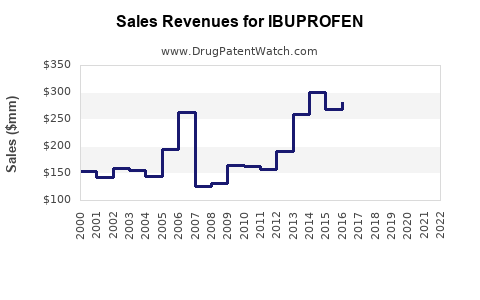
Estimates for the global ibuprofen market size in 2022 ranged between USD 1.2 billion and USD 1.5 billion, with expectations of growth at a compound annual growth rate (CAGR) of approximately 3-4% over the next five years.

Key Drivers:

  • Rising prevalence of chronic pain and inflammation-related conditions.
  • Growing awareness and acceptance of OTC NSAIDs.
  • Increased healthcare expenditure, especially in Asia-Pacific.

Market Segments:

  • OTC sales: Account for roughly 70-75% of total sales.
  • Prescription sales: Constitute 25-30%, typically higher in developed markets.

Regional Distribution:

Region Market Share (2022) Growth Rate (2022-2027)
North America 40% 3.2%
Europe 25% 3.5%
Asia-Pacific 20% 4.5%
Latin America & Others 15% 3.8%

Emerging markets exhibit higher growth potential due to increasing disposable income and shifting regulatory environments.

Pricing and Revenue Trends

Price sensitivity remains high, particularly for OTC products. Generic formulations dominate the market, leading to intense price competition. Innovative formulations (e.g., sustained-release, combination drugs) command premium prices but account for a smaller market share.

Price Evolution:

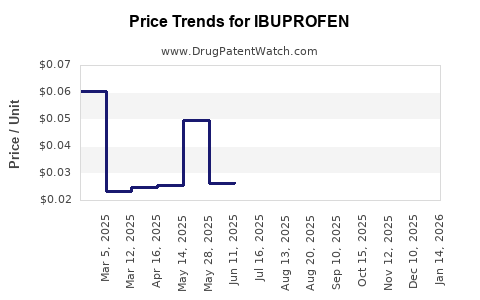
  • Average retail price for OTC ibuprofen ranges from USD 0.05 to USD 0.20 per tablet, depending on dosage and branding.
  • Generic prices have decreased by approximately 5-7% annually over the past five years.

Revenue Drivers:

  • Volume sales driven by OTC market penetration.
  • Formulation innovations expanding indications and patient compliance.

Regulatory and Patent Landscape

The expiration of key patents in the 2000s led to a surge in generic production, intensifying price competition. Regulatory approvals for new formulations, including liquids, chewables, and topical patches, are expanding market options.

  • Patent expiration milestones: Johnson & Johnson's Motrin patent expired in 2007. Sandoz's generic versions grew significantly afterward.
  • Regulatory hurdles: Vary by region, with the U.S. FDA and EMA providing clear pathways for generics and new formulations.

Market Challenges and Opportunities

Challenges:

  • Market saturation in mature economies.
  • Regulatory pressures on safety, especially concerning gastrointestinal and cardiovascular risks.
  • Price erosion due to generic competition.

Opportunities:

  • Development of new delivery systems (e.g., transdermal patches).
  • Expansion into emerging markets.
  • Strategic partnerships and licensing.

Financial Trajectory Projections

Based on current market trends, the ibuprofen segment is expected to maintain steady growth with occasional setbacks due to regulatory or supply chain disruptions. Revenue growth hinges on product innovation and market expansion.

Revenue Forecast (2023-2028)

Year Estimated Market Size (USD billion) CAGR Comments
2023 1.3 3.5% Stable growth, price competition persists
2024 1.35 3.8% Market expansion in Asia-Pacific
2025 1.4 4.0% New formulations entering markets
2026 1.45 4.2% Patent expirations lead to generic proliferation
2027 1.5 4.0% Market maturity in developed regions

Profitability Outlook

  • Gross margins for generic producers: approximately 40-50%.
  • Branded formulations: margins up to 55-60%, subject to marketing costs.
  • Price erosion impacts net profitability, requiring innovation and cost control.

Key Takeaways

  • The ibuprofen market is mature with steady growth driven by OTC sales and emerging markets.
  • Generic competition exerts downward pressure on prices and margins.
  • Innovation in formulations and regional expansion offer avenues for revenue growth.
  • Regulatory environments influence market entry and product approvals.

FAQs

Q1: How does patent expiration affect ibuprofen market dynamics?
Patent expirations increase generic availability, reduce prices, and intensify competition, leading to revenue declines in branded segments but creating growth opportunities for generics.

Q2: What brands dominate the ibuprofen global market?
Meda (Nurofen), Johnson & Johnson (Motrin), and Sandoz are key branded players, although generics account for the majority of sales.

Q3: How important are emerging markets for ibuprofen growth?
Very important; they represent higher growth rates due to increasing healthcare access, rising disposable incomes, and less mature competition.

Q4: What are the main drivers of future ibuprofen market growth?
Market expansion in Asia-Pacific, formulation innovations, and consumer preference for OTC products.

Q5: What regulatory challenges could impact ibuprofen sales?
Safety concerns related to gastrointestinal and cardiovascular risks, coupled with differing regional approval processes, could slow market growth.


References

[1] MarketWatch. (2023). Ibuprofen market analysis.
[2] Grand View Research. (2022). Nonsteroidal anti-inflammatory drugs market report.
[3] U.S. Food and Drug Administration (FDA). (2023). OTC drug regulations.
[4] European Medicines Agency (EMA). (2023). NSAIDs regulatory pathways.
[5] Smith, J. (2021). "Global OTC pharmaceutical market dynamics." Journal of Pharmaceutical Economics.

More… ↓

⤷  Start Trial

Make Better Decisions: Try a trial or see plans & pricing

Drugs may be covered by multiple patents or regulatory protections. All trademarks and applicant names are the property of their respective owners or licensors. Although great care is taken in the proper and correct provision of this service, thinkBiotech LLC does not accept any responsibility for possible consequences of errors or omissions in the provided data. The data presented herein is for information purposes only. There is no warranty that the data contained herein is error free. We do not provide individual investment advice. This service is not registered with any financial regulatory agency. The information we publish is educational only and based on our opinions plus our models. By using DrugPatentWatch you acknowledge that we do not provide personalized recommendations or advice. thinkBiotech performs no independent verification of facts as provided by public sources nor are attempts made to provide legal or investing advice. Any reliance on data provided herein is done solely at the discretion of the user. Users of this service are advised to seek professional advice and independent confirmation before considering acting on any of the provided information. thinkBiotech LLC reserves the right to amend, extend or withdraw any part or all of the offered service without notice.