Last updated: August 11, 2026
Oxcarbazepine is a mature antiseizure medicine with two distinct commercial markets: low-priced immediate-release and oral-suspension generics, and the branded extended-release product Oxtellar XR marketed by Supernus Pharmaceuticals. Trileptal, originally marketed by Novartis, lost its U.S. exclusivity years ago. Current economic value is concentrated in Oxtellar XR, specialty prescribing, and differentiated extended-release delivery rather than in the oxcarbazepine molecule itself.
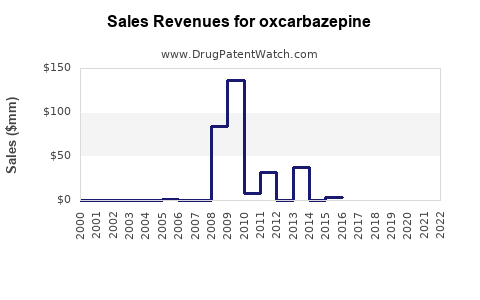
Supernus reported Oxtellar XR net product sales of approximately $111 million in 2023, while the broader oxcarbazepine market remains heavily genericized.[1] The principal commercial risk is future generic entry against Oxtellar XR. The principal technical barrier is the controlled-release formulation, not the active ingredient.
What is oxcarbazepine and how is it used?
Oxcarbazepine is an anticonvulsant approved by the U.S. Food and Drug Administration for partial-onset seizures. It is available as immediate-release tablets, oral suspension, and extended-release tablets.
Oxcarbazepine is rapidly converted to its active 10-monohydroxy metabolite, commonly called MHD. The metabolite is responsible for most antiseizure activity. The drug is commonly prescribed as monotherapy or adjunctive therapy, depending on the formulation and jurisdiction.
| Product |
Company or originator |
Dosage form |
Primary U.S. status |
| Trileptal |
Novartis originator |
Immediate-release tablets and suspension |
Generic competition |
| Generic oxcarbazepine |
Multiple manufacturers |
Tablets and suspension |
Widely available |
| Oxtellar XR |
Supernus Pharmaceuticals |
Extended-release tablets |
Branded product with formulation differentiation |
Oxcarbazepine is not FDA-approved for bipolar disorder, although physicians may prescribe anticonvulsants off label in psychiatric practice. Its approved commercial market is principally epilepsy.
How large is the oxcarbazepine market?
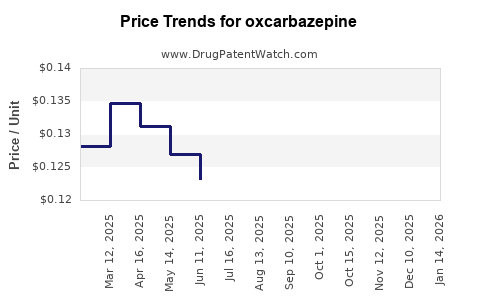
The market is large in prescription volume but limited in branded revenue. Immediate-release oxcarbazepine has been generic for more than a decade, which has compressed prices and shifted value to pharmacy volume rather than manufacturer revenue.
The commercial market has four characteristics:
- Generic immediate-release products dominate unit volume.
- Retail prices are substantially below branded prices.
- Oxtellar XR retains a premium based on once-daily dosing and extended-release pharmacokinetics.
- Reimbursement and formulary restrictions limit conversion from generic immediate-release therapy to Oxtellar XR.
Public company filings do not provide a consolidated worldwide revenue figure for all oxcarbazepine products. Market-research estimates vary by methodology and may include only branded products, hospital sales, or retail prescriptions. The most reliable public financial indicator is Supernus's reported Oxtellar XR revenue.
Which companies manufacture oxcarbazepine?
Generic oxcarbazepine has been marketed by multiple U.S. and international manufacturers, including companies that have supplied tablets and oral suspension through abbreviated new drug applications. The competitive field can change by dosage strength, supplier status, pharmacy-contract status, and FDA approval status.
The main commercial competitors are:
- Generic oxcarbazepine immediate-release tablets.
- Generic oxcarbazepine oral suspension.
- Oxtellar XR extended-release tablets.
- Other antiseizure medicines, including carbamazepine, levetiracetam, lamotrigine, lacosamide, and topiramate.
Competition is therefore both molecule-specific and therapeutic. Physicians may switch patients to another antiseizure medicine when tolerability, drug interactions, adherence, or reimbursement is unfavorable.
What is the financial trajectory for Oxtellar XR?
Oxtellar XR is the principal branded financial asset in the oxcarbazepine category. Supernus reported approximately $111 million in Oxtellar XR net product sales in 2023.[1] This represented a growing product line despite generic competition to immediate-release oxcarbazepine.
| Financial factor |
Effect on Oxtellar XR |
| Once-daily dosing |
Supports adherence and product differentiation |
| Generic Trileptal availability |
Limits pricing power and expands substitution pressure |
| Specialty epilepsy prescribing |
Supports persistence in selected patients |
| Commercial payer controls |
Restrict access and increase authorization burden |
| Formulation patents |
Delay or complicate generic extended-release entry |
| Small-molecule status |
Prevents biologic-style exclusivity protection |
Oxtellar XR revenue is more exposed to patent and formulation competition than to loss of molecule-level exclusivity. Supernus's broader financial performance also includes Trokendi XR, Qelbree, and other products, so total company revenue cannot be attributed to oxcarbazepine.
The financial trajectory has likely progressed through three stages:
Originator decline
Trileptal benefited from brand adoption before generic entry. Once immediate-release oxcarbazepine became available, price erosion and generic substitution reduced the originator's commercial value.
Branded reformulation growth
Supernus created a separate market with Oxtellar XR. The product targeted patients who could benefit from once-daily extended-release dosing, steadier exposure, or reduced dosing frequency.
Patent-dependent maturity
Oxtellar XR revenue now depends on the durability of its formulation patents, payer coverage, and the company's ability to defend the product against abbreviated new drug applications. A successful generic launch would likely produce rapid price and market-share erosion.
When did oxcarbazepine lose exclusivity?
Trileptal's U.S. molecule-level exclusivity ended long ago. Generic oxcarbazepine products have been available for many years, and the immediate-release market should be treated as mature and commoditized.
The relevant distinction is:
| Exclusivity layer |
Product |
Current commercial position |
| New chemical entity exclusivity |
Trileptal |
Expired |
| Immediate-release formulation protection |
Trileptal |
Expired or commercially ineffective |
| Pediatric or regulatory exclusivity |
Trileptal |
No meaningful current barrier |
| Extended-release formulation patents |
Oxtellar XR |
Potentially relevant until patent expiry or settlement-based entry |
| Active ingredient protection |
Oxcarbazepine |
Expired |
FDA approval of generic oxcarbazepine did not require a biosimilar pathway. Oxcarbazepine is a conventional small molecule, so applicants use the ANDA pathway and must demonstrate pharmaceutical equivalence and bioequivalence.
What patents protect Oxtellar XR?
Oxtellar XR is protected primarily by patents covering controlled-release delivery of oxcarbazepine and related formulation or dosing characteristics. The active ingredient itself is not the meaningful barrier.
The relevant patent categories include:
- Controlled-release matrix or osmotic delivery systems.
- Release profiles that maintain oxcarbazepine or MHD exposure over an extended interval.
- Once-daily dosing.
- Formulation composition and excipient arrangements.
- Pharmacokinetic performance.
- Method-of-use claims involving seizure control and dosing conversion.
The FDA Orange Book is the principal source for patents listed against the Oxtellar XR new drug application. Patent status should be analyzed by individual claim, expiration date, terminal disclaimer, pediatric extension, and litigation outcome rather than by counting every patent in a family.[2]
What formulations are protected by Oxtellar XR patents?
The commercial distinction is the extended-release tablet. Generic immediate-release tablets do not automatically establish pharmaceutical equivalence to Oxtellar XR.
An ANDA applicant seeking an extended-release oxcarbazepine product must address:
- Dosage-form equivalence.
- Release-rate characteristics.
- Bioequivalence.
- Food-effect data.
- Dose proportionality.
- Orange Book patent certifications.
- Potential formulation and method-of-use patent claims.
A formulation patent can delay generic competition even after the active ingredient and original immediate-release product are fully generic.
What is the Orange Book status of oxcarbazepine?
The Orange Book treats oxcarbazepine products according to their individual reference-listed drugs. Generic immediate-release oxcarbazepine products are associated with Trileptal or applicable reference products. Oxtellar XR has a separate extended-release reference product and separate patent considerations.[2]
The practical Orange Book analysis is:
- Trileptal is not protected by meaningful current molecule exclusivity.
- Immediate-release generic oxcarbazepine is established.
- Oxtellar XR must be evaluated separately because its formulation is different.
- An applicant may file a Paragraph IV certification against listed patents.
- A patent challenge does not itself establish that a generic will launch.
Which companies are challenging Oxtellar XR patents?
Oxtellar XR has faced ANDA-related patent litigation involving generic-drug applicants. Supernus has used patent litigation to defend its extended-release formulation and has negotiated settlements in some cases.
The most important challenger categories are:
- Large generic manufacturers with established neurology portfolios.
- Specialty generics companies targeting controlled-release formulations.
- Applicants that challenge patent validity.
- Applicants that certify non-infringement or assert that patents are not enforceable.
Public litigation records show that Oxtellar XR patent disputes have involved Supernus and generic applicants, including Actavis-related entities. The commercial importance of each case depends on the asserted patent, the dosage strengths covered, the litigation venue, and any settlement date.[3]
What do Paragraph IV challenges mean for oxcarbazepine?
A Paragraph IV certification states that a listed patent is invalid, unenforceable, or not infringed. If the patent holder files suit within the statutory period, FDA approval may be subject to a 30-month stay, subject to statutory exceptions and court developments.[4]
For Oxtellar XR, a Paragraph IV case can produce four outcomes:
- The generic applicant loses and remains blocked until patent expiry.
- The generic applicant wins and may launch before the listed patent expiry.
- The parties settle on a negotiated entry date.
- The case ends without immediate commercial entry because approval, manufacturing, or other regulatory issues remain unresolved.
A settlement can be more commercially important than a final infringement judgment because it establishes a predictable generic-entry date.
When does Oxtellar XR lose exclusivity?
Oxtellar XR does not have one single economically decisive loss-of-exclusivity date. Its risk depends on the surviving Orange Book patents and any generic settlements.
The relevant timeline is:
| Milestone |
Commercial consequence |
| 2000 |
Trileptal approved in the United States |
| 2000s |
Generic immediate-release competition develops |
| 2012 |
Oxtellar XR approved by FDA |
| 2010s |
Oxtellar XR patent litigation and ANDA challenges emerge |
| 2020s |
Product revenue remains dependent on formulation protection |
| Post-patent or settlement entry |
Rapid price erosion becomes likely |
The earliest lawful generic-entry date can differ from the latest patent expiration date. A settlement may permit entry before expiry, while a successful patent defense can delay entry until the last enforceable patent expires.
What generic entry risks exist for oxcarbazepine?
Immediate-release oxcarbazepine has high generic-entry risk because that risk has already materialized. The product is a mature generic market with limited pricing power.
Oxtellar XR faces a different risk profile:
- A single approved generic could trigger pharmacy substitution or formulary pressure.
- Multiple entrants would accelerate price erosion.
- Extended-release manufacturing is more complex than immediate-release tablet production.
- Formulation patents may delay entry but do not permanently prevent it.
- Payers may prefer the lowest-cost equivalent once generic substitution is available.
The expected commercial pattern after generic entry is a sharp decline in average selling price, followed by loss of branded volume as plans revise formularies. Oxtellar XR could retain a protected niche among patients who are stable on the branded product, but that niche would not normally preserve current branded revenue levels.
How does oxcarbazepine compare with competing antiseizure drugs?
Oxcarbazepine competes on efficacy, tolerability, dosing flexibility, and cost. It is often considered an alternative to carbamazepine, with a different interaction profile but clinically relevant risks such as hyponatremia.
| Drug |
Market status |
Differentiation |
| Oxcarbazepine immediate release |
Generic |
Low cost |
| Oxtellar XR |
Branded extended release |
Once-daily controlled release |
| Carbamazepine |
Generic and branded forms |
Long-established alternative |
| Levetiracetam |
Generic and branded forms |
Broad use and simple dosing |
| Lamotrigine |
Generic |
Broad epilepsy and psychiatric use |
| Lacosamide |
Generic and branded history |
Partial-onset seizure positioning |
Levetiracetam and lamotrigine create substantial therapeutic substitution pressure. Patients may remain on oxcarbazepine when seizure control is adequate and switching creates clinical risk, but new prescriptions are more sensitive to formulary position and physician preference.
Is there biosimilar risk for oxcarbazepine?
There is no biosimilar risk because oxcarbazepine is a small-molecule drug. The relevant threat is conventional generic competition through ANDAs.
This distinction affects:
- Approval standards.
- Patent certification procedures.
- Substitution rules.
- Manufacturing requirements.
- Expected price erosion.
Generic competition generally arrives through pharmaceutical-equivalence and bioequivalence claims rather than through the biologics licensing pathway.
What manufacturing and intellectual-property barriers affect the market?
Immediate-release oxcarbazepine manufacturing is relatively accessible for established generic companies. Extended-release manufacturing requires greater control over formulation technology, dissolution behavior, process consistency, and bioequivalence.
Potential barriers include:
- Controlled-release formulation know-how.
- Drug-release testing and batch reproducibility.
- Bioequivalence studies under fasting and fed conditions.
- Active pharmaceutical ingredient sourcing.
- Stability and dissolution specifications.
- Patent litigation expense.
- Regulatory review of abbreviated applications.
These barriers can reduce the number of early entrants, but they are not equivalent to a durable product monopoly. Once one generic manufacturer solves the formulation and regulatory requirements, additional entrants can follow.
What licensing deals affect oxcarbazepine?
The principal commercial structure is not a large licensing market for the active ingredient. Trileptal was associated with Novartis, while Oxtellar XR was developed and commercialized by Supernus. Public filings identify product-specific commercial and development arrangements, but the economic center of gravity is internal product ownership rather than a broad network of oxcarbazepine licenses.[1]
The most relevant transaction risk is therefore not royalty leakage. It is whether a branded owner can maintain commercial rights, defend formulation patents, and sustain payer access.
What is the likely financial outlook?
The immediate-release market should remain stable in volume but weak in value. Generic competition, low prices, and therapeutic substitution will limit revenue growth.
Oxtellar XR has a more concentrated outlook:
- Near-term revenue depends on continued branded retention and payer access.
- Revenue can grow modestly through adherence-focused prescribing and patient conversion.
- Patent challenges create binary downside risk.
- Generic entry would likely cause rapid revenue compression.
- Manufacturing complexity may delay the number of competitors after first entry, but it will not eliminate erosion.
For investors and licensing teams, the key valuation question is the probability-weighted period before generic extended-release entry. Oxtellar XR should not be valued like a protected new chemical entity. It is a mature reformulation asset with meaningful but time-limited formulation protection.
Key Takeaways
- Oxcarbazepine is a mature, heavily genericized antiseizure medicine.
- Trileptal's molecule-level exclusivity has expired, and immediate-release products are commoditized.
- Oxtellar XR is the main remaining branded revenue opportunity.
- Supernus reported approximately $111 million in Oxtellar XR net product sales in 2023.
- The principal IP value lies in extended-release formulation and dosing patents.
- Paragraph IV litigation and settlements determine the practical generic-entry timeline.
- Biosimilar competition is irrelevant; ANDA-based generic competition is the applicable pathway.
- Oxtellar XR revenue is vulnerable to rapid erosion after the first approved generic.
- Competitive threats include both generic oxcarbazepine and alternative antiseizure drugs.
- The asset's value depends on formulation-patent durability, litigation outcomes, payer coverage, and patient persistence.
FAQs
Is oxcarbazepine still profitable for pharmaceutical companies?
Immediate-release oxcarbazepine is generally a low-margin generic product. Profitability is concentrated in branded extended-release Oxtellar XR and in efficient generic manufacturing.
Can a generic company launch extended-release oxcarbazepine before all Oxtellar XR patents expire?
It may launch if it prevails in patent litigation, reaches a settlement permitting earlier entry, or relies on patents that do not cover the proposed product. FDA approval alone does not eliminate patent-related launch risk.
Does Oxtellar XR have a therapeutic advantage over generic oxcarbazepine?
Oxtellar XR provides extended-release, once-daily dosing. Its commercial value depends on whether physicians and payers consider that dosing convenience sufficient to justify the branded price.
What is the main clinical safety issue affecting oxcarbazepine demand?
Hyponatremia is a recognized safety concern. Drug interactions, central nervous system effects, and hypersensitivity reactions also influence prescribing and monitoring decisions.[5]
Is oxcarbazepine used for bipolar disorder?
Oxcarbazepine is used off label in some psychiatric settings, but the FDA-approved indication is partial-onset seizures. Off-label use is not a substitute for an approved commercial indication.
References
-
Supernus Pharmaceuticals, Inc. (2024). Annual report pursuant to Section 13 or 15(d) of the Securities Exchange Act of 1934 for the fiscal year ended December 31, 2023. U.S. Securities and Exchange Commission.
-
U.S. Food and Drug Administration. (n.d.). Approved drug products with therapeutic equivalence evaluations, Orange Book. https://www.accessdata.fda.gov/scripts/cder/ob/
-
Supernus Pharmaceuticals, Inc. v. Actavis Laboratories FL, Inc., patent litigation records, U.S. District Court for the District of Delaware and U.S. Court of Appeals for the Federal Circuit.
-
U.S. Food and Drug Administration. (n.d.). Abbreviated new drug application approvals and Paragraph IV certifications. https://www.fda.gov/drugs
-
U.S. Food and Drug Administration. (2022). Trileptal (oxcarbazepine) prescribing information. Novartis Pharmaceuticals Corporation.