Last updated: July 30, 2026
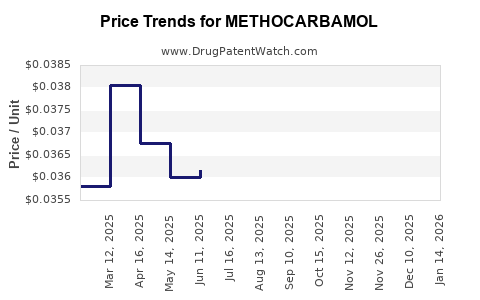
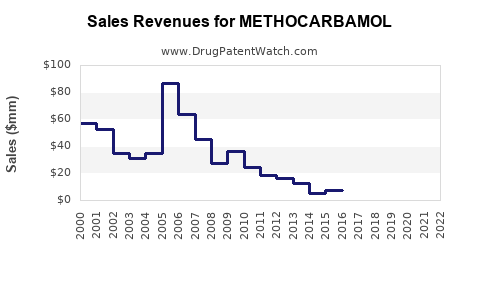
Methyl carbamate? No. Methocarbamol is a centrally acting muscle relaxant used for symptomatic relief of painful musculoskeletal conditions. In the US, the near-term revenue trajectory is driven by (1) generic substitution and price erosion, (2) formulation mix (tablets, injectable), (3) wholesaler channel stocking cycles, and (4) payer and PBM pressure rather than patent exclusivity. The financial profile is largely that of a mature generic commodity with episodic margin volatility around supply and regulatory disruptions.
What is the current market size and sales trajectory for methocarbamol?
Featured snippet answer: Methocarbamol is a mature, mostly generic muscle relaxant with revenues primarily determined by volume stability and continued price compression in the US retail and wholesaler channels.
US demand drivers: what actually moves unit sales
Methocarbamol demand correlates with:
- Back pain and musculoskeletal injury prevalence, including emergency department and outpatient treatment volumes.
- Utilization of multimodal back pain regimens (opioid-sparing strategies) in which methocarbamol is used as an adjunct rather than a primary analgesic.
- Seasonality in musculoskeletal presentations (winter weather injury patterns can lift volumes, though magnitude is payer and site-of-care dependent).
Where revenue comes from: dosage forms and channel mix
Revenue is typically split across:
- Oral tablets (dominant volume and revenue share).
- Injectable/IV formulations (smaller share, used in acute settings; margin volatility can be higher).
- Institutional purchasing (hospitals, EDs) that can swing with formulary decisions and tendering cycles.
Why the US financial trajectory trends down absent a supply shock
- Generic competition compresses net prices quickly after entry.
- PBM-driven preferred status among low-cost products sustains channel switching.
- Manufacturing base consolidation can create periodic inventory constraints that temporarily lift net pricing, but this is episodic.
How does methocarbamol’s pricing evolve under generic competition?
Featured snippet answer: Methocarbamol’s pricing follows classic generic erosion: steep drops after multiple entrants, then a low plateau with intermittent step-ups during supply constraints.
Retail vs. institutional net price dynamics
- Retail: driven by pharmacy switching, copay tiers, and PBM rebate economics. The “lowest net cost” typically wins, creating frequent product-level price dispersion.
- Institutional: tendering and group purchasing organizations can push net prices lower, but contract renewals can lock pricing for set periods, reducing volatility.
Injectable pricing has different risks
Injectable methocarbamol can show:
- Higher margin swings with limited number of qualified suppliers.
- Higher unit-cost sensitivity to shortages, sterility assurance capacity, and packaging material constraints.
What competitive landscape shapes methocarbamol sales in the US?
Featured snippet answer: Competition is dominated by multiple ANDA generics, with performance anchored in product availability, consistent dissolution/bioequivalence acceptance, and formulary penetration.
Generic entry pressure and substitution
- Rapid substitution in the therapeutic class is typical once multiple ANDAs are on market.
- Patient-level switching is less relevant than provider and institutional selection decisions.
- In many settings, methocarbamol competes head-to-head with other skeletal muscle relaxants (class-level substitution), which can reduce share even when methocarbamol is not directly challenged by single-product patent events.
Class competition effects
Methocarbamol faces ongoing substitution from:
- Other oral muscle relaxants with different tolerability profiles.
- Fixed-dose combination products in the broader musculoskeletal pain market where prescribers choose by guideline alignment, patient comorbidity, and sedation risk.
How do methocarbamol formulary decisions affect revenue stability?
Featured snippet answer: Formulary placement and contract pricing in hospitals and insurers are the main levers for stability; losing preferred status can shift volumes to competing muscle relaxants quickly.
Hospital/IDN procurement patterns
- Contract renewals: annual or semiannual; revenue can step down when preferred products rotate.
- Tender pricing: multi-source bids can drive methocarbamol toward the lowest total cost option.
PBM dynamics for outpatient use
- PBM status can create a durable, low-volatility revenue stream for preferred SKUs, even in a crowded generic market.
- Non-preferred brands or higher-cost equivalents face near-term volume drops after formulary changes.
What patents protect methocarbamol, and how does that affect financial outcomes?
Featured snippet answer: Methocarbamol’s US market is overwhelmingly shaped by generic availability rather than active exclusivity in the way it would be for an on-patent drug; the key business impact comes from the timing of patent expiry and the presence or absence of enforceable secondary patents around formulations, methods, or packaging.
Patent estate business impact: what to watch
Even for mature actives, financial outcomes can be influenced by:
- Formulation patents (for dissolution, particle engineering, sustained release, or stability).
- Injection-related patents (sterile processes, concentration, container closure systems).
- Method-of-use patents tied to specific dosing regimens or indications.
Patent-to-revenue mapping (how to read it commercially)
- If secondary patents exist and are enforceable, generic entry for a specific dosage form can lag, sustaining a higher net price band.
- If the estate is weak or already expired, the business trajectory is dominated by continued generic competition and channel pricing.
What is the Orange Book status of methocarbamol products?
Featured snippet answer: Orange Book status for methocarbamol is typically dominated by generic listings with limited or no practical exclusivity for new entrants at this stage of lifecycle; the market impact is usually reflected in the generic competition already realized in net pricing.
How Orange Book listings translate to market behavior
- Each listed patent can affect a specific NDA/ANDA product (strength, dosage form, route).
- Even when patents exist, the practical effect depends on whether litigated or actively blocking, and whether alternative strengths or routes are still available for substitution.
When does methocarbamol lose exclusivity and what entry risks exist for generics?
Featured snippet answer: For methocarbamol’s overall drug class, generics already dominate the market; entry risk is less about “first generic” timing and more about maintaining manufacturing readiness, passing bioequivalence, and surviving any remaining secondary patent or litigation activity by specific product.
Paragraph IV litigation: how it would show up financially
A Paragraph IV event can temporarily:
- Delay competitor launches if injunctions or settlements constrain entry.
- Lift net pricing for remaining suppliers.
- Create short-lived share gains for the litigating/settling party.
What methocarbamol litigation and settlement activity affects commercialization?
Featured snippet answer: The US methocarbamol market is more commonly affected by routine generic competition than by ongoing, large-scale exclusivity litigation, though any product-specific injunction or settlement can create short-term pricing effects.
Litigation channels to monitor commercially
- Court actions tied to a specific dosage form (tablets vs injection).
- Settlement agreements that govern launch dates for specific ANDA products.
- Expert-driven disputes over bioequivalence that can delay approvals or launches.
How strong is the patent estate for methocarbamol, and what does that mean for R&D ROI?
Featured snippet answer: For a commoditized molecule like methocarbamol, investor-grade ROI typically requires either (1) differentiated formulations with clear clinical or practical advantages, or (2) non-overlapping IP around delivery, stability, or manufacturing.
Where differentiation can still pay off
Commercially credible differentiation tends to include:
- Injectable stability and packaging improvements that reduce batch failure risk.
- Oral formulation changes that improve manufacturability, shelf-life, or patient adherence (even if bioequivalence is the primary regulatory hurdle).
- Route-specific optimization if institutional adoption is sensitive to supply reliability.
R&D math in a generic market
- Revenue is limited by price erosion to the low net price plateau.
- Manufacturing advantage and regulatory execution dominate returns over IP-driven monopoly.
What regulatory milestones shape methocarbamol availability and financial performance?
Featured snippet answer: Financial outcomes track regulatory execution and supply continuity more than label expansion.
FDA-related risk factors
- ANDA approvals tied to bioequivalence, stability, and validation of manufacturing controls.
- Facility inspections and quality system performance, which can lead to voluntary withdrawals, distribution pauses, or delayed batch release.
Drug shortages and financial effects
When supply is constrained:
- Net prices can rise across available SKUs due to reduced competitive supply.
- Institutional contracts can force reallocation of inventory, changing near-term share.
- Shortages can trigger additional competitor “relief demand” once capacity returns.
How does methocarbamol compare with other skeletal muscle relaxants financially?
Featured snippet answer: Methocarbamol sits in a mature class where price competition among generics is intense; differentiation is usually minimal, so the primary advantage is supply reliability and formulary inclusion.
Key commercial comparison dimensions
- Sedation profile and patient tolerability: influences persistence, but in practice prescriber switching dominates.
- Dosing convenience: can affect institutional preference for specific products.
- Route availability: injectables can be chosen for acute settings if supply is uninterrupted.
What generic launch scenarios could change methocarbamol revenue?
Featured snippet answer: Revenue shifts are most likely when a new qualified competitor enters with high reliability, when a supply disruption ends, or when a dosage form (not the active) gains a broader supplier base.
Launch scenario 1: additional multi-source tablet supply
Expected impact:
- Lower net pricing.
- Volume share depends on contracts and preferred listing dynamics.
Launch scenario 2: injectable supply re-entry after shortage
Expected impact:
- Short-term price normalization.
- Potential share gains for suppliers that can fulfill institutional demand quickly.
Launch scenario 3: formulation-specific regulatory/quality disruption
Expected impact:
- Targeted price uplift for unaffected strengths/routes.
- Channel substitution within class may reduce methocarbamol share even if it remains available.
Geographic considerations: how do export markets affect the financial trajectory?
Featured snippet answer: Export contributes unevenly and is typically constrained by local regulatory approvals, tariff structures, and supply chain reliability. In muscle relaxants, revenue is usually protected by relationships and distribution contracts, not patents.
What to monitor outside the US
- Local market approvals for tablets and injectables.
- Tender systems that replicate hospital procurement dynamics in the US.
- Quality and inspection outcomes affecting ability to supply.
Key takeaways
- Methocarbamol’s financial trajectory is characteristic of a mature, mostly generic commodity: demand is steady, but net pricing trends toward a low plateau due to substitution and PBM/hospital procurement pressure.
- Injectable products can create higher volatility because the competitive base may be narrower and supply constraints more material.
- Patent and Orange Book status typically matters more at the product and dosage-form level via any secondary patents, but the market structure is already dominated by generic availability.
- Revenue sustainability hinges on supply continuity, contract execution, and maintaining preferred positioning versus both direct generics and class substitutes.
FAQs
- What factors drive methocarbamol net price changes during drug shortages?
- Which methocarbamol dosage forms (tablets vs injection) show the biggest margin swings in institutional purchasing?
- How do PBM formulary changes typically affect methocarbamol volume and prescription persistence?
- What regulatory or quality events most often disrupt methocarbamol supply in the US?
- How do class-level switches among skeletal muscle relaxants affect methocarbamol share even when it remains in formulary?
References
- U.S. Food and Drug Administration. Orange Book: Approved Drug Products with Therapeutic Equivalence Evaluations. (Accessed 2026).