You're using a free limited version of DrugPatentWatch: Upgrade for Complete Access

Last Updated: March 26, 2026

CALCIUM ACETATE - Generic Drug Details


✉ Email this page to a colleague

« Back to Dashboard


What are the generic drug sources for calcium acetate and what is the scope of freedom to operate?

Calcium acetate is the generic ingredient in five branded drugs marketed by Amneal Pharms, Chartwell Rx, Heritage Pharms Inc, Hikma, Invagen Pharms, Lotus Pharm Co Ltd, Lupin Ltd, Mpp Pharma, Square Pharms, Suven Pharms, Fresenius Medcl Care, Chartwell Molecular, Padagis Us, and Cypress Pharm, and is included in eighteen NDAs. There are three patents protecting this compound and two Paragraph IV challenges. Additional information is available in the individual branded drug profile pages.

Calcium acetate has twenty-three patent family members in sixteen countries.

There are six drug master file entries for calcium acetate. Twenty suppliers are listed for this compound.

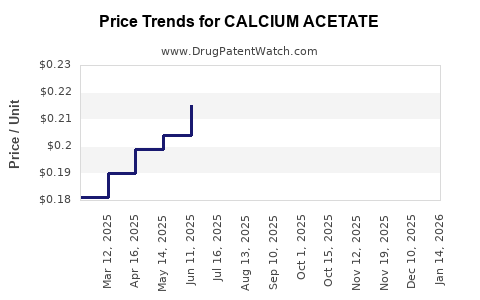
Drug Prices for CALCIUM ACETATE

See drug prices for CALCIUM ACETATE

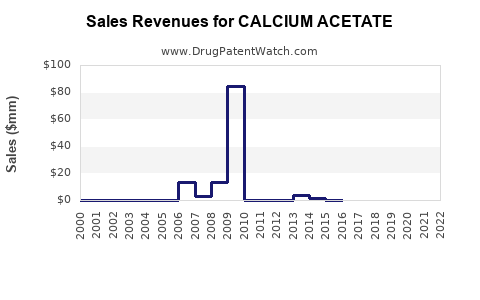
Drug Sales Revenue Trends for CALCIUM ACETATE

See drug sales revenues for CALCIUM ACETATE

Recent Clinical Trials for CALCIUM ACETATE

Identify potential brand extensions & 505(b)(2) entrants

SponsorPhase
Peking University People's HospitalPHASE2
Ramsay Clinic Albert RoadPHASE3
Deakin UniversityPHASE3

See all CALCIUM ACETATE clinical trials

Pharmacology for CALCIUM ACETATE
Paragraph IV (Patent) Challenges for CALCIUM ACETATE
Tradename Dosage Ingredient Strength NDA ANDAs Submitted Submissiondate
PHOSLYRA Oral Solution calcium acetate 667 mg/5 mL 022581 2 2013-12-05
PHOSLO GELCAPS Capsules calcium acetate EQ 169 mg calcium 021160 1 2005-05-31

US Patents and Regulatory Information for CALCIUM ACETATE

Applicant Tradename Generic Name Dosage NDA Approval Date TE Type RLD RS Patent No. Patent Expiration Product Substance Delist Req. Exclusivity Expiration
Cypress Pharm ELIPHOS calcium acetate TABLET;ORAL 078502-001 Nov 25, 2008 DISCN No No ⤷  Start Trial ⤷  Start Trial ⤷  Start Trial
Chartwell Molecular CALCIUM ACETATE calcium acetate TABLET;ORAL 202420-001 Feb 5, 2013 AB RX No Yes ⤷  Start Trial ⤷  Start Trial ⤷  Start Trial
Mpp Pharma CALCIUM ACETATE calcium acetate CAPSULE;ORAL 203179-001 Oct 26, 2015 AB RX No No ⤷  Start Trial ⤷  Start Trial ⤷  Start Trial
Amneal Pharms CALCIUM ACETATE calcium acetate CAPSULE;ORAL 201658-001 Oct 6, 2014 DISCN No No ⤷  Start Trial ⤷  Start Trial ⤷  Start Trial
Fresenius Medcl Care PHOSLO GELCAPS calcium acetate CAPSULE;ORAL 021160-003 Apr 2, 2001 DISCN Yes No ⤷  Start Trial ⤷  Start Trial ⤷  Start Trial
Square Pharms CALCIUM ACETATE calcium acetate CAPSULE;ORAL 217205-001 Mar 13, 2023 AB RX No No ⤷  Start Trial ⤷  Start Trial ⤷  Start Trial
>Applicant >Tradename >Generic Name >Dosage >NDA >Approval Date >TE >Type >RLD >RS >Patent No. >Patent Expiration >Product >Substance >Delist Req. >Exclusivity Expiration

Expired US Patents for CALCIUM ACETATE

International Patents for CALCIUM ACETATE

Country Patent Number Title Estimated Expiration
South Korea 101553719 ⤷  Start Trial
Hong Kong 1129814 LIQUID COMPOSITIONS OF CALCIUM ACETATE ⤷  Start Trial
China 101522021 ⤷  Start Trial
Austria E547099 ⤷  Start Trial
Russian Federation 2009104774 ЖИДКАЯ ФАРМАЦЕВТИЧЕСКАЯ КОМПОЗИЦИЯ (ВАРИАНТЫ) И СПОСОБ СВЯЗЫВАНИЯ ФОСФОРА В ЖЕЛУДОЧНО-КИШЕЧНОМ ТРАКТЕ ⤷  Start Trial
World Intellectual Property Organization (WIPO) 2008011126 ⤷  Start Trial
>Country >Patent Number >Title >Estimated Expiration

Supplementary Protection Certificates for CALCIUM ACETATE

Patent Number Supplementary Protection Certificate SPC Country SPC Expiration SPC Description
2957286 1990003-4 Sweden ⤷  Start Trial PRODUCT NAME: PATRIOMER SORBITEX CALCIUM; REG. NO/DATE: EU/1/17/1179 20170721
2957286 LUC00094 Luxembourg ⤷  Start Trial PRODUCT NAME: PATIROMER SORBITEX CALCIUM; AUTHORISATION NUMBER AND DATE: EU/1/17/1179 20170721
0933372 13/2008 Austria ⤷  Start Trial PRODUCT NAME: FOSAMPRENAVIR ALS FOSAMPRENAVIR-CALCIUM; REGISTRATION NO/DATE: EU/1/04/282/001 - EU/1/04/282/002 (MITTEILUNG VOM 14.07.2004) 20040713
0247633 62/1997 Austria ⤷  Start Trial PRODUCT NAME: ATORVASTATIN CALCIUM; NAT. REGISTRATION NO/DATE: 1-21926, 1-21927, 1-21928 19970411; FIRST REGISTRATION: GB PL 00018/0240 - PL 00018/0242 19961107
3752510 CA 2025 00041 Denmark ⤷  Start Trial PRODUCT NAME: VANZACAFTOR ELLER ET FARMACEUTISK ACCEPTABLELT SALT DERAF, FORTRINSVIS ET CALCIUM-SALT DERAF; REG. NO/DATE: EU/1/25/1943 20250701
2365988 LUC00061 Luxembourg ⤷  Start Trial PRODUCT NAME: PATIROMER SORBITEX CALCIUM ET TOUS LES SELS ET DERIVES DE CELUI-CI; AUTHORISATION NUMBER AND DATE: EU/1/17/1179 20170721
>Patent Number >Supplementary Protection Certificate >SPC Country >SPC Expiration >SPC Description

CALCIUM ACETATE: MARKET DYNAMICS AND FINANCIAL TRAJECTORY

Last updated: February 19, 2026

Calcium acetate is a pharmaceutical compound with established applications, primarily in managing hyperphosphatemia. Its market performance is influenced by patient demographics, clinical guidelines, and competitive landscapes. This analysis outlines its current market position and projected financial trajectory based on available patent data, regulatory approvals, and market intelligence.

WHAT IS THE PRIMARY CLINICAL APPLICATION OF CALCIUM ACETATE?

Calcium acetate is a phosphate binder. It is prescribed to patients with chronic kidney disease (CKD) undergoing dialysis who have elevated serum phosphate levels (hyperphosphatemia). By binding to dietary phosphate in the gastrointestinal tract, it reduces phosphate absorption and lowers serum phosphate concentrations. This is critical for preventing secondary hyperparathyroidism, renal osteodystrophy, and soft tissue calcification associated with hyperphosphatemia [1]. Beyond hyperphosphatemia, calcium acetate may be used in specific dietary supplement formulations for calcium supplementation.

WHAT IS THE CURRENT MARKET SIZE AND GROWTH PROJECTION FOR CALCIUM ACETATE?

The global market for phosphate binders, including calcium acetate, is substantial and projected to grow. Market research reports estimate the global phosphate binder market size to be in the billions of U.S. dollars. For instance, one report indicated the global phosphate binder market was valued at approximately $2.5 billion in 2022 and is anticipated to grow at a compound annual growth rate (CAGR) of 4.5% to 5.5% from 2023 to 2030 [2].

Calcium acetate represents a significant segment within this market due to its established efficacy and relatively lower cost compared to newer, non-calcium-based binders. Specific market share data for calcium acetate alone is often embedded within broader phosphate binder reports. However, its status as a first-line therapy for many patients on dialysis supports its continued market relevance.

The growth trajectory is driven by:

  • Increasing prevalence of Chronic Kidney Disease (CKD): Global rates of CKD are rising due to aging populations, the increasing incidence of diabetes and hypertension, and improved diagnostic capabilities [3]. This directly expands the patient pool requiring phosphate management.
  • Aging Population: Elderly individuals are more susceptible to CKD and its complications, including hyperphosphatemia.
  • Shifting Treatment Guidelines: While newer agents exist, clinical guidelines often position calcium-based binders, including acetate, as cost-effective first-line options for many patients, particularly in resource-constrained settings or when cost is a primary consideration.
  • Generic Availability: Calcium acetate is widely available as a generic medication, which contributes to its accessibility and widespread use.

WHAT ARE THE KEY PATENT LANDSCAPE AND INTELLECTUAL PROPERTY CONSIDERATIONS FOR CALCIUM ACETATE?

Calcium acetate itself is a well-established chemical compound, and its basic patents have long expired. This means the active pharmaceutical ingredient (API) is off-patent. The intellectual property landscape for calcium acetate therefore focuses on:

  • Formulation Patents: Companies may hold patents on novel formulations that improve palatability, pharmacokinetic profiles, or patient compliance. This could include extended-release formulations, chewable tablets with improved taste, or combination products.
  • Manufacturing Process Patents: Innovations in the synthesis or purification of calcium acetate that lead to higher purity, lower cost of goods, or more efficient production can be patented.
  • Method of Use Patents: While the primary use for hyperphosphatemia is well-known, patents might exist for novel or specific therapeutic uses of calcium acetate, or for its use in conjunction with other therapeutic agents for synergistic effects. However, such patents for a well-established drug are less common and typically require demonstrating a significant and unexpected therapeutic advantage.
  • Brand Name Trademarks: While the API is generic, specific branded versions of calcium acetate may have registered trademarks.

The lack of fundamental API patent protection means that the market is primarily driven by generic competition, influencing pricing and profitability. Pharmaceutical companies may focus on branded generic strategies, combination therapies, or differentiated formulations to establish market share and command a premium.

WHO ARE THE MAJOR MARKET PLAYERS AND COMPETITIVE LANDSCAPE?

The market for calcium acetate is characterized by a fragmented landscape of generic manufacturers and suppliers. Due to its generic status, market entry barriers are relatively low for API producers and formulators.

Key players involved in the manufacturing and supply of calcium acetate include:

  • API Manufacturers: Numerous chemical manufacturers globally produce bulk calcium acetate API. These often include companies based in India, China, and Europe. Examples include major chemical suppliers and specialized pharmaceutical ingredient manufacturers.
  • Generic Drug Formulators: Companies that develop, manufacture, and market finished dosage forms (tablets, capsules) of calcium acetate. These are often generic pharmaceutical companies that compete on price and distribution. Examples include:
    • Fresenius Medical Care: A major provider of dialysis services, which also offers phosphate binders, including calcium acetate, as part of its dialysis support products.
    • B. Braun Melsungen AG: Another significant player in the dialysis and nephrology market, offering a range of related pharmaceuticals.
    • Actavis (now part of Teva Pharmaceutical Industries): A prominent generic drug manufacturer that has historically offered calcium acetate products.
    • Amneal Pharmaceuticals: A generic pharmaceutical company with a broad portfolio that includes nephrology products.
    • Major generic wholesalers and distributors: Companies that facilitate the widespread availability of calcium acetate products from various manufacturers to pharmacies and healthcare providers.

Competitive dynamics are driven by:

  • Price: Generic competition leads to significant price pressure, making cost-effective manufacturing and efficient supply chains critical.
  • Quality and Regulatory Compliance: Manufacturers must adhere to stringent Good Manufacturing Practices (GMP) and regulatory standards (FDA, EMA, etc.) to ensure product safety and efficacy.
  • Distribution Networks: Access to dialysis centers, pharmacies, and hospitals is crucial for market penetration.
  • Product Portfolio: Companies offering a broader range of dialysis-related products may have a competitive advantage through integrated patient care solutions.

WHAT ARE THE PRICING TRENDS AND REIMBURSEMENT POLICIES AFFECTING CALCIUM ACETATE?

Pricing for calcium acetate is highly competitive due to its status as a generic drug. The wholesale acquisition cost (WAC) is significantly lower than that of branded or newer phosphate binders. Pricing is influenced by:

  • Generic Erosion: The introduction of multiple generic manufacturers drives prices down.
  • Volume Discounts: Large purchasers, such as dialysis organizations and hospital systems, negotiate significant discounts.
  • Payer Policies: Reimbursement policies by government payers (Medicare, Medicaid) and private insurers play a crucial role. These policies often favor the use of lower-cost generics unless there is a demonstrated clinical superiority or specific patient need for a more expensive alternative.

Reimbursement policies are generally favorable for calcium acetate in its approved indication:

  • Medicare Part D: Calcium acetate is typically covered as a prescription drug under Medicare Part D, subject to formulary placement and patient co-pays.
  • Managed Care and Private Insurance: Most private insurance plans cover calcium acetate for the treatment of hyperphosphatemia in patients with CKD. Coverage may require prior authorization, especially for higher doses or specific patient populations.
  • Dialysis Centers: Reimbursement for drugs administered in dialysis centers is complex, often involving bundled payments for dialysis services, which include medications. The cost-effectiveness of calcium acetate makes it a preferred choice within these bundled reimbursement models.

The trend in pricing for calcium acetate is generally stable to declining, reflecting ongoing generic competition. Any significant price increases would likely be driven by supply chain disruptions or consolidation among a limited number of API manufacturers.

WHAT ARE THE FUTURE MARKET TRENDS AND POTENTIAL CHALLENGES FOR CALCIUM ACETATE?

The future market for calcium acetate will be shaped by several evolving trends and potential challenges:

Future Market Trends:

  • Continued Demand from CKD Patient Population Growth: The persistent rise in CKD incidence globally will sustain the demand for effective and affordable phosphate binders.
  • Focus on Cost-Effectiveness: As healthcare systems globally face increasing cost pressures, the inherent cost advantage of calcium acetate will likely ensure its continued use, particularly as a first-line therapy or in conjunction with other agents.
  • Combination Therapies: There may be an increased focus on using calcium acetate in combination with other phosphate binders or agents to optimize phosphate control and manage potential side effects or mineral and bone disorder components.
  • Emergence of Novel Phosphate Binders: The development of new phosphate binders with potentially better efficacy, safety profiles, or patient convenience (e.g., lower pill burden, improved GI tolerability) could eventually erode market share from older agents. However, the high cost of these novel agents often limits their widespread adoption as first-line therapy.
  • Biosimil Competition: While biosimil development is primarily for biologic drugs, advancements in generic drug formulation and delivery might lead to more differentiated generic offerings, albeit not "biosimil" in the traditional sense.

Potential Challenges:

  • Adverse Event Profile: Calcium acetate can lead to hypercalcemia, especially when used at high doses or in combination with vitamin D analogs. This risk is a significant consideration and can limit its use in certain patient subsets. Gastrointestinal side effects are also common.
  • Drug-Drug Interactions: Calcium acetate can interact with certain medications by binding to them in the GI tract, reducing their absorption.
  • Competition from Non-Calcium Binders: Agents like sevelamer (RenaGel, Renagel) and lanthanum carbonate (Fosrenol) offer alternatives that do not contribute to calcium load but are generally more expensive. Newer agents like patiromer (Veltassa) and iron-based binders also compete.
  • Regulatory Scrutiny: Continuous monitoring by regulatory bodies for safety and efficacy could lead to updated prescribing information or, in rare cases, label changes that might impact its usage.
  • Supply Chain Vulnerabilities: Reliance on a globalized supply chain for API can expose the market to disruptions from geopolitical events, manufacturing issues, or raw material shortages.

KEY TAKEAWAYS

Calcium acetate is a well-established, generic phosphate binder primarily used in the management of hyperphosphatemia in dialysis patients. Its market is characterized by high volume and significant price competition among generic manufacturers. The growing global incidence of CKD provides a sustained demand. While newer, more expensive phosphate binders are available, calcium acetate's cost-effectiveness and established clinical utility ensure its continued relevance, particularly as a first-line therapy. Future market trajectory will be influenced by the increasing CKD patient pool and ongoing competition from both generic and novel agents, balanced against its favorable reimbursement status and cost advantages.

FREQUENTLY ASKED QUESTIONS

What is the typical dosage range for calcium acetate in treating hyperphosphatemia?

Typical dosages of calcium acetate tablets range from 667 mg to 1,333 mg (containing 169 mg to 338 mg elemental calcium) administered with meals. Doses are adjusted based on serum phosphate levels, with many patients requiring 4 to 8 tablets per day divided among meals [1].

Are there specific patient populations for whom calcium acetate is contraindicated or used with caution?

Yes, calcium acetate is contraindicated in patients with hypercalcemia, hypersensitivity to the drug, and in those with a history of kidney stones (nephrolithiasis) if calcium intake is excessive. It is used with caution in patients with mild to moderate renal impairment not on dialysis, and in those taking cardiac glycosides (e.g., digoxin) due to the risk of hypercalcemia, which can potentiate cardiac toxicity.

How does calcium acetate compare in terms of efficacy and cost to other phosphate binders like sevelamer?

Calcium acetate is generally considered as effective as sevelamer in lowering serum phosphate levels. However, calcium acetate is significantly less expensive. Sevelamer has the advantage of not contributing to calcium load, potentially reducing the risk of hypercalcemia and vascular calcification associated with high calcium intake, but at a higher cost.

What is the expected lifespan of calcium acetate's market presence, given the introduction of newer therapies?

Given its entrenched position, low cost, and the expanding CKD patient population, calcium acetate is expected to maintain a significant market presence for at least the next decade. While newer agents may capture market share, particularly among patients who cannot tolerate calcium acetate or require more sophisticated management, the economic advantages of calcium acetate will sustain its use in broad patient populations.

Can calcium acetate be used to treat hyperphosphatemia in non-dialysis CKD patients?

Calcium acetate can be used in non-dialysis CKD patients to manage hyperphosphatemia. However, its use requires careful monitoring for hypercalcemia and potential calcium accumulation. The decision to use calcium acetate versus other binders in non-dialysis patients is often based on individual patient risk factors, comorbidities, and the specific degree of phosphate elevation.


CITATIONS

[1] National Institute of Diabetes and Digestive and Kidney Diseases. (2023). Phosphate Binders for People With Chronic Kidney Disease. National Institutes of Health. Retrieved from https://www.niddk.nih.gov/health-information/kidney-disease/chronic-kidney-disease-ckd/phosphate-binders

[2] Grand View Research. (2023). Phosphate Binder Market Size, Share & Trends Analysis Report By Type (Calcium-based, Non-calcium-based), By Disease Indication (Chronic Kidney Disease, End-stage Renal Disease), By Route of Administration, By Region, And Segment Forecasts, 2023 - 2030.

[3] Global Burden of Disease Collaborative Network. (2020). Global Burden of Disease Study 2019 (GBD 2019) Results. Institute for Health Metrics and Evaluation (IHME).

More… ↓

⤷  Start Trial

Make Better Decisions: Try a trial or see plans & pricing

Drugs may be covered by multiple patents or regulatory protections. All trademarks and applicant names are the property of their respective owners or licensors. Although great care is taken in the proper and correct provision of this service, thinkBiotech LLC does not accept any responsibility for possible consequences of errors or omissions in the provided data. The data presented herein is for information purposes only. There is no warranty that the data contained herein is error free. We do not provide individual investment advice. This service is not registered with any financial regulatory agency. The information we publish is educational only and based on our opinions plus our models. By using DrugPatentWatch you acknowledge that we do not provide personalized recommendations or advice. thinkBiotech performs no independent verification of facts as provided by public sources nor are attempts made to provide legal or investing advice. Any reliance on data provided herein is done solely at the discretion of the user. Users of this service are advised to seek professional advice and independent confirmation before considering acting on any of the provided information. thinkBiotech LLC reserves the right to amend, extend or withdraw any part or all of the offered service without notice.