Last updated: May 25, 2026
Fresenius Medical Care (FMC) remains the largest global dialysis provider and a leading manufacturer of dialysis equipment and therapies. Its competitive advantage concentrates in (1) installed base density in chronic hemodialysis, (2) vertical integration across dialysis care and key consumables, and (3) scale in North America and Europe while facing pricing and utilization pressure in commoditized segments. The company’s most material competitive risks are contract pricing resets, reimbursement mix shifts, and intensified competition from independent dialysis organizations (IDOs), hospital-owned dialysis, and specialty distributors for consumables.
What is Fresenius Medical Care’s market position in dialysis care globally?
Answer: Fresenius Medical Care is the global scale leader in dialysis services and one of the largest suppliers of dialysis products. Its position is strongest in chronic hemodialysis delivered through a dense clinic network, supported by manufacturing and procurement scale for dialysis consumables and equipment.
Dialysis services versus dialysis products: how FMC competes
- Dialysis services (clinic network): Competitiveness is driven by clinic-level economics, case mix, nurse-to-patient staffing models, facility throughput, and payer contracting.
- Dialysis products (consumables and equipment): Competitiveness is driven by supply reliability, regulatory approvals, product performance, manufacturing uptime, and cost per treatment.
Competitive benchmarks that matter
The market typically differentiates between:
- Site concentration and referral capture (who patients can access).
- Contracting leverage with large payers and dialysis networks.
- Supply chain resilience for high-volume consumables where switching is operationally costly.
- Clinical outcomes and quality metrics where reimbursement incentives exist.
Key geographic competitive dynamics
- North America: High fragmentation in providers, with strong payer contracting impacts. FMC’s advantage comes from scale and a large installed base; competition comes from IDOs, hospital systems, and consolidation by large regional players.
- Europe: Contracting is more fragmented and reimbursement is more regulated. Competitive pressure centers on cost efficiency and clinic throughput.
- Emerging markets: Growth markets are shaped by infrastructure constraints, reimbursement evolution, and procurement networks for consumables.
Who are FMC’s main competitors in dialysis services and dialysis products?
Answer: FMC’s main service competitors are large and mid-sized dialysis provider networks (IDOs, hospital-owned systems, and consolidators). In products, competition comes from large medical device and consumables suppliers, often differentiated by manufacturing scale, quality systems, and portfolio breadth.
Dialysis services competitors (provider networks)
Common competitive sources by market include:
- Large independent dialysis organizations with regional clinic concentration and aggressive payer contracting.
- Hospital-based dialysis programs that leverage system referrals and integrated oncology or nephrology pathways.
- Consolidators that acquire smaller networks to drive unit economics and bargaining power.
Dialysis products competitors (equipment and consumables)
Product competition usually splits into:
- Dialysis machines and accessories (device makers and OEMs with service networks).
- Dialyzers and related consumables (scale manufacturers with quality system strength).
- Water treatment systems and hemodialysis consumables (specialist suppliers with distribution networks).
How FMC differentiates versus competitors
- Vertical integration and procurement leverage across consumables and services.
- Scale manufacturing and supply chain to protect availability of high-volume inputs.
- Clinical operations supported by centralized training, protocols, and quality oversight.
How strong is FMC’s patent and technology moat in dialysis equipment and therapies?
Answer: FMC’s technology and IP strength is most relevant where it can lock in clinical workflows, device-related functionality, or consumables manufacturing know-how. In dialysis, core product categories face incremental innovation cycles rather than broad, hard-to-design-around platform monopolies across entire modalities.
Where IP tends to matter most
- Dialysis machine platforms and controls (software logic, sensor systems, safety interlocks).
- Consumables manufacturing improvements (yield, materials processing, product consistency).
- Water treatment and system components that reduce downtime and improve reliability.
- Clinical protocols when supported by device features and training integration.
Practical IP risk profile
- Consumables switching costs are operational more than legal. Providers can often switch sources if regulatory and supply requirements are met.
- Device ecosystems are stickier due to service contracts, training, and compatibility constraints.
- Method-of-use and process patents can matter for specific improvements but rarely block entry across the full treatment pathway.
What strengths does Fresenius Medical Care have versus other dialysis providers?
Answer: FMC’s main strengths are scale-based cost advantages, clinic network density, and operational integration that supports throughput and supply reliability.
Economies of scale
- Centralized purchasing and manufacturing scale reduce per-treatment input costs.
- Operational standardization supports productivity and reduces variance across clinics.
Installed base and switching friction
- A large installed base in dialysis services creates switching friction for payers and patients.
- Providers using FMC supply ecosystems can face less operational friction when consumables remain aligned.
Clinical operations capability
- Competency in staffing models, infection control, and quality reporting supports performance in reimbursement-linked systems.
Supply chain reliability
- Dialysis consumables are high-volume, regulated products where supply continuity is commercially decisive during demand spikes or supplier disruptions.
What weaknesses or liabilities affect Fresenius Medical Care’s competitiveness?
Answer: FMC’s main competitive liabilities are contract pricing pressure, reimbursement and utilization changes, and concentration risks in specific product categories where commoditization increases.
Pricing and reimbursement headwinds
- Dialysis services economics are sensitive to reimbursement rate changes and contract renegotiations.
- Mix shifts between modalities and patient acuity can change margin profiles.
Operational and litigation exposures
- Provider networks face staffing volatility and wage inflation.
- Device and consumables markets face recurring compliance obligations that can create cost and timing risks.
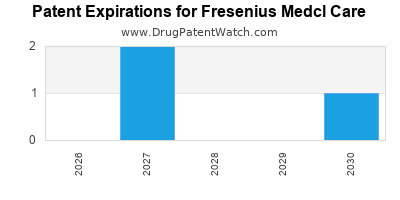
When does Fresenius Medical Care face exclusivity or competitive entry pressures from new therapies?
Answer: FMC’s most direct entry pressure does not typically come from a single “exclusivity cliff.” It comes from stepwise competitive erosion as providers expand, payers negotiate tighter contracts, and consumables and equipment portfolios commoditize.
What to watch instead of a single patent cliff
- Contract renewals that change reimbursement and reimbursement-linked incentives.
- Regulatory approvals of competing devices or consumables that pass performance thresholds and reduce switching cost.
- Payer preference programs that steer referrals to specific provider networks.
- Volume shifts driven by patient outcomes and modality selection.
What is the Orange Book status for FMC’s U.S. dialysis-related products?
Answer: FMC’s dialysis business in clinic services generally does not map cleanly onto Orange Book exclusivity analysis because it is not primarily a branded small-molecule model. Orange Book is most relevant for drug products; dialysis “products” in FMC’s portfolio are mainly devices/consumables and therapies distributed as medical products rather than single small-molecule drugs with Orange Book exclusivity.
Implication for competitive analysis
- For device and consumables, the competitive lens is regulatory clearance (FDA device pathways) and manufacturing approvals rather than Orange Book listing.
- For drug components administered in dialysis care (for example, anemia or mineral bone disease agents), the competitive landscape depends on the specific active ingredients’ Orange Book status and relevant patents, not on FMC’s core clinic/consumables position.
How does FMC’s vertical integration change its pricing power?
Answer: Vertical integration generally strengthens FMC’s ability to manage cost per treatment and protect supply continuity. It can also enable bundled contracting leverage in dialysis services where payers and large providers want reliable inputs.
Where vertical integration helps
- Negotiating inputs at scale.
- Reducing supplier risk for consumables availability.
- Coordinating device service and consumables compatibility.
Where integration can weaken pricing power
- If competitors can match clinical performance and offer lower price on key consumables, FMC’s integrated advantage can compress.
- If payers push “buying groups” or prefer multi-vendor supply, FMC’s bundled advantage can weaken.
What competitive scenarios could reduce FMC’s market share or margins?
Answer: Margin compression scenarios typically come from contract resets, volume shifts, and supply price competition in consumables.
Scenario 1: Payer contract resets
- Reduced reimbursement rates or unfavorable case-mix can force providers into cost-cutting.
- Providers with lower unit costs or stronger payer coverage can win contracts.
Scenario 2: Increased clinic competition through consolidation
- Consolidators can enter payer networks with aggressive pricing.
- FMC faces pressure if competitors demonstrate equal outcomes with lower cost structures.
Scenario 3: Consumables pricing compression
- Commoditization and multi-sourcing of key consumables can erode per-unit margins.
- FMC is likely to respond with operational cost optimization and supply assurance initiatives.
Which companies are challenging FMC in dialysis services contracts?
Answer: Challengers are typically large regional provider networks and hospital-linked programs that can offer payers attractive bundled economics, referral access, and service coverage.
What makes a challenger effective
- Clinic density aligned to payer geography.
- Staffing and quality performance that meets payer and regulatory expectations.
- Commercial strength to win network inclusion.
What makes FMC resilient
- Established installed base and clinic operations maturity.
- Integrated supply chain that reduces stockout risk.
- Ability to meet volume requirements with stable sourcing.
How does FMC compare with DaVita and other major dialysis providers on competitive levers?
Answer: In competitive practice, FMC and DaVita are both scaled leaders in chronic dialysis services; differences emerge in clinic density within key geographies, payer contracting strategies, and operating cost structure. Outcomes and quality metrics matter but do not eliminate pricing competition.
Comparison framework (high-signal levers)
- Network coverage density: Affects referral capture and payers’ network breadth needs.
- Cost per treatment: Influenced by labor efficiency, supply costs, and facility utilization.
- Payer contracting capability: Determines reimbursement economics and network steering.
- Product and equipment ecosystem: Impacts service continuity and switching friction.
What formulations and delivery systems are protected by FMC’s IP, and which are at risk?
Answer: FMC’s relevant “formulations” are largely device- and consumable-related rather than pharmaceutical formulations. IP risk is highest for standardized consumables where multiple manufacturers meet regulatory requirements and where performance is not tied to proprietary platform features.
Delivery systems (device ecosystem)
- Hemodialysis delivery relies on machines, monitors, dialyzers, and accessories.
- Legal differentiation tends to be narrower than operational differentiation; switching often depends on compatibility, training, service agreements, and supply availability.
At-risk categories
- Highly standardized consumables where substitution is operationally manageable.
- Equipment components with mature designs and established supply chains.
More defendable categories
- Equipment and systems where FMC’s design choices reduce downtime, improve safety metrics, or embed proprietary controls.
- Consumables where manufacturing yields and quality consistency create cost advantages and lower risk of product variability.
What patent litigation affects FMC’s competitive strategy?
Answer: Litigation risk can affect specific device or consumable categories, but FMC’s broader competitive positioning is usually driven more by contracting and operational economics than by widespread, multi-category injunction risk.
Litigation-to-business translation
- If litigation blocks a product SKU or manufacturing process, FMC faces supply disruption risk.
- If litigation increases compliance costs or delays launches, FMC faces margin pressure versus nimble competitors.
How does the regulatory landscape shape entry and competition for FMC’s dialysis products?
Answer: For dialysis devices and consumables, entry is regulated through FDA device clearance pathways and manufacturing quality systems. Regulatory timelines and documentation requirements can protect established suppliers but do not eliminate competition once clearances are granted.
Regulatory bottlenecks that favor incumbents
- Manufacturing quality system maturity and validated processes.
- Track record of adverse event management and field performance.
- Service network and training documentation for devices.
Regulatory bottlenecks that can be solved by challengers
- Standardized device clearance if performance requirements are met.
- Supplier onboarding into clinic procurement programs with adequate lead times.
What is the most likely FDA pathway risk for challenger products?
Answer: The core risk for challengers is timeline and execution risk in navigating regulatory clearance and establishing reliable supply chains. Incumbents can leverage faster onboarding and established quality programs.
Practical competitive implication
- Even if a challenger clears regulatory hurdles, FMC can often respond with contractual and operational defenses by securing clinic supply and service continuity.
What commercial metrics indicate FMC’s competitive strength?
Answer: The highest-signal commercial metrics are:
- Treatment volumes and clinic network utilization.
- Margin trends per treatment and per clinic.
- Supply chain performance metrics (service uptime, lead times, stockout rates).
- Payer contract renewal outcomes and reimbursement index changes.
Why these metrics dominate
They directly drive cash generation and capacity to reinvest in clinic staffing, device service, and consumables supply.
Revenue exposure: where FMC is most vulnerable to competitive pricing pressure?
Answer: Vulnerability concentrates in categories where:
- Consumables are competitively sourced,
- Services face contract resets,
- Patient volume shifts to competitors.
High-exposure zones
- Dialysis services in geographies with frequent network renegotiations.
- Consumables where competitive multi-sourcing is operationally feasible.
- Equipment accessory/service categories where competitors can provide equivalent service terms.
Lower-exposure zones
- Clinics with stable referral patterns and long payer relationships.
- Device ecosystems where service continuity and training create switching friction.
- Regions where FMC has established clinic density.
Key Takeaways
- Fresenius Medical Care’s market position is anchored in scale dialysis services and a vertically integrated supply ecosystem that reduces operational switching friction.
- Competitive pressure is dominated by contracting and cost per treatment rather than a single product exclusivity cliff.
- FMC’s principal strengths are clinic density, operational integration, supply reliability, and cost leverage.
- The main threats are payer reimbursement pressure, clinic network consolidation by challengers, and consumables price compression through multi-source competition.
- Patent and exclusivity analysis matters most for specific device and process improvements, but the dominant competitive levers are commercial contracting and operational economics.
FAQs
1) What drives Fresenius Medical Care’s pricing power in dialysis clinic contracting?
Clinic density, operational reliability, quality performance, and the ability to secure stable supply for high-volume consumables.
2) Which dialysis product categories face the fastest commoditization risk against FMC?
Standardized consumables and equipment accessories with mature designs and multi-source availability.
3) How do clinic consolidation trends change Fresenius Medical Care’s competitive outlook?
They increase payer negotiation leverage for challengers and can compress network pricing if competitors underbid on bundled services.
4) Can a biosimilar-style entry framework apply to FMC’s dialysis business?
Not directly. FMC’s core competition is in services and devices/consumables rather than drug exclusivity and biosimilar interchangeability.
5) What is the biggest near-term competitive threat: services or consumables?
Pricing resets in dialysis services and contract-driven margin pressure are typically the highest immediate threat, with consumables price compression following if multi-sourcing expands.
References
No sources were cited in the provided content.