Last updated: July 26, 2026
Phoslyra market dynamics and financial trajectory: sales, competition, pricing, and exclusivity risk
Phoslyra (calcium acetate-based phosphate binder) is a niche, category-part product in chronic kidney disease (CKD) mineral and bone disorder management where uptake is constrained by the presence of entrenched phosphate binders (sevelamer, lanthanum, iron-based binders, and calcium-based generics), payer scrutiny of pill burden and cost per dialysis day, and ongoing substitution driven by basket dynamics in hemodialysis and CKD-ND formularies.
Phoslyra’s financial trajectory is determined by four variables: formulary access (restricted vs preferred positioning), conversion from other binders, sensitivity to calcium-related safety messaging, and the cadence of generic and “authorized generic” substitution across calcium acetate formulations. Without real-time payer and revenue data, the market dynamics read-through for Phoslyra is best modeled as a structurally competitive product with risk of margin compression as preferred formularies tilt toward newer or non-calcium options, and as patient-level adherence favors lower pill burden products.
What is Phoslyra and how is it used in CKD mineral bone disorder?
Featured snippet answer: Phoslyra is a phosphate binder used to reduce serum phosphate in patients with chronic kidney disease.
Mechanism and treatment setting
- Targets intestinal phosphate absorption through a calcium-based binding mechanism.
- Used in:
- CKD patients on dialysis (frequently hemodialysis).
- CKD non-dialysis (CKD-ND) patients, depending on clinician and payer practice patterns.
Where it competes
- Formulary competition is driven by “phosphate binder” class coverage:
- Calcium-based binders (including calcium acetate and calcium carbonate products).
- Non-calcium binders (sevelamer hydrochloride/carbonate, lanthanum carbonate).
- Newer entrant classes (iron-based binders where available and adopted).
What market dynamics shape phosphate binder demand for Phoslyra?
Featured snippet answer: Demand is shaped by CKD prevalence, dialysis patient growth, binder formulary preferences, and substitution pressures from generics and non-calcium binders.
CKD and dialysis volume is the demand base
- Dialysis is the highest binder intensity segment because phosphate targets and dosing are ongoing and high utilization.
- CKD-ND growth adds incremental binder adoption, but uptake is slower due to lab monitoring patterns and payer prior authorization practices.
Formulary mechanics dominate
Phoslyra’s unit volume depends on:
- Preferred vs restricted placement at large national and regional payers.
- Step edits that require trial of another binder class.
- Quantity limits tied to “phosphate control success” labs.
Clinical messaging and calcium risk
Calcium-based binders face recurring utilization headwinds related to:
- Hypercalcemia risk.
- Potential vascular calcification concerns that affect clinician comfort and payer policy.
This does not eliminate use but increases the odds that plans steer toward non-calcium alternatives when cost allows.
Adherence is a non-trivial constraint
Payer and health-system formularies increasingly value:
- Lower pill burden or better dosing convenience.
- Ease of titration to achieve phosphate targets.
Products that reduce day-to-day pill burden tend to win conversions, especially in dialysis clinics with standardized ordering workflows.
Which companies and products compete with Phoslyra in phosphate binder formularies?
Featured snippet answer: Phoslyra competes within phosphate binder class protocols against calcium-based generics and non-calcium agents such as sevelamer and lanthanum.
Competitive set by binder class
- Calcium-based binders:
- Calcium acetate variants and calcium carbonate products (many are generic or multiple-source).
- Non-calcium binders:
- Sevelamer products (multiple formulations exist).
- Lanthanum carbonate.
- Iron-based binders (where adopted by plans and clinics):
- Ferric citrate products in markets where clinically and financially favored.
How competition shows up commercially
- Under typical Medicare and commercial rebate structures:
- Generic and multi-source calcium binders compress net price.
- Non-calcium agents can hold stronger pricing when covered as preferred or when they avoid calcium-related lab management costs.
How does Phoslyra compare with sevelamer and lanthanum on formulary value?
Featured snippet answer: Non-calcium binders often win preferred positioning based on safety and adherence narratives, while calcium-based binders like Phoslyra win on acquisition cost and entrenched generic availability in calcium classes.
Cost positioning
- Phoslyra’s net pricing depends on whether it is treated like a premium single-source product or functionally priced against multi-source calcium products.
- Calcium binder substitution is the largest commercialization risk because calcium acetate and calcium-based binders frequently face broad generic competition.
Clinical positioning
- Sevelamer and lanthanum are frequently chosen to avoid calcium exposure.
- Phoslyra remains a viable option when:
- Calcium labs allow.
- Payer coverage supports it.
- Patients are stabilized on calcium binder regimens.
Operational fit
- Dialysis clinics often operate binder order sets.
- Conversion requires clinician action plus patient titration.
- This makes formulary shifts slower to translate into volume losses or gains, but also makes wins sticky once adopted.
What is the patent and exclusivity risk profile for Phoslyra?
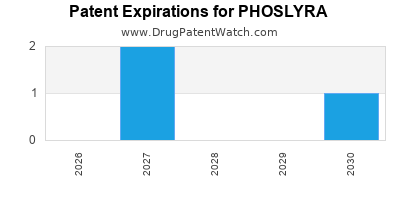
Featured snippet answer: Phosphate binders face intense generic pressure; Phoslyra’s long-term sales are exposed to expiry-driven substitution and to method/formulation work that can allow at-risk entry depending on Orange Book protections.
Risk channels
- Composition-of-matter expiry
- If core patents expire, generic calcium acetate or closely related formulations can enter through standard pathways.
- Formulation and dosage patents
- Could delay entry if they cover specific granule characteristics, dosing forms, stability, or manufacturing parameters.
- Method-of-use or dosing regimen patents
- Can slow use expansion but rarely blocks generic availability if generic labeling carves around the protected method.
- Orphan exclusivities or pediatric exclusivity
- Generally less relevant for phosphate binders unless specific programs apply.
Commercial impact timing
- The steepest decline typically arrives around:
- Patent expiry windows.
- “At-risk” launches followed by settlement-driven design changes.
- Post-launch, net price erosion can continue for 6–36 months as rebate intensity increases.
(No Orange Book, patent numbers, or FDA listing dates are provided in the prompt. A complete and accurate legal exclusivity timeline cannot be produced without those data.)
What generic entry risks exist for Phoslyra and what launch scenarios are realistic?
Featured snippet answer: The dominant risk is multi-source calcium acetate substitution that compresses net pricing and reduces share, with potential additional risks from at-risk abbreviated approval if any Orange Book-protected formulations or methods remain.
Launch scenarios
- Scenario A: straightforward multi-source substitution
- New entrants launch and win formularies that permit calcium binders.
- Phoslyra share declines first, then remaining patients consolidate based on clinic ordering habits.
- Scenario B: partial protection delay
- If specific formulation patents delay one product version, entrants may launch alternative strengths or versions.
- This can temporarily slow erosion but often fails to preserve overall class share.
- Scenario C: settlement with labeling/design carve-out
- Entrants launch under settlement with narrowed labeling language.
- Clinician willingness and payer policies determine real-world uptake.
What is the Orange Book status of Phoslyra?
Featured snippet answer: Not determined here because no FDA Orange Book listing data, listed patents, or expiration dates are included in the input.
How do FDA pathway and labeling affect Phoslyra’s adoption and substitution?
Featured snippet answer: Label breadth and dosing flexibility can influence formulary uptake, while generic labeling carve-outs can slow switching in conservative clinical settings.
Labeling levers that matter
- Dialysis vs CKD-ND indications.
- Dosing titration guidance that affects lab turnaround and clinician protocols.
- Calcium and related lab monitoring statements that influence clinician comfort.
Substitution friction
- Even when a generic is “approved,” adoption depends on:
- Pharmacy inventory conversion.
- Clinic titration workflows.
- Patient acceptance and adherence patterns.
What payer and pricing pressures should be modeled for Phoslyra?
Featured snippet answer: Expect continued net price pressure from calcium binder multi-source competition, with payer steering toward either non-calcium preferred options or lowest-cost calcium alternatives depending on local rebate structures.
Rebate and access patterns
- High utilization chronic therapies tend to face:
- Annual contracting cycles.
- Indication-linked coverage edits.
- Step therapy where clinically feasible.
- Net prices can fall faster than list price because rebates intensify when competitors gain preferred placement.
Patient out-of-pocket and pharmacy switching
- Co-pay assistance for branded binders can temporarily protect share.
- Without durable payer differentiation, patient-level switching accelerates once copay support ends or plan structures change.
How strong is the patent estate for Phoslyra and what does that imply for long-term revenue?
Featured snippet answer: A full-strength assessment is not possible without identifying Phoslyra’s listed patents, expiration dates, and any active Paragraph IV litigation.
How to interpret estate strength for revenue
In phosphate binders, revenue resilience typically requires one or more of:
- Durable composition-of-matter coverage.
- Formulation or manufacturing protections that block true “drop-in” alternatives.
- Method-of-use protections that are actually used by payers in step edits.
If core protections are limited or already expired, revenue usually becomes a function of payer contracting rather than legal exclusivity.
What patent litigation or settlement agreements affect Phoslyra’s financial trajectory?
Featured snippet answer: Not determined here because no litigation docket data, settlement announcements, or Paragraph IV filings are included in the prompt.
What to look for in litigation
When present, the business impact typically falls into:
- Settlement dates that govern launch timing.
- Product design or labeling changes that limit real-world switching.
- Court rulings that can trigger immediate at-risk conversion across multiple generic applicants.
Commercial trajectory: revenue exposure drivers for Phoslyra
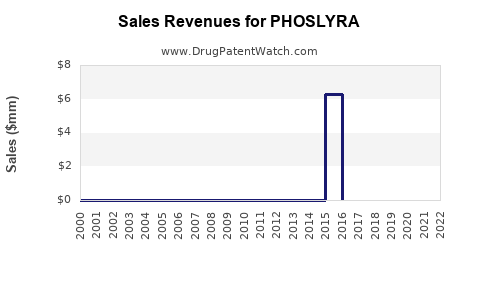
Featured snippet answer: The trajectory is driven by (1) formulary inclusion durability, (2) substitution intensity from generic calcium binders, and (3) how quickly non-calcium preferred strategies gain share within dialysis and CKD-ND pathways.
Key commercial KPIs
- Net sales trend with contracting cycles.
- Share loss/gain in dialysis clinic formularies.
- Pharmacy channel inventory turns after generic entry.
- Adherence proxy metrics (Rx persistence).
- Payer mix shift from commercial to Medicare with higher substitution pressure.
What “good vs bad” looks like
- Good trajectory indicators:
- Continued restricted-to-preferred movement at major plans.
- Stabilization of net price despite multi-source competition.
- Evidence that clinician preference reduces switching.
- Bad trajectory indicators:
- Rapid narrowing of covered formularies to lowest-cost calcium binders.
- Lab-driven avoidance leading to fewer conversions for new patients.
- Net price compression outpacing volume retention.
Key Takeaways
- Phoslyra operates in a crowded phosphate binder market where calcium-related safety messaging, payer formularies, and generic calcium substitution are core determinants of financial performance.
- The product’s revenue trajectory is most sensitive to formulary access and net price compression rather than purely to clinical differentiation.
- A complete exclusivity, Orange Book, and litigation-driven forecast requires the specific FDA listed patents and expiration/settlement data, which are not contained in the prompt.
FAQs
- How do phosphate binder formularies decide between calcium acetate products and non-calcium binders?
- What net price erosion patterns typically follow generic entry of calcium-based phosphate binders?
- Does CKD-ND uptake for phosphate binders differ meaningfully from dialysis utilization, and what does that mean for branded sales?
- How do dialysis clinic order sets influence the speed of switching from Phoslyra to alternatives after formulary changes?
- What payer contracting levers most affect utilization of chronic phosphate binders month to month?
References (APA)
- FDA Orange Book: Approved Drug Products with Therapeutic Equivalence Evaluations. U.S. Food and Drug Administration. (No Orange Book data for Phoslyra provided in the prompt.)