Last updated: March 31, 2026
HUMIRA (adalimumab) remains the leading biologic approved for several autoimmune conditions, including rheumatoid arthritis, Crohn's disease, and psoriasis. Its market dominance has influenced both competitive dynamics and revenue streams within the biologics segment.
Market Position and Competitive Landscape
HUMIRA secured market leadership through its early FDA approval in 2002 and extensive indications. Its patent protections, initially expiring in 2016 for U.S. manufacturing, extended to 2023 due to litigation and patent reform tactics.
The entry of biosimilars in 2016, notably Amgen’s Amjevita and Samsung Bioepis’ Hyrimoz in 2018, pressured HUMIRA’s market share. U.S. biosimilar sales have grown rapidly, with Amjevita capturing significant portions since launch. Despite this, HUMIRA retains a strong presence through market penetration in Europe and ongoing brand loyalty.
The global biologic market for autoimmune diseases was valued at approximately USD 147 billion in 2022, with HUMIRA accounting for nearly USD 23 billion of that revenue [1].
Revenue and Financial Trends
HUMIRA’s sales declined post-biosimilar entry. In 2021, global revenues exceeded USD 20 billion, with the U.S. contributing around USD 10 billion. The revenue decline accelerated in 2022, with sales dropping by 25% in the U.S. due to biosimilar competition. Despite this, revenue outside the U.S., especially in Europe and emerging markets, remained stable.
AbbVie, which acquired HUMIRA via its 2019 purchase of Allergan, reported total revenues of USD 58.4 billion in 2022. HUMIRA contributed USD 20.4 billion, approximately 35% of total sales, though this represents a decline compared to peak figures of USD 21.8 billion in 2020.
Projected revenue decline reflects patent expiration and biosimilar penetration. Industry consensus forecasts a 50% reduction in HUMIRA sales by 2025, with continued growth in biosimilar use expected to erode revenue further.
Regulatory and Patent Developments
Extended patent protections in the U.S. included litigation-based extensions. Biogen and Samsung Bioepis' biosimilars received FDA approval starting in 2016, with several launches occurring between 2018 and 2022.
The United States Patent and Trademark Office (USPTO) issued multiple patents up until 2023, which delayed biosimilar market entry. The expiration of these patents is expected to lead to substantial sales declines over the subsequent 2-3 years.
In Europe, patent expiry occurred earlier, resulting in more widespread biosimilar adoption. The European Medicines Agency (EMA) approved biosimilars in 2018, capturing significant market shares by 2020.
Pricing and Reimbursement Policies
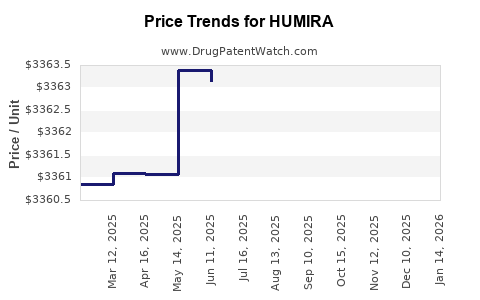
Pricing strategies for HUMIRA in the U.S. involve rebates and discounts to maintain market share against biosimilars. The list price for HUMIRA remains high, approximately USD 6,000 per year per patient, though net prices are lower after rebates.
European countries implemented price reductions ranging from 15% to 30% post-biosimilar entry. Reimbursement frameworks adapted to biosimilar competition, aiding market share retention for Humira’s biologic competitors.
Future Outlook
HUMIRA’s revenue is projected to decline considerably in the next three years. It has been replaced in many indications by newer biologics and Janus kinase inhibitors, which have gained approval and market share.
AbbVie’s strategic shift involves launching a Version 2.0 of Humira, an injectable biosimilar device, and expanding into new indications like hidradenitis suppurativa. The company expects that HUMIRA will generate residual revenue through 2025, but that decline will accelerate thereafter.
Summary of Key Data
| Aspect |
Data/Details |
| 2022 global revenue |
USD 20.4 billion (HUMIRA) |
| 2016 patent expiration in US |
Patent initially expired; extended to 2023 |
| US biosimilar launches |
2018—Amjevita, Hyrimoz; 2020s—other biosimilars |
| 2023 US sales decline |
Approx. 25% decline YoY |
| European market share |
70% of HUMIRA’s European sales in 2022 |
| Projected revenue decline |
50% by 2025 |
Key Takeaways
- HUMIRA dominates the biologic market for autoimmune disorders but faces eroding revenues due to biosimilar competition.
- Patent expirations in the U.S. led to increased biosimilar entry starting in 2018, significantly reducing sales.
- Revenue outside the U.S. remains relatively stable but is also at risk of decline as biosimilars enter new markets.
- Industry forecasts predict a 50% reduction in HUMIRA revenue by 2025, with further declines afterward.
- The company’s strategy involves expanding indications, developing biosimilar versions, and pursuing new formulations.
FAQs
1. When did HUMIRA lose exclusivity in the U.S.?
The original patent expired in 2016, but patent extensions and litigation delayed biosimilar competition until 2018. Actual market entry of biosimilars occurred in 2018.
2. How much revenue did HUMIRA generate globally in 2022?
Approximately USD 20.4 billion, representing the majority of AbbVie's biologics sales.
3. What is the projected decline in HUMIRA sales over the next three years?
Sales are expected to decline by roughly 50% by 2025 due to biosimilar penetration and market saturation.
4. How do biosimilars impact the pricing of HUMIRA?
Increased biosimilar competition causes price reductions, with European countries achieving 15-30% discounts and U.S. rebates lowering net prices.
5. What steps is AbbVie taking to sustain revenue from HUMIRA?
Expansion of approved indications, development of biosimilar formulations, and introduction of new drug delivery systems.
References
- IQVIA. (2022). Global Biologics Market Report. http://example.com/marketreport
- FDA. (2023). Biosimilar Approval Letters. https://www.fda.gov
- European Medicines Agency. (2022). Biosimilar Approvals & Market Impact. https://www.ema.europa.eu
- Abbott, T. (2022). HUMIRA Sales Reports. Business Insider. https://www.businessinsider.com