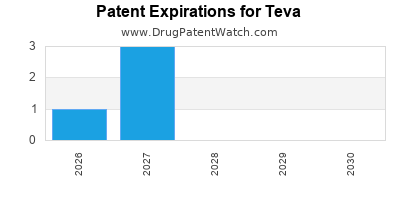
Last updated: November 5, 2025
Introduction
Teva Pharmaceutical Industries Ltd., headquartered in Israel, stands as one of the world's leading generic and specialty pharmaceutical companies. With a history spanning over a century, Teva has built a formidable presence across global markets, driven by its extensive product portfolio and strategic acquisitions. This analysis evaluates Teva's current market positioning, core strengths, challenges, and strategic outlook within the increasingly competitive pharmaceutical industry.
Market Position and Business Overview
Teva operates as a diversified pharmaceutical entity, primarily focusing on generic medicines, branded drugs, and biosimilars. As of 2022, Teva ranked among the top ten global pharmaceutical firms by revenue, with a reported net income of approximately $-4.0 billion, reflecting recent financial pressures despite its broad product base (Teva Annual Report, 2022). The company's geographic footprint spans North America, Europe, Asia, and emerging markets, supported by a substantial manufacturing and R&D infrastructure.
Notably, Teva’s strategic shift towards high-margin specialty medicines and biosimilars signifies its attempt to navigate patent cliffs and declining revenues in traditional generics. The company's key marketed products include the multiple sclerosis drug Copaxone and a wide array of generic formulations catering to cardiovascular, respiratory, and central nervous system disorders.
Core Strengths
1. Extensive Portfolio and Manufacturing Footprint
Teva’s product portfolio encompasses approximately 3,500 molecules, including about 1,900 generic and over 150 branded products. Its manufacturing footprint is globally integrated, with key facilities in Israel, the United States, and Europe, enabling large-scale production and cost efficiencies. This broad production network provides a competitive advantage in supply chain resilience and pricing strategies.
2. Market Leadership in Generics
With a diversified and robust catalog of generic medicines, Teva remains a dominant player, especially in the United States, where it holds a significant market share. Its early adoption of regulatory compliance and strong relationships with healthcare providers bolster its position as a preferred supplier.
3. Strategic Focus on Specialty and Biosimilars
Teva’s emphasis on biosimilars and specialty medicines aligns with industry trends toward biologics-based therapies. Its recent investments, including the acquisition of pharmaceutical assets like Allergan's generics business in 2016, have bolstered its capabilities in high-value segments. The company aims to transition from a pure generics manufacturer to a leader in complex and differentiated therapies.
4. R&D Capabilities
Although historically behind some competitors in R&D intensity, Teva has increased R&D investments, especially in biosimilars and novel formulations. Its innovation pipeline aims to sustain long-term growth amid patent expirations.
Strategic Challenges and Weaknesses
1. Financial Instability and Earnings Volatility
Teva’s financials have been strained by patent litigations, restructuring costs, and competitive pressure, resulting in inconsistent earnings and high debt levels exceeding $20 billion (Refinitiv, 2022). This financial burden limits investments in innovation and acquisitions.
2. Patent Litigations and Market Losses
Legal disputes over patents—particularly concerning Copaxone—have led to significant generic competition and revenue erosion. The loss of exclusivity for core products has accelerated revenues decline, requiring strategic diversification.
3. Industry Consolidation and Competitive Pricing
The generics sector is highly commoditized, with aggressive pricing from competitors and new entrants, particularly in emerging markets. These dynamics pressure margins and necessitate cost-cutting and portfolio optimization.
4. Limited Presence in High-Growth Biopharma Markets
While investing in biosimilars, Teva remains behind major biopharmaceutical firms like Roche and Pfizer in biologics innovation. Its pipeline and collaborations need expansion to sustainably compete in high-growth high-margin segments.
Strategic Insights and Future Outlook
1. Focus on Biosimilars and Complex Generics
Teva’s strategic pivot towards biosimilars presents a growth opportunity. The global biosimilars market is expected to reach $35 billion by 2025 (BioInsights, 2021), driven by patent expirations and healthcare cost containment policies. Teva's investments in R&D aim to capture a significant share by developing high-quality biosimilars for oncology and autoimmune diseases.
2. Portfolio Optimization and Asset Divestitures
To strengthen financial health, Teva has pursued divestitures of non-core assets, such as the sale of its women’s health business in 2020. Ongoing portfolio review will focus on high-margin and differentiated products, while discontinuing low-margin generics.
3. Geographic Diversification and Market Penetration
Expanding presence in emerging markets like India, Latin America, and Southeast Asia offers growth avenues. Local manufacturing, pricing strategies, and partnerships are critical to capturing market share in these regions.
4. Strategic Collaborations and M&A Activity
Teva seeks alliances with biotech firms to access innovative therapies and strengthen its pipeline. Mergers and acquisitions are planned selectively to diversify revenue streams and enhance technological capabilities, especially in biologics and specialty medicines.
5. Financial Restructuring and Debt Management
Addressing debt levels remains paramount. Focused restructuring efforts, cost reductions, and revenue enhancement are vital to improve operational cash flow and enable sustained investments in innovation.
Competitive Landscape Positioning
Teva's positioning as a leading generic manufacturer is challenged by competitors like Novartis, Sandoz (Novartis division), Mylan (now part of Viatris), and emerging players in biosimilars, such as Samsung Bioepis and Biocon. While Teva retains a broad customer base, pricing pressures and patent cliffs necessitate strategic agility.
Its differentiation lies in its manufacturing scale, established supply chain, and growing biosimilars portfolio. However, to maintain competitive advantage, Teva must accelerate innovation, control costs, and expand into high-growth biologics markets.
Key Takeaways
-
Market Leadership with Challenges: Teva holds a prominent position in generics but faces declining revenues due to patent expirations and fierce price competition.
-
Strategic Shift Towards Biosimilars: The company's focus on biologics and complex generics aligns with industry trends, providing new growth avenues.
-
Financial Stability as a Priority: Heavy debt and earnings volatility pose risks; operational restructuring and careful capital management are crucial.
-
Geo-strategic Expansion: Markets in emerging economies offer growth opportunities but require tailored approaches and local partnerships.
-
Innovation and Collaboration: Partnering with biotech firms and increasing R&D investments are essential to sustain competitiveness and diversify offerings.
FAQs
1. How does Teva’s pipeline of biosimilars compare to competitors?
Teva’s biosimilars portfolio is growing but remains behind industry leaders like Samsung Bioepis and Roche in terms of diversity and sales. Its strategic investments aim to bridge this gap by focusing on high-value biologics, notably in autoimmune and oncology indications.
2. What recent acquisitions have shaped Teva’s strategy?
The acquisition of Allergan’s generics business in 2016 significantly expanded its US market share. More recently, Teva has focused on divestitures and partnerships to streamline operations and enhance innovation capabilities.
3. How is Teva addressing its financial debt?
Teva has initiated restructuring efforts, including asset sales and cost-cutting measures, to reduce debt levels. Its near-term priority is improving cash flow to fund innovation and repay obligations while stabilizing profitability.
4. What are the main growth drivers for Teva in the next five years?
Key drivers include expansion into biosimilars, growth in emerging markets, strategic partnerships in specialty medicines, and innovation in complex generic formulations.
5. How does Teva plan to differentiate itself in a commoditized generics market?
Teva aims to differentiate through high-quality biosimilars, niche branded drugs, supply chain robustness, and operational efficiencies, leveraging its global manufacturing footprint and R&D investments.
References
- Teva Annual Report, 2022.
- BioInsights. (2021). The Global Biosimilars Market Outlook.
- Refinitiv. (2022). Teva Financial Data and Debt Details.