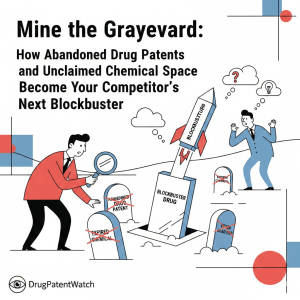
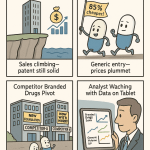
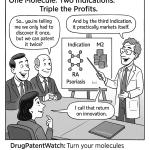
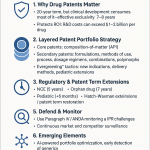
In the spring of 2014, a small biotech called Idenix Pharmaceuticals held patents covering certain nucleotide analogue structures with antiviral activity against hepatitis C. Merck acquired Idenix for $3.85 billion — not for its pipeline, not for its clinical assets, and certainly not for its commercial operation. Merck paid $3.85 billion for its patents [1].
That acquisition is a clean illustration of a dynamic that most pharmaceutical executives acknowledge but few systematically exploit: intellectual property covering molecules, formulations, mechanisms, and chemical spaces that was once filed, once valued, and then abandoned, lapsed, or ignored often retains enormous scientific and commercial utility. The companies that find it first — before competitors, before generics, before the market figures out what it actually covers — convert that latent value into proprietary programs.
The ones who ignore it discover the same territory after a competitor has already staked their claim.
This article examines the full architecture of abandoned, lapsed, and unclaimed chemical space in pharmaceutical patent strategy. It covers why patents get abandoned, how the territory they covered reverts to public domain or becomes available for exploitation, the specific mechanisms through which competitors mine that space, and what your organization can do to either exploit it offensively or defend against competitors doing exactly that to your legacy programs.
Part One: The Anatomy of a Pharmaceutical Patent Graveyard
Why Patents Get Abandoned — And What Gets Left Behind
A pharmaceutical patent does not expire on a single day in a single way. It lapses, it gets abandoned, it gets invalidated, it gets let go for reasons that made sense at the time and often look inexplicable in hindsight. Understanding the different modes of abandonment matters because each leaves a different type of residue — different legal exposure, different competitive opportunity, different regulatory pathway for whoever picks the territory up.
Maintenance fee non-payment is the most common cause of early abandonment. U.S. utility patents require maintenance fees at 3.5, 7.5, and 11.5 years after grant [2]. Miss a payment and the patent expires. A six-month grace period allows late payment with a surcharge, but beyond that grace period, the patent is unenforceable and the disclosed technology enters the public domain. For small biotechs managing cash against a runway, a $7,400 maintenance fee at the 11.5-year mark can get deprioritized when clinical trial costs are consuming capital. For large pharmaceutical companies managing portfolios of hundreds or thousands of patents, individual maintenance decisions get made by patent management systems rather than by scientists or strategists who understand the underlying chemistry.
The result: patents covering molecules that were synthesized, characterized, and demonstrated to have biological activity in the disclosed specification get abandoned because nobody connected the patent management decision to the compound’s residual scientific value.
Prosecution abandonment happens when applicants fail to respond to office actions within the statutory deadline — typically three months with extensions available for up to six months [3]. After the extended deadline passes, the application goes abandoned. In pharmaceutical prosecution, office actions often raise enablement, written description, or obviousness rejections that require substantive work to overcome. Applicants whose circumstances changed — company pivoted, lead program changed, key scientists left — sometimes let the application go without response rather than invest in overcoming the rejection. The result is an abandoned application whose disclosure is publicly available but whose claims were never granted.
Strategic abandonment is less common but more interesting. A pharmaceutical company occasionally abandons a patent or an application deliberately, having decided that the underlying program will not be pursued and seeing no value in the maintenance cost. The company may be correct: perhaps the molecule showed toxicity in later studies, the indication was not commercially attractive at the time, or the program was displaced by a superior compound. Or it may be wrong in ways that become apparent only when scientific understanding advances, the indication becomes commercially relevant, or a delivery technology emerges that solves the problems that made the molecule unattractive.
Statutory expiration — the 20-year term running from the earliest priority date — produces the largest volume of technically free territory [4]. Every composition-of-matter patent on a pharmaceutical compound eventually reaches its 20-year limit. When it does, anyone can make, use, and sell the compound without a license. The molecule passes to the public domain. What does not necessarily pass to the public domain: the specific formulations, delivery systems, methods of use, and manufacturing processes that were developed after the composition-of-matter filing. Those may still be under patent. The chemical structure is free; the commercial product form may not be.
Understanding the distinction between what is in the public domain and what is still under patent protection is where the competitive analysis gets genuinely complicated — and genuinely valuable.
The Volume Problem: How Much Unclaimed Space Actually Exists
The scale of available pharmaceutical patent territory is larger than most practitioners recognize. The USPTO has granted more than 650,000 patents in the pharmaceutical and biotechnology categories since 1980 [5]. The majority of those patents have lapsed, expired, or been abandoned. The patents that covered commercially successful drugs account for a small fraction of the total. The rest — covering molecules that were synthesized, characterized, studied, and ultimately not pursued commercially — represent a vast library of disclosed but unexploited chemistry.
The CAS Registry, maintained by the American Chemical Society, contains over 200 million unique organic and inorganic substances [6]. A significant portion of those substances were first disclosed in patent literature — pharmaceutical patent applications that described synthetic routes, biological activity data, and structural characterizations for compounds that were never developed into drugs. The compounds exist in the literature. The synthesis routes are described. The biological data, however preliminary, has been generated and disclosed.
Researchers at the Novartis Institutes for BioMedical Research estimated that of all compounds described in pharmaceutical patent literature with documented biological activity, fewer than 3 percent have been the subject of clinical development programs [7]. The remaining 97 percent sit in the disclosed but undeveloped space — not secret, not protected by active patents in most cases, but not actively pursued either.
This is not a minor inefficiency. It is the largest unmapped opportunity in pharmaceutical R&D.
Chemical Space Versus Patent Space: A Critical Distinction
“Unclaimed chemical space” has a specific meaning in pharmaceutical strategy that is distinct from its use in organic chemistry. In patent terms, chemical space refers to the set of molecular structures not currently covered by active, enforceable patent claims. A compound that exists in disclosed patent literature but whose covering patent has expired is “in the chemical space” of a given structural class but is no longer “in the patent space” — the patent claim is gone.
The distinction matters because many pharmaceutical researchers treat the expired patent status of a compound as confirmation that it cannot be proprietary. The molecule is in the public domain; therefore it is not interesting for a proprietary drug program. This reasoning conflates the molecule with the drug. The molecule may be in the public domain. The drug — the specific formulation, dosage form, delivery system, and clinical indication optimized through subsequent development — is an entirely new invention, potentially patentable on entirely new grounds.
Shire’s development of lisdexamfetamine (Vyvanse) from dextroamphetamine illustrates the distinction precisely. Amphetamine salts had long been public-domain compounds. Shire took a public-domain active pharmaceutical ingredient, developed a prodrug formulation that required enzymatic cleavage for activation (making it harder to abuse), ran clinical trials demonstrating efficacy and reduced abuse potential, and obtained patents covering the prodrug structure, the method of treatment, the pharmacokinetic profile, and the abuse-deterrent mechanism [8]. Vyvanse generated over $2 billion in annual revenues at its peak, built on a core molecule that anyone could have used.
The question was not whether the compound was free. The question was whether anyone would do the work to turn a free compound into a proprietary drug product.
Part Two: The Legal Framework for Mining Public Domain Chemistry
What “Public Domain” Actually Allows — And What It Does Not
When a pharmaceutical patent expires or is abandoned, the public domain status of the covered invention is immediate and permanent. No patent holder can reclaim exclusivity over the specific claims that expired. But “public domain” is not the same as “fully free to commercialize.” The regulatory pathways for bringing a drug to market based on public-domain chemistry involve their own costs and constraints.
For small-molecule drugs, the most direct pathway is the 505(b)(2) application, which allows an applicant to rely on published literature and existing safety data rather than conducting the full preclinical and clinical program that a new chemical entity application (NDA) would require [9]. If the compound has prior human safety data in the literature — including data from the original developer’s programs, data from academic research, or data from other regulatory submissions that have become publicly available — a 505(b)(2) applicant can reference that data.
The 505(b)(2) pathway does not eliminate development costs. It reduces them. The applicant still needs to demonstrate that the specific product — the particular formulation, dosage form, and clinical indication it is seeking approval for — is safe and effective. Clinical trials may still be required, particularly for new indications or formulations that differ significantly from anything previously studied. But the ability to reference prior safety data substantially compresses the preclinical package and sometimes the Phase 1 clinical program.
What the 505(b)(2) pathway does not provide: it does not give the new applicant access to the original developer’s proprietary clinical data. That data remains protected by trade secret and, in the case of data submitted to the FDA, by the regulatory data exclusivity provisions of 21 U.S.C. § 355 [10]. If the original developer’s NDA data is still within its exclusivity period — five years for new chemical entities, three years for new clinical investigations — the 505(b)(2) applicant cannot rely on it, even if the composition-of-matter patent has lapsed.
This creates an important temporal asymmetry. A molecule’s patent protection and its data exclusivity run on different clocks. Data exclusivity for the original approval attaches to the regulatory submission date, not the patent filing date. A composition-of-matter patent that expires eight years after approval leaves four more years of data exclusivity intact. A competitor mining the public-domain chemistry needs to either conduct independent studies or wait for the data exclusivity period to expire before referencing the original sponsor’s submissions.
Prior Art, Enablement, and the Public Domain Trap
One of the most common errors in pharmaceutical competitive intelligence is treating all public-domain patent territory as freely available for claiming in new applications. It is not, quite. Prior art doctrine means that a compound first disclosed in a 1990 patent — now long-expired — is prior art against any new patent application that claims the same compound or its obvious variants [11]. You cannot refile a patent on a compound just because the original patent expired. The expired patent is itself prior art.
What you can patent on a previously disclosed compound:
New formulations that were not obvious from the prior art. An extended-release version of a compound disclosed only in immediate-release form in the prior art can be patentable, provided the formulation approach was not obvious to someone skilled in the art.
New methods of use. A compound disclosed in prior art as having antibacterial activity can be patented for antifungal use if that activity was not disclosed or obvious from the prior disclosure. Similarly, a compound disclosed for use in adults can be patented for use in pediatric populations if the pediatric pharmacology required non-obvious investigation.
New salts, polymorphs, or co-crystals with non-obvious properties. If a prior art compound was disclosed only in its free base form, a specific salt form with superior bioavailability, stability, or processability can be patentable. The key word is “non-obvious”: the salt itself must demonstrate properties that were not predictable from the prior art.
New synthetic routes with commercial advantages. If the prior art synthesis route is impractical at commercial scale, a new route with genuine efficiency improvements can be patentable. This does not prevent others from using the old route, but it can provide process patent protection over the most commercially practical manufacturing method.
The enablement doctrine adds a further wrinkle. Prior art must actually enable a skilled person to make and use the disclosed invention [12]. Some older patents — particularly those filed before modern computational chemistry and high-throughput synthesis tools — disclose broad genus claims covering millions of potential compounds but only demonstrate synthesis and activity for a handful of specific examples. Courts and the USPTO have increasingly scrutinized whether genus claims are actually enabled by limited examples, a doctrine the Supreme Court clarified in Amgen Inc. v. Sanofi (2023) [13].
The practical implication: large genus claims in expired pharmaceutical patents may not actually block the patentability of every compound nominally within their scope. If the original patent claimed “a compound of formula X where R is any alkyl group” but only demonstrated synthesis of compounds where R is methyl and ethyl, an applicant developing a compound where R is a complex heterocycle may be able to argue the original patent did not enable that specific compound. The legal analysis is fact-specific and requires an experienced opinion, but the opportunity is real.
The PTAB Reexamination Legacy: Mining Invalidated Patents
An additional layer of the pharmaceutical patent landscape involves patents that were challenged and invalidated — not abandoned voluntarily, but declared unenforceable by the Patent Trial and Appeal Board in IPR proceedings, by district courts in Hatch-Waxman litigation, or by the USPTO in ex parte reexamination [14]. When a patent is invalidated, its claims are treated as if they never existed. The scope of what was formerly “claimed” by that patent becomes prior art-free from the date the patent would have been prior art against subsequent filings — a nuanced but commercially significant point.
More directly: an invalidated patent is prior art in the same way an expired patent is prior art. The compound or method it disclosed is in the public domain. But if the invalidation was based on a prior art combination that rendered the specific claimed embodiment obvious, there may be neighboring chemical space — variants of the invalidated compound not covered by the underlying prior art — that is both unpatented and potentially patentable.
PTAB’s written decisions in IPR proceedings are publicly available and detailed in their prior art analysis. Reading the winning prior art combinations in a pharmaceutical patent IPR reveals exactly which structural variants the petitioner (usually a generic manufacturer) argued were obvious from prior art — and by implication, which variants may not have been covered by the prior art analysis. This is advanced analysis, but it is the kind of analysis that produces proprietary insight.
Part Three: Real Companies, Real Mistakes — And the Competitors Who Capitalized
Pfizer’s Sildenafil and the Pulmonary Arterial Hypertension Pivot
The history of sildenafil’s development as a cardiovascular drug, its clinical failure in that indication, and its incidental discovery as a treatment for erectile dysfunction is widely known. Less discussed is the chemical space that Pfizer’s original cardiovascular program disclosed but did not fully exploit — and the competitive dynamics that resulted.
Pfizer filed the core sildenafil composition-of-matter patent in 1993 [15]. The Viagra NDA was approved in 1998. Pfizer obtained a pediatric exclusivity extension. The primary composition-of-matter patent expired in the U.S. in 2012, though formulation and method-of-use patents extended Viagra’s market protection further. In 2005, Pfizer received approval for sildenafil under the trade name Revatio for pulmonary arterial hypertension (PAH) — a distinct indication requiring a different dosage (20 mg versus 100 mg) and supported by separate clinical studies.
The PAH indication had been described in the scientific literature as a potential application for PDE5 inhibitors before Pfizer pursued it commercially. Competitors — specifically GlaxoSmithKline with its prostacyclin analogue ambrisentan, Actelion with bosentan, and United Therapeutics with epoprostenol — had meanwhile established the PAH market through different molecular mechanisms. When Pfizer entered PAH with sildenafil, it entered a market that others had built.
The structural lesson: Pfizer held intellectual property disclosing PDE5 inhibition and had clinical data suggesting cardiovascular activity in smooth muscle, including pulmonary vasculature. The connection from PDE5 inhibition to pulmonary arterial hypertension was not a mystery requiring entirely new science. Companies with better patent landscape monitoring and a systematic program for evaluating disclosed but unpursued chemistry in their own portfolios might have prioritized the PAH indication years earlier, establishing dominance rather than late entry.
The Thalidomide Rehabilitation and Celgene’s $96 Billion Lesson
Thalidomide was withdrawn from markets in the early 1960s after its teratogenic effects became apparent [16]. For decades, it sat in the medical literature as a cautionary example. The compound’s chemistry was, of course, in the public domain.
In 1998, the FDA approved thalidomide (Thalomid) for erythema nodosum leprosum — a rare complication of leprosy — under strict distribution controls. The sponsor was Celgene Corporation. Celgene had not synthesized thalidomide; the molecule had been known for 40 years. What Celgene had done was study it systematically for modern indications, develop a risk management system (the STEPS program) that addressed its teratogenicity, and file patents covering its methods of use, the STEPS distribution program, and the specific clinical protocols for its approved indications [17].
The multiple myeloma program followed. Thalidomide’s immunomodulatory activity had been published in academic literature before Celgene’s programs. Celgene’s contribution was systematic clinical development, novel formulation work, and the construction of an IP estate around uses, protocols, and analogues rather than the compound itself. The analogue program produced lenalidomide (Revlimid) and later pomalidomide (Pomalyst) — structural variants of thalidomide with superior efficacy and safety profiles and independent, strong IP positions.
Bristol Myers Squibb ultimately acquired Celgene for $74 billion in 2019 [18]. A substantial portion of that acquisition value derived from the immunomodulatory imide drug (IMiD) franchise that Celgene built from a 40-year-old public-domain compound through systematic method-of-use development, analogue chemistry, and clinical program construction. The underlying molecule cost nothing. The IP estate built around it was worth tens of billions of dollars.
Actavis and the Lost Memantine Opportunity
Forest Laboratories had held the U.S. rights to memantine (Namenda) under license from Merz Pharmaceuticals, which developed the compound in Germany [19]. Forest commercialized memantine as Namenda for Alzheimer’s disease, generating peak revenues exceeding $1.5 billion annually in the U.S. When Namenda’s patents began expiring, Forest attempted a “product hop” to an extended-release formulation (Namenda XR), withdrawing the immediate-release formulation from the market to force patients and prescribers to the still-patented XR product.
The strategy failed. New York State’s attorney general obtained an injunction blocking the immediate-release withdrawal, holding that forcing patients off a generic-eligible product to drive them toward a patented reformulation constituted anticompetitive conduct [20]. The immediate-release went generic. Forest (by then Actavis, by then Allergan, by then AbbVie) maintained the XR franchise for a period but never achieved the franchise transition it had planned.
The IP lesson runs in both directions. First, the product hop strategy — abandoning an immediate-release product in favor of a patented extended-release formulation as a mechanism to delay generic competition — faces increasingly skeptical courts and regulators. The memantine case was not an isolated outcome; it reflected a judicial trend toward scrutinizing product transitions that primarily serve exclusivity extension rather than patient benefit.
Second, from a competitive intelligence perspective, the memantine landscape created an opportunity. When the immediate-release generic market opened, generics captured it rapidly. But the dementia pharmacology space — NMDA receptor modulation, the underlying mechanism of memantine — had been defined by Merz and Forest without full exploration of neighboring mechanisms and structural variants. Academic groups had published extensively on partial NMDA antagonists, glycine site modulators, and other mechanistic variants. The patent literature around those variants was sparse. Companies that surveyed that space systematically could find protectable territory that the original developers had left behind.
Abbott’s Clarithromycin and the Macrolide Patent Gap
Abbott’s clarithromycin (Biaxin) came off patent in the early 2000s, generating rapid generic entry and market share erosion [21]. Abbott had not built a second-generation macrolide franchise to defend the revenue. The macrolide antibiotic class — erythromycin, azithromycin, clarithromycin, telithromycin — had a complex IP landscape with patents held by multiple companies and a large body of public-domain chemistry from earlier generations.
Ortho-McNeil (part of Johnson & Johnson) had developed azithromycin (Zithromax) under license from Pfizer. Azithromycin’s commercial success was partly attributable to once-daily dosing and a shorter treatment course — features that derived from its formulation and pharmacokinetic profile, not solely its molecular structure. When azithromycin came off patent, the same story repeated: generic entry was rapid and thorough.
What the macrolide story illustrates is the consequence of treating the COM patent as the franchise boundary. The macrolide chemical space was rich with unexplored structural variants — compounds whose activity had been disclosed in academic and patent literature but never developed commercially. The original developers, focused on maximizing the commercial return from approved products, did not systematically mine that space for second-generation programs with independent IP positions.
Academic groups did. Several semi-synthetic macrolide variants with activity against emerging resistance profiles were published without commercial follow-through. By the time antibiotic resistance became a major commercial and policy priority, the window for filing strong composition-of-matter claims on those variants had often closed — because the academic literature was prior art against composition patents, and because the development economics of antibiotics remained challenging.
Part Four: How to Find It — The Patent Mining Toolkit
Systematic Prior Art Landscape Analysis
Finding exploitable abandoned chemical space requires a disciplined search process that goes beyond simple keyword queries. The search must cover four categories of prior art: granted patents (U.S. and international), published patent applications, scientific literature (journals, conference abstracts, theses), and regulatory submissions that have become publicly available (through FDA disclosure programs, publication of clinical study reports, or FOIA requests).
Each category covers different time periods and different levels of characterization. Older granted patents — filed before 1995, now all expired — often describe compound series with broad structural diversity but limited biological characterization. The compounds were synthesized; their activity profiles were disclosed; but the depth of pharmacological characterization that modern drug development requires was not present. These patents are both prior art against new claims on the same compounds and primary sources of compounds worth revisiting with modern assay capabilities.
Published patent applications from programs that went abandoned — identifiable in the USPTO database as applications that received no grant and whose prosecution is closed — represent a specific category of publicly available compound disclosures that were never granted exclusivity. The application disclosed the chemistry; the applicant never received a granted patent. The compounds are in the public domain from the application publication date. The biological data disclosed in the application — however preliminary — is publicly available.
The systematic landscape analysis maps these prior art sources against current therapeutic targets. If you are developing a program targeting a specific protein, you want to know every compound in the prior art that has been described as active against that target or closely related targets. The compounds with the weakest IP coverage — disclosed in expired patents or abandoned applications, with limited characterization — are candidates for new formulation, new indication, or analogue programs.
DrugPatentWatch as a Competitive Intelligence Layer
Patent mining in pharmaceuticals requires not just the raw patent databases but the contextual intelligence about what is commercially relevant. DrugPatentWatch aggregates pharmaceutical patent data with commercial context — linking patent expiration dates to FDA-approved products, tracking Paragraph IV litigation histories, and providing expiration calendars that show when specific molecular structures will lose their last active protection.
For a company surveying abandoned and lapsing chemical space, DrugPatentWatch’s product-patent linkage provides a filtering mechanism that pure patent database searches cannot replicate. A search of expired patents in a therapeutic class might produce thousands of results. DrugPatentWatch narrows that to the compounds that actually reached approved drug status — confirming clinical proof of concept, which is the most valuable form of validation for any drug candidate — and shows when their last active protection lapses, what regulatory submissions were made, and whether any competitors are currently pursuing related programs.
The platform’s Paragraph IV tracking is also relevant for the inverse analysis: identifying which compounds are currently being contested by generic manufacturers, which tells you where generic developers see commercial opportunity in recently expiring or challengeable patent positions. That intelligence is directly useful for a branded company trying to identify the chemical space that will be most actively mined by competitors over the next three to five years.
Freedom to Operate Analysis: Before You File, Before You Build
A freedom-to-operate (FTO) analysis determines whether a proposed activity — making, using, or selling a specific product — would infringe any currently valid and enforceable patent [22]. In the context of abandoned chemical space, FTO analysis has a specific function: it confirms that the territory you intend to exploit is actually free, rather than encumbered by patents you missed in your initial landscape survey.
FTO analysis for public-domain chemical space must address two scenarios that new entrants frequently underestimate. First, the molecule may be in the public domain, but the specific formulation you are developing may infringe a current formulation patent held by the original developer or a third party. A once-daily extended-release version of a public-domain molecule may encounter exactly the formulation patents that the original developer filed to protect its second-generation product. Second, your synthetic route to the public-domain compound may infringe a process patent that has not yet expired, even if the compound itself is free.
Both scenarios are more common than practitioners expect. The compound is free; the product is not. This distinction is the central complexity of exploiting abandoned chemical space for commercial drug development, and it is the reason that a thorough FTO analysis — covering formulation patents, delivery technology patents, process patents, and method-of-use patents across all major jurisdictions — is mandatory before committing development resources to a public-domain compound program.
Patent Landscaping Tools and Competitive Intelligence Platforms
The infrastructure for systematic pharmaceutical patent mining has improved substantially over the past decade. Three categories of tools support the process:
Patent database platforms — Derwent Innovation (Clarivate), PatSnap, and Lens.org — provide structured access to patent literature with chemical structure search capabilities. These platforms support Markush structure searches, which allow querying for chemical genus claims that cover compound classes rather than specific structures — essential for identifying whether a target compound falls within the scope of an active genus claim or a prior art genus disclosure.
Regulatory intelligence platforms — DrugPatentWatch, Citeline, and Evaluate Pharma — link patent data to commercial context, providing the product-level and therapeutic class-level analysis that pure patent databases cannot offer. These platforms answer the question “which patents matter commercially” rather than simply “which patents exist.”
Chemical informatics platforms — Reaxys, SciFinder, and the CAS database — provide the broadest coverage of scientific literature, including journal publications, conference abstracts, and non-patent literature that functions as prior art. For a compound mining exercise, the intersection of patent database coverage and scientific literature coverage is where the most complete prior art picture emerges.
No single platform covers all relevant territory comprehensively. The standard approach for a serious landscape analysis combines a patent database search for structural classes, a scientific literature search for the same structural classes and mechanisms, a regulatory database search for commercial products and their associated filings, and a manual review of the key patents and applications identified by automated searches.
Part Five: The Regulatory Arbitrage in Public Domain Drug Development
505(b)(2): The Fastest Legitimate Path to Market
The 505(b)(2) NDA pathway has become the primary regulatory mechanism for commercializing public-domain pharmaceutical chemistry with improvements [23]. The pathway allows applicants to rely on published scientific literature, prior FDA findings of safety and efficacy for previously approved drugs, and their own new studies, without conducting the full preclinical and clinical package required for a new chemical entity.
The commercial model is straightforward: identify a compound in the public domain with demonstrated biological activity and prior human safety data, develop an improved formulation or identify a new indication with commercial potential, conduct the clinical program necessary to demonstrate efficacy and safety for the new product profile, and submit a 505(b)(2) application referencing prior data plus new studies.
The data exclusivity generated by a successful 505(b)(2) approval is three years for applications supported by new clinical investigations essential to approval. Three years is modest — not the five-year NCE exclusivity granted to genuinely new chemical entities. But combined with formulation patents, method-of-use patents, and an authorized generic program, three years of data exclusivity can be a commercially workable foundation.
What makes 505(b)(2) particularly valuable for public-domain compound programs is the speed-to-market advantage relative to full NDA programs. If the public-domain compound has extensive prior human safety data — clinical trials run by the original developer, published case series, academic studies — much of the Phase 1 safety characterization is essentially complete before the new applicant starts. Programs that would require five to eight years for a full NCE development path can sometimes be completed in three to five years through 505(b)(2), with proportionally lower capital requirements.
Noven Pharmaceuticals built a business on exactly this model — acquiring rights to public-domain compounds with transdermal delivery potential, developing proprietary transdermal formulations, and submitting 505(b)(2) applications relying on the original compound’s published safety data plus new bioavailability studies for the transdermal route [24]. The underlying molecules were not proprietary. The transdermal delivery system, the clinical pharmacokinetic characterization, and the method-of-use patents for the new delivery route generated the IP estate.
The Repurposing Opportunity: Old Molecules, New Indications
Drug repurposing — identifying new therapeutic uses for known compounds — is the most studied form of abandoned chemical space exploitation. The scientific rationale is well-established: polypharmacology means that most drugs interact with multiple targets; the original indication may not be the only clinically useful application; and the safety profile established during original development substantially de-risks a new indication program.
The commercial rationale is equally established: a compound with an existing human safety profile has already cleared the highest hurdle in drug development. Phase 1 first-in-human studies typically require 18 to 36 months and $20 to $50 million. For a repurposed compound with prior human exposure data, the FDA may permit abbreviated Phase 1 or skip it entirely, moving directly to proof-of-concept efficacy studies. This compression translates directly to time and cost.
The IP challenge for repurposing programs is securing protectable exclusivity over the new indication. If the compound is in the public domain, the structure cannot be claimed in a new composition-of-matter patent — the compound itself is prior art. The new method-of-use patent covering the new indication is the primary IP tool. Method-of-use patents are valid and enforceable in the U.S., though they face challenges under other jurisdictions’ patent systems (notably in India and Brazil, where some method-of-use claims are less reliably enforceable).
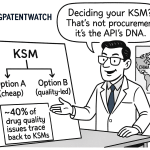
The robustness of a method-of-use patent depends heavily on claim drafting. A claim that reads “a method of treating [condition] comprising administering [compound]” provides narrow protection: a generic can potentially market the compound without the patented indication by using a “skinny label” that omits the patented use. A claim that specifically requires a dosing protocol, patient population characteristic, combination regimen, or biomarker-defined patient selection criterion is harder to avoid. <blockquote> “The average cost of developing a drug through a repurposing pathway is estimated at $1.6 billion — approximately 40 percent below the $2.6 billion average for a de novo development program — with a success rate from Phase II to approval of 50 percent, compared to 24 percent for new chemical entities.” — Deloitte Insights, Measuring the Return from Pharmaceutical Innovation, 2023 [25] </blockquote>
Pfizer’s experience with tofacitinib (Xeljanz) illustrates the method-of-use patent value in repurposing-adjacent programs. Tofacitinib was originally approved for rheumatoid arthritis. Pfizer subsequently obtained approvals for psoriatic arthritis, ulcerative colitis, and ankylosing spondylitis, each supported by separate clinical programs and each generating new method-of-use patents that extended the patent estate’s commercial coverage well beyond the original RA indication [26]. The compound was the same. The IP estate expanded with each new indication.
The FDA Rare Disease and Orphan Drug Incentive Stack
For public-domain compounds with activity in rare diseases, the U.S. regulatory system provides a specific incentive stack that can make otherwise marginal development economics workable: orphan drug designation (seven years of market exclusivity, 50 percent tax credit on clinical trial costs, waived user fees), priority review designation (six-month rather than 10-month review timeline), and potentially breakthrough therapy designation (intensive FDA guidance, rolling review).
Rare diseases are defined as conditions affecting fewer than 200,000 U.S. patients [27]. The market exclusivity for approved orphan drugs blocks the FDA from approving the same drug for the same indication for seven years. Importantly, orphan exclusivity attaches to the specific drug for the specific indication — not to the compound generically. If a public-domain compound receives orphan approval for Rare Disease A and a competitor then seeks approval for the same compound for Rare Disease B, the second developer’s orphan exclusivity is independent of the first.
United Therapeutics has systematically exploited this structure. Its portfolio includes treprostinil, a prostacyclin analogue for pulmonary arterial hypertension, available in multiple formulations — intravenous, subcutaneous, inhaled, and oral — each with separate regulatory approvals, separate orphan exclusivity periods where applicable, and separate IP positions [28]. The progression from one formulation to the next was not simply about drug delivery optimization. It was a deliberate IP and regulatory strategy to build a multi-layered exclusivity stack on a single molecule across multiple delivery routes, each with its own commercial positioning.
Part Six: The Competitor’s Playbook — Mining Your Portfolio
How Generic and Specialty Pharma Companies Identify Vulnerable Programs
If you do not conduct an “outside-in” analysis of your own patent portfolio — examining it as a competitor looking for exploitable abandoned space would — your competitors will do it for you, and you will discover their conclusions when they file an ANDA or announce a competing program.
The generic pharmaceutical industry has developed sophisticated patent landscape analysis capabilities. Major ANDA filers — Teva, Viatris, Amneal, Sun Pharma, Sandoz — maintain internal patent intelligence teams that continuously scan the Orange Book, the USPTO publication database, and commercial patent databases for upcoming expiration opportunities. These teams identify drugs whose primary patents are expiring within a five-year planning horizon, assess the robustness of remaining secondary patent protection, and prioritize ANDA filings based on the commercial opportunity (revenue of the brand) and the legal risk (strength of the secondary patents).
The specialty pharma model — which overlaps with the repurposing model — targets a different type of opportunity. Instead of challenging existing Orange Book patents through ANDA Paragraph IV filings, specialty pharma companies identify public-domain compounds or recently genericized molecules and build new products around them, seeking FDA approval through 505(b)(2) applications. This approach generates new regulatory exclusivity, new IP, and potentially new pricing power without the litigation risk of a Paragraph IV challenge.
Companies like Arbor Pharmaceuticals, Osmotica Pharmaceutical, and Avadel Pharmaceuticals have operated on variants of this model, identifying public-domain or genericized compounds, developing improved formulations, obtaining new approvals with data exclusivity, and marketing the new products at brand prices while generic versions of the original formulation compete at generic prices [29]. The brand and the generic coexist in the market, targeting different patient segments — the brand targeting patients for whom the formulation improvement is clinically meaningful, the generic targeting price-sensitive channels.
Academic Literature Mining: The Published Prior Art That Nobody Commercializes
Academic biomedical research produces an enormous volume of pharmacological characterization of compounds with no commercial sponsor. Papers describing the activity of specific compounds against disease-relevant targets — complete with binding affinity data, cell-based assay results, and sometimes in vivo efficacy data — appear in journals from groups that have neither the resources nor the mandate to commercialize their findings.
For pharmaceutical companies with systematic literature monitoring capabilities, this published research is a primary source of lead compounds for new programs. The compounds are in the public domain (or were never patented). The biological data, however preliminary, is publicly available. The synthesis route is described (though often requiring optimization for scale). The gap between “published academic result” and “drug candidate” may be much smaller than for a program starting from a target and needing to design a lead series from scratch.
The challenge is that academic papers, once published, become prior art against any composition-of-matter patent application covering the described compound. A company that identifies an academically published compound as a lead must proceed quickly — before other companies also reading the literature file composition-of-matter applications on the same compounds or their obvious structural variants.
The window between academic publication and commercial patent filing is real and often exploitable. Publication in a peer-reviewed journal takes months to years from the underlying research. Companies with agreements or partnerships with academic groups — or with systematic literature monitoring that identifies publications immediately upon appearance — have a meaningful lead over competitors who discover the same publication weeks or months later in a routine literature review.
The Role of Patent Expiry Calendars in Competitive Intelligence
One of the most direct competitive intelligence tools available to pharmaceutical companies is the patent expiry calendar — a systematic listing of when specific product-covering patents will expire, enabling planning for both offensive entry (generic or repurposing programs) and defensive response (lifecycle management, authorized generic programs, second-generation product development).
DrugPatentWatch’s patent expiry calendars are used for exactly this purpose by both generic manufacturers identifying filing opportunities and branded manufacturers assessing where competitive pressure will emerge. The platform tracks not only the stated expiration dates of granted patents but also the supplementary protection certificates, pediatric exclusivity periods, and other extensions that push the effective exclusivity date beyond the nominal patent term. A competitor preparing to exploit an expiring patent position needs to account for all of these extensions to avoid either filing too early (triggering 30-month stay litigation before the extension runs out) or filing too late (missing the first-filer 180-day exclusivity window).
Understanding the patent expiry calendar for your own products from the competitor’s perspective is equally valuable for branded manufacturers. If you can see, from publicly available data, exactly when your primary and secondary patents expire, you can understand the filing incentives facing generic and specialty pharma competitors — and calibrate your lifecycle management investments accordingly. If your last significant Orange Book patent expires in 36 months, a second-generation formulation that requires 48 months to develop provides no protection at all; a 505(b)(2) for a new indication with a shorter development timeline might.
Part Seven: The Counterattack — Defending Against Chemical Space Mining
The Continuation Patent as a Defensive Weapon
The U.S. patent system’s continuation practice allows patent applicants to file new applications claiming priority to a parent application, adding or modifying claims within the scope of the parent’s original disclosure, as long as the parent application is still pending [30]. For a pharmaceutical company whose original composition-of-matter patent was filed decades ago, continuation practice may no longer be available — the parent application has long since been granted or abandoned. But for programs where prosecution is ongoing, the continuation practice is a powerful defensive tool against the chemical space mining described above.
A continuation application can add claims covering specific structural variants that the original application disclosed but did not specifically claim. If academic researchers or competitor companies have identified a specific variant of your disclosed compound series as particularly active, a pending continuation application can add claims covering that variant — converting it from “disclosed but unclaimed” to “actively protected” territory.
The window for this defensive filing is limited. Continuations can only be filed while the parent application is pending. The practical implication is that pharmaceutical companies should maintain at least one continuation application in prosecution throughout the commercial life of their primary products — a practice sometimes called “patent evergreening” by critics, but more accurately described as ongoing prosecution of a legitimately broad original disclosure.
The claims added in continuations must be supported by the original disclosure. This is a genuine constraint. You cannot disclose a methyl compound in the parent application and then claim a phenyl compound in the continuation just because a competitor published that it is more active. But within the original disclosure — which in a well-drafted pharmaceutical patent typically covers a broad genus of compounds with diverse substituents — there is usually significant scope for claims tailored to commercially important specific variants.
Filing on Your Own Abandoned Space Before Competitors Do
The most preventable failure in pharmaceutical IP management is abandoning patent coverage on scientific programs that are discontinued without any competitive analysis of what the abandonment enables for competitors. When a pharmaceutical company discontinues a drug development program, the standard IP process is to allow the program’s patents and applications to lapse — reducing maintenance costs associated with a non-productive program.
This is the right decision for truly nonproductive chemistry with no residual scientific or commercial value. It is the wrong decision — but unfortunately a common one — for programs that were discontinued for reasons unrelated to the chemistry’s underlying value. A molecule discontinued because of a formulation problem is not a molecule with no value; it is a molecule with a formulation problem that someone else might solve. A molecule discontinued because the original indication was not commercially attractive is not a molecule with no value; it is a molecule whose value in other indications may be substantial.
Before abandoning any patent or application covering a discontinued pharmaceutical program, a systematic assessment should address two questions: could this chemistry be useful in an indication or formulation that we would not pursue but a competitor might, and if so, what is the cost of maintaining the patent coverage relative to the competitive risk of not maintaining it?
For an application whose annual maintenance cost is $5,000 to $15,000, and whose chemical disclosure could support a competitor’s $100 million development program, the decision to let the application lapse deserves significantly more analysis than the standard “discontinued program, close the patent file” workflow typically provides.
The Defensive Publication: Taking Space Off the Table
For programs where you want neither to maintain patent protection nor to allow competitors to patent the same territory, defensive publication is a specific tool with a specific function [31]. By publishing a full technical disclosure of a compound, formulation, or method — either through a journal article, a technical paper, or a dedicated defensive publication platform — you create prior art that prevents anyone from obtaining a patent on the disclosed subject matter.
Defensive publication is most useful when you have chemistry you do not want to patent (perhaps because you do not want to disclose it to competitors through the patent publication process) but also do not want to allow competitors to patent. Once the disclosure is published, it is prior art against any subsequent patent application covering the same or obvious subject matter. No one can obtain an enforceable patent on the published chemistry.
The Industrial Research Institute maintains a defensive publication database, and several pharmaceutical companies have used analogous mechanisms — publishing broad structural disclosures of compound libraries in journals, depositing compound structures in public databases with explicit prior art declarations, or publishing detailed technical reports on formulation approaches they have abandoned. The goal is not to commercialize the chemistry; the goal is to ensure that no competitor can obtain proprietary rights to it either.
This approach works best for chemical space that is adjacent to your core programs — variants and analogues that you do not want to develop but do not want competitors to claim. It does not work for chemistry that you genuinely want to keep confidential; publication eliminates trade secret protection for the disclosed material.
Part Eight: International Dimensions of Abandoned Chemical Space
How India’s Section 3(d) Reshapes the Incremental Innovation Landscape
India’s patent law includes a provision with significant implications for pharmaceutical chemical space: Section 3(d) of the Indian Patents Act, which limits the patentability of new forms of known substances — salts, polymorphs, esters, ethers — to those demonstrating significantly enhanced efficacy relative to the known form [32]. The provision was specifically designed to prevent “evergreening” — the practice of obtaining new patents on marginally modified forms of existing compounds to extend exclusivity.
Section 3(d) changes the competitive calculus for incremental pharmaceutical innovation targeting the Indian market. A new salt form of a public-domain compound that would be patentable in the U.S. under standard non-obviousness analysis may not be patentable in India if it cannot demonstrate significantly enhanced therapeutic efficacy. A new polymorph with superior stability properties, but no superior clinical efficacy, faces rejection under Section 3(d).
For pharmaceutical companies with significant Indian revenue exposure — or developing markets where Indian-manufactured generics compete — this provision narrows the scope of incremental innovation that provides meaningful protection. The implication for abandoned chemical space strategy is that programs targeting new formulations of public-domain compounds must be designed around genuine clinical improvement, not merely physical chemistry optimization. A formulation that provides superior bioavailability and translates that into better clinical outcomes can survive Section 3(d) scrutiny; a formulation that improves shelf life without affecting efficacy cannot.
European Supplementary Protection Certificates and the Filing Deadline Problem
The European supplementary protection certificate (SPC) system compensates patent holders for regulatory review time in a manner analogous to U.S. Patent Term Extension [33]. An SPC can extend the patent term by up to five years, with a six-month pediatric extension available for products with completed pediatric studies. The SPC must be filed within six months of the first marketing authorization in the EU.
For companies mining abandoned chemical space and seeking approval for public-domain compounds in new formulations or indications, the SPC filing deadline creates a specific planning requirement. If the 505(b)(2)-equivalent European application results in a new marketing authorization, and if that new authorization is covered by a patent (a formulation or method-of-use patent on the new product), the SPC application must be filed within six months of the authorization date. Missing this deadline forecloses the SPC extension entirely — permanently.
The practical implication: European regulatory and IP teams need to be coordinated from the moment a new marketing application is submitted. The IP team must identify which patents are potentially eligible for SPC protection and calendar the six-month filing deadline from the anticipated authorization date. This coordination is more complex than U.S. PTE filing (where the 60-day deadline runs from approval) because European authorizations can occur in stages — centralized authorization through the EMA followed by country-specific validations — and the SPC filing strategy must account for the regulatory sequence.
China, Brazil, and the Secondary Patent Gap in Growth Markets
In the largest emerging pharmaceutical markets — China, Brazil, India, and Indonesia — the protection available for secondary pharmaceutical patents (formulation patents, method-of-use patents, process patents on public-domain molecules) varies substantially from the U.S. standard and often provides thinner coverage.
China’s patent linkage system, implemented in 2021, covers new drug applications and provides a mechanism for innovators to list patents and trigger administrative proceedings against ANDA filers — but only for marketed products with current regulatory approvals [34]. A program based on a public-domain compound being developed through the Chinese equivalent of 505(b)(2) faces a more uncertain IP environment than a comparable U.S. program. Formulation patents for incremental innovations are subject to heightened obviousness scrutiny, and the administrative linkage mechanism may not apply with the same force as in the U.S.
Brazil’s Instituto Nacional da Propriedade Industrial (INPI) has historically been one of the slowest patent offices in major markets for pharmaceutical applications, with prosecution timelines extending to ten or more years in some cases [35]. For a program based on a public-domain compound with a three-year data exclusivity period, a ten-year prosecution timeline means the patent may not grant until the data exclusivity has long expired — providing no overlap of exclusivity. Brazilian program design must account for this prosecution timeline risk, either through expedited examination procedures, the use of foreign patent priority, or explicit business model decisions about whether Brazilian IP protection is commercially necessary.
Part Nine: The Economics of Chemical Space Mining
Build Versus Buy: When to Acquire the Rights to Abandoned Programs
The most direct path to exploiting abandoned chemical space is to acquire it — purchasing the IP estate of a discontinued program or the company that held it, rather than rediscovering the chemistry independently. The Merck acquisition of Idenix, discussed at the outset, illustrates the extreme case. Paid-for abandoned IP can cost from low six figures (for an academic license to a single compound series) to several billion dollars (for a company whose primary value is its patent portfolio).
The build-versus-buy analysis for abandoned chemical space programs turns on two factors: how much prior work has been done, and how defensible the resulting IP estate will be.
If the abandoned program has already generated significant clinical data — Phase 1 or early Phase 2 results in prior development — acquiring those rights provides a substantial head start on Phase 1 clinical characterization. Even if the clinical data was generated under a previous developer’s IND and is not directly transferable to the new applicant’s filing, it informs the clinical design and often allows a more aggressive Phase 1 protocol than would be appropriate for a compound with no human exposure data.
If the abandoned program has only preclinical data, the acquisition primarily purchases the composition-of-matter patent and the associated scientific work — synthesis, characterization, and in vitro and in vivo biological profiling. This is valuable if the compound series is genuinely novel and if the preclinical work has already confirmed the key activity parameters. It is less valuable if significant pharmacology development remains to be done, because the purchaser must still invest in that development and the resulting IP may be contested.
The defensibility of the acquired IP is the primary risk factor. An acquired patent estate may look impressive but contain patents whose claims are vulnerable to IPR challenge, whose Orange Book listings are questionable, or whose prosecution history contains estoppel-creating amendments that narrow the scope below commercial relevance. Thorough IP due diligence — of the type described in Part Six of this article — is as critical for acquiring abandoned chemical space programs as it is for any pharmaceutical M&A transaction.
The ROI Model for Repurposing and Reformulation Programs
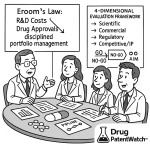
Building a business case for a public-domain compound program requires modeling the probability-weighted NPV of the program against the probability-weighted NPV of alternative investments. The key variables are development cost, development timeline, probability of regulatory success, peak revenue opportunity, IP exclusivity period, and competitive dynamics.
Development costs for 505(b)(2) programs range from approximately $30 million (for a new indication with substantial prior safety data and a relatively straightforward efficacy signal) to over $200 million (for a new formulation requiring a full pharmacokinetic bridge study plus clinical efficacy trials across multiple indications). The timeline ranges from three to eight years. The probability of regulatory success from program initiation is higher than for NCE programs — roughly 50 to 60 percent for programs reaching Phase 2, compared to 24 percent for NCE programs — because the starting compound has a known safety profile [25].
Peak revenue depends on the indication, the strength of the clinical differentiation, and the IP exclusivity period. A new formulation with three years of data exclusivity and formulation patents extending to year eight of commercialization — but no significant clinical differentiation over the original compound — will see rapid generic erosion at data exclusivity expiration. A new indication with method-of-use patents extending to year fifteen and genuine clinical superiority over existing alternatives can support premium pricing throughout the exclusivity period.
The competitive dynamics variable — how quickly and aggressively competitors will attempt to enter the market after your exclusivity periods expire — depends on the same patent landscape analysis tools described throughout this article. A program with a robust secondary patent estate, covering multiple aspects of the product with staggered expiration dates, will sustain premium pricing longer than a program protected only by data exclusivity.
Risk Allocation in Licensing Abandoned Programs
When a company licenses a discontinued pharmaceutical program from the original developer rather than purchasing it outright, the deal structure determines how risk and return are allocated between licensor and licensee. The original developer typically wants either an upfront payment (compensating for the asset’s existing value) or milestone payments tied to development progress (maintaining exposure to the upside if development succeeds) or both.
For the licensee building a program on a public-domain compound, the key negotiation points are the scope of the licensed rights (specific indications only, or all indications?), the milestone structure (are milestones linked to regulatory events that the licensee controls, or to commercial events that depend on market dynamics?), the sublicensing rights (can the licensee bring in co-development or commercialization partners?), and the prosecution and maintenance obligations (who is responsible for maintaining the licensed patents, and who controls prosecution strategy in post-grant proceedings?).
The prosecution and maintenance obligations deserve particular attention for public-domain compound programs. If the original developer is the nominal patent owner and the licensee funds prosecution, the licensee needs substantial control over prosecution strategy — because prosecution decisions (amendments, arguments made to overcome rejections) create prosecution history estoppel that can limit the patent’s commercial scope. A licensee that funds prosecution but cedes strategic control to the original developer risks building its commercial program on a patent whose claims have been narrowed by the licensor’s prosecution choices without the licensee’s input.
Part Ten: Building Organizational Capability for Chemical Space Intelligence
The IP Intelligence Function: What It Needs to Look Like
Most pharmaceutical companies have a patent prosecution function (filing and defending patents) and a litigation function (managing patent disputes). Fewer have a systematic IP intelligence function — the capability to continuously scan the competitive patent landscape, identify emerging threats and opportunities, and connect that intelligence to business strategy decisions.
The IP intelligence function for a company that takes abandoned chemical space seriously requires four capabilities. First, systematic monitoring of patent expirations across commercially relevant compound classes and therapeutic areas — not just the expirations of your own patents, but the expirations of competitor patents in the same classes. Second, ongoing surveillance of patent application publications, identifying when competitors file applications on compound series that overlap with your programs or that target mechanisms adjacent to your core therapeutic areas. Third, access to and analysis of regulatory intelligence — ANDA filings, 505(b)(2) filings, and competitive regulatory submissions — that signal where competitors are building new programs on public-domain or near-public-domain chemistry. Fourth, connection to the scientific and clinical functions of the organization, so that IP intelligence about available chemical space is routed to the teams that can assess its scientific and clinical potential.
This last capability is often the most difficult to build. Patent intelligence systems generate information; the value of that information depends on whether it reaches people who can act on it. A patent intelligence team that produces excellent competitive landscape reports that sit unread in strategy meetings has no practical impact. The teams that benefit from patent intelligence are the therapeutic area scientific teams, the business development teams evaluating in-licensing and acquisition opportunities, and the clinical operations teams managing lifecycle management programs. Building the organizational connections between IP intelligence and those functions is as important as building the intelligence capability itself.
Training Scientists to Think in Patent Terms
The disconnect between scientific and patent thinking is one of the most persistent sources of missed opportunity in pharmaceutical IP management. Scientists think in terms of hypotheses, experiments, and mechanisms. Patent law thinks in terms of claims, prior art, and enablement. The concepts translate, but the translation requires deliberate training.
Scientists who understand the prior art concept — the principle that anything publicly disclosed before a patent filing date can prevent patentability — are better positioned to identify when their research is generating patentable results. A researcher who discovers that a specific formulation approach produces unexpected bioavailability results recognizes, with patent training, that this result may be patentable as long as it has not been previously disclosed. Without that training, the same researcher may present the result at a conference before any patent application has been filed — creating prior art against their own potential patent.
Scientists who understand the enablement concept — the principle that patent claims must be supported by examples sufficient to allow skilled practitioners to reproduce the results across the scope of the claim — are more likely to conduct the experiments needed to support broad patent claims during their normal research process. A researcher who understands that a genus claim covering a hundred compounds needs experimental data on representative examples across the genus will run those experiments during the normal course of research; a researcher without that understanding may generate strong data on three compounds and wonder why the patent attorney is asking for more.
The training investment is modest — a half-day workshop, annual updates, accessible patent attorneys willing to field scientific questions — and the return is compounded over the careers of the scientists being trained.
Connecting DrugPatentWatch Data to R&D Decision Making
The specific application of competitive patent intelligence platforms to R&D decision making requires organizational processes, not just tool access. Providing a DrugPatentWatch subscription to the patent team without connecting it to the therapeutic area R&D teams limits the platform’s value to legal and IP management functions rather than extending it to the scientific decisions that drive the most value.
Practically, this connection looks like: quarterly patent landscape reviews in therapeutic area team meetings, with IP intelligence analysts presenting what is expiring, what is being filed, and where competitive programs are emerging; integration of patent expiry data into the portfolio prioritization models used by R&D strategy teams; and specific triggering protocols for when patent intelligence should initiate an accelerated assessment of a compound program — for instance, when a competitor’s key formulation patent in a therapeutic area where you have programs is challenged in IPR, the therapy area team should be asked immediately whether a competing formulation development program should be accelerated.
These processes are not complicated in principle. They require sustained attention to maintain, because they compete with the daily pressures of clinical development, regulatory interactions, and commercial launches. The companies that maintain them systematically — that treat patent intelligence as a continuous input to R&D strategy rather than a periodic legal function — systematically outperform those that do not.
Part Eleven: The Future of Chemical Space Competition
AI-Assisted Chemical Space Mining and the Coming Acceleration
Artificial intelligence and machine learning tools for drug discovery have received substantial investment and attention for their ability to identify novel chemical structures with predicted biological activity. Less discussed — but immediately relevant to the analysis in this article — is their application to chemical space mining: the systematic identification of compounds in the public domain with predicted activity against current therapeutic targets.
AI-assisted chemical space mining uses structural databases, published biological activity data, and predictive models trained on known drug-target interactions to identify public-domain compounds likely to have activity against a specified target. The output is a ranked list of compounds — drawn from patent literature, structural databases, and academic publications — with predicted activity and predicted ADMET (absorption, distribution, metabolism, excretion, toxicity) profiles.
The commercial implication is an acceleration of the chemical space mining process that has historically been rate-limited by the human capacity to review prior art literature. A systematic AI-assisted survey of, for example, all disclosed compounds in the prior art literature with structural features predicting kinase inhibition can be completed in days by a modern computational chemistry platform; the equivalent manual process would take months or years. This acceleration compresses the timeline from “opportunity identified” to “patent application filed” for public-domain compound programs, raising the competitive intensity of the race to identify and file on the most valuable unclaimed territory.
The companies with the most effective AI-assisted chemical space mining capabilities will systematically identify and patent territory that slower-moving competitors miss. The companies without these capabilities will discover that the most attractive public-domain compounds in their therapeutic areas have already been claimed when they get there.
The Next Wave of Patent Cliffs: What Goes Public Domain by 2030
Between 2025 and 2030, a significant cohort of pharmaceutical molecules will have their primary patents expire, placing them in the public domain for the first time. Tracking which specific molecules enter the public domain in this period — and assessing what formulation, indication, and delivery technology opportunities they represent — is the forward-looking application of the chemical space mining analysis.
Key molecules entering the composition-of-matter patent territory in the next five years include several major biologics and small molecules across immunology, oncology, and cardiovascular disease. DrugPatentWatch’s expiration calendars provide the specific dates; the analytical question is what residual commercial opportunities each molecule’s expiration creates.
For any molecule expiring from composition-of-matter protection, the immediate opportunity set includes: new formulations enabling better patient convenience or adherence (once-monthly versus twice-daily, oral versus injectable, room-temperature stable versus refrigerated); new indications not covered by current regulatory approvals but supported by published biological data; and pediatric or geriatric formulations optimized for age-specific pharmacokinetics.
The companies that have already identified the two or three most valuable opportunities in this expiration cohort, and are already in development programs targeting 505(b)(2) approvals ahead of the composition-of-matter expiration, will be positioned to launch new proprietary products into markets their competitors expect to take with generics. The companies discovering these opportunities after the expirations occur will find the territory more contested.
When the Graveyard Becomes a Patent Battleground
The final dynamic to account for is the paradox that the most valuable abandoned chemical space territory — the most commercially interesting public-domain molecules, the most scientifically validated prior art platforms — attracts the most competition. When multiple well-resourced companies simultaneously identify the same public-domain molecule as an attractive development candidate, the race to file composition-of-matter claims on novel analogues, formulation patents on optimized delivery systems, and method-of-use patents on specific clinical applications can generate overlapping, contested IP positions that require years of litigation to resolve.
The patent interference system that previously governed disputes between applicants claiming the same invention has been replaced by the America Invents Act’s first-inventor-to-file system [36]. Under first-inventor-to-file, the race to the patent office is unambiguously dispositive: the first applicant to file wins, subject only to the requirement that the claims be patentable over the prior art. This changes the strategy for mining competitive chemical space: identifying an opportunity and acting on it quickly — filing a patent application before disclosing the work publicly, before reaching out to partners, before publishing results — is more critical under first-inventor-to-file than it was under the prior first-to-invent system.
The transformation of the patent landscape in any particular chemical space from “open graveyard” to “active battleground” happens faster than most companies expect. The identification of a valuable public-domain compound by any significant competitor starts a clock that may be shorter than the time required to conduct a thorough landscape analysis and develop a filing strategy. Speed matters. Systems that enable rapid identification and rapid filing — not just careful analysis followed by eventual action — are the ones that capture the territory.
Conclusion
The pharmaceutical industry is built on a paradox: it invests enormously to discover and develop chemical entities, and then systematically loses track of what it has and has not exploited. Patents lapse on molecules with residual value. Programs are discontinued before their full indication potential is explored. Chemical space adjacent to developed programs goes unmapped while competitors prepare to mine it.
The $400 billion in branded revenues facing patent cliffs over the next five years is the most visible form of this dynamic. But the abandoned chemical space problem is larger and older than any single patent cliff. Every year, across every therapeutic area, molecules with demonstrated biological activity and documented human safety profiles pass from patent protection to the public domain. The companies that find them first — that use systematic patent monitoring, competitive landscape analysis, and AI-assisted mining to identify exploitable territory before competitors arrive — turn abandoned science into new proprietary franchises.
Celgene built $70 billion of market value from a 40-year-old molecule that everyone else ignored. Shire built a franchise worth billions from public-domain amphetamine chemistry. United Therapeutics built a PAH empire from a prostacyclin compound by layering formulation after formulation, approval after approval, into a multi-route, multi-patent commercial position that generics have struggled to erode.
The graveyard is not empty. The question is whether you find it before your competitor does.
Key Takeaways
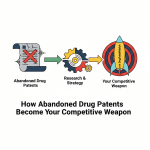
Pharmaceutical patents expire in layers, and each layer creates different competitive opportunity. Composition-of-matter expiration opens the molecule to reformulation and repurposing; formulation patent expiration opens the specific product form; method-of-use patent expiration opens the clinical indication. Each layer has a different exploiter and a different timeline.
The 505(b)(2) pathway is the primary regulatory mechanism for commercializing public-domain chemistry. It does not eliminate development requirements, but it compresses them significantly for compounds with prior human safety data.
Prior art from an expired or abandoned patent does not block patenting of new formulations, new indications, or non-obvious structural variants. The original compound is prior art; the new drug product may not be.
Celgene’s thalidomide-to-IMiD franchise is the clearest large-scale example of abandoned chemical space exploitation. The underlying molecule was in the public domain. The IP estate built around methods, formulations, and analogues was worth tens of billions of dollars at acquisition.
DrugPatentWatch’s expiration calendars and product-patent linkage data provide the commercial context needed to filter the universe of expiring patents down to commercially relevant opportunities — and to understand which of your own positions competitors are already mapping.
The first-inventor-to-file system makes speed a competitive variable in patent filing. Identifying an opportunity is not sufficient; filing before competitors do is what creates rights.
Defensive publication is a specific tool for taking territory off the table without taking on maintenance costs. If you will not exploit a piece of chemical space and do not want competitors to claim it, publish it.
The coming wave of biologics coming off data exclusivity between 2025 and 2030 represents the largest pool of new public-domain chemical space since the small-molecule patent cliff of the 2000s. Biosimilar programs starting now are targeting this window; branded manufacturers need to understand which of their assets will be targeted and what new IP positions they are building.
Frequently Asked Questions
Q1: If a composition-of-matter patent has expired on a molecule I want to develop for a new indication, can I still obtain a valid U.S. patent on that new use?
Yes, in most circumstances. A method-of-use patent covering a specific new therapeutic application is a distinct invention from the compound itself, and the expiration of the composition-of-matter patent does not preclude patenting the method of use. The new method-of-use patent must be non-obvious: if the new indication was disclosed or suggested in the prior art — including the original expired patent’s specification, subsequent academic literature, or conference disclosures — the claim may be rejected as obvious. The claim scope needs to be specific enough to distinguish from what was previously disclosed. In practice, this means describing not just the general use of the compound in the new indication, but the specific patient population, dosing regimen, clinical outcome measure, or combination regimen that your clinical program will demonstrate. A skinny-label risk remains — a generic can potentially market the compound without the patented indication — but a well-drafted method-of-use patent with genuinely novel clinical content still provides meaningful protection, particularly in specialty pharmacy and payer management contexts where the patented indication is the principal clinical use.
Q2: How does the Amgen v. Sanofi decision affect the patentability of antibody genus claims and, by extension, what it means for biologic chemical space mining?
The Supreme Court’s 2023 decision in Amgen Inc. v. Sanofi held that Amgen’s broad genus claims covering antibodies defined by their function (binding PCSK9 and blocking its interaction with LDL receptors) rather than their specific structure were invalid for lack of enablement [13]. The decision confirmed that a patent’s claims cannot exceed the scope of what is actually enabled by the specification’s examples and teachings. For biologic chemical space mining, the decision creates two relevant dynamics. First, existing broad antibody genus claims in the prior art — claims covering large functional antibody classes with only a handful of specific examples — may not constitute effective prior art against novel antibodies within the claimed genus, if the genus was not actually enabled. A competitor developing a novel PCSK9-targeting antibody can potentially argue that Amgen’s prior art genus did not enable its specific structure, preserving patentability. Second, biologic innovators must now support broad antibody claims with more extensive enabling examples across the claimed genus — a more expensive prosecution effort but one that produces more defensible claims.
Q3: What is the most effective approach for a small biotech with limited resources to exploit public-domain pharmaceutical chemistry without losing the race to larger, faster-moving competitors?
The small biotech’s primary advantage in chemical space mining is focus: a team of five to ten scientists concentrating on a specific therapeutic target or mechanism can move faster than a large pharmaceutical company’s bureaucratic processes, even if the large company has more raw resources. The practical execution priorities are: concentrate the opportunity search on a single therapeutic area where you have scientific expertise, because broad surveys without scientific depth produce lower-quality opportunities; use DrugPatentWatch and structural database searches to identify the specific compound classes with the most commercially interesting patent expiry timelines; prioritize compounds with prior human safety data, because these compress the development timeline most dramatically; file provisional applications immediately upon identifying a promising compound and a patentable innovation, before any public disclosure, to establish priority while conducting further due diligence; and consider licensing arrangements with the original patent holders for discontinued programs before those programs have been widely identified as opportunities, when licensing economics are most favorable. The small biotech that successfully identifies a single high-value opportunity and executes quickly — using 505(b)(2) with a well-drafted provisional application to establish priority — can outpace much larger organizations that are still running internal review processes.
Q4: Can a pharmaceutical company actively monitor competitor activity in a specific therapeutic area’s chemical space on an ongoing basis, and what does that infrastructure realistically look like?
Yes, and the infrastructure is more accessible than many companies realize. The core components are: automated patent publication alerts (available through the USPTO and through platforms like Derwent Innovation and PatSnap) configured to flag applications in specific compound classes, mechanisms, or therapeutic areas; quarterly manual review of flagged publications by an IP analyst with scientific background in the relevant area; a DrugPatentWatch monitoring protocol that alerts when Orange Book listings change, Paragraph IV certifications are filed, or patent expiry dates are updated for products in relevant therapeutic classes; and a structured communication process that routes competitive intelligence findings to the relevant R&D and commercial teams. The human resource requirement for a focused program covering one or two therapeutic areas is roughly 0.5 to 1.0 FTE of dedicated IP analyst time, with support from therapeutic area scientists for scientific interpretation. The investment is modest relative to the value of the decisions it informs — particularly for lifecycle management decisions, where a two-year warning of competitive entry can mean the difference between a managed transition and a crisis.
Q5: What distinguishes a defensible repurposing or reformulation patent from one that courts and PTAB are likely to invalidate?
The core distinction is whether the patent represents genuine scientific discovery — results that were not predictable from prior art — or merely routine optimization of what the prior art already suggested. Courts and PTAB have become significantly more rigorous in applying the non-obviousness standard to pharmaceutical reformulation and repurposing patents since KSR International Co. v. Teleflex Inc. (2007) shifted the standard away from “teaching, suggestion, or motivation” toward a more flexible “ordinary creativity” test [37]. A reformulation patent on an extended-release version of a compound for which the prior art explicitly suggested extended-release as desirable will face an obviousness challenge with a reasonable probability of success. A reformulation patent demonstrating unexpected pharmacokinetic or clinical results — a drug release profile that the prior art would not have predicted, a bioavailability enhancement unexpectedly large for the excipient combination used, a clinical outcome measure showing superiority in a patient population not tested in the prior art — has a much stronger foundation. The practical guidance is to design development programs around the generation of unexpected results — not to create surprises artificially, but to measure the parameters most likely to yield non-obvious outcomes and to draft patent claims that specifically capture those measured unexpected results. Prosecution should also proactively address the most likely prior art combinations, distinguishing them in the specification with experimental data, rather than leaving the distinction for post-grant challenge.
[2] 37 C.F.R. § 1.20(e)-(g) (2023). Patent maintenance fees. Code of Federal Regulations.
[3] 37 C.F.R. § 1.136 (2023). Extensions of time. Code of Federal Regulations.
[4] 35 U.S.C. § 154(a)(2) (2023). Contents and term of patent. United States Code.
[5] U.S. Patent and Trademark Office. (2023). U.S. patent statistics chart: Calendar years 1963-2022. USPTO.
[6] American Chemical Society. (2024). CAS registry: The gold standard for chemical substance information. CAS.
[7] Papadatos, G., & Hopkins, A. L. (2014). The grand challenges of computer-aided drug discovery. Frontiers in Pharmacology, 5, 245.
[8] Krishnan, S. M., & Kelleher, K. (2011). Lisdexamfetamine dimesylate: Pharmacology and clinical utility in attention deficit hyperactivity disorder. Patient Preference and Adherence, 5, 1–8.
[9] 21 U.S.C. § 355(b)(2) (2023). Applications relying on published literature. United States Code.
[10] 21 U.S.C. § 355(c)(3)(E) (2023). Data exclusivity provisions. United States Code.
[11] 35 U.S.C. § 102 (2023). Conditions for patentability; novelty. United States Code.
[12] 35 U.S.C. § 112(a) (2023). Specification and enablement requirement. United States Code.
[13] Amgen Inc. v. Sanofi, 598 U.S. 594 (2023).
[14] 35 U.S.C. §§ 311-319 (2023). Inter partes review. United States Code.
[15] U.S. Patent No. 5,250,534. (1993). Pyrazolopyrimidinone antianginal agents. U.S. Patent and Trademark Office.
[16] Vargesson, N. (2015). Thalidomide-induced teratogenesis: History and mechanisms. Birth Defects Research Part C: Embryo Today, 105(2), 140–156.
[17] Celgene Corporation. (2001). Thalidomide STEPS program: System for Thalidomide Education and Prescribing Safety. Celgene Corporation.
[20] New York v. Actavis PLC, 787 F.3d 638 (2d Cir. 2015).
[21] Drugs@FDA. (2023). Biaxin (clarithromycin) approval history. U.S. Food and Drug Administration.
[22] American Intellectual Property Law Association. (2021). Report of the economic survey 2021: Freedom to operate opinion billing rates. AIPLA.
[23] U.S. Food and Drug Administration. (2020). Applications covered by section 505(b)(2): Guidance for industry. FDA.
[24] Noven Pharmaceuticals. (2018). Annual report 2017: Transdermal drug delivery platform overview. Noven Pharmaceuticals, Inc.
[25] Deloitte Insights. (2023). Measuring the return from pharmaceutical innovation 2023: Unlocking R&D productivity. Deloitte Centre for Health Solutions.
[26] Pfizer Inc. (2022). Xeljanz (tofacitinib) prescribing information and indication history. Pfizer Inc.
[27] Orphan Drug Act of 1983, Pub. L. 97-414, 96 Stat. 2049 (1983) (codified at 21 U.S.C. §§ 360aa-360ee).
[28] United Therapeutics Corporation. (2023). Annual report 2022: Treprostinil portfolio and IP overview. United Therapeutics Corporation.
[30] 37 C.F.R. § 1.53(b) (2023). Application filing requirements — continuation applications. Code of Federal Regulations.
[31] Research Disclosure. (2023). Defensive publication: Technical disclosure database overview. Research Disclosure Ltd.
[32] The Patents (Amendment) Act, 2005, No. 15 of 2005, § 3(d), India Code (2005). Patentability restrictions on new forms of known substances.
[33] Regulation (EC) No 469/2009 of the European Parliament and of the Council concerning the supplementary protection certificate for medicinal products. Official Journal of the European Union, L 152, 1-10.
[34] National Medical Products Administration (China). (2021). Measures for the implementation of the early resolution mechanism for drug patent disputes. NMPA.
[35] Instituto Nacional da Propriedade Industrial. (2022). Relatório anual de propriedade industrial 2022. INPI Brazil.
[36] Leahy-Smith America Invents Act, Pub. L. 112-29, 125 Stat. 284 (2011).
[37] KSR International Co. v. Teleflex Inc., 550 U.S. 398 (2007).