You're using a free limited version of DrugPatentWatch: Upgrade for Complete Access

Last Updated: December 11, 2025

DEPAKOTE Drug Patent Profile


✉ Email this page to a colleague

« Back to Dashboard


When do Depakote patents expire, and what generic alternatives are available?

Depakote is a drug marketed by Abbvie and Abbott and is included in four NDAs.

The generic ingredient in DEPAKOTE is divalproex sodium. There are eighteen drug master file entries for this compound. Forty-two suppliers are listed for this compound. Additional details are available on the divalproex sodium profile page.

DrugPatentWatch® Litigation and Generic Entry Outlook for Depakote

A generic version of DEPAKOTE was approved as divalproex sodium by DR REDDYS LABS LTD on July 29th, 2008.

  Get Started Free

AI Deep Research
Questions you can ask:
  • What is the 5 year forecast for DEPAKOTE?
  • What are the global sales for DEPAKOTE?
  • What is Average Wholesale Price for DEPAKOTE?
Drug patent expirations by year for DEPAKOTE
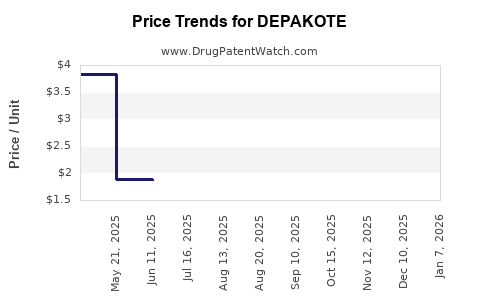
Drug Prices for DEPAKOTE

See drug prices for DEPAKOTE

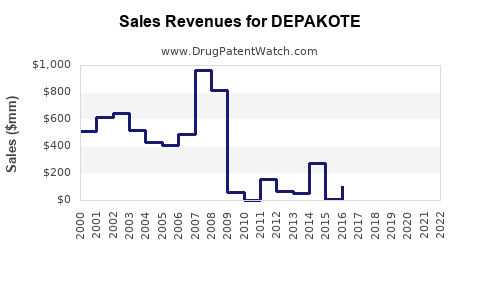
Drug Sales Revenue Trends for DEPAKOTE

See drug sales revenues for DEPAKOTE

Recent Clinical Trials for DEPAKOTE

Identify potential brand extensions & 505(b)(2) entrants

SponsorPhase
Virginia Commonwealth UniversityPhase 1/Phase 2
Puma Biotechnology, Inc.Phase 1/Phase 2
Barretos Cancer HospitalEarly Phase 1

See all DEPAKOTE clinical trials

US Patents and Regulatory Information for DEPAKOTE

Applicant Tradename Generic Name Dosage NDA Approval Date TE Type RLD RS Patent No. Patent Expiration Product Substance Delist Req. Exclusivity Expiration
Abbvie DEPAKOTE divalproex sodium CAPSULE, DELAYED REL PELLETS;ORAL 019680-001 Sep 12, 1989 AB RX Yes Yes ⤷  Get Started Free ⤷  Get Started Free ⤷  Get Started Free
Abbvie DEPAKOTE ER divalproex sodium TABLET, EXTENDED RELEASE;ORAL 021168-002 May 31, 2002 AB RX Yes No ⤷  Get Started Free ⤷  Get Started Free ⤷  Get Started Free
Abbvie DEPAKOTE divalproex sodium TABLET, DELAYED RELEASE;ORAL 018723-002 Mar 10, 1983 AB RX Yes Yes ⤷  Get Started Free ⤷  Get Started Free ⤷  Get Started Free
Abbvie DEPAKOTE ER divalproex sodium TABLET, EXTENDED RELEASE;ORAL 021168-001 Aug 4, 2000 AB RX Yes No ⤷  Get Started Free ⤷  Get Started Free ⤷  Get Started Free
Abbvie DEPAKOTE divalproex sodium TABLET, DELAYED RELEASE;ORAL 018723-003 Oct 26, 1984 AB RX Yes No ⤷  Get Started Free ⤷  Get Started Free ⤷  Get Started Free
Abbvie DEPAKOTE divalproex sodium TABLET, DELAYED RELEASE;ORAL 018723-001 Mar 10, 1983 AB RX Yes No ⤷  Get Started Free ⤷  Get Started Free ⤷  Get Started Free
>Applicant >Tradename >Generic Name >Dosage >NDA >Approval Date >TE >Type >RLD >RS >Patent No. >Patent Expiration >Product >Substance >Delist Req. >Exclusivity Expiration

Expired US Patents for DEPAKOTE

Applicant Tradename Generic Name Dosage NDA Approval Date Patent No. Patent Expiration
Abbvie DEPAKOTE divalproex sodium TABLET, DELAYED RELEASE;ORAL 018723-002 Mar 10, 1983 ⤷  Get Started Free ⤷  Get Started Free
Abbvie DEPAKOTE divalproex sodium CAPSULE, DELAYED REL PELLETS;ORAL 019680-001 Sep 12, 1989 ⤷  Get Started Free ⤷  Get Started Free
Abbvie DEPAKOTE divalproex sodium TABLET, DELAYED RELEASE;ORAL 018723-002 Mar 10, 1983 ⤷  Get Started Free ⤷  Get Started Free
Abbvie DEPAKOTE divalproex sodium TABLET, DELAYED RELEASE;ORAL 018723-001 Mar 10, 1983 ⤷  Get Started Free ⤷  Get Started Free
Abbvie DEPAKOTE divalproex sodium TABLET, DELAYED RELEASE;ORAL 018723-003 Oct 26, 1984 ⤷  Get Started Free ⤷  Get Started Free
Abbvie DEPAKOTE divalproex sodium TABLET, DELAYED RELEASE;ORAL 018723-001 Mar 10, 1983 ⤷  Get Started Free ⤷  Get Started Free
>Applicant >Tradename >Generic Name >Dosage >NDA >Approval Date >Patent No. >Patent Expiration

International Patents for DEPAKOTE

See the table below for patents covering DEPAKOTE around the world.

Country Patent Number Title Estimated Expiration
Australia 538751 ⤷  Get Started Free
Italy 8024207 ⤷  Get Started Free
World Intellectual Property Organization (WIPO) 8100562 ⤷  Get Started Free
Japan S643178 ⤷  Get Started Free
Germany 3063328 ⤷  Get Started Free
South Africa 8004636 ⤷  Get Started Free
>Country >Patent Number >Title >Estimated Expiration

Market Dynamics and Financial Trajectory for DEPAKOTE

Last updated: July 31, 2025

Introduction

Depakote, commercially known as divalproex sodium, is an established antiepileptic drug (AED) used to treat various neurological and psychiatric conditions, including epilepsy, bipolar disorder, and migraine prophylaxis. Originally developed by Abbott Laboratories (now AbbVie), the drug’s market presence has experienced shifts driven by evolving regulatory standards, competitive landscape, and emerging clinical evidence. This comprehensive analysis examines the current market dynamics and fiscal outlook of Depakote, offering critical insights into its commercial viability and strategic positioning.

Market Overview of Depakote

Depakote’s primary indication for epilepsy and bipolar disorder has historically driven robust demand. Its pharmacological profile as a broad-spectrum AED provides a competitive advantage over more targeted therapies. Despite its longstanding presence, the drug's market share faces headwinds from newer agents offering better safety profiles and efficacy.

Market Size and Segmentation

Globally, the AED market was valued at approximately USD 4.2 billion in 2022, with expectations of annual growth around 4% through 2030 [1]. Depakote, accounting for a significant share historically, is projected to experience fluctuations owing to patent expirations and competitive pressures. Notably, the segment geared towards bipolar disorder treatment remains sizable, given the prevalence of bipolar spectrum disorders—estimated at over 45 million cases worldwide [2].

Patent and Regulatory Landscape

Depakote’s patent exclusivity protections have largely expired, especially with the landmark 2018 generic approvals in major markets like the U.S. and EU. The expiration has precipitated a sharp intensity in generic competition, exerting downward pressure on pricing and profitability [3]. Furthermore, regulatory safety concerns—particularly regarding teratogenicity and hepatotoxicity—have led to stricter prescribing guidelines, influencing market adoption rates.

Competitive Environment and Market Dynamics

Generic Penetration and Pricing Dynamics

Post-patent expiries, generics have dominated Depakote’s sales, often selling at significantly lower prices. Generic manufacturers present substantial competition, capturing over 85% of the AED market share in key markets like the U.S. [4]. This commoditization diminishes profit margins for branded formulations, compelling original developers to innovate or reposition.

Emerging Therapies and Evolving Treatment Paradigms

Novel anticonvulsants such as levetiracetam, lacosamide, and brivaracetam have gained prominence due to improved safety profiles and reduced side effects. Additionally, personalized medicine approaches are influencing treatment choices, favoring targeted therapies over broad-spectrum AEDs like Depakote. Consequently, Depakote's dominance in certain indications wanes, especially where clinicians prioritize newer agents.

Safety Profile and Prescribing Practices

Concerns over teratogenic effects have curtailed the use of Depakote in women of childbearing age. Regulatory agencies, including the FDA, have issued black box warnings, further constraining its market share in reproductive-age populations [5]. These safety issues impact prescribing behavior, favoring alternative treatments with more favorable risk profiles.

Financial Trajectory and Revenue Analysis

Historical Revenue Performance

Depakote historically generated peak revenues exceeding USD 2 billion annually. However, since patent expirations and the advent of generics, revenues have declined markedly. For example, Abbott’s 2017 annual report noted a steep revenue decline from prior peaks, with subsequent stabilization through increased generic volume sales [6].

Current Revenue Estimates and Forecasts

By 2022, annual sales in the U.S. and Europe are estimated at approximately USD 200-300 million, predominantly from generic formulations. The global market share is expected to contract further, averaging a compound annual decline rate (CAGR) of about 8% over the next five years as newer therapies further displace Depakote.

Cost Dynamics and Profitability

While generics typically deliver lower manufacturing costs, intense price competition erodes margins. Additionally, quality assurance for generics necessitates investments, and regulatory scrutiny can impose additional costs. The original branded drug’s profitability has diminished accordingly, with estimates suggesting gross margins below 20% in mature markets.

Strategic Opportunities and Risks

Potential avenues for financial stabilization include developing new formulations (e.g., extended-release versions), repositioning Depakote for niche indications, or leveraging combination therapies. However, inherent safety concerns and market saturation impose significant barriers. Moreover, legal and patent litigation risks, especially regarding patent defense or patent challenges against generics, influence future financial trajectories.

Market Outlook and Future Trends

Shift Toward Precision Medicine

Advancements in neurogenetics and biomarker research are paving the way for personalized epilepsy and bipolar disorder therapies. These developments threaten to diminish Depakote’s role unless converged with tailored treatment strategies or combination regimens.

Impact of Regulatory Changes

Regulatory authorities’ emphasis on safety and efficacy metrics will likely continue to influence prescribing habits negatively for Depakote. The drug’s safety profile necessitates rigorous monitoring, potentially restricting its use in certain populations, thereby constraining market expansion.

Emerging Market Opportunities

In regions with limited access to advanced therapies, Depakote remains a cost-effective option, especially in low- and middle-income countries. However, price sensitivity and generic proliferation globally dilute revenue prospects.

Innovation and Lifecycle Management

Future revenues could be bolstered by lifecycle extension strategies such as reformulation, combination products, or approval for new indications (e.g., migraine prophylaxis). Ongoing research into neuroprotective effects or off-label uses offer potential pathways but require substantial investment and evidence generation.

Conclusions and Strategic Recommendations

Depakote’s market dynamics are characterized by declining revenues due to patent expiries, competitive erosion, safety concerns, and evolving treatment paradigms. The drug’s financial trajectory is expected to trend downward but may stabilize through targeted niche markets or innovative formulations. Stakeholders should focus on diversification, licensing, or pipeline development to mitigate revenue decline. Maintaining competitive intelligence on emerging therapies and regulatory shifts remains imperative for long-term strategic planning.

Key Takeaways

  • Patent expirations and resulting generic competition have significantly curtailed Depakote's revenue streams.
  • Safety and teratogenicity concerns influence prescribing practices, especially among women of reproductive age.
  • The global antiepileptic market is evolving toward personalized medicine, favoring newer, targeted therapies.
  • Revenue projections suggest an ongoing decline, with potential stabilization limited to niche indications or innovative formulations.
  • Lifecycle extension strategies, including new indications or combination therapies, may present future revenue opportunities amid competitive pressures.

FAQs

1. What factors have primarily contributed to the decline in Depakote’s market share?
Patent expirations leading to generic competition, safety concerns such as teratogenicity, and the advent of newer AEDs with improved safety profiles have collectively diminished Depakote's market share.

2. How do safety profiles influence Depakote's prescribing patterns?
Regulatory warnings and evidence of safety risks reduce its use, especially among women of childbearing potential, leading clinicians to prefer alternatives with more favorable safety profiles.

3. Are there emerging opportunities for Depakote in the current market?
Potential exists in niche markets, such as low-income countries, or through reformulation and combination therapies, though these strategies face regulatory and clinical challenges.

4. How does the competitive landscape impact Depakote’s financial outlook?
Intense competition from generic manufacturers and newer therapies compress margins and limit revenue growth, necessitating strategic innovation to remain relevant.

5. What strategies can stakeholders adopt to mitigate future revenue decline?
Focusing on innovation through new formulations, expanding into under-served indications, or pursuing licensing deals can help sustain revenue streams amid market contraction.


References

[1] MarketsandMarkets. Antiepileptic Drugs Market. 2022.

[2] WHO. Bipolar Disorder: Global Prevalence. 2018.

[3] U.S. Food & Drug Administration. FDA Approves First Generic Divalproex Sodium. 2018.

[4] IQVIA. Global Generic AED Market Analysis. 2021.

[5] FDA Black Box Warning. Divalproex Sodium (Depakote): Risk of Birth Defects. 2019.

[6] Abbott Laboratories. Annual Report 2017.

More… ↓

⤷  Get Started Free

Make Better Decisions: Try a trial or see plans & pricing

Drugs may be covered by multiple patents or regulatory protections. All trademarks and applicant names are the property of their respective owners or licensors. Although great care is taken in the proper and correct provision of this service, thinkBiotech LLC does not accept any responsibility for possible consequences of errors or omissions in the provided data. The data presented herein is for information purposes only. There is no warranty that the data contained herein is error free. We do not provide individual investment advice. This service is not registered with any financial regulatory agency. The information we publish is educational only and based on our opinions plus our models. By using DrugPatentWatch you acknowledge that we do not provide personalized recommendations or advice. thinkBiotech performs no independent verification of facts as provided by public sources nor are attempts made to provide legal or investing advice. Any reliance on data provided herein is done solely at the discretion of the user. Users of this service are advised to seek professional advice and independent confirmation before considering acting on any of the provided information. thinkBiotech LLC reserves the right to amend, extend or withdraw any part or all of the offered service without notice.