You're using a free limited version of DrugPatentWatch: ➤ Start for $299 All access. No Commitment.

Last Updated: March 26, 2026

Divalproex sodium - Generic Drug Details


✉ Email this page to a colleague

« Back to Dashboard


What are the generic sources for divalproex sodium and what is the scope of freedom to operate?

Divalproex sodium is the generic ingredient in four branded drugs marketed by Abbvie, Ajanta Pharma Ltd, Alembic, Dr Reddys Labs Ltd, Mankind Pharma, Rising, Teva Pharms Usa, Zydus Pharms Usa Inc, Abbott, Actavis Labs Fl Inc, Apotex, Aurobindo Pharma Ltd, Chartwell Rx, Invatech, Lupin, Mylan, Orbion Pharms, Ph Health, Pharmobedient, Prinston Inc, Sun Pharm Inds, Teva, Unichem Labs Ltd, Upsher Smith Labs, Amneal Pharms, Annora Pharma, Cosette, Impax Labs, Lupin Ltd, Reddys, Sciegen Pharms, Unichem, and Yichang Humanwell, and is included in forty-two NDAs. Additional information is available in the individual branded drug profile pages.

There are eighteen drug master file entries for divalproex sodium. Forty-four suppliers are listed for this compound. There is one tentative approval for this compound.

Summary for divalproex sodium
Drug Prices for divalproex sodium

See drug prices for divalproex sodium

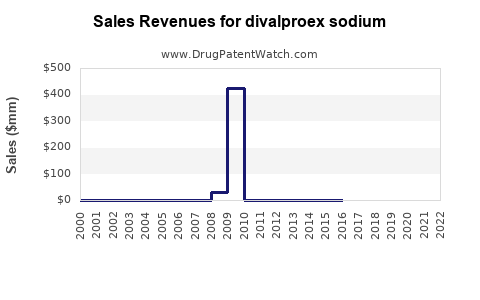
Drug Sales Revenue Trends for divalproex sodium

See drug sales revenues for divalproex sodium

Recent Clinical Trials for divalproex sodium

Identify potential brand extensions & 505(b)(2) entrants

SponsorPhase
NuventraPhase 1
Emalex Biosciences Inc.Phase 1
Syneos HealthPhase 1

See all divalproex sodium clinical trials

Generic filers with tentative approvals for DIVALPROEX SODIUM
Applicant Application No. Strength Dosage Form
⤷  Start Trial⤷  Start TrialEQ 500MG VALPROIC ACIDTABLET, DELAYED RELEASE;ORAL
⤷  Start Trial⤷  Start TrialEQ 250MG VALPROIC ACIDTABLET, DELAYED RELEASE;ORAL
⤷  Start Trial⤷  Start TrialEQ 125MG VALPROIC ACIDTABLET, DELAYED RELEASE;ORAL

The 'tentative' approval signifies that the product meets all FDA standards for marketing, and, but for the patents / regulatory protections, it would approved.

Pharmacology for divalproex sodium
Paragraph IV (Patent) Challenges for DIVALPROEX SODIUM
Tradename Dosage Ingredient Strength NDA ANDAs Submitted Submissiondate
DEPAKOTE ER Extended-release Tablets divalproex sodium 500 mg 021168 2005-02-08
DEPAKOTE ER Extended-release Tablets divalproex sodium 250 mg 021168 2004-05-03

US Patents and Regulatory Information for divalproex sodium

Applicant Tradename Generic Name Dosage NDA Approval Date TE Type RLD RS Patent No. Patent Expiration Product Substance Delist Req. Exclusivity Expiration
Prinston Inc DIVALPROEX SODIUM divalproex sodium TABLET, DELAYED RELEASE;ORAL 090210-003 Nov 30, 2009 AB RX No No ⤷  Start Trial ⤷  Start Trial ⤷  Start Trial
Chartwell Rx DIVALPROEX SODIUM divalproex sodium TABLET, DELAYED RELEASE;ORAL 077296-001 Jul 31, 2008 AB RX No No ⤷  Start Trial ⤷  Start Trial ⤷  Start Trial
Zydus Pharms Usa Inc DIVALPROEX SODIUM divalproex sodium TABLET, DELAYED RELEASE;ORAL 077100-001 Mar 5, 2009 AB RX No No ⤷  Start Trial ⤷  Start Trial ⤷  Start Trial
Sun Pharm Inds DIVALPROEX SODIUM divalproex sodium TABLET, DELAYED RELEASE;ORAL 078597-003 Jul 29, 2008 AB RX No No ⤷  Start Trial ⤷  Start Trial ⤷  Start Trial
Apotex DIVALPROEX SODIUM divalproex sodium TABLET, DELAYED RELEASE;ORAL 077615-001 Jul 29, 2008 DISCN No No ⤷  Start Trial ⤷  Start Trial ⤷  Start Trial
Pharmobedient DIVALPROEX SODIUM divalproex sodium TABLET, DELAYED RELEASE;ORAL 090062-001 Mar 17, 2009 DISCN No No ⤷  Start Trial ⤷  Start Trial ⤷  Start Trial
Mylan DIVALPROEX SODIUM divalproex sodium TABLET, DELAYED RELEASE;ORAL 077254-001 Jul 29, 2008 DISCN No No ⤷  Start Trial ⤷  Start Trial ⤷  Start Trial
>Applicant >Tradename >Generic Name >Dosage >NDA >Approval Date >TE >Type >RLD >RS >Patent No. >Patent Expiration >Product >Substance >Delist Req. >Exclusivity Expiration

Expired US Patents for divalproex sodium

Applicant Tradename Generic Name Dosage NDA Approval Date Patent No. Patent Expiration
Abbvie DEPAKOTE ER divalproex sodium TABLET, EXTENDED RELEASE;ORAL 021168-002 May 31, 2002 6,419,953*PED ⤷  Start Trial
Abbvie DEPAKOTE ER divalproex sodium TABLET, EXTENDED RELEASE;ORAL 021168-001 Aug 4, 2000 4,988,731*PED ⤷  Start Trial
Abbott DEPAKOTE CP divalproex sodium TABLET, DELAYED RELEASE;ORAL 019794-002 Jul 11, 1990 5,212,326*PED ⤷  Start Trial
Abbvie DEPAKOTE divalproex sodium CAPSULE, DELAYED REL PELLETS;ORAL 019680-001 Sep 12, 1989 4,988,731*PED ⤷  Start Trial
Abbott DEPAKOTE CP divalproex sodium TABLET, DELAYED RELEASE;ORAL 019794-001 Jul 11, 1990 5,212,326*PED ⤷  Start Trial
Abbvie DEPAKOTE ER divalproex sodium TABLET, EXTENDED RELEASE;ORAL 021168-001 Aug 4, 2000 6,419,953*PED ⤷  Start Trial
Abbvie DEPAKOTE ER divalproex sodium TABLET, EXTENDED RELEASE;ORAL 021168-002 May 31, 2002 4,913,906*PED ⤷  Start Trial
>Applicant >Tradename >Generic Name >Dosage >NDA >Approval Date >Patent No. >Patent Expiration

Divalproex Sodium: Patent Landscape and Market Trajectory Analysis

Last updated: February 19, 2026

Divalproex sodium, an anticonvulsant and mood-stabilizing medication, demonstrates a mature market characterized by generic competition and strategic patent lifecycle management. The drug's patent history reveals a series of extensions and challenges, impacting its market exclusivity and pricing. Analysis of market data indicates stable demand driven by its established efficacy in treating epilepsy and bipolar disorder. Future trajectory hinges on clinical advancements, therapeutic area expansion, and the competitive landscape.

What is the patent status of divalproex sodium?

The original patent for divalproex sodium expired in 2008 [1]. However, subsequent patent filings related to formulations, manufacturing processes, and extended-release versions have extended market exclusivity for certain products. For instance, specific extended-release formulations have patents that expired or are set to expire in the coming years. Generic manufacturers have actively entered the market following the expiry of primary patents, leading to price erosion and increased market access.

Key Patent Milestones:

  • Original Compound Patent: Expired 2008.
  • Extended-Release Formulations: Patents have varied expiration dates, with some expiring in the late 2010s and others more recently. This has allowed for the introduction of "authorized generics" or branded generics from original innovators, maintaining a competitive edge [2].
  • Manufacturing Process Patents: Ongoing development and patenting of novel or improved manufacturing processes can provide limited protection against direct replication, though they do not typically extend the exclusivity of the active pharmaceutical ingredient itself.

The United States Patent and Trademark Office (USPTO) and the European Patent Office (EPO) are primary jurisdictions for these patents. The landscape is dynamic, with patent litigation often playing a significant role in determining market entry timelines for generic competitors.

How has divalproex sodium's market evolved?

The market for divalproex sodium has transitioned from a branded, patent-protected product to a highly competitive generic space. The introduction of generic versions following patent expiry has significantly reduced prices while maintaining a substantial patient base due to the drug's established therapeutic value.

Market Evolution Timeline:

  • Pre-2008: Branded product dominated, with high pricing and limited competition.
  • 2008-2015: Gradual entry of generic competitors, leading to initial price declines and increased market share for generics.
  • 2015-Present: Mature generic market with a high degree of price competition. The market is characterized by multiple generic manufacturers, contract manufacturing organizations (CMOs), and price-sensitive healthcare providers and payers.

Market Size and Growth:

While precise current market size figures for divalproex sodium alone are often aggregated within broader anticonvulsant or mood stabilizer categories, historical data indicates a substantial and stable demand. The global market for valproate derivatives, including divalproex sodium, was estimated to be in the hundreds of millions of dollars annually prior to extensive genericization [3]. Current revenue is primarily driven by volume rather than high unit prices. Growth is largely tied to population demographics, increasing diagnosis rates for epilepsy and bipolar disorder, and market penetration in developing economies.

Factors Influencing Market Dynamics:

  • Genericization: The primary driver of market evolution, leading to price reductions and accessibility improvements.
  • Healthcare Policy: Reimbursement policies, formulary placements, and government healthcare initiatives influence prescribing patterns and market access.
  • Therapeutic Guidelines: Evolving clinical guidelines for epilepsy and bipolar disorder can impact the preferred status of divalproex sodium relative to newer agents.
  • Manufacturing Costs: Efficiency in generic manufacturing directly impacts profitability and competitive pricing.

What are the key therapeutic applications and indications for divalproex sodium?

Divalproex sodium is a broad-spectrum antiepileptic drug (AED) approved for multiple indications, contributing to its sustained demand. Its mechanism of action involves increasing gamma-aminobutyric acid (GABA) levels in the brain, which has a calming effect.

Primary Indications:

  • Epilepsy:
    • Monotherapy for partial seizures in adults and children 10 years of age and older.
    • Adjunctive therapy for patients with complex partial seizures that occur with or without secondary generalization [4].
    • Treatment of absence seizures in patients with absence seizures when other treatments have been ineffective.
  • Bipolar Disorder:
    • Prevention of migraine headaches in patients who have a history of migraine.
    • Treatment of manic or mixed episodes in patients with bipolar I disorder. The efficacy in treating manic episodes is comparable to lithium [5].

Emerging and Off-Label Uses:

While not FDA-approved, divalproex sodium has been explored for other neurological and psychiatric conditions, including:

  • Tourette's syndrome
  • Chronic pain conditions

These off-label uses, if supported by robust clinical evidence, could contribute to future market demand.

Who are the major manufacturers and competitors in the divalproex sodium market?

The divalproex sodium market is characterized by a large number of generic manufacturers, making it highly competitive. The original innovator, Abbott Laboratories (now AbbVie), no longer holds significant market share in the branded segment due to generic entry.

Key Market Players (Generic Manufacturers):

  • Teva Pharmaceutical Industries: A major global generic pharmaceutical company with a strong presence in the CNS market.
  • Lannett Company, Inc.: Historically a significant player in the divalproex sodium market.
  • Amneal Pharmaceuticals: A diversified pharmaceutical company with a broad generic portfolio.
  • Apotex Inc.: A Canadian-based global pharmaceutical company known for its generic offerings.
  • Dr. Reddy's Laboratories: An Indian multinational pharmaceutical company with a global generic business.
  • Sun Pharmaceutical Industries Ltd.: Another Indian pharmaceutical giant with extensive generic operations.
  • Viatris Inc. (formed from Mylan and Pfizer's Upjohn): A substantial player in the global generics market.

These companies compete on price, manufacturing scale, distribution networks, and supply chain reliability. The market is sensitive to supply disruptions and fluctuations in raw material costs.

What is the financial trajectory and pricing strategy for divalproex sodium?

The financial trajectory of divalproex sodium has been shaped by its transition from a high-margin branded product to a low-margin generic commodity. Pricing strategies are now primarily driven by competitive pressures and cost of goods sold.

Pricing Trends:

  • Branded Product: Prior to patent expiry, branded divalproex sodium commanded premium pricing, contributing significant revenue to its innovator.
  • Generic Entry: Upon patent expiry, the introduction of generics led to a rapid and substantial decline in prices, often by 70-90% within a few years.
  • Current Pricing: Prices are now largely determined by competitive bidding, payer contracts, and wholesale acquisition costs. There is significant price variability between manufacturers and wholesalers. Contract manufacturing is common, allowing smaller companies to market the drug under their own labels.

Financial Considerations for Manufacturers:

  • Volume-Based Revenue: Profitability relies heavily on achieving high sales volumes to offset lower per-unit margins.
  • Cost Management: Efficient manufacturing processes, secure raw material sourcing, and optimized supply chains are critical for maintaining profitability.
  • Regulatory Compliance: Maintaining high quality standards and adhering to Good Manufacturing Practices (GMP) are essential for continued market access and avoiding costly recalls.
  • Market Access and Reimbursement: Negotiating favorable terms with pharmacy benefit managers (PBMs) and insurance providers is crucial for ensuring broad prescribing.

The financial future for divalproex sodium manufacturers is one of sustained, albeit modest, revenue generation through high-volume sales in a competitive generic market. There are limited opportunities for significant revenue growth unless new indications are broadly adopted or manufacturing cost advantages are substantial.

What are the future outlook and potential risks for divalproex sodium?

The future outlook for divalproex sodium is characterized by continued demand due to its established efficacy and cost-effectiveness, balanced by risks associated with evolving treatment paradigms and market competition.

Future Outlook:

  • Sustained Demand: The drug remains a first-line or second-line treatment option for epilepsy and bipolar disorder, particularly in cost-sensitive markets. Population growth and increasing diagnosis rates are likely to support baseline demand.
  • Emerging Market Penetration: Opportunities exist for increased market share in developing countries where access to newer, more expensive medications may be limited.
  • Therapeutic Area Expansion: While unlikely for a mature drug, further research into novel applications or improved formulations could potentially revitalize market interest, though patentability of such advancements would be a key factor.

Potential Risks:

  • Competition from Newer Agents: The development of novel anticonvulsants and mood stabilizers with potentially improved efficacy or safety profiles could lead to a gradual shift away from divalproex sodium, especially in developed markets.
  • Adverse Event Profiles and Black Box Warnings: Divalproex sodium carries significant black box warnings related to hepatotoxicity, teratogenicity, and pancreatitis [4, 5]. These warnings can influence physician prescribing decisions and patient preferences, particularly for women of childbearing potential.
  • Increased Regulatory Scrutiny: Pharmaceutical regulators globally maintain oversight on the safety and manufacturing quality of all medications. Any issues related to product recalls, manufacturing defects, or post-market surveillance findings could negatively impact the market.
  • Supply Chain Disruptions: As with many generic drugs, reliance on a limited number of raw material suppliers and manufacturing sites can create vulnerabilities to global supply chain disruptions, impacting availability and price.
  • Price Wars: Intense price competition among generic manufacturers could further erode profit margins, potentially leading to market consolidation or withdrawal of less efficient producers.

The long-term trajectory will depend on the balance between the drug's proven utility and the continuous introduction of therapeutic alternatives.


Key Takeaways

  • Divalproex sodium's patent exclusivity expired in 2008, ushering in a highly competitive generic market.
  • The drug remains a cornerstone therapy for epilepsy and bipolar disorder, ensuring sustained demand.
  • Market pricing has significantly decreased due to genericization, shifting revenue generation to volume.
  • Major pharmaceutical companies compete primarily on cost efficiency and supply chain reliability.
  • Future growth is limited, with potential arising from emerging markets and the risk of displacement by newer therapeutic agents.

Frequently Asked Questions

  1. What is the primary mechanism of action for divalproex sodium? Divalproex sodium increases the levels of gamma-aminobutyric acid (GABA) in the brain, a neurotransmitter that inhibits neuronal activity, leading to a calming effect.

  2. Are there any significant side effects associated with divalproex sodium use? Yes, divalproex sodium has several serious potential side effects, including hepatotoxicity (liver damage), teratogenicity (harm to a developing fetus), pancreatitis (inflammation of the pancreas), and thrombocytopenia (low platelet count). It carries black box warnings for these risks.

  3. Can divalproex sodium be used during pregnancy? Divalproex sodium is generally not recommended for use during pregnancy, especially for indications like epilepsy, due to a significantly increased risk of major congenital malformations, including neural tube defects (e.g., spina bifida), and potential developmental neurotoxicity.

  4. What is the difference between valproic acid and divalproex sodium? Divalproex sodium is a coordination complex of sodium valproate and valproic acid. While both are forms of valproic acid, divalproex sodium is designed for more stable release and absorption.

  5. How does the pricing of generic divalproex sodium compare to the original branded product? Generic divalproex sodium is substantially less expensive than the original branded product, with prices typically falling by 70% to 90% after patent expiry due to market competition among multiple manufacturers.


Citations

[1] U.S. Food & Drug Administration. (n.d.). Drug Approvals and Databases. Retrieved from https://www.fda.gov/drugs/developmentapprovalprocess/drugapprovals/ (Note: Specific patent expiry dates are publicly searchable via patent databases like USPTO or commercial patent analytics platforms).

[2] Generic Pharmaceutical Association. (n.d.). The Value of Generic Medicines. Retrieved from https://www.aipmmagazine.com/the-value-of-generic-medicines/ (Note: Generic Pharmaceutical Association is now the Association for Accessible Medicines).

[3] Grand View Research. (2021). Valproate Market Size, Share & Trends Analysis Report By Product (Divalproex Sodium, Valproic Acid), By Application (Epilepsy, Bipolar Disorder, Migraine Prevention), By Region, And Segment Forecasts, 2021 – 2028. (Note: Specific market reports are proprietary; this is a representative example of market research sources).

[4] U.S. Food & Drug Administration. (2008). DEPAKOTE ER (divalproex sodium extended-release) Tablets, for Oral Use Initial US Approval: 09/15/2008. Retrieved from https://www.accessdata.fda.gov/drugsatfda_docs/label/2008/021906s031_021907s020lbl.pdf (Note: This is a representative label; specific product labels and their updates should be consulted for precise indication details).

[5] U.S. Food & Drug Administration. (2020). DEPAKOTE (divalproex sodium) Tablets, Delayed-Release Tablets, and Sprinkle Capsules. Retrieved from https://www.accessdata.fda.gov/drugsatfda_docs/label/2020/017452s071,018601s033,019073s046,020102s042lbl.pdf (Note: This is a representative label; specific product labels and their updates should be consulted for precise indication details).

More… ↓

⤷  Start Trial

Make Better Decisions: Try a trial or see plans & pricing

Drugs may be covered by multiple patents or regulatory protections. All trademarks and applicant names are the property of their respective owners or licensors. Although great care is taken in the proper and correct provision of this service, thinkBiotech LLC does not accept any responsibility for possible consequences of errors or omissions in the provided data. The data presented herein is for information purposes only. There is no warranty that the data contained herein is error free. We do not provide individual investment advice. This service is not registered with any financial regulatory agency. The information we publish is educational only and based on our opinions plus our models. By using DrugPatentWatch you acknowledge that we do not provide personalized recommendations or advice. thinkBiotech performs no independent verification of facts as provided by public sources nor are attempts made to provide legal or investing advice. Any reliance on data provided herein is done solely at the discretion of the user. Users of this service are advised to seek professional advice and independent confirmation before considering acting on any of the provided information. thinkBiotech LLC reserves the right to amend, extend or withdraw any part or all of the offered service without notice.