Last updated: July 30, 2026
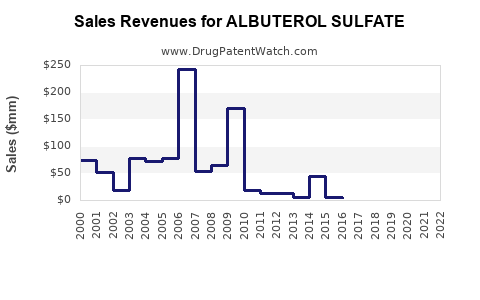
Albuterol sulfate remains a high-volume, low-to-moderate-growth respiratory generic with persistent demand from COPD, asthma, and acute bronchospasm. The financial trajectory is dominated by (1) long-established generic penetration, (2) the mix shift between inhaled products and nebulized solutions, (3) payer and pharmacy benefit pressure, and (4) intermittent brand-like pockets created by delivery-device differentiation and specific strengths/formulations. In the US, the addressable revenue base is large but structurally capped by generic competition; upside comes mainly from product mix, channel share, and patient adherence via device usability rather than new exclusivity.
How big is the albuterol sulfate market and what drives demand?
Featured answer: Demand is driven by chronic obstructive pulmonary disease and asthma prevalence, plus recurrent acute exacerbation need. Revenue is constrained by widespread generic availability in essentially all major dosage forms.
What therapeutic uses sustain demand?
- Asthma: rescue/reliever therapy for reversible airflow obstruction.
- COPD: symptomatic relief and acute bronchospasm management.
- Acute care: emergency treatment of wheezing/bronchospasm, typically via nebulization or MDI in controlled settings.
What patient and utilization dynamics matter?
- Increased utilization occurs during viral respiratory seasons and higher exacerbation rates.
- Long-term demand is stabilized by persistent disease prevalence.
- Inhaler technique and adherence influence product selection between MDI, breath-actuated options, and nebulized formulations.
What product categories dominate revenue?
Market revenue generally concentrates in:
- MDIs (metered-dose inhalers): short-acting beta-agonist reliever class.
- Nebulizer solutions: frequently used in pediatrics, patients with poor inhaler technique, and acute care.
- Dry powder inhalers: less common for albuterol sulfate specifically, depending on country and formulary.
What is the financial trajectory for albuterol sulfate under generic competition?
Featured answer: The financial profile is steady-to-slow growth with downward or flat pricing trends, offset by volume and channel share. Any “brand-like” earnings are mostly tied to limited differentiation and contracts rather than IP exclusivity.
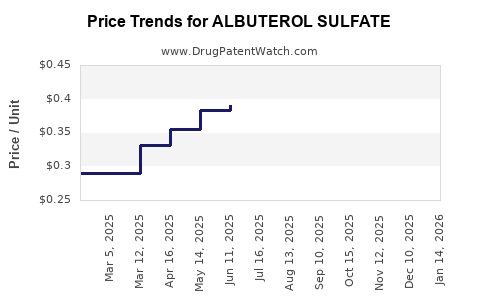
Typical US pricing and margin pattern for generics
- Wholesale to net price compression: as more ANDA entrants take share.
- Contract pharmacy and PBM formulary placement: drives short-term share changes and net price variability.
- Channel mix effects: retail vs institutional can shift revenue volatility.
How does mix shift change the revenue curve?
- Nebulizer solutions can gain share in pediatric and institutional settings where inhaler coordination is harder.
- MDIs can regain share when substitution and device preference favor lower-cost equivalents.
- Strength and package-size selection affect reimbursement and contracting.
What are the principal risk factors to revenue stability?
- Substitution policies at pharmacy counter and PBM formulary changes.
- Input cost volatility (propellants and packaging).
- Supply chain disruptions for inhaler components, if any specific supplier constraints arise.
Which albuterol sulfate products have the best market positioning by dosage form?
Featured answer: Market positioning tends to favor products that align with prescribing habits (reliever use), institutional workflows (nebulization), and payer substitution rules (available generics with good acquisition terms).
Metered-dose inhalers (MDIs)
Key determinants:
- Device usability, actuation reliability, and patient satisfaction.
- Net price competitiveness under pharmacy substitution.
- Packaging and strength availability.
Nebulizer solutions
Key determinants:
- Unit-of-use packaging that fits dosing workflows.
- Stability and shelf-life performance.
- Institutional contracting and tendering.
Oral alternatives
There are fewer substitution pathways compared with inhaled delivery, so revenue is typically confined to device-centric competitive sets.
How do US regulatory and Orange Book dynamics affect market competition for albuterol sulfate?
Featured answer: Competition is largely governed by ANDA entry and substitution, not by active exclusivity. Orange Book listings for specific formulations or methods can matter at the margin, but the product category is structurally generic.
What does exclusivity typically look like for established generics?
- Many products are beyond exclusivity periods and are widely substitutable.
- Certain formulation/device-specific patents can delay limited launches, but they rarely change the category-wide trajectory once multiple entrants are present.
How do ANDAs translate into market outcomes?
- ANDA approvals that broaden the available strengths, packaging, or label instructions can quickly expand market share.
- Early entrants tend to anchor contracts; later entrants gain share mainly through pricing and channel wins.
What patents protect albuterol sulfate and how strong is the patent estate?
Featured answer: For albuterol sulfate as an active ingredient, the practical IP situation is dominated by older foundational patents that are long expired; remaining barriers are typically formulation, device, packaging, or method-of-use claims tied to specific product presentations.
What patent types can still matter?
- Formulation patents: excipient systems, particle/solution stability, or device compatibility.
- Device-related patents: inhaler actuation mechanisms and delivery performance.
- Method-of-use patents: specific dosing regimens or patient populations (less common in late-stage generic landscapes).
What is the competitive implication?
- IP barriers tend to be narrow and presentation-specific.
- Once multiple ANDAs exist for a given strength and dosage form, revenue becomes a function of contracts and pricing rather than exclusivity.
How do settlement agreements and patent litigation affect albuterol sulfate launches?
Featured answer: Litigation can delay specific presentations, but in a widely generic category the overall financial trajectory usually reflects the speed and number of successful ANDA launches rather than prolonged exclusivity hold-ups.
How Paragraph IV challenges typically affect this market
- If a reference product has late-expiring patents in a narrow presentation, Paragraph IV could shift timing for one formulation strength or device variant.
- Settlement tends to trade off launch timing for generic market share access, but category-wide effects are usually limited once multiple competitors already exist.
What does this mean for investor/revenue modeling?
- Launch timing is sensitive to injunction risk and negotiated carve-outs.
- The market response is usually rapid when approvals are sustained and supply is stable.
What is the competitive landscape for albuterol sulfate in the US and major markets?
Featured answer: The competitive set is primarily composed of established generic inhalation and respiratory companies plus large diversified generics with strong distribution and PBM access.
Competitive axes
- Price: PBM and wholesaler contracting drives acquisition cost.
- Availability: in-stock performance is a decisive factor in inhalation therapy continuity.
- Packaging: unit dose and device interchangeability can affect formulary acceptance.
- Institutional adoption: hospital formularies often favor specific NDCs for workflow and tender pricing.
What international dynamics matter most?
- Regulatory pathways and market authorization timelines vary.
- Substitution rules and tender systems in public healthcare systems can accelerate generic capture.
When does albuterol sulfate lose exclusivity and what launch scenarios exist?
Featured answer: The category’s dominant “exclusivity” is long past for the active ingredient. The operative timing question is less about ingredient exclusivity and more about presentation-specific IP and specific reference product formulations.
Practical launch scenarios for investors and competitors
- Scenario A (post-barrier): broad ANDA entry for common strengths and packaging drives sustained price compression.
- Scenario B (narrow barrier): limited delay for a specific presentation results in temporary price premiums for entrenched NDCs.
- Scenario C (supply-constrained): even after legal clearance, temporary shortages can protect net pricing for in-stock products.
How do inhalation devices and formulations impact financial performance?
Featured answer: Performance is driven by delivery reliability, patient technique alignment, and the contracting value of specific presentations rather than by changes to the active molecule.
Device and adherence effects
- Better usability supports switching and reduced discontinuation, supporting volume stability even under generic pricing pressure.
- Institutional workflows tend to lock in certain devices by formulary decision and standard order sets.
Formulation and substitution effects
- Stability and shelf-life affect purchasing patterns and distribution efficiency.
- Slight label differences can affect payer coverage and prescriber preference.
How much revenue is at risk from biosimilar or biologic substitution?
Featured answer: Biosimilars are not a relevant substitute category for albuterol sulfate; it is a small-molecule inhaled bronchodilator with no biologic parallel.
What is the revenue exposure by channel and setting?
Featured answer: Revenue exposure is highest in chronic maintenance not as a controller but as rescue use volumes, and in acute care where nebulized therapy is common. Channel mix changes can shift quarterly revenue even when underlying disease prevalence is stable.
Retail pharmacy
- Subject to PBM substitution and automatic substitution at the counter.
- Short-term volatility from formulary updates and contract renewals.
Institutional (hospitals, clinics)
- Tender pricing and standardization drive NDC selection.
- In-stock availability can protect share during short supply periods.
Mail order
- Often captures stable maintenance-like refills and can mitigate some retail volatility.
Key financial sensitivities for albuterol sulfate manufacturers and investors
Featured answer: Net sales and profitability are most sensitive to pricing (contract and PBM), mix (MDI vs nebulizer), and supply continuity.
Pricing sensitivity
- Category-wide price declines as additional entrants appear.
- Negotiated discounts and rebate structures govern net price.
Volume sensitivity
- Respiratory seasonality.
- COPD/asthma exacerbation rates and local epidemiology.
Cost sensitivity
- Propellant and packaging costs for inhalers.
- Manufacturing yield and distribution costs.
Supply and service sensitivity
- Stock-outs reduce dispensed volumes even if demand exists.
Key Takeaways
- Albuterol sulfate’s financial trajectory is dominated by entrenched generic competition, making category growth depend on volume and mix rather than on exclusivity.
- Demand is durable due to asthma and COPD rescue use and acute bronchospasm treatment, with seasonality influencing quarterly swings.
- Revenue is structurally exposed to pricing compression through PBM contracting and substitution rules; any “brand-like” outcomes typically stem from device or presentation-specific advantages plus channel share.
- Litigation and settlement can delay narrow presentations, but category-level impact usually tracks ANDA entry cadence and supply continuity.
FAQs
1) What are the main competitive risks for albuterol sulfate in the US?
Generic substitution, PBM formulary changes, and price compression driven by multi-entrant ANDA competition.
2) Do inhaler delivery devices materially change albuterol sulfate market share?
Yes. Device usability and fit with prescribing and institutional workflows can shift mix between MDI and nebulized solutions, affecting net sales.
3) Can patent litigation significantly protect albuterol sulfate revenues?
Only for narrow, presentation-specific patents or specific product configurations. Category-wide revenue protection is limited once multiple ANDA competitors exist.
4) How do seasonal respiratory patterns affect albuterol sulfate financials?
Demand typically rises during viral seasons and higher exacerbation periods, increasing dispensed volume and potential net sales volatility.
5) Is there any biosimilar threat to albuterol sulfate?
No. Albuterol sulfate is a small-molecule bronchodilator with no biologic substitute class.
References
- US Food and Drug Administration. Orange Book: Approved Drug Products with Therapeutic Equivalence Evaluations. https://www.accessdata.fda.gov/scripts/cder/daf/
- US Food and Drug Administration. Drug Approval Reports and Therapeutic Equivalence Evaluations. https://www.fda.gov/drugs/drug-approvals-and-databases/
- GlobalData (market intelligence). Respiratory Drugs and Generics: Competitive and Market Dynamics (database). (General reference for category dynamics)