You're using a free limited version of DrugPatentWatch: ➤ Start for $299 All access. No Commitment.

Last Updated: December 15, 2025

Celecoxib - Generic Drug Details


✉ Email this page to a colleague

« Back to Dashboard


What are the generic drug sources for celecoxib and what is the scope of freedom to operate?

Celecoxib is the generic ingredient in five branded drugs marketed by Upjohn, Alembic, Amneal Pharms, Apotex, Aurobindo Pharma, Cadila Pharms Ltd, Cipla, Cspc Ouyi, Jubilant Generics, Lupin Ltd, Macleods Pharms Ltd, Micro Labs, Nanjing, Pangea, Pharmobedient, Qingdao Baheal Pharm, Sciegen Pharms Inc, Strides Pharma, Teva, Tianjin Tianyao, Torrent, Umedica, Unichem, Watson Labs Inc, Yabao Pharm, Yiling, Zydus Pharms, Scilex Pharms, Carwin Pharm Assoc, and Kowa Pharms, and is included in thirty NDAs. There are thirteen patents protecting this compound and one Paragraph IV challenge. Additional information is available in the individual branded drug profile pages.

Celecoxib has twenty-six patent family members in twelve countries.

There are twenty-six drug master file entries for celecoxib. Sixty-five suppliers are listed for this compound.

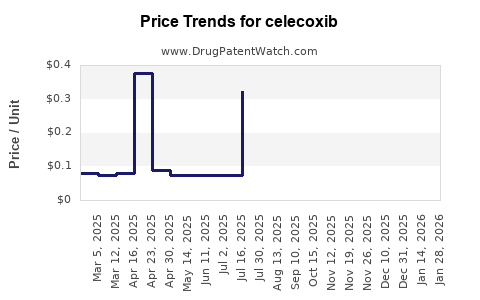
Drug Prices for celecoxib

See drug prices for celecoxib

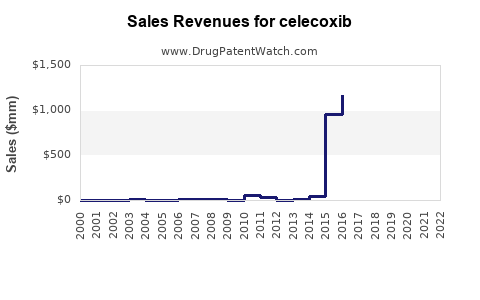
Drug Sales Revenue Trends for celecoxib

See drug sales revenues for celecoxib

Recent Clinical Trials for celecoxib

Identify potential brand extensions & 505(b)(2) entrants

SponsorPhase
Myopharm LimitedPHASE2
Stony Brook UniversityPHASE4
University of OklahomaPHASE4

See all celecoxib clinical trials

Pharmacology for celecoxib
Medical Subject Heading (MeSH) Categories for celecoxib
Paragraph IV (Patent) Challenges for CELECOXIB
Tradename Dosage Ingredient Strength NDA ANDAs Submitted Submissiondate
CELEBREX Capsules celecoxib 50 mg 020998 1 2008-03-21

US Patents and Regulatory Information for celecoxib

Applicant Tradename Generic Name Dosage NDA Approval Date TE Type RLD RS Patent No. Patent Expiration Product Substance Delist Req. Exclusivity Expiration
Strides Pharma CELECOXIB celecoxib CAPSULE;ORAL 213127-001 Apr 29, 2025 DISCN No No ⤷  Get Started Free ⤷  Get Started Free ⤷  Get Started Free
Sciegen Pharms Inc CELECOXIB celecoxib CAPSULE;ORAL 205129-002 Dec 3, 2020 AB RX No No ⤷  Get Started Free ⤷  Get Started Free ⤷  Get Started Free
Kowa Pharms SEGLENTIS celecoxib; tramadol hydrochloride TABLET;ORAL 213426-001 Oct 15, 2021 DISCN Yes No ⤷  Get Started Free ⤷  Get Started Free Y Y ⤷  Get Started Free
Apotex CELECOXIB celecoxib CAPSULE;ORAL 204197-001 Jun 2, 2015 AB RX No No ⤷  Get Started Free ⤷  Get Started Free ⤷  Get Started Free
Qingdao Baheal Pharm CELECOXIB celecoxib CAPSULE;ORAL 208856-003 Aug 7, 2019 AB RX No No ⤷  Get Started Free ⤷  Get Started Free ⤷  Get Started Free
Apotex CELECOXIB celecoxib CAPSULE;ORAL 204197-003 Jun 2, 2015 AB RX No No ⤷  Get Started Free ⤷  Get Started Free ⤷  Get Started Free
Tianjin Tianyao CELECOXIB celecoxib CAPSULE;ORAL 207872-002 Feb 25, 2020 AB RX No No ⤷  Get Started Free ⤷  Get Started Free ⤷  Get Started Free
>Applicant >Tradename >Generic Name >Dosage >NDA >Approval Date >TE >Type >RLD >RS >Patent No. >Patent Expiration >Product >Substance >Delist Req. >Exclusivity Expiration

Expired US Patents for celecoxib

Applicant Tradename Generic Name Dosage NDA Approval Date Patent No. Patent Expiration
Upjohn CELEBREX celecoxib CAPSULE;ORAL 020998-002 Dec 31, 1998 ⤷  Get Started Free ⤷  Get Started Free
Upjohn CELEBREX celecoxib CAPSULE;ORAL 020998-003 Aug 29, 2002 ⤷  Get Started Free ⤷  Get Started Free
Upjohn CELEBREX celecoxib CAPSULE;ORAL 020998-002 Dec 31, 1998 ⤷  Get Started Free ⤷  Get Started Free
Upjohn CELEBREX celecoxib CAPSULE;ORAL 020998-001 Dec 31, 1998 ⤷  Get Started Free ⤷  Get Started Free
Upjohn CELEBREX celecoxib CAPSULE;ORAL 020998-004 Dec 15, 2006 ⤷  Get Started Free ⤷  Get Started Free
Upjohn CELEBREX celecoxib CAPSULE;ORAL 020998-003 Aug 29, 2002 ⤷  Get Started Free ⤷  Get Started Free
>Applicant >Tradename >Generic Name >Dosage >NDA >Approval Date >Patent No. >Patent Expiration

EU/EMA Drug Approvals for celecoxib

Company Drugname Inn Product Number / Indication Status Generic Biosimilar Orphan Marketing Authorisation Marketing Refusal
Pfizer Limited Onsenal celecoxib EMEA/H/C/000466Onsenal is indicated for the reduction of the number of adenomatous intestinal polyps in familial adenomatous polyposis (FAP), as an adjunct to surgery and further endoscopic surveillance (see section 4.4).The effect of Onsenal-induced reduction of polyp burden on the risk of intestinal cancer has not been demonstrated (see sections 4.4 and 5.1) Withdrawn no no no 2003-10-17
>Company >Drugname >Inn >Product Number / Indication >Status >Generic >Biosimilar >Orphan >Marketing Authorisation >Marketing Refusal

International Patents for celecoxib

Country Patent Number Title Estimated Expiration
Mexico 2017015238 COMPOSICION ORAL DE CELECOXIB PARA TRATAMIENTO DE DOLOR. (ORAL COMPOSITION OF CELECOXIB FOR TREATMENT OF PAIN.) ⤷  Get Started Free
Russian Federation 2017144574 ⤷  Get Started Free
China 114469858 ⤷  Get Started Free
South Korea 101994129 ⤷  Get Started Free
European Patent Office 3463340 ⤷  Get Started Free
European Patent Office 3302429 ⤷  Get Started Free
Australia 2016267685 ⤷  Get Started Free
>Country >Patent Number >Title >Estimated Expiration

Supplementary Protection Certificates for celecoxib

Patent Number Supplementary Protection Certificate SPC Country SPC Expiration SPC Description
0731795 10075033 Germany ⤷  Get Started Free PRODUCT NAME: CELECOXIB; NAT. REGISTRATION NO/DATE: 48802.00.00 20000518; FIRST REGISTRATION: SE 14838 19991203
2488169 C202330042 Spain ⤷  Get Started Free PRODUCT NAME: COCRISTAL DE TRAMADOL, OPCIONALMENTE EN FORMA DE UNA SAL FISIOLOGICAMENTE ACEPTABLE, Y CELECOXIB; NATIONAL AUTHORISATION NUMBER: 89051; DATE OF AUTHORISATION: 20230925; NUMBER OF FIRST AUTHORISATION IN EUROPEAN ECONOMIC AREA (EEA): 89051; DATE OF FIRST AUTHORISATION IN EEA: 20230925
>Patent Number >Supplementary Protection Certificate >SPC Country >SPC Expiration >SPC Description

Market Dynamics and Financial Trajectory for Celecoxib

Last updated: July 27, 2025

Introduction

Celecoxib, marketed primarily under the brand name Celebrex, is a nonsteroidal anti-inflammatory drug (NSAID) that specifically inhibits cyclooxygenase-2 (COX-2). Since its approval in 1998 by the U.S. Food and Drug Administration (FDA), celecoxib has become a significant player in the anti-inflammatory and analgesic markets. Its popularity stems from its targeted mechanism of action, which offers reduced gastrointestinal side effects compared to traditional NSAIDs. This report explores the evolving market dynamics and financial trajectory of celecoxib, considering factors such as patent protection, competition, regulatory landscape, and global demand.

Market Overview and Historical Performance

Initially introduced by Pfizer, celecoxib quickly gained considerable market share due to its favorable safety profile for certain patient populations. During its patent exclusivity period, peak sales in the US exceeded $2 billion annually (Pfizer's 2005-2010 reports). However, subsequent market attrition owing to the patent cliff, generic entry, and competition significantly impacted revenues.

The historically high revenues showcased celecoxib's prominence in osteoarthritis, rheumatoid arthritis, and acute pain management markets. Its initial commercial success was underpinned by clinical advantages over older NSAIDs and a well-established prescribing pattern by healthcare providers. Nevertheless, the entry of generics—beginning around 2014 following Pfizer's patent expiry—marked a pivotal shift in its market dynamics.

Patent Expiry and Generic Competition

The loss of patent protection in major markets such as the U.S. and Europe led to rapid erosion of brand-name sales and proliferation of generic equivalents. Generics typically retail at a significant discount, drastically reducing revenue for the originator. Today, multiple manufacturers produce generic celecoxib, leading to intense price competition and shrinking profit margins.

Pfizer, the original innovator, faced revenue declines post-patent expiry, aligning with typical pharmaceutical patent cliffs. Nonetheless, strategic cost management and increased focus on emerging markets have mitigated some financial impacts. The generic market accounts for over 80% of celecoxib prescriptions, reflecting the compound's commoditized status within NSAID therapy.

Market Evolution and Therapeutic Positioning

Despite generic competition, celecoxib maintains relevance owing to its unique COX-2 selective mechanism, which is favored in specific clinical contexts that require reduction of gastrointestinal adverse events associated with non-selective NSAIDs. Prescribing patterns underscore its use in osteoarthritis, rheumatoid arthritis, ankylosing spondylitis, and certain cancer-related pain indications.

The drug's patent protections granted exclusivity until approximately 2015-2016 in key regions, after which marketing shifted to generic manufacturers. Ongoing research and post-market surveillance have supported its safety profile, although concerns over cardiovascular risks have tempered broader expansion.

Regulatory and Safety Considerations

Regulatory agencies have issued warnings regarding cardiovascular risks associated with celecoxib, paralleling findings from the VIGOR trial (2000). As a result, physicians exercise caution, limiting broader use to specific patient cohorts. These safety concerns influence demand, especially in markets with strict regulatory oversight.

Moreover, regulatory bodies continue to scrutinize the drug for potential adverse effects, which can impact market access and reimbursement policies. Despite this, regulatory approvals in multiple countries sustain celecoxib's market presence, and ongoing Post-Approval Commitments support long-term viability.

Global Market Dynamics

The global market for celecoxib remains sizeable, propelled by the increasing prevalence of osteoarthritis and rheumatoid arthritis—particularly in aging populations. The expanding burden of chronic inflammatory conditions ensures sustained demand in mature markets such as North America and Europe.

Emerging markets, including Asia-Pacific and Latin America, exhibit rising prescriptions driven by increasing healthcare access and the expanding middle class. Generic competition has facilitated wider adoption through lower retail prices, making celecoxib competitively viable in price-sensitive regions.

Financial Trajectory and Future Outlook

The financial outlook for celecoxib is characterized by a decline in revenue from its peak years—driven by patent expirations—but also opportunities arising from new formulations, such as combination drugs or extended-release versions. The current primary revenue streams originate from generic sales, with relatively modest contributions from the original patent-holder.

Industry forecasts suggest a continued decline in brand-name sales over the next five years, with overall market volume stabilizing as chronic disease prevalence persists. Revenue is expected to plateau in mature regions but could sustain growth through market expansion in developing countries.

Furthermore, ongoing research into Cardiovascular safety profiles could influence long-term usage patterns, with potential shifts toward safer alternatives or new targeting modalities. The competitive landscape remains robust, with other NSAIDs and analgesics vying for market share.

Impact of Market Factors on Revenue

  • Patent expiration: Sharp decline post-2015, with generic proliferation reducing prices.
  • Generic entry: Significant price erosion, leading to revenue decline for originator companies.
  • Regulatory scrutiny: Ongoing safety concerns temper expansive prescribing, impacting revenue streams.
  • Market penetration in emerging economies: Offers potential growth despite generic competition.
  • New formulations or indications: Minor revenue contributors but may extend market viability.

Conclusion

Celecoxib’s market dynamics underscore a quintessential lifecycle pattern for patented drugs—initial blockbuster success followed by decline post-patent expiry. While generic competition has markedly reduced revenue, the drug maintains a niche owing to its COX-2 selectivity and favorable safety profile in select populations. Future growth prospects hinge on regional market expansion, innovative drug formulations, and evolving safety profiles. Industry participants must navigate patent expirations, regulatory considerations, and competitive pressures to optimize financial outcomes.


Key Takeaways

  • Patent expirations in 2015-2016 precipitated a sharp decline in brand-name revenues; generic competition dominates the market now.
  • Celecoxib maintains a critical niche due to its COX-2 selectivity, especially in patients at risk of gastrointestinal adverse events.
  • Regulatory safety concerns, notably cardiovascular risks, influence prescribing patterns and market demand.
  • Emerging markets present growth opportunities owing to increased prevalence of chronic inflammatory diseases and lower generic prices.
  • Future revenues depend on market expansion, new formulations, and ongoing safety assessments, with legacy sales declining gradually.

FAQs

1. How has patent expiration affected celecoxib's market?
Patent expiration around 2015-2016 allowed multiple pharmaceutical manufacturers to produce generic versions, leading to a dramatic reduction in brand-name sales and increased price competition, which eroded profit margins for the original innovator.

2. What are the primary safety concerns impacting celecoxib's market?
The primary safety concern is an elevated risk of cardiovascular events, as identified in clinical trials like VIGOR. These concerns restrict broader use and influence regulatory decisions, subsequently affecting market demand.

3. Which regions show promising growth opportunities for celecoxib?
Emerging markets in Asia-Pacific and Latin America demonstrate growth potential due to rising prevalence of arthritis and chronic inflammatory conditions, coupled with broader healthcare access and affordability of generics.

4. Can celecoxib's new formulations revive its financial trajectory?
While minor in impact, novel formulations such as extended-release versions or combination drugs could offer incremental revenue streams and prolong market relevance, especially if they address safety or efficacy concerns.

5. What is the long-term outlook for celecoxib's revenues?
Expect a continued decline in revenues in mature markets due to generics and safety considerations. Long-term growth prospects are tied to market expansion in developing regions and potential niche indications, with overall revenues stabilizing or gradually declining.


Sources:
[1] Pfizer Inc. Annual Reports (2005–2010).
[2] U.S. Food and Drug Administration (FDA) approvals and safety warnings.
[3] Market research reports on NSAIDs and osteoarthritis therapeutics.
[4] Clinical trial data (VIGOR trial, 2000).
[5] Industry financial analysis publications on patent cliffs and generic drug markets.

More… ↓

⤷  Get Started Free

Make Better Decisions: Try a trial or see plans & pricing

Drugs may be covered by multiple patents or regulatory protections. All trademarks and applicant names are the property of their respective owners or licensors. Although great care is taken in the proper and correct provision of this service, thinkBiotech LLC does not accept any responsibility for possible consequences of errors or omissions in the provided data. The data presented herein is for information purposes only. There is no warranty that the data contained herein is error free. We do not provide individual investment advice. This service is not registered with any financial regulatory agency. The information we publish is educational only and based on our opinions plus our models. By using DrugPatentWatch you acknowledge that we do not provide personalized recommendations or advice. thinkBiotech performs no independent verification of facts as provided by public sources nor are attempts made to provide legal or investing advice. Any reliance on data provided herein is done solely at the discretion of the user. Users of this service are advised to seek professional advice and independent confirmation before considering acting on any of the provided information. thinkBiotech LLC reserves the right to amend, extend or withdraw any part or all of the offered service without notice.