Last updated: September 26, 2025
Introduction
Upjohn, a subsidiary of the global pharmaceutical giant Pfizer, has carved a distinctive niche within the competitive pharmaceutical landscape. Focused primarily on off-patent medications, biosimilars, and established therapeutic areas, Upjohn aligns its strategy with Pfizer’s broader goal of expanding access to essential medicines. This analysis scrutinizes Upjohn’s current market position, assesses its core strengths, and offers strategic insights aimed at optimizing its growth trajectory amid an evolving pharmaceutical industry.
Market Position Overview
Historical Foundations and Corporate Evolution
Founded in 2018 through Pfizer’s spin-off of its off-patent and legacy drug portfolio, Upjohn’s core mission centers on providing affordable medicines across multiple therapeutic areas. This strategic realignment allows Pfizer to streamline its operations, while Upjohn focuses on mature, high-use medications with stable demand, such as Viagra (sildenafil), and established antibiotics.
Distribution and Geographic Footprint
Upjohn’s geographical presence spans North America, Europe, Asia-Pacific, and Africa. Its focus on high-volume, off-patent medicines provides a resilient revenue stream less vulnerable to patent cliffs than innovative, proprietary drugs. The company's strategic emphasis on emerging markets further positions it as a key player in expanding healthcare access where unmet needs persist.
Market Share and Revenue Streams
While specific revenue figures are proprietary, publicly available data indicates Upjohn’s contributions form a significant portion of Pfizer’s legacy drug revenue. Its portfolio is characterized by stable, recurring income, underpinning its strategic importance. In 2021, Pfizer recognized the spinoff as a means to hone its focus on innovative therapies, implicitly reaffirming Upjohn’s role as a robust cash generator.
Strengths of Upjohn
1. Focus on High-Volume, Off-Patent Medications
Upjohn’s portfolio is anchored in well-established medicines such as sildenafil (Viagra), atorvastatin (Lipitor’s off-patent variant), and other perennial therapeutic agents. These drugs benefit from established demand, relatively straightforward manufacturing, and predictable profitability.
2. Cost-Effective Manufacturing and Supply Chain
Leveraging Pfizer’s global manufacturing infrastructure, Upjohn achieves economies of scale, ensuring reliable and cost-efficient production. This operational excellence, coupled with mature supply chains, allows the company to maintain competitive pricing advantages.
3. Geographic Diversification and Market Penetration
Targeting emerging markets enhances Upjohn’s growth prospects. These regions often display less saturated markets for off-patent medicines and are characterized by increasing healthcare expenditure. Strategic partnerships with local distributors underpin expanded access and market share.
4. Strategic Focus on Biosimilars and Lifecycle Management
Upjohn has begun venturing into biosimilars and lifecycle extension strategies for its existing products, adding new revenue streams. This diversification aligns with industry trends toward biologic therapies and addressable markets for affordable biosimilars.
5. Financial Resilience
Due to the mature nature of its portfolio, Upjohn enjoys consistent cash flow, enabling steady investment in operations, regulatory compliance, and market expansion initiatives. Its financial stability offers a competitive advantage in price negotiations and strategic acquisitions.
Challenges and Strategic Opportunities
Challenges
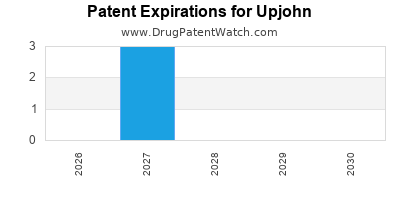
- Patent Expirations and Generic Competition: Although focused on off-patent products, eventual patent expirations of key drugs threaten revenue streams.
- Market Saturation: Mature markets face increased competition from other off-patent and generic manufacturers.
- Regulatory and Pricing Pressures: Governments and payers deploy pricing controls and formulary restrictions, constraining profit margins.
- Limited Innovation Pipeline: The reliance on established drugs exposes Upjohn to obsolescence risks without a significant pipeline of novel therapies.
Strategic Opportunities
- Expansion into Biosimilars: Developing biosimilars offers pathways into high-growth biologic markets, with substantial margins and volume opportunities.
- Entry into Specialty and Niche Markets: Identifying unmet needs within niche therapeutic areas can foster new growth avenues.
- Partnerships and Acquisitions: Collaborations with smaller biotech firms or acquisition targets can accelerate pipeline diversification.
- Digital Transformation and Supply Chain Optimization: Leveraging digital tools can enhance manufacturing efficiencies, forecasting, and patient outreach.
Competitive Landscape Analysis
Key Competitors
Upjohn operates within a crowded field of generic and off-patent medication manufacturers, including Teva Pharmaceuticals, Sandoz (Novartis), Mylan (now part of Viatris), and Walgreens Boots Alliance. These players possess extensive portfolios and international reach, intensifying price competition.
Differentiation Strategies
To sustain its market position, Upjohn emphasizes cost leadership, reliable supply, and strategic regional growth. Its association with Pfizer enhances credibility and access to R&D resources, facilitating entry into biosimilars and lifecycle extensions.
Emerging Trends Impacting Competition
- Biosimilars and Biologics: The shift toward biologics offers new avenues, albeit with high regulatory barriers.
- Regulatory Harmonization: Standardization across markets simplifies entry but demands compliance sophistication.
- Digital Health Integration: Digital tools for patient engagement, adherence, and supply chain tracking could differentiate providers.
Strategic Insights
Prioritize Biosimilars and Specialty Areas
Upjohn should accelerate biosimilar development, capitalizing on biologics’ expanding footprint. This entails investing in R&D, regulatory expertise, and strategic partnerships to navigate complex approval pathways efficiently.
Expand Geographic Reach in Emerging Markets
Enhancing distribution networks in Africa, Southeast Asia, and Latin America aligns with global health initiatives. Local manufacturing or licensing agreements could bolster market penetration.
Invest in Digital Infrastructure
Digital platforms for inventory management, market intelligence, and patient engagement can reduce costs and improve service delivery, cementing Upjohn’s relevance in digital health ecosystems.
Enhance Lifecycle Management
Proactively seeking patent extensions, line extensions, and reformulations can extend the commercial lifespan of key drugs, counteracting patent expirations.
Monitor and Adapt to Regulatory Changes
Staying ahead of evolving pricing regulations and biosimilar policies is crucial. Engaging proactively with policymakers mitigates risk and fosters favorable regulatory environments.
Conclusion
Upjohn’s strategic advantage resides in its focused portfolio of high-demand, off-patent medications, supported by Pfizer’s global infrastructure and manufacturing expertise. While facing near-term challenges from patent expirations and commoditization, opportunities in biosimilars, emerging markets, and digital health position Upjohn for sustained relevance. Strategic agility—investing in biosimilars, expanding geographically, and reinforcing lifecycle management—will be vital in maintaining its competitive edge.
Key Takeaways
- Upjohn’s focus on high-volume, off-patent drugs ensures stable revenue but demands diversification to counter patent expiration threats.
- Expanding into biosimilars and specialty markets aligns with industry shifts and offers high-margin growth prospects.
- Geographic expansion, especially in emerging markets, can unlock new demand and mitigate saturation in mature markets.
- Digital transformation provides efficiencies and competitive differentiation amid increasing commoditization.
- Proactive lifecycle management and regulatory engagement are key to safeguarding profitability in a volatile landscape.
FAQs
1. What is Upjohn’s core competitive advantage?
Upjohn’s core advantage lies in its portfolio of well-established, high-demand off-patent medications, backed by Pfizer’s manufacturing and distribution infrastructure, enabling cost-effective supply and stable revenues.
2. How is Upjohn positioned against its competitors?
While operating in a competitive market with major generic manufacturers, Upjohn leverages its strategic focus, geographic diversification, and Pfizer’s support to maintain a resilient market presence.
3. What are the main risks facing Upjohn?
Key risks include patent expirations, intensifying commoditization, regulatory and pricing pressures, and a limited innovation pipeline.
4. Which strategic moves could enhance Upjohn’s growth?
Accelerating biosimilar development, expanding into emerging markets, diversifying product offerings via lifecycle extensions, and investing in digital tools are pivotal strategies.
5. What role do biosimilars play in Upjohn’s future?
Biosimilars represent a high-potential growth avenue, allowing Upjohn to tap into biologic markets with significant demand and margins, aligning with industry trends toward affordable biologic therapies.
References
- Pfizer Annual Report 2022.
- Reuters. “Pfizer spins off Upjohn to focus on innovative drugs” (2020).
- EvaluatePharma. “Biosimilars Market Outlook,” 2022.
- IMS Health (IQVIA). “Global Generic Medicines Market Analysis,” 2021.
- McKinsey & Company. “Strategic opportunities in biosimilars,” 2022.