Last updated: September 7, 2026
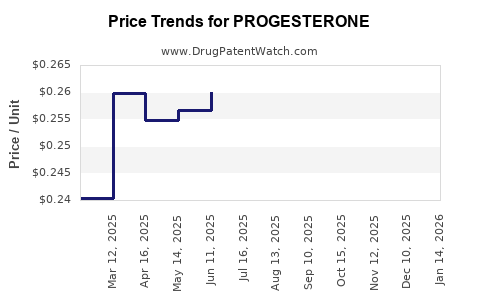
Progesterone is a mature, fragmented pharmaceutical market rather than a single branded product category. Revenue is distributed across generic oral capsules, injectable products, vaginal gels, vaginal inserts, compounded preparations, and fertility-clinic products. The U.S. market has limited composition-of-matter patent protection, low regulatory barriers for established formulations, and substantial price pressure in oral products. Commercial value remains higher in differentiated vaginal delivery systems, fertility indications, and branded or specialty-distributed products.
What is the current progesterone market structure?
Progesterone products contain either natural micronized progesterone or synthetic progestins. This analysis covers pharmaceutical progesterone itself, not the broader progestin market that includes medroxyprogesterone acetate, norethindrone, levonorgestrel, and drospirenone.
| Product segment |
Representative products |
Primary use |
Market condition |
| Oral micronized capsules |
Prometrium and generics |
Endometrial protection with estrogen therapy; secondary amenorrhea |
Highly genericized |
| Vaginal gel |
Crinone |
Luteal support and infertility treatment |
Branded and specialty-channel exposure |
| Vaginal insert |
Endometrin |
Assisted reproductive technology |
Generic and therapeutic-substitution pressure |
| Injectable progesterone |
Progesterone injection products |
Fertility treatment and amenorrhea |
Multiple suppliers; hospital and clinic demand |
| Compounded progesterone |
Compounding pharmacies |
Hormone therapy and fertility-related uses |
Price-sensitive, variable regulatory treatment |
| Topical and nonprescription products |
Creams and supplements |
Consumer hormone-related uses |
Generally outside the prescription pharmaceutical market |
Progesterone demand is linked to menopause hormone therapy, assisted reproductive technology, infertility treatment, and treatment of secondary amenorrhea. Fertility demand is more specialized and less price-sensitive than routine oral hormone therapy. Oral capsules generate volume, but vaginal and injectable products can retain greater revenue per treatment course.
What FDA-approved progesterone products are available?
The FDA has approved progesterone in several dosage forms and indications.
| Product |
Active ingredient |
Route |
Key FDA-approved use |
Commercial status |
| Prometrium |
Micronized progesterone |
Oral capsule |
Prevention of endometrial hyperplasia in postmenopausal women receiving conjugated estrogens; secondary amenorrhea |
Generic competition |
| Crinone |
Progesterone |
Vaginal gel |
Luteal support and infertility treatment |
Branded specialty product |
| Endometrin |
Progesterone |
Vaginal insert |
Luteal support as part of assisted reproductive technology |
Branded and generic competition |
| Progesterone injection |
Progesterone in oil or related injectable formulations |
Intramuscular |
Selected amenorrhea and reproductive indications |
Multiple manufacturers |
| Generic micronized progesterone capsules |
Micronized progesterone |
Oral capsule |
Same or substantially similar indications to Prometrium |
Dominant volume segment |
The FDA-approved label is important because progesterone products are frequently used outside labeled indications. Fertility clinics may use oral, vaginal, or injectable products under clinical protocols that do not map cleanly to one commercial product label. The distinction affects reimbursement, promotion, patent scope, and litigation risk. (U.S. Food and Drug Administration [FDA], n.d.-a, n.d.-b)
When does progesterone lose exclusivity?
Most major progesterone products have already lost practical market exclusivity. The principal commercial loss occurred through generic entry, expiration of legacy patents, and the absence of meaningful regulatory exclusivity for mature products.
| Product or category |
Exclusivity position |
Generic-entry exposure |
| Prometrium oral capsules |
Legacy brand exclusivity expired |
High |
| Oral micronized progesterone |
No meaningful composition-of-matter barrier |
Very high |
| Crinone vaginal gel |
Legacy formulation and method protection have limited practical force |
Moderate to high |
| Endometrin vaginal insert |
Legacy product protections have been challenged or eroded |
Moderate to high |
| Injectable progesterone |
Mature product category |
High |
| Compounded progesterone |
No conventional branded exclusivity |
Commercially fragmented |
The exact Orange Book position depends on the reference-listed drug, dosage form, strength, and current FDA listing. FDA Orange Book data should be read at the product level because one active patent listing can apply to a specific strength or formulation without protecting the entire progesterone market. (FDA, n.d.-c)
What patents protect progesterone products?
The strongest historical patent claims have concerned delivery systems, pharmaceutical compositions, dosing schedules, and methods of use rather than progesterone as a molecule.
Oral micronized progesterone
The active pharmaceutical ingredient is an endogenous hormone with long-established medical use. Oral progesterone products generally rely on particle-size control, micronization, excipient selection, capsule formulation, and pharmacokinetic performance. Those features can support formulation patents, but they provide weaker exclusivity than a new chemical entity patent.
Generic manufacturers can often compete after demonstrating pharmaceutical equivalence and bioequivalence. This has made oral progesterone the most exposed segment to price erosion.
Vaginal gel formulations
Crinone used a vaginal delivery system intended to provide sustained progesterone exposure. Protection historically focused on the gel composition, applicator, delivery vehicle, and treatment methods. The commercial value of these claims has declined as the product matured and competing delivery systems became available.
Vaginal inserts
Endometrin uses a vaginal insert designed for progesterone delivery in assisted reproductive technology. Relevant intellectual property has included the dosage form, excipients, manufacturing process, and use in luteal support. Formulation patents can delay generic entry, but they do not prevent substitution from other FDA-approved progesterone products when clinicians and payers accept alternatives.
Injectable products
Injectable progesterone products are generally exposed to process, formulation, and manufacturing competition. The primary barriers are sterile manufacturing, validated supply chains, facility compliance, and commercial distribution rather than broad patent exclusivity.
How many patents cover progesterone?
There is no meaningful single count for “progesterone patents.” Patent coverage must be separated into:
- Patents covering progesterone as a chemical compound.
- Patents covering micronized oral capsules.
- Patents covering vaginal gels.
- Patents covering vaginal inserts.
- Patents covering injectable formulations.
- Patents covering infertility or hormone-therapy methods.
- Patents covering manufacturing, packaging, and delivery devices.
The molecule itself has no practical new-drug patent barrier in the U.S. Current risk is concentrated in formulation and method-of-use claims. A patent family may include U.S. continuations, foreign counterparts, and expired parent applications. Counting publication numbers without checking terminal disclaimers, maintenance fees, claim scope, and expiration dates can materially overstate protection.
What is the Orange Book status of progesterone?
The Orange Book is relevant for FDA-approved prescription progesterone products, especially oral capsules, vaginal products, and approved injectables. It does not capture every commercial progesterone preparation. Compounded products, many nonprescription creams, and products outside the reference-listed-drug framework may not appear as equivalent Orange Book entries.
The principal Orange Book implications are:
- Oral micronized progesterone has extensive generic substitution.
- Legacy brand products have limited ability to use patent listings to preserve broad market control.
- Any remaining listed patents are likely to be formulation- or use-specific.
- A patent listed for one dosage form does not automatically block another dosage form.
- Orange Book listing does not establish ultimate patent validity or enforceability.
For generic applicants, the practical question is whether a product can obtain an ANDA approval without infringing enforceable claims. For brand companies, the commercial question is whether the listed claim covers the product architecture that matters to prescribers and payers. (FDA, n.d.-c)
Which companies compete in the progesterone market?
Competition is divided among branded pharmaceutical companies, generic manufacturers, specialty fertility suppliers, and compounding pharmacies.
Generic manufacturers
Large generic companies have competed in oral micronized progesterone and injectable progesterone. The segment is attractive for companies with established softgel, sterile injectable, or hormone manufacturing capacity. Margins are constrained by multiple approved suppliers and payer substitution.
Specialty reproductive-health companies
Fertility-focused companies compete through physician relationships, clinic distribution, patient-support services, and supply reliability. In this segment, product selection may depend on clinic protocols, route of administration, reimbursement, and patient tolerance rather than list price alone.
Compounding pharmacies
Compounding pharmacies supply progesterone when a prescriber seeks a dosage, vehicle, strength, or combination not commercially available. They create price and substitution pressure but do not offer the same FDA-approved product status as an approved manufacturer. Their position is affected by federal compounding rules, state pharmacy regulation, quality controls, and payer policy. (FDA, n.d.-d)
What is the financial trajectory for progesterone products?
The financial trajectory differs sharply by dosage form.
Oral progesterone
Oral micronized progesterone has the largest volume base but the weakest pricing power. Generic entry shifts revenue from branded manufacturers to a broad supplier base. Expected financial characteristics include:
- High prescription volume.
- Low average selling prices.
- Limited brand loyalty.
- Reimbursement-driven substitution.
- Stable underlying demand from menopausal hormone therapy.
- Periodic supply disruptions when manufacturers exit low-margin products.
Vaginal progesterone
Vaginal products have stronger revenue per treatment course because they are used in fertility protocols and specialized reproductive care. Their performance depends on:
- Assisted reproductive technology volumes.
- Fertility-clinic activity.
- Insurance coverage and patient out-of-pocket costs.
- Generic availability.
- Physician preference for gels, inserts, or injections.
- Product shortages and manufacturing reliability.
Injectable progesterone
Injectables can produce attractive institutional or specialty-clinic demand, but sterile manufacturing increases cost and regulatory risk. A manufacturer with limited competition may obtain temporary pricing leverage. That advantage can disappear when another approved supplier restores availability.
Market-level outlook
The market is likely to remain stable in volume and pressured in price. Growth is more likely to come from fertility treatment, aging-related hormone therapy, and product-mix shifts than from expansion of the progesterone molecule into new broad indications. Financial upside is concentrated in differentiated delivery systems and dependable specialty supply, not in standard oral capsules.
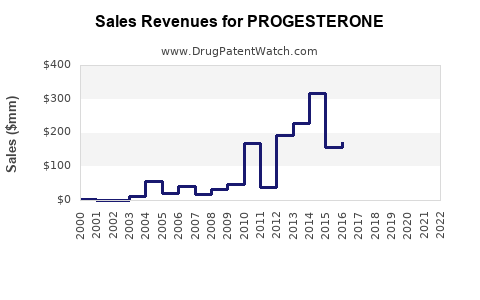
Public-company filings generally do not report progesterone revenue as a separate line item. Revenue exposure therefore requires product-level sales data, prescription data, payer claims, or internal management reporting. It cannot be reliably inferred from a company’s total women’s-health or fertility revenue. (AbbVie Inc., 2024; Ferring Pharmaceuticals, 2024)
What generic-entry risks exist for progesterone?
Generic-entry risk is high for oral capsules and mature injectables. It is moderate to high for vaginal products, depending on formulation complexity and the status of product-specific patents.
| Risk factor |
Oral capsules |
Vaginal products |
Injectables |
| Molecule patent protection |
Low |
Low |
Low |
| Formulation complexity |
Low to moderate |
Moderate to high |
Moderate |
| Bioequivalence difficulty |
Moderate |
Moderate to high |
Moderate |
| Manufacturing barriers |
Low to moderate |
Moderate |
High |
| Price erosion after entry |
High |
Moderate |
Moderate |
| Supply disruption risk |
Moderate |
Moderate |
High |
A Paragraph IV challenge could target an Orange Book-listed formulation or method patent. For mature progesterone products, the commercial impact of a Paragraph IV filing depends less on the existence of a listing than on the patent’s remaining term, claim breadth, litigation history, and the applicant’s ability to obtain approval.
Which companies are challenging progesterone patents?
The progesterone market has had generic competition, but there is no single current patent challenge that defines the category. Generic applicants typically pursue ANDA approval for specific strengths and dosage forms rather than challenge “progesterone” as a unified product.
A challenge may involve:
- A Paragraph IV certification against a listed patent.
- A Paragraph III certification accepting approval after patent expiry.
- A Section viii statement carving out a patented method of use.
- A product-specific certification for a vaginal insert, gel, or capsule.
Because litigation attaches to individual reference-listed drugs, a category-wide ranking of challengers would be misleading. FDA approval records, Orange Book listings, and federal court dockets must be reviewed together. (FDA, n.d.-c; U.S. Courts, n.d.)
What patent litigation affects progesterone?
Progesterone litigation risk is product-specific and generally lower than in newer specialty pharmaceuticals. The principal disputes concern:
- Whether a generic product infringes a delivery-system claim.
- Whether a listed method-of-use patent is properly applicable to the proposed label.
- Whether a formulation patent is valid in view of prior art.
- Whether the generic applicant can carve out the patented indication.
- Whether a manufacturing process produces the claimed particle size, release profile, or composition.
The absence of major molecule patents reduces the risk of a category-wide injunction. Litigation can still delay a specific vaginal or injectable product, particularly when a manufacturer has limited alternative products and a concentrated customer base.
Are there biosimilar risks for progesterone?
Progesterone has no conventional biosimilar risk because it is a small-molecule drug, not a biologic. The relevant competitors are ANDA generics, authorized generics, alternative dosage forms, and compounded products.
This distinction matters commercially. Biosimilar entry usually involves a biologics license and interchangeability considerations. Progesterone competition is governed primarily by pharmaceutical equivalence, bioequivalence, state substitution rules, reimbursement, and formulation differentiation.
What licensing deals affect the progesterone market?
Licensing activity has historically centered on product commercialization, regional distribution, manufacturing, and fertility portfolios rather than on ownership of a foundational progesterone molecule patent. Companies may license:
- Vaginal delivery technology.
- Fertility products for regional markets.
- Manufacturing rights.
- Brand rights after divestitures or portfolio restructuring.
- Specialty distribution rights for reproductive-health products.
The commercial value of a progesterone licensing transaction depends on the remaining life of formulation patents, regulatory approvals, manufacturing know-how, and clinic access. A license covering only an expired oral capsule has limited strategic value unless it includes supply, distribution, or a broader women’s-health portfolio.
How does progesterone compare with competing hormone products?
| Factor |
Progesterone |
Medroxyprogesterone acetate |
Norethindrone |
Levonorgestrel |
| Chemical type |
Natural hormone |
Synthetic progestin |
Synthetic progestin |
Synthetic progestin |
| Main commercial uses |
Hormone therapy, infertility, amenorrhea |
Contraception, endometrial protection, bleeding disorders |
Contraception and hormone therapy |
Contraception and intrauterine delivery |
| Generic pressure |
High |
High |
High |
High |
| Fertility-clinic relevance |
High |
Lower |
Lower |
Limited in fertility treatment |
| Delivery differentiation |
Oral, vaginal, injectable |
Oral, injectable, depot |
Oral |
Oral and intrauterine |
| Patent strength today |
Generally weak |
Generally weak for legacy products |
Generally weak |
Stronger only for specific devices or newer delivery systems |
Progesterone has a distinct position in fertility treatment because clinicians can select a hormone chemically identical to endogenous progesterone. Synthetic progestins may have different receptor activity, pharmacokinetics, or tolerability, limiting direct substitution in some protocols.
What is the geographic coverage of progesterone patents and products?
Progesterone is widely marketed across North America, Europe, Asia-Pacific, and Latin America. Patent exposure is jurisdiction-specific. A U.S. formulation patent may have no corresponding enforceable right in Europe or may expire on a different timetable because of filing and patent-term rules.
Commercial conditions also vary:
- The U.S. has extensive generic substitution and a large fertility market.
- Europe has broad generic penetration but different reimbursement and prescription systems.
- Emerging markets may rely more heavily on branded generics and local manufacturing.
- Regulatory requirements for vaginal products, injectables, and compounded preparations differ by country.
- Local manufacturing capacity can matter more than patent protection where products are mature.
How strong is the progesterone patent estate?
The overall progesterone patent estate is weak for the molecule and mature oral products, moderate for selected delivery systems, and potentially stronger for narrowly claimed manufacturing or combination technologies.
| Estate component |
Relative strength |
| Progesterone molecule |
Very weak |
| Oral micronized capsule |
Weak |
| Vaginal gel delivery |
Weak to moderate |
| Vaginal insert |
Moderate for specific formulation claims |
| Injectable manufacturing |
Moderate operational barrier; weak molecule protection |
| New combination or device platform |
Potentially moderate to strong |
| Method-of-use claims |
Narrow and indication-dependent |
The most durable competitive advantages are likely to come from regulatory approvals, manufacturing reliability, clinic relationships, supply continuity, and device or delivery-system know-how rather than from broad patent exclusivity.
What generic launch scenarios are most likely?
Scenario 1: Oral capsule price erosion
This is the base case. Additional suppliers or contracting changes reduce average selling prices, while demand remains stable. Brand products retain limited share through physician familiarity or channel access.
Scenario 2: Vaginal-product substitution
A generic or alternative vaginal product gains approval and obtains payer preference. The incumbent faces a gradual decline rather than an immediate collapse because fertility clinics may retain protocol-specific preferences.
Scenario 3: Injectable supply disruption
A manufacturer exits or experiences a manufacturing interruption. Remaining suppliers gain temporary volume and pricing power. The opportunity is operational rather than patent-driven.
Scenario 4: Specialty formulation differentiation
A company launches a progesterone product with improved administration, reduced leakage, easier storage, or a more convenient dosing schedule. Commercial success depends on reimbursement and clinical adoption because the active ingredient is mature.
Key Takeaways
- Progesterone is a mature, fragmented pharmaceutical market with no broad molecule-level patent barrier.
- Oral micronized progesterone is the most genericized and price-sensitive segment.
- Vaginal gels, vaginal inserts, and injectables retain greater commercial value because delivery and manufacturing are more complex.
- FDA Orange Book protection is product-specific and should not be treated as category-wide exclusivity.
- Paragraph IV risk exists for individual formulations but does not create a unified progesterone patent dispute.
- Progesterone has generic risk, not biosimilar risk.
- Fertility treatment and specialty distribution are the principal sources of higher-value demand.
- Public-company revenue exposure is rarely reported separately for progesterone.
- The strongest commercial barriers are manufacturing quality, supply reliability, clinic access, and differentiated delivery systems.
- Financial performance is likely to remain stable in volume but pressured in price, with growth concentrated in specialty formulations and reproductive-health channels.
FAQs
Does progesterone have composition-of-matter patent protection?
No meaningful active composition-of-matter protection generally controls the mature U.S. progesterone market. Current protection, where present, is more likely to involve formulation, delivery, manufacturing, or method-of-use claims.
Is Prometrium still commercially protected?
Prometrium has faced extensive generic competition. Any remaining protection must be assessed by strength, dosage form, Orange Book listing, patent term, and the scope of the generic label.
Can a generic progesterone capsule substitute for vaginal progesterone?
Not automatically. Route, dosage form, indication, labeling, clinical protocol, and state substitution rules affect whether substitution is permitted or clinically appropriate.
Is compounded progesterone an FDA-approved generic?
No. A compounded product is not automatically an FDA-approved generic equivalent. Its regulatory status depends on the applicable compounding pathway, pharmacy controls, formulation, and state and federal requirements.
What is the main investment risk in progesterone?
The main risk is price compression in oral products combined with fragmented competition. For vaginal and injectable products, the main risks are generic entry, supply interruptions, manufacturing compliance, and reduced fertility-clinic demand.
References
-
AbbVie Inc. (2024). Annual report pursuant to Section 13 or 15(d) of the Securities Exchange Act of 1934.
-
Ferring Pharmaceuticals. (2024). Annual report and corporate product information.
-
U.S. Food and Drug Administration. (n.d.-a). Prometrium prescribing information.
-
U.S. Food and Drug Administration. (n.d.-b). Crinone and Endometrin prescribing information.
-
U.S. Food and Drug Administration. (n.d.-c). Approved drug products with therapeutic equivalence evaluations: Orange Book.
-
U.S. Food and Drug Administration. (n.d.-d). Compounding and the FDA: Questions and answers.
-
U.S. Courts. (n.d.). PACER case locator and federal patent litigation records.