Last updated: August 10, 2026
Baclofen is a mature, largely generic skeletal-muscle relaxant with low unit pricing and limited conventional pharmaceutical exclusivity. The commercial opportunity is concentrated in three segments: generic oral tablets, branded or authorized oral solutions, and intrathecal baclofen delivered through implanted pump systems. Oral products face intense price competition. Intrathecal therapy has stronger clinical and operational barriers because it requires specialist evaluation, pump implantation, refills, monitoring, and long-term device management.
The market is unlikely to produce broad-based pharmaceutical revenue growth. Financial expansion is more likely to come from specialty formulations, hospital supply contracts, device-linked therapy, pricing stability in shortage conditions, and increased use in severe spasticity rather than from new chemical-entity exclusivity.
What is baclofen and how is it used?
Baclofen is a gamma-aminobutyric acid B receptor agonist used primarily to treat spasticity associated with multiple sclerosis, spinal cord injury, cerebral palsy, and other neurologic disorders. It is marketed in oral and intrathecal dosage forms.
| Product type |
Typical use |
Principal commercial characteristics |
| Oral tablets |
General spasticity management |
Generic, low price, many suppliers |
| Oral solution |
Patients unable to swallow tablets; pediatric and institutional use |
Smaller market, formulation and supply-chain differentiation |
| Intrathecal injection |
Severe spasticity unresponsive to oral therapy |
Specialist market, pump-dependent, higher barriers to substitution |
| Compounded preparations |
Selected patients and institutions |
Quality, consistency, and regulatory concerns vary by source |
The oral route is usually first-line treatment. Intrathecal delivery is reserved for severe cases because it requires a screening trial, catheter and pump implantation, dose programming, refill procedures, and management of withdrawal or overdose risks. FDA labeling identifies abrupt interruption of intrathecal baclofen as a potentially serious clinical event requiring urgent treatment.[1][2]
What is the FDA regulatory status of baclofen?
Baclofen has long-established FDA approval in oral and intrathecal forms.
| Regulatory product |
Active ingredient |
Route |
FDA status |
| Generic baclofen tablets |
Baclofen |
Oral |
Approved through abbreviated new drug applications |
| Lioresal Intrathecal |
Baclofen |
Intrathecal injection |
Original branded product; legacy approval |
| Gablofen |
Baclofen |
Intrathecal injection |
FDA-approved alternative to Lioresal Intrathecal |
| Ozobax |
Baclofen |
Oral solution |
FDA-approved oral liquid |
Lioresal Intrathecal was developed by Ciba-Geigy and is associated with the legacy brand franchise later linked to Novartis. Gablofen was developed and commercialized by Piramal Critical Care. Ozobax is an oral solution product associated with Metacel Pharmaceuticals.[1][3][4]
Baclofen is not a biologic. Biosimilar regulation therefore does not apply. Competitive entry occurs through abbreviated new drug applications, pharmaceutical equivalence, therapeutic substitution rules, contracts, and, for intrathecal products, clinical and operational acceptance.
When did baclofen lose exclusivity?
Baclofen’s principal composition-of-matter and original product exclusivity expired decades ago. Generic oral baclofen has been commercially available for many years, and the core molecule does not provide a current patent barrier to entry.
The practical exclusivity picture is segmented:
| Segment |
Exclusivity position |
Current impact |
| Oral baclofen tablets |
Core exclusivity expired |
Highly competitive generic market |
| Lioresal oral products |
Legacy brand protection expired |
Limited brand pricing power |
| Intrathecal baclofen |
Core molecule expired; product, manufacturing, and device-related rights may differ |
Specialty competition remains |
| Oral solution |
Product-specific formulation and regulatory differentiation may remain |
Limited protection relative to a new chemical entity |
| Pump delivery |
Device and system patents may apply to the pump, catheter, or control system |
Creates operational rather than molecule-level barriers |
The commercial moat is therefore based less on active-ingredient patents and more on formulation approval, manufacturing reliability, institutional contracts, physician familiarity, pump compatibility, and distribution.
What patents protect baclofen products?
The fundamental baclofen molecule is not protected by a meaningful unexpired United States composition-of-matter patent. Relevant patent questions now concern product-specific formulations, manufacturing processes, delivery systems, and device combinations.
Oral baclofen patent position
Generic tablets generally compete without a material Orange Book patent barrier. The principal risks are ordinary ANDA litigation, labeling disputes, manufacturing issues, and state-level substitution or reimbursement dynamics rather than a credible challenge to the active ingredient.
Intrathecal baclofen patent position
Intrathecal products may have historically relied on patents covering:
- Sterile injectable formulations.
- Concentration and stability characteristics.
- Container and packaging systems.
- Pump compatibility.
- Administration methods.
- Device-related delivery systems.
These rights should be evaluated separately from the baclofen molecule. Medtronic’s SynchroMed pump platform, for example, has its own device and system history, but pump patents do not automatically create pharmaceutical exclusivity for baclofen injection.[5]
Oral solution patent position
Ozobax and similar products may obtain commercial protection from product-specific formulation work, regulatory labeling, manufacturing know-how, trademarks, and distribution arrangements. A formulation patent, if listed or enforceable, would not recreate the breadth of a composition-of-matter patent. A competitor could potentially design around a narrow formulation claim while maintaining the same active ingredient.
What is the Orange Book status of baclofen?
The Orange Book is relevant to approved drug products and listed patents, but baclofen’s commercial exposure is not equivalent to that of a recently launched branded drug.
The principal Orange Book implications are:
- Generic baclofen tablets have been approved for years through ANDA pathways.
- Legacy brand products do not retain meaningful basic-molecule exclusivity.
- Product-specific listings, if present, must be reviewed by NDA and formulation.
- Intrathecal products require separate analysis because the approved product, concentration, sponsor, and delivery route differ from oral products.
- The absence of a broad composition patent does not eliminate potential disputes involving formulation, labeling, manufacturing, or device compatibility.
FDA’s Approved Drug Products with Therapeutic Equivalence Evaluations remains the controlling public source for current approval and patent-listing information.[6] A definitive litigation assessment must be performed at the specific NDA and ANDA level because “baclofen” is not a single patent estate.
How many patents cover baclofen?
There is no commercially meaningful single count of patents covering all baclofen products. Patent scope varies by route, formulation, sponsor, device, and jurisdiction.
A practical classification is:
| Patent category |
Commercial relevance |
| Baclofen composition patents |
Expired or commercially immaterial |
| Oral tablet formulation patents |
Generally weak relative to generic entry |
| Oral solution formulation patents |
Potentially relevant for branded liquid products |
| Intrathecal formulation patents |
Potentially relevant to product differentiation |
| Pump and catheter patents |
Relevant to delivery infrastructure |
| Manufacturing patents |
Relevant where process consistency or sterile production is difficult |
| Method-of-use patents |
Narrower value because many uses are established and labels may overlap |
Patent counts derived from commercial databases can overstate protection by including abandoned applications, expired patents, continuations, foreign equivalents, and unrelated device claims. The useful measure is the number of unexpired, enforceable claims that read on the product actually sold in the relevant country.
Are there Paragraph IV challenges to baclofen?
Baclofen has no widely recognized current Paragraph IV risk comparable to a high-revenue branded medicine approaching patent expiry. Generic oral baclofen entry occurred long ago, and the principal molecule-level barriers are already gone.
Paragraph IV activity could still arise for a specific NDA if a sponsor lists a formulation or method patent in the Orange Book. That would be a product-specific dispute rather than a challenge to baclofen as a molecule.
Potential litigation theories include:
- Invalidity of a formulation patent.
- Noninfringement based on a different excipient system.
- Failure of an asserted patent to be properly listed.
- Labeling differences in a proposed ANDA.
- Product-by-process or manufacturing claims.
- Patent disputes involving an oral liquid rather than tablets.
No broad, current Paragraph IV campaign defines the overall baclofen market. The risk profile is fragmented and sponsor-specific.
What formulations are protected by baclofen patents?
The principal differentiated formulations are oral solution and intrathecal injection.
Oral solution
Oral liquid baclofen can create limited commercial differentiation through:
- Ready-to-use dosing.
- Pediatric administration.
- Use in feeding-tube patients.
- Reduced tablet manipulation.
- Institutional dispensing convenience.
- Excipient and stability performance.
The market remains exposed to compounded liquids and alternative generic solutions. A branded solution can command a higher price only if reimbursement, supply reliability, clinical convenience, or distribution access supports the premium.
Intrathecal injection
Intrathecal baclofen has greater practical protection because the product is used within a complex treatment system. Relevant factors include:
- Sterility and preservative requirements.
- Concentration options.
- Pump reservoir compatibility.
- Long shelf life.
- Refill schedules.
- Hospital and specialty-pharmacy handling.
- Physician confidence in dose consistency.
- Continuity of supply, because interruption can cause severe withdrawal.
These barriers can sustain specialty pricing even when pharmaceutical patent protection is limited.
Which companies compete in the baclofen market?
Competition differs sharply by route.
| Company or supplier category |
Product or role |
Competitive position |
| Generic manufacturers |
Oral baclofen tablets |
Price-driven, fragmented |
| Piramal Critical Care |
Gablofen intrathecal injection |
Specialty branded/generic competitor |
| Legacy Lioresal suppliers |
Lioresal Intrathecal |
Established reference-product position |
| Metacel Pharmaceuticals |
Ozobax oral solution |
Branded oral-liquid niche |
| Contract manufacturers and compounders |
Oral and injectable alternatives |
Supply and regulatory quality vary |
| Medtronic |
SynchroMed pump systems |
Device-linked infrastructure rather than baclofen ownership |
The most important competitive distinction is between commodity oral therapy and procedure-linked intrathecal therapy. Generic tablet suppliers compete primarily on acquisition cost and availability. Intrathecal suppliers compete on regulatory status, product continuity, concentration options, hospital purchasing, pump integration, and specialist familiarity.
How strong is the baclofen patent estate?
The overall patent estate is weak at the molecule level and moderate in selected product and delivery niches.
| Area |
Patent strength |
Commercial assessment |
| Active ingredient |
Low |
Expired core protection |
| Oral tablets |
Low |
Generic substitution is established |
| Oral solution |
Low to moderate |
Product differentiation may delay direct substitution |
| Intrathecal injection |
Moderate operational protection |
Sterile manufacturing and specialist use create barriers |
| Pump delivery |
Moderate to strong at the device level |
Device switching is costly and clinically disruptive |
| Method of use |
Low to moderate |
Narrow claims and established clinical uses limit breadth |
| Manufacturing |
Moderate where sterile capacity is scarce |
Supply reliability may matter more than patent duration |
The strongest barriers are regulatory and operational, not classic patent exclusivity. A supplier that loses manufacturing capacity or fails to maintain sterile production can lose share even without a competing patent.
What is the financial trajectory of the baclofen market?
Baclofen’s financial trajectory is mature and bifurcated.
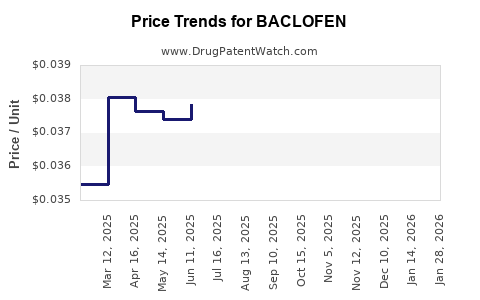
Oral tablets: declining or flat pricing
Oral tablets have the characteristics of a mature generic market:
- Numerous approved suppliers.
- Low average selling prices.
- Limited brand loyalty.
- High payer substitution.
- Periodic wholesaler and pharmacy shortages.
- Low promotional spending.
- Limited ability to raise prices without supply disruption.
Revenue growth in tablets is likely to track prescription volume, population aging, neurologic disease prevalence, and changes in treatment patterns. Price competition suppresses the value of volume growth.
Oral solution: niche growth potential
Oral solution has a better revenue profile than tablets because liquid dosing addresses specific patient and institutional needs. Growth can come from pediatric use, enteral administration, and improved prescribing recognition.
The segment remains constrained by:
- Small patient population relative to tablets.
- Competition from pharmacy compounding.
- Payer restrictions.
- Potential generic liquid entry.
- Limited clinical differentiation from the same active ingredient.
Intrathecal therapy: higher-value specialty economics
Intrathecal baclofen has the strongest revenue durability. Its economics are linked to:
- Pump implantation.
- Specialist follow-up.
- Refill procedures.
- Hospital and ambulatory surgery utilization.
- Long-term treatment persistence.
- Device replacement cycles.
- Reimbursement for the procedure and associated care.
The drug itself is only one part of the economic bundle. Pump manufacturers and specialty suppliers may capture greater value from the complete treatment pathway than from baclofen ampules alone.
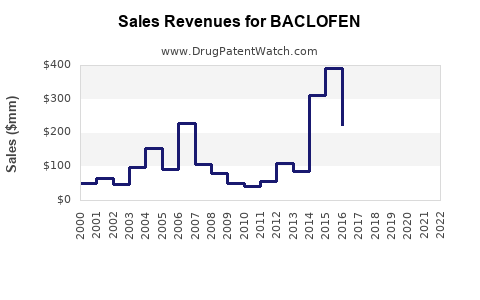
Public company filings generally do not disclose baclofen revenue separately. Medtronic reports broader operating segments rather than product-level revenue for intrathecal baclofen, while specialty pharmaceutical companies may include baclofen within wider portfolios.[5] Commercial market reports often publish materially different estimates because they vary in geographic scope, whether they include tablets or device-linked therapy, and whether they measure manufacturer sales, pharmacy sales, or total market value.
What revenue exposure does baclofen create for manufacturers?
Baclofen revenue exposure is asymmetric.
For generic manufacturers, baclofen is usually a low-value portfolio product. It can support manufacturing utilization and pharmacy relationships but rarely determines corporate performance.
For specialty suppliers, exposure can be meaningful if the company has:
- A concentrated intrathecal product portfolio.
- Hospital contracts.
- A proprietary oral liquid.
- Limited competitors.
- Sterile manufacturing capacity.
- A device or specialty-pharmacy distribution network.
Supply interruption creates temporary pricing opportunity but also regulatory and reputational risk. The long-term financial case depends on maintaining approval, reliable production, reimbursement, and physician confidence.
What generic launch scenarios exist for baclofen?
Oral tablet scenario
Further oral tablet entry would have limited effect on clinical access but could reduce prices and supplier share. The market is already genericized, so new entrants would compete for a narrow economic pool.
Oral solution scenario
A new approved oral solution could pressure branded pricing, especially if it matches concentration, excipient profile, dosing convenience, and reimbursement status. The impact would be greater in pediatric and institutional channels than in conventional retail prescriptions.
Intrathecal scenario
A new intrathecal competitor could take share from incumbent products, but adoption would likely be gradual. Hospitals and specialists may require evidence of pump compatibility, supply continuity, concentration availability, and post-launch reliability.
Device-linked scenario
A competing pump platform could create the largest strategic disruption, but switching costs are substantial. Existing patients, implanted hardware, programming systems, clinician training, and refill infrastructure can slow conversion.
What litigation and settlement agreements affect baclofen?
No major, market-defining settlement agreement currently establishes a delayed generic-entry framework for baclofen comparable to litigation involving high-revenue branded medicines.
Potential disputes are more likely to involve:
- Specific oral-solution patents.
- Intrathecal formulation claims.
- ANDA approval and labeling.
- Sterile manufacturing quality.
- Product liability.
- Pump malfunction or administration errors.
- Trademark and trade-dress rights.
- Hospital contracting and supply obligations.
Litigation exposure is therefore product-specific. A company evaluating a baclofen asset should inspect FDA patent listings, USPTO prosecution history, court dockets, ANDA certifications, manufacturing warning letters, and product recalls rather than relying on the molecule name alone.[6][7]
What geographic markets offer the most opportunity?
The United States has the clearest regulatory structure and the strongest specialty economics for branded oral liquids and intrathecal therapy. Europe has broad generic penetration and substantial national pricing pressure. Emerging markets may have larger unmet need but lower reimbursement and more variable regulatory enforcement.
| Region |
Oral tablet opportunity |
Oral solution opportunity |
Intrathecal opportunity |
| United States |
Low margin, high volume |
Moderate niche value |
Highest specialty value |
| Western Europe |
Low price, mature generic market |
Selective reimbursement opportunity |
Specialist hospital opportunity |
| Japan |
Regulatory and pricing barriers |
Limited unless locally differentiated |
Specialist opportunity |
| China |
Volume potential, price pressure |
Growing pediatric and hospital use |
Limited by specialist infrastructure |
| Latin America |
Access-driven, fragmented |
Selective private-market demand |
Concentrated in major centers |
| Middle East |
Import and hospital tender driven |
Niche |
Specialty-center dependent |
International expansion is more dependent on registration, local pricing, sterile supply, and distribution than on unexpired baclofen patents.
What manufacturing and intellectual-property barriers exist?
Sterile intrathecal production is the most material manufacturing barrier. Requirements include validated aseptic processing, container-closure integrity, sterility testing, stability data, and reliable supply of approved concentrations.
Manufacturing risks include:
- Sterility failures.
- Contamination events.
- Batch-release delays.
- Limited fill-finish capacity.
- Raw-material shortages.
- Packaging incompatibility.
- Concentration-specific demand volatility.
For oral products, manufacturing barriers are lower. The primary risks are supply economics, contract manufacturing capacity, packaging, and regulatory compliance. Trade secrets involving formulation and process control may have value even when patent protection is weak, but they generally provide less durable exclusion than an enforceable patent.
How does baclofen compare with competing spasticity drugs?
| Drug |
Main route |
Market maturity |
Differentiation |
| Baclofen |
Oral and intrathecal |
Mature generic |
Low price; pump-linked specialty use |
| Tizanidine |
Oral |
Mature generic |
Alternative oral mechanism and dosing profile |
| Dantrolene |
Oral |
Mature generic |
Peripheral skeletal-muscle action; tolerability limits |
| Diazepam |
Oral and other routes |
Mature generic |
Sedation, dependence, and safety constraints |
| Botulinum toxin products |
Injectable |
Branded specialty |
Focal spasticity; procedure-based economics |
| Cannabinoid products |
Oral or mucosal, jurisdiction-dependent |
Variable |
Regulatory and reimbursement variability |
Baclofen’s competitive advantage is its established role in generalized spasticity and intrathecal pump therapy. Its weakness is limited molecule-level differentiation and substantial generic price pressure in oral treatment.
Key Takeaways
- Baclofen is a mature generic drug with no meaningful current composition-of-matter exclusivity.
- Oral tablets are a low-margin, price-driven market.
- Oral solution is a smaller niche with potential formulation and distribution differentiation.
- Intrathecal baclofen has the strongest commercial durability because it is tied to specialist care and implanted pump systems.
- Biosimilar risk does not apply because baclofen is a small-molecule drug.
- Paragraph IV risk is product-specific rather than molecule-wide.
- The most relevant barriers are sterile manufacturing, pump compatibility, reimbursement, and supply reliability.
- Public financial reporting rarely separates baclofen revenue, so market value estimates must distinguish tablets, oral liquids, intrathecal products, and device-linked services.
- Future growth is more likely to come from specialty delivery and treatment infrastructure than from conventional oral volume.
FAQs about baclofen patents, market entry, and investment risk
Does baclofen have a new-drug patent protecting the molecule?
No. The core baclofen molecule has been off patent for decades, and generic oral products are well established.
Can a company launch a generic baclofen oral solution without challenging a patent?
Potentially, depending on the target product’s Orange Book listings, regulatory exclusivity, labeling, and formulation claims. The answer must be determined for the specific reference NDA.
Is intrathecal baclofen protected by Medtronic pump patents?
Pump patents may protect aspects of the delivery device or system, but they do not automatically confer pharmaceutical exclusivity over baclofen injection.
Is baclofen reimbursement vulnerable to generic substitution?
Yes. Oral tablets are highly exposed to substitution. Intrathecal therapy is less exposed because treatment depends on specialists, pumps, procedures, and continuity of supply.
What is the main investment risk in a baclofen product?
The main risk is commoditization in oral products and limited addressable revenue. In intrathecal products, the principal risks are sterile manufacturing failure, reimbursement pressure, product recalls, and loss of specialist or hospital contracts.
References
- U.S. Food and Drug Administration. (2023). Lioresal Intrathecal (baclofen injection) prescribing information.
- U.S. Food and Drug Administration. (2023). Gablofen (baclofen injection) prescribing information.
- U.S. Food and Drug Administration. (2018). Ozobax (baclofen oral solution) prescribing information.
- U.S. Food and Drug Administration. (n.d.). Drugs@FDA: FDA-approved drugs.
- Medtronic plc. (2024). Annual report pursuant to Section 13 or 15(d) of the Securities Exchange Act of 1934.
- U.S. Food and Drug Administration. (2024). Approved drug products with therapeutic equivalence evaluations, Orange Book.
- U.S. Patent and Trademark Office. (2024). Patent Center and patent examination data.