Share This Page
Drug Price Trends for BACLOFEN
✉ Email this page to a colleague
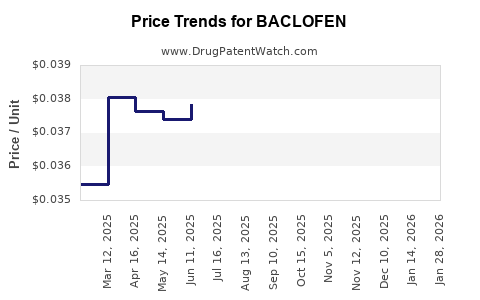
Average Pharmacy Cost for BACLOFEN
| Drug Name | NDC | Price/Unit ($) | Unit | Date |
|---|---|---|---|---|
| BACLOFEN 10 MG TABLET | 00172-4096-60 | 0.03210 | EACH | 2026-07-22 |
| BACLOFEN 10 MG TABLET | 00172-4096-80 | 0.03210 | EACH | 2026-07-22 |
| BACLOFEN 10 MG TABLET | 00527-1330-01 | 0.03210 | EACH | 2026-07-22 |
| BACLOFEN 10 MG TABLET | 00527-1330-10 | 0.03210 | EACH | 2026-07-22 |
| BACLOFEN 10 MG TABLET | 00603-2406-21 | 0.03210 | EACH | 2026-07-22 |
| BACLOFEN 10 MG TABLET | 00603-2406-28 | 0.03210 | EACH | 2026-07-22 |
| BACLOFEN 10 MG TABLET | 00603-2406-32 | 0.03210 | EACH | 2026-07-22 |
| >Drug Name | >NDC | >Price/Unit ($) | >Unit | >Date |
Best Wholesale Price for BACLOFEN
| Drug Name | Vendor | NDC | Count | Price ($) | Price/Unit ($) | Unit | Dates | Price Type |
|---|---|---|---|---|---|---|---|---|
| BACLOFEN 10MG TAB | AvKare, LLC | 31722-0998-01 | 100 | 5.72 | 0.05720 | EACH | 2023-06-15 - 2028-06-14 | FSS |
| BACLOFEN 10MG TAB | AvKare, LLC | 31722-0998-10 | 1000 | 57.29 | 0.05729 | EACH | 2023-06-15 - 2028-06-14 | FSS |
| BACLOFEN 20MG TAB | AvKare, LLC | 31722-0999-01 | 100 | 7.64 | 0.07640 | EACH | 2023-06-15 - 2028-06-14 | FSS |
| BACLOFEN 20MG TAB | AvKare, LLC | 31722-0999-10 | 1000 | 76.39 | 0.07639 | EACH | 2023-06-15 - 2028-06-14 | FSS |
| BACLOFEN 5MG TAB | AvKare, LLC | 00527-1333-01 | 100 | 64.91 | 0.64910 | EACH | 2023-06-15 - 2028-06-14 | FSS |
| GABLOFEN 0.1MG/ML PF INJ INTRATHECAL | Piramal Critical Care, Inc. | 66794-0156-02 | 20ML | 276.96 | 13.84800 | ML | 2024-01-01 - 2027-07-14 | Big4 |
| GABLOFEN 2MG/ML PF INJ INTRATHECAL | Piramal Critical Care, Inc. | 66794-0157-02 | 20ML | 562.81 | 28.14050 | ML | 2024-01-01 - 2027-07-14 | FSS |
| >Drug Name | >Vendor | >NDC | >Count | >Price ($) | >Price/Unit ($) | >Unit | >Dates | >Price Type |
Baclofen Market Analysis and Price Projections
Baclofen, a gamma-aminobutyric acid (GABA) agonist, is primarily prescribed as a skeletal muscle relaxant. Its efficacy in managing spasticity associated with conditions such as multiple sclerosis and spinal cord injuries drives its market demand. The global baclofen market is projected to experience moderate growth, influenced by an aging population, increasing prevalence of neurological disorders, and generic competition. Pricing is expected to remain relatively stable, with fluctuations tied to manufacturing costs, regulatory approvals of new generics, and demand shifts.
What is the current market size and projected growth for Baclofen?
The global baclofen market was valued at approximately \$750 million in 2023. Projections indicate a compound annual growth rate (CAGR) of 3.5% from 2024 to 2030. This growth is underpinned by several factors. The increasing incidence of neurological conditions, including multiple sclerosis and spinal cord injuries, directly correlates with the demand for muscle relaxants like baclofen [1]. An aging global population also contributes, as older individuals are more susceptible to conditions requiring spasticity management. Furthermore, ongoing research into potential new indications for baclofen, although currently limited, could present future growth opportunities. However, the market's expansion is tempered by the mature status of the drug and the intense competition from generic manufacturers.
What are the key therapeutic areas and indications for Baclofen?
Baclofen's primary therapeutic application is in the management of spasticity. This includes:
- Spasticity associated with Multiple Sclerosis (MS): Baclofen is a first-line treatment for reducing the involuntary muscle contractions and stiffness characteristic of MS [2].
- Spasticity following Spinal Cord Injury (SCI): Patients with SCI often experience significant spasticity, which baclofen helps to alleviate, improving mobility and quality of life [3].
- Spasticity due to other Neurological Disorders: This encompasses conditions such as cerebral palsy, stroke, and other central nervous system disorders that result in muscle overactivity [4].
- Off-Label Uses: While not its primary indication, baclofen has been investigated and, in some cases, used off-label for conditions like hiccups, addiction withdrawal symptoms (e.g., alcohol and cocaine), and Tourette syndrome, though evidence for these uses varies in strength [5].
Who are the major manufacturers and suppliers of Baclofen?
The baclofen market is characterized by a significant presence of generic manufacturers. Key players involved in the production and supply of oral baclofen include:
- Teva Pharmaceutical Industries Ltd.
- Mylan N.V. (now Viatris)
- Sun Pharmaceutical Industries Ltd.
- Lupin Ltd.
- Dr. Reddy's Laboratories Ltd.
- Wockhardt Ltd.
These companies supply both the active pharmaceutical ingredient (API) and finished dosage forms globally. Competition among these entities has historically led to price erosion for generic baclofen.
What is the current pricing landscape for Baclofen and how is it expected to evolve?
The pricing of baclofen is primarily driven by its generic status. The average wholesale price (AWP) for a 30-count bottle of 10 mg oral baclofen tablets typically ranges from \$15 to \$30. For 20 mg tablets, the price is slightly higher, ranging from \$18 to \$35 per 30-count bottle. These figures represent the manufacturer's suggested retail price before insurance discounts and pharmacy markups.
Factors influencing current pricing:
- Generic Competition: The presence of numerous generic manufacturers creates a highly competitive environment, suppressing prices.
- Manufacturing Costs: Raw material costs, production efficiency, and economies of scale for large manufacturers impact the final price.
- Regulatory Environment: Compliance with Good Manufacturing Practices (GMP) and other regulatory requirements adds to production costs.
- Supply Chain Dynamics: Availability of API and the efficiency of distribution networks play a role.
Price Projections (2024-2030):
The price of oral baclofen is expected to remain relatively stable, with only minor fluctuations.
- Projected Price Range (2024-2025): \$16 - \$32 for a 30-count bottle of 10 mg tablets; \$19 - \$36 for a 30-count bottle of 20 mg tablets.
- Projected Price Range (2028-2030): \$17 - \$35 for a 30-count bottle of 10 mg tablets; \$20 - \$38 for a 30-count bottle of 20 mg tablets.
Reasons for stability:
- Maturity of the Market: Baclofen is a well-established drug with no significant new patent-protected formulations or delivery systems on the immediate horizon.
- Consistent Demand: The underlying demand for spasticity management is stable and growing modestly, not experiencing rapid expansion that would justify significant price increases.
- Limited Innovation: There are no major upcoming advancements in baclofen therapy that would warrant premium pricing.
Potential for slight increases:
- Inflationary Pressures: Gradual increases in manufacturing, labor, and logistics costs may lead to incremental price adjustments.
- API Supply Disruptions: Any unforeseen disruptions in the supply chain for key raw materials could temporarily impact pricing.
- Regulatory Hurdles: New, stricter regulatory requirements could increase production costs for some manufacturers, potentially leading to minor price adjustments for their products.
Intrathecal Baclofen:
It is important to distinguish pricing for oral baclofen from intrathecal baclofen therapy. Intrathecal baclofen, administered via a pump, involves higher costs associated with the drug itself (concentrated formulations), the pump device, implantation surgery, and ongoing management. The price for intrathecal baclofen therapy is significantly higher, typically ranging from \$10,000 to \$30,000 per year per patient, covering the drug, pump, and associated medical services [6]. This segment is less price-sensitive due to the specialized nature of the treatment and the lack of comparable alternatives for severe spasticity.
What is the regulatory landscape and its impact on Baclofen?
Baclofen is approved by major regulatory bodies globally, including the U.S. Food and Drug Administration (FDA) and the European Medicines Agency (EMA).
- FDA Approval: Oral baclofen has been FDA-approved for the treatment of spasticity for decades. Its generic availability means that the primary regulatory focus for new market entrants is demonstrating bioequivalence to the reference listed drug.
- EMA Approval: Similar to the FDA, baclofen has been approved for therapeutic use in Europe for many years.
- Manufacturing Standards: All manufacturers must adhere to current Good Manufacturing Practices (cGMP) to ensure product quality, safety, and efficacy. Compliance audits by regulatory agencies are routine.
- Intellectual Property: The compound patent for baclofen has long expired. The market is dominated by generic versions, and there are no significant ongoing patent disputes or upcoming patent expiries that would dramatically alter the market landscape for the original molecule. Research into new formulations or delivery methods could potentially lead to new patents, but these are not currently prominent market drivers.
- Impact on Market: The established regulatory approval and generic status simplify market entry for new manufacturers but also contribute to intense price competition. Regulatory agencies monitor drug safety, and any significant adverse event reporting related to baclofen could trigger pharmacovigilance measures, but no such widespread issues are currently impacting its market status.
What are the key market drivers and challenges for Baclofen?
Market Drivers:
- Increasing Prevalence of Neurological Disorders: The rising incidence of conditions like multiple sclerosis, spinal cord injuries, and stroke directly increases the patient pool requiring spasticity management [1, 3].
- Aging Global Population: Older demographics are more prone to conditions leading to spasticity, sustaining demand for treatments like baclofen.
- Established Efficacy and Safety Profile: Baclofen has a long history of clinical use, demonstrating reliable efficacy and a generally manageable safety profile for its primary indications [2].
- Cost-Effectiveness of Generic Baclofen: Compared to newer or more specialized spasticity treatments, generic oral baclofen offers a highly cost-effective solution for many healthcare systems and patients.
- Off-Label Prescribing: While not a primary driver, continued exploration and use in off-label indications can contribute to overall demand.
Market Challenges:
- Intense Generic Competition: The market is saturated with generic manufacturers, leading to significant price erosion and limited profitability margins for individual companies.
- Side Effect Profile: Common side effects such as drowsiness, dizziness, weakness, and fatigue can limit patient adherence and physician prescribing preferences in some cases, especially when compared to newer agents with potentially improved tolerability.
- Limited Innovation in Oral Formulations: The primary oral dosage forms have been available for decades, with minimal innovation leading to novel formulations or delivery methods that could command premium pricing.
- Competition from Alternative Therapies: While baclofen remains a cornerstone, alternative muscle relaxants, botulinum toxin injections, and other therapeutic interventions compete for market share, particularly for specific spasticity profiles or when baclofen is not tolerated.
- Development of Intrathecal Baclofen: While intrathecal baclofen addresses severe spasticity, its higher cost and invasive nature make it a distinct market segment, but it represents a more advanced solution for specific patient needs.
What is the future outlook for Baclofen?
The future outlook for baclofen is characterized by sustained, albeit modest, growth driven by demographic trends and the drug's established role in treating spasticity. The market will continue to be dominated by generic manufacturers, with pricing remaining competitive and stable.
- Oral Baclofen: The oral segment will likely see gradual volume growth, mirroring the increase in neurological disorder prevalence. Price stability will persist due to ongoing generic competition and the absence of significant new product innovations. Manufacturers will focus on cost optimization and supply chain efficiency to maintain profitability.
- Intrathecal Baclofen: The intrathecal segment, while smaller in patient numbers, will continue to serve patients with severe spasticity. This segment is less susceptible to the price pressures of oral generics, with pricing reflecting the specialized nature of the treatment, including pump devices and ongoing medical management.
- Research and Development: While major breakthroughs for oral baclofen are unlikely, research may continue to explore its utility in specific off-label conditions or refine its use in combination therapies. Any significant findings could marginally impact specific market niches.
- Global Market Dynamics: Emerging markets may present opportunities for increased adoption as healthcare infrastructure improves and access to essential medications like baclofen expands.
Overall, baclofen will remain a vital and cost-effective treatment option for spasticity management. Its market trajectory will be characterized by incremental gains rather than transformative growth, with the generic nature of the drug dictating a competitive pricing environment.
Key Takeaways
- The global baclofen market is valued at approximately \$750 million with a projected CAGR of 3.5% through 2030, driven by neurological disorder prevalence and an aging population.
- Oral baclofen prices are stable, ranging from \$15-\$38 per 30-count bottle, influenced by generic competition and manufacturing costs.
- Intrathecal baclofen therapy represents a significantly higher cost segment, essential for severe spasticity.
- The market is dominated by generic manufacturers, with minimal pricing power and focus on operational efficiency.
- Baclofen's future outlook is one of steady demand and stable pricing, with no disruptive innovations anticipated for oral formulations.
Frequently Asked Questions
-
Will the price of generic baclofen increase significantly in the next five years? No, significant price increases for generic oral baclofen are not anticipated. The market is highly competitive with numerous manufacturers, which generally suppresses price inflation. Minor increases may occur due to general inflation in manufacturing and logistics costs.
-
Are there any new patented formulations of baclofen expected to launch soon? Currently, there are no major new patented oral formulations of baclofen with significant market disruption potential on the immediate horizon. The market is mature for the existing oral forms.
-
How does the cost of oral baclofen compare to intrathecal baclofen? Oral baclofen is substantially less expensive. A 30-day supply of oral baclofen tablets costs between \$15 and \$38. In contrast, annual costs for intrathecal baclofen therapy, including the drug, pump, and medical services, can range from \$10,000 to \$30,000.
-
What are the primary drivers for increased demand for baclofen? The primary drivers are the increasing prevalence of neurological conditions such as multiple sclerosis and spinal cord injuries, coupled with a growing elderly population, which is more susceptible to these conditions.
-
Which geographical regions are expected to show the most growth for baclofen? Growth is expected to be relatively consistent across developed markets due to established demand. Emerging markets may present opportunities for increased adoption as healthcare access and infrastructure improve.
Citations
[1] National Institute of Neurological Disorders and Stroke. (2023). Multiple Sclerosis: Hope Through Research. https://www.ninds.nih.gov/Disorders/Patient-Caregiver-Education/Fact-Sheets/Multiple-Sclerosis-Hope-Through-Research-Fact-Sheet [2] Texter, T. L., & Bhimraj, A. (2023). Baclofen. In StatPearls. StatPearls Publishing. https://www.ncbi.nlm.nih.gov/books/NBK482128/ [3] American Spinal Injury Association. (2020). Spasticity Management. https://www.asia-spinalinjury.org/wp-content/uploads/2020/03/Spasticity-Management-2020.pdf [4] National Institute of Neurological Disorders and Stroke. (2023). Cerebral Palsy: Hope Through Research. https://www.ninds.nih.gov/Disorders/Patient-Caregiver-Education/Fact-Sheets/Cerebral-Palsy-Hope-Through-Research-Fact-Sheet [5] National Institute on Drug Abuse. (2023). Prescription Opioids: Usage, Abuse, and Side Effects. https://www.drugabuse.gov/drug-topics/prescription-opioids [6] Healthline. (2023). Intrathecal Baclofen Pump for Spasticity. https://www.healthline.com/health/spasticity-intrathecal-baclofen-pump
More… ↓
